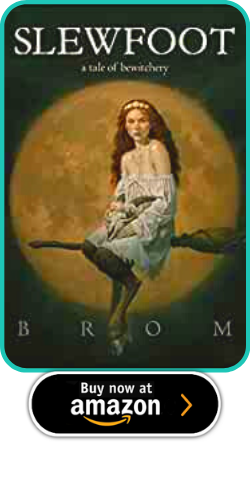
Slewfoot: a Tale of Bewitchery by Brom Publisher : Tor Nightfire Language : English Hardcover : 320 pages ISBN-10 : 125062200X ISBN-13 : 978-1250622006 A Book Review by Tony Jones Back in 1666 darkness awakens amongst a group of Puritan Christians Gerald Brom, generally known in the literary world as the singular ‘Brom’, weaves a fascinating tale of magic, mystery, and all-round self-indulgent weirdness in his latest novel Slewfoot. For those of you unfamiliar with the term ‘Slewfoot’, it is one of many names historically given to the Devil and ‘Old Nic’ lurks in the background of this odd story, even if he rather confused for most of the time. That was part of the charm of this story, I was not entirely sure how I was supposed to feel about the darker characters. Technically the demons are traditionally the ‘bad guys’ in fiction, but in its own way Slewfoot oddly turns this fact on its head and they are considerably more likable that the stiff-collared Puritan dudes! Set in Sutton Village, a remote area of Colonial New England Connecticut, in 1666, a group of very zealous Puritan Christians live in an isolated village and hunt for demons under every rock, each trying to be ‘purer’ than their neighbours. Brom paints a vivid picture of how difficult life was in this time, with things made even worse by the fact that the guy next door may well report you to the church for doing something dodgy (like reading a book which was not the Bible!) or showing an inch of flesh from above the ankle. For Sunday church services the congregation listened to three long winded preachers on the bounce and those who had missed the midweek service had to kneel throughout the entirely of the three sermons. Painful stuff! These villagers were an incredibly unlikable bunch and one wonders how they would have fitted in Nathaniel Hawthorne’s Young Goodman Browne or even worse, Netflix’s Fear Street Part 3: 1666 which are both set in the same type of community and with similar goings on. You have to wonder about the state of the humanly souls of good Christian men who looked forward with good cheer to a juicy torturing followed by a jolly hanging! The main character Abitha steals the show and once you have spent some time with her you might wonder why she ever married the rather simpleton Puritan man Edward. Sadly, in those days women had little choice and could be seen but not heard in the Puritan world (in actual fact Abitha was sold by her drunken father). Straightaway the reader realises that Abitha is the brains in the marriage and she rails ever so slightly against the Puritan way of life. She is also somewhat of an outsider and is shunned by the other villagers as she has inherited the same herbal skills (‘devilry’ to many) of her dead mother. Edward is a real weakling and is bullied by his oaf of a brother Wallace, with a key part of the plot built around who owns the two farms the different families live on. Abitha pulls the strings in the background, but at the same time knows she could easily end up in the stocks for speaking out of turn. Is Abitha a good Puritan woman? That is one of the many fascinating and ambiguous questions Slewfoot asks. What is evil is another question Brom asks of the reader. And there are no easy answers coming from either the Puritan side with their cruel rigid rules, contrasting with the ancient awakening dark forces in the encroaching forest. The novel does not make any particular moral judgments and the reader can decide themselves what ‘evil’ truly is and whether it applies to what lurks in the forest, or whether it is actually more elemental or a blur between the two. Most of the characters are portrayed as very black and white, with the brother Wallace for example, being a very unlikable Puritan caricature, which no readers are going to side with, with the rest of the village pretty much as ghastly. If you know what happened in the Salem Witch Trials of 1692 or anything about Matthew Hopkins made famous by the cult film Witchfinder General then you will have a good idea of the direction in which Slewfoot heads. Although it does not hold any surprises, it meanders in its own time, is rather seductive and beautifully written with descriptions of the Puritan lifestyle and the supernatural entities of the highest quality. Further into the novel events move through the gears with some brutal torture scenes before a very wild finish which may well have you cheering to the rooftops! This terrifying tale of bewitchery also features many of Brom’s own haunting paintings, fully immersing readers in this wild and unforgiving fairy tale world. Slewfoot had the feel of an early American novel and much of your enjoyment of it will depend on how you connect with Abitha and how she deals with the trials thrown in her direction. Sure, she was head strong and iron willed in a world dominated by men, but on the other hand when her ‘Adam and Eve’ moment arrives she appeared to be as gullible as a five-year-old. But many of the best characters in literature are full of contradictions and the same could be said for ‘Samson’ who although he tested my patience at times was very amiable for a demon. Slewfoot is dark, and the story is very painful with the reader feeling the isolation of Abitha as circumstances moves against her. In turn it was a hauntingly beautiful, slightly frustrating in parts, blend of horror, fantasy, historical fiction, and a harrowing tale of revenge. Brom has a certain swagger to his writing and it really blossoms in Slewfoot. Tony Jones Slewfoot: A Tale of Bewitchery |
Sharply written, gripping and as black as sin, Adam Nevill delivers another standout novel in a career studded with them. Cunning Folk is a dark feast, serving up a sumptuous appetiser of rural conflict, a main course of escalating dread, and a toothsome dessert of shattering destruction and loss. |
Publisher : Ritual Limited (13 Sept. 2021)
Language : English
Paperback : 336 pages
ISBN-10 : 183837891X
ISBN-13 : 978-1838378912
A book review from James Bennett
When Tom and his wife Fiona move to a rural location, they’re dreaming of a golden childhood for their small daughter, Gracey. Far from the city, with a fresh start ahead of them, the couple know they have their work cut out for them in the dilapidated house on the edge of the woods. On the one hand, it’s a potential money pit. On the other, it’s a place with a recent grisly past. With the countryside all around them and summer in the air, what could possibly go wrong?
Try the neighbours. When Tom encounters the elderly couple living next door, Mr and Mrs Moot, he might be forgiven for believing it a disappointing, yet typical confrontation in a new location. Mean-spirited and unbearably condescending, the Moots’ unwelcoming attitude soon gives way to unwanted hedge cutting, slammed doors in faces and missing pets. Who are the strange visitors who pay homage next door? What lurks in the decrepit caravan parked across Tom’s drive? It’s in this petty dispute that Nevill reveals a keen eye for the small nature of some of the residents of his home country, and the first half of the book reads like a delicious and engrossing episode of Neighbours From Hell. It’s hard not to share a guilty smile at the worsening turn of events.
Peppered with enough subtle weirdness to let the reader know that this is far from some mediocre backwater drama, Cunning Folk jolts as much as it sends shivers up the spine, ratcheting up the tension with exquisite aplomb. Soon enough, a vengeful Tom and his family are plunged into a nightmare of horrific proportions, with occult paraphernalia found in the garden, strange transformations seen in the woods and an ancient mound surrounded by stones emanating an ancient and malefic force… When Tom turns to local ‘wizard’ Blackwood for assistance to break the curse settling over his new home, all hell breaks loose. As the pages fly by, Cunning Folk scales to nothing less than a grand slam of modern folk horror.
Sharply written, gripping and as black as sin, Adam Nevill delivers another standout novel in a career studded with them. Cunning Folk is a dark feast, serving up a sumptuous appetiser of rural conflict, a main course of escalating dread, and a toothsome dessert of shattering destruction and loss.
It’s that loss, and its grim potential, that adds a moving and spine-tingling cherry on the top.
Highly recommended.
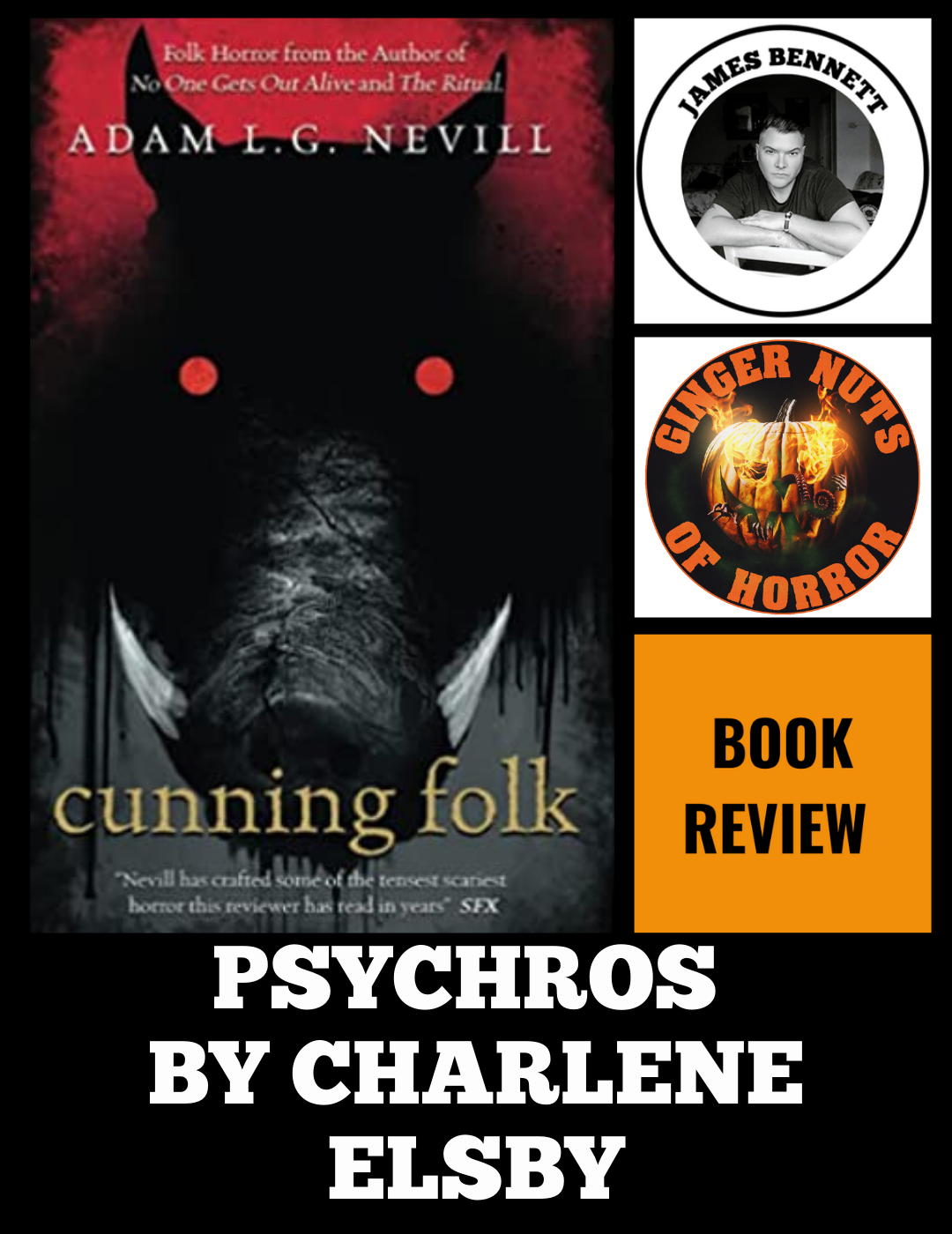
Cunning Folk: A Folk Horror Thriller by Adam Nevill
No home is heaven with hell next door.
Money's tight and their new home is a fixer-upper. Deep in rural South West England, with an ancient wood at the foot of the garden, Tom and his family are miles from anywhere and anyone familiar. His wife, Fiona, was never convinced that buying the money-pit at auction was a good idea. Not least because the previous owner committed suicide. Though no one can explain why.
Within days of crossing the threshold, when hostilities break out with the elderly couple next door, Tom's dreams of future contentment are threatened by an escalating tit-for-tat campaign of petty damage and disruption.
Increasingly isolated and tormented, Tom risks losing his home, everyone dear to him and his mind. Because, surely, only the mad would suspect that the oddballs across the hedgerow command unearthly powers. A malicious magic even older than the eerie wood and the strange barrow therein. A hallowed realm from where, he suspects, his neighbours draw a hideous power.
“Nevill has crafted some of the tensest scariest horror this reviewer has read in years” SFX
“Adam Nevill excels at making nightmares real” The Guardian
JAMES BENNETT
TODAY ON THE GINGER NUTS OF HORROR WEBSITE
HELLRAISER [13 FOR HALLOWEEN]
THE HEART AND SOUL OF HORROR FICTION REVIEWS
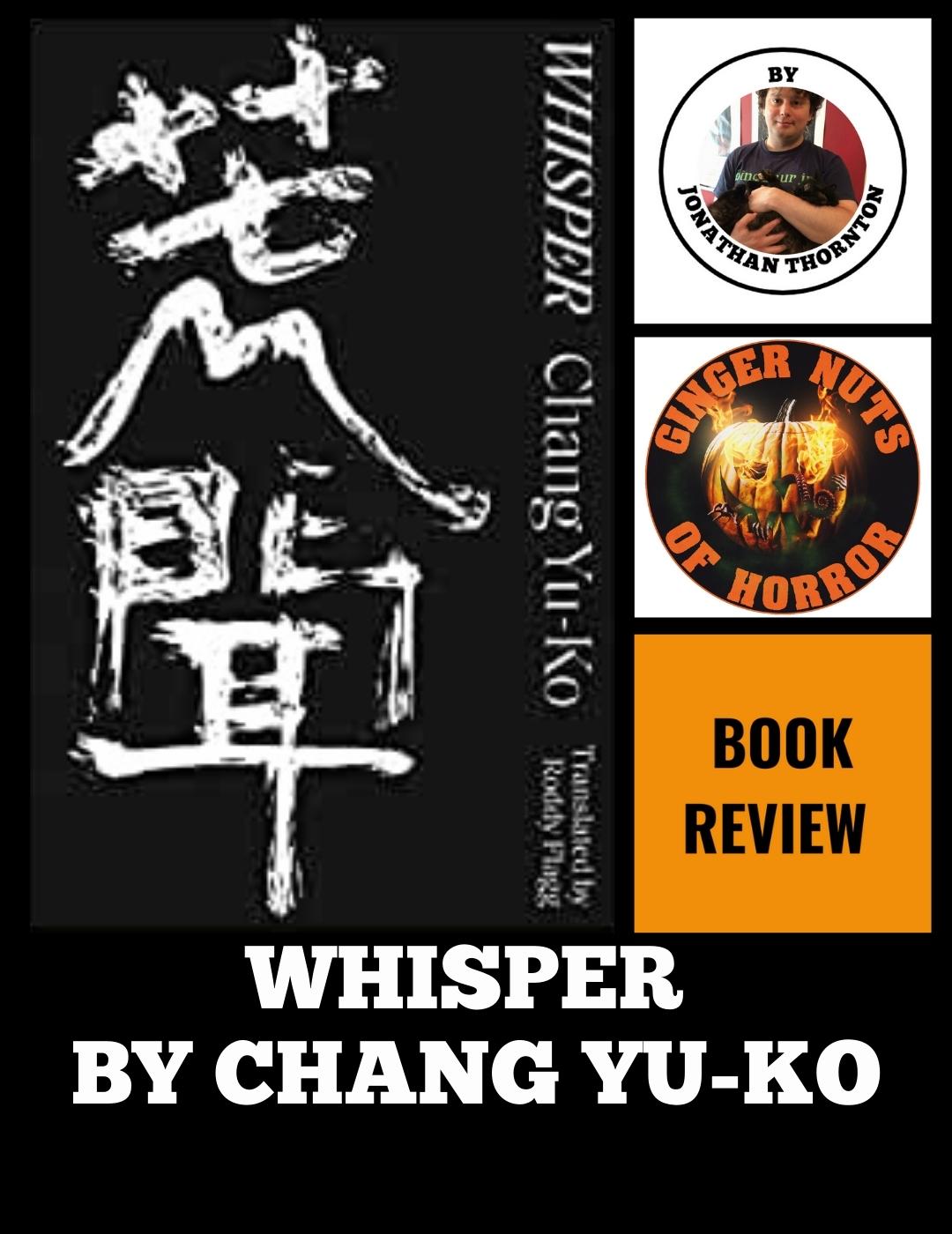
WHISPER BY CHANG YU-KO [BOOK REVIEW]
Chang Yu-Ko does not shirk on the scares. From horrific insectile monsters to deeply unpleasant demon-summoning, Whisper reaches uncomfortable pitches of all-out terror. These intense, hallucinogenic sequences are all the more striking for taking place within the context of the novel’s realistically described setting, from the scuzziest parts of the city of Taipei to the austere beauty of the Taiwanese countryside. |

Publisher : Honford Star (15 Oct. 2021)
Language : English
Paperback : 296 pages
ISBN-10 : 1916277160
ISBN-13 : 978-1916277168
A book review by Jonathan Thornton
Whisper is the first novel by Taiwanese writer Chang Yu-Ko to be translated into English. It is a powerful and disturbing horror novel, one that takes in Taiwanese and Japanese folklore to speak to the legacy of the Japanese wartime occupation of Taiwan and the social divides that currently shape Taiwanese culture. Intensely paced, Whisper expertly balances its cast of realistic and frequently unlikable yet compelling characters and creeping horror that rises to disturbing and visceral crescendos. The end result is a horror thriller that disturbs on both a visceral and psychological level. Once again Honford Star are to be praised for bringing this book into the English language, replete with striking cover design by Jaehoon Choi.
Taipei taxi driver Wu Shih-sheng’s life is a mess. Once an electronics store manager with a happy family, he now spends his time driving round the city, wasting his money on cigarettes, booze and gambling, avoiding his estranged wife Kuo Hsiang-ying and wondering what happened to their daughter. Shi-sheng and Hsiang-ying’s grim existence is interrupted by the horrific when Hsiang-ying is lured into a nightmare vision by a mysterious voice. Shi-sheng soon learns that his wife and his life are both in danger from a malevolent spirit, and unless he can destroy the spirit’s shrine on Mount Jade both of them will be killed. Meanwhile concerned social worker Jui-yi investigates the circumstances behind Hsiang-ying’s haunting, convinced it must have a link to the legends of the moxina which she learned about whilst researching the indigenous tribes of southern Taiwan. And Hsiang-ying’s sister Kuo Chen-shan finds her perfect family life with her husband falling apart around her as she becomes taken over by a malevolent presence. It’s up to Shi-sheng and Jui-yi to solve the mystery before Shi-sheng, Hsiang-ying and Chen-shan’s time runs out.
Chang expertly combines folklore and the horrific with a vividly realised modern Taiwan and well-rounded characters. All of the novel’s main characters, with the exception of Jui-yi, are incredibly damaged. Shih-sheng is arrogant and entitled and, being unable to accept the blame for how badly his life has turned out, viciously lashes out at those around him, especially his wife. Hsiang-ying is stuck in a co-dependent relationship with her abusive husband, and her sister Chen-shan is snobbish and condescending, only realising too late she has put all her self-worth into the image of being a housewife. These are deeply dysfunctional people whose lives are on the verge of collapse anyway, and the addition of the supernatural into the equation causes each of them to breakdown in various destructive ways. These sharply observed and deeply flawed characters ground Whisper in people’s lived reality, and much of the horror comes from their flaws leading them to make increasingly poor decisions.
Whisper portrays a Taiwan still suffering from the scars of the Japanese occupation, and the malevolent spirit, a creature of Taiwanese mythology driven to feed on the Taiwanese people by the actions of a careless Japanese daughter of a wealthy family, perfectly symbolises how the occupation has left fault lines in modern Taiwanese society. Chang Yu-Ko explores the social climate created by Japanese colonialism, the erasure and displacement of indigenous peoples, and the inherited imbalances of social and monetary power that still exist to this day. As such, Whisper provides an excellent example of how horror can effectively explore these hidden traumas that shape societies and mould the contours of people’s lives.
Chang Yu-Ko does not shirk on the scares. From horrific insectile monsters to deeply unpleasant demon-summoning, Whisper reaches uncomfortable pitches of all-out terror. These intense, hallucinogenic sequences are all the more striking for taking place within the context of the novel’s realistically described setting, from the scuzziest parts of the city of Taipei to the austere beauty of the Taiwanese countryside. A striking aspect of the novel’s construction is that, in keeping with all of its characters’ inability to communicate with each other, the reader is frequently the only person who receives all of the information. Chang increases the sense of dread by providing the reader with more information than the characters, sending them off into increasingly fraught situations missing key pieces of information. By the end, the survivors will never fully understand the full course of events that they have suffered through, but the reader gets the closure of understanding how the main plot threads link together.
Intelligently constructed and full of effective scares, Whisper is an excellent example of Taiwanese horror. Chang has created an exciting and frightening read with real depth. Enthusiastic readers of horror in translation will hope that Honford Star provide us with more from Chang Yu-Ko and from Taiwanese horror writers in general.
whisper
by Chang Yu-Ko (Author), Roddy Flagg (translator)
Whisper is a plot-driven Taiwanese horror story. As well as being a chilling read, Chang Yu\-Ko cleverly combines Taiwanese folklore, the Japanese occupation of Taiwan, and the long-term mistreatment of the country's aboriginal people into a tale of how the past can still kill.
Chang Yu-Ko was a clinical physician before winning multiple prestigious awards for his television scripts in his mid-twenties. He later turned his hand to fiction and is now regarded as a rising star in Taiwanese literature. Whisper was originally published in Chinese in 2018 and is his English language debut.
Roddy Flagg is a freelance translator living in Edinburgh, Scotland. He has translated a range of work by mainland and Taiwanese authors, including stories from Diao Dou and Chen Chongzheng for Pathlight magazine and The Sniper, a thriller by Chang Kuo-Li.
TODAY ON THE GINGER NUTS OF HORROR WEBSITE
NORMA BOE, THE DIVA IS BACK FOR CHRISTMAS [INTERVIEW]
THE HOWL OF THE ROUGAROU [FILM REVIEW]
THE HEART AND SOUL OF HORROR FICTION REVIEWS
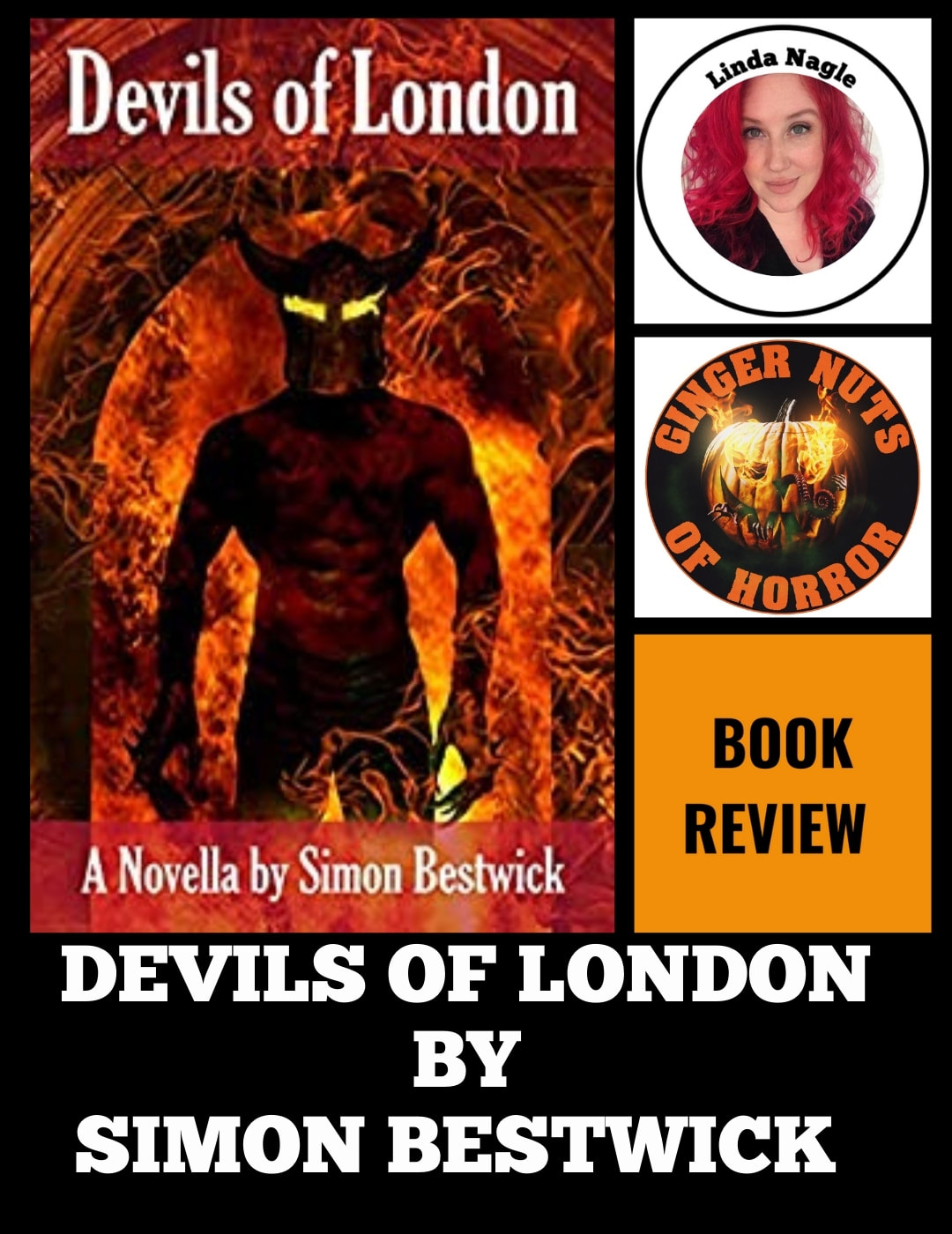
With a subtle colour palette, the artist that is Simon Bestwick paints a nicely-rounded cross-section of society and frames it in terror. Through the greys of the smoke, through the filth and the ash raining down upon the city, we see red cars, red eyes, steel toecaps glowing cherry red in the heat, all making for a cloying, suitably uncomfortable effect. |
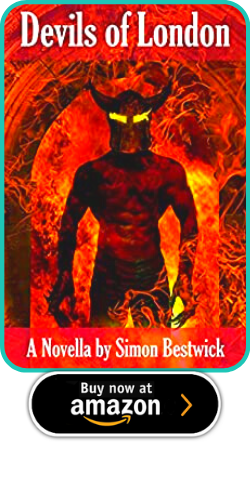
We’re in London, in the not-too-distant future. That future is now, and we’re immediately thrown in at the scorching deep end. No meandering, no faff, only relentless storytelling. As an all-new, all-singing, all-dancing Great Fire of London breaks out, we follow John’s journey as he makes his way through fire and life and a fuckton of horror. John’s just a regular geezer, because of course he is (Bestwick sure knows his shiz about creating identifiable, quintessentially British characters). And along with John and his buddies—co-workers, really—we flee the impending apocalypse. I say ‘we’ because young Bestie m’lad knows how to engage the reader: hook ’em, reel ’em in, and keep ’em there, right in the heart of the story.
Along the way, we meet something ’orrible – and something even ’orribler. But which is which? Who’s worse? That’s for me to know and you to find out (neh-neh). I don’t want to get all spoilery on you, but what a joy it is to hear from the other side (literally), the main narrative being interspersed as it is with a chunk of first-person Devil-POV, which might have been jarring had it been poorly executed. Which this wasn’t. So there. No, it’s a welcome change: the author has given the Devil a platform here and it’s refreshing AF.
With a subtle colour palette, the artist that is Simon Bestwick paints a nicely-rounded cross-section of society and frames it in terror. Through the greys of the smoke, through the filth and the ash raining down upon the city, we see red cars, red eyes, steel toecaps glowing cherry red in the heat, all making for a cloying, suitably uncomfortable effect. The heat, as they say, is on. But in a refreshing deviation from convention and trope—call it subversion, if you will—yellow gets a say here, too. Typically associated with cowardice, this colour is given a new definition: people are twats. They just are. They always have been, and they always will be. Bestwick knows this, so he plays with it in DEVILS, giving us just enough info about an ’orrible lot known as the Yellow-Scarves. Somewhat ambiguous to begin with, we learn their names later on, the author’s instinct serving his tale well – familiarity breeds contempt, humanity, and in this case, horror. Sure, these particular twats might have been a tad creepier had they retained a smidgen of that aforementioned ambiguity, but making them real and giving them humanity is equally as terrifying when you think about it: the beast within, and all that.
So there has to be something bad, right? There’s always something you’d have done differently (and if not, you should make up something negative to give a balanced review, yes?) Ah, bollocks to that. Bollocks, I say. You can take this story any number of ways – as you find it, it has a beginning, a middle, and an end: something happens, and we follow the journey. Or you could get all deep and thinky; there’s philosophy in them thar words, I tellzya. Through a trichotomous viewfinder, though, I found myself contemplating the hierarchical structure of the piece, what with hell being empty, ’n’ all. But who—and where—are the devils?
DEVILS OF LONDON is an easy read, which is fine by me because I have the attention span of a splattered gnat these days – if you don’t hook me by page one (paragraph one, if I’m being honest), then down goes the book. For me to read anything twice is …erm … a first.
HISTORY is Simon’s thang, and it shows. The devil can cite Scripture for his purpose; Bestwick can cite history. The point is: do we learn from it?
*****Five flaming stars.*****
Devils Of London Paperback
by Simon Bestwick
Linda Nagle
You can find some of her ramblings over at liberatetutemet.com.
Or pop on over to Facebook and say hi:
https:/www.facebook.com/claudia.franklyn.92
TODAY ON THE GINGER NUTS OF HORROR WEBSITE
THE BEAST WITHIN: A GABRIEL KNIGHT MYSTERY [THIRTEEN FOR HALLOWEEN 2021]
THE HEART AND SOUL OF HORROR FICTION REVIEWS
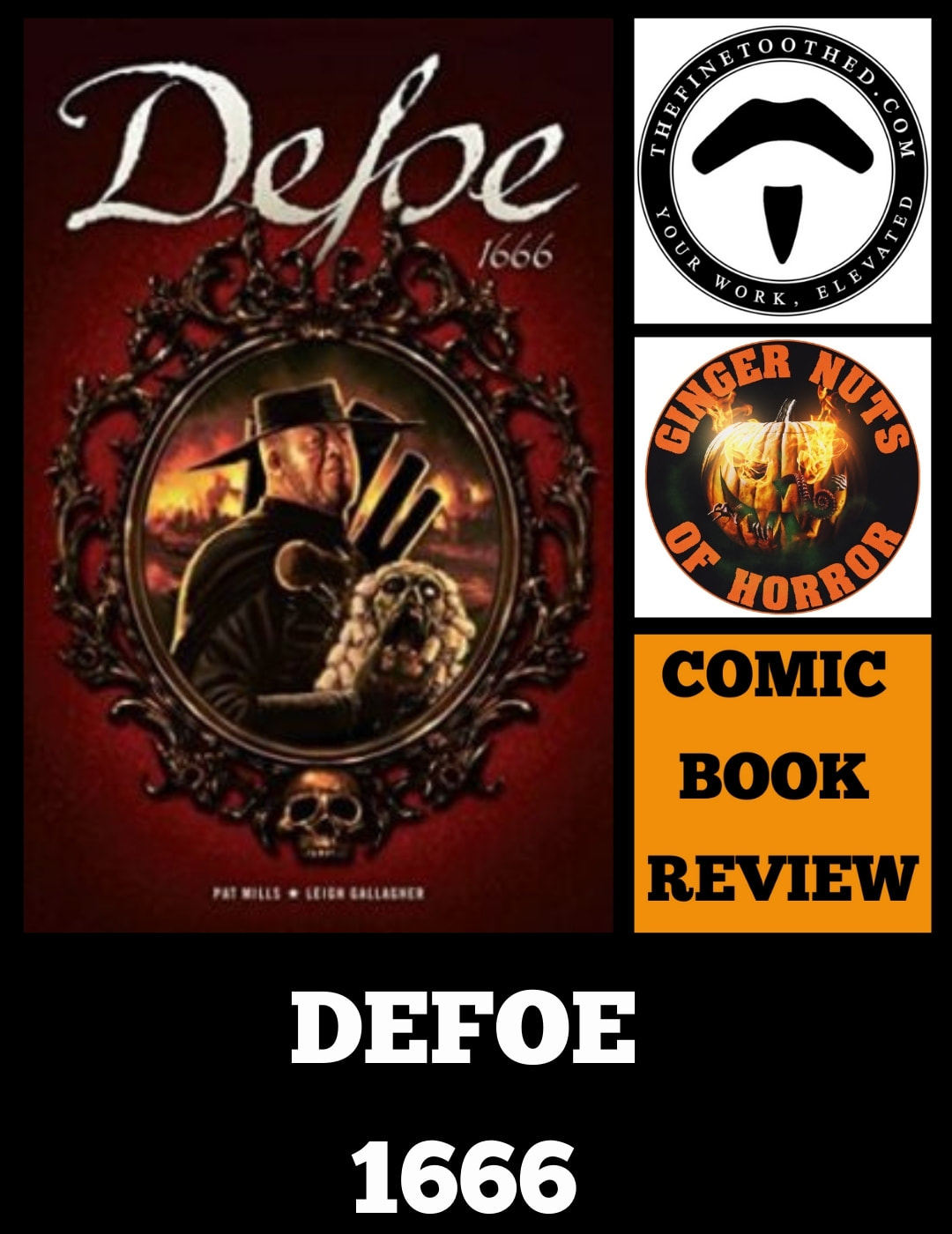
DEFOE 1666 [SPLASHES OF DARKNESS]
a richly detailed book with a bleak but firm social conscience. The art is exquisite and gruesome, the people ugly yet full of character, and the nuggets of world-building are alluring. The first time I read it, I put the thing down feeling a little confused at the sheer volume of possibility hinted at but barely developed. A second reading (and a bit of thought) has made it all much plainer, but there is still an awful lot which remains unanswered. |
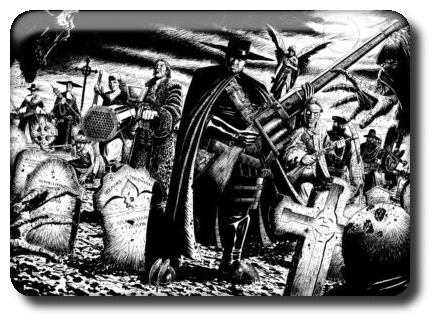
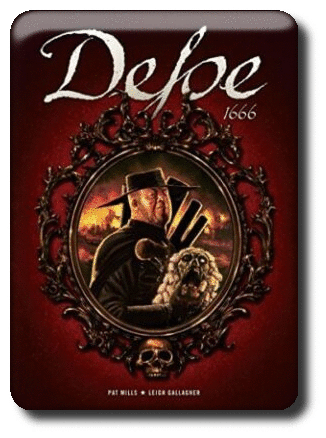
London, 1668. It is two years since the city was devastated by the Great Fire, the inferno caused by a ‘comet’ passing over the capital. But from the ashes rose the undead, hungry for the flesh of the living. Protecting the populous are zombie hunters like Titus Defoe, ex-Leveller and now agent of the Crown. As Titus battles the zombie horde, he comes to realise that some sort of intelligence is guiding them. Along with his Brethren of the Night, he must look deep into the rotten heart of the undead capital to discover the cause of this evil canker.
The taste:
Welcome back, friend. I’ve a flagon of 1666 waiting for ye that will, I think, be deemed favourable. ’Tis in some ways a tried and tested formula: a civilisation under siege, drowning in waves of o’ the walking dead, yet there are significant notes o’ difference too. Here. Have a sniff. There’s more’n reeking flesh and fear to be found at the bottom o’ this draught. The base is a strong yet often unexplored historical setting, sprinkled with rusty flakes of steampunk to spice things up. Underlying it all, deeper ’n necrosis, is the squalid tang o’ poverty and injustice infecting the populace just as surely as the plague, driving their desperation – and Defoe’s determination – to cleanse the world of this sea o’ corruption. Ye might need to hold yer nose, but down it anyway. Like V for Vendetta, it’ll do you the power o’ good. Take up arms, citizen; the true enemy is revealed.
With an out-of-touch elite floundering to maintain power, an unstoppable disease ravaging the country indiscriminately, and a divisive class war brewing, one might be forgiven for thinking Defoe 1666 was a satire on the last couple of years. The fact that it springs from the mind of Pat Mills (creator of Charley’s War and Nemesis the Warlock) – and the pages of 2000AD (his legendarily subversive British comic) – would almost guarantee it, save for the fact that Defoe first hit the shelves in 2007.
Nevertheless, this is a story which is deeply critical of the corruption power brings to both the ruling class who inherit it and the underclass who (very occasionally) manage to wrest it from their hands. On the surface of course, it’s a straight-up gore-fest, full of spectacular violence, awesome anachronistic weaponry, dark conspiracies, and alt-history zombie shenanigans. The anti-hero at the heart of it all is Defoe, a bitter brute, trying to find a spark of righteousness in a darkened world. He’s not the kind of person you warm to for his personality, more for his grit. He’s the last good man, as it were; the ronin, the wandering gunslinger, the maverick cop—brought briefly to heel, yet ready to turn on his masters if the truth points their way.
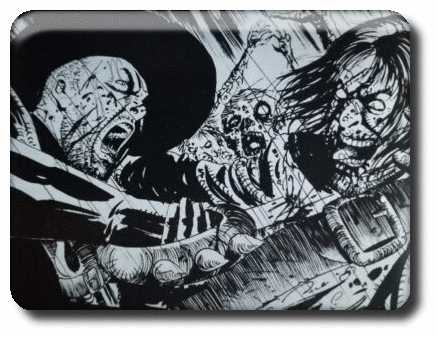
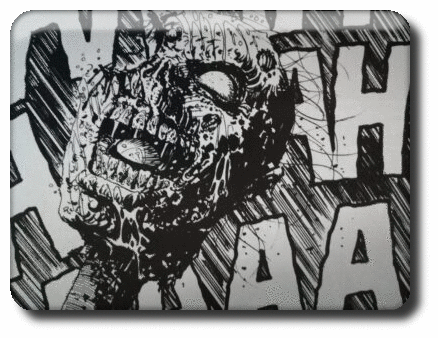
Leigh Gallagher brings Defoe vividly to life with astonishing penmanship that at times overwhelms the senses. His urban sprawls are filthy, wooden structures knotted and warped, his rain spattering or relentless, the clothing wrinkled and highly mobile, while his corpse-flesh boasts a wealth of research on states of decay. Let’s focus on the zombies for a moment more, because this story brings something new to the table: a sense of organisation, an intent that runs deeper than braaaains. Gallagher conveys it all through the tilt of a head, the line of sight, the body posture… It’s chilling. The calculation of a cunning predator. These are not your normal rotters, and this is not your normal zombie apocalypse.
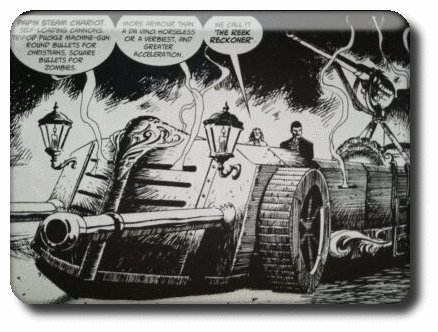
As we follow Defoe into the Office of Ordnance in Whitehall – the Q Branch of the day – we meet Sir Isaac Newton, his *extraordinary wig, and the scientific marvels he’s made under the tutelage of the ‘angels’. The intervention of non-human entities – both in the creation of the threat and in the means to fight it – fascinates me. Once small set of panels demonstrate that people see what they expect to see within their limited experience, so where one person sees demons in the blood on a microscope slide, another sees dragons. Are the ‘angels’ truly heavenly beings then, or aliens from another world? We don’t see them in this first volume, but we have no reason to doubt their existence. Of further interest to geeks like me are the ‘vizards’ – seen briefly from afar – who might be this world’s equivalent of **superheroes, or simply the equivalent of a Rocketeer air force using angel-inspired tech, much as the Brethren of the Night do with their steam-powered arsenal.
History is not forgotten. Mills has clearly done his research, slipping notes and sly references into his script to add layers and texture to Defoe’s world. Newton and Oliver Cromwell (well…Cromwell’s head) are front and centre, but cultural Easter eggs litter the text. Some will ring only faint bells whilst others clang in bold print, distracting the reader from the story. I think he can be forgiven. If you like to be educated as well as entertained, there’s fun to be had parsing out true cultural reference points from his raw imagination. If you find the habit irritating, just brush these off and move past. There’s plenty more to occupy your attention.
This is a richly detailed book with a bleak but firm social conscience. The art is exquisite and gruesome, the people ugly yet full of character, and the nuggets of world-building are alluring. The first time I read it, I put the thing down feeling a little confused at the sheer volume of possibility hinted at but barely developed. A second reading (and a bit of thought) has made it all much plainer, but there is still an awful lot which remains unanswered. Who or what are the angels, what is the relationship between Cromwell, the Queen of the Zombies, and the mysterious Mene Tekel—and for that matter, what did Mene Tekel actually do? Did they enter into a bargain with the Zombie Queen, did they call the ‘comet’ down, or are they responsible for the actual raising of the dead? All I can say for sure is that I recommend Defoe to you all, and suggest you maybe pick up volume 2 at the same time. Come the end, you’ll be glad you did.
* A separate life-form, practically. Gallagher must have cursed the day Mills wrote Sir Isaac into the tale. The smug bastard’s barnet must have been hell to draw once, let alone panel after panel.
** Vizard is an archaic word for a mask – and a Mask is itself a colloquial name for for a superhero. Of course, I might be overthinking this. You should totally seek out Neil Gaiman’s brilliant 1602 though, if the idea appeals. There are a few mini-series bringing Marvel’s familiar heroes to the 17th century.
Illustrated by Leigh Gallagher
Lettered by Ellie De Ville
Published by 2000AD
Reporter: Dion Winton-Polak
TODAY ON THE GINGER NUTS OF HORROR WEBSITE
THE PACK BY DAVID FISHER [PAPERBACKS FROM HELL]
GHOST RECALL BY ALAN BAXTER [BOOK REVIEW]
THE HEART AND SOUL OF HORROR FICTION REVIEWS
GHOST RECALL BY ALAN BAXTER [BOOK REVIEW]
Eli Carver returns to crack skulls, kick ass and lock horns with a formidable
supernatural foe in book three of the killer ‘Manifest Recall’ series
Publisher : Grey Matter Press (7 Dec. 2021)
Language : English
Paperback : 170 pages
ISBN-10 : 195056908X
ISBN-13 : 978-1950569083
A Book Review by Tony Jones
The series began back in 2018 with Manifest Recall and was followed in 2020 by Recall Night, both were great reads and you can read both of my Ginger Nuts of Horror reviews behind the links.
https://gingernutsofhorror.com/fiction-reviews/book-review-manifest-recall-by-alan-baxter
https://www.gingernutsofhorror.com/fiction-reviews/book-review-recall-night-by-alan-baxter
Ghost Recall is a quality continuation of the series and although I would recommend you read the books in sequence, this third entry is a standalone story with various pointers to what went before without going into too much detail, so you could also potentially jump straight in here. All three are novella, or short novel length stories (170-pages this time out) and are guaranteed to be devoured very quickly. If anything, I wished they were longer, with more detail thrown into the mix, for example the main plot of Ghost Recall revolves around a supernatural cult and there was plenty of scope to develop this strange secret society in significantly more detail. Instead, Alan Baxter keeps things moving with a light and sketchy style which was perfect if you’re after an easy and fast paced reading experience, the literary equivalent of a quality popcorn and beer driven ninety-minute horror/thriller film.
Eli Carver is a supreme main character, the frailties and emotional turmoil which surrounded his memory loss and personal tragedy in Manifest Recall are generally gone and book three finds him hooked up with one of the characters introduced in its predecessor Night Recall. Narrated in the first person, the uber-cool former hitman attracts trouble and is soon involved in another mystery which takes a dangerous supernatural turn when he acquires a ring (with an odd symbol) after his first fist fight in a while. Finding himself in Las Vegas, Eli has grown accustomed to a relatively quiet life, but problems soon arise as this guy simply cannot back away from a tussle, no matter how heavily the odds are stacked against him. The plot is top heavy with vicious action sequences, a substantial body count and Alan Baxter has a real knack of delivering unrelentingly brutal battles which would not be out of place in a Tarantino flick, or the Hong Kong Heroic Bloodshed films of the 1990s. He certainly dispatches his enemies with the same brutal efficiency Chow Fun Fat did in his Honk Kong action flick heyday!
One of the major strengths of Ghost Recall is the clever development of one of the key story threads which connect the three books. Eli Carver sees five ghosts, all individuals he has previously killed over his long career as a hitman, none of which are particularly fond of him (with obvious reason!) and in this book the ghosts have a much more prominent role, rather than just lurking in the background. Their individual characters begin to develop, they both help and hinder Eli, and one could not really see any future instalments without them cursing and chundering in the background.
This was a highly entertaining supernatural thriller which refuses to get too deep, the romantic interest could have been developed for example but is kept on the backburner, instead Baxter chooses to throw the kitchen sink at Carver who probably wishes he returned the dodgy ring but is just not that kind of guy. The climatic sequence was wildly over the top and was by far the most overtly supernatural part of the series thus far. Baxter obviously has a lot of fun writing this character and I would not be surprised if he bounced back for another adventure. If so, I would like to see him pushed through the emotional wringer (as in book one) as well as the physical, in order to see his character develop, as he wiped out the opposition without breaking too much sweat in this book.
Recurring characters are great for long-term fans who enjoy episodic fiction and I love this type of writing where I can periodically reconnect with old favourites for a few hours. Personally, more often than not these come from detective fiction rather than horror so having a yearly catchup with Eli Carver is a very welcome distraction where I can easily tap into his world without too much thought. I’m sure new readers will find the series equally appealing and relish the opportunity of reading the three books on the bounce. By way of comparison, the absolute gold standard of supernatural thrillers is John Connolly’s simply breath-taking Charlie Parker series, now nineteen books old, now there’s a challenge for Alan Baxter to rise to.
Tony Jones
Ghost Recall: An Eli Carver Supernatural Thriller, Book 3
by Alan Baxter
Life has calmed down for Eli Carver and he's grown complacent. Enjoying the high-stakes spoils of his new girlfriend's gambling wins, the duo is living large in Las Vegas. It's the most peaceful time he can recall. But when things turn quiet, Eli finds trouble.
Dragged into the strange machinations of a dangerous secret society, Eli will finally face everything he's been ignoring if he hopes to make it out the other side. And even then, nothing will ever be the same again. Eli and his ghosts find themselves battling powerful adversaries as violence and dark magic coalesce with lethal consequences. Strap yourself in for the third installment of award-winning author Alan Baxter's unrelenting Eli Carver Supernatural Thriller Series.
TODAY ON THE GINGER NUTS OF HORROR WEBSITE
THE PACK BY DAVID FISHER [PAPERBACKS FROM HELL]
DEFOE 1666 [SPLASHES OF DARKNESS]
THE HEART AND SOUL OF HORROR FICTION REVIEWS
Man has betrayed his best friend—now the dogs will have their day. It’s a bitter winter, and the dogs of summer have grown hungry ... and vicious!
Publisher : Valancourt Books (14 April 2020)
Language : English
Paperback : 216 pages
ISBN-10 : 1948405520
ISBN-13 : 978-1948405522
A review by Richard Martin
Horror was doing big business in the bookstores in the 1960s. This was largely thanks to gothic literature which promised gentle tales of haunted manors and melancholy spirits on their covers. Things took a more devilish turn towards the end of the decade with the release of ‘Rosemary’s Baby’ in 1967, followed by William Peter Blatty’s ‘The Exorcist’ and Thomas Tryon’s ‘The Other in 1971, but the real fun began in 1974 with the release of two books that would open the floodgate for pulp horror.
Jaws (Peter Benchley) and The Rats (James Herbert) proved that there was an appetite out there for books that weren’t ashamed to be all-out horror. The publishing industry took note and throughout the 1970s and 1980s, companies such as Zebra, Tor and Pinnacle published a seemingly endless supply of books promising unspeakable terrors and sporting covers that had to be seen to be believed. Sometimes the content was great, other times… not so much, but one thing that you could always be guaranteed was a fun and entertaining read.
By the mid-90s, horror paperbacks were seemingly out, and thrillers were in. Gone were the lurid covers of skeletons, evil dolls, creepy kids and flesh hungry critters. The horror was still there, it just wasn’t marketed as such, treated like a shameful secret. As titles fell quickly out of print, many of the horror authors and their work became increasingly forgotten by all but the most avid fans and collectors.
Enter Will Errickson, Grady Hendrix and ‘Paperbacks From Hell’.
In 2017 Hendrix and Errickson released their seminal love letter to the horror paperbacks of a bygone era, shining a light on some long-forgotten classics and renewing interest in the mass market horror paperbacks of the 1970s and 80s. Not content to simply share their passion for these oft maligned but much missed books, thanks to their partnership with Valancourt Books, we are being treated to new reprints of the best of these decades-old, forgotten gems.
To date, thirteen reprints have been published (with a fourteenth on the way), retaining the original cover art and boasting brand new and insightful introductions from Hendrix and Errickson. In this series I’ll be reading each and every one and posting articles at Ginger Nuts of Horror looking back at the best books two decades of horror has to offer.
Any books that can be included in the ‘when animals attack’ sub-genre have always been my go-to for horror paperbacks from this era, and following the success of books like ‘Jaws’, ‘The Rats’ and ‘Night of the Crabs’, there was certainly no shortage of imitators to choose from. My stance has always been, the more outlandish the creature the better (two of my personal favourites are ‘The Pike’ by Cliff Twemlow and ‘Carnosaur’ by Harry Adam Knight) but if you’re looking for something genuinely scary as opposed to the fantastical escapism many of these books offered, the best books to pick up were always ones featuring dogs as the antagonist.
The reason, for me at least, was twofold. Firstly, they always felt a little more plausible and grounded than a lot of the wilder creature features out there (I have a lot of positive things to say about ‘Slugs’ by Shaun Hutson, but ‘plausible’ and ‘grounded’ would not be two of them). Dogs in horror novels always feel like a genuine threat and it is not outside the realm of possibility (certainly when compared to Slugs and Dinosaurs) that what you are reading could actually happen. The second reason was how ‘wrong’ it felt to have man’s best friend turn on him. There is no other animal where that same sense of betrayal and corruption was quite as pervasive as when your beloved pet turns on you.
To call David Fisher’s debut novel, ‘The Pack’, plausible and grounded may be a step too far, but there were passages, particularly in the early sections of the book, where it was all too easy to put yourself in the character’s shoes. Published in 1976, it tells the story of an isolated island community frequented by tourists and holidaymakers during the summer months and all but abandoned during the winter bar a half dozen elderly families who call the island their year-round home. Those making their summer homes there have been leaving their pet dogs behind, unwilling to take them back to their ‘real lives’ in the city, and a feral pack of former pets has formed. Struggling to find food as a winter storm sweeps the island, the dogs begin to take desperate measures, going against their domestic upbringings and giving in to primal natures in order to survive.
The book's prologue, a meagre four pages, sets the story up in a particularly heartbreaking way. A family packing up to catch the ferry back to the mainland debate the fate of Jake, a dog they saved from the pound early in the summer. It seems his rescue was only a temporary reprieve as the parents don’t want the responsibility of feeding and walking the dog now that the summer is over, and instead opt to take him out to the woods and tie him to a tree, expecting him to free himself and live wild, but not before they have beat a hasty retreat. As an animal lover, I found this section to be a rough read, but an undeniably effective one and it introduces an element to the book which is often missing from these creature feature books, namely making the antagonist a sympathetic one.
We are soon introduced to Larry, who is visiting his parents on the island for the winter with his family (wife Diane and two young children) with a view to convincing the elderly couple to come live with him in Manhatten. There is an interesting dynamic at play with Larry and his father, who don’t see eye to eye on the subject but, after a tense moment when the pack of now wild dogs first make themselves known to the group, the argument between father and son becomes moot, as the family soon find themselves unable to leave the house, let alone the island, as the pack lay siege to their isolated home.
The notion of a pack of pet dogs gone rogue, and one that includes a dalmatian, a terrier and a dachshund at that, may sound comical on paper (and the book does descend into increasingly outlandish set pieces as it goes on) but the pack are effectively menacing in the early sections of the book, and there are two scenes in the first half (one with Larry’s youngest daughter and a second with him and his father) which are incredibly, page-turningly tense. Once the action becomes limited to the house, however, the book takes an unexpected turn and the focus instead becomes the psychological toll the siege takes on the family and Larry in particular.
I can well imagine that many readers will take objection to Larry’s actions throughout the book, labelling them as erratic at best, idiotic at worst, but the strength of the book is that Larry isn’t a capable hero who thrives under pressure and makes all the right calls. As the events of the story begin to take their mental and physical toll on him, we get to the heart of his true character and find a strong undercurrent of toxic masculinity which causes him to make increasingly unwise and unnecessary decisions that begin to put himself and his family at risk. A subplot detailing the sibling rivalry between him and his younger brother provides not only the reasons why acts like he does, but also gives us an (admittedly superfluous, but very engaging) introduction to someone who acts like a more traditional ‘hero’, who fares no better.
The genres most famous examples of ‘when creatures attack’ books, particularly ‘Night of the Crabs’, boast hyper-masculine leads who are capable of saving the day by sheer manliness alone, and it was very refreshing to read a book from this era where actions driven solely by fear of being shown to be ‘less than a man’ are consistently proven to be counter-productive, to the point that things escalate to almost absurd levels solely due to some poor decisions. You may not like Larry much as a character, but he certainly makes for interesting reading.
Not every character gets the same level of attention as Larry, however, and I’d go so far as to say the rest of the cast is largely forgettable (literally. Larry and Diane have two children and twice while reading the book I was taken aback by the mention of them as I’d completely forgotten they existed). Given the books relatively light body count there is little narrative reason for a lot of the characters to be there and the story would have benefitted from either sharing the focus more or removing them entirely.
I can’t close out my review without mentioning the movie adaptation. There are scores of examples of film versions of the 70s and 80s mass-market horror paperbacks that were of, let’s be generous and say questionable quality, and in Will Errickson’s introduction to ‘The Pack’, he uses a quote from the author that lets his feelings on the 1977 movie loosely based on his novel known in hilariously ruthless style. While there are countless examples of bad movies based on these books, ‘The Pack (starring Joe Don Baker of ‘Walking Tall’ fame, and directed by the man who brought us ‘Enter the Dragon’) is not one of them. Tense, affecting and occasionally brutal, it’s surprisingly effective and the dogs on screen are a genuinely menacing presence. I highly recommend tracking it down.
The Pack is ‘Cujo’ meets ‘Night of the Living Dead’, predating the former by over five years. While not without its flaws, it offers a rare example of a Paperback From Hell that manages to balance suspenseful action and character moments with a fun and entertaining story. The book is uncommonly unpredictable for a sub-genre so rife with predictable plots and had me riveted from page one right through to the fantastic final page.
Join me next time when I’ll be sharing my thoughts on Stage Fright by Garrett Boatman. If you’d like to read along with this series and want to pick up copies of the books, or learn more about Valancourts’ Paperbacks From Hell line, visit their site at www.valancourtbooks.com/paperbacksfromhell
THE PACK BY DAVID FISHER
Then the summer dwellers left, abandoning them to the island’s harsh winter. Ravenous hunger and violent rage have brought them together under a cunning, ferocious leader.
Man has betrayed his best friend—now the dogs will have their day. It’s a bitter winter, and the dogs of summer have grown hungry ... and vicious!
This edition of David Fisher’s The Pack (1976) features a new introduction by Will Errickson and the original cover painting by Lydia Rosier.
“A flesh-crawling thriller!”—The New York Times
TODAY ON THE GINGER NUTS OF HORROR WEBSITE
GHOST RECALL BY ALAN BAXTER [BOOK REVIEW]
DEFOE 1666 [SPLASHES OF DARKNESS]
THE HEART AND SOUL OF HORROR FICTION REVIEWS
a bold and highly original horror novel built around the power of grief, guilt, isolation, loneliness and the entities which might feed on those feelings. When you get to the end you may well ask yourself “what the f**k did I just read?” and then backtrack over the previous pages for missed clues you may or may not find. This Thing Between Us is one of the novels of 2021 and Gus Moreno deserves to make a huge splash with this startling and unforgettable debut. |
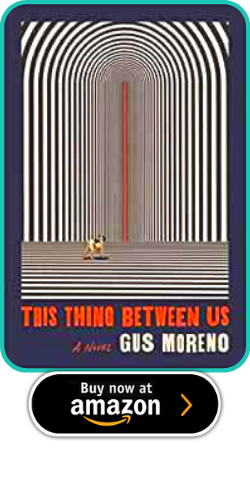
Gus Moreno’s debut, a haunting supernatural study of
grief and guilt, is one of the literary highlights of 2021
Publisher : MCD x FSG Originals (12 Oct. 2021)
Language : English
Paperback : 272 pages
ISBN-10 : 0374539235
ISBN-13 : 978-0374539238
A book review by Tony Jones
Written in a very peculiar style, Thiago narrates This Thing Between Us in the first person, with the reader piggybacking on a long conversation, almost a confession in parts, he is having with his recently dead wife Vera. Wracked with guilt over the circumstances of her death, Thiago both reflects back to when his wife was still alive whilst also telling the story in the present as he struggles to move on with his life. Part of it is presented as a first-person stream of consciousness and as things get stranger you may wonder whether Thiago is an unreliable narrator as he begins to experience odd events in the build up to Vera’s sudden and tragic death. It has a deliberately fragmented and unsettling style as Thiago struggles to cope with life without his wife which is made worse by both his extended family and the media. Some readers may find the lack of focus the novel has mildly frustrating, also the obscureness of the supernatural entity, but I found these peculiarities fascinating and look forward to reading other reviews to see what I might have overlooked.
Grief is a major theme of This Thing Between Us and various online sources indicate that Gus Moreno suffered a family loss which has had some influence on the novel. Grief can be very close to guilt and the story interconnects them beautifully as Thiago looks to blame somebody (or something) for his unimaginable loss, whilst internally asking himself whether he is to blame? How is this connected to the supernatural manifestation which seems to be tracking him both before Vera’s death and afterwards? If you are looking for answers to all these questions, you might not get them and the book is a more memorable reading experience because not everything is spelled out. By comparison, I do not think Paul Tremblay’s The Cabin at the End of the World would have had a fraction of the online discussion it has picked if its controversial the ending was clear cut.
Even though This Thing Between Us is not a long novel it crams much into its page length, with the first half setting the scene and the second seriously upping the ante, where things get pitch dark. Do not think part two is just twitching curtains and ambiguous shimmering shadows, hell no, blood spills and the dead rise. There are also some nods to classic films and books, as wide ranging as Cujo and more bizarrely 2001: a Space Odyssey.
Supernatural matters aside, part of the strength of This Thing Between Us is that Thiago is both a complex and fragile character whom although he is of Mexican heritage cannot speak Spanish particularly well and this is frowned upon by his (in-law) family who do not see him as a ‘real’ Mexican. Vera’s family are also very clingy, particularly her mother, with things being made worse by the fact her death is racially politicised which sucks Thiago’s psyche deeper into the mire. Might you feel less guilty if there was not a huge insurance policy connected to your dead spouse? These are all interesting areas also explored via Thiago’s internal conflicts.
Part of the plot revolves around the couple buying "world's most advanced smart speaker!" known as an Itza (obviously an upgrade of Amazon’s Alexa) and the strange things which follow, with them repeatedly being delivered purchases they did not buy, followed by odd noises and scratches. Was their condo haunted and if so could this be connected to Vera’s death and what follows? Much of this was unsettling and the reader will either have fun attempting to join the dots, or give up in frustration, ultimately I do not think it was supposed to make 100% sense and interpretations will undoubtedly differ.
This Thing Between Us was a bold and highly original horror novel built around the power of grief, guilt, isolation, loneliness and the entities which might feed on those feelings. When you get to the end you may well ask yourself “what the f**k did I just read?” and then backtrack over the previous pages for missed clues you may or may not find. This Thing Between Us is one of the novels of 2021 and Gus Moreno deserves to make a huge splash with this startling and unforgettable debut.
Tony Jones
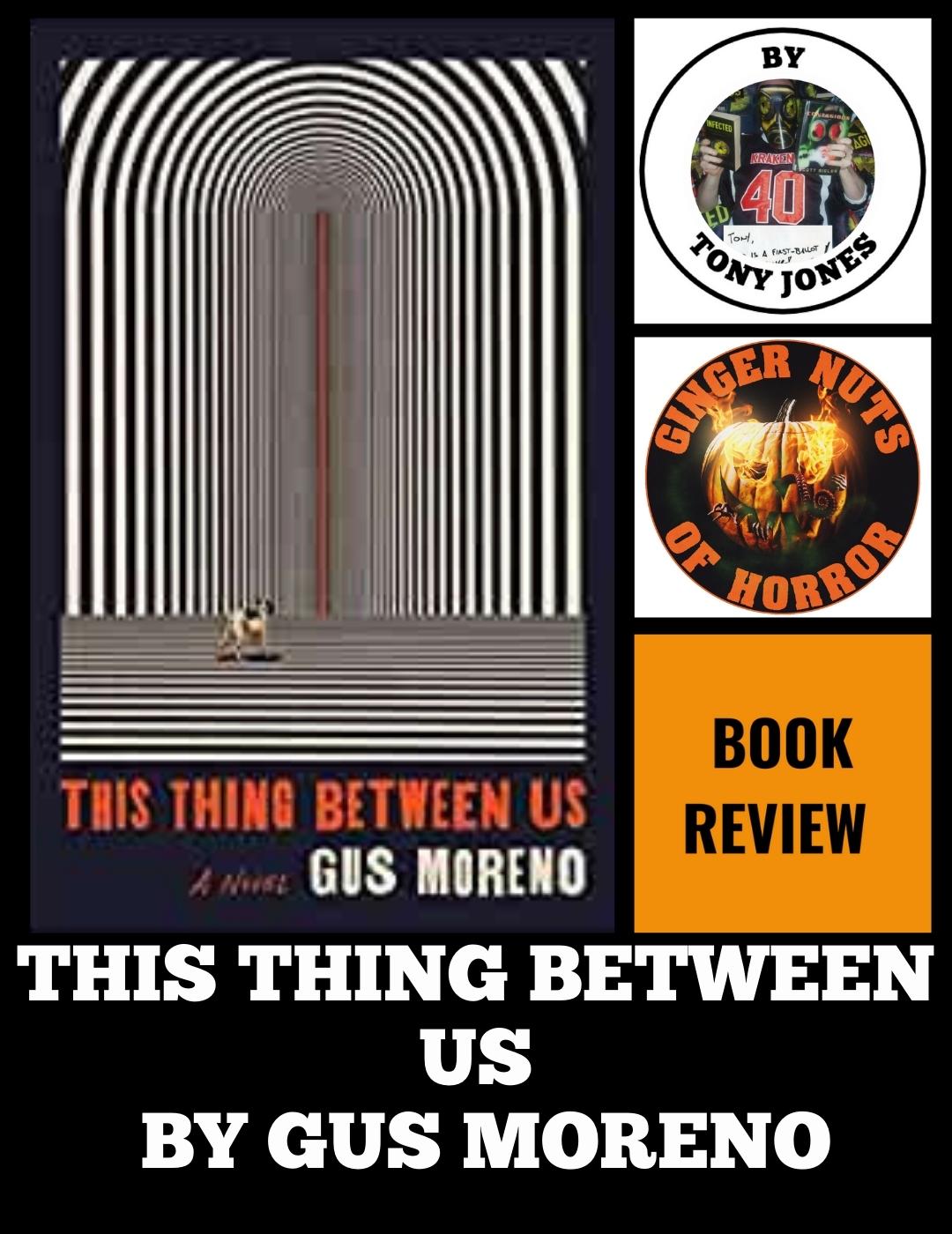
This Thing Between Us
by Gus Moreno
--Paul Tremblay, author of Survivor Song
"Hold on, this isn't a ride, it's a slide, and it doesn't care whether you're ready or not."
--Stephen Graham Jones, author of The Only Good Indians
A widower battles his grief, rage, and the mysterious evil inhabiting his home smart speaker, in this mesmerizing horror thriller from Gus Moreno.
It was Vera's idea to buy the Itza. The "world's most advanced smart speaker!" didn't interest Thiago, but Vera thought it would be a bit of fun for them amidst all the strange occurrences happening in the condo. It made things worse. The cold spots and scratching in the walls were weird enough, but peculiar packages started showing up at the house--who ordered industrial lye? Then there was the eerie music at odd hours, Thiago waking up to Itza projecting light shows in an empty room.
It was funny and strange right up until Vera was killed, and Thiago's world became unbearable. Pundits and politicians all looking to turn his wife's death into a symbol for their own agendas. A barrage of texts from her well-meaning friends about letting go and moving on. Waking to the sound of Itza talking softly to someone in the living room . . .
The only thing left to do was get far away from Chicago. Away from everything and everyone. A secluded cabin in Colorado seemed like the perfect place to hole up with his crushing grief. But soon Thiago realizes there is no escape--not from his guilt, not from his simmering rage, and not from the evil hunting him, feeding on his grief, determined to make its way into this world.
A bold, original horror novel about grief, loneliness and the oppressive intimacy of technology, This Thing Between Us marks the arrival of a spectacular new talent.
TODAY ON THE GINGER NUTS OF HORROR WEBSITE
HORROR, CULTURE, SOCIETY, AND THE NEED TO BE LIKED BY CLAIRE FITZPATRICK [FEATURE]
THE HEART AND SOUL OF Horror fiction reviews
Archives
May 2023
April 2023
March 2023
February 2023
January 2023
December 2022
November 2022
October 2022
September 2022
August 2022
July 2022
June 2022
May 2022
April 2022
March 2022
February 2022
January 2022
December 2021
November 2021
October 2021
September 2021
August 2021
July 2021
June 2021
May 2021
April 2021
March 2021
February 2021
January 2021
December 2020
November 2020
October 2020
September 2020
August 2020
July 2020
June 2020
May 2020
April 2020
March 2020
February 2020
January 2020
December 2019
November 2019
October 2019
September 2019
August 2019
July 2019
June 2019
May 2019
April 2019
March 2019
February 2019
January 2019
December 2018
November 2018
October 2018
September 2018
August 2018
July 2018
June 2018
May 2018
April 2018
March 2018
February 2018
January 2018
December 2017
November 2017
October 2017
September 2017
August 2017
July 2017
June 2017
May 2017
April 2017
March 2017
February 2017
January 2017
December 2016
November 2016
October 2016
September 2016
August 2016
July 2016
June 2016
May 2016
April 2016
March 2016
February 2016
January 2016
December 2015
November 2015
October 2015
September 2015
August 2015
July 2015
June 2015
May 2015
April 2015
March 2015
February 2015
January 2015
December 2014
November 2014
October 2014
September 2014
August 2014
July 2014
June 2014
May 2014
April 2014
March 2014
February 2014
January 2014
December 2013
November 2013
October 2013
September 2013
August 2013
July 2013
June 2013
May 2013
April 2013
March 2013
February 2013
December 2012

RSS Feed