THE KING IN YELLOW [SPLASHES OF DARKNESS]
23/11/2021
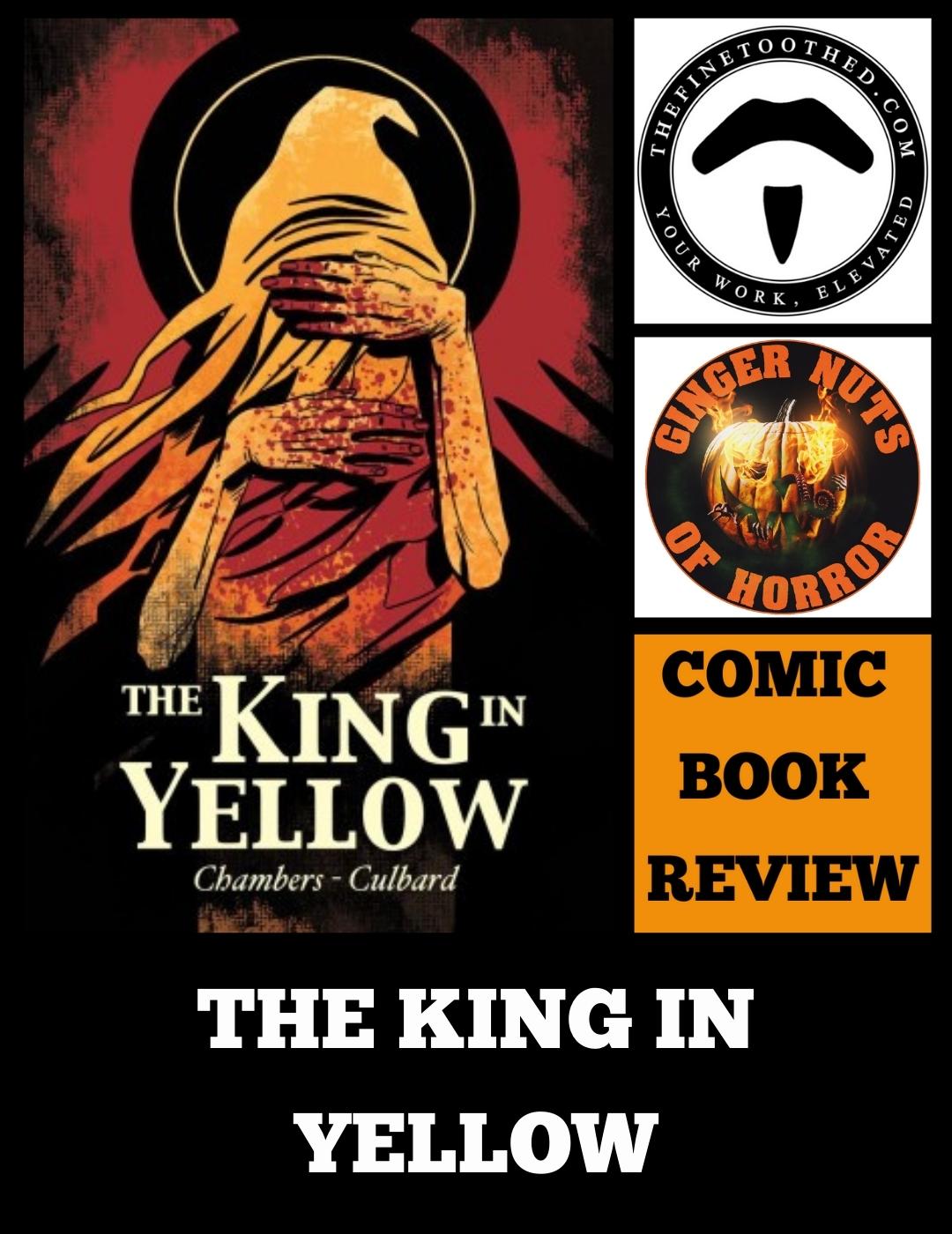
Comic-books are a medium, not a genre; they can tell any story and suit any palate. You want horror? I've got bottles of the stuff. Welcome to 'Splashes of Darkness.' The pitch: The King in Yellow was a short-story collection by Robert W. Chambers which mingled literary stories of love and heartbreak in bohemian Paris with weird tales filled with insanity and despair. They were linked by a fictional play so powerful it had never been performed; said to drive anyone unfortunate enough to read it utterly mad. Like H.P. Lovecraft’s Necronomicon, the book is both incredibly rare, yet seems to turn up all over the place, infecting innocent lives and heralding the arrival of the titular supernatural entity. Thankfully I.N.J. Culbard makes the choice to leave the more prosaic stuff to one side, bringing us lush adaptations of The Repairer of Reputations, The Mask, The Yellow Sign, and In the Court of the Dragon –some of the finest examples of weird fiction to be found. The taste: Greetings, and welcome to Lost Barcosa. (Yes, I know – terrible pun, but we’ve got new owners; they thought it was a real hoot.) If your only knowledge of the Yellow King comes from S1 of True Detective, you might think you’re in for a tall glass of noirish folk-horror, but the stories presented here have a very different flavour. The base notes are more Cask of Amontillado than Lonestar beer, blended with the cosmic indifference and mind-shattering ‘truths’ of HPL’s oeuvre, chased with a splash of Ashton Smith’s absinthe. It may look cold and rigid, but there’s a wild swirl running through it, apt to make one see the world in a new light. Thoughts on the comic: The term ‘weird fiction’ has been applied (and misapplied) to a multitude of works over the years. Some weave qualities of the inexplicable through their own original creations to produce that peculiar blend of imbalance and hysteria, whilst others do their best to draw attention to classic source materials via adaptation. These are sometimes (though not always) successful in their own right, but they keep the flame of inspiration alive regardless. In recent years the artist I.N.J. Culbard has produced some wonderful graphic-novelisations based on the works of Lovecraft, Wilde, and Conan Doyle through Self Made Hero (along with original works like the brilliant Deadbeats, which I reviewed back in July.) If you have seen his comics before you will immediately recognise Culbard’s artistic style. It has a European feel with clear, clean line-work and a limited palette of colour, used in blocks—save for flesh, which tends to have a couple of tones to help bring it to life. There’s a pleasing eye for the human form, running the full gamut of body types, hair and facial hair, though they are slightly cartoonish in design and strangely lacking in pupils. Nevertheless, the darkness of the plots and the weight of the characters’ emotions are more than ably portrayed. The world quickly sucks you in and the city – with its grand decadence and sordid corners – becomes all too tangible, though only appearing in brief and sketchy glimpses throughout. Interestingly, this adaptation feels much more ‘of a piece’ than the patchwork text of the original (available for free at Project Gutenberg), thanks to the combination of this visual element and the tighter story selection. The Repairer of Reputations is the strongest piece – a startling and uncanny story that leaves the reader questioning just about everything they just read. In it, we are introduced us to Hildred; a taut and haughty man with a renowned cousin, a copy of The King in Yellow, a perceived destiny, and an unrequited love. There are strong hints throughout that this takes place in an alternative timeline to our own, evoking an historical piece in some ways, with overtones of a dystopian future. The ‘Repairer’ is a peculiar character who manipulates lives, but does he deal in true facts or merely encourage delusions for his own warped ends? The Mask introduces several new characters: an artsy set with a somewhat incestuous relationship. The sculptor, Boris, has possession of The King in Yellow now, and a liquid that can turn living tissue into marble. His artistic obsession grows, and with it his own doom. The Yellow Sign is perhaps the most famous of Chambers’ stories – and is a truly nightmarish vignette. Jack Scott is a painter, falling in love with his model, Tessie. She dreams of him in a coffin, carried away by a dough-faced man. She finds a brooch of unusual design and gives it to him. Soon dreams cross over to reality and the doughy man stands under their window gazing in, demanding to know about the Yellow Sign. The final piece is slighter in narrative but even more surreal. Jack flees towards his final destiny, pursued by the sinister forces of the tattered King in Yellow. It is worth noting that the character in Chambers’ version of In the Court of the Dragon remains unnamed. Culbard uses Scott here to bring unity to the piece—going so far as to weave him into The Repairer of Reputations in (what I believe to be) a wholly invented scene, and bringing Hildred into the Court of the Dragon. This ploy works wonderfully. The weirder a tale is, the more important it is for elements of normality, of familiarity to stand in firm counterpoint. Jack provides us with that anchor of sanity, of external contemplation and as such, his toppling into madness becomes our own. The final image of the book is both glorious and devastating to behold. If you are new to Self Made Hero’s literary adaptations, I might recommend starting with something a little easier to grasp: The Picture of Dorian Gray, perhaps, or Ghost Stories of an Antiquary. Their Lovecraft anthologies are another great place to take your first tentative dip. Fans of Culbard’s earlier work will certainly get a kick out of The King in Yellow, but I suspect it will not be quite as satisfying to those who place narrative above sensation. To be fair that is more likely to be down to the source material than his sterling adaptation. It may leave you scratching your head as to just what the effing hell happened, but that is, in many respects, the very essence of the Weird. Sit back, pick up the book and enjoy it for what it is. You can go nuts later. Rating: 4/5 This review was originally written for Geek Syndicate, but it has been updated and expanded for Ginger Nuts of Horror. Adapted and Illustrated by I.N.J. Culbard From the short stories of Robert W. Chambers Edited by Dan Lockwood Published by Self Made Hero Reporter: Dion Winton-Polak TODAY ON THE GINGER NUTS OF HORROR WEBSITE THE STRANGE CASE OF DOCTOR JEKYLL AND MISTER HYDE [THIRTEEN FOR HALLOWEEN 2021]LET’S GO PLAY AT THE ADAMS’ BY MENDAL W. JOHNSON [PAPERBACKS FROM HELL]THE HEART AND SOUL OF HORROR FEATURES
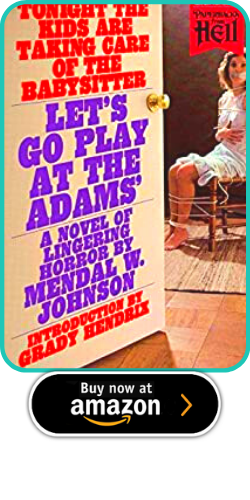
Let’s Go Play At The Adams’ by Mendal W. Johnson Publisher : Valancourt Books (10 Mar. 2020) Language : English Paperback : 280 pages ISBN-10 : 1948405539 ISBN-13 : 978-1948405539 A Paperbacks from Hell book review by Richard Martin Horror was doing big business in the bookstores in the 1960s. This was largely thanks to gothic literature which promised gentle tales of haunted manors and melancholy spirits on their covers. Things took a more devilish turn towards the end of the decade with the release of ‘Rosemary’s Baby’ in 1967, followed by William Peter Blatty’s ‘The Exorcist’ and Thomas Tryon’s ‘The Other in 1971, but the real fun began in 1974 with the release of two books that would open the floodgate for pulp horror. Jaws (Peter Benchley) and The Rats (James Herbert) proved that there was an appetite out there for books that weren’t ashamed to be all-out horror. The publishing industry took note and throughout the 1970s and 1980s, companies such as Zebra, Tor and Pinnacle published a seemingly endless supply of books promising unspeakable terrors and sporting covers that had to be seen to be believed. Sometimes the content was great, other times… not so much, but one thing that you could always be guaranteed was a fun and entertaining read. By the mid-90s, horror paperbacks were seemingly out, and thrillers were in. Gone were the lurid covers of skeletons, evil dolls, creepy kids and flesh hungry critters. The horror was still there, it just wasn’t marketed as such, treated like a shameful secret. As titles fell quickly out of print, many of the horror authors and their work became increasingly forgotten by all but the most avid fans and collectors. Enter Will Errickson, Grady Hendrix and ‘Paperbacks From Hell’. In 2017 Hendrix and Errickson released their seminal love letter to the horror paperbacks of a bygone era, shining a light on some long-forgotten classics and renewing interest in the mass market horror paperbacks of the 1970s and 80s. Not content to simply share their passion for these oft maligned but much missed books, thanks to their partnership with Valancourt Books, we are being treated to new reprints of the best of these decades-old, forgotten gems. To date, thirteen reprints have been published (with a fourteenth on the way), retaining the original cover art and boasting brand new and insightful introductions from Hendrix and Errickson. In this series I’ll be reading each and every one and posting articles at Ginger Nuts of Horror looking back at the best books two decades of horror has to offer. Of the thirteen books that currently make up Valancourt’s Paperbacks From Hell series, ‘Let’s Go Play At The Adams’ was the one I was most anticipating. It was one of the few I already had a passing awareness of, largely due to its infamous reputation, aided by its scarcity (the book had been long since out of print prior to Valancourt’s intervention and secondary market copies would regularly fetch hundreds of dollars) and the enigmatic author (Let’s Go Play At The Adams’ was Johnson’s only book, and little is known about the author himself), not to mention subject matter. It is a book a great many horror fans are aware of but, until now, not one many have had the opportunity to actually read. Supposedly based on the real-life case of the Sylvia Likens murder (which was also the basis for Jack Ketchum’s equally notorious ‘The Girl Next Door’), ‘Let's Go Play At The Adams’ tell the story of Barbera, who is hired to babysit for two young children while their parents are away on holiday. What seems to be an easy job to set aside some money for her studies soon turns into a nightmare as, with the help of the local children, the pair enact a plan to keep Barbera prisoner and subject her to a week of terrifying tortures and lurid indignities. For a book with such difficult subject matter, it is not as explicit as you may expect. Johnson is far more interested in exploring how the actions of the children affect Barbera mentally, rather than physically, not to mention exploring the thought processes of the children who are committing these acts. Mileage may vary but, personally, I found this approach far more disturbing. There is a lot of complexity and nuance to the reasons why each of the children have decided to act on their plan and it is genuinely unsettling to see how easily things escalate from a ‘game’ to something far more sinister. That isn’t to say that the book doesn’t get graphic when the need arises, but it rarely details events as they happen, but rather recounts them retrospectively from a particular character’s perspective. While this may take the edge off in regards to the violence, it is used very effectively to humanise it. The reader is always very aware of the consequences of the violence because it is always presented by how either the person inflicting it or one having it inflicted upon them, experienced it. The philosophical approach may put some readers off, but it is undeniably effective if you are prepared for a more psychological and less action-packed story. The cast are also not painted simply as a bunch of ‘evil’ kids. Some of them demonstrate serious apprehension and regret at how far things ultimately go, whereas others relish the opportunity to push limits and take pleasure in the pain they are inflicting. In other cases (particularly with the youngest) there seems to be a lack of appreciation and understanding of the real-world consequences of what they are doing, and it’s never made clear if they truly understand that what they are doing has gone way past being a ‘game’. The characters who stuck with me the most, however, are the ones who acted with indifference. They were neither keen to take things further nor were they concerned when things ultimately escalate. These aren’t characters it is easy to relate to and, for me, that is what made them scary. The brilliance of making the antagonists children is that we never truly know why they do what they do because they are too young to either understand or articulate the why themselves and that makes the book all the more unsettling. As for Barbera herself, she is an interesting character to follow because, more than any of the children, she has an arc to her story, as she goes through fear, bargaining, frustration and, ultimately, acceptance as she descends slowly but surely into madness. What is most striking about these sections spent with her is that it isn’t the big things that get to her (and there are some pretty unpleasant things that she has to endure) but an accumulation of dozens of small things, whether that be her frustration at being unable to engage meaningfully with the children, the tightness of her bonds, or even understanding why any of this is happening to her. It is harrowing to read about the mindset of somebody who has had all basic human needs removed entirely, and seeing what that does to them mentally. Comparisons to Jack Ketchum’s ‘The Girl Next Door’ are hard to avoid, not just because of the subject matter, but also the writing. Johnson shares a sparse and blunt writing style with Ketchum that compliments the material. If anything, Johnson’s book is the bleaker of the two, because while ‘The Girl Next Door’ is largely told through the eyes of a likeable and (largely) innocent character, ‘Let’s Go Play At The Adams’ only has two perspectives, that of perpetrator and victim. Both are incredibly potent and affecting works, but Johnson’s book is by far the most pessimistic. Let's Go Play At The Adams is a tough book to rate. It isn’t an enjoyable or entertaining read, and nor is it meant to be. It is also not a book I would ever read again, largely because I know it is one that will stay with me long after I’ve finished it, making a revisit to the bleak and hostile world Johnson created redundant. It is a book that will absolutely provoke a strong reaction from any reader who picks it up. Whether that reaction be disgust, shock, sadness or frustration depends on the reader, but it is a rare book that can almost guarantee to leave a lasting impression. What struck me after reading it is what a tragedy it is that this proved to be his one and only novel (the author passed away a few years following publication). Based on this book alone, one wonders what the horror community missed out on. Join me next time when I’ll be sharing my thoughts on The Pack by David Fisher. If you’d like to read along with this series and want to pick up copies of the books, or learn more about Valancourts’ Paperbacks From Hell line, visit their site at www.valancourtbooks.com/paperbacksfromhell Let's Go Play at the Adams' (Paperbacks from Hell) Paperback |
‘Summer Sons’ is immensely readable and thoroughly engaging from the very start, remaining unpredictable and unputdownable until the final page. Its strong characters and unique setting enhance what could have been just another Southern gothic horror thriller and delivers something far more interesting. |
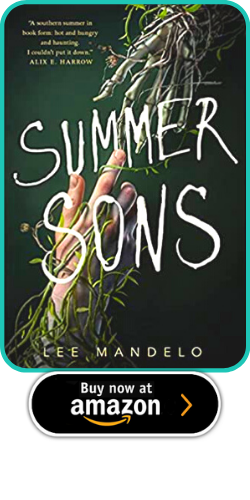
Publisher : Titan Books
Language : English
ISBN-10 : 125079028X
ISBN-13 : 978-1250790286
Book Review by Richard Martin
Eddie and Andrew are inseparable friends until Eddie accepts a place on a graduate program at the prestigious Vanderbilt University, studying local folklore. Andrew is excited to join him later in the year and is confused by Eddie’s seeming reluctance for him to begin attending. When Andrew learns that Eddie committed suicide under mysterious circumstances, he travels to his student home to learn more about the life he had created for himself, and to find answers about his friend’s unexpected death.
As Andrew meets Eddie’s housemate Riley and new friends, including the dangerous and enigmatic Halse, he begins investigating the work he had been doing at the University leading up to his death. He becomes embroiled in a gang of street racers and finds himself in the middle of sordid academic conspiracies, all clues to Eddie’s apparent suicide, and which may be linked to a traumatic childhood incident that changed both boys’ lives forever.
For a character who only features via occasional flashbacks, and almost entirely as someone only spoken about by the other characters, Eddie’s presence looms large over every aspect of this book. He is the conduit via which the books’ themes are explored and, particularly in the early sections of the book, the driving narrative force. While the book gradually shifts to focus on Andrew as he not only begins to discover more about the circumstances of Eddie’s death but also journeys closer towards his acceptance of it, this book begins being all about Eddie, insofar as our lead characters experiences revolve around him at the outset. It’s a testament to how talented a writer Mandelo is that you find yourself so heavily invested in a character you technically never meet.
Our protagonist, Andrew, is equally engaging and is our relatable, but not always likeable, guide through Summer Sons. When we meet him, his grief is almost palpable and you get a sense early on that there was far more to his and Eddie’s relationship than simple friendship. One of the most heart-breaking elements of the book was watching Andrew sort through his feelings about Eddie through the lens of mourning. Mandelo doesn’t allow her lead to wallow, however, and Andrew develops a great deal as a character as the story progresses and the character we meet at the beginning is irrevocable changed by the final page. Whether for better or worse isn’t something I’ll be spoiling here. He seems most comfortable and at home in the seamier elements of his investigations (the parties, the street racing) but equally is more than intelligent enough to navigate the different (but no less perilous) pitfalls of academic studies and the back-stabbing and double-dealing that comes with it.
While the melding of the book’s seemingly disparate elements makes for a unique premise, it also has the unfortunate side effect of making the book feel overstuffed at times. There is an engaging and emotionally charged story at the book’s core of a friendship that, in retrospect, promised to eventually develop into something more, and a thoroughly engaging murder mystery that comes out of that friendship. Throw in some classic literary academia, a southern gothic setting, a side-line of the seedy underbelly of drug dealing and drag racing and a supernatural element involving hauntings and curses, and there is an awful lot going here. That's without getting into the book’s tackling of issues of class and institutionalised racism.
As a horror fan first and foremost, it pains me to say it, but it's the supernatural elements that often feel the most jarring or out of place. Lift this part out and you are still left with all the book’s strongest elements (Eddie, his friendship with Andrew, the murder mystery and Andrew’s journey of self-discovery with Halse and Riley) and perhaps most tellingly, very little impact on the story being told. When it works, it provides a creepy ambience and some tension but it is effective mostly as a metaphor for the complex relationship Eddie and Andrew shared, or a manifestation of Andrew’s grief, and tales of family curses and latent supernatural powers don't always mesh well with the other, more grounded elements in play.
This is a minor quibble, however, noticeable only because everything else works so well. There will likely be some element of the book that will hook any reader, and ‘Summer Sons’ is immensely readable and thoroughly engaging from the very start, remaining unpredictable and unputdownable until the final page. Its strong characters and unique setting enhance what could have been just another Southern gothic horror thriller and delivers something far more interesting. I’m left genuinely excited to see what Mandelo follows this up with.
4 Stars
SUMMER SONS BY LEE MANDELO
TODAY ON THE GINGER NUTS OF HORROR WEBSITE
LIFE IS STRANGE [THIRTEEN FOR HALLOWEEN 2021]
KYLIE WHITEHEAD BECOMES ABSORBED [AUTHOR INTERVIEW]
THE HEART AND SOUL OF HORROR FICTION REVIEWS
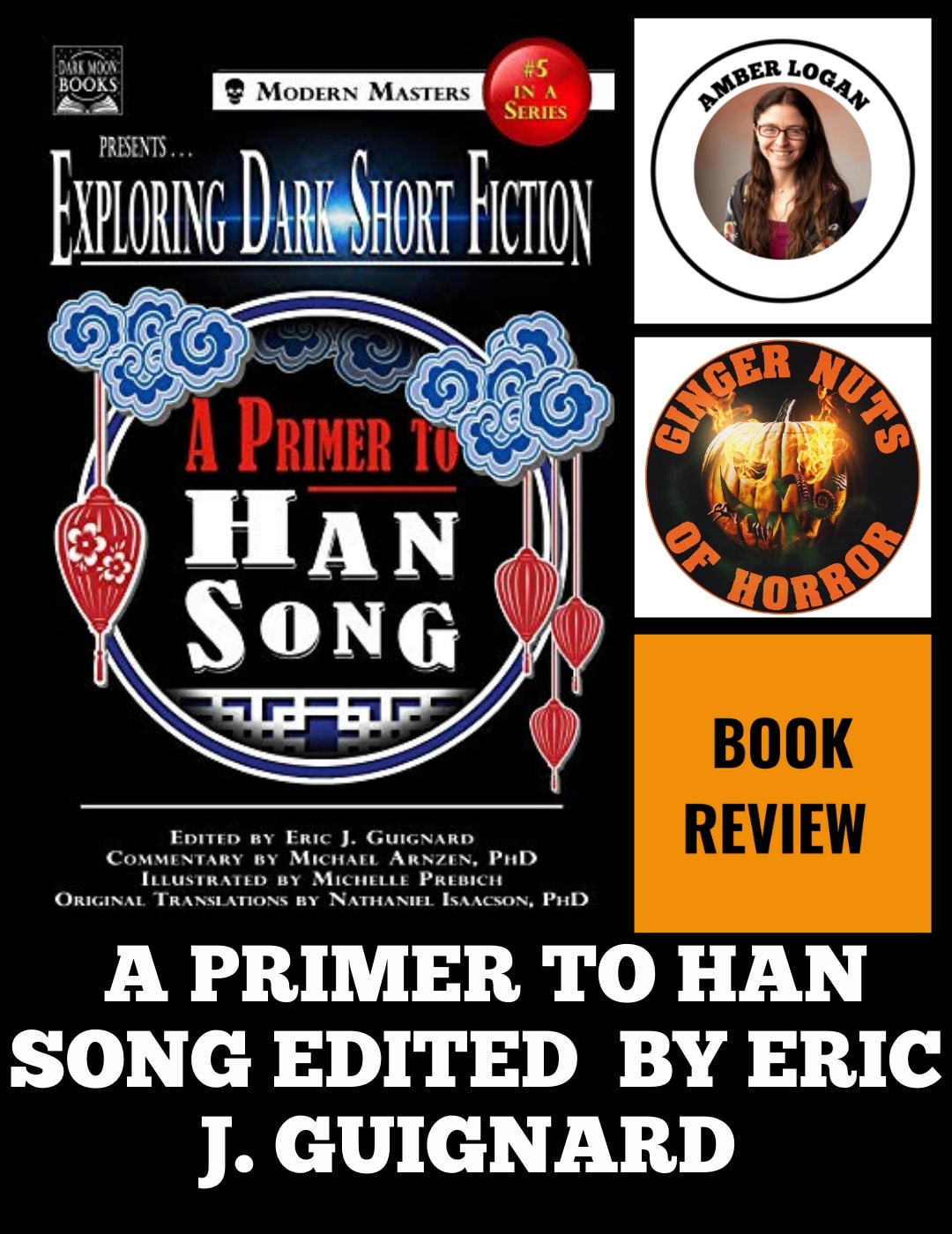
EXPLORING DARK SHORT FICTION #5: A PRIMER TO HAN SONG EDITED BY ERIC J. GUIGNARD [BOOK REVIEW]
If you’ve ever been on a packed subway or train, this story is for you. Claustrophobic and uncomfortable, the story continually evolves and keeps the reader guessing. I was dying to know where it was headed (both the story and the subway!), and I was delighted to be continually surprised and intrigued. A skilful (and disturbing) blend of horror and Sci Fi. |
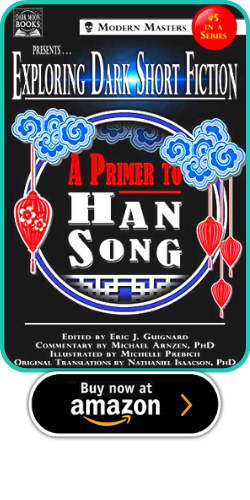
Publisher : Dark Moon Books (28 Sept. 2020)
Language : English
Paperback : 222 pages
ISBN-10 : 1949491129
ISBN-13 : 978-1949491128
Review by Amber Logan
This is particularly true of Chinese speculative fiction. Are the stories Han Song writes Sci Fi or are they horror? As is explained in the collection’s introduction, in China “the term Science Fiction incorporates horror, as well (as there is not a separate distinction between the two genres).” I was pleasantly surprised to learn this fact, as I love blurred genre lines and tend to prefer horror that has at least one foot across the line into an adjacent genre, anyways.
Because of this lack of genre-differentiation, the stories in this collection (part of the broadly titled “Exploring Dark Short Fiction” series) aren’t straight horror…but they aren’t straight Sci Fi (or fantasy), either. I would argue they are best described as creepy thought experiments that Song takes to new and startling extremes.
In addition to an interview with Han Song and other details about the author and his works, the collection features six short stories, each with an accompanying commentary:
“Earth is Flat”
This first story is quite short. It is an interesting take on colonization, and also the most Sci Fi of the collection. In “Earth is Flat,” a Chinese tourist has travelled to New York and is told a tale about the REAL flat Earth discovered by Columbus (and how we’re not living on it).
“Transformation Subway”
If you’ve ever been on a packed subway or train, this story is for you. Claustrophobic and uncomfortable, the story continually evolves and keeps the reader guessing. I was dying to know where it was headed (both the story and the subway!), and I was delighted to be continually surprised and intrigued. A skilful (and disturbing) blend of horror and Sci Fi.
“The Wheel of Samsara”
A beautiful Sci Fi story with a fairy tale feel set in Tibet. The story deals with the origins of the universe in a brain-expanding, Dr. Strange kind of way.
“Two Small Birds”
I will be the first to admit this story went over my head. The commentary describes it as “a subtly bizarro story that belongs fully in the category of contemporary surrealist experimentation. John Chu deserves a prize for capturing the ‘WTF’ feeling of the story in his translation.” That about sums it up. There’s a magazine, some birds, a library…from there, your guess is as good as mine.
“Fear of Seeing”
In this story, a baby is born with eight additional eyes. The world gets involved (newspapers, scientists wanting to study the child, etc.), conspiracies ensue, and the reader is led to wonder whether this baby (and others of its kind…) sees the true nature of reality, unlike the rest of us. Creepy and thought-provoking.
“My Country Does Not Dream”
The final story in the collection was probably my favorite, though it wasn’t scary (save for the underlying social/cultural implications). A man wakes in the night and realizes the Chinese government has been forcing the entire population to essentially sleepwalk their way through doubling the nation’s productivity. Everyone falls asleep as normal, but then sleepwalks to work, to shopping centers, etc. to further drive the economy. But knowledge of this bizarre plot to boost China’s economy is dangerous to have…
The stories in this collection are quite accessible for the casual reader, but the additional content would also make this a good text for a more academic setting. As I assume was the intention of the publisher, A Primer to Han Song has inspired me to seek out more Chinese Sci Fi/horror.
EXPLORING DARK SHORT FICTION #5: A PRIMER TO HAN SONG EDITED BY ERIC J. GUIGNARD
Including original English translations by Nathaniel Isaacson, PhD, Dark Moon Books and editor Eric J. Guignard bring you this introduction to Han Song's work, the fifth in a series of primers exploring modern masters of literary dark short fiction. Herein is a chance to discover-or learn more of-the enigmatic voice of Han Song, as beautifully illustrated by artist Michelle Prebich.
Included within these pages are:
• Six short stories, three translated exclusively for this book
• Author interview
• Complete bibliography
• Academic commentary by Michael Arnzen, PhD (former humanities chair and professor of the year, Seton Hill University)
• ... and more!
Enter this doorway to the vast and fantastic: Get to know Han Song.
###
"A fascinating study for fans seeking new reads and for librarians developing wide-ranging collections." -Library Journal
"Refreshing and much-needed... Addresses significant themes and figures within the horror field." -Locus Magazine
THE HEART AND SOUL OF HORROR FICTION REVIEWS
ASIN : B09DJ5H948
Publisher : Independently published (24 Aug. 2021)
Language : English
Paperback : 280 pages
ISBN-13 : 979-8463712363
A book review by Joe Ortlieb
As for the characters in the story some of them I really liked and wish were in the story more. Red and Zander were two of my favorite characters. The main character heller was a good one. So having three daughters i found myself telling them hold on I'll help you when I'm done this chapter. So if cosmic horror is your thing for sure check out Hell fighters. So kick back your in for a hell of a crazy ride.
Hell Fighters: 21st Century Lovecraft
by Bil Richardson
A terrifying evil wants to enter our world, and Dr. Max Heller and the Hell Fighters are the only ones who can stop it. Heller is a man of science but when he stumbles upon something that defies all logic, he must put aside his old ways of thinking and plunge into the unknown.
In the tradition of HP Lovecraft comes a tale of cosmic horror that will have you on the edge of your seat. There are things in the universe beyond our understanding, malevolent entities of immense power. Can Heller and a ragtag group of townspeople prevail against such beings? Find out in this gripping tale filled with horrors more frightening than any nightmare.
"I highly recommend Hell Fighters to fans of quirky, capable heroes thrown way out of their depth; readers who enjoy intricately plotted dark fiction; and anyone who adores Lovecraft and is looking for a superb modern take.”
Readers Favorite
"Richardson pens a remarkable story. It's un-put-downable. Intriguing and unpredictable. A definite recommendation."
Amy Shannon's Bookshelf Reviews
"Richardson has a flair. Definitely gonna keep this author on my radar.” Manhattan Book Review
"Bil has a fresh approach to the art of the word." Menton3 (30 Days of Night, Heavy Metal)
THE HEART AND SOUL OF HORROR FICTION REVIEWS
THE JAM BY DAN SOULE [BOOK REVIEW]
Soule lays the breadcrumbs and leaves you to pick up the pieces and put them together. The ending wasn’t what I expected, and it will possibly frustrate some reader but, if a story takes you somewhere you didn’t quite expect and leaves you thinking about the ending for the rest of the day, then that’s a job well done. |

ASIN : B09KNJYFGQ
Publisher : Rotten Row Press (23 Nov. 2021)
Language : English
File size : 320 KB
Text-to-Speech : Enabled
Screen Reader : Supported
Review by: Mark Walker
It's a traffic jam, that's all. And traffic can be a real nightmare. Everything will get back to normal soon enough. There's no cause for concern.
While people get out of their cars and pass the time with fellow travellers, fourteen-year-old Max sits in the back of his family's campervan, with a knife hidden in his pocket.
Those on the road wonder about what's causing the blockage up ahead. Max worries about why his dad sprung the road trip on them and wishes his mother would do more than stare at her feet. In cars and trucks, some bitch about being late, others hope no one is hurt. At least, they do until the screaming begins, and then the monster inside Max's van isn't the only thing for him to be scared of in The Jam.
Warning – some very minor spoilers follow!
That synopsis probably won’t prepare you for The Jam. What sounds like domestic drama playing out against the backdrop of a typical afternoon on a British motorway has a lot more to thank The Mist for than any kitchen sink.
What starts out as a simple traffic jam rapidly spirals into a nightmare for Soule’s disparate and desperate band of characters. Thrown together by a common crisis, a group of very different people come together as things get seriously weird and people start dying. Whether they die by the hands (claws?) of half-glimpsed, monstrous predators or from in-fighting and back-stabbing, you will have to read to find out.
So far, so ‘The Mist’ – mysterious accident? Check! Unseen creatures picking people off one by one? Check! Tense characters who wouldn’t even like each other under normal circumstances? Check!
So far so King.
But, believe me, I am not being flippant or cynical; I did find myself thinking of King as I was reading. Although Soule doesn’t give himself much room in the novella’s 42,000 words, he still manages to weave in enough back story and character development to get you invested in his players. This is an aspect of King’s work that I have always enjoyed and I was glad to find it here as well. You don’t just get a convenient cast of gore-fodder, but a nicely fleshed out group of people… some of who might even deserve to survive.
Yes, the characters might seem a bit stereotypical; an arrogant, self-serving lifestyle guru, a philanthropic footballer with a murky past, a victim of domestic violence desperate to rescue her son from her abusive husband and a sex-worker to name a few. But that’s what you want in a story like this, characters with flaws, characters with history, characters with the potential to flip on a sixpence and tear someone’s face off. The only thing we didn’t have was a crazy priest for the Top Trump of horror stereotypes! But, you know what? I wouldn’t have minded if there was one! Who DOESN’T love a crazy priest?
While the book does share a lot of DNA with something like The Mist, this is no lazy copy and the story goes off in all sorts of directions – some you might guess, others you probably won’t. And that is what I enjoyed about it – I was lulled at the beginning, convinced I knew where this story was going and not expecting any surprises, but Soule tricked me and I soon realised I didn’t have a clue! It is difficult to go into The Jam’s plot any more without starting to give things away, but I was carried along nicely and, for the most part, didn’t predict what was happening or question the plot twists and turns.
Soule’s writing is concise and well-structured, never labouring the point and never getting boring. I think he has managed to cram a lot into a short space and it mostly feel unrushed. He successfully builds tension in some scenes and then turns your stomach in others, but never goes over the top.
My main criticism would probably be saved for the ending which I found to be a bit confused, mainly because it does feel like it comes up very quickly, so it just needs you to pay attention. I did have to skip back a few pages at one point to check what I had just read and piece together the loose ends, but I am still not quite sure if that was down to me or Soule being slightly obfuscatory in the final couple of chapters. Either way, pay attention and it will be fine - Soule lays the breadcrumbs and leaves you to pick up the pieces and put them together. The ending wasn’t what I expected, and it will possibly frustrate some reader but, if a story takes you somewhere you didn’t quite expect and leaves you thinking about the ending for the rest of the day, then that’s a job well done. Even if you didn’t like it.
The Jam is a great little novella by a talented writer that I can’t criticise as I had fun reading it. It is a quick read, just 42,000 words and can be easily finished in one sitting. I enjoyed Soule’s style, which was detailed but not overly fussy and he conjures up a couple of quite unpleasant scenes to delight the ghouls amongst you. It was good enough to make me consider other books by Soule and, to be honest, what have you got to lose? Other than a couple of hours on an afternoon?
Soule’s caution for his book:
Reader guidance: contains themes of domestic abuse, scenes of violence and gore, moderately coarse language, and occasional sexual references.
The Jam: A dark page turning modern horror full of twists (Fright Nights)
It's just another day on a busy highway until everything comes to a screeching halt. The jam tails back forever. But there's no cause for concern, no reason to panic. It's a traffic jam, that's all. Everything will get back to normal soon enough.
While people get out of their cars and pass the time with fellow travellers, fourteen-year-old Max sits in the back of his family's campervan, with a knife hidden in his pocket. Those outside wonder about what's causing the blockage up ahead. Max worries about why his dad sprung the road trip on them and wishes his mother would do more than stare at her feet. There's some bitching on the road about being late, others hope no one was hurt. At least, they do until the screaming begins, and then the monster inside Max's van isn't the only thing for him to be scared of in The Jam.
A tense and claustrophobic story akin to King's The Mist and Barker's A Hellbound Heart, The Jam will take you on a thrilling horror ride where nothing and no one are as they seem.
Reader guidance
This book contains themes of domestic abuse, scenes of violence and gore, moderately coarse language, and mild sexual references.
TODAY ON THE GINGER NUTS OF HORROR WEBSITE
ANKLE BITERS [FILM REVIEW]
THE HEART AND SOUL OF HORROR FICTION REVIEWS
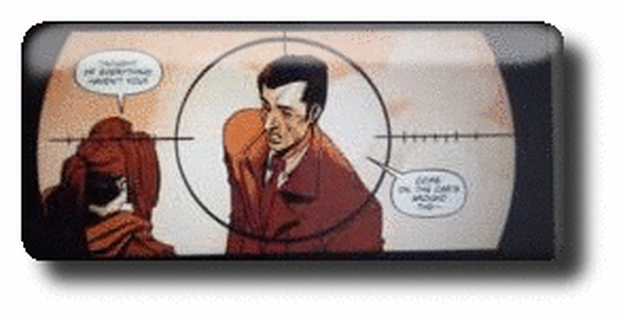
It’s full of twists and turns, betrayals and shockingly brutal acts, cracking the world open for expansion. With tightly-plotted scripts, a compelling focal character, and throat-grabbing art, you really couldn’t find much better to spend your money on. You’ve got eyes on the target now. Whenever you’re ready... |
Comic-books are a medium, not a genre; they can tell any story and suit any palate. You want horror? I've got bottles of the stuff. Welcome to 'Splashes of Darkness.'
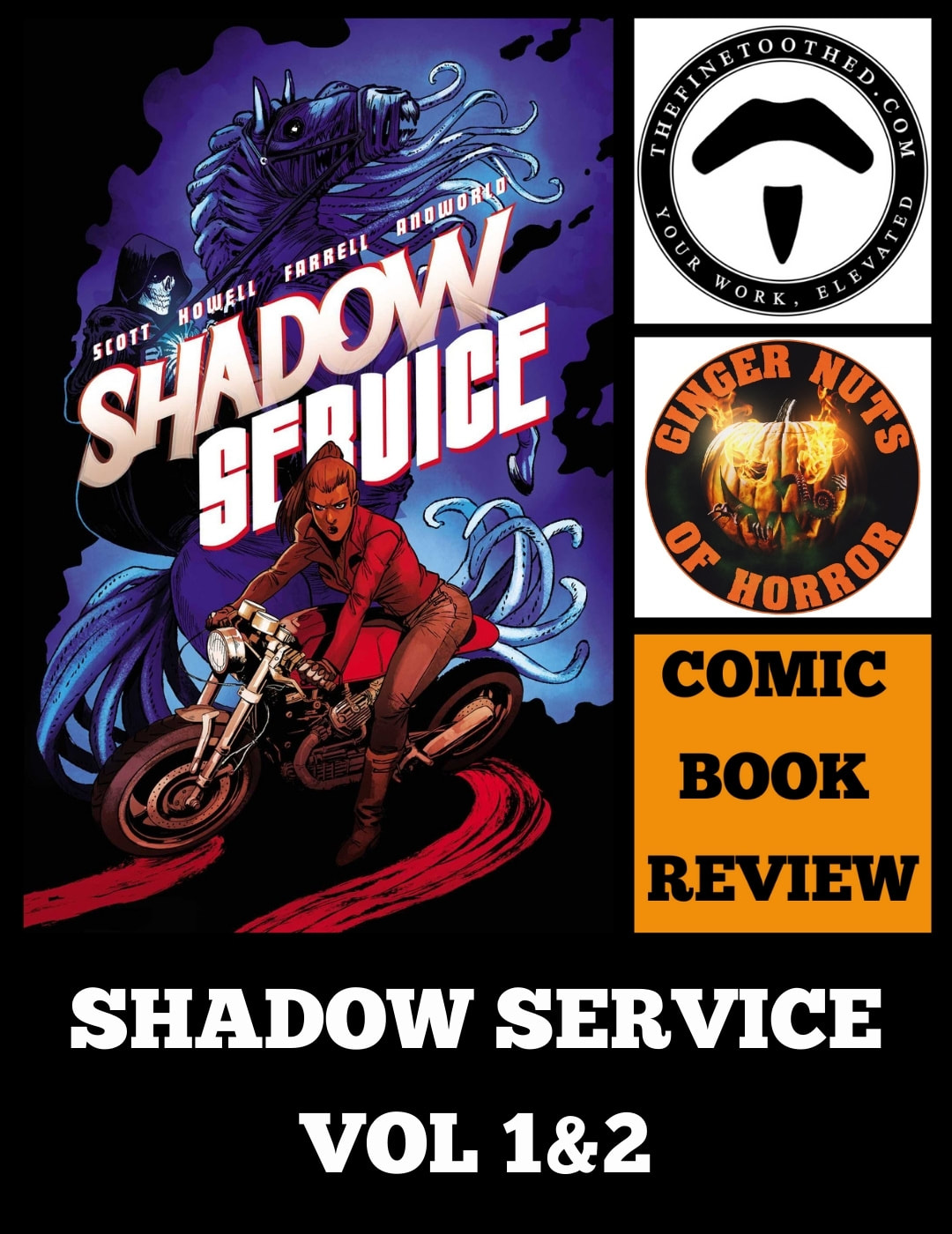
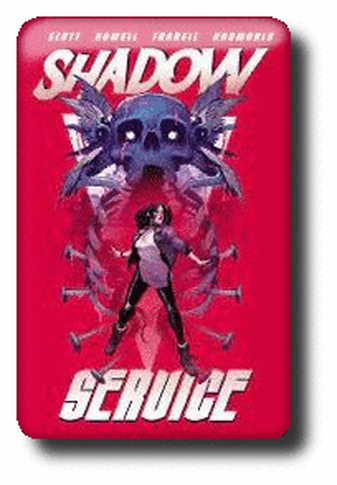
Worried your partner is cheating? Need a missing person found? Gina Meyers is the Private Investigator for you. She’s a witch who worries that her powers make her a monster, worse than the crooks she’s trying to catch, but London’s criminal underworld runs deeper than she ever could have imagined...all the way to Hell. As Meyers tracks her target, she crosses paths with a ghoulish shape-shifter and his partner. They work for a mysterious organisation that packs some serious mojo and – as it turns out – they’re after the same man. Can he really be saved, or has the devil dug his claws in too deep? Black ops meets black magic in Shadow Service.
The Taste:
Hey there friend, I think you dropped something. Here ya go. (No, don’t look at it yet. Wait till I’m serving somebody else. Just keep smiling, say thanks, then pretend to order a drink. We’re being…watched.) A pitcher? Sure, I’ve got just the thing for you: Shadow Service. It’s a murky brew, strong, dark, and full of character. This is one to mull over, full of subtlety and surprise, and definitely no sulphur. Uh-uh. Have a sip. There’s a bitterness to it, sure – comes with any kind of noir – but there’s a freshness too – you getting that? – vibrant like magic, cutting through the mire. Mmm. Citrus-clean and crisp. Yeah, I thought you’d like it. Here, it’s on the house. Yes ma’am, how can I help y…?
[MEET ME OUT BACK FOR THE FULL SKINNY.]
Thoughts on the comic:
Well, this one’s a cracker. It’s slick, creepy, explosive, and deeply engaging. One of the things I love about small presses is that they publish creator-owned content, giving platform to people with a unique story to tell. And they tend to be *complete stories, with real character development and actual consequences—no reboots or retcons here. As such, I think it’s a more satisfying experience: focused, self-contained, and they often reward re-reading. Shadow Service vols 1 & 2 combine to form a complete story arc, introducing Meyers to the demonic criminal underworld while bringing her deep into that most secret of services.
Cavan Scott’s done a great job, crafting a twisty plot full of secrets and betrayal. I’ve burned through both volumes of this twice now in past two days, and second time round it was smashing to see just how many details were seeded in from the start – all those telling little fractures and frictions between characters that lend texture at first then gain new meaning as the story unfolds. If there is an overriding theme, it is one of sacrifice for a larger cause and of course different characters have different ideas about what constitutes ‘larger’ in this context. One thing remains true though: nothing comes without cost.
I’ve gotta say, Gina makes for a great main character, engaging our sympathies and embodying our fantasy of being more capable than we know. She’s not your typical PI, though she does do a fine line in fatalism, counter-balanced by personal resolve. We learn early on that she was once a victim of domestic abuse and now, having saved herself, she seems intent on helping others. It’s not about the money, it’s about self-worth. What elevates her (magical powers aside) is the empathy she evinces for her clients. It’s a subtle but welcome shift, and one that warms us to her immediately. One of the things that gave me the fiercest grin though was seeing how Gina negotiates a Mexican stand-off, rebalancing the tensions to try to save her target. It’s such an elegant move, placing her firmly on the side of the angels.
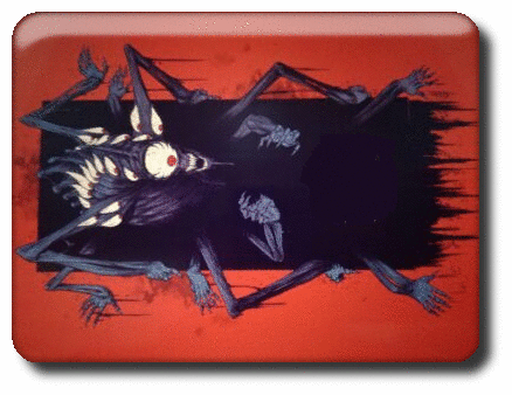
I should talk a bit about the art here because – intricate as the plotting is, and snappy as the dialogue may be – it’s Corin Howell’s exquisite monster designs, hard-hitting action, and soft emotional beats that bring it all to life. [Ed. Yeah, yeah – but the monsters?] [Tut. Fine] Part of the joy of using demons in a story (rather than, say, vampires or werewolves,) is the visual freedom they grant. There’s no real archetype, so here we can find all kinds of fleshy abominations, insectoid horrors (see main image), flesh-peeling strippers, and the demon Yastrick – who would frankly take an entire paragraph to describe in words – and every single one elicits shock or disgust. She’s quite the talent!
The round-up:
I’ve not come across Vault Comics before, but if this series is anything to go by, they’re a comic company to watch. In their own words, they aim to ‘break the established order, dissolve conceptions of social identity, and give voices to the silenced’ with their stories. It’s a beautifully designed comic, glossy in style but full of depth, relentlessly working to keep the reader engaged. While vol. 1 does a great job of setting up the characters and seeding in some of the deeper mysteries, vol. 2 is where things really kick into gear, uncovering a bigger plot. It’s full of twists and turns, betrayals and shockingly brutal acts, cracking the world open for expansion. With tightly-plotted scripts, a compelling focal character, and throat-grabbing art, you really couldn’t find much better to spend your money on. You’ve got eyes on the target now. Whenever you’re ready...
* Compared to the likes of D.C. and Marvel who tend towards sandbox play with the same old characters in endless iteration.
** I particularly pleased to see ‘Bollocks!’ being shouted, along with such cultural references as ‘It’s all gone Pete Tong’ and, ‘Who do you think you are? Geoff Capes?’
*** Though there is a throwaway reference to Brexit that made me snort, and an ever-so tragic fate for the current Home Secretary.
Illustrated by Corin Howell
Coloured by Triona Farrell
Lettered by Andworld
Published by Vault
Reviewer: Dion Winton-Polak
TODAY ON THE GINGER NUTS OF HORROR WEBSITE
NEST OF NIGHTMARES BY LISA TUTTLE [PAPERBACKS FROM HELL]
CHILDHOOD FEARS: EXORCISING DEMONS ONE WORD AT A TIME [FEATURE]
THE HEART AND SOUL OF HORROR FICTION REVIEWS
A Nest of Nightmares is an all killer, no filler collection of stories stuffed with unique ideas, leaving just enough to the reader's imagination to put your own personal stamp on the reading experience. This may have been my first time reading Lisa Tuttle but with ‘Familiar Spirit’ still to read, I’m very glad it’s not my last. |
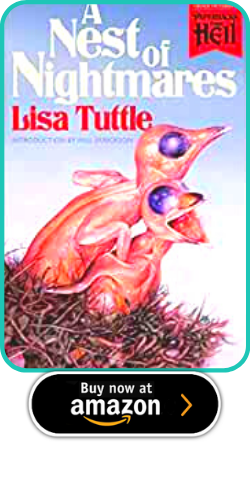
Publisher : Valancourt Books (7 Jan. 2020)
Language : English
Paperback : 240 pages
ISBN-10 : 1948405679
ISBN-13 : 978-1948405676
A Paperbacks from Hell review by Richard Martin
Jaws (Peter Benchley) and The Rats (James Herbert) proved that there was an appetite out there for books that weren’t ashamed to be all-out horror. The publishing industry took note and throughout the 1970s and 1980s, companies such as Zebra, Tor and Pinnacle published a seemingly endless supply of books promising unspeakable terrors and sporting covers that had to be seen to be believed. Sometimes the content was great, other times… not so much, but one thing that you could always be guaranteed was a fun and entertaining read.
By the mid-90s, horror paperbacks were seemingly out, and thrillers were in. Gone were the lurid covers of skeletons, evil dolls, creepy kids and flesh hungry critters. The horror was still there, it just wasn’t marketed as such, treated like a shameful secret. As titles fell quickly out of print, many of the horror authors and their work became increasingly forgotten by all but the most avid fans and collectors.
Enter Will Errickson, Grady Hendrix and ‘Paperbacks From Hell’.
In 2017 Hendrix and Errickson released their seminal love letter to the horror paperbacks of a bygone era, shining a light on some long-forgotten classics and renewing interest in the mass market horror paperbacks of the 1970s and 80s. Not content to simply share their passion for these oft maligned but much missed books, thanks to their partnership with Valancourt Books, we are being treated to new reprints of the best of these decades-old, forgotten gems.
To date, thirteen reprints have been published (with a fourteenth on the way), retaining the original cover art and boasting brand new and insightful introductions from Hendrix and Errickson. In this series I’ll be reading each and every one and posting articles at Ginger Nuts of Horror looking back at the best books two decades of horror has to offer.
I am a huge fan of short story collections and the horror genre does them better than anyone. Horror is so well suited to the short, sharp shock of a good short story, especially ones with a killer premise and a sting in the tail. The genre is so full of acclaimed collections (Night Shift, Books of Blood, Ghost Stories of an Antiquary, the list is endless) that it’s a wonder they aren’t more prevalent, particularly in the mass market. I was excited, therefore, to find the next in Valancourt’s Paperback From Hell line was not only a short story collection (and one sporting hands down the best cover in the series) but one by an author I hadn’t previously read.
Lisa Tuttle is currently be best known as a YA and Sci-Fi author (her debut novel was co-authored with none other than George RR Martin) and was already an established and well-known author by 1986 (having her first short story sale fifteen years prior), when her debut short story collection was released. Yet she features twice in the Paperback From Hell line (her 1983 novel ‘Familiar Spirit’ is book twelve). Reading ‘A Nest of Nightmares’, it is easy to see why, because Tuttle has an incredible knack for a memorable and hard-hitting horror story.
Boasting thirteen terrifying tales, ‘A Nest of Nightmares’ often features female protagonists and ranges from ghost stories, creature features, to more psychological or thought-provoking subject matter. While the range varies, each story is unpredictable, memorable, and worthy of individual note, so in a change to the usual format of these reviews, I’ll be looking at each story individually.
The opening story is the brilliantly titled ‘Bug House’ (Tuttle has some great titles in this collection), which starts proceedings off strongly. Telling the story of a woman visiting the broken-down home of her ageing aunt, Tuttle builds up some seriously creepy tension before a low-key body horror finale, the implications of which are far more disturbing than the actual events of the story, which are wisely kept largely ambiguous.
Another contender for the best title goes to ‘Dollburger’, which is a fun cautionary tale that reads like a particularly bizarre and unsettling episode of ‘The Twilight Zone’. When a father tries to discourage his young daughter from leaving her toys out by claiming that people break into homes at night to steal unwanted dolls in order to make dollburgers to eat, little does he know that there may be more truth to his lie than he initially thought.
After two stories that either hint at, or overtly lean into the supernatural, ‘Community Property’ delivers something far more down to earth, and infinitely more upsetting. This story of a couple going through a divorce who go to extreme lengths to decide who gets to keep the family pet may not be my favourite story in the collection, but it’s definitely one that I won’t soon forget.
One of the collections longest stories is ‘Flying to Byzantium’. Given it features a female sci-fi writer as its protagonist, I wondered when reading this one how much of it may be autobiographical. Equal parts black humour and insightful character work, this was less overtly ‘horror’ than many of the collections other stories, but thanks to a great premise and a fun cast, it holds its own against its scarier companions.
Speaking of scary, ‘Treading the Maze’ is one of the books more chilling entries, giving off strong ‘Wicker Man’ vibes with a folk horror short about a young couple visiting a historic landmark in rural England. Tuttle avoids the expected cliché ending with something more subtle, refusing to give away all the answers and making it all the more effective for being partially left to the reader’s imagination.
‘The Horse Lord’ (see, great titles!) was one of my favourite stories of the collection, part ghost story and part urban legend, about a demon horse that has cursed a family home. It isn’t groundbreakingly original, but it weaves a familiar tale with great skill, throwing in enough original twists to make it stick in the mind.
One thing that you notice quickly when reading ‘A Nest of Nightmares’ is that the author does not pull any punches, and ‘The Other Mother’ is a great example of that. What starts like a fantasy story grounded by a family drama subplot goes to some surprisingly dark places by the final page and even though many of the book’s stories are hardly tame, it still came as quite a shock just how quickly this story shifted to something far darker than initially expected.
Another common theme throughout the book is taking a relatable subject matter (here, the breakdown of a relationship) and putting a horrific spin on it. Tuttle definitely favours the ‘ordinary people in extraordinary situations’ school of storytelling and ‘Need’ shows the consequences of a selfish decision, using the suggestion of the supernatural to accentuate the point being made.
Another of my favourites was ‘The Memory of Wood’, and this story more than any other is a great example of the culmination of all the things Tuttle uses with great effect (Ordinary people, often women, confronted with the supernatural, an element of ambiguity, hints at some very dark subject matter). This story begins with a married couple purchasing an antique wooden chest at a yard sale, which their infant son begins to take an unhealthy interest in. This is one of the books most suspenseful stories and the ending goes far beyond what you expect it might.
If I were forced to pick a favourite story in the collection, ‘A Friend In Need’ would likely be it. It is a more low-key story than many of the others, and a lot of the horror comes not from what happens, but from the implications of it. It is a truly unique premise, perfectly paced and executed for maximum impact and one that will ensure you never think of imaginary friends in the same way again.
‘Stranger in the House’ (Tuttle’s first short story sale) reads very differently from many other stories in this collection, changing between past and present throughout to deliver a more subtle and indirect tale compared to most of the other stories in the collection. It is interesting to read a story first published almost fifteen years before this book was released that still shows all the early hallmarks of the themes that carry through into the author’s more recent work.
Where most of the books various protagonists tend to be largely sympathetic and relatable, ‘Sun City’ does things a little differently and gives us a pretty reprehensible, racist and embittered divorcee who gets a violent comeuppance thanks to a Mexican deity. This story was an interesting change of pace and one of the books more unpredictable offerings.
The collection closes with ‘The Nest’. Thematically apt, given it shares most in common with the book's opening story. When two sisters move into a remote old house together, one sister’s increasingly erratic behaviour becomes a cause of great concern, causing them both to examine their relationship. Don’t expect any easy answers with this story, which has a fantastic ending, effective because it goes for a low-key and character-driven moment. A great way to close things out.
A Nest of Nightmares is an all killer, no filler collection of stories stuffed with unique ideas, leaving just enough to the reader's imagination to put your own personal stamp on the reading experience. This may have been my first time reading Lisa Tuttle but with ‘Familiar Spirit’ still to read, I’m very glad it’s not my last.
Join me next time when I’ll be sharing my thoughts on the infamous ‘Let’s Go Play At The Adams’ by Mendal W. Johnson. If you’d like to read along with this series and want to pick up copies of the books, or learn more about Valancourts’ Paperbacks From Hell line, visit their site at www.valancourtbooks.com/paperbacksfromhell
A Nest of Nightmares
by Lisa Tuttle
Never before published in the United States and highly sought-after by collectors, A Nest of Nightmares (1986) is a classic of modern horror. This new edition features the original paperback cover art by Nick Bantock and a new introduction by Will Errickson.
‘Thirteen stories guaranteed to leave you strongly disquieted’ – Neil Gaiman
TODAY ON THE GINGER NUTS OF HORROR WEBSITE
SHADOW SERVICE VOL 1&2 [SPLASHES OF DARKNESS]
CHILDHOOD FEARS: EXORCISING DEMONS ONE WORD AT A TIME [FEATURE]
THE HEART AND SOUL OF HORROR FICTION REVIEWS
Archives
May 2023
April 2023
March 2023
February 2023
January 2023
December 2022
November 2022
October 2022
September 2022
August 2022
July 2022
June 2022
May 2022
April 2022
March 2022
February 2022
January 2022
December 2021
November 2021
October 2021
September 2021
August 2021
July 2021
June 2021
May 2021
April 2021
March 2021
February 2021
January 2021
December 2020
November 2020
October 2020
September 2020
August 2020
July 2020
June 2020
May 2020
April 2020
March 2020
February 2020
January 2020
December 2019
November 2019
October 2019
September 2019
August 2019
July 2019
June 2019
May 2019
April 2019
March 2019
February 2019
January 2019
December 2018
November 2018
October 2018
September 2018
August 2018
July 2018
June 2018
May 2018
April 2018
March 2018
February 2018
January 2018
December 2017
November 2017
October 2017
September 2017
August 2017
July 2017
June 2017
May 2017
April 2017
March 2017
February 2017
January 2017
December 2016
November 2016
October 2016
September 2016
August 2016
July 2016
June 2016
May 2016
April 2016
March 2016
February 2016
January 2016
December 2015
November 2015
October 2015
September 2015
August 2015
July 2015
June 2015
May 2015
April 2015
March 2015
February 2015
January 2015
December 2014
November 2014
October 2014
September 2014
August 2014
July 2014
June 2014
May 2014
April 2014
March 2014
February 2014
January 2014
December 2013
November 2013
October 2013
September 2013
August 2013
July 2013
June 2013
May 2013
April 2013
March 2013
February 2013
December 2012


RSS Feed