


THE GULP BY ALAN BAXTER: BOOK REVIEW
13/1/2021
 Much like Roysten Vasey, The Gulp is filled with bizarre and unsettling locals who you wouldn't want to meet in an alley on a dark night, but unlike Roysten Vasey, The Gulp should never be just for local people. Grab a copy and pay a visit to one of the most interesting locations in recent horror history. Gulp verb (used without object)To gasp or choke, as when taking large drafts of a liquid. verb (used with object)To swallow eagerly, or in large drafts or morsels (often followed by down): To suppress, subdue, or choke back as if by swallowing: to gulp down a sob. noun The act of gulping: He drank the whole bottle of beer in one gulp. The amount swallowed at one time; a mouthful. All of these definitions of the word Gulp can be used to describe this latest portmanteau novel from Alan Baxter; once you have started it, you'll want to gulp it down in one, with the occasional gulp of revulsion as Baxter's depictions of some of the events in Gulp unfold, and be sure to not eat any food during your time in this novel as you might end up gulping for air as the tense narrative chokes you. So what is Gulp? Well, Gulp is Alan Baxter's attempt at creating a mythos, Lovecraft had Innsmouth, King has Maine, and Ramsey Campbell has Liverpool. And now we are invited to walk the streets of this latest mysteriously malevolent metropolis (note it's not a metropolis it's not large enough, but Jimmy loves his alliterations) Presented here are five novellas that can be read individually when read in isolation; each of them provides the reader with a satisfying and varied set of stories. If this classed as a collection rather than a "novel", then you would still be delighted after spending time walking the streets of The Gulp. But this isn't just five independent stories linked by only a location. This is a cleverly plotted and exceptionally well-executed five-sectioned novel where the finale of the last story in the novel brings everything that has gone before it into perspective and envelopes them with a sense of dramatic unease at what has just happened, and what will hopefully come (I'm praying there is a volume two in the works). The range of styles that Baxter presents ensures that the reader is kept glued to the pages, from the surreal opening story of a delivery driver being in the wrong place at the wrong time has an almost Twin Peaks vibe to it. There is a deep sense of unease and danger, on show here, with an overlying sense of "what the hell is going on here" It proves my theory that no one should ever look into a hole, nothing good will come from it. It also serves as a fantastic opening story that sets the scene and introduces us to some of the characters who will make appearances throughout the rest of the stories. Baxter drops just enough hints and winks at what is to come, while allowing the opening story to lay the groundwork of the nature of The Gulp, without ever resorting to a massive info dump. There are enough hooks and breadcrumbs on offer here to ensure that you don't take the first bus out of town. Baxter takes on numerous styles and atmospheres throughout the rest of the novel, from a fantastic take on fungal body horror to an extraordinary Lovecraftian tale of horrors from the sea. Simultaneously, these stories may be diverse in the stylistic leanings they are held together by Baxter's strong personal style and voice. It could have been easy for this to have turned into a pastiche novel, with the individual stories being a cheap pastiche of their respective genre roots. Thankfully, Baxter is confident in the strength of his own voice, yes you will recognise the feelings and broad stylistic strokes of the subgenre presented here, but throughout the novel, you are left without a doubt that you are reading not just an Alan Baxter novel, but an Alan Baxter novel that is firing on all cylinders. Perhaps the greatest strength of The Gulp, is how Baxter interlinks each story into one cohesive narrative. The use of recurring characters is key to the success of the novel, with the opening story laying most of the groundwork, in a wonderfully executed bar scene, like most small towns the local bar is the heart and soul of the town, it's just a pity that this town's heart is black. The way in which minor characters in one story, which in most other novels be nothing more than a passing mention, come to the fore as the story progresses is a masterclass in plotting and structure. I loved how Baxter makes the reader call back to previous stories throughout the length of the book, climaxing in an ominous finale that has a perfect "season finale" ending that will leave you waiting with bated breath for the next instalment. As for the Gulp characters and denizens, there is a powerful sense of resignation and mortality. They all know there is something wrong with the town, but none of them makes a move to leave it. OK, one or two would love to make a run for it, however, they know that to do so would be disastrous for not just them but also for those they leave behind, adding another layer of dread to the narrative. In a traditional sense, there are no heroes living here. The residents all exist in an ambiguous state of being. It's a brave move to base a whole novel and possibly future ones on a cast of characters who don't have any redeeming traits. Even the one or two who may well play a vital role in the future, do things that no "hero" would do, but do their actions justify the means? Well, that's for you, my dear reader, to decide, I for one will never look at a hamster in the same way again. Suffice to say Baxter puts them through hell, and the ethical dilemmas they face and how they justify their actions are handled intelligently and sympathetically. It's easy for a reader to read things into a story that the author never intended. Still, I get the feeling that this is a sort of pandemic adjacent novel, with the constant threat and almost futility of existence that we are all feeling just now, mirrored by the life of the residents of The Gulp, where the actions of others, that initially appear to be consequence-free, but have significant implications further down the road. The Gulp is an interesting idea for a novel, I'm a massive fan of the old portmanteau horror films from the seventies, and The Gulp captures the essence of what made those films so much fun. Mixing a pulp horror sentimentality and a cast of charismatic characters with gripping narrative that keeps its secrets to itself until it is ready to scare the living hell out of you, The Gulp delivers on all fronts. Much like Roysten Vasey, The Gulp is filled with bizarre and unsettling locals who you wouldn't want to meet in an alley on a dark night, but unlike Roysten Vasey, The Gulp should never be just for local people. Grab a copy and pay a visit to one of the most interesting locations in recent horror history. 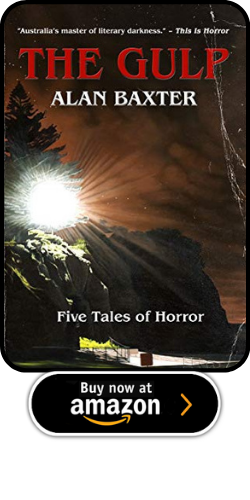 The Gulp (Tales From The Gulp #1) Strange things happen in The Gulp. The residents have grown used to it. The isolated Australian harbour town of Gulpepper is not like other places. Some maps don’t even show it. And only outsiders use the full name. Everyone who lives there calls it The Gulp. The place has a habit of swallowing people. A truck driver thinks the stories about The Gulp are made up to scare him. Until he gets there. Teenage siblings try to cover up the death of their mother, but their plans go drastically awry. A rock band invite four backpackers to a party at their house, where things get dangerously out of hand. A young man loses a drug shipment and his boss gives him 48 hours to make good on his mistake. Under the blinking eye of the old lighthouse, a rock fisher makes the strangest catch of his life. Five novellas. Five descents into darkness. Welcome to The Gulp, where nothing is as it seems.   THE NIGHT OF THE DAYFISH BY D.T. NEAL
12/1/2021
 I once saw Green Day perform Walking Contradiction live, where Billie Joe changed the lyrics to “I'm a walking contradiction / and I'm bored”, which pretty much sums up both the characterisation in, and my experience with, The Night of the Dayfish. Within the first three pages our narrator, a nameless aspiring chef, manages to sound both bored and excited by his culinary training, ruminates on how adventure is a bad idea for artists before saying how much he likes danger, and so on. It's a frustrating opening to what bills itself as a memorable, horrifying adventure, as the chef in training seeks out the source of the titular fish and gets more than he bargained for. The adventure is, sadly, more underwhelming than unforgettable. Eventually dumping you in Rhode Island after starting the story in Phuket felt like a weird choice; why set up an interesting location in favour of a more everyday one? Any chance of intrigue is also watered down by a meandering narrative, which lingers on dull conversation and repeats itself way too often for a novella-sized piece. One thing that really put me off was the wannabe chef's descriptions of his food. He confusingly describes the elusive nightfish as a taste similar to six other species. It's hard to imagine stuffing your gob with so many different fish at once (I'm no Matt Stonie), and most of the other dishes he chows down on never made me lick my lips. You're meant to be as curious as the chef eventually is, but his passion doesn't come through well enough, which means the mystery also lacks flavour. By the time any horror threatens to rear its subaquatic head, well past the halfway mark, it's mired by the same problems, losing any potential bite thanks to ponderous descriptions and some tepid pacing. The encounters with the nightfish aim for thrills but fall well short. Overall, the story feels too beholden to that old-fashioned style of Lovecraftian writing, with a narrator who is allowed to blather on to their heart's content about what could have been, failing to let you anywhere near some potentially gripping action and frights. If you're looking for some properly scary and disturbing fish tales, you'd do a lot better with the Dead Bait series from Severed Press, or Edward Lee & John Pelan's Family Tradition. Review by Ben Walker  A young chef-in-training and self-styled culinary adventurer is transported by tasting the savory food fad, nightfish, at a top-notch hotel in Thailand with his rich girlfriend. Nobody can tell him what nightfish actually is, and his quest for the elusive and enigmatic nightfish takes him across half the world to the unassuming town of Gunwale, Rhode Island, sole producer of nightfish. Here, he works his way to get aboard one of the Blackfin Fishing Company boats, the Amanda Luce, for an unforgettable and horrifying seagoing adventure, where he gets far more than he bargained for.  BOOK REVIEW: MR CABLES BY RONALD MALFI
11/1/2021
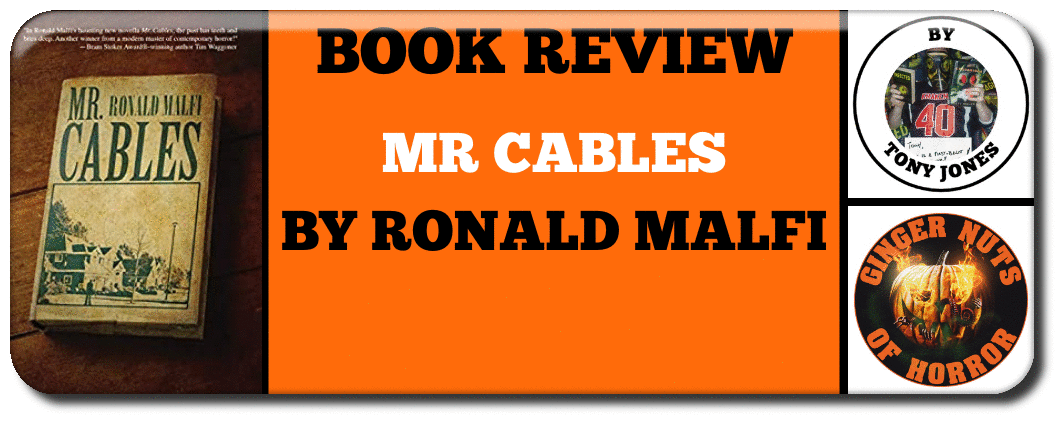 A welcome rerelease for Ron Malfi’s outstanding novella ‘Mr Cables’ When the small press Dark Fuse disappeared a few years ago a lot of excellent fiction sadly vanished from print and with copyright undoubtedly returned to the authors, thankfully, some are beginning to resurface. I never read Ronald Malfi’s excellent Mr Cables first time around and was delighted when I heard JournalStone were releasing a new edition. It is relatively short, about 75 minutes of reading, and is a snip to buy for your Kindle or e-reader directly from JournalStone, whether such a slight book is worth a pricy paperback or hardback if for your pocket to decide. Malfi completists will undoubtedly be investing in one of the neat looking physical options. Considering Malfi has been writing to a very high standard since 2000 and has published 17 novels, several novellas, and a single author collection he really deserves to be more widely read beyond the hardcore horror community and should be adorning the shelves of mainstream bookshops with the big names of the genre. Mr Cables is a great example of a short work which many non-horror readers would definitely enjoy if they ever had the opportunity to pick it up, as it is beautifully crafted and an outstanding example of what can be achieved over a hundred pages. It is as polished a product as anything you will see being trumped up in literary magazines which will be devoured in a single sitting. This is no surprise, as Malfi is an outstanding writer of short fiction and much of his best work is included in his collection We Should Have Felt Well Enough Alone (2017) which I would highly recommend and even features a story which connects with Mr Cables. If you have never tried Malfi Mr Cables is an excellent entry point, but if you are after a novel, he has many to recommend. Since 2015 he was been on an outstanding run of form with Little Girls (2015) an ambiguous and psychological haunted house story, The Night Parade (2016) an apocalyptic tale about a disease called ‘wanderer’s Folly’ and the terrifying Bone White (2017) which will put you off ever wanting to travel to Alaska. The Floating Staircase (2010) is slightly older, but another outstanding haunted house (and lake) story which is a firm favourite with fans. Mr Cables has a genuinely outstanding and very original cool hook: bestselling horror author Wilson Paventeau is at a book signing when a woman in the queue presents him with a book to sign called ‘Mr Cables’, Wilson is surprised as he has never written a book of this name. The woman claims to have bought the copy in a yard-sale some years earlier and is genuinely surprised when Wilson tells her he did not write it. She also says it is the scariest of all his fiction! Intrigued he swops the oddity for his latest novel and takes it home with him. Thinking it is some sort of elaborate hoax, he begins to research into it and discovers the publisher does not exist. Finally, he decides to read the book, and finds it incredibly boring…. He then gives a section to his agent to read and she has a very different opinion, and very quickly the mystery begins to thicken. To say much more about the plot would ruin the fun and Mr Cables easily ranks amongst the strongest horror novellas of the last few years, which is no mean feat considering the incredibly high standard in the horror genre at the moment. It had me thinking of novels about horror novelists, or books within books, with Stephen King’s The Dark Half springing to mind, but Ronald Malfi has a lot of fun with the concept before expertly reeling the reader in for the cool climax. Written in the first person, Wilson Paventeau is a great narrator, and even though he is not a genuine unreliable narrator, he is slightly selective in what he reveals to the reader and that is one of the major strengths of Mr Cables. Sometimes books which are built around one single great concept, or hook, ultimately disappoint as the ending never matches the hook, that is not the case with this novella which keeps it going until the end and has a couple of moving scenes thrown into the plot, which is nicely balanced with the tension. I also loved the contrast of reactions when Paventeau reads the book (and finds it tedious) compared to the two other characters who read sections (and it scares the crap out of them), this is nicely played and has the reader on edge in figuring out what is really going on. Ronald Malfi is a genuine literary class act, and I am looking forward to reading his 2021 novel Come With Me which is being published as the first part of a new two book deal with Titan who, in recent times, have been releasing outstanding fiction, so it is no surprise they have snared Ron! Also, five of Malfi’s older and out-of-print novels, Cradle Cake, December Park, Snow, The Ascent and The Floating Staircase are being republished by Open Road Media in January. This author has an outstanding back-catalogue and Mr Cables is a brilliant place to start the coolest of journeys! Tony Jones 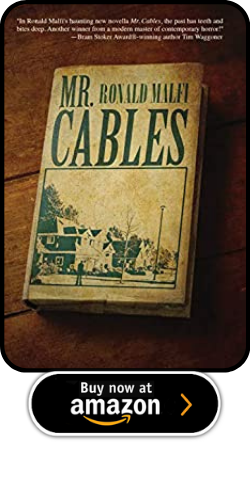 For bestselling horror novelist Wilson Paventeau, the scariest novel of his career is one he didn't write. It bears his name on the dust jacket and contains his bio near the end, but this enigmatic tome is not part of his oeuvre. And the most frightening thing about it may not be the tale between the covers, but the reason for its mysterious appearance in Paventeau's life.   There aren’t any hidden meanings, metaphors or messages about the state of the world, which – given the state of the world – is a positive point. It’s also, if the truth be told, not a book that will stay with you for a long time. It’s a short, sharp injection of fun, and we all need one of those every now and again. In the world of bizarro fiction, there tend to be two main styles which are common. The first is plot-driven stories with character development, typical story arcs and the traditional conflict and resolution typical with most books. What marks them out as bizarro is the inclusion of something odd, off-kilter and generally weird. While these tales demand a suspension of belief, they often do have a realism withing their own worlds. The second common style are stories where character development, story arcs and realism within the constructed world are jettisoned for the sake of sheer insanity. These often include cartoon-like violence, extreme characters and unbelievable events which unfold at a breakneck speed. Fast, furious and fun, they career through a bombardment of craziness until they reach an explosive ending which, more often than not, isn’t as happy as many would expect it to be. It's fair to say that Freak Night at the Slee-Z Hotel falls into the latter camp, and while that doesn’t make it any less worthy of attention, it does filter out some readers who might find the excessive pile-on of conflicts and gory episodes a bit too much without any real reason other than they’re happening. Freak Night at the Slee-Z Hotel is an unapologetic romp through a twisted landscape occupied by weird and unnatural characters, who are immersed in a senseless night of depravity and violence. If that’s not your thing, then steer clear, but if it is, you’ll love the novella. A van of side-show freaks are caught out in a storm and take refuge at a rundown roadside motel. If that sounds like a glaring clue something untoward is about to unfold, it is. The van occupants include a fire-eater with four arms who is in love with the side-show’s headless woman, a human dog, conjoined twins and a mind-reading fat lady. The hotel isn’t busy, the only other residents being a G-Man and a couple of petty crooks hiding out. The owners of the place also have a secret: a lizard-like girl who’s been banished to live in the wishing well. Sounds pretty normal so far? Well, add in the fact that the hotel owners are decidedly anti-freak, and have a desire to ‘fix’ their guests, and the conflict is established pretty early in the book. Earlier I mentioned the violence was cartoon-like, and that’s the key to Freak Night at the Slee-Z Hotel. Everything is over the top, but it doesn’t read like a story which sets out to glorify violence or deliver distasteful descriptions of torture and suffering. It’s no more disturbing than watching a mouse dropping an anvil onto the head of a cat, but it’s twice as much fun. There aren’t any hidden meanings, metaphors or messages about the state of the world, which – given the state of the world – is a positive point. It’s also, if the truth be told, not a book that will stay with you for a long time. It’s a short, sharp injection of fun, and we all need one of those every now and again. Review by Peter Caffrey  When the Main Event Sideshow is waylaid at an isolated desert motel, they become the target of two homicidal xenophobes who want to "fix" them. With the help of other freaks they meet along the way, as well as one albino chupacabra, maybe some of them will make it through the night.  Peter Caffrey is a writer of tales with an absurdist bent. A born and bred Londoner, he currently lives in the middle of nowhere with nothing but the North Sea and fog for company. Introduced to horror as a small child by a Mother who was too scared to watch films on her own, he has a fondness for demonic possession, crucifixion and impalements. His novels, The Devil’s Hairball and Whores Versus Sex Robots are available from Amazon. He drinks too much, exercise too little and is unlikely to change. http://petercaffrey.com  STUDIO OF SCREAMS - BOOK REVIEW
6/1/2021
 I must tip my hat to the genius idea of casting real players, an audacious idea that for my money paid off perfectly), and a metanarrative that lands a decidedly uncozy punch, this book was exactly what I was craving. Four superb novella-length yarns by four world-class horror writers, Studio Of Screams is a themed 4 novella collection by Mark Morris, Christopher Golden, Tim Lebbon, and Stephen volk, with a bridging metanarrative by Stephen R Bissette. The concept is that the novellas represent the official ‘novelization’ of four horror movies that were made in the 70’s by now-defunct Blythewood horror studio. The studio was making movies around the time of the Amicus and Hammer heyday, but had a reputation of being a bit nastier than either; a reputation somewhat enhanced by the subsequent vanishing act the studio performed after folding, with the films themselves apparently evaporating into thin air, and even reference to the studio in official film histories thin on the ground. As the book opens, a film historian and academic, who is researching a wider project about movies that have either been banned or otherwise suppressed, is contacted by one of the studio's founder members, with the offer of a lifetime; come and see four of the studio’s output at a private screening, after which he will be gifted a novelization of the movie and the chance to interview the elusive filmmaker about what he’s just seen. It’s an absolutely superb conceit, mixing alt-history with a canny nostalgia for a golden age of pulp horror cinema, and adding in that extra kick from the notion that there’s something dangerous, even forbidden, about the films themselves. And not to jump to the end, but the framing leads to a denouement that I found genuinely disquieting, as the weaving of fiction with history reaches a surprising yet plausible twist that did a great job in recreating/invoking a real-life sinking feeling. The first novella in the book is Sword Of The Demon by Mark Morris; an on-the-surface pretty classic Mummy style creature feature, complete with treasures raided from an ‘exotic’ tomb (China rather than Egypt, but still), and a pleasingly visceral creature of vengeance. In some ways, it’s a risky type of tale to take on; the anxieties of empire such stories represent (along with, in the original incarnations, often more than a dash of good old fashioned racism) have often not aged terribly well, to put it mildly. And what’s going on here has an extra layer of trickiness, in that it’s written as a homage to a specific type of 70’s horror movie, a genre with many of its own issues when it comes to matters of gender and race relations. Here, Morris deftly sets the tone for the entire book; avoiding racial stereotypes for the characters of colour in the tale, but allowing the adventuring party to cover a range of positions; from the petty disinterested greed of Sir Clyde, the party leader, to the anxieties of the younger Richard Frye, and from the character of Sir Winston (instantly recognisable as being played by Peter Cushing, yet another delight of the framing conceit) an apologia, though not an excuse, for the honestly-held if morally-suspect-to-modern-minds beliefs that would allow otherwise decent men to commit such acts of cultural vandalism (and, you know, theft). Most importantly, he delivers all the above with a deft lightness of touch, weaving it seamlessly into a compact narrative, which quickly allowed me to mentally unclench at the potential pitfalls and instead just enjoy the romp. And a romp it is; from the ancient temple, with echos of the opening to Indiana Jones, through to a bloody, muscular action-horror set-piece attack on a horse-drawn carriage, culminating in a pulse-pounding finale in (where else?) The British Museum, the narrative zips along at a pleasingly page-turning pace (a property common to all four stories in the volume). Like the good real-life novelisations the piece echos, Morris does a superb job fleshing out the characters interiority, while still giving precedence to plot and spectacle; again, a common theme to all four stories is I frequently found myself visualising the ‘source material’ movie in my mind’s eye as I read the story, and Morris delivers that experience in spades. As a fan of pulp horror in general, and as someone who has a great fondness for the 70’s British Horror Cinema aesthetic, this novella was the perfect opening to the book and just pure joy from start to finish. Next up is Christopher Golden’s The Devil's Circus, a macabre piece that keeps the 70’s aesthetic, but also invokes previous cinema exploits in the setting of the circus (indeed, in the post ‘movie’ interview, the filmmaker confirms the influence of Browning’s Freaks, and it’s just this kind of playful, in-plain-sight evocation of the influences at work that makes the whole piece such a delight to read). Again, I found myself able to picture the 70’s-horror-movie-does-vaguely-historical-Europe setting with spooky ease, thanks to Golden’s crisp and confident prose. As with the other tales, he does incredible work playing with broad strokes characterizations - in this case, the strangers flung together by a common cause to find the Circus, but whose divergent goals when they arrive introduce tension where there had been a growing sense of unity of purpose - in a way that manages to feel enjoyable rather than offputting, enlivening rather than reductive. I think the framing helps with this; it really was a stroke of genius to prime the reader to be expecting the novelisations of 70’s slightly-seedy horror. It made me approach the text with a certain mindset, for sure; that said, it’s easy to overlook the pressure that puts on the authors, I think, in that any misstep from that atmosphere would not just be jarring, but actually damaging to the whole pursuit. As with Morris, Golden simply does not put a single foot wrong, and the novella-length telling produces a narrative without an ounce of fat that builds relentlessly to a glorious pulp horror climax - one you suspect looks better on the page than the 70’s effects budget would have allowed for. Next up is Tim Lebbon’s Castle Of The Lost, which takes on the absolute classic tropes of a cursed inheritance, a dark family past, and the city family transplanted to rural ways, weaving another superbly paced tale that ratchets up the tension scene by scene. The story makes deft use of flashbacks, evoking cinematic flash cuts whilst also making good use of the novelist's toolkit to build interiority of character. This story simply drips with atmosphere, building an ever-escalating sense of dread from the first page to a genuinely horrific set-piece finale. The bridging narrative makes it clear that the movie studio was pushing the boundaries of the film censorship board harder and harder as their productions progressed (again, a delightful conceit that I found working on my sense of anticipation, almost recreating the feeling of being a kid and sneaking a viewing of a late-night Hammer rerun on TV), and Lebbon certainly takes the brief to heart, serving up sexpoltiation horror scenes that uncomfortably recall that 70’s milieu. It’s another superb, fast read that recreates the movie-that-never-was in the mind's eye with disturbing clarity. The collection rounds out with The Squeamish by Stephen Volk. In a hint at what’s to come in the framing story, things start to get meta here; in the prior ‘interview with the studio head’, we’ve been informed that there were increased levels of interference in their productions from the BBFC, with one particular woman causing significant issues for Blythewood by this stage, demanding cuts that the creators regarded as vindictive interference in the process. Indeed, we’re informed that the filmmakers waited until that board member was taking a leave of absence before submitting the script for this film. So it’s not a surprise to find this tale concerns a film censor, who is drawn into an escalating confrontation with a maverick young filmmaker (who, both the poster art and the author’s clear description confirm, is played by Oliver Reed). That said, there’s a different quality to this tale; in addition to the further escalation of sex and violence, the narrative develops an increasingly hallucinatory quality, as the movie-within-a-movie that is the source of the censors' ire appears to start bleeding into her reality - or is it her psyche that’s becoming infected, somehow? Again, I found myself visualising what the movie version of the story must look like, even as Volk effortlessly evoked the 70’s setting with his trademark attention to the telling detail. There’s an incredible fluidity to Volk’s period work; his ability to call forth the essence and atmosphere of a previous era may be unparalleled, and certainly, that rare talent is on full display here yet again. Add in the feeling of reality becoming increasingly slippery and unmoored in the back half, and I was left with a brilliant double whammy of an uneasy nostalgia coupled with a genuine fear that the entire narrative rulebook was on the bonfire, and really anything could happen. Again, the nervous thrill of realising you’d reached reel three of a video nasty and you had no idea where - or how far - it was ultimately going to go. I strongly suspect I’d have enjoyed this superb book in any year I’d encountered it; but I have to say, in 2020, it was a particular delight. A heady mix of escapism, fake film history blended with fact (and again, I must tip my hat to the genius idea of casting real players, an audacious idea that for my money paid off perfectly), and a metanarrative that lands a decidedly uncozy punch, this book was exactly what I was craving. Four superb novella-length yarns by four world-class horror writers, each giving their own loving tribute to a very particular moment in British cinema history. Add in PS Publishing’s usual outstanding production values on the hardback, including gorgeous artwork for the cover of each ‘novelization’, and you have what was hands-down one of my straight up happiest reading experiences of the year. KP 9/12/20 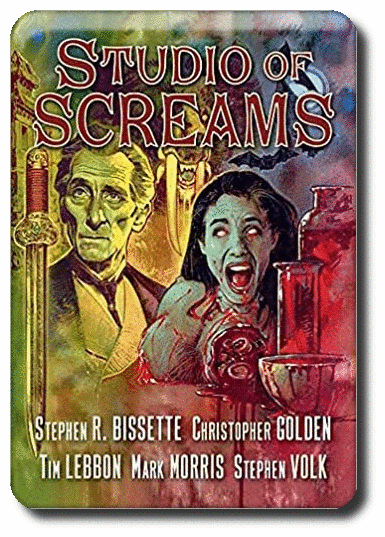 “I think it’s true to say,” says horror wunderkind Stephen Volk, “that many of us horror writers of a certain generation have treasured memories of Hammer Films, Amicus Productions and their ilk. In fact, their output of genre classics is so important that some of us have secretly longed for a way to relive and recapture the excitement we had when we first experienced them. "That was my exact impulse when I first talked to Mark Morris about a book proposal entitled The Blythewood Horror Film Omnibus—an unashamed homage to John Burke’s Hammer Horror Film Omnibus, a fat paperback that came out in the sixties, comprising four novellas based on upcoming horror films. The difference being that our “Blythewood” would be a studio that never existed. Our four films would be movies that we’d invent from scratch. Movies we wished we could have seen as feature films when we were growing up. And now we can – in book form – thanks to PS." CONTENTS * Prologue (by Stephen R. Bissette) * Sword of the Demon (by Mark Morris) * Interview the First (by Stephen R. Bissette) * The Devil's Circus (by Christopher Golden) * Interview the Second (by Stephen R. Bissette) * Castle of the Lost (by Tim Lebbon) * Interview the Third (by Stephen R. Bissette) * The Squeamish (by Stephen Volk) * Interview the Fourth & Epilogue (by Stephen R. Bissette)    Rosalie Parker has long been known as one half of the Tartarus Press and editor of their terrific Strange Tales anthology series, which recently celebrated its 30th birthday. However, in the past decade Parker has also built up a reputation as an author of supernatural fiction, culminating in her most recent collection Through The Storm. The title is apt as the best stories here tend to be set among the elemental forces of nature. The Yorkshire moors and their pitfalls are eerily evoked to good effect in ‘The Moor’, which in atmosphere reminded me a bit of Ann Halam’s Ally Ally Aster. ‘Village Life’, the heart-breaking ‘Cow City’ and the softly redemptive ‘Reality TV’ all benefit from keen but sympathetic observations of modern-day rural Britain. My favourite moorland story is definitely ‘Touchstone’, a skilful blend of an antiquarian ghost story (full of interesting details about standing stones) and a persuasive character study of a woman who, depending on how you look at it, is either losing her way in life or very much finding it. Parker is a dab hand at describing the natural world – none of the tales above would work otherwise - and her sea stories are of particularly high quality in this respect. The title tale is a proper flight of fantasy, one of those glittering fugues that make the wonderful seem within reach. ‘Chimera’, about a hard-up photographer on the hunt for a marine cryptid, was the stand-out story in the recent sea horror anthology Great British Horror 3: For Those In Peril, effortlessly splicing the raptures and terrors of the vasty deep with a painfully accurate portrayal of life – if you can call it life – in poverty-stricken Britain. In fact, social commentary is one of the things Parker does very well. She is unafraid to look the present in the face and shine a light on the sections of society that have been the worst hit by the UK’s raging, decade-long war on poor people. ‘Fever’ deals with homelessness as a liminal state that becomes superimposed with another more fantastical type of border, and ‘The Group’ is a more full-throated assault on the unbridled thanatopolitics embraced by the British government when it comes to dealing with the disabled and long-term sick. The story stars the members of a support group for people with severe mental illnesses and concerns what they get up to on the days out that are organized for them by an increasingly grudging local health authority. Despite the sombre theme there’s a lot of humour in it and the horror is leavened with a swirl of magical realism. And fans of Les Murray’s classic disability poem ‘Dog Fox Field’ will be glad to know that there is even a cameo from an actual fox! Parker’s grasp of current issues is quite surprising when you consider that most of her nearest literary neighbours tend to hail from mainstream literary fiction several decades old. Her work is reminiscent of a number of feminist writers from the 70s and 80 such as Fay Weldon and Alison Lurie, and you can definitely imagine some of the more light-hearted pieces being turned into one of those old Woman’s Hour plays. However, within the speculative fiction genre her work can be compared to writers of ‘quiet’ sci-fi like Brian Aldiss and supernatural authors like Tina Rath. Most of the stories are short with a light touch, and many have familiar, domestic settings, but things are rarely allowed to get too cosy thanks to frequent flashes of irony and wit that are no less effective for being couched in a gentle, conversational style. Parker’s fiction acts as a kind of literary sorbet, refreshing and full of zing without weighing down the stomach, although the reader should resist the temptation to bolt too much at once, as many of these stories are best when savoured slowly. 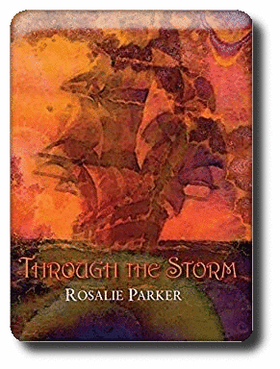 “Parker shows considerable skill at creating dramatic tension and moods of menace that will appeal to fans ofsubtly told tales of the macabre.” Ghosts, shamans, aliens, angels and the weirdness of life all make their appearance in this new collection of Rosalie Parker’s strange tales. Her stories depict subtly shifting realities, and celebrate the fluidity of the barrier between the uncanny and the everyday. These twenty-five stories vary from contes to longer pieces, and explore the traditions of the weird tale in fresh and original ways. AUTHOR BIO Rosalie Parker’s previous collections of short stories are The Old Knowledge, Damage and Sparks from the Fire. ‘In the Garden’ was selected for Best New Horror #21, and ‘Random Flight’ for Best British Horror 2015. She runs the independent UK publisher Tartarus Press with R.B. Russell, and lives in Coverdale, North Yorkshire.  |


Archives
May 2023
|

|

|
 RSS Feed