


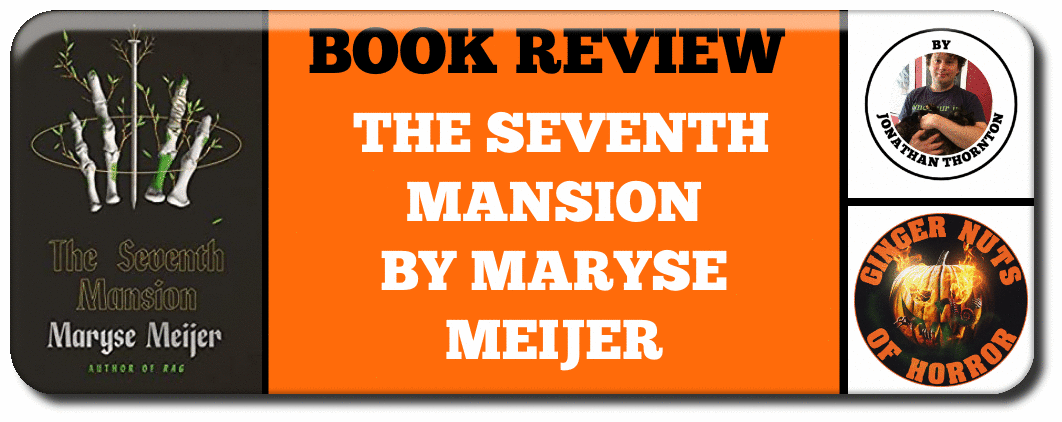
 The Seventh Mansion is a glorious, poetic piece of writing that demands heavy engagement with its reader, both in terms of the unflinching look at the horrors and grotesqueries of human existence and in forcing the reader to think about the morality of their attitude to the world around them “How careful you have to be, with a body like this, or it will be destroyed. You can never forget, for even a second, what it is, what id needs. Do they all deserve it, every creature of the earth, to be touched like this, fucked, loved, adored, a stone, a sea, a fox, a tree. Can you see everything as a body that is crushed if not cared for, a body capable of ravishing and waiting to be ravished, gently, completely, by life itself.” “What’s it like. Never to belong to yourself. Maybe we all know. That’s why we kill ourselves. Poison the world you can’t have, that doesn’t want you, that knows. What a virus you are. On the face of the earth. Moore’s white truck a ghost in the night, glowing. He can still feel the teeth through the glove, the claws, if you free them then they are free to kill. Free to die another death.” Maryse Meijer has made a name for herself with the striking and original writing present in her two short story collections Heartbreaker (2016) and Rag (2019). Her debut novel, The Seventh Mansion (2020), more than delivers on the promise of those two collections and confirms her as a major voice that anyone with an interest in horror and unsettling literature would do well to pay attention to. Told in Meijer’s beautiful, impressionistic prose, The Seventh Mansion is a macabre coming of age story that wrestles with the singular intensity of youth, a meditation on the thin line between inspiration and madness, and a profound exploration of the challenges of living a moral life. It is at once beautifully uplifting and deeply uncomfortable, a truly haunting book. The Seventh Mansion tells the story of Xie, a teenager who has moved from California to a rural Southern town to live with his father Erik. Xie is a shy kid with a passionate interest in animal rights, and he gets kicked out of school when he and his only friends, Jo and Leni, attempt to free the minks from a local farm. As he becomes more and more alienated, he develops an increasingly deep relationship with the woods behind his house, and the spirit of martyred Catholic saint Pancratius, whose remains he steals from a church. As Xie develops his relationship with P., learns more about animal rights and environmental activism and the beliefs of the Catholic saints, and slowly begins to come out of his shell, the woods he so loves becomes threatened by loggers. Xie must decide on what the right course of action is, how he can respond to the destruction of the environment around him and make some kind of life for himself in the world he lives in. The Seventh Mansion is an astonishing piece of writing. The novel is told in close third person from Xie’s perspective, in moments of great intensity moving inwards via the second person. Meijer’s prose is impressionistic and gorgeous, a steam of consciousness flow stemmed by fragmented sentences that give it a feeling of breathlessness. She captures both the intensity, the alienation and the solipsism of youth perfectly. Meijer teases out the wonderous and sublime in both the mundanity of Xie’s life with his father and his tutor, the feeling of closing in horizons as more and more of Xie’s options collapse in on themselves. She also finds the sublime in the horrific and grotesque. Xie is ill at ease with the physicality of human existence and shies away from sexual relationships with men and women. But he finds the love and sexual release he craves in his intimate relation with P.’s spirit and his skeleton, in what are some truly bizarre and unsettling sex scenes. Yet through Meijer’s use of Xie’s close viewpoint, we are able to glimpse the transcendence he experiences in this grotesque union. Meijer’s swapping of the abject for the sublime and the sublime for the abject lead to some of the most disconcerting and powerful sequences in the book. At its heart, The Seventh Mansion is an exploration of humanity’s frequently destructive relationship with nature, and how people attempt to live lives that do not cause harm to other beings. Xie, Jo and Leni are all involved in animal rights and environmental activism. Meijer explores the different routes that lead people to activism, and how different priorities and lived experiences shape one’s relationship to how best to serve one’s beliefs. Jo, who is more outgoing and pugnacious than Xie, is frustrated by Xie’s withdrawn attitude, how this manifests in an attitude of superiority to others that is not tempered by an understanding of their circumstances. However, Xie’s attitude towards animal life and the environment stems from a desire to live without causing harm, something that the imbrication of violence and capitalism makes increasingly difficult. Xie’s life is about trying to navigate a space where one does not partake in the violence of the meat and dairy industry but also the violence of environmental destruction via pollution and destruction of natural habitats. It is this that draws Xie to Catholic sainthood. Saint Pancratius was beheaded at the age of 14 for refusing to sacrifice a deer to the Roman gods. Xie is attracted to this purity of vision and purpose, and this desire for transcendence. However he is ultimately driven away by Catholicism’s elevation of the soul of man as holy and the denigration of all that is animal and natural as sinful. He ultimately comes to associate his own reluctance to act with the inaction of the saints, and questions its validity: “She wanted them to experience the pleasure, the joy she thought was possible. Don’t you think that’s generous? Or good? Xie shakes his head. It just seems. Like a waste. Wait, being in love is a waste? If you think that’ the most important thing, like, that that’s the point of being alive, then… yeah. She thought the world was evil but she didn’t do anything to change it, it’s like she thought the best thing to do was just wait to die so she could be in heaven and everything would be perfect for her and fuck everything else, you know?” Xie is ultimately caught in the conflict, that he no longer finds inaction moral, but by taking action to prevent the destruction of the woods he winds up causing harm to other people. The Seventh Mansion wrestles with this dilemma, but ultimately offers up no easy solution. The Seventh Mansion is a glorious, poetic piece of writing that demands heavy engagement with its reader, both in terms of the unflinching look at the horrors and grotesqueries of human existence and in forcing the reader to think about the morality of their attitude to the world around them, their responsibilities to other people, to animals and to the environment. It is not a didactic work of art, but it is fiercely and passionately politically engaged. By refusing to ignore the complexities and subtleties of its moral implications, it is a brave and uncompromising book that takes the reader to some very uncomfortable places. It is a work I shall return to multiple times, that I expect to haunt me on future readings as much as it has on the first.  One of The Millions's Most Anticipated Books of the Second-Half of 2020, one of Library Journal's 35 Standout Summer/Fall 2020 Debut Novels, and one of Shondaland's 11 New Books That Will Change How You Think About the Climate Crisis From the author of the story collections Heartbreaker and Rag comes a powerful and propulsive debut novel that examines activism, love, and purpose When fifteen-year-old Xie moves from California to a rural Southern town to live with his father he makes just two friends, Jo and Leni, both budding environmental and animal activists. One night, the three friends decide to free captive mink from a local farm. But when Xie is the only one caught his small world gets smaller: Kicked out of high school, he becomes increasingly connected with nature, spending his time in the birch woods behind his house, attending extremist activist meetings, and serving as a custodian for what others ignore, abuse, and discard. Exploring the woods alone one night, Xie discovers the relic of a Catholic saint—the martyred Pancratius—in a nearby church. Regal and dressed in ornate armor, the skeleton captivates him. After weeks of visits, Xie steals the skeleton, hides it in his attic bedroom, and develops a complex and passionate relationship with the bones and spirit of the saint, whom he calls P. As Xie’s relationship deepens with P., so too does his relationship with the woods—private property that will soon be overrun with loggers. As Xie enacts a plan to save his beloved woods, he must also find a way to balance his conflicting—and increasingly extreme—ideals of purity, sacrifice, and responsibility in order to live in this world. Maryse Meijer's The Seventh Mansion is a deeply moving and profoundly original debut novel—both an urgent literary call to arms and an unforgettable coming-of-age story about finding love and selfhood in the face of mass extinction and environmental destruction.   the heart and soul of horror fiction review websites A welcome return to the brutal world of Eli Carver Many horror and dark thriller fans will be delighted to hear that former mob enforcer Eli Carver returns for a second blood, guts and gunfest with Recall Night, which follows on from Manifest Recall, published back in 2018. Although this new tale has a full recap of the events in its predecessor, I would still recommend reading Manifest Recall first. I particularly enjoyed book one and although this sequel is another fast-paced bone-crunching face-smasher, it falls short of the original, but remains a (very) bloody solid read. Here is my original review of Manifest Recall for anybody interested: https://gingernutsofhorror.com/fiction-reviews/book-review-manifest-recall-by-alan-baxter In a brief recap from Manifest Recall, mob enforcer Eli Carver suffers a horrific personal tragedy and his story is told out of sequence as he looks for both redemption and revenge whilst dealing with severe mental problems. The story also has a strange supernatural touch where Eli sees the ghosts of some of his enemies, which are perhaps a reflection of his conscience, guilty of otherwise. Let us be clear: Eli Carver has his own code, but he is not exactly a good guy and is responsible for a body-count to rival John Wick. Recall Night picks up the story a couple of years later when Eli returns from his self-imposed exile in Canada and meets a young woman called Bridget on the train back to New York. The minimal plot was too slight for my taste and was not the strongest feature of this story, but as Recall Night was a lean 107-pages, only so much slaughter can be squeezed into a novella length story. In a nutshell: Eli is hired by the young woman he meets on the train and is quickly sucked into the mobster world he abandoned a couple of years earlier. As with its predecessor, there is an impressive body count with exploding heads and bones breaking as Carver turns killing into an art form. If you are looking for a deeper or more challenging read, look elsewhere, this is an entertaining equivalent of a violent 80 minute straight to video feature, and there is nothing wrong with that. Recall Night is billed as a supernatural thriller, but for the most part it is presented as a violent gangland potboiler with the supernatural angle taking a noticeable backseat. Throughout the entire story Eli sees five ghosts of players he previously killed and there is no explanation given as to why this is the case and I felt that this could have been developed in moving from book one to the sequel. I frequently found the ghosts to be annoying and felt they added little to the plot, in fact, you could be forgiven for forgetting they were ghosts at all as all they do is jabber away the background, often annoying Eli as well as distracting the reader. The main character was not the only person they irritated, add this reviewer to the list. The story does have other supernatural elements, including occult rituals which was an entertaining side-development. Because of the painful circumstances at the heart of Manifest Recall it was easy to forgive Eli for his killing rampage, this is not the case in Recall Night. This time out he simply does not command the sympathies of the reader and is presented as a relentless and robotic killing machine and is no longer as likable or as engaging as he once was, and the book suffers slightly because of it. Recall Night’s strength lies in its unrelenting action sequences, but as sequels go I did not feel it added that much to the earlier book, and if Eli Carver is to return for a trilogy the next instalment needs to be stronger otherwise the series will sag. ‘More of the same’ is not going to be enough. You can only explain heads disintegrating under shotgun blasts in so many ways before it becomes repetitive, and the story was held back by a lack of character development of Eli. There is not much to say about the bag guys, they were all cardboard cut-out anonymous, and the plot could have done with a stronger central villain to build Eli’s rage around. There are several references to Miyamoto Musahi, a famous samurai warrior from the 1600s, who penned a series of classic books about battle strategy and life as a ronin (masterless) samurai. I presume Alan Baxter was suggesting that Eli Carver was perhaps some form of modern equivalent to Musashi? I was not convinced by these illusions and I doubt Carver had the class of Musashi, but if you want to find out more about the Japanese legend, I would recommend the series of five novels written by Eiji Yoshikawa inspired by Musashi’s life which begins with The Way of the Warrior. If you think Manifest Recall and Recall Night have high body counts, forget it, wait until you read these bad boys. If you enjoyed the first book then it is highly likely you will get a kick from this second outing, it adds little to the original, but is still entertaining, particularly the action sequences which were a highlight. However, if Eli Carver is to return for a third outing some new X-Factor ingredient needs to be added into the mix and maybe we will find out more about the ghosts. Tony Jones 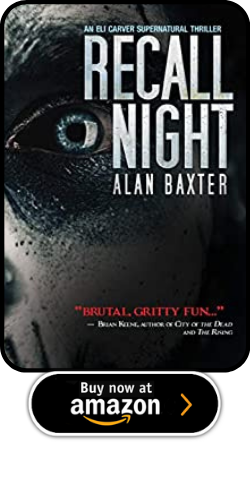 Back from self-imposed exile in Canada where he fled to avoid the law following the blood-stained events in Manifest Recall–the first installment of award-winning author Alan Baxter’s latest supernatural thriller series–Eli Carver returns to the states with thoughts of starting over. But an accidental encounter on a train with a mysterious woman, one he soon learns has her own dangerous past, threatens to unravel his well-intended plans. Upon their arrival in New York, the duo quickly find themselves entangled in an ongoing war between two rival crime syndicates. And with the ghosts of his own past continuing to torment him, Eli finds himself taking the darkest of turns as he’s drawn down a perilous path into a world of ancient religion and deadly occult rituals. “Eli Carver is back with a vengeance! That’s bad news for some but good news for readers. RECALL NIGHT is brutal, gritty fun and a phenomenal follow-up to MANIFEST RECALL.” — Brian Keene, author of The Complex  the heasrt and soul of horror fiction reviews “Nakota, who saw it first: long spider legs drawn up beneath her ugly skirt, wise mouth pursed into nothing like a smile. Sitting in my dreary third-floor flat, on a dreary thrift-shop chair, the window light behind her dull and gray as dirty fur and she alive, giving off her dark continuous sparks. Around us the remains of this day’s argument, squashed beer cans, stolen bar ashtray sloped full. “You know it,” she said, “the black-hole thing, right? In space? Big dark butthole,” and she laughed, showing those tiny teeth, fox teeth, not white and not ivory yellow either like most people’s, almost bluish as if with some undreamed-of decay beneath them. Nakota would rot differently from other people; she would be the first to admit it.” Kathe Koja’s The Cipher was first published in 1991, and made an instant impact on everyone who read it. From its unsettling, impressionistic cover art to the novel’s opening, quoted above, which drops you straight into Koja’s brilliant prose and bleak worldview, it was immediately apparent that this was something special and different. The novel launched Dell’s legendary Abyss line, which prioritised originality and innovation in Horror, just as the 80s Horror paperback boom began to sink into cliché and repetition. It won the Bram Stoker and Locus Award, and marked Koja out as a major talent in Horror. Over the intervening years, its reputation has grown as its influence has spread within and beyond the horror genre. After many years of being out of print and frustratingly difficult to get hold of, Meerkat Press are doing the world a great service by bringing The Cipher back into print, so it can disrupt, disturb and inspire a whole new generation of readers and writers. Nicholas, a failed poet, and his sometime lover Nakota discover the Funhole, a mysterious black hole of nothingness that exists in the storage room of Nicholas’s dingy rental flat. Nakota begins a series of increasingly unpleasant experiments to determine the nature of the Funhole, which distorts and mangles everything it comes into contact with – it causes insects to grow extra heads, mutates and then explodes a rat, and reanimates a dead hand. Nicholas accidentally puts his hand down the Funhole and starts developing a hole of his own on his hand, one that is expanding and weeping strange fluids. Things continue to get stranger as Nicholas, Nakota and the Funhole’s increasing band of damaged disciples are drawn deeper and deeper into something they cannot possibly hope to understand. The Cipher is bracingly bleak and nihilistic, fitting for a Horror novel where the source of terror is a manifestation of nothing itself, rather than any monster or supernatural creature. The Funhole defies explanation, a dark hole of mystery that draws these troubled characters into its destructive orbit. It is the hollowness that sits at the centre of Nicholas’ dreary existence, as he struggles to find the motivation to turn up to his job at the Video Hut, only writes his poetry when he’s blind drunk and then destroys the poems rather than face them whilst sober, fails to make any meaningful connection with Nakota or any of the other damaged weirdos they drag into their orbit. The world of the novel is grimy and grungy. Aside from the Funhole itself, the story is set in an all-too believable anonymous American town, run down and drenched in snow and rain, a world full of grimy flats, dead-end jobs and pretentious local art shows where at least the booze is free. Sex is brutish, sordid and unsatisfying, whether in Nicholas and Nakota’s desperate couplings or the degenerates renting seedy pornography from the Video Hut. The Funhole provides a focus for all this early 90s alienation. The story is told from Nicholas’ perspective, and Koja is unflinching in her portrayal of his relentless self-loathing. However, despite his complete renunciation of agency over his own life, or perhaps because of it, the Funhole chooses Nicholas as its dark messiah, the object that will suffer all its horrifying transformations and transfigurations. This is much to the chagrin of the selfish, manipulative Nakota, who has eyes only for the Funhole. In its bleak, all-consuming emptiness, she sees the culmination and rewarding of all her most nihilistic, destructive impulses. Driven and deranged, brutally unconcerned with the damage she causes to the people around her, yet utterly, resolutely certain that this communion with nothingness is all she desires, Nakota remains the novel’s most indelible character. Much of the novel focuses on her and Nicholas’ horrendously dysfunctional relationship, as he continuously fails to protect her from the darkness she is drawn into, and she surgically hacks away at his psychic wounds to get exactly what she wants from him. The Cipher is powered by Koja’s incredible and unique prose. It is immediately clear what an incredible stylist she is. From those infamous first lines, Koja’s command of voice immediately draws the reader into her character’s heads and their distorted viewpoints. Her language achieves a dark and compelling poetry that draws the reader in, describing sensation and feel as powerfully and as deftly as action and thought. Koja is capable of describing the grim realism of her character’s lives in palpable detail. As Nicholas’ sense of reality is warped and distorted by the Funhole, so her writing achieves a delirious, surrealistic intensity that marks the most powerful sequences in the book. The Funhole draws a crowd of pretentious and vapid artists to it, typified by the smug, idiotic Malcolm and his groupies. They are ghouls looking for a fix of the dark and dangerous to spice up their mundane existence who come across something too viscerally disturbing for their cheap kicks. Much of the novel focuses on the unique artistic challenge set down by the Funhole, a challenge Malcolm and his fellow failed poseurs are ill equipped to face. Everyone from the most shallow and ridiculous artist up to Nakota herself, who is best equipped to understand the Funhole, has their own pet theory as to what the Funhole is, what it symbolises, and where communion with it will lead, but in the end Koja exposes these theories as just so much bullshit. The Funhole defies theorising and explanations; the only way in which it can be engaged with is on its own terms, the full surrender that only Nicholas with his acute self-loathing and conscious lack of agency is able to give to it. The novel leaves us on the threshold of destruction or transfiguration, and asks us at the end of the day if there’s any substantial difference. By the end, the reader is as much transformed as Nicholas. The Funhole is back to warp us all into new and unrecognisable forms again; we should be grateful to have it. Review by Jonathan Thornton 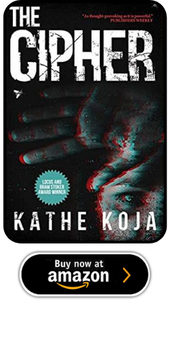 From acclaimed author Kathe Koja comes the highly anticipated paperback reissue of her award-winning horror classic The Cipher. Winner of the Bram Stoker Award and Locus Awards, finalist for the Philip K. Dick Award, and named one of io9.com's ""Top 10 Debut Science Fiction Novels That Took the World By Storm."" With a new afterword by Maryse Meijer, author of Heartbreaker and Rag. ""Black. Pure black and the sense of pulsation, especially when you look at it too closely, the sense of something not living but alive."" When a strange hole materializes in a storage room, would-be poet Nicholas, and his feral lover Nakota, allow their curiosity to lead them into the depths of terror. ""Wouldn't it be wild to go down there?"" says Nakota. Nicholas says ""We're not."" But no one is in control, and their experiments lead to obsession, violence, and a very final transformation for everyone who gets too close to the Funhole.  the heart and soul of horror fiction review websites If you like your horror stories to come from human weakness, from the dark corners that lurk within us and from those moments where it’s all too easy to lose control and become unmoored, then ‘Shadowy Natures’ is well worth checking out. There are a few disappointments, but some real gems too. This book would scare the shit out of my sister. Shadowy Natures is a collection of 21 short stories, edited by Rebecca Rowland, focusing on very human terrors. No vampires, werewolves, tentacled gods or zombies here. The only ghosts and demons are the ones we carry within ourselves, and as we all know those can be the ugliest of all. That’s what makes the best of these stories hit home – it could happen to any of us, but even worse any of us could be the monster. Stories of the ‘psycho killer’ variety all too often ignore the motive of the killer, what makes them tick, why they do what they do, opting instead to shrug and say ‘welll, they’re craaazy’. The best stories show that, with the right buttons, any of us could snap and lose control. As loveable racist old Lovecraft used to say, any of us could go mad under the right conditions. And the consequences would be dire. While the stories in the collection hit more often than they miss, there is a common problem that I found a bit frustrating. Many of the endings were unsatisfactory and didn’t really feel like I was being given any real resolution. ‘Seven Days of Dog Walking’ by Scotty Milder gripped me from the beginning, teasing a mystery about the woman Charlie became fixated on during his dog walks, but the shocking ending didn’t really gel and felt really abrupt. Similarly, ‘Ring Rock’ by James Edward O’Brien was brilliant most of the way through and had me holding my breath in suspense, but then it just… stopped. It’s a shame, as the story was really well told and the image of the rocks that ring out when tapped with hammers was really haunting. Same with ‘The Wolf Gang’ by Barrie Darke – a fantastically eerie premise, a family home where the pictures on the wall capture the family in moments of fear and anger and pain, but just as it gets to the tense climax it just ends. I like an ambiguous ending too sometimes but this one was really frustrating. There are others, and it takes the wind out the sails of an otherwise very good collection. The stories that do land, though, they land hard. They may not have kept me up at night staring into the shadows, but they definitely grabbed my heart strongly enough to leave deep impressions with the fingers. My favourites are: ‘Drifter’ by C.W. Blackwell – a lone wanderer in the Old West travels around with an unorthodox companion – a corpse he carries around and talks to. The ending was predictable but in the best way, and the drifter himself is such an amiable fellow that it seems mighty fine to spend time in his company, despite what a terrible idea that may be… ‘In Control’ by Joseph Rubas – a henpecked young man lives very thoroughly under his mother’s thumb while harbouring some dark desires indeed. Though Frankie’s a deeply unpleasant person, it’s not hard to see how he could have been influenced by his upbringing. I’m not excusing him here, I should add! I’m just saying that his circumstances and his inner turmoil make for an explosive ad dangerous mixture, and the ensuing fireworks are a good read. ‘Accessory’ by K.N. Johnson – a quiet young girl is taken under the school Queen Bee’s wing and the result is murder and subterfuge and teenage woes. This one’s superb, even without the great twist at the end. Right from the beginning you’re on Chrissy’s side, especially if you’ve ever been the quiet kid at school. The savage intricacies of life as a mean teenage girl are laid out brilliantly here, in a very Mean Girls/Heathers kind of way, as Jenny terrorises her friends and always (always?) gets what she wants. This is the one that stuck with me the most. ‘Itch’ by Louis Stephenson – a story of irrational paranoia stemming from ablism and a fear of the other. Though Hayley’s brother is painted out to be some kind of ghoulish figure with his peeling skin and bloody sores, he’s more of a victim as Hayley is. She fixates on him and the dead flakes of skin he leaves everywhere he goes, almost to the point of madness and psychosomatic injury, but he’s in constant pain and has to live with the actual condition. A complicated one, but certainly one that stays with you. ‘Heart Skull Heart’ by Bryan Miller – ooft. This one cuts deep. Zoe’s a seemingly innocent and sweet girl who just wants to help you, but her particular brand of helping is… problematic, shall we say? Accused of murdering a boy by insisting he kill himself, the story is really about her father reconciling her actions with the sweet little girl he thought he knew. Suicide is a tricky subject to handle delicately, and this story is best approached with trigger warnings up front, but it’s a fascinating peek into a troubled mind. ‘Roger’ by Hollee Nelson – this is what I meant when I said any of us could snap under the right circumstances. A teenage boy, used to acting out violently and not handled with love and care by his family, falls deeper and deeper into darkness and violence as no one even tries to lend him a helping hand or show any understanding. His little brother comes closest, but even he is ultimately a let down. Treat your children well, folks. If you like your horror stories to come from human weakness, from the dark corners that lurk within us and from those moments where it’s all too easy to lose control and become unmoored, then ‘Shadowy Natures’ is well worth checking out. There are a few disappointments, but some real gems too. 3.5/5 REVIEW BY SAM KURD 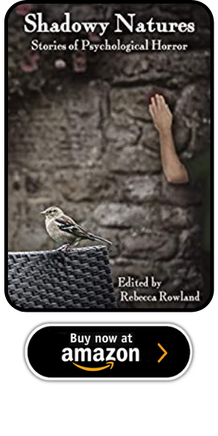 With its twenty-one stories of serial killers and sociopaths, fixations and fetishes, breakdowns and bad decisions crafted by authors as diverse as their writing styles, Shadowy Natures leads fans of psychological horror down dark and treacherous roads to destinations they will be too unsettled to leave. From unique twists on traditional terror tropes to fresh frights found in the most innocuous of places, these tales will surprise and unnerve even the most veteran horror fans. Featuring brand new fiction from Jeremy Billingsley, C.W. Blackwell, Barrie Darke, Matthew R. Davis, Christina Delia, KC Grifant, Liam Hogan, K.N. Johnson, Thomas Kearnes, Rudy Kremberg, Scotty Milder, Bryan Miller, Hollee Nelson, Elin Olausson, James Edward O’Brien, Andrew Punzo, Lee Rozelle, Joseph Rubas, Paul Stansfield, Louis Stephenson, and Thomas Vaughn.   THE HEART AND SOUL OF HORROR REVIEW WEBSITES  Similarly the problems the character has with self-image in ‘The Wishing Sisters’, an all-too familiar concern of so many young people, lead to her making some poor choices. These are not the easiest subjects to write about, but in Cooper’s hands they are written about with sensitivity. All That’s Fair is a collection by S.H. Cooper which promises “twenty-two short horror stories themed around women who are made up of anything but sugar, spice, and everything nice.” With its stories that play on the best ideas of urban legends and folklore, it more than delivers. The choice to tell each of the stories in first person help to establish a personal tone and make the strange experiences of the protagonists seem all the more genuine. The stories are also all very similar in length, approximately ten pages each, but in that relatively short span they deliver compelling narratives and well-formed characters. There’s plenty of meat on the bones of each story, but not an ounce of fat: there are no unnecessary characters or distracting side-plots. Cooper knows also when to ramp up the tension and when to place a twist or a reveal to make these stories really effective. Each of the stories features a familiar scenario or type of character which allows the reader to immediately engage with them. In Cruel Inheritance, for instance, Betsy Jo Keene is recognisably as the kind of neighbour you’re on nodding terms with who looks like she’s had a difficult life. The story kicks to life when she knocks on the door of the protagonist and asks to borrow her car, immediately grabbing the reader. Many of the other stories use a similar known situation – an elderly person put into a home suffering from dementia, friends growing apart in their teenage years, unrequited love. Into these situations, the horror, or a strangeness which leads to the horror, is introduced, and it’s a very effective method of storytelling. It means little time is spent on unnecessary exposition. The stories start as close to the action as possible, keeping the pace quick, and the stories engaging. Another way in which these stories seem fresh is that where there is something monstrous, it is rarely as it first appears, and where characters do experience something horrific, there is often a good reason for this. Sometimes they lead to a discovery – truth is very important in these stories, and sometimes it comes as a warning – be careful what you wish for is a moral of a number of these tales. A couple of stories are guilty of over-explaining a touch at the ends, but this is a very small criticism. There’s a good variety in the stories. A couple of them touch on issues of mental health, and these are very well handled. The experiences and feelings of worthlessness of the protagonist in ‘So Much Filler’ are particularly harrowing, and they feel authentic. Similarly the problems the character has with self-image in ‘The Wishing Sisters’, an all-too familiar concern of so many young people, lead to her making some poor choices. These are not the easiest subjects to write about, but in Cooper’s hands they are written about with sensitivity. A few of the stories contain subtle humour, which is more than welcome. Others have almost comical aspects, ‘The Shy Lady’, for an example, tells of a ghost that can only be seen when the person can’t see properly. She visits the short-sighted when they remove their glasses. Stories like this fit in well even among some of the more horrific tales. The description throughout the stories is excellent, whether that be in terms of vividly creating the setting, or in describing some of the horrors contained in the story. Sometimes this is simply through a sound, as in the first story, or in a smell, and it all contributes to bringing these stories to life. Among the twenty-two stories a number stood out as being truly exceptional. The story of ‘Auntie Bells’ reveals the secret the bells worn by a local woman known to all, but seemingly friends to none. ‘She Wasn't Like the Other Mothers’ starts with the line "every night for a week, I woke to a gunshot." From there is only gets better. It contains a repeated line, the significance of which becomes more apparent as the story reaches its conclusion. The story that closes the book, ‘The Hardest Lesson’ tells of an urban legend of truck stops. It contains one of the collection’s main messages. Sometimes what seems to be monstrous is actually saving us from the true monsters. All in all, it’s a very successful collection of short stories. I had a few late nights with the book, as I always wanted to read just one more. They’re lean, and they’re mean, and I’d recommend All That’s Fair to anyone. Review by Ben Langley 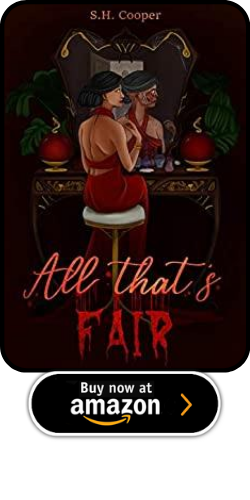 A maiden looking for love in all the wrong places. A mother in an endless search for missing children. A crone whose passing is marked by the tinkling of tiny bells. All That’s Fair is a collection of twenty-two short horror stories themed around women who are made up of anything but sugar, spice, and everything nice. Be they human, ghost, or something else entirely, one thing holds true for all: These are not the girls you’ll find (or want) next door.  THE HEART AND SOUL OF HORROR FICTION REVIEWS Belle Vue by C. S. Alleyne is the latest offering from Crystal Lake Publishing. The story unfolds in two parallel timelines around the titular building, once a Victorian asylum, now a modern day apartment complex. In the past we have the stories of Ellen, her half sister Mary, and their dealings with the hospital. And in the present we follow Claire, who buys an apartment in the converted Belle Vue, her boyfriend Alex and their friend Marianne. The past of course, is not yet ready to rest and pushes into the present, so the stage is set for the novel. This book can be a tough read at times. Within the first few pages we are witness to a sexual assault and throughout the story we are shown the depravity of what occurred under the guise of 'mental health'. Whilst fictional, history has told us that such cruelty was commonplace. It was these moments I found particularly affective and as such much of the horror, at least for me, was loaded into those chapters set in the past. The present day chapters unravel as a ghost story, drawing on the traditions of the gothic, with Claire at the centre of the haunting. There are glimpsed shadows, odd neighbours, phantom smells and deformed visions. Whilst all familiar territory, there is a comfort in these chapters. An homage to tradition and the ghost stories which came before. Compared to the very real horrors depicted in great detail within those chapters set in the past, some of those haunting elements in the present felt almost tame at times. However, this depends on what frightens you personally and Alleyne offers enough variants on these tropes to elicit some reaction from readers. The story is deep and features a large cast of characters and as a result character motivations seemed a little quick on occasion, which left me wishing there was more time spent in the headspace of each of them. However, Alleyne is working on a sequel to Belle Vue so we will hopefully see more from at least some of the players. Great news. Full credit to Alleyne for this debut novel. She doesn't shy away from tackling characters that are unlikeable, complicated and nuanced, and this makes for compelling reading as Belle Vue progresses. The stories, both past and present, reveal their secrets and Alleyne's use of alternating timelines is put to great effect, pulling you through the story towards a powerful and claustrophobic final act. 4/5 Review by Grant Longstaff  Jealousy. Betrayal. Murder. And a hunger for vengeance that spans the centuries... History student Alex Palmer is thrilled when his girlfriend, Claire Ryan, buys an apartment in Belle Vue Manor, formerly a Victorian lunatic asylum. But as Alex begins to discover the dark truth about the asylum’s past, he, Claire, and their friend Marianne find themselves on a nightmarish journey. Each will face the deadly consequences of the evil that began with the construction of the first Belle Vue Manor by an aristocratic French émigré in 1789, as well as the cruelty and satanic practices that continued when it became an asylum for the insane. As the two strands—past and present—unfold, Alex uncovers a supernatural mystery where revenge is paramount and innocence irrelevant—without being aware of the price he, and those around him, will pay. Proudly represented by Crystal Lake Publishing—Tales from the Darkest Depths.  Grant Longstaff is from a small, suitably dismal town in the north east of England where nothing much happens. He had no choice but to write fiction. His work has appeared in Arterial Bloom from Crystal Lake Publishing and Aurealis Magazine. He now lives in Glasgow. You can find him at www.grantlongstaff.co.uk or on Twitter at @GrantLongstaff.   Resident Evil can mean a lot of things based on how old you are. You could have grown up with the PlayStation original, the countless sequels and spinoffs, the movie franchises and the other mediums the horror classic has staggered towards. Essentially, it is a title that is now infamous for being a horror classic and its influence has only grown alongside the people that its scared. In Boss Fight Books’ latest release, Philip J Reed takes a look at the horror that terrified him as a child, and how it feels revisiting it when he’s not scared so easily. Reed provides a confident and detailed history of the game that will welcome people who have never played it before and inform those that stayed up all night playing it, whose knowledge of the zombies and Spencer Mansion is part of their DNA. There’s a summary of the plot, woven in with Reed’s personal experiences with the game, tying it to his childhood and homelife. Reed mixes the two well, it never feels too much like a memoir and the reader is aware of the personal significance that this title has for him, which makes them just more invested to find out more about the game. It’s also a more difficult task to talk about than you’d think, with multiple sequels, a film franchise, alternate titles in Japan and story continuity, Reed does a fantastic job at keeping the focus on this one game (other than speaking about the Remake), only referencing other titles to prove his point or to contrast. While it would be nice to hear the story of these films and the development of future games, that can be another authors job, as Reed certainly had his hands full with this title. The book excels with Reed’s research into the live action cutscenes that were filmed for Resident Evil. While as a sentence it doesn’t sound like a thrilling exploration, the end result is catching up with people, some of whom didn’t even know that the game had gone on to become such a worldwide phenomenon, here Reed manages to capture the development of the game, the differences in the East and West, the artists struggle and enough humour so that most readers will go back to Youtube to watch the cutscene again and again. Reed himself is wonderfully aware of how dated it all is, and how nostalgia can protect things from aging like vinegar. Like most books written about specific video games, if you’re not a fan, or at least have some understanding or interest in Resident Evil or game development, this may not entice you too much, especially the parts about the walkthrough of the game, but if you do have a fraction of an interest, reading this will be like catching up with a friend over a beer. The only thing is, though, that you wouldn’t feel safe walking home at night because now all you can think about is zombies. Oh, and while you are walking home, don’t even think about stopping at that mansion in the middle of the woods, because you know the flawed and beautiful truth about how Spencer Mansion and its monsters came to be there.  Now a sprawling video game franchise, Resident Evil has kept us on the edge of our seats for decades with its tried-and-true brand of jump scares, zombie action, and biological horror. But even decades after its release, we can’t stop revisiting the original’s thrills, chills, and sometimes unintentional spills. Pop culture writer and horror cinephile Philip J Reed takes dead aim at 1996’s Resident Evil, the game that named and defined the genre we now call “survival horror.” While examining Resident Evil’s influences from the worlds of film, literature, and video games alike, Reed’s love letter to horror examines how the game’s groundbreaking design and its atmospheric fixed-cam cinematography work to thrill and terrify players—and why that terror may even be good for you. Featuring a foreword from Troma Entertainment legend Lloyd Kaufman and new interviews with the game’s voice actors and its live-action cast, the book serves as the master of unlocking the behind-the-scenes secrets of Resident Evil, and shows how even a game filled with the most laughable dialogue can still scare the pants off of you.  Jay Slayton-Joslin is the author of Sequelland: A Story of Dreams and Screams (Clash Books, 2020) and Kicking Prose (KUBOA, 2014). Jay graduated with a BA in American Literature with Creative Writing from the University of East Anglia and a MA in Creative Writing from the University of Surrey. He lives in Leeds, England. Find out more about Jay by checking out his website here 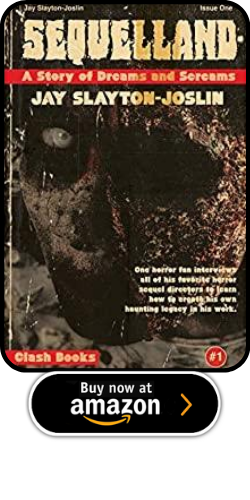 In the back alley of HOLLYWOOD lies SEQUELLAND, where directors and creatives get the chance to do what they love, not necessarily in the conditions that they love. Jay Slayton-Joslin, a writer and horror fan, experiencing his own existential crisis takes a direct approach exploring his childhood filled with direct to DVD horror sequels, interviewing those who created the sequels to iconic franchises feel upon looking back on them. The story of people who tried to do what they loved, filled with pride, regret, and resolution.It’s… SEQUELLAND: A STORY OF DREAMS AND SCREAMS. “Jay Slayton-Joslin delivers rare and insightful peeks into the world of Hollywood’s most battle-scarred foot soldiers. Whether legionnaires, barbarians or berserkers, these filmmakers weave their war-stories with equal measures of cynicism, idealism and candor. Less a series of interviews than informal conversations one might have on a hot afternoon over whisky shots in the Mitchum-booth at Boardners. Engaging, compelling fun.”Daniel Knauf, Creator of Carnivale Interviews with: Uwe Boll, John Skipp, Jeff Burr, Adam Marcus, Ernie Barbarash, Peter Webber, Mary Lambert, Kevin Yagher, Zack Lipovsky, Katt Shea, and Kevin Greutert.  BOOK REVIEW - MISFITS BY HUNTER SHEA
2/9/2020
 The undisputed king of monsters Hunter Shea is back… I’ve been a fan of Hunter Shea for a few years and was originally attracted to his dumb, fast-paced creature features, which were often very humorous and violent horror novels which were great forms of escapism for a few hours. However, his recent output has upped the ante, blending a similar type of schlock horror, but with stronger stories and more importantly characters which are fully developed, and considerably more than the brief sketches given in some of his earlier books. Shea’s previous novel Slash, a clever play on the final girl myth (with monsters) was a fine example, with an outstanding heroine. Misfits takes this to another level, bouncing a third person narrative around five friends in their final year of school in a no-name small town, Milbury, they would all love to leave. And, of course, monsters. Lots of them in all shape and sizes, well almost. This novel has an outstanding opening chapter which takes up back to Christmas Day 1977 and Chris who has just got a new bike and is taken out by his much older teenage brother to give it a spin. They head to the infamous ‘Dracula Drive’ an area of town which is boarded up and encroaches on the forest which most people avoid. Chris does not want to cycle there but is dared by his brother who has his own, yet unknown, agenda for taking him there. Once they are close to the woods Dylan slashes his little brother’s bike tire and abandons him. But why? And for what purpose? What follows is an unpleasant bolt from the blue, but there will be no spoilers from me. Misfits then jumps to 1993 where most of the novel is set, and it kicks to a convincing grunge soundtrack which I know very well. Music throbs throughout the story and Shea makes a fine job of bringing 1993 back to life, where Nirvana dominated the airwaves, backed up by the likes of Soundgarden and Alice in Chains. And the halcyon days of underage drinking, flannel shirts and long greasy hair. Every small town has a dive which serves kids without ID and this is one of the hangouts featured in the early stages of the story. I could identify with this, the town I grew up in had many such fine establishments, but hey, that’s Scotland and few others knock it back like we do. After a while you’ll realise where 1977 connects with 1993, meantime we’re introduced to the five best friends of Mick, Marnie, Chuck, Heidi and Vent. For the most part they are very different characters and may very well be the ‘misfits’ of the title and have one major thing in common: the love of smoking dope. They are serious stoners and spent a lot of time together, chilling, going out and listening to music. Of course, you may decide that the ‘misfits’ of the title appear later…. Mick has the toughest story and has been abandoned by his mother and stepfather, living in a caravan in the forest which has no running water. He shoots squirrels with a bb-gun for food, sells dope, and is helped particularly by Vent who comes from a steady family and excels at school. The dynamics between the five characters is highly convincing, floating between the different voices, their crushes, problems and dreams. Where is the horror you might ask? Every small town has its own myths and legends, many are very localised and in Milbury it goes along the lines of “If you don’t watch out the Melon Heads will get you”. Lots of towns will have their own variations of an old wives’ tale of creatures lurking in the forest, Big Foot or some other long-lost ghost of a dead hitchhiker, whatever it might be. After a horrific incident where one of the five is raped they decide to take revenge on the assailant by driving them out to the woods. Big mistake. Things do not go as they planned. At that point Hunter Shea really begins to move through the gears and although it sounds corny ‘nobody does it better’ blending bone-crunching action sequences with vicious body horror. Arms get screwed off, others eaten alive and this is no holds-barred stuff. This is even more hurtful as you really care about the five teenagers who end up fighting for their lives, especially in the brutal closing stages. In between the chase and fight sequences the author still finds time to develop the characters, their personal interactions and the other casualties as the body count begins to mount up. If I was to spell out what happens I would not argue if you labelled it dumb, however, this author is an absolute master of turning very far out plots into slick pieces of violent fiction. Yup, it is stupid, it is not believable, but at the same time you get behind the characters and it is very easy to be swept along with the brutal action sequences as family members are picked-off one by one. At 288 pages Misfits comes in at a perfect length, lean, very mean and although the action sequences are numerous, they never become repetitive, this is probably because all the characters are fighting for their lives and are deep out of their comfort zone as they’re being mercilessly stalked. Misfits was a very enjoyable piece of horror trash from one of the most reliable voices in the genre. Keep them coming Hunter! 4/5 Review by Tony Jones  During the height of the 90s grunge era, five high school friends living on the fringe are driven to the breaking point. When one of their friends is brutally raped by a drunk townie, they decide to take matters into their own hands. Deep in the woods of Milbury, Connecticut, there lives the legend of the Melon Heads, a race of creatures that shun human interaction and prey on those who dare to wander down Dracula Drive. Maybe this night, one band of misfits can help the other. Or maybe some legends are meant to be feared for a reason. FLAME TREE PRESS is the new fiction imprint of Flame Tree Publishing. Launched in 2018 the list brings together brilliant new authors and the more established; the award winners, and exciting, original voices.  THE HEART AND SOUL OF HORROR REVIEW WEBSITES |


Archives
May 2023
|

|

|
 RSS Feed