

 Daniel Reiner was born, raised, and still lives in Pittsburgh, PA. Influenced at an early age by the imaginations of Larry Niven and Stephen King, it was a later encounter with H.P. Lovecraft’s dizzying use of adjectives that set him on his course. That path has led to the creation of a set of characters within Lovecraft’s universe, their tales currently being published by Vulpine Press in The Shadow Saga. Though the bulk of his creative output remains Lovecraftian, he does branch out and dabble in shorter pieces with horror, science fiction, or other, uncategorizable flavors. Samples of his work are available at https://www.danielreinerfiction.com. WEBSITE LINKS https://www.danielreinerfiction.com/ https://www.facebook.com/Daniel-Reiner-Fiction-273386506648355 Could you tell the readers a little bit about yourself? Though I’ve done little reading recently, I devoured science fiction and, well…comic books…when young. As a teenager, I got hooked on Larry Niven’s Known Space universe, and Frank Herbert’s Dune is still in my top three overall favorites. At about the same time, Stephen King’s early tales also grabbed me, especially ‘Salem’s Lot and The Stand. But in college I was absolutely captivated by the adjectives used by H.P. Lovecraft and the overall atmosphere he evoked. So, even though I fed my voracious imagination with all that fiction, writing was an after-after-thought. My logical, problem-solving personality fit in well with mathematics and computer science, and that’s where my career went. Writing was an on-again/off-again hobby, all self-taught, self-learned, with no early success because I didn’t know how to proceed or how to truly get better. Finally, in my fifties, I found a writing group, made the right connections, and had measurable progress. Which one of your characters would you least like to meet in real life? From the book that was just released, The Shadow Effect, Frances is even worse than I present her. And I tried to make her atrocious in this one. By the end of the series (The Shadow Saga), her full awfulness will have been revealed. Other than the horror genre, what else has been a major influence on your writing? I’m going to scrape everything together into a big bucket and label it “fantastic” fiction, but fantastic in that far-fetched sense: things that are wildly thought provoking. For me, that means science fiction, fantasy (such as The Lord of the Rings), mythology, and Dungeons and Dragons (the role-playing game). There’s lots of overlap between the final three. But in particular, I enjoy adding in elements of mythology whenever I can. The term horror, especially when applied to fiction always carries such heavy connotations. What’s your feeling on the term “horror” and what do you think we can do to break past these assumptions? For good or bad, we’ve come a long way from the gothic horror of Stoker and Shelly. These days, it takes quite a lot to shock the average reader, so I think that the concentration should be on building tension, or taking perfectly normal events and twisting them just enough to create the abnormal. It becomes more psychological then, rather than explicit gore. But that isn’t a new concept. A lot of good horror movements have arisen as a direct result of the socio/political climate, considering the current state of the world where do you see horror going in the next few years? I am sincerely afraid to speculate. We’re going to have to see what else 2020 has in store for us. The world of 1984 is right around the corner, and THAT is genuinely scary. Given the dark, violent and at times grotesque nature of the horror genre why do you think so many people enjoy reading it? Pure escapism: It’s that other person going through the trauma, not me. I’m here, on my couch, and everything is fine. It’s all fine. I just wish it wasn’t quite so dark, and the house would creak a bit less… What, if anything, is currently missing from the horror genre? I haven’t kept up enough to offer an opinion on trends. It’s hard to imagine that anything is missing, but something must be, though. Right? Somethings. Otherwise, why do authors bother to keep writing? What new and upcoming authors do you think we should take notice of? I wish I could comment authoritatively on this. With a full-time job that is not writing, and the hobby/second-job of writing, I am far, far, far behind on reading. I have no idea what’s really happening out there. If it’s a valid response, I can give myself a plug and say, “Hey, that Daniel Reiner is turning out some pretty good stuff.” Are there any reviews of your work, positive or negative that have stayed with you? Not so far. Or, maybe. But see the question after next. What aspects of writing to do you find the most difficult? Outlining. I would so much like to make a habit of jotting down an outline, charting out the chapters, and adhering to it. I managed to do that once, but no longer. I have ideas and sequences and scenes in my head. Sometimes those things are static, sticking around from beginning to end, and sometimes they’re fluid, morphing as I write. Is there one subject you would never write about as an author? I’m not comfortable writing about sex or relying on profanity, though I’m trying to get past that when it fits with the piece. The one thing I shy away from completely is anything autobiographical. I see no need to expose my life to the world, partly because it’s private, and partly because it was/is so fucking uninteresting! (And there you go: I dipped into some profanity for the audience.) Writing, is not a static process, how have you developed as a writer over the years? I hardly developed at all until I joined up with the Millvale Writer’s Group. Reading one’s own work aloud, in front of others, is a terrific way to see and hear the details that aren’t quite right. Equally, seeing and hearing others read their work aloud is extremely insightful. I guess what it boils down to is: You can’t write in a vacuum. Unless you’re naturally gifted (like Lallafa, if I may pull in an obscure reference from Life, the Universe and Everything), interaction and feedback is required. What is the best piece of advice you ever received with regards to your writing? I had the good luck to meet the late Joe Pulver at a NecronomiCon in Providence back in the 1990’s. He told me of the struggles he went through to get his Nightmare’s Disciple published, and we kept in contact for a time. Essentially, he told me to just keep going, keep trying, and things will happen one day. And, things eventually did happen. I wish I’d known him better. Which of your characters is your favourite? Jebediah Higgins. I often think the way Higgins does, but, thankfully, I don’t speak or act like him. At least, I hope not. Which of your books best represents you? Hmmm. I don’t think that one has been written yet. It will one day, though. Do you have a favorite line or passage from your work, and would you like to share it with us? Favorite is such a hard thing to nail down. I can think of a number of examples from the newest book, but—in order to avoid any spoilers—I’m going to go back to The Shadow Beyond. I’m not a poet or lyricist by any means, but I was very pleased with the sea ditty that I came up with: No skin, no flesh, them bones shine through. Hackin’, scrapin’, the best we do. The best we can, though pretty rough. Others though, they polishes off. Beaks and teeth, they eat their fill. All blood, all gore, a devil’s meal. So clean, so clean, that skel’ton gleams. With flesh stripped clean, that skel’ton gleams. It’s white, so white. It’s oh so-- And the singer gets interrupted at that point, so we don’t find out how it ends. Or how interminably long it may have been. Can you tell us about your last book, and can you tell us about what you are working on next? The most recent work, The Shadow Effect, is a follow-up to The Shadow Beyond, but not a true sequel. I always imagined the first volume to be akin to The Hobbit, setting the stage, and the remainder to be more connected, not unlike The Lord of the Rings trilogy. In the first book, Quentin Gardiner is introduced and disappears early on. In The Shadow Effect, we learn all about his adventure. Next up will be the third volume, which has been started, but I’m also always at work on short, or flash, fiction to stretch my brain in different ways. I also work on serial tales that fill in some holes in The Shadow Saga: stories that relate to the characters and plot in general, but that don’t make it into the books. Many of those bits and pieces show up on my website. If you could erase one horror cliché what would be your choice? Personally, I don’t like the unkillable villain. They can be unkillable, or resurrected, if there’s a good reason. But I want a really, really good reason. Even in fantasy I need logic. What was the last great book you read, and what was the last book that disappointed you? To be perfectly honest, I was very pleased, or satisfied, with the way that Rowling wrapped up everything in Harry Potter and the Deathly Hallows. Satisfying may not sound like a great compliment, but that’s really what it boiled down to. For an honourable mention, I have to add Pulver’s A Long, Dark, Grim Road. At only a few dozen pages, it’s not a conventional book, but it is an intense, unique, and memorable read. As far as disappointing: I really liked the concept of Riggs’ Miss Peregrine’s Home for Peculiar Children, but that wasn’t an ending. That first book just stopped due to lack of time, or energy, or whatever. What's the one question you wish you would get asked but never do? And what would be the answer? Is there a beer you won’t drink? I won’t touch beers made with habanero, or similar, hot peppers. Also, watermelon and pickle are out. I’m game to try anything else, though, be it bitter, malty, sweet, or sour. 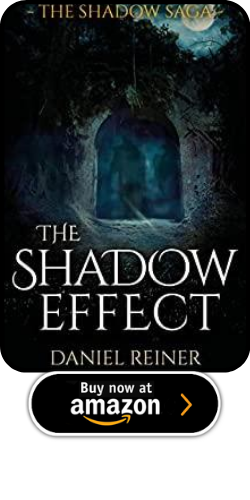 For a mistake to be corrected, it must first be made. Tenets such as this are the foundation upon which Quentin Gardiner has built his world. Logic. Reason. Cause and effect. Such basic principles are vital to one such as he, devoted to science. But as the head of the Archaeology department at Miskatonic University, Gardiner is one of the few aware of just how much lies beyond the commonlyaccepted boundaries of science. Magic is just one of those secret truths. When a mysterious package arrives from Gardiner's former mentor, he finds himself caught up in a globe-spanning quest, forced to peer into the shadows and discover the truth. But shadows conceal much, and some truths—some secrets—are quite ugly.   the heart and soul of horror author interviewsComments are closed.
|


Archives
May 2023
|
 RSS Feed

|

|