• HOME
  • CONTACT / FEATURE
  • FEATURES
  • FICTION REVIEWS
  • FILM REVIEWS
  • INTERVIEWS
  • YOUNG BLOOD
  • MY LIFE IN HORROR
  • FILM GUTTER
  • ARCHIVES
    • SPLASHES OF DARKNESS
    • THE MASTERS OF HORROR
    • THE DEVL'S MUSIC
    • HORROR BOOK REVIEWS
    • Challenge Kayleigh
    • ALICE IN SUMMERLAND
    • 13 FOR HALLOWEEN
    • FILMS THAT MATTER
    • BOOKS THAT MATTER
    • THE SCARLET GOSPELS
GINGER NUTS OF HORROR
  • HOME
  • CONTACT / FEATURE
  • FEATURES
  • FICTION REVIEWS
  • FILM REVIEWS
  • INTERVIEWS
  • YOUNG BLOOD
  • MY LIFE IN HORROR
  • FILM GUTTER
  • ARCHIVES
    • SPLASHES OF DARKNESS
    • THE MASTERS OF HORROR
    • THE DEVL'S MUSIC
    • HORROR BOOK REVIEWS
    • Challenge Kayleigh
    • ALICE IN SUMMERLAND
    • 13 FOR HALLOWEEN
    • FILMS THAT MATTER
    • BOOKS THAT MATTER
    • THE SCARLET GOSPELS
GINGER NUTS OF HORROR
horror review website ginger nuts of horror website
Picture

TELL ME I’M WORTHLESS BY ALISON RUMFITT [BOOK REVIEW]

8/11/2021
TELL ME I’M WORTHLESS BY ALISON RUMFITT [BOOK REVIEW]
Can there be any escape from fascism? Rumfitt gives us no easy answers, but instead forces the reader to look anew at the world around us and where we’re going, where we already are. It is an incredible piece of work from a debut writer, and the book that we need right now.
Tell Me I'm Worthless 
by Alison Rumfitt 
Publisher ‏ : ‎ Cipher Press (28 Oct. 2021)
Language ‏ : ‎ English
Paperback ‏ : ‎ 276 pages
ISBN-10 ‏ : ‎ 1838390022
ISBN-13 ‏ : ‎ 978-1838390020

A book review by Jonathan Thornton 


“No live organism can continue to exist compassionately under conditions of absolute fascism, even the pigs in Chile under Pinochet’s rule were observed to take part in political killings.”

“There’s a difference between a ghost story and a haunted house story. This feels so basic, but also so hard to articulate. A ghost story is about the thing that it tells you it is about: a ghost, an ephemeral thing from beyond the grave, trying to contact the living. A haunted house story is about more than that. It is about structure, architecture, history.”
I don’t think I have read any book as powerful, as burningly furious at the current state of England, as Alison Rumfitt’s superlative Tell Me I’m Worthless (2021). Here is a book that fearlessly confronts the rotten, beating heart of fascism with admirable passion and frankness. Here is a book that centres the trans experience, in a time when it seems every day there is yet another piece of vitriolic transphobic published by the British press. And here is an incredibly written debut horror novel that shows exactly horror’s strength as a tool to pry open and air the present’s most festering wounds. Tell Me I’m Worthless made me laugh, made me cry, and scared the shit out of me. It eloquently grapples with the rising tide of hatred and intolerance that threatens to drown this country, and unflinchingly gazes into the very roots of these problems and how they exert their stranglehold on modern society. In short, Rumfitt’s novel is utterly essential and you should drop whatever you’re doing and read it right now.

Three years ago, three friends spent a night in an abandoned House. Only two of them left, both of them suffering deep trauma and with wildly conflicting stories about what happened on that strange night. Alice, a transwoman, is self-medicating with drugs and alcohol, barely inhabiting her life. Ila, her former best friend, has joined a group of TERFs and spreads transphobic vitriol online. Both of them are haunted by the hateful, vengeful spirit that resides in the House, both of them are suffering through the trauma of rape, of their friend Hannah never returning from the House, of losing their friendship with each other, of living in an England blighted by a very every-day, mundane, English fascism. Amidst the rising tide of hatred and intolerance, whether for trans people like Alice or Ila with her half-Jewish, half-Pakistani heritage, the two ex-friends find themselves pulled further apart from each other yet inexorably drawn back to the House and the red room that keeps its unpleasant, terrifying secret.

Tell Me I’m Worthless cuts deep into the English psyche to explore the knotted roots of colonialism, classism, misogyny, homophobia and eugenics that are entwined in English Nationalism. The House, named Albion by the arrogant and wealthy politician who had the house built, serves as a nexus for all the unpleasant truths that modern England is built on that we would rather sweep away, and a focal point for when all this repressed violence bubbles up and erupts. Rumfitt is absolutely unflinching in her willingness to expose all this. Her complex and troubled characters, at the intersection of different identities and privilege, force the reader to confront their own privilege and complicity in our attitudes towards people who are different from us, how the poisonous media and psychic landscape of 21st century Britain is dividing us and warping our ability to connect and empathise with others. She expertly ties this into the book’s visceral body horror. The reader is confronted with repeated images of warped and broken bodies twisted into unpleasant shapes, rooms dripping with blood and bodily fluids, ravenous unforgiving orifices. The grotesque body horror echoes the physical violence and trauma enacted on Othered bodies; foreigner’s bodies, women’s bodies, homosexuals’ bodies, whether through the systematic violence of colonialism, the brutish violence of hate crimes, or the state sanctioned vivisection and experimentation allowed under Victorian medical science. The link between psychic and physical violence is made explicit, is made graphically visible, so physically sickening the reader can not turn away or deny it.

Whilst Rumfitt’s novel is undeniably intense and excoriating, it is not without a dark, wry humour. There’s a running thread throughout the book about the racist, hateful spirit of the House manifesting itself through former-indie-heartthrob-turned-reactionary-knobhead Morrissey in the Smiths poster on Alice’s wall. Rumfitt’s characters are deeply human, their manifest flaws existing alongside a desperate need to be seen, accepted, loved, that makes them tragically believable. The reader can’t help but be drawn into their dramas and struggles, even as you know it’s not going to work out well for them. Rumfitt has a very pertinent understanding of how fascism works, how it manifests in English culture, which allows her to both parody it mercilessly but also to mock it in a way that exposes its inherent ridiculousness along with its horrifying nature. In its shifting visions of alternate fascist dystopian Britains a hairs breadth away from our reality, the novel brings home the crushing mundanity of fascism. As much as the novel frequently takes flight into Barker-esque psychedelic carnivals of body horror, much of the power of the book comes from how she relates the day-to-day malaise and sickness that comes from living with fascism, the way toxic mindsets slowly begin to permeate every aspect of culture and social interaction.
​
Throughout Tell Me I’m Worthless, Rumfitt acknowledges her debt to a history of queer horror fiction, from Shirley Jackson to Clive Barker, often with direct references. She is a writer who deeply understands what she is doing, and the role of horror in making visible the darkness and unpleasantness of reality, of forcing the reader to confront the evils of the present. Can there be any escape from fascism? Rumfitt gives us no easy answers, but instead forces the reader to look anew at the world around us and where we’re going, where we already are. It is an incredible piece of work from a debut writer, and the book that we need right now.

TELL ME I’M WORTHLESS BY ALISON RUMFITT

Picture

A dark, unflinching haunted house novel that takes readers from the well of the literary gothic, up through Brighton's queer scene, and out into the heart of modern day trans experience in the UK.

Three years ago, Alice spent one night in an abandoned house with her friends Ila and Hannah. Since then, things have not been going well. Alice is living a haunted existence, selling videos of herself cleaning for money, going to parties she hates, drinking herself to sleep. She hasn’t spoken to Ila since they went into the House. She hasn't seen Hannah either.

Memories of that night torment her mind and her flesh, but when Ila asks her to return to the House, past the KEEP OUT sign, over the sick earth where teenagers dare each other to venture, she knows she must go. Together Alice and Ila must face the horrifying occurrences that happened there, must pull themselves apart from the inside out, put their differences aside, and try to rescue Hannah, who the House has chosen to make its own.

Cutting, disruptive, and darkly funny, Tell Me I'm Worthlessis a vital work of trans fiction that confronts both supernatural and real-world horrors as it examines the devastating effects of trauma and the way fascism makes us destroy ourselves and each other.


​​​TODAY ON THE GINGER NUTS OF HORROR WEBSITE ​

[AUTHOR INTERVIEW] E.C. HANSON TELLS US ALL ABOUT THE DEADLY THINGS

BOOK REVIEW: THE DEVIL MAKES THREE BY LUCY BLUE

Picture

THE HEART AND SOUL OF HORROR FICTION REVIEWS ​

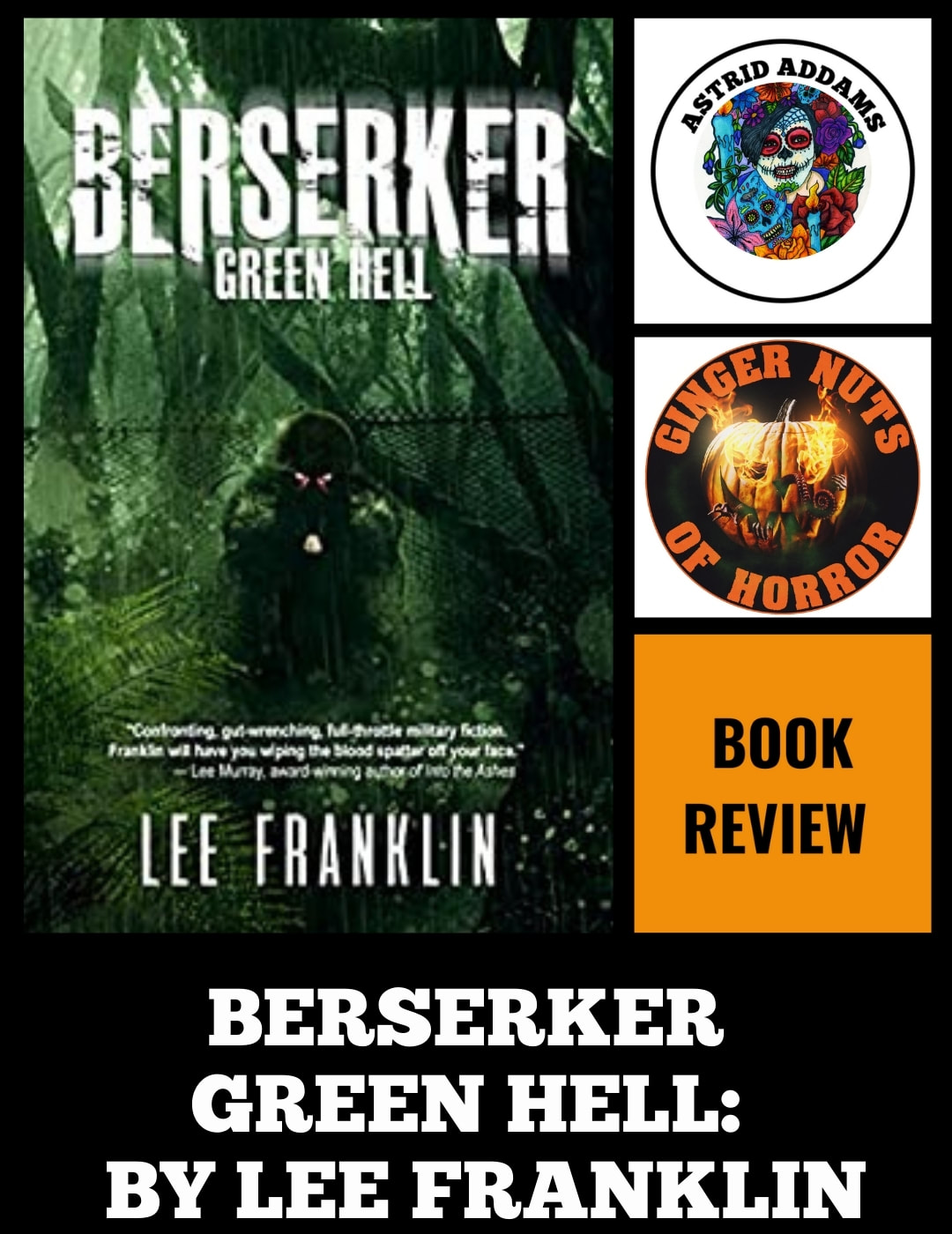
BOOK REVIEW:  BERSERKER GREEN HELL: SOMETIMES WAR IS BEYOND HELL BY LEE FRANKLIN

6/11/2021
HORROR FICTION REVIEW BERSERKER GREEN HELL- SOMETIMES WAR IS BEYOND HELL BY LEE FRANKLIN
​I read this book over four days whilst in the beautiful Keswick countryside. Whilst some books featuring gruesome violence and brutality would feel out of place if read within such an environment. Berserker Green Hell seemed to fit right in and kept me entertained and unsure of what was going to happen until the end.
 Berserker Green Hell: Sometimes War is Beyond Hell by Lee Franklin
I read this book over four days whilst in the beautiful Keswick countryside. Whilst some books featuring gruesome violence and brutality would feel out of place if read within such an environment. Berserker Green Hell seemed to fit right in and kept me entertained and unsure of what was going to happen until the end.

    Berserker Green Hell is written within the first person perspective of Pinny, a part aboriginal  Australian soldier on his second tour of the now notorious Vietnam War. Pinny is part of a small platoon of soldiers, tasked with retrieving the dog tags of fallen soldiers after combat has finished. The first third feels very like the brutal big budget Vietnam war films that are anti war. Think Full Metal Jacket kind of thing. The next two thirds feel more like science fiction or a conspiracy theorists fantasy. I won’t spoil it for you.

    Over all the main character Pinny is likeable and human. However the language he uses in the later two thirds do not feel like they come from the same Pinny narrating in the first third. Maybe the change is to represent the growing extreme circumstances, but to me it felt like a glitch in the narrative voice. I found the claustrophobia of both the jungle and the underground compound engaging. I also enjoyed the real horrors represented in both settings, I think Lee has a real understanding of true horror and what people are really afraid of. For me, I liked the start of the book best with the soldiers in the jungle and the war. I did also enjoy the rest of Berserker, particular the action and the delicious evil of Harding.
​
    All in all Berserker Green Hell is an above average good read which I’d recommend to people who like real horror, war stories as well as scientific secrets and conspiracy theories.

Berserker - Green Hell: Sometimes War Is Beyond Hell 
by Lee Franklin  

Picture
Something lurks in the northern shadows of Vietnam.

Known as the Reapers, Pinny and his special group of soldiers are sent to collect dog tags from their fallen comrades only to uncover the sinister underbelly of the Vietnam War, and a monstrous secret beyond comprehension.
Pinny might survive the war, but can he save his humanity?

“Confronting, gut-wrenching, full-throttle military fiction. Franklin will have you wiping the blood spatter off your face.” — Lee Murray, award-winning author of Into the Ashes

“Strong horror. Its relentless fast-paced narrative carries the reader along on a gruesome roller-coaster of a ride. Great stuff.” - Simon Clark, author of Vampyrrhic

"Brutal, bloody brilliance." - Tim Lebbon author of Eden

"
Berserker: Green Hell is one of the best Military Horror novels I've ever read." The Sci-fi and Fantasy Reviewer


Picture

THE HEART AND SOUL OF HORROR FICTION REVIEWS ​

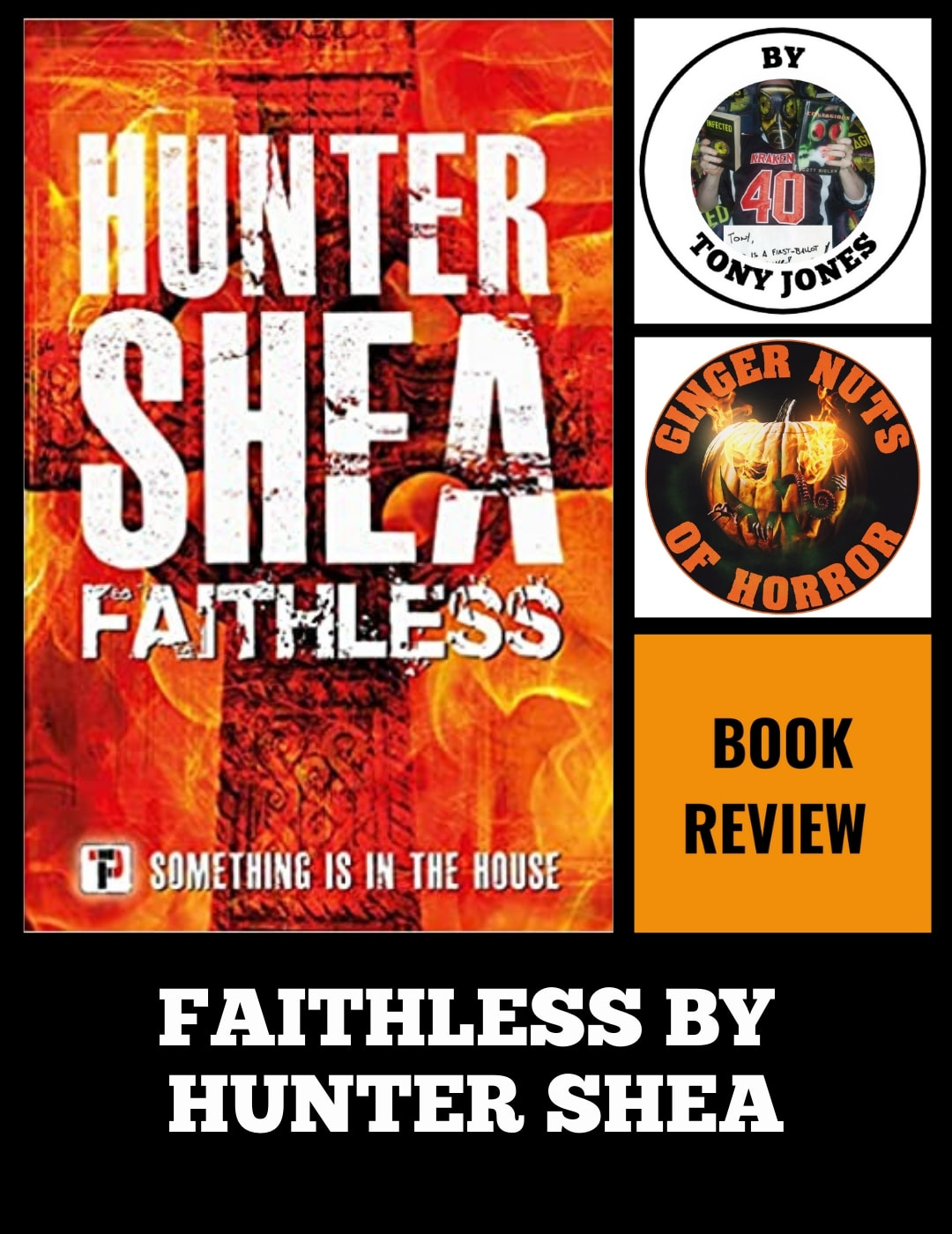
BOOK REVIEW: ​ FAITHLESS BY ​HUNTER SHEA

5/11/2021
FAITHLESS BY ​HUNTER SHEA
In recent times Flame Tree Press have been on an excellent run of form and are deservedly seen as one of the market leaders in indie horror and Hunter Shea’s Faithless is a fine addition to their catalogue. It impressively ticks many horror boxes: a killer (literally) opening, followed by superb setting the scene and pacing, lots of mystery and goes out with a serious bang.
​ Faithless by ​Hunter Shea

The brutal murder of a young family causes a
priest to have a crisis of faith like no other

Publisher ‏ : ‎ FLAME TREE PRESS; New edition (26 Oct. 2021)
Language ‏ : ‎ English
Hardcover ‏ : ‎ 304 pages
ISBN-10 ‏ : ‎ 1787586235
ISBN-13 ‏ : ‎ 978-1787586239

A book review by Tony Jones 
Since arriving on the scene around 2012 Hunter Shea has been seriously prolific with close to thirty releases. When it comes to fast-paced, over-the-top, often dumb, but always entertaining creature features Hunter is one of the best in the business and a decent percentage of his output falls into this category, with Fury of the Orca (2017), Antarctic Ice Beasts (2019) and Bigfoot in the Bronx (2021) being three recent examples. However, I am a much bigger fan of his recent run of more complex novels, all published by Flame Tree Press, which have considerably more depth than his b-movie style features. If you have never tried Shea previously, Creature (2018), Slash (2019) and Misfits (2020) are all high-quality horrors and are great places to start and have more ambition that those which feature Bigfoot or the many other monsters he frequently writes about.

Shea’s latest Faithless continues with the tradition of the afore mentioned three and was a terrific novel, riddled with tension, paranoia and a major change of direction in the second half, including a very cool twist I did not see coming. To avoid spoilers, I am going to be particularly vague about the direction of the plot, other than saying that is goes wildly over the top and you will eventually find yourself dropped in the middle of a scenario not too dissimilar from a cult seventies horror film. I’m not going to say which, as it would be too much of a spoiler for those of you who might have seen it.  
 

Faithless opens fast (very fast) in true Hunter Shea style and then sensibly backpedals on the horror and skilfully sets the scene, building tension in a similar manner successfully achieved in other recent novels. After the brutal opening, Shea lulls the reader into a false sense of security and by 50% into the story I was totally on the hook for the direction the plot might take. Was it supernatural? Was the main character going mad? It was all deliberately obscure and considering much of the first half of the story was effectively a grieving father and his alcoholic head (there were few other characters) it was never dull and the lack of action was not a problem. Perhaps Shea fans who prefer the speedier action style of Rattus New Yorkus (2018) or The Devil’s Fingers (2018) might find it too slow, but I much prefer this version of Shea’s writing. His recent run of four books for Flame Tree are amongst the most mature he has written and he is improving all the time, with Faithless really backing that fact up. However, any fans of the style of Jurassic Florida (2018) haven’t got much to complain about, as when this book really goes through the gears, it goes crazy.

The action opens with Father Raul Figeuroa driving home, in atrocious weather, to his wife and two kids. The journey is delayed due to a car breakdown and whilst on the phone to his wife it becomes clear somebody has broken into his family’s house. This was terrific writing, with the Father being totally helpful as he hears his kids and wife screaming. Fearing the worst, he panics and runs the several miles home, only to discover a bloodbath. This was a seriously intense way of opening a novel and there was little surprise the author then calmed the story down, as there was no way this intensity could have been maintained.

There was a convincing element of mystery thrown into the action and the reader becomes genuinely invested in uncovering why this family were targeted in what looks like a premeditated murder? There are no easy answers and as a result Raul abandons the priesthood and retreats to his aunt's empty farmhouse in upstate New York, intending to drink himself to oblivion where most of Faithless is set. Obviously it would be difficult for anybody in recovering from such a horrific loss, but Raul barely tries and cuts himself off from his old friends and church community. For the most part the pacing was excellent, however, there came a point that I wished Raul pulled himself together, thankfully an old friend (Felix) turns up to help before he genuinely tested my patience.

When knocking around (and getting permanently drunk) in his new house the plot takes a fascinating direction, meantime the unsolved murders lurk in the background, Raul begins to hear voices which resemble his dead wife and children. Equally strange, objects disappear from the house, are seemingly moved and a very large cat appears. Combined, there was a lot going on in Faithless and it was one of those books which asked a lot of questions, cleverly held back or shrouded the answers, until the latter stages where Shea dishes out some of the gore regular readers would be accustomed to seeing in his fiction. Clues and suggestions are dropped here and there, all of which were skilfully handled, creating an overall atmosphere which played a big part in a highly enjoyable read.
​
In recent times Flame Tree Press have been on an excellent run of form and are deservedly seen as one of the market leaders in indie horror and Hunter Shea’s Faithless is a fine addition to their catalogue. It impressively ticks many horror boxes: a killer (literally) opening, followed by superb setting the scene and pacing, lots of mystery and goes out with a serious bang.

​
Tony Jones

Faithless 
by Hunter Shea  

Picture
How do you survive hearing your family being brutally murdered over the phone? For Father Raul Figeuroa, all faith and hope are lost. Turning away from the priesthood, he retreats to his aunt's empty farmhouse in upstate New York, hoping to drink himself to oblivion. But he's not alone in the house. Something is trying to reach out to him. Or is he losing his grip on reality? When his childhood friend Felix comes to visit, things take a darker turn. The deeper they dig into the mystery, the closer they get to hell literally breaking loose.  
​
FLAME TREE PRESS is the imprint of long-standing Independent Flame Tree Publishing, dedicated to full-length original fiction in the horror and suspense, science fiction & fantasy, and crime / mystery / thriller categories. The list brings together fantastic new authors and the more established; the award winners, and exciting, original voices. Learn more about Flame Tree Press at www.flametreepress.com and connect on social media @FlameTreePress.


​​TODAY ON THE GINGER NUTS OF HORROR WEBSITE ​

BOOK REVIEW: BEYOND THE VEIL NEW HORROR SHORT STORIES EDITED BY MARK MORRIS

Picture

THE HEART AND SOUL OF HORROR FICTION REVIEWS ​

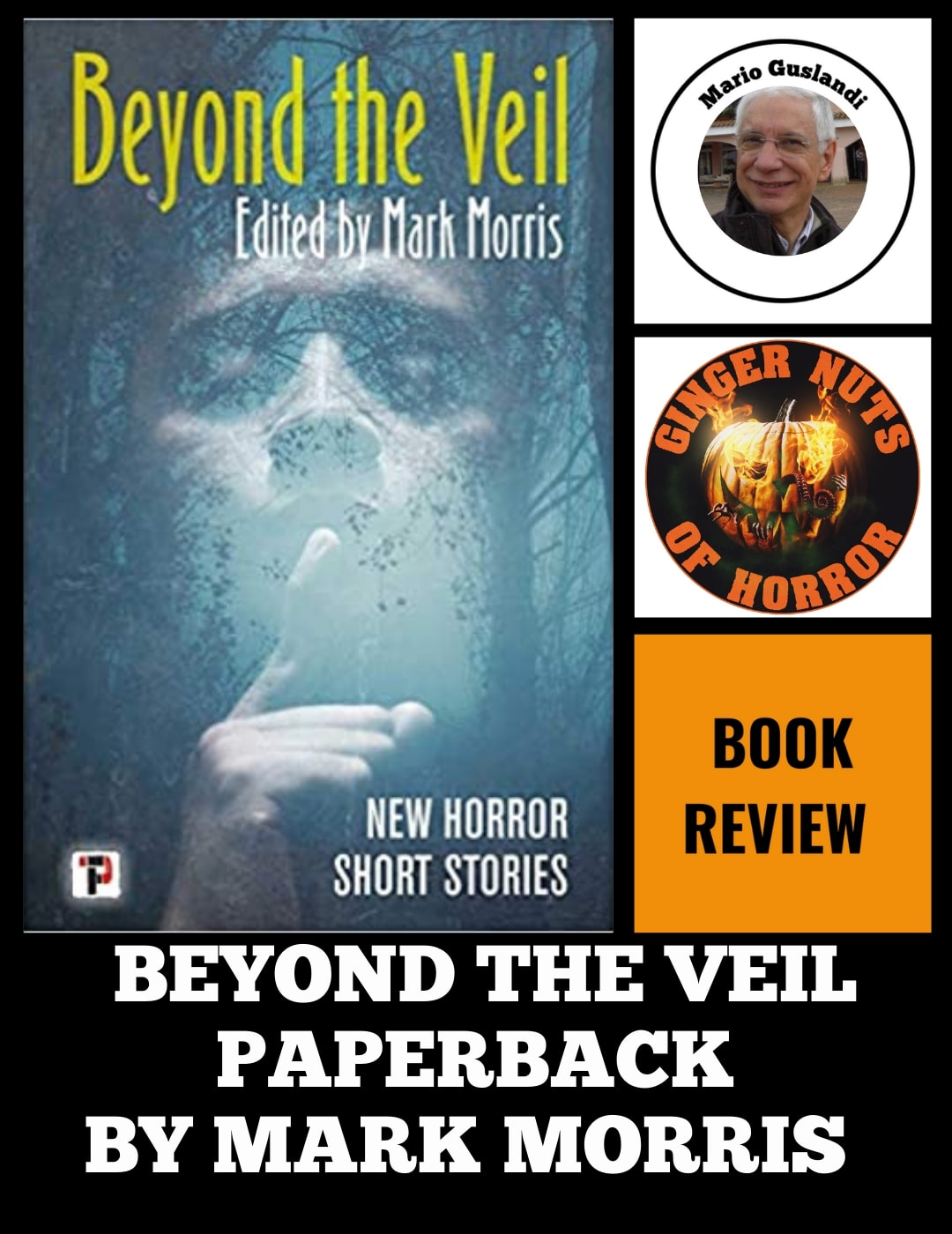
BOOK REVIEW: BEYOND THE VEIL NEW HORROR SHORT STORIES EDITED BY MARK MORRIS

5/11/2021
BEYOND THE VEIL PAPERBACK  BY MARK MORRIS
​“ The God Bag” by Christopher Golden is  truly an outstanding tale with a distinct supernatural taste, investigating the terrible secrets of the human soul, our selfishness,our hunger for life, even at the expense of our loved ones.
BEYOND THE VEIL New Horror Short Stories edited by Mark Morris

Publisher ‏ : ‎ FLAME TREE PRESS; New edition (26 Oct. 2021)
Language ‏ : ‎ English
Paperback ‏ : ‎ 320 pages
ISBN-10 ‏ : ‎ 1787584623
ISBN-13 ‏ : ‎ 978-1787584624

Reviewed by Mario Guslandi
Here’s a new massive horror anthology edited by Mark Morris, who seems to be following the steps of famous genre editors such as Ellen Datlow, Paula Guran and Stephen Jones.

The stories included in this loosely themed anthology explore, in different ways, what lurks behind everyday reality and what happens after death. As in any book of this type the quality of the contributions is a bit uneven, but on average most stories are good and some downright excellent.

My task, as a reviewer of such a hefty volume,  is to point out the tales that I feel are the best, hence especially worth to be mentioned.

“ The God Bag” by Christopher Golden is  truly an outstanding tale with a distinct supernatural taste, investigating the terrible secrets of the human soul, our selfishness,our hunger for life, even at the expense of our loved ones.

Other  great stories are the deeply disquieting “ Caker’s Man” by Matthew Holness, about a nasty, dangerous man whose cakes are indigestible and whose malign influence persists after his death, and ”A Mystery for Julie Chu” by Stephen Gallagher, a splendid, dark tale revolving around an old, bizarre radio set found in a second-hand market, with the uncanny property of catching the voices of the dead.

In the quite unusual “ The Dark Bit” by Toby Litt, a married couple is affected by a strange “disease” continuosly spreading every time they move through a dark area of their house, while in the well told “ For All the Dead” by Angeline B Adams & Remco van Straten we learn about the sad  fate of fishermen lost at sea and their desire to get back home alive or dead.

“Provenance Pond” by Josh Malerman is yet another offbeat tale depicting a young girl’s imaginary friend living in a pond by her house, and “ The Girl in the Pool” by Bracken MacLeod describes how a projected burglary in an empty villa gets sour when one of the thieves discovers a dead girl in the pool and things start to get weird...
​
Other contributors to the book are: Priya Sharma, Dan Coxon, Aliya Whitely, Jeremy Dyson, Lisa L Hannett, Karter Mycroft, Lisa Tuttle,Peter Harness, Lynda E Rucker, John Everson, Nathan Ballingrud, Frank J Oreto, Gemma Files.
Happy shivers!

Beyond the Veil Paperback 
by Mark Morris  

Picture
​Beyond the Veil is the second volume in an annual, non-themed horror series of entirely original stories, showcasing the very best short fiction that the genre has to offer, and edited by Mark Morris. This new anthology contains 20 original horror stories, 16 of which have been commissioned from some of the top names in the genre, and 4 of which have been selected from the 100s of stories sent to Flame Tree during a 2-week open submissions window.


TODAY ON THE GINGER NUTS OF HORROR WEBSITE ​

BOOK REVIEW: ​ FAITHLESS BY ​HUNTER SHEA

Picture

THE HEART AND SOUL OF HORROR FICTION REVIEWS ​

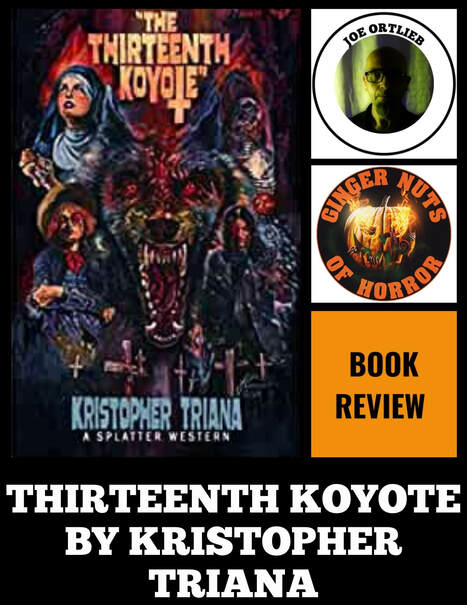
BOOK REVIEW - THIRTEENTH KOYOTE BY KRISTOPHER TRIANA

3/11/2021
HORROR FICTION REVIEW THIRTEENTH KOYOTE BY KRISTOPHER TRIANA


Thirteenth koyote
By Kristopher Triana

So  let me start by saying I'm not a fan of westerns,  movies, shows, books, any and all of it. I read this because I wanted a werewolf book to read and somebody told me to check it out. Let me just say I'm damn glad I did. The story starts off at about 80mph and hits 100 in no time. It's fast pasted non-stop from start to finish.

So well written filled with blood gore, and guts. When I got to part 2 of the story, I thought to myself this has been a great book I hope he doesn't drag the ending out for the next 200 pages. Not a chance Kristopher was just getting warmed up for the second act. Then it was balls to the wall nothing held back.
Thirteenth koyote is by far one of the best books I've read in a very long time. Hands down! If you don't pick this book up and read it then you are missing out. Reading this i think I went out a bought 4 more of Kristopher's books. So out of 5 I'm giving it 6. Damn right this book is that f@#$ing good.


Joe Ortlieb


The Thirteenth Koyote (Splatter Western) 
by Kristopher Triana  

Picture
An evil has returned to the town of Hope’s Hill. When a grave robber unearths the corpse of Jasper Thurston, a piece of the body is stolen, one that will call the Koyotes from across the plains. They are a vicious company of outlaws, part madmen and part wolves. Their leader is Glenn the Dreadful, and he’s out to gather the power of the Menhir, a particle from an ancient evil. The fate of Hope’s Hill—and perhaps the world—rests in the hands of unlikely heroes. A rugged U.S. Marshall, a teenage girl out for revenge, an emancipated slave, a nun with a dark secret, and a mysterious half-breed with the number thirteen tattooed on his neck. The Thirteenth Koyote is a werewolf western from Splatterpunk-Award-winner Kristopher Triana, author of Gone to See the River Man and Full Brutal. Filled with gunfights as well as ghouls, it is a horror epic as big as the open range.

Publisher ‏ : ‎ Death's Head Press LLC (29 Dec. 2020)
Language ‏ : ‎ English
Paperback ‏ : ‎ 502 pages
ISBN-10 ‏ : ‎ 1950259331
ISBN-13 ‏ : ‎ 978-1950259335

​TODAY ON THE GINGER NUTS OF HORROR WEBSITE ​

Picture

THE HEART AND SOUL OF HORROR FICTION REVIEWS ​

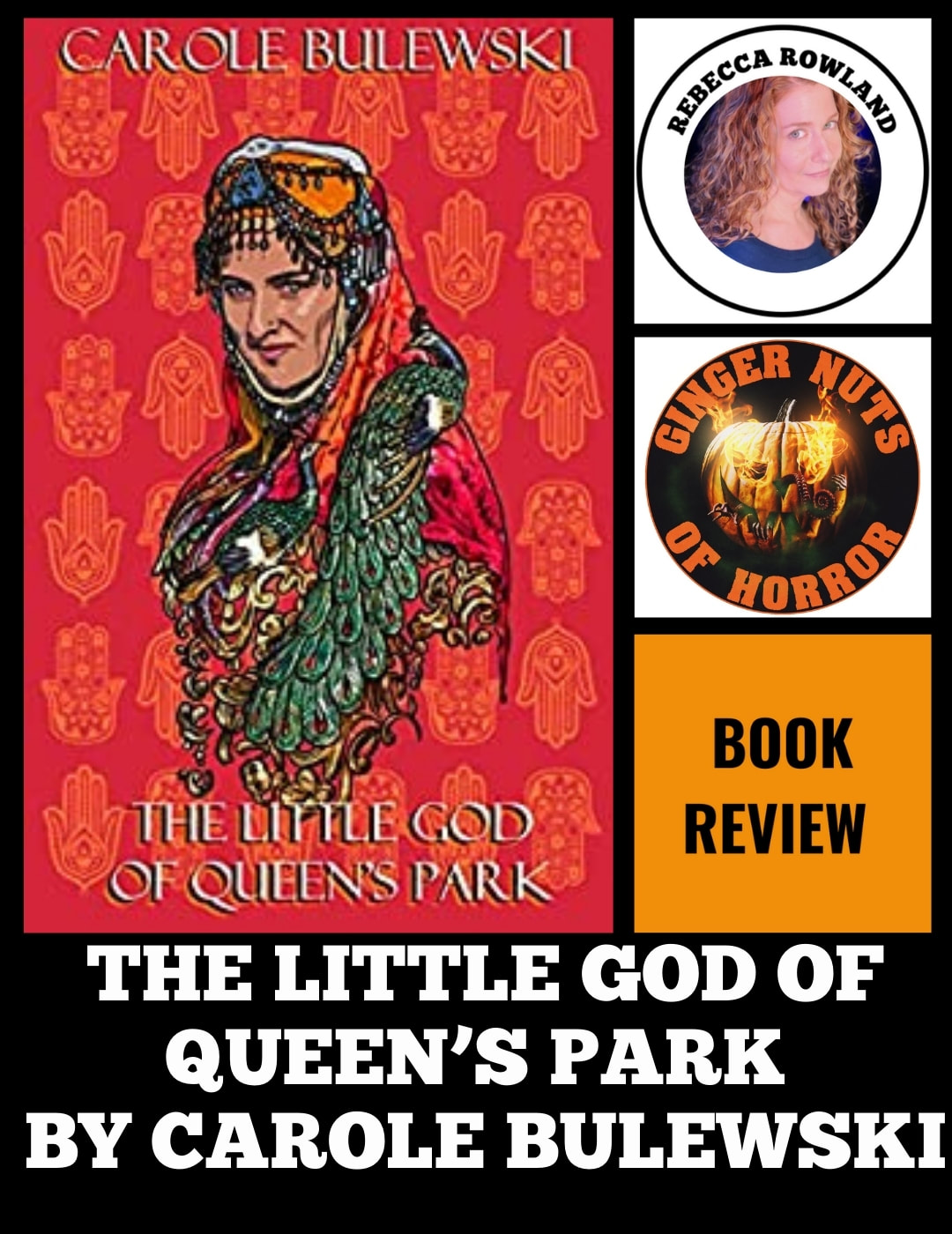
THE LITTLE GOD OF QUEEN’S PARK BY CAROLE BULEWSKI [FICTION REVIEW]

3/11/2021
THE LITTLE GOD OF QUEEN’S PARK BY CAROLE BULEWSKI
The Little God is a smart novel: there are wisps of warning regarding the negative impact social media and other forms of mindless entertainment has made on our mental sharpness as a species and sly winks (whether intentional or not) at the cult of personality a few infamous individuals managed to glean in recent decades despite the horror of hands-tied onlookers. 
The Little God of Queen’s Park by Carole Bulewski

(Review by Rebecca Rowland)
In Marcus Zuzak’s The Book Thief, the everyday horrors of Nazi Germany during the Second World War are witnessed and reported on by Death himself, who eventually admits his voyeurism has caused him to be “haunted by humans.” In Carole Bulewski’s The Little God of Queen’s Park, the omniscient spectator is named Lilith, and she, too, is observing a human world ravaged by destruction. Here, however, the setting is post-apocalyptic: “half of the population had disappeared under water,” modern conveniences have evaporated, and the true nature of humankind is revealed when a group of interlopers joins a community of survivors in Queen’s Park, London.

Framed as part religious horror, part dystopian morality tale, and despite clocking in at 225 pages, Bulewski’s short novel elbows its way into ensemble piece territory even as Iris and Lilith’s viewpoints steer most of the narrative. Counted among the multi-dimensional characters are Winston, a charismatic leader of musicians who join the community after their previous homestead collapses; the aforementioned Iris, a former sculptor and current co-owner of the co-op building; Raj, an Indian man whose family disowned him before The Flood when they discovered he was gay; and Julian, a xenophobic Cassandra character who warns of the destruction Winston’s group will bring.

There are subtle scenes of nefariousness sprinkled about early on: one character spent time in a bizarre environmental cult until he gathered the courage to flee. After escaping, he committed himself to a mental institution, his hair having turned completely white from fright.  Another character falls into a deep trance, chanting Lilith’s name again and again. It is Iris, however, who eventually channels a relationship with the lurking spirit and is soon plagued by a series of mysterious visions featuring a young girl with “dark eyes and dark hair, [and] olive skin aged before her time.”

Iris is a medium and is attempting to decipher the dreams’ meanings when another resident points out, “Lilith…Laila Tov means goodnight in Hebrew. The crazy people at the Chai community, at least the Israeli ones, used to say that to each other. One day I asked if it was Laila as in the name, and Noam explained to me that it was derived from the name Lilith. Lilith, mother of demons, the one who comes at night.”

Immediately after arriving at the housing development, Winston, a devout Seventh-Day Adventist, takes it upon himself to lead the residents in Sabbath services, but his plans expand much further beyond keeping tradition. A man whose faith swelled to consume him after he found himself saved from The Flood, Winston spreads a gospel that allows no mercy for vocal dissenters. As religious fervor envelopes Iris’ community, she begins to acknowledge Julian’s unheeded warning: “Winston and the Apostles won’t be starting a Church here in the Queen’s Park House, but they will do the next best thing: indoctrinate people at a time when they are mentally fragile and easy to manipulate.”

Winston and his ever-growing flock of acolytes transform the first floor of the community housing development into a funeral home, and the people of Queen’s Park, still shell-shocked from the recent mass-destruction, are too frightened to do anything but follow orders in order to be “saved.” “This would have been impossible before the Flood, at least in this country,” notes Iris. “But things have changed beyond recognition. People are tired…they have no distractions. The one source of entertainment people could have is reading, for a lot of books have survived the disaster…but no one was reading anymore before the Flood, and people still cannot concentrate long enough to be able to read a novel. They’re ready for the great entertainment that is the new religion Father Winston and the Apostles have in store for them, for all of us.” Winston must reckon with Lilith, however, who has decided that the Flood is a vehicle of rebirth that has paved the way for her return.

Bulewski’s writing style is cozy and readers will find it easy to hop onto the story train as it slowly increases in speed, but with that familiar voice come a bit of verbosity, not to the point of distracting the reader or interfering with the plot, but enough that readers who favor a fast-paced storyline may feel frustrated at times. Despite this mild flaw, The Little God is a smart novel: there are wisps of warning regarding the negative impact social media and other forms of mindless entertainment has made on our mental sharpness as a species and sly winks (whether intentional or not) at the cult of personality a few infamous individuals managed to glean in recent decades despite the horror of hands-tied onlookers. “People need something else in their lives so badly now,” Lilith says. “Something that is not just about survival but about believing in a power, and ideas, greater than themselves. They need a new religion, and I’m ready to be its god.” Consider it a cautionary tale for a world slowly pulling itself from the wreckage of a worldwide pandemic, and take heed.

Picture
In a not-so-distant world destroyed by an environmental disaster, a creature by the name of Lilith observes the daily lives of people forced to live together in what used to be a family house in Queen’s Park, North London. How they are trying to adapt to the new world order, to having lost everything, to being forced to do demanding manual work, and, most of all, how they interact with each other.

But who is Lilith, or rather, what kind of creature is she to be able to read the innermost thoughts of the people living in the house? Could she really be a tri-millennial spirit first bound to this plane of existence by her witch mother in ancient Jerusalem, as she claims?

Events take an unexpected and rather sinister turn when a new group of people who need rehousing after the collapse of a hastily constructed high-rise building come to the Queen’s Park house. Winston, their leader, is a preacher who announces the Second Coming for the virtuous people who will follow his teachings. But is he really who he pretends to be? Are his plans truly for the happiness of mankind? And how does he know so much about Lilith?

Publisher ‏ : ‎ Dream's Edge Publishing (11 Sept. 2021)
Language ‏ : ‎ English
Paperback ‏ : ‎ 227 pages
ISBN-10 ‏ : ‎ 1913844072
ISBN-13 ‏ : ‎ 978-1913844073

​TODAY ON THE GINGER NUTS OF HORROR WEBSITE ​

FILM REVIEW- BLOODTHIRSTY ( DIRECTED BY AMELIA MOSES)

THIRTEEN FOR HALLOWEEN 2021: GONE HOME [FEATURE]

Picture

THE HEART AND SOUL OF HORROR FICTION REVIEWS ​

SPLASHES OF DARKNESS: COMPLETE DARKNESS [REVIEW]

2/11/2021
Picture
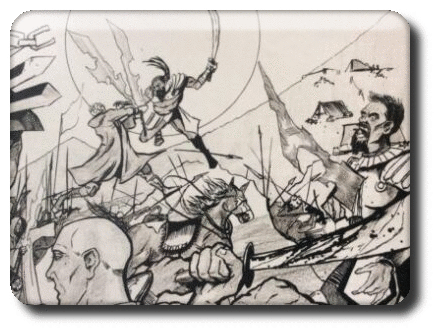
The production design here is clean and the paper quality high, so it’s a bit of a surprise to find that the artwork is monochrome and quite scratchy. It reminded me of some of the earlier Dredd strips in 2000AD, packed with ambitious cityscape details (though strangely low on inhabitants).
Comic-books are a medium, not a genre; they can tell any story and suit any palate. You want horror? I've got bottles of the stuff. Welcome to 'Splashes of Darkness.' ​
​Complete Darkness – Kickstarter
A Splashes of Darkness review by
Dion Winton-Polak
Picture
For every carefully-crafted cocktail you’ve savoured, there were dozens of trial runs: rough concepts worked through and taste-tested until they hit the spot. The process of concoction, experimentation and refinement is the very essence of creation. So we come to Complete Darkness, a blended-genre comic-book adaptation of Matt Adcock’s cyberpunk fantasy novel. It’s a little raw, a little rough, but there’s something interesting here. It’s on Kickstarter now, so you could help it develop and grow.

The Pitch:
​

Cleric20 is a hedonistic loner, but he might just be the saviour of the world. It’s 2242 and the future has arrived – full of flying cars, robots, dystopian companies and sprawling megacities. Unfortunately, the past is about to arrive too, along with a demonic horde – all thanks to a revolutionary new piece of technology. The starlight bounce allows human observers to view historical events. As the first beam returns to Earth, the research team witnesses an ancient battle taking place. Alas, they are also seen in return by the demon Razour. The day of carnage is coming.
Picture


Thoughts on the Comic:
We don’t always have time to burn through a novel, but comic-book adaptations like this can be a quick and easy way for consumers to discover *new worlds. (One Hollywood has begun relying upon more and more in their search for content and product recognition.) Comics are not quick, easy, nor cheap to produce though – as anyone in the industry will tell you – which is why indie publishers started to turn to crowdfunding.
​
I’m not familiar with the novel, the world, or the author, but I really dug the concept as Adam described it to me, so I snagged a copy at FantasyCon. As I settled down to it, I appreciated the care with which I was brought up to speed. The first couple of pages set up the premise (in a short paragraph), and introduce us to the main characters (each with a single image and brief description). The production design here is clean and the paper quality high, so it’s a bit of a surprise to find that the artwork is monochrome and quite scratchy. It reminded me of some of the earlier Dredd strips in 2000AD, packed with ambitious cityscape details (though strangely low on inhabitants).
Picture
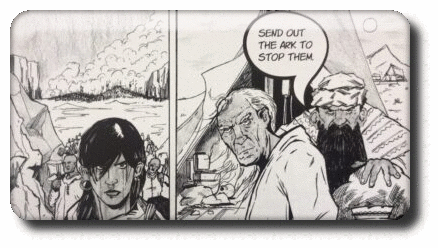
There are only 14 pages here, so we’re whisked through at a breakneck pace, barely meeting our hero before the inciting incident occurs and the threat emerges. The scene at the encampment in Canaan with the Ark is the standout for me, full of tension. The action, when it occurs, is a little stiff –caused, I think, by the line-work being just too thick, in stark contrast to the previous page. However, the artist does manage to give the illusion of a fast-moving battle with some shrewd details that lead the eye from element to element across the double-page spread.
Picture
In addition to the main comic, Adcock has produced a short story set in the same world – bonus content to thank the backers – which riffs on Christine by Stephen King. Not wholly to my tastes but again, it’ll give you that window into the wider world and help you decide if Cleric20 and co. are your cup of tea.

Issue 1 of Complete Darkness has already been produced – so you’re guaranteed a copy – and the Kickstarter has been fully funded with a month still to go. Having paid the creators, all profits will be ploughed back into creating Issue 2, and so on. The more support thrown at these things, the more likely the project as a whole can reach completion. Prefer to just grab the novel? There are links here or, better yet, order at your local bookshop.


* One writer I know has created no less than 16 spin-off comics from his novels, along with a Find-Your-Fate book, an audio drama, and a middle-grade adventure book. It’s a goddamned multi-media empire.
Picture
Written by Matt Adcock
Illustrated by Karl Brown
Published by Complete Darkness Comics
Kickstarting Now!
Reporter: Dion Winton-Polak


TODAY ON THE GINGER NUTS OF HORROR WEBSITE ​

PAPERBACKS FROM HELL: 
​​BLACK AMBROSIA BY ELIZABETH ENGSTROM

WARNING (2021) DIRECTED BY AGATA ALEXANDER [REVIEW]

Picture

THE HEART AND SOUL OF HORROR FICTION REVIEWS ​

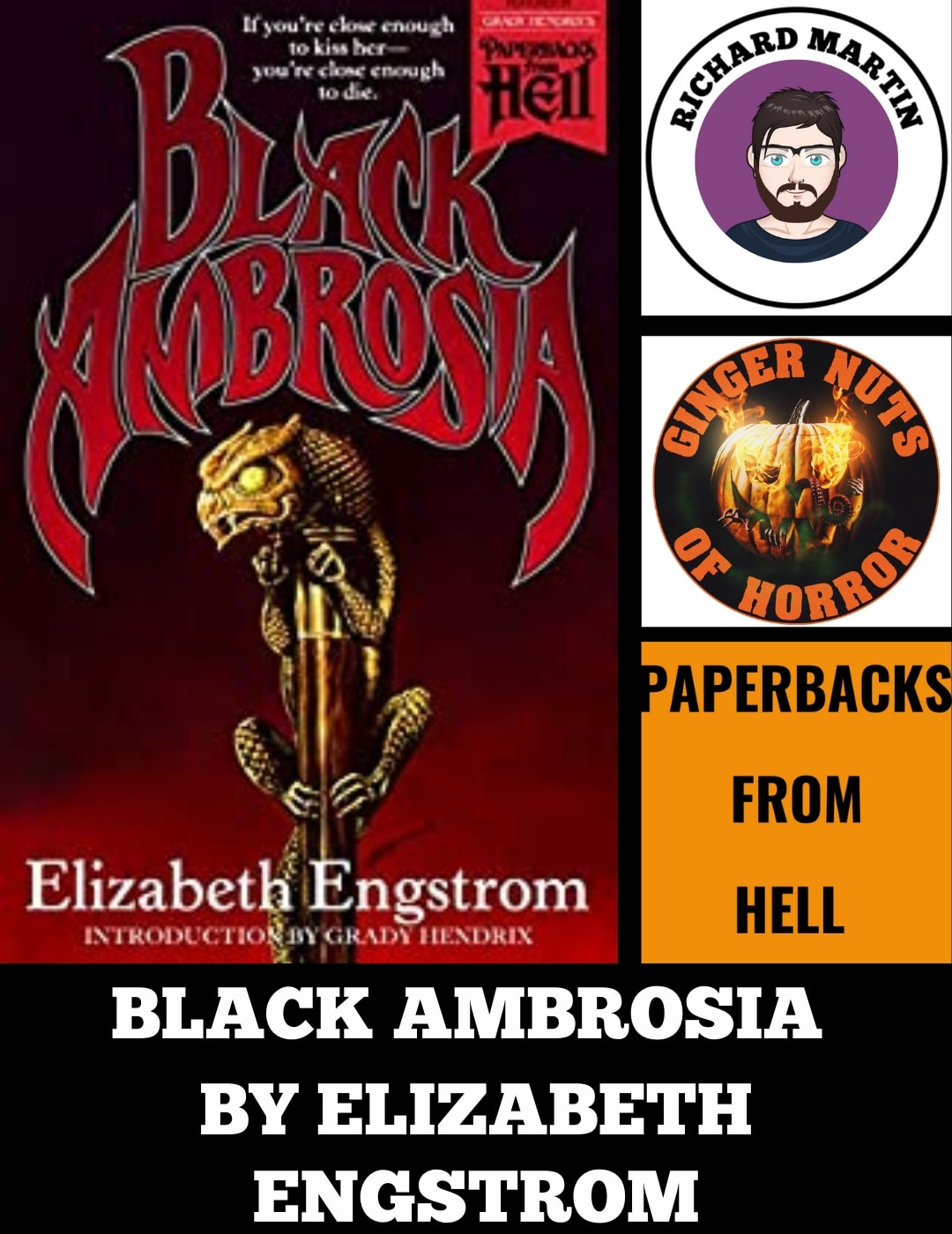
PAPERBACKS FROM HELL:  ​BLACK AMBROSIA BY ELIZABETH ENGSTROM

2/11/2021
​BLACK AMBROSIA BY ELIZABETH ENGSTROM
Part psychological character study, part cross country vampire epic, ‘Black Ambrosia’ is a unique take on vampire mythology. It reads like Anne Rice by way of Shirley Jackson, a story where the lead character becomes a vampire almost by sheer force of will.
​Black Ambrosia by Elizabeth Engstrom

Publisher ‏ : ‎ Valancourt Books (1 Oct. 2019)
Language ‏ : ‎ English
Paperback ‏ : ‎ 270 pages
ISBN-10 ‏ : ‎ 1948405504
ISBN-13 ‏ : ‎ 978-1948405508

A Paperbacks from Hell review by Richard Martin 

Horror was doing big business in the bookstores in the 1960s. This was largely thanks to gothic literature which promised gentle tales of haunted manors and melancholy spirits on their covers. Things took a more devilish turn towards the end of the decade with the release of ‘Rosemary’s Baby’ in 1967, followed by William Peter Blatty’s ‘The Exorcist’ and Thomas Tryon’s ‘The Other in 1971, but the real fun began in 1974 with the release of two books that would open the floodgate for pulp horror.

Jaws (Peter Benchley) and The Rats (James Herbert) proved that there was an appetite out there for books that weren’t ashamed to be all-out horror. The publishing industry took note and throughout the 1970s and 1980s, companies such as Zebra, Tor and Pinnacle published a seemingly endless supply of books promising unspeakable terrors and sporting covers that had to be seen to be believed. Sometimes the content was great, other times… not so much, but one thing that you could always be guaranteed was a fun and entertaining read.

By the mid-90s, horror paperbacks were seemingly out, and thrillers were in. Gone were the lurid covers of skeletons, evil dolls, creepy kids and flesh hungry critters. The horror was still there, it just wasn’t marketed as such, treated like a shameful secret. As titles fell quickly out of print, many of the horror authors and their work became increasingly forgotten by all but the most avid fans and collectors.

Enter Will Errickson, Grady Hendrix and ‘Paperbacks From Hell’.

In 2017 Hendrix and Errickson released their seminal love letter to the horror paperbacks of a bygone era, shining a light on some long-forgotten classics and renewing interest in the mass market horror paperbacks of the 1970s and 80s. Not content to simply share their passion for these oft maligned but much missed books, thanks to their partnership with Valancourt Books, we are being treated to new reprints of the best of these decades-old, forgotten gems.

To date, thirteen reprints have been published (with a fourteenth on the way), retaining the original cover art and boasting brand new and insightful introductions from Hendrix and Errickson. In this series I’ll be reading each and every one and posting articles at Ginger Nuts of Horror looking back at the best books two decades of horror has to offer.

I’ll confess upfront, that I wasn’t terribly excited to get to this book in my readthrough of Valencourt’s recent reprints. Nothing to do with the author herself (‘When Darkness Loves Us’, is an absolute must-read), but rather the subject matter.

Vampires.


‘Black Ambrosia’ is Enstrom’s debut novel, and second published book after ‘When Darkness Loves Us’. Released in 1988 (the same year that Anne Rice released her second ‘Interview With A Vampire’ sequel, ‘The Queen of the Damned’), this was at a time when vampires were doing big business, both on-screen and on the page. The late 70s had seen Anne Rice release the seminal ‘Interview With a Vampire’ just a year after the king of horror himself had released Salems Lot. Big releases like ‘The Hunger’ and ‘Fevre Dream’ going into the 1980s, not to mention a plethora of successful movies (‘Lost Boys’, ‘Near Dark’, ‘Fright Night’, to name just a few) kept the vampire in the limelight and Black Ambrosia came along at the tail end of the decade where the vampire was big business.

I’ve never been a particularly big fan of vampire literature, particularly novels of this era, which often leaned more to the gothic tradition. Anne Rice’s ‘The Queen of the Damned’, which was released the same year, reached number 1 on the New York Times bestseller list. It’s easy to see why there were so many imitators. While ‘Black Ambrosia’ does owe a debt to the work of Anne Rice (the way the narrative voice is used is very similar) the similarities end there.

Black Ambrosia tells the story of Angelina, a teenage girl who loses her mother and is left to live with her stepfather. She soon leaves home and embarks on a cross country journey. Effectively homeless, it’s not long until she finds people all too willing to take advantage of her vulnerability.

After a potentially dangerous encounter, she discovers within herself a power she has never tapped into before, one that will give her a thirst for blood and a preference for the night. Never staying in one place too long, she becomes stronger and bolder with each confrontation, while she is hunted relentlessly by a figure from her past.

I’m a sucker for an unreliable narrator, and Angelina is a great example. Black Ambrosia isn’t especially graphic or violent and is more of a slow burn character study, where the reader is being told the story from the perspective of someone with a tenuous grasp on reality. With each passing chapter, that grasp lessens and it remains unclear for large portions of the book how much of what Angelina is telling us is real, fiction, or something in between. To counter this, Engstrom uses a device that is somewhat inspired. Each chapter ends with a different character adding to the story, often providing an account of the same events Angelina has just recounted, but from their own perspective. It’s incredibly well utilised, particularly early on, and really helps to sell the notion that the facts as presented by our narrator are not necessarily a fair reflection of the book’s events.

The books ambiguity may frustrate some readers, but I believe it’s one of its biggest strengths. Almost nothing we’re told by Angelina throughout the story can be taken at face value. Even without the different perspectives that refute her version of events, the things she tells us don’t always add up, and it makes for a fascinating read, in the same vein of Shirley Jackson’s classic ‘We Have Always Lived in the Castle’. There are enough hints throughout to get a picture of some version of the truth, but a lot can be left open to each individual readers interpretation. Even the additional perspectives sprinkled in can’t necessarily be relied upon, as some characters are given plenty of motivation to lie, or at least only offer a partial truth, and while this level of ambiguity may not be for everyone, it at least offers a unique reading experience that different readers can, and will, interpret in different ways. I would have argued that the question of whether or not Angelina really is a vampire is pretty definitively answered by the end of the book after my initial readthrough, but skimming over the book again now for this review, I’m not so sure…

As effective and unique as the set-up is, the story does begin to feel a little repetitive as we get into the midway point. The closing section of each chapter that tells the story from a different character’s perspective begins to focus almost exclusively on one particular character. Not a particularly engaging one either and, perhaps most damningly, one that isn’t actually with Angelina throughout most of the story. This results in the previously effective switch in perspective ceasing to add a great deal to the story, and the plot loses its forward momentum and becomes a series of set pieces until things get back on track for the (admittedly excellent) finale. The real travesty is that we stop seeing Angelina’s actions through another (perhaps more reliable) characters eyes and the book loses one of its most interesting and defining features for a significant portion of its page count.
​
Part psychological character study, part cross country vampire epic, ‘Black Ambrosia’ is a unique take on vampire mythology. It reads like Anne Rice by way of Shirley Jackson, a story where the lead character becomes a vampire almost by sheer force of will. It is a bold choice to make your lead character someone who has succumbed to insanity, her behaviour and thought processes becoming increasingly erratic as the story progresses, and it is a gripping and utterly fascinating read, flaws and all.
        
Join me next time when I’ll be sharing my thoughts on Nightblood by T. Chris Martindale. If you’d like to read along with this series and want to pick up copies of the books, or learn more about Valancourts’ Paperbacks From Hell line, visit their site at www.valancourtbooks.com/paperbacksfromhell

Black Ambrosia (Paperbacks from Hell) 
by Elizabeth Engstrom  

Picture
Angelina is a killer. You’d never know it to look at her—until you look into her eyes.
Angelina doesn’t kill out of hatred or fear—she kills out of love, bringing solace to her victims, guided by the seductive Voice that speaks only to her.
Angelina offers you eternal peace—at the cost of your soul!
This new edition of Elizabeth Engstrom’s rare and highly sought-after 1980s horror classic features an introduction by Grady Hendrix (Paperbacks from Hell) and the original cover art by Bob Eggleton.
“Behind Engstrom’s soft-voice style is power, is surprise, is—well, ferocity!”—Theodore Sturgeon


​TODAY ON THE GINGER NUTS OF HORROR WEBSITE ​

WARNING (2021) DIRECTED BY AGATA ALEXANDER
​ [REVIEW]

SPLASHES OF DARKNESS: COMPLETE DARKNESS
[REVIEW]

Picture

THE HEART AND SOUL OF HORROR FICTION REVIEWS ​

Previous
Forward
    Picture
    Picture

    RSS Feed

    Archives

    May 2023
    April 2023
    March 2023
    February 2023
    January 2023
    December 2022
    November 2022
    October 2022
    September 2022
    August 2022
    July 2022
    June 2022
    May 2022
    April 2022
    March 2022
    February 2022
    January 2022
    December 2021
    November 2021
    October 2021
    September 2021
    August 2021
    July 2021
    June 2021
    May 2021
    April 2021
    March 2021
    February 2021
    January 2021
    December 2020
    November 2020
    October 2020
    September 2020
    August 2020
    July 2020
    June 2020
    May 2020
    April 2020
    March 2020
    February 2020
    January 2020
    December 2019
    November 2019
    October 2019
    September 2019
    August 2019
    July 2019
    June 2019
    May 2019
    April 2019
    March 2019
    February 2019
    January 2019
    December 2018
    November 2018
    October 2018
    September 2018
    August 2018
    July 2018
    June 2018
    May 2018
    April 2018
    March 2018
    February 2018
    January 2018
    December 2017
    November 2017
    October 2017
    September 2017
    August 2017
    July 2017
    June 2017
    May 2017
    April 2017
    March 2017
    February 2017
    January 2017
    December 2016
    November 2016
    October 2016
    September 2016
    August 2016
    July 2016
    June 2016
    May 2016
    April 2016
    March 2016
    February 2016
    January 2016
    December 2015
    November 2015
    October 2015
    September 2015
    August 2015
    July 2015
    June 2015
    May 2015
    April 2015
    March 2015
    February 2015
    January 2015
    December 2014
    November 2014
    October 2014
    September 2014
    August 2014
    July 2014
    June 2014
    May 2014
    April 2014
    March 2014
    February 2014
    January 2014
    December 2013
    November 2013
    October 2013
    September 2013
    August 2013
    July 2013
    June 2013
    May 2013
    April 2013
    March 2013
    February 2013
    December 2012

https://l.facebook.com/l.php?u=https%3A%2F%2Fmybook.to%2Fdarkandlonelywater%3Ffbclid%3DIwAR1f9y1sr9kcIJyMhYqcFxqB6Cli4rZgfK51zja2Jaj6t62LFlKq-KzWKM8&h=AT0xU_MRoj0eOPAHuX5qasqYqb7vOj4TCfqarfJ7LCaFMS2AhU5E4FVfbtBAIg_dd5L96daFa00eim8KbVHfZe9KXoh-Y7wUeoWNYAEyzzSQ7gY32KxxcOkQdfU2xtPirmNbE33ocPAvPSJJcKcTrQ7j-hg
Picture