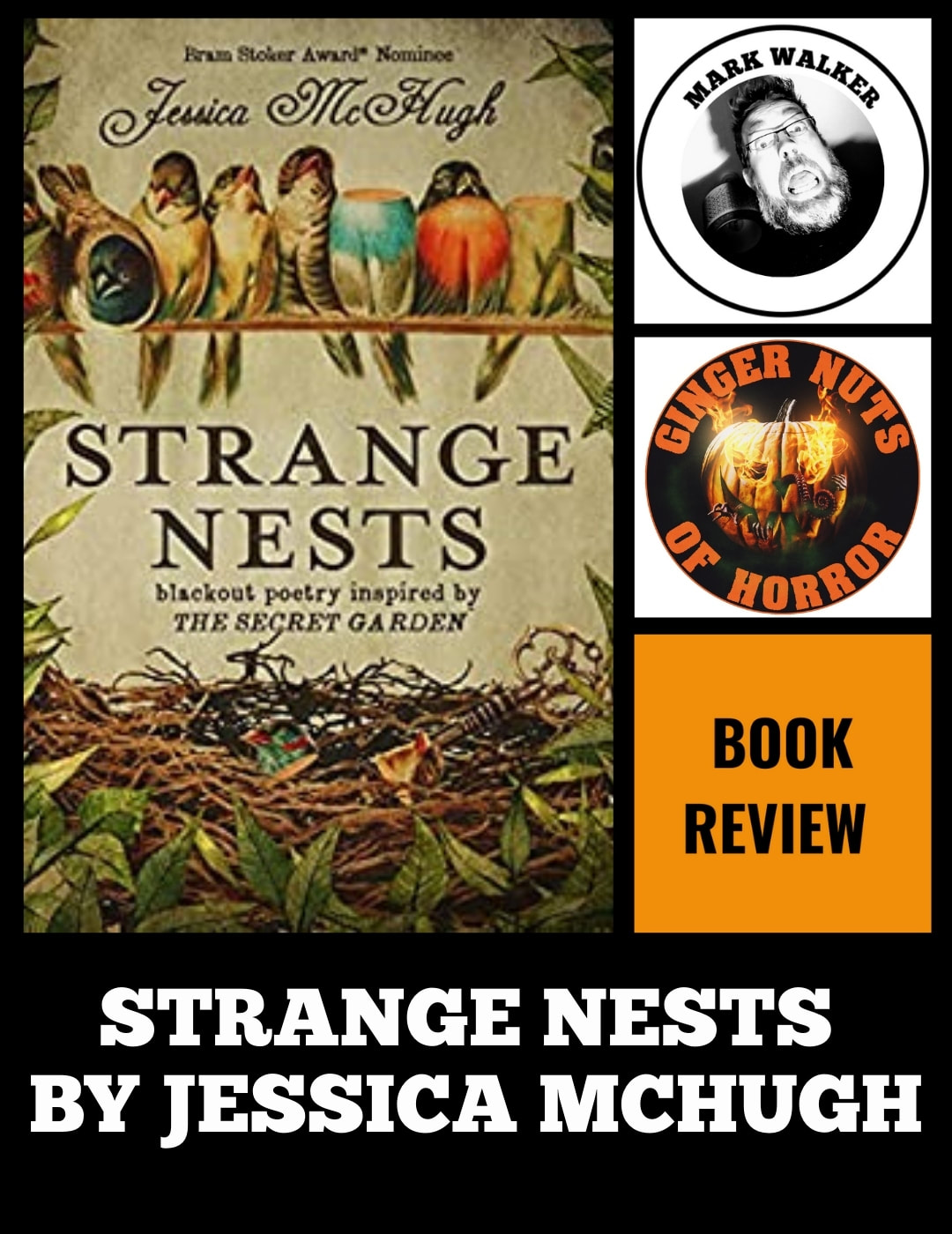
Strange Nests by Jessica McHugh ASIN : B09BBKQZSH Publisher : Apokrupha (18 Aug. 2021) Language : English File size : 50844 KB Simultaneous device usage : Unlimited Review by Mark Walker for Ginger Nuts of Horror So, poetry is about honesty isn’t it? So let’s be honest. My experience of poetry and deeper understanding of the form is lacking. For someone who is limited to memorising The Charge of the Light Brigade at primary school and loving a book of nonsense poems by Spike Milligan (including the still remembered Fred Fernackerpan) I may not be the best person to be reviewing a book of serious poetry. Or maybe that’s a good thing? I’m not coming with any preconceptions or biases and, to be even more honest, before I read the collection, I didn’t even know what Blackout Poetry was. If Jessica is reading this review, I suspect this is the point where her eye has started twitching and she’s wondering why on Earth is this idiot reading my poetry if he has no idea what it even is? Bear with me, I’m a quick learner… When I received my review copy and flicked through it, every other page was an extract from another book or text, with certain words highlighted and others, well, blacked out. And this fascinated me. As it turns out, blackout poetry (to me) is on another level; a form of poetry that I can only imagine takes a lot of hard work and talent to produce. Intrigued, I just got stuck in… Strange Nests is a collection of just over 40 short poems across 3 chapters, entitled BODY, ROOT and KNIFE, that take the reader on a journey through a range of emotions, exploring themes of life and death, of belonging and leaving, the wonder of childhood and the pain of adulthood, being yourself and knowing others. Although I felt the title of one of the poems, ‘Curious and Gloomy’ could easily be the title of the book as a whole, there is still positivity to be found amongst the pain. The raven is a recurring motif throughout the book and the bird represents a totem of loss and ill omen, of the dead and lost souls, but it can also be associated with prophecy and insight. As the above write up from Amazon attests, the book explores the ‘transformative nature of grief’ and it does so in both positive and negative ways. Or does it? Isn’t that the beauty and the curse of poetry, and not just for the uninitiated? Or maybe it isn’t? Maybe poetry is supposed to paint the world with broad strokes and leave much to the imagination and our own interpretation? I am not sure if my interpretation of Jessica’s words is the correct interpretation, but it is MY interpretation and perhaps that is what counts? Regardless of my understanding, Jessica and her poems have made me feel SOMETHING. My experiences coming into these themes will be different from Jessica’s, but we have all known loss, grief, love and hurt, and Jessica has etched her experiences, pain and emotion onto the page for all to see and share. The reader is allowed take that, internalise it, and enjoy their own interpretation of the words and how they resonate with their life and their experiences. A shared celebration of different experiences. Because I was reviewing the book, I perhaps took longer over them than if I was reading for any other reason, and I took short notes about every poem and what each meant to me. There are a few gaps in my notes for the poems I was not sure about, but the majority have something. They all made me feel something. Actually, even the ones I was not sure about made me feel something and, for someone who is not traditionally a poetry reader, I am intrigued to go back and explore them some more. So I may not have fully understood all of the poems and some may have worked more for me than others, but what is clear from the collection, is that Jessica is a talented poet. I know I said I am no expert, so this might sound a bit strange, or even ridiculous coming from me, but the crux of the matter is this; I read the poems in two sittings, I enjoyed reading them and I didn’t get bored or distracted. I am not going to delve into the poems or try and dissect them individually. I think poetry is a personal thing and, as I have alluded to, if we are going to share the inner, personal thoughts of the poet, we should enjoy our own interpretations and our own feelings. To analyse and compare too clinically would strip the poems of their power and magic; break that secret connection with the poet. Strange Nests is a thought-provoking and powerful collection of short poems exploring a range of emotions and experiences that even a novice poetry reader can appreciate and learn from. It is worth a look, even if it is just to get a glimpse at the fascinating world of blackout poetry Strange Nests |
|
Publisher : Unsung Stories Limited (2 Sept. 2021)
Language : English
Paperback : 244 pages
ISBN-10 : 1912658143
ISBN-13 : 978-1912658145
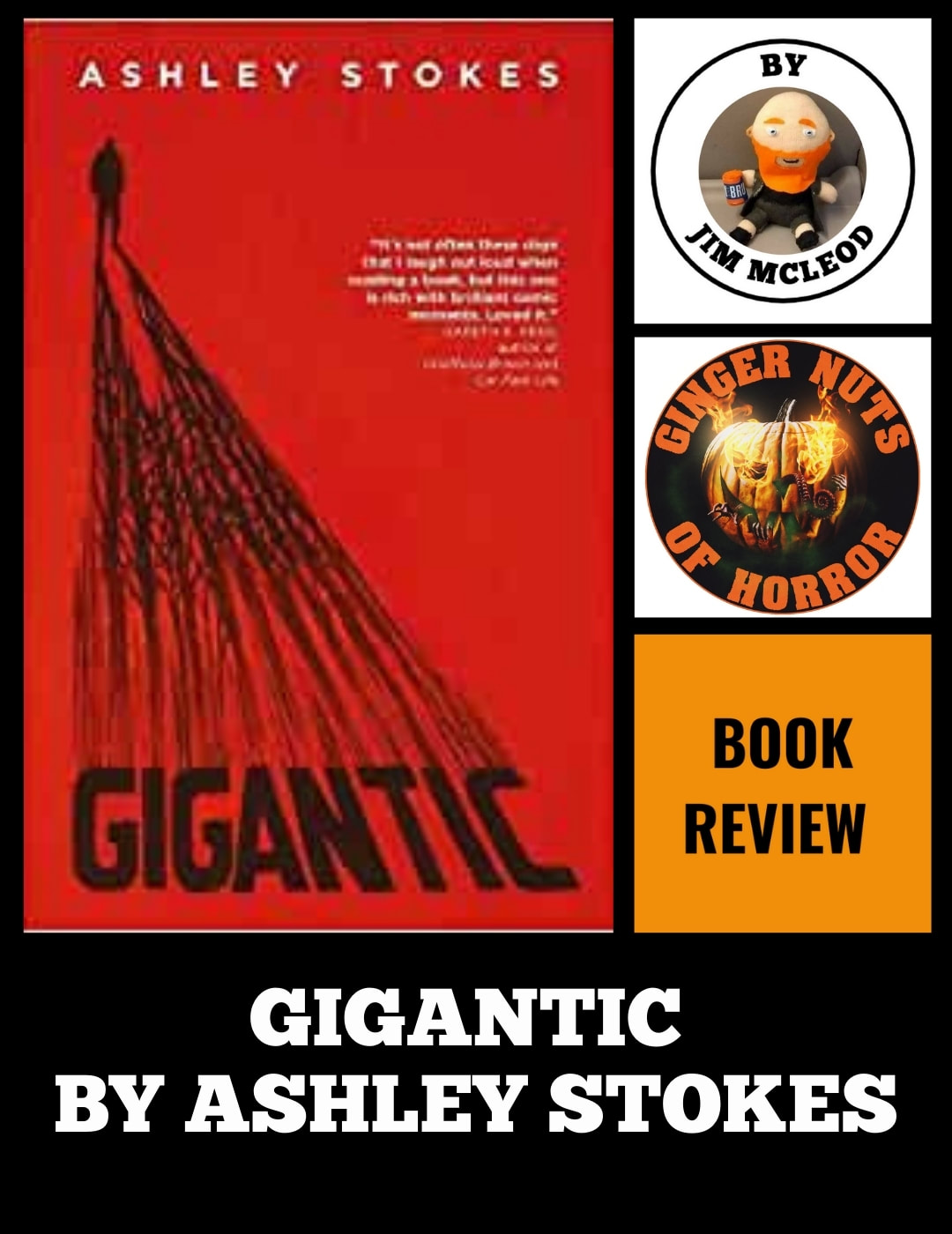
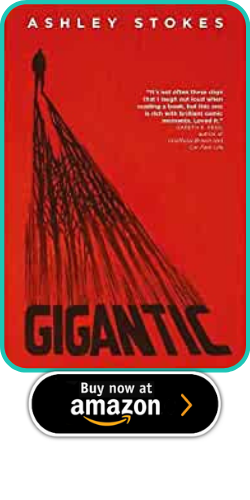
Armed with a thermal imaging camera and a host of other electronic paraphernalia, Kevin and his merry band of fellow losers, and I mean that in the most excellent possible way, you will see this for yourself as you read this review, are searching for the elusive and mysterious Gigantopithecus! For they are Suttons answer to Mulder and Scully, plus one extra person, they are the GIT, the Gigantopithecus Intelligence Team!! And they are prepared not so much to die for the truth, more be really late for their dinner for the truth.
Gigantic is an odd novel, in terms of being reviewed on Ginger Nuts of Horror; it is not a horror novel in the traditional sense; in fact, it's not a horror novel at all, well that's what I can hear so many of you saying, even the author might take this stance. Nothing horrific happens in the novel; there are shocking events, but the Hairy Man of Sutton is never portrayed as a monster from a horror novel, and if you stay with me, I will attempt to explain why this novel of the uncanny and weird can be classed as a horror novel.
But before we get to that, let me describe and explain exactly what this novel is. Gigantic is a heartfelt and humorous novel of the absurd obsession of a group of friends who are only friends because of their shared focus. Take away their common interest, and these three people would never be friends. Some of you would call them losers but haven't we all got friends like this, take away your hobbies, and we are all just going about our lives own warm wet circles.
Gigantic can best be described as a weird bittersweet comedy that looks at the damage caused to a person's life when they become fixated on one thing above all else. Written with a want for a better term, a semi dual narrative, with the main thrust of the narrative coming from Kevin's point of view, supplemented by the more matter of fact and grounded in reality reports from GIT's lead investigator. It is an exciting narrative device, one that could have been intrusive if it wasn't for the seamless integration of the two threads with each other. Primarily as the second point of view is written in the style of police incident reports. There was a danger that the book's rhythm could have become somewhat stop-start, but Stokes's absorbing writing style ensures that the whole book has a harmonious feel to it.
I have always said that comedy is the hardest thing to pull off in a novel, as most of the heavy work in terms of.... timing are left to how the reader reads the book. Gigantic isn't a laugh a minute sidesplitting read, don't get me wrong; there are moments of belly-busting humour, with a joke solely dependant on your feelings on Grendel; it is more of a warm and witty look at the humanity and fallibility of one man. Think Robert Rankin but with way more heart and soul if you need a point of reference.
How Stokes guides your feelings towards Kevin is a remarkable use of character development. You start off thinking, "what a loser"; however, by the time you reach the conclusion of the book, you will have completely changed your opinion on him, and most of you, well, those of you who don't have a heart of Midlothian instead of a real heart, will be cheering for him. Stokes doesn't make it easy for you. Kevin is a frustrating character; there were times where I wanted to climb into the story and shake some sense into him. This is a man who has allowed his obsession to destroy everything good in his life. Stokes exquisite eye for character development keeps the reader just on the right side of the tracks between sympathy and annoyance for Kevin.
As for the story itself, on the whole, this is a tight well-plotted narrative, that perfectly balances the absurdity of the situation with the mundane reality of real life. There is a slightly flabby small middle section that could have possibly done with being a little bit tighter, but this won't distract you or lessen your enjoyment of this fabulous novel.
Absurd humour is notoriously hard to pull off, go too far, and you end up with an episode of Mrs Browns Boys, reign it in too much, and your reader will laugh as many times as they would if they were watching an episode of Mrs Browns Boys. Thankfully, Stokes is aware of just how much absurd the uncanny, weird, and humanist elements of this novel require for it to be a coherent, thoughtful and engaging read. Gigantic will make you laugh and smile whilst tugging at your heartstrings with its unique brand of suburban folky horror vibes.
Between you and me, I enjoyed this novel so much I want to see further adventures of the GIT, and I certainly want proper answers to the questions raised in the final act of the novel. This book will get its hooks in you, and there is no doubt about it.
But Jim, you said you'd explain why this was a horror novel. Well, here goes nothing. And Ashley, feel free to tell me if I picked up the not so much the wrong end, but entirely the wrong stick. For me, the central theme of this book, and why I connected so strongly with the book and Kevin, is it is about a man looking for his place in the world, a man so sure that he only has one role in his life to play that he becomes so internalised and shut off from all the legitimate joys in his life that he turns away and causes those who love him to turn away from him. Is Kevin the all too human monster for ignoring his responsibilities, or is Gigantopithecus the real monster of the novel?
Dehumanisation is a real fear for me, and the obsessive nature of Kevin ultimately resulted in a partial dehumanisation of him. It is so easy for all of us to follow this route; we are just one incident of being hurt, ignored or being made fun of, from becoming our own version of Kevin, and isn't a fear of never fitting in, of never feeling as though you have a place or purpose in the world one of the biggest fears of them all. Kevin found is place in the universe, have you?
And that is why Gigantic is a horror novel in my eyes because, at the end of the day, we are all just sugar mice in the rain (OK, that final reference was forced)
COMPETITION
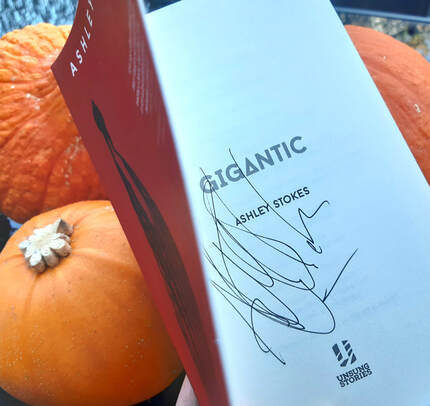
For a chance to win a signed copy of Gigantic by Ashley Stokes simply like and retweet the highlighted tweet below, and follow Ashley on Twitter.
GIGANTIC BY ASHLEY STOKES
— Ginger Nuts of Halloween (@GNutsofHorror) October 27, 2021
We review Gigantic by Ashley Stokes published by @UnsungTweets
Retweet this tweet for a chance to win a signed copy of Gigantic
https://t.co/vUk6ymuQB7 @DanCoxonAuthor @AshleyJStokes @LMcKnightHardy #BookReview #GNoH #BookBoost pic.twitter.com/O5hfry97Cj
Gigantic
by Ashley Stokes
TODAY ON THE GINGER NUTS OF HORROR WEBSITE
THE LAST STORM, THE LURE OF THE FOUNTAIN PEN BY TIM LEBBON
THE HEART AND SOUL OF HORROR FICTION REVIEWS
A Paperbacks from Hell review by Richard Martin
Publisher : Valancourt Books (6 Aug. 2019)
Language : English
Paperback : 242 pages
ISBN-10 : 1948405334
ISBN-13 : 978-1948405331
introduction to the paperbacks from hell series
Jaws (Peter Benchley) and The Rats (James Herbert) proved that there was an appetite out there for books that weren’t ashamed to be all-out horror. The publishing industry took note and throughout the 1970s and 1980s, companies such as Zebra, Tor and Pinnacle published a seemingly endless supply of books promising unspeakable terrors and sporting covers that had to be seen to be believed. Sometimes the content was great, other times… not so much, but one thing that you could always be guaranteed was a fun and entertaining read.
By the mid-90s, horror paperbacks were seemingly out, and thrillers were in. Gone were the lurid covers of skeletons, evil dolls, creepy kids and flesh hungry critters. The horror was still there, it just wasn’t marketed as such, treated like a shameful secret. As titles fell quickly out of print, many of the horror authors and their work became increasingly forgotten by all but the most avid fans and collectors.
Enter Will Errickson, Grady Hendrix and ‘Paperbacks From Hell’.
In 2017 Hendrix and Errickson released their seminal love letter to the horror paperbacks of a bygone era, shining a light on some long-forgotten classics and renewing interest in the mass market horror paperbacks of the 1970s and 80s. Not content to simply share their passion for these oft maligned but much missed books, thanks to their partnership with Valancourt Books, we are being treated to new reprints of the best of these decades-old, forgotten gems.
To date, thirteen reprints have been published (with a fourteenth on the way), retaining the original cover art and boasting brand new and insightful introductions from Hendrix and Errickson. In this series I’ll be reading each and every one and posting articles at Ginger Nuts of Horror looking back at the best books two decades of horror has to offer.
the spirit review
The book follows both John Moon and Raymond Jason. John is a member of the Flathead Indian tribe who has recently returned from a tour in Vietnam. He is undertaking a quest to learn his true name and he believes he will learn it from his spirit guide; a seven-foot monster that walks like a man. His journey and this unlikely partnership will test his resolve and make him question just how far he is willing to go to discover who he is.
When Raymond crosses paths with John and his spirit, the encounter ends in bloodshed and tragedy. Raymond becomes obsessed with hunting the creature down, no matter the cost.
What surprised me most about ‘The Spirit’ is both how the monster was portrayed, and how little Page was interested in it when compared to his human cast. It’s fair to say that the Bigfoot isn’t really the books focus. I’d go so far as to say that you could probably lift it out of the story entirely and the story would still work fine without it and play out basically the same way. The monster isn’t portrayed as a violent man-eater, but rather a reclusive, wild animal, and while the book does rack up a bit of a body count, it also takes pains to justify and explain it, rather than just go with a blanket ‘bigfoot = bad’ mentality and expect the reader to just roll with it.
In either case, John Moon absolutely steals the show from his sasquatch spirit guide. He’s a likeable and complex character with a rich and complex backstory. It’s a shame that he has to compete so much for page time with Raymond Jason, who is bad-tempered and generally unpleasant. They make such an odd duo as joint protagonists and this is probably the big reason why the book works so well. Raymond's alpha male, domineering personality screams ‘80s pulp hero’ (think Cliff Davenport from ‘Night of the Crabs’, but angrier), but he’s increasingly shown to be something else entirely. A lazier book would have had it's Native American character be the book's villain, and John Moon certainly does some questionable things throughout the book, but his motivation is a pure one and his morals never waver, even if they do lead him astray at times. There aren’t any clear-cut heroes and villains in The Spirit and I loved that about it.
If there is one thing holding the book back, it's that it throws so many good ideas out there, but doesn’t always make the most of them. Raymond Jason begins as a potential hero of the story (albeit not the most likeable one) and as the book progresses, it becomes increasingly clear how alike he and John Moon are, and how their own personal obsessions have clouded their judgement and all but ruined their lives. It’s a really interesting take, and one that pays off in the closing sequence, but I couldn’t help but feel more could have been made from it in the build-up to really earn that ending. John Moon has a similar, very intriguing backstory hinted at and briefly mentioned, detailing his time in Vietnam. I got strong ‘Rambo’ vibes from the little detail we do get, and I’d have loved to hear more. His mental illness, a direct result of his time at war, may inform some of his decisions throughout the book, but I couldn’t help but wish Page had delved a little deeper here as well.
The Spirit isn’t the ‘nature gone wild’ Bigfoot bloodbath you may be expecting, and it’s a stronger book for it. The action set pieces are thrilling and the finale delivers the man versus nature showdown you came for, but there’s a lot more going on that makes this one a more unique and memorable book than your standard ‘animal rampage’ pulp offering. Page clearly has a great deal of affection for his characters, John Moon in particular, and it shows in the finished product. Its unpredictable narrative and abundance of depth and creativity make it a memorable and engaging read that stands apart from a lot of creature features of the time.
Join me next time when I’ll be sharing my thoughts on Black Ambrosia by Elizabeth Engstrom. If you’d like to read along with this series and want to pick up copies of the books, or learn more about Valancourts’ Paperbacks From Hell line, visit their site at www.valancourtbooks.com/paperbacksfromhell
The Spirit (Paperbacks from Hell)
by Thomas Page
But whatever it is, it’s out there in the woods and leaving a trail of blood and severed heads behind it.
For John Moon, a half-mad Indian, it is a spirit that holds the key to his inner self. He worships its power and he’ll kill to protect it. Desperate, exhausted, half-starved, Moon will follow it wherever it goes.
For Raymond Jason, killing it has become an obsession. He was the only survivor of a hunting trip to the Rockies where the hunters became the monster’s prey. Now he is determined to track the creature down and destroy it.
But when the two men finally corner their quarry they set loose a flood of terror and destruction that may leave no survivors ...
This long-awaited reissue of Thomas Page's Bigfoot classic The Spirit (1977) features a new introduction by Grady Hendrix and cover art by paperback horror legend Tom Hallman.
TODAY ON THE GINGER NUTS OF HORROR WEBSITE
WORLD EXCLUSIVE COVER REVEAL: THE LAST STORM BY TIM LEBBON
CHILDHOOD FEARS: LOSING CONTROL BY CATHERINE SCHAFF-STUMP
THE HEART AND SOUL OF HORROR FICTION REVIEWS
The other stories in the collection are significantly shorter, and many have appeared in venues such as Black Static , The Shadow Booth and Nightjar Press. Many of the stories show McKnight Hardy exploring her fascination with dysfunctional families to just as striking effect. Much of what makes these stories so chilling is the way that the horror stems from characters being trapped in realistic, well-observed unhappy relationships, with the supernatural or the horrific slowly encroaching on this all-too-believable recognisable situation. McKnight Hardy expertly dissects the unease of modern family life, and engages with the grisly spectre of tragedy that lurks behind every parent’s fears for their loved ones. ‘Jutland’ follows a harried and exhausted housewife, struggling with post-natal depression and her oblivious artist husband. ‘Resting Bitch Face’ similarly focuses on a woman who is pushed past the limits by her family. ‘Cortona’ sees a woman return to a holiday destination that ended in tragedy, whilst ‘The Devil of Timanfaya’ and ‘Cavities’ bring us to the brink of family tragedy from the perspective of characters who don’t understand what they are seeing until it’s too late.
McKnight Hardy’s stories identify grief as a key theme of horror. Many of these stories are built around a catastrophic loss, one that forever warps the perception of the characters involved. McKnight Hardy shows us the estranging power of grief in a number of effective ways. ‘Badgerface’, an exploration of alienation in a small town, reveals the loss that haunts its characters right at the end, the tragic unintended consequence of trying to keep face in a place where everyone knows everyone else’s business. The jet black humour of ‘The Pickling Jar’ revolves around a seemingly innocuous small town ritual for honouring the dead that becomes truly stomach-churning once you realise what it is. ‘The Birds of Nagasaki’, the devastating final story in the collection, is a tale of childhood cruelty come back to roost that expertly builds towards its grim conclusion.
Perhaps my favourite story in the whole collection, and the most unusual, is ‘Wretched’, previously collected in the Comma Press anthology The New Abject (2020). Unusually for McKnight Hardy, this story is speculative fiction, and imagines a ghastly dystopian Britain not far removed from our own, in which people’s fates are decided by government rating, and a new underclass of the Wretched has emerged, people whose ratings are too low to get any kind of job, who have their faces surgically removed and are hunted by government employees. An absolutely damning dissection of the brutal dehumanisation of the poor, working class and unemployed in modern Britain, the story is tense, compelling and uncomfortably easy to imagine happening. A grim and disturbing masterpiece, and one that makes me wish McKnight Hardy would write more speculative fiction.
McKnight Hardy’s Dead Relatives is essential reading for anyone who enjoyed Water Shall Refuse Them, and anyone in general with a taste for the more literary side of horror. The stories within confirm her as a master of characterisation and prose, and a writer unafraid to confront the darker side of what it means to live in the UK in the 21st Century. And it makes me incredibly excited to see whatever she writes next.
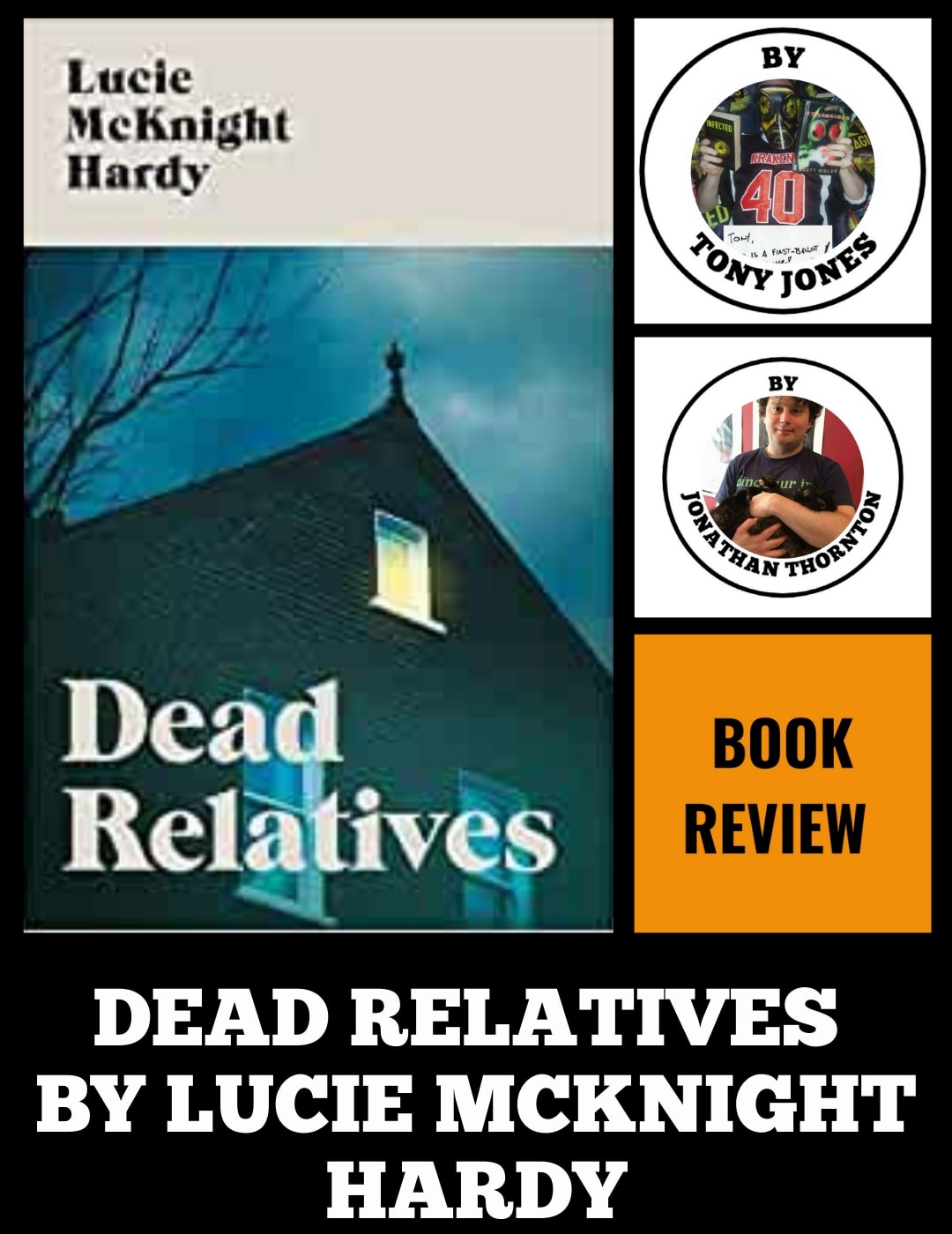
DEAD RELATIVES BY LUCIE MCKNIGHT HARDY
review by TONY JONES
tap unto everyday anxieties and undiagnosed fears
Since then, Lucie has featured on Ginger Nuts of Horror a couple of times and you can read our 2019 interview
Much more recently Lucie was part of a GNOH panel which broadly discussed the ‘uncanny’ where she and other authors shoot the breeze on writing this type of fiction for a book edited by Dan Coxon Writing the Uncanny: Essays on Crafting Strange Fiction. This fascinating piece can be found here and is worth dipping into should you intend to read this collection as it digs into her thought process and what she is trying to achieve with her writing.
Dead Relatives features thirteen short stories, the centrepiece, the 81-page novella, the self-titled Dead Relatives is closest in style and content to her novel Water Shall Refuse Them and is amongst the strongest pieces in the collection. Eight stories have been previously published in magazines such as Black Static and The New Abject, the rest are making their print debut. Hardy’s highly original debut was hard to categorise and was a strange blend of Folk Horror and coming-of-age story, the same could be said of Dead Relatives which is closer to the traditional horror stories than most of the others. Don’t expect blood, guts and monsters, these stories are much subtler, featuring strange snapshots in time, lonely people, troubled children, marital problems or unsettling moments in time with the reader being dropped into peculiar circumstances. Welcome to the world of the uncanny!
Dead Relatives was a stellar opening which sets the bar very high and although it did not make perfect sense was a tale which gets under the skin. Iris is a young teenager living in a remote house which looks after pregnant women who want rid of their babies, but also has a succession of relatives (who are dead) staying in the house for unspecified periods. Both occurrences are relatively normal to Iris who enjoys meeting her dead relatives. Perhaps I missed something, but the ‘Dead Relatives’ lurked and added little to the story, but on the other hand the other hand the troubled pregnant women seen through the eyes of Iris made it a captivating read. Nothing is not quite as it seems and the two threads intertwine in a tale which captures the loneliness and isolation which is a theme in many of the stories.
This was a bleak eclectic collection which gives both uncanny and uneasy twists to everyday occurrences and small things which might tip us over the edge. Normally I read collections quite slowly, but I sped through Dead Relatives and was greatly impressed by the range, even if I felt a few were underdeveloped, there really was not much to Parroting for example. All the narratives are female driven, revolving around subjects as diverse and mundane as marital problems, bullying, the strains of young children and the stresses which life can bring. Jutland features a young mother on holiday with her family, feeling both the pressures of her career and problems relating to the health of her son. This was one of those stories which at first glance did not seem to be about very much, but beneath the surface the cracks were beginning to show, closing with a brutal final paragraph. There are cracked psyches throughout the collection.
Bullying is a theme which pops up in several stories, in The Birds of Nagasaki a younger sister has a spectacular revenge on her nasty elder brother after he destroys one of her favourite possessions, make sure you hang on for the killer ending. Resting Bitch Face has a wicked level of black humour when a ground down housewife gets some seriously payback on her abusive husband. Cavities looks at school bullying and the profound long-term psychological effects it has on a woman who visits the dentist for the first time in many years, bringing back painful memories.
The great Roald Dahl himself would have been proud of The Pickling Jar in which we realise a peculiar village community does something very special with their dead. This one kept me on tender-hooks until the first mouthful! In Wretched Hardy tries her hand at dystopian fiction and although it is brimming with fascinating ideas I struggled to make sense of some of it, but it has the potential for further development into a longer story or novella.
Two stories were set in locations I had previously visited on holiday. Cortona is an amazing Italian medieval Italian town, and as much as I loved the location the story passed me by. However, The Devil of Timanfaya was considerably more striking and the author had obviously been on the same tour of the volcanic area of Lanzarote as myself, as I vividly recalled the hot stones and craters, almost moon like, terrain she describes. Central character Tessa is distracted by her local surroundings, her holiday home and perhaps her husband also. Like many of the characters in this collection, she suffers from low level anxiety which is hard to describe and becomes unsettled by a figure she believes is following her from a distance and is threatened in some undiagnosed way.
In describing what the ‘uncanny’ actually is, this is what Hardy said in her 2021 feature on GNOH:
“For me, it’s that sense that something is not quite right with a situation, but it might be difficult to define exactly what has made the hairs on the back of your neck stand up. A creeping sense of unease that increases in intensity. There doesn’t necessarily have to be any sort of climax for something to be uncanny – rather, the opposite.” […] “Very simply, it gives you the opportunity to explore your own fears. Writing the Uncanny lets you venture into the dark spaces you might otherwise avoid – some people might say it’s cathartic.”
These comments nicely sum up what you can expect from Dead Relatives, even the stories I have been critical of have their merits, peculiarities and are worthwhile reading experiences. The beauty of a strong collection is the reader is left wondering what to expect from the next story, or the sense of dread for the impending ending, or the sheer sense or ordinariness many of the stories featured until something uncanny or peculiar bubbled to the surface. Hardy mentions in the GNOH feature that triggering a reaction in readers is of key importance to her and many of these startling stories are guaranteed to do that.
Tony Jones
Dead Relatives Paperback
by Lucie McKnight Hardy
TODAY ON THE GINGER NUTS OF HORROR WEBSITE
FILM REVIEW – SMOKE AND MIRRORS: THE STORY OF TOM SAVINI
THE CURSE OF NOSTALGIA? BY STEVEN SAVILE
the heart and soul of horror fiction reviews
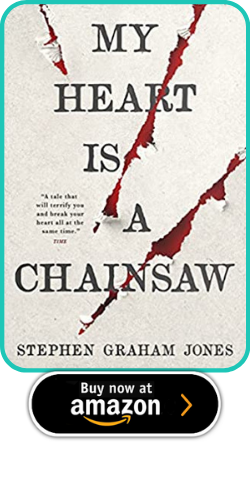
The “Final Girl” trope has been done a lot lately; in fact, this is my 4th final girl book this year alone. My Heart is a Chainsaw is the best written of the ones I have read by far. In creating Jade Daniels, SGJ has created a character who was real and flawed, who was lonely and wanted family and a home. She was the absolute best part of this whole story for me. |
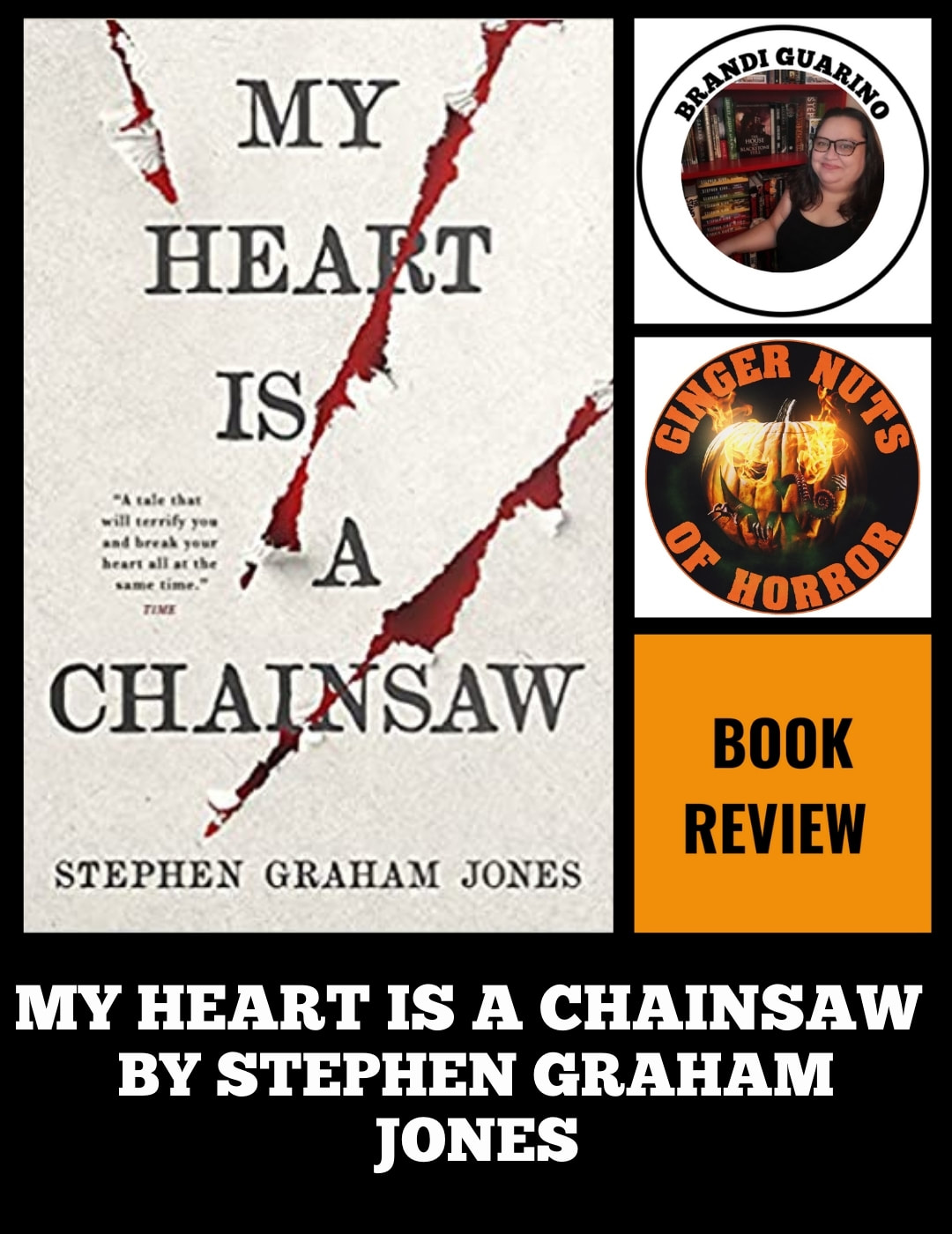
MY HEART IS A CHAINSAW BY STEPHEN GRAHAM JONES
Publisher : Titan Books (UK); 1st edition (7 Sept. 2021)
Language : English
Paperback : 448 pages
ISBN-10 : 1789098092
ISBN-13 : 978-1789098099
TW: Child Abuse, Sexual Abuse, Rape
When gentrifiers come to Proofrock with plans to raze Camp Blood and build mega mansions for themselves, and blood is spilled into Indian Lake, Jade knows the town is about to experience its own slasher story. Thanks to her obsession with horror movies, her school pranks, and her off-putting behavior, Jade must work overtime to get the town authorities to believe her and prep the one she has deemed “the final girl” before more blood spills.
I love this book in a big, bad way. Stephen Graham Jones’ love letter to horror and slasher films hit the right notes for me. While not as extensive as SGJ, I am crazy for slasher movies and have cut my teeth on them since childhood. His wealth of knowledge shown through Jade throughout the book and reminded me of some flicks that I haven’t seen for years.
The “Final Girl” trope has been done a lot lately; in fact, this is my 4th final girl book this year alone. My Heart is a Chainsaw is the best written of the ones I have read by far. In creating Jade Daniels, SGJ has created a character who was real and flawed, who was lonely and wanted family and a home. She was the absolute best part of this whole story for me.
If I must state one issue that detracted from the story for me, it was the history reports from Jade that included between chapters. I realize that these were included not only to fill in the town’s backstory, but they also to educate the non-slasher fans. While they were a novel inclusion, it killed the book’s momentum for me and made it difficult for me to want to finish the book at times. I would have preferred more of Jade and less filler.
My Heart is a Chainsaw
by Stephen Graham Jones
The Jordan Peele of horror fiction turns to classic slasher cinema in this sharp and witty gentrification horror
The Jordan Peele of horror fiction turns his eye to classic slasher films: Jade is one class away from graduating high-school, but that's one class she keeps failing local history. Dragged down by her past, her father and being an outsider, she's composing her epic essay series to save her high-school diploma.
Jade's topic? The unifying theory of slasher films. In her rapidly gentrifying rural lake town, Jade sees the pattern in recent events that only her encyclopedic knowledge of horror cinema could have prepared her for. And with the arrival of the Final Girl, Letha Mondragon, she's convinced an irreversible sequence of events has been set into motion.
As tourists start to go missing, and the tension grows between her community and the celebrity newcomers building their mansions the other side of the Indian Lake, Jade prepares for the killer to rise. She dives deep into the town's history, the tragic deaths than occurred at camp years ago, the missing tourists no one is even sure exist, and the murders starting to happen, searching for the answer.
As the small and peaceful town heads towards catastrophe, it all must come to a head on 4th July, when the town all gathers on the water, where luxury yachts compete with canoes and inflatables, and the final showdown between rich and poor, past and present, townsfolk and celebrities slasher and Final Girl.
TODAY ON THE GINGER NUTS OF HORROR WEBSITE
[FILM GUTTER REVIEWS]
DAHMER (2002) DIR. DAVID JACOBSON
THE HEART AND SOUL OF HORROR FICTION REVIEWS
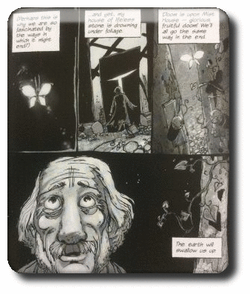
Pulled together, they form a tapestry of contradictions and skewed perspectives, full of anger, horror and rose-tinted grief. Griselda Mist is determined at last to understand the enigma that was her husband. The truth lurks there, somewhere between memory and perception, outrage and deception. She will hunt it out. |
(COMIC REVIEW BY DION WINTON-POLAK)
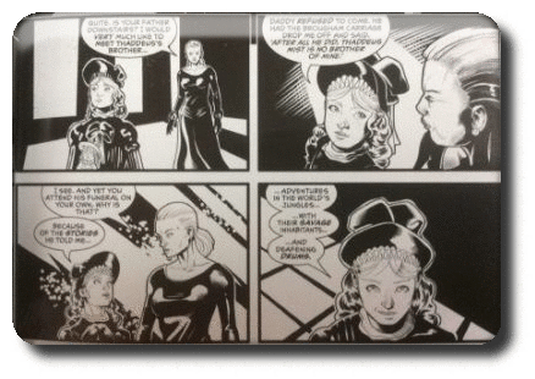
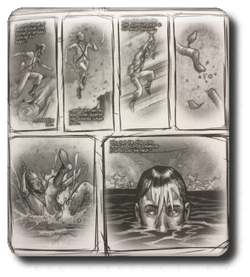
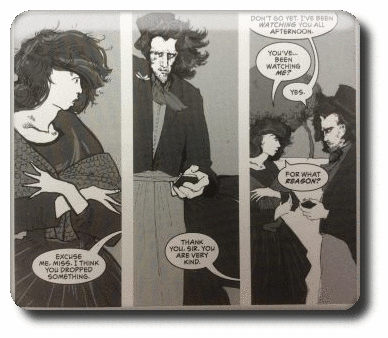
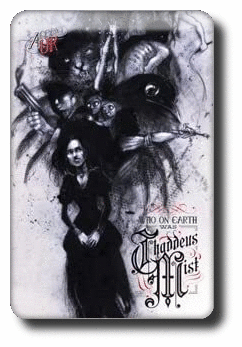
Thaddeus Mist is truly a name to conjure with, redolent with authority and an atmosphere of mystery. Independent publisher Accent UK have outdone themselves with this anthology of stories, spinning a web of intrigue across a multitude of written and artistic styles to tackle the deceptively simple question posed by the title. As his friends and relations come together for his funeral, we begin to hear bizarre tales of the man, revealing him to be something of an adventurer: a stage magician; detective; lover; artist; and wild raconteur. Pulled together, they form a tapestry of contradictions and skewed perspectives, full of anger, horror and rose-tinted grief. Griselda Mist is determined at last to understand the enigma that was her husband. The truth lurks there, somewhere between memory and perception, outrage and deception. She will hunt it out.
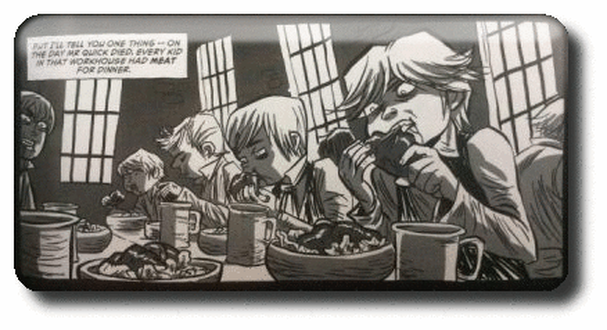
I wasn’t, I confess, particularly attracted by the cover of this book. It seemed altogether too darksome and difficult to decipher. When first flicking through the pages, I found the mish-mash of artistic styles jarring, and the monochromatic inks a bit of a depressing sight. Ordinarily, I would not have looked further, but the man who pressed it into my hands is a salesman born. His name is Conor Boyle, and I’ve been acquainted with him for a few years now. He’s a shrewd fellow, with a strong sense of artistic integrity and a passion for the tale well-told. Essentially, I bought the book on trust, and I am very glad that I did.
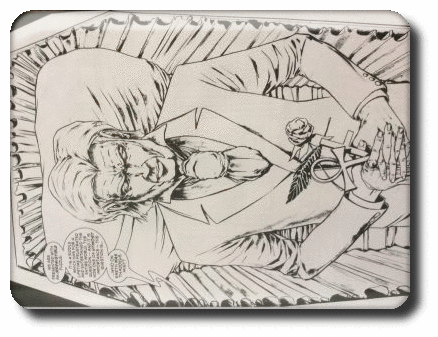
The first tale is that of the young widow, Griselda Mist. It is integral to driving the plot of the volume as a whole, and gives us the heart of her pain. Through it, we come to care deeply for the woman and her need for closure. Boyle’s art is primarily line-work with black or white spaces used to give a sense of shadow and space. He is economical, with some panels seeming almost unfinished, yet he still manages to capture the complexity of Victorian design and decoration. His layouts are the most free of the artists within the volume, sprawling across pages to overwhelming our senses, just as Griselda herself is overwhelmed. While her memories swirl, so to do images, blending together in montage and mystery.
We follow her and, as she fulfils her hostly duty – passing from guest to guest – a new writer takes over, along with a new artist to illustrate their tale. It is part anthology, part ongoing drama, and a fascinating way to construct a project. I doubt any mainstream publisher out there would have the balls to try the same. Independents have to take chances though, and make the most of their resources. This method has allowed Accent to spread the workload across a far wider pool of creative talent – each of whom most likely hold down a full-time job elsewhere, and so have limited time to spare – but it also gives us readers the with truly separate perspectives (visually and tonally) for each story.
The whole team should take a bow.
Reading experience: 4/5
Owen Michael Johnson / Conor Boyle
David West / Steve Howard
Mark Douglas / MD Penman
Benjamin Dickson / Leonardo M Giron
Max Deacon / Nicola Patten
Jim Schwitzer / Rhys L Reed
Andrew Cheverton / Jack Tempest
Marleen Lowe
Published by Accent UK
Out of print, but second-hand copies are available.
Maybe bug the publishers for a reprint? Or a digital version?
This review was originally featured at Geek Syndicate. It has been revisited and polished up for GNOH. Many thanks to Barry once more for letting me bring it across to share with you all.
TODAY ON THE GINGER NUTS OF HORROR WEBSITE
[PAPERBACKS FROM HELL]
THE TRIBE BY BARI WOOD
MONSTER ‘ICE SCREAM’ TRUCK SERVES GORY-IOUS TREATS THIS HALLOWEEN
THE HEART AND SOUL OF HORROR FICTION REVIEWS
Publisher : Valancourt Books (2 July 2019)
Language : English
Paperback : 316 pages
ISBN-10 : 1948405326
ISBN-13 : 978-1948405324
Jaws (Peter Benchley) and The Rats (James Herbert) proved that there was an appetite out there for books that weren’t ashamed to be all-out horror. The publishing industry took note and throughout the 1970s and 1980s, companies such as Zebra, Tor and Pinnacle published a seemingly endless supply of books promising unspeakable terrors and sporting covers that had to be seen to be believed. Sometimes the content was great, other times… not so much, but one thing that you could always be guaranteed was a fun and entertaining read.
By the mid-90s, horror paperbacks were seemingly out, and thrillers were in. Gone were the lurid covers of skeletons, evil dolls, creepy kids and flesh hungry critters. The horror was still there, it just wasn’t marketed as such, treated like a shameful secret. As titles fell quickly out of print, many of the horror authors and their work became increasingly forgotten by all but the most avid fans and collectors.
Enter Will Errickson, Grady Hendrix and ‘Paperbacks From Hell’.
In 2017 Hendrix and Errickson released their seminal love letter to the horror paperbacks of a bygone era, shining a light on some long-forgotten classics and renewing interest in the mass market horror paperbacks of the 1970s and 80s. Not content to simply share their passion for these oft maligned but much missed books, thanks to their partnership with Valancourt Books, we are being treated to new reprints of the best of these decades-old, forgotten gems.
To date, thirteen reprints have been published (with a fourteenth on the way), retaining the original cover art and boasting brand new and insightful introductions from Hendrix and Errickson. In this series I’ll be reading each and every one and posting articles at Ginger Nuts of Horror looking back at the best books two decades of horror has to offer.
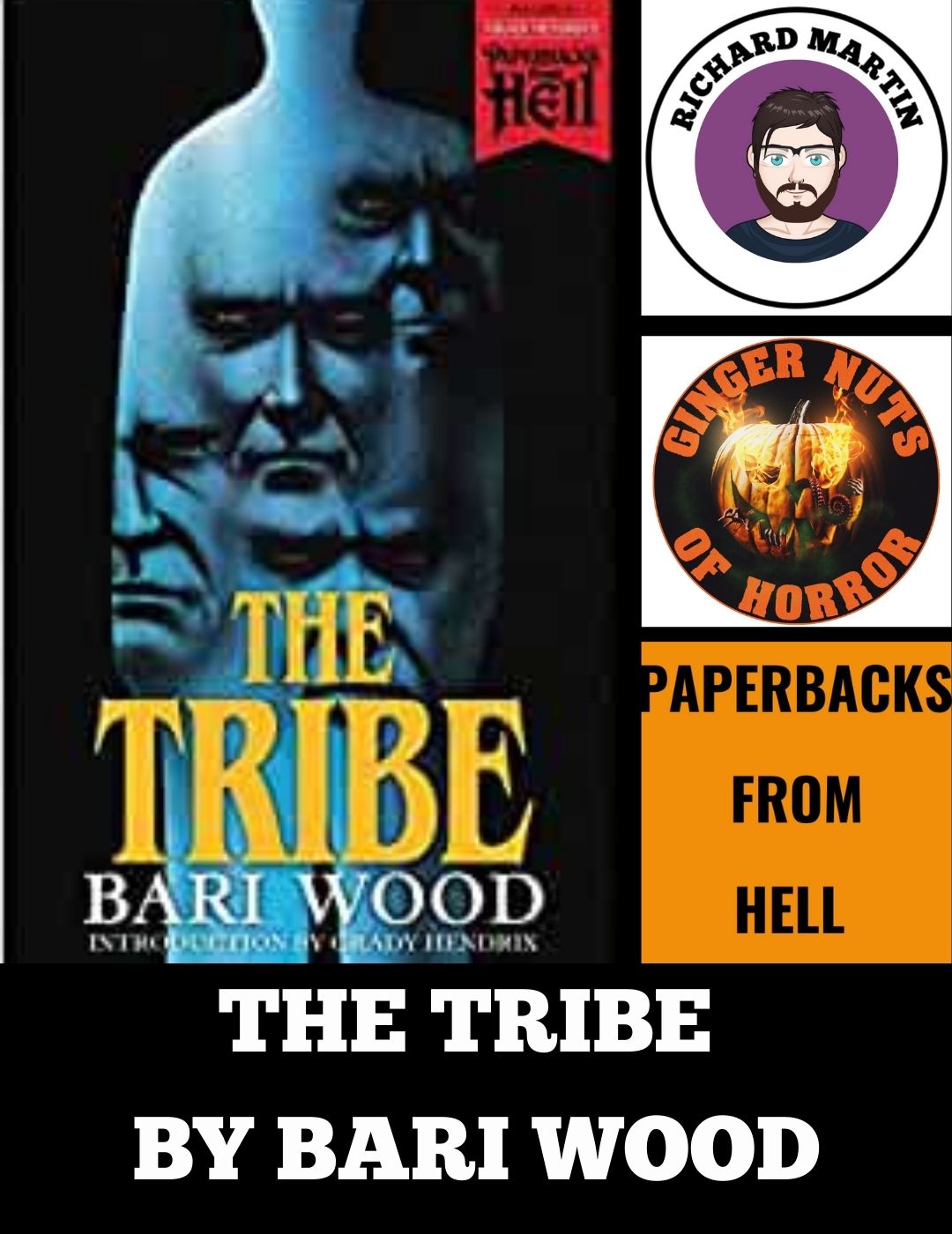
The name Bari Wood may not be a well-known name among horror fans, but David Cronenberg certainly is. His film Dead Ringers is based on her 1977 book ‘Twins’ (co-authored with Jack Geasland). Having also had her work adapted by Neil Jordan (1999s ‘In Dreams’) I was surprised that this was the first book of Woods I had heard of and read. First published in 1981, its sprawling cast, vividly described locations and unique antagonist combine to make this the best Paperback From Hell yet.
The story begins in a Nazi concentration camp in 1945 and follows a group of Jewish survivors as they subsequently make a new home in modern-day New York. For this group of eight men, the atrocities they faced are not ones they can ever truly leave behind and their experiences have left their mark on them all.
When the son of one of the group, now a rabbi beloved by his community, is brutally killed in a senseless act of violence, these survivors seek out their own vengeance. When police detective Roger Hawkins finds his suspects for the young man's murder torn apart by someone or something that can’t possibly exist, he finds himself embroiled in a web of secrets and a community bond so strong that more death and bloodshed seem sure to follow.
Off the top of my head, I can think of very few horror books that feature a Golem (a mythical Jewish creature that is man-made, formed from clay and brought to life to do its creators bidding). Aside from the famous classic by Gustav Meyrink, plus a pretty decent Edward Lee novel and an excellent comic book miniseries by Steve Niles (‘Breath of Bones’, published by Dark Horse in 2012), it seems to be a largely underutilised creation. The reason may lie in how deeply rooted the Golem is in Jewish folklore, making the practicalities of producing a faithful depiction something that requires significant research to do the creature justice. In this regard, The Tribe is a rousing success.
The depiction of Jewish culture and history throughout the Tribe is one of the things that really resonated with me while reading. It is a vital part of the story and makes no effort to simplify the beliefs, rituals or attitudes of its Jewish characters for the reader. A lot of Yiddish words and phrases are sprinkled throughout the text (always defined, not to worry) and a lot of page time is dedicated to seemingly small, everyday elements of the faith that build up to a complex and thorough look at a culture that I wasn’t overly familiar with beforehand. It added an extra layer of enjoyment for me to be guided through the story by a group of protagonists so different to those you would typically expect in mainstream horror fare, particularly from this era.
To call The Tribe a slow burn would be an understatement. In terms of action set pieces, I can recall only one. The story opens with a prologue whereby an Army Major who was present for the liberation of the Belzec concentration camp in 1945 is awaiting the capture of the camps commandant so he can ask him a question that has plagued him for years. The answer to that question hangs heavy over the remainder of the book and creates a tense air of intrigue and inevitability that carries the story. Despite the proclamations of its blurbs (including one from Stephen Kind himself), The Tribe is far more concerned with looking at how these events have impacted its characters and those they surround themselves with, and less so about being a ‘horror’ book.
Reading more like a family drama piece than a horror story, for the most part, Wood keeps the Golem an absent presence for almost the entire book. Most of the action happens off-page, often told either via descriptions of the aftermath of the event or through vague remembrances of witnesses. If this sounds like a criticism, it is not. The creature is a huge presence throughout, made all the more terrifying for the fact it is never seen, its absence causing both the books’ characters and us, the reader, to fill in the gaps in such a way that nothing actually described on the page could possibly live up to it. This is one of those situations where not showing the monster makes it that much scarier.
I can well imagine some finding the book a frustrating read. The switches between 1945 and the present day, both told from multiple different perspectives, coupled with the firm focus on character and drama over action and horror mean that anyone wanting a fast-paced book would be best looking elsewhere. They would be missing out on a rich and rewarding reading experience, however, as the Tribe is not like any other book I have read before. It’s a chilling and grounded take on real-world atrocities, that uses the supernatural as a hook to draw its readers into the story it really wants to tell. Valencourt have put out a consistently great line with Paperbacks From Hell and, so far, this is the one to beat.
Join me next time when I’ll be sharing my thoughts on The Spirit by Thomas Page. If you’d like to read along with this series and want to pick up copies of the books, or learn more about Valancourts’ Paperbacks From Hell line, visit their site at www.valancourtbooks.com/paperbacksfromhell
The Tribe (Paperbacks from Hell) Paperback
by Bari Wood
This new edition of Bari Wood’s classic The Tribe (1981) features a new introduction by Grady Hendrix and the original paperback edition’s cover painting by Don Brautigam.
“Marvelous . . . had me nervous about going upstairs!” – Stephen King
“This terrifying tale will hold you shiveringly spellbound!” – Los Angeles Herald Examiner
“A compelling chiller . . . plenty of mystery and horror guaranteed to keep you reading far into the night!” – Washington Star
TODAY ON THE GINGER NUTS OF HORROR WEBSITE
MONSTER ‘ICE SCREAM’ TRUCK SERVES GORY-IOUS TREATS THIS HALLOWEEN
{SPLASHES OF DARKNESS}
WHO ON EARTH WAS THADDEUS MIST?
THE HEART AND SOUL OF HORROR FICTION REVIEWS
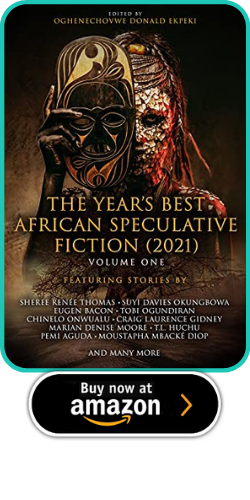
by Oghenechovwe Donald Ekpeki
ASIN : B09CNGLKVV
Language : English
File size : 1965 KB
Simultaneous device usage : Unlimited
Review by Mark Walker
Do you rate such a book against its poorest story, or against its greatest? Who makes that judgement call? As we all know, art is subjective and what works for me, won’t work for you and vice-versa. With so many stories, I can’t guarantee anyone is going to love them all; there were certainly some I wasn’t sure about. But I did enjoy reading them. As a window into the hearts of diverse writers, it was an eye-opening smörgåsbord of histories and cultures I am not familiar with. On that level, the book is a resounding success and introduced me to aspects of culture and folklore that were completely new for me.
Of course, that makes it sound like I didn’t like some of the stories, which couldn’t be further from the truth. As I suggested earlier, a few of them just didn’t resonate with me as much as others. With such a wide variety of tales that encompass the mystical and spiritual, that are horrific, moving, scary and chilling and which include demons, ghosts, vampires, aliens, robots, spirits and djinns across horror, sci-fi and drama genres the reader is bound to relate to some more than others. Read that list again (which is definitely NOT exhaustive) and you can see how there is clearly something for everyone – well, maybe not if you are here for romantic comedies, but then I suspect you wouldn’t be reading reviews on Ginger Nuts of Horror if that was the case. (DISCLAIMER – I have nothing against RomComs, they just ain’t hanging around in the pages of YBASF.)
I won’t go into each story in turn, not least because there isn’t the space to do them all justice, but looking back over my notes, there were no tales that I thought of as “bad” per se. I did feel that one or two of them could have been developed a bit further, and a few ended a little abruptly. Sometimes, leaving the audience wanting more is a good thing, but sometimes it can leave the audience feeling cheated – for each story, which it is will depend on the reader. There were only a couple that left me scratching my head, but, again, it is not necessarily a bad thing if a story gets you thinking, lodged in your head for a day or two. Even where a story didn’t work for me, the ideas behind those stories were still fascinating and intriguing and many of them lingered long after they were finished.
I debated whether or not to list the stories that I particularly enjoyed but decided against it; I didn’t want to imply that anything I didn’t mention was of poorer quality. However, I will say that I enjoyed reading every story. Each one was different; a different tone, a different style and a different theme, each one an unknown quantity that has the potential to take you anywhere, and they rarely went where I expected them to. As I said before, it gave me a glimpse into culture and folklore that I am not familiar with and has led me to other African literature that now sits on my Amazon wish list!
It was a pleasure and an honour to read the work of so many writers, and this book deserves to be read by as many people as possible.
YBASF is an eclectic mix of stories from a group of talented and varied writers that will transport you to a world at once familiar but, at the same time, wonderful and new. With so many tales there are going to be some that won’t land for you, but that is to be expected. Even those that weren’t quite my cup of tea, will definitely have an audience out there. The YBASF will intrigue and delight any lover of short fiction and I would recommend it.
The Year’s Best African Speculative Fiction
by Oghenechovwe Donald Ekpeki
“Where You Go” by Somto O. Ihezue
“Things Boys Do” by Pemi Aguda
“Giant Steps” by Russell Nichols
“The Future in Saltwater” by Tamara Jerée
“The ThoughtBox” by Tlotlo Tsamaase
“The Parts That Make Us Monsters” by Sheree Renée Thomas
“Scar Tissue” by Tobias S. Buckell
“Ancestries” by Sheree Renée Thomas
“Breath of the Sahara” by Inegbenoise O. Osagie
“The Many Lives of an Abiku” by Tobi Ogundiran
“A Love Song for Herkinal as composed by Ashkernas amid the ruins of New Haven” by Chinelo Onwualu
“A Curse at Midnight” by Moustapha Mbacké Diop
and many more
TODAY ON THE GINGER NUTS OF HORROR WEBSITE
{FEATURE}
BODY SHOCKS: WHAT IS YOUR BODY HORROR
{BOOK REVIEW}
THE DEATH OF JANE LAWRENCE BY CAITLIN STARLING
THE HEART AND SOUL OF HORROR FICTION REVIEWS
Archives
May 2023
April 2023
March 2023
February 2023
January 2023
December 2022
November 2022
October 2022
September 2022
August 2022
July 2022
June 2022
May 2022
April 2022
March 2022
February 2022
January 2022
December 2021
November 2021
October 2021
September 2021
August 2021
July 2021
June 2021
May 2021
April 2021
March 2021
February 2021
January 2021
December 2020
November 2020
October 2020
September 2020
August 2020
July 2020
June 2020
May 2020
April 2020
March 2020
February 2020
January 2020
December 2019
November 2019
October 2019
September 2019
August 2019
July 2019
June 2019
May 2019
April 2019
March 2019
February 2019
January 2019
December 2018
November 2018
October 2018
September 2018
August 2018
July 2018
June 2018
May 2018
April 2018
March 2018
February 2018
January 2018
December 2017
November 2017
October 2017
September 2017
August 2017
July 2017
June 2017
May 2017
April 2017
March 2017
February 2017
January 2017
December 2016
November 2016
October 2016
September 2016
August 2016
July 2016
June 2016
May 2016
April 2016
March 2016
February 2016
January 2016
December 2015
November 2015
October 2015
September 2015
August 2015
July 2015
June 2015
May 2015
April 2015
March 2015
February 2015
January 2015
December 2014
November 2014
October 2014
September 2014
August 2014
July 2014
June 2014
May 2014
April 2014
March 2014
February 2014
January 2014
December 2013
November 2013
October 2013
September 2013
August 2013
July 2013
June 2013
May 2013
April 2013
March 2013
February 2013
December 2012


RSS Feed