• HOME
  • CONTACT / FEATURE
  • FEATURES
  • FICTION REVIEWS
  • FILM REVIEWS
  • INTERVIEWS
  • YOUNG BLOOD
  • MY LIFE IN HORROR
  • FILM GUTTER
  • ARCHIVES
    • SPLASHES OF DARKNESS
    • THE MASTERS OF HORROR
    • THE DEVL'S MUSIC
    • HORROR BOOK REVIEWS
    • Challenge Kayleigh
    • ALICE IN SUMMERLAND
    • 13 FOR HALLOWEEN
    • FILMS THAT MATTER
    • BOOKS THAT MATTER
    • THE SCARLET GOSPELS
GINGER NUTS OF HORROR
  • HOME
  • CONTACT / FEATURE
  • FEATURES
  • FICTION REVIEWS
  • FILM REVIEWS
  • INTERVIEWS
  • YOUNG BLOOD
  • MY LIFE IN HORROR
  • FILM GUTTER
  • ARCHIVES
    • SPLASHES OF DARKNESS
    • THE MASTERS OF HORROR
    • THE DEVL'S MUSIC
    • HORROR BOOK REVIEWS
    • Challenge Kayleigh
    • ALICE IN SUMMERLAND
    • 13 FOR HALLOWEEN
    • FILMS THAT MATTER
    • BOOKS THAT MATTER
    • THE SCARLET GOSPELS
GINGER NUTS OF HORROR
horror review website ginger nuts of horror website
Picture

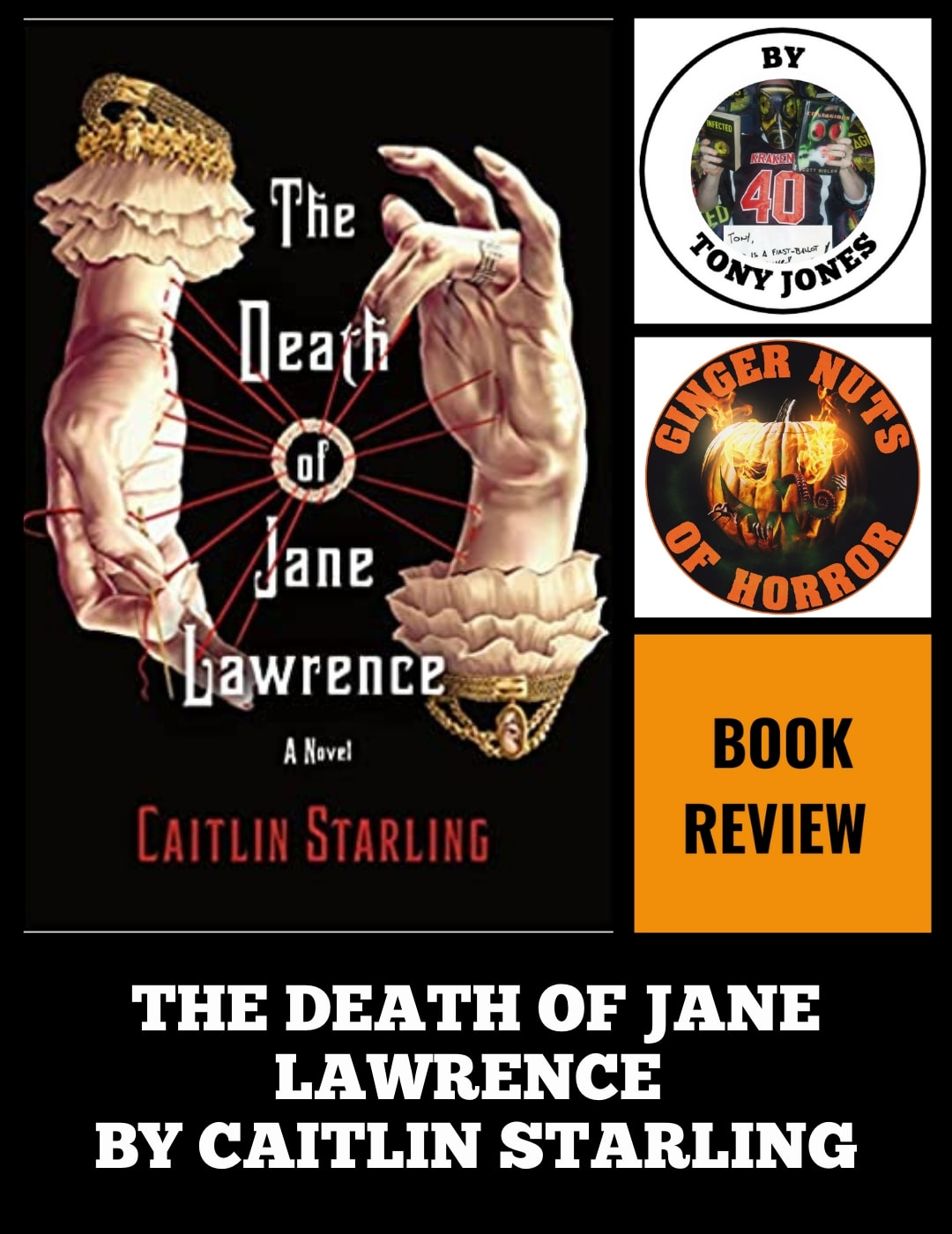
{BOOK REVIEW} THE DEATH OF JANE LAWRENCE BY CAITLIN STARLING

18/10/2021
HORROR FICTION REVIEW THE DEATH OF JANE LAWRENCE BY CAITLIN STARLING
the use of mathematical inquiry and the concept of zero to make sense of death and transcendence in the second half of the novel was fascinating, but I must admit I did not understand it all.
Slow burning historical drama where magic and death are strange bedfellows
​
The Death of Jane Lawrence by Caitlin Starling  

Publisher ‏ : ‎ St. Martin's Press (5 Oct. 2021)
Language ‏ : ‎ English
Hardcover ‏ : ‎ 368 pages
ISBN-10 ‏ : ‎ 1250272580
ISBN-13 ‏ : ‎ 978-1250272584
Caitlin Starling makes an ambitious change of direction from her 2019 debut The Luminous Dead, which was nominated for a Bram stoker Award in the First Novel category. That story was a fascinating and atmospheric blend of horror and science fiction, with this latest tale pairing horror with historical and period drama. The Death of Jane Lawrence was one of those books I enjoyed in fits and starts, finding some sections tested my patience, whilst others were very entertaining. It certainly has the potential to find an audience, but equally it will not surprise me if many readers struggle in making it to the end. However, it is worth persevering, as the first and second halves of the plot are significantly different from each other, with the pace quickening in the latter part.


The title of the novel The Death of Jane Lawrence is a slight spoiler for what lies ahead. Do not let that put you off though, much of the fun is how the plot arrives there and nothing is quite what it seems. And that includes death. When the novel opens the main character Jane Shoringfield is plotting to find a husband, however, she is not looking for love and is after a marriage of convenience, so she can remain independent and carry on with her own career. Her first choice is the dashing, but reclusive doctor Augustine Lawrence who would be seen as a major catch. Going back to the title of the book: you know what is going to happen; the couple click.   


The plot takes its time finding its legs and true direction, which begins when Augustine tells Jane that there is a unbreakable condition to their marriage: she must never stay the night at Lindridge Hall, his crumbling family manor outside of town. Jane agrees, but the reader knows this is not going to happen, with her realising that her husband is a very different man when he is on his own turf. Much of the novel is about uncovering secrets and Jane finding herself seriously out of her depth in the empty and unloved house. It takes a while for anything supernatural (or ‘magical’ for want of a better word) to happen, which might put off some readers, but Jane is an engaging main character, and she comfortably carries the novel on her shoulders, even if she does prefer numbers to people.


Various blurbs and promotional materials have namechecked Crimson Peak and this was a fair enough comparison, the underlying brooding romance was a key part of the story, with Jane on edge over the potential skeletons (romantic or otherwise) lurking in her new husband’s closet. Even though there a fair amount of gore, courtesy of several operating scenes, fans of quite sedate stuff like Jane Eyre or the atmospheric work of Shirley Jackson might enjoy this, even if the final third is very heavy on the magical, with potential madness or separation from reality not far away.


The setting was an intriguing one, but it did not truly click for me. One of the blurbs says “Set in a dark-mirror version of post-war England” to be frank, I am not too sure all readers would even notice this unless it was pointed out to them. I found this confusing and kept thinking, for some reason, it was set after the American Civil War! This location was just not defined well enough or distinguished from our own world to make any noticeable difference to the plot. BookRiot said “It’s like Jonathan Strange and Mr. Norrell meets Mexican Gothic meets Crimson Peak.” I have read both books and seen the film and the quote is a fair sell, however, the alternative reality where The Death of Jane Lawrence exists is not a patch on Jonathan Strange and Mrs Norrell or any of the best in alternative reality fiction, such as Ishiguru’s Never Let Me Go. Interesting little tip-bits were dropped here and there, but there not enough of them to make this reality intriguing enough to truly shine.


The alternate mirror version of Great Britain is called ‘Great Breltain’, whose capital Camhurst, is struggling to recover and rebuild after suffering gas attacks from the ‘Ruzkans.’ I was not sure of the point in having a place where the location names were so similar to our own. Organized religion has become unpopular following the war, after many citizens found they were unable to combat the horrors of war and industrialization with mere faith. So, God, Christianity, and the Devil are never mentioned in the story and there were some really great scenes which illustrated the cultural shift. After the marriage, there was this odd gathering of all the locals who followed and congregated around the married couple. Also, I noticed women had very good jobs, one of the secondary main characters was a surgeon, which most certainly would not be the case in the early 20th Century in our reality.


The plot swings into a standard slow-burning gothic horror story, with a few variations, but repetition sets in before the end. However, the use of mathematical inquiry and the concept of zero to make sense of death and transcendence in the second half of the novel was fascinating, but I must admit I did not understand it all. Considering the book was a fair length, it was a tough ask for Jane to carry it on her own, although her struggle with moral goodness and empathy was always engaging, it could have done with more characters or alternative perspectives. The servants were wallpaper in the background and the visiting surgeons (who practiced magic) seemed only to be a plot device in order to give Jane some magical tips. Perhaps ‘magic’ is a better word than ‘supernatural’ for what goes on in this novel, but whichever you prefer it was very well presented and thought out by the author and was perhaps the most interesting aspect of this alternative reality.


The Death of Jane Lawrence was an intriguing mix of literary ideas and although it never becoming a bodice ripping romantic tale, it does in places teeter towards it. However, Jane Lawrence was an engaging and, very much, a modern woman who embraces the magical world with both hands and with some bravery when the chips were down.


Tony Jones
Picture
From the Bram Stoker-nominated author of The Luminous Dead comes a gothic fantasy horror--The Death of Jane Lawrence.

"Intense and amazing! It's like Jonathan Strange and Mr. Norrell meets Mexican Gothic meets Crimson Peak." --BookRiot
​

Practical, unassuming Jane Shoringfield has done the calculations, and decided that the most secure path forward is this: a husband, in a marriage of convenience, who will allow her to remain independent and occupied with meaningful work. Her first choice, the dashing but reclusive doctor Augustine Lawrence, agrees to her proposal with only one condition: that she must never visit Lindridge Hall, his crumbling family manor outside of town.
Yet on their wedding night, an accident strands her at his door in a pitch-black rainstorm, and she finds him changed. Gone is the bold, courageous surgeon, and in his place is a terrified, paranoid man--one who cannot tell reality from nightmare, and fears Jane is an apparition, come to haunt him. By morning, Augustine is himself again, but Jane knows something is deeply wrong at Lindridge Hall, and with the man she has so hastily bound her safety to.
Set in a dark-mirror version of post-war England, Caitlin Starling crafts a new kind of gothic horror from the bones of the beloved canon. This Crimson Peak-inspired story assembles, then upends, every expectation set in place by Shirley Jackson and Rebecca, and will leave readers shaken, desperate to begin again as soon as they are finished.
"Don't read this one alone at night; Caitlin Starling has done it again. Unsettling, atmospheric, and downright brutal at times, The Death of Jane Lawrence will continue to haunt you long after you leave Lindridge Hall...if the house lets you leave, that is." --Genevieve Gornichec, author of The Witch's Heart


​TODAY ON THE GINGER NUTS OF HORROR WEBSITE ​

​{FEATURE}
​ BODY SHOCKS: WHAT IS YOUR BODY HORROR

{BOOK REVIEW}
​THE YEAR’S BEST AFRICAN SPECULATIVE FICTION (2021)

Picture

THE HEART AND SOUL OF HORROR FICTION REVIEWS ​

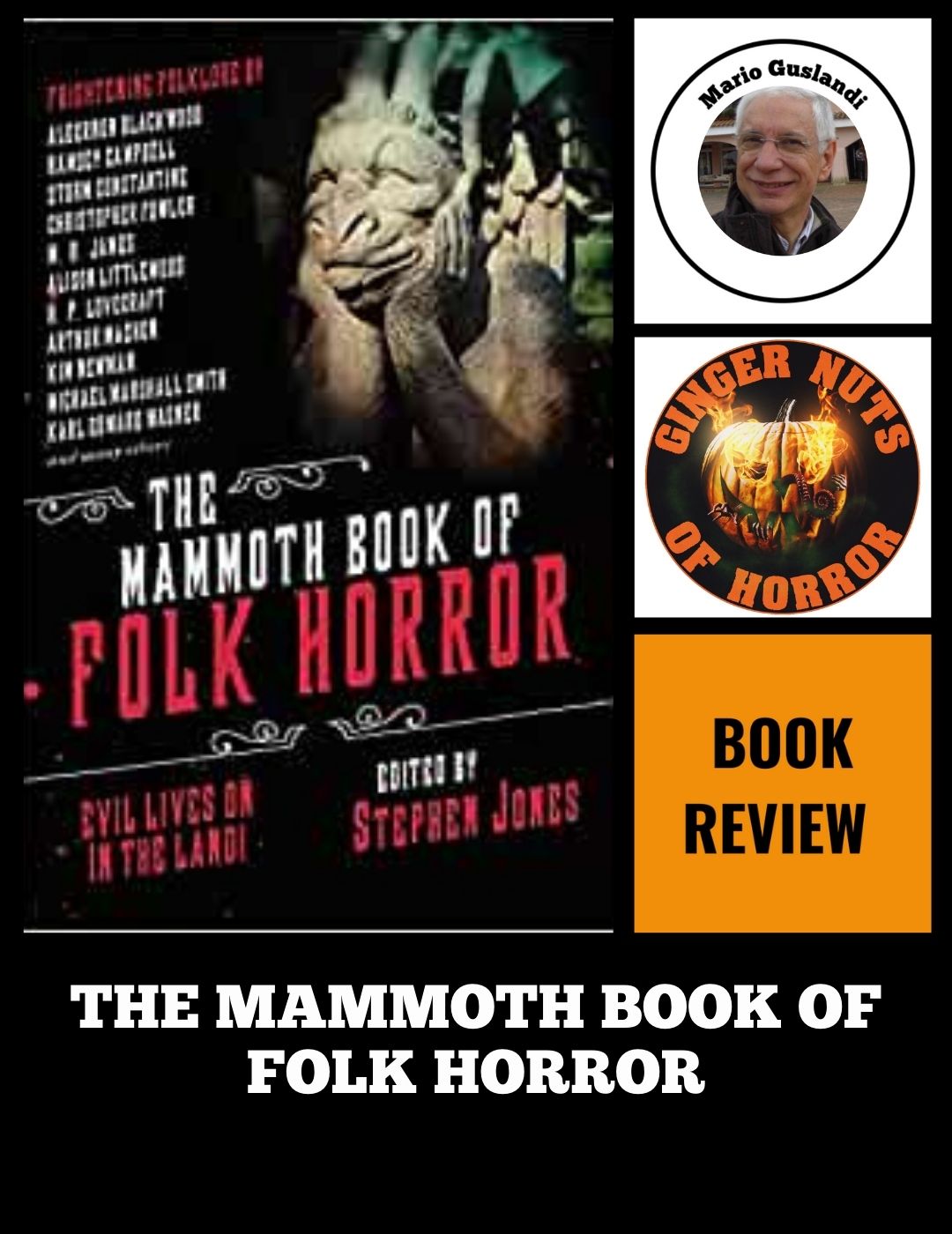
{BOOK REVIEW} THE MAMMOTH BOOK OF FOLK HORROR, EVIL LIVES ON IN THE LAND! EDITED BY STEPHEN JONES

17/10/2021
Picture
“ The Offering” a  superb,  deeply disturbing story taking place in Copenhagen during an unlucky family trip, penned by Michael Marshall Smith who,incidentally, has  also provided all the spooky photographs appearing in the volume at the beginning of each story.
THE MAMMOTH BOOK OF FOLK HORROR
Evil Lives On in the Land!


Publisher ‏ : ‎ Skyhorse; 1st edition (14 Oct. 2021)
Language ‏ : ‎ English
Paperback ‏ : ‎ 552 pages
ISBN-10 ‏ : ‎ 1510749861
ISBN-13 ‏ : ‎ 978-1510749863

Reviewed by Mario Guslandi
Folk Horror is a fashionable subgenre in the Horror area. Did we need this new label? No.

Will it last? Perhaps. To prove that “folk” horror is nothing new, but has always existed, the huge volume assembled by famous British editor Stephen Jones includes an odd mix of classical, widely known horror stories by big names, a few “minor “ tales by established masters and some original, brand new stories by modern writers.

In the first group we find short fiction by Arthur Machen ( “The White People”),  HP Lovecraft ( “The Hound”), Karl Edward Wagner ( “Sticks”), Dennis Etchison ( “The Dark Country”), Algernoon Blackwood ( “The Eye-Witness”). Obviously I won’t make any comment about those recognized masterpieces in the horror genre.

A nice example of the second group is “Wailing Well” one of the less known ( and reprinted] stories by the legendary and seminal MR James, an extremely dark piece where dangerous, unearthly presences lurk in an abandoned country area.

Among the contributions by contemporary authors, to me the more accomplished are “ Jenny Greenteeth” by Alison Littlewood, a subtly horrific tale where an evil creature hunts its victim by a pool, “ The KIng of Stones” by Simon Strantzas,  a terrifying story set in a rural village inhabited by dangerous and murderous women and “ The Mistake at the Monsoon Palace” by Christopher Fowler, an enjoyable piece of exotic horror set in India, featuring a restless American woman.

Reggie Oliver contributes “Porson’s Piece”,a great supernatural tale featuring a retired professor forced to deal with unexplained phenomena.
​
Last but not least I want to mention “ The Offering” a  superb,  deeply disturbing story taking place in Copenhagen during an unlucky family trip, penned by Michael Marshall Smith who,incidentally, has  also provided all the spooky photographs appearing in the volume at the beginning of each story.

Picture
​Welcome to a landscape of ancient evil . . . with stories by masters of horror Arthur Machen, Algernon Blackwood, H. P. Lovecraft, M. R. James​, Ramsey Campbell, Storm Constantine, Christopher Fowler, Alison Littlewood, Kim Newman, Reggie Oliver​, Michael Marshall Smith, Karl Edward Wagner, and more!
 
The darkness that endures beneath the earth . . . the disquiet that lingers in the woodland surrounding a forgotten path . . . those ancient traditions and practices that still cling to standing stone circles, earthworks, and abandoned buildings; elaborate rituals that invoke elder gods or nature deities; the restless spirits and legendary creatures that remain connected to a place or object, or exist in deep wells and lonely pools of water, waiting to ensnare the unwary traveler . . .

These concepts have been the archetypes of horror fiction for decades, but in recent years they have been given a name: Folk Horror.
 
This type of storytelling has existed for more than a century. Authors Arthur Machen, Algernon Blackwood, H. P. Lovecraft, and M. R. James all published fiction that had it roots in the notion of the supernatural being linked to objects or places “left behind.” All four writers are represented in this volume with powerful, and hopefully unfamiliar, examples of their work, along with newer exponents of the craft such as Ramsey Campbell, Storm Constantine, Christopher Fowler, Alison Littlewood, Kim Newman, Reggie Oliver, and many others.

Illustrated with the atmospheric photography of Michael Marshall Smith, the stories in The Mammoth Book of Folk Horror tap into an aspect of folkloric tradition that has long been dormant, but never quite forgotten, while the depiction of these forces as being in some way “natural” in no way detracts from the sense of nameless dread and escalating horror that they inspire . . .


Picture

THE HEART AND SOUL OF HORROR FICTION REVIEWS ​

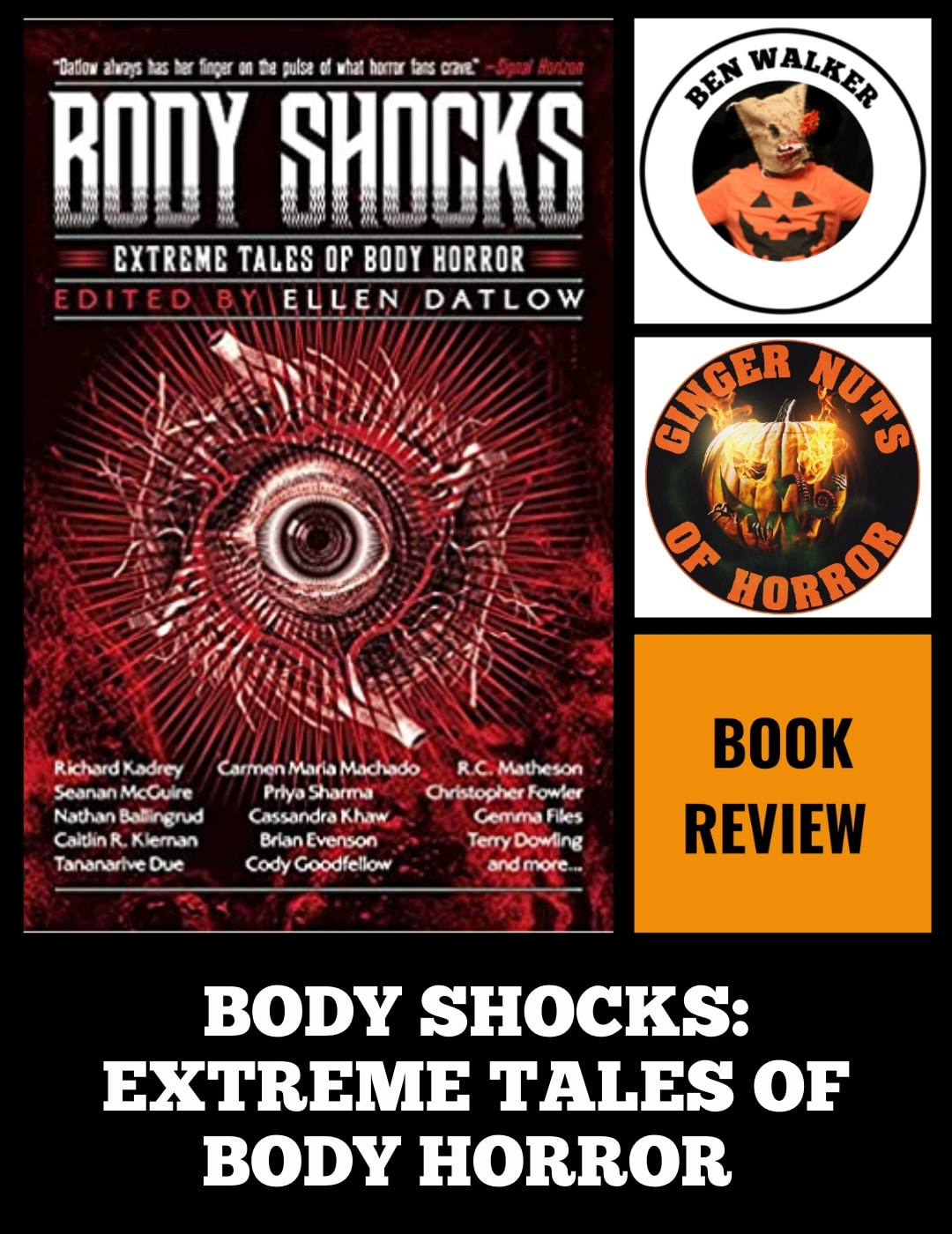
[BOOK REVIEW] BODY SHOCKS EDITED BY BY ELLEN DATLOW

12/10/2021
BODY SHOCKS EDITED BY BY ELLEN DATLOW - BOOK REVIEW
Some stories definitely shock more than others, swinging wildly from subtle to schlocky without warning, so be wary as you turn each page – or at the very least, have some dry toast and water on hand to keep your belly settled. You're not making it to the end of this book unchanged.
Publisher ‏ : ‎ Tachyon Publications (19 Oct. 2021)
Language ‏ : ‎ English
Paperback ‏ : ‎ 384 pages
ISBN-10 ‏ : ‎ 1616963603
ISBN-13 ‏ : ‎ 978-1616963606
Pun fully intended here – good body horror really gets under your skin. Sometimes it accomplishes this through a slow burn to a shocking reveal, other times the reveal comes early and things gradually get worse. Many of the stories in Body Shocks fall into the former camp, taking their time to set up places, characters and situations before the skin splits and whatever's lurking there decides to push its way out.


This is a whopper of a book, offering 28 stories over 350+ pages, with selections spanning the decades from 1984 onwards. It's fantastically varied, and many of the stories run long, which didn't quite work for me immediately. Quite a lot of the anthologies I've been reading over the past year tend to open with a short sharp shock to set the mood, whereas this one opens with The Traveller's Stay, a story content to take its time in getting to the meat of the matter. Which is fine, there are certainly no issues of quality with this or any of the other stories on offer, but it caught me in an impatient mood, so I had to read it again to fully appreciate it. And that's my main takeaway from this book – it isn't one to be rushed. Taking your time to savour these morsels of horror is far more rewarding than stuffing your guts in one marathon sitting.


Favourites-wise, the clear standouts start with Genevieve Valentine's La beauté sans vertu, a tale both chilling and tragic as it outlines the things models are subjected to for the sake of fashion. There are some fantastic uses of metaphor here, and suitably vivid imagery. Lucy Taylor's Subsumption reads like an offshoot of VanderMeer's Annihilation, with a similar blend of tech-talk and creeping, vegetation-based mutation. Angela Slatter's Cuckoo reminded me a lot of the Denzel Washington supernatural thriller Fallen, involving bodies used as temporary shells by an evil entity, made all the more effective, and terrifying, thanks to its strong character work. And Tananarive Due's The Lake veritably drips with atmosphere all the way through, pulling you close to its lead character through a slow transformation to a chilling, satisfying ending.


In all, this a fine selection, balanced to cover all tastes and types of body horror, from skin crawling to downright dirty. Some stories definitely shock more than others, swinging wildly from subtle to schlocky without warning, so be wary as you turn each page – or at the very least, have some dry toast and water on hand to keep your belly settled. You're not making it to the end of this book unchanged.

Review by Ben Walker 

Body Shocks: Extreme Tales of Body Horror 

Picture
Bestselling editor Ellen Datlow (Darkness, Lovecraft's Monsters) presents body horror at its most wide-ranging and shocking best. Discover twenty-nine intricate, twisted tales of the human body, soul, and psyche, as told by storytelling legends including Carmen Maria Machado, Richard Kadrey, Seanan McGuire, Caitlín R. Kiernan, Nathan Ballingrud, Tananarive Due, Cassandra Khaw, Christopher Fowler, and many more.


​TODAY ON THE GINGER NUTS OF HORROR WEBSITE ​

[PAPERBACKS FROM HELL] 
​THE REAPING BY BERNARD TAYLOR

[SPLASHES OF DARKNESS]
​ WRINKLES (WRITTEN AND ILLUSTRATED BY PACO ROCA)

Picture

THE HEART AND SOUL OF HORROR FICTION REVIEWS ​

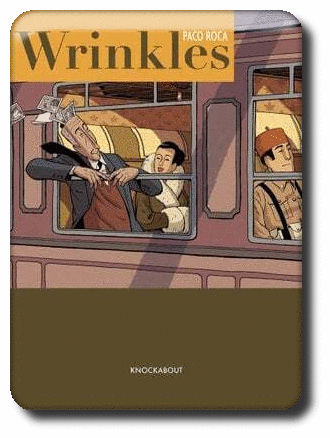
[SPLASHES OF DARKNESS] WRINKLES (WRITTEN AND ILLUSTRATED BY PACO ROCA)

12/10/2021
[SPLASHES OF DARKNESS] WRINKLES (WRITTEN AND ILLUSTRATED BY PACO ROCA)
There is a real love and generosity of spirit worked incrementally into the pages, like dust. It may be hard to see at times but your fingers pick it up with each turn of the page and, as you wipe your tears, it changes you. By the end you will see the world with new eyes. It is old, it is beautiful, and it matters a great deal.
Comic-books are a medium, not a genre; they can tell any story and suit any palate. You want horror? I've got bottles of the stuff. Welcome to 'Splashes of Darkness.'
Picture
SPLASHES OF DARKNESS: Wrinkles
​(COMIC REVIEW BY 
DION WINTON-POLAK)
Here’s something a little different for you; I know you like to try different flavours. This is bittersweet, one of those concoctions that seems to change as you sip it, hitting the palate in odd ways and taking you by surprise. You don’t want to knock it back in one go. Give it time to play on your tongue. There’s liberation to be found at the bottom of this glass, and a lot to mull over on the way. I think you’ll like it but I’ve seen a lot of folk sobbing into their glasses too.

I have, over time, become increasingly interested in European comics. This has been largely through my discovery of the Cinebook translations, though other suppliers have broadened my horizons. The most admirable and intoxicating books I have come across so far have been Peter Pan and The Hartlepool Monkey (follow those links if you missed my reviews). I’ll add Wrinkles to this list of what-are-you-waiting-fors with a hearty kick up your booty.

This slice-of-life story has not only deepened my appreciation of the European sequential art scene, but of the comics medium as a whole.
Picture
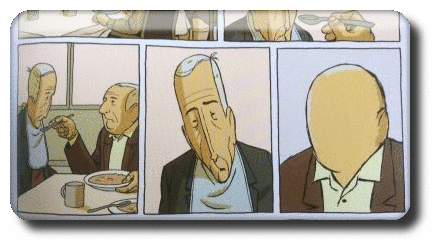
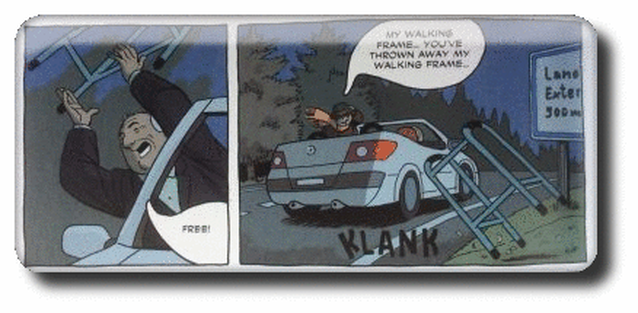
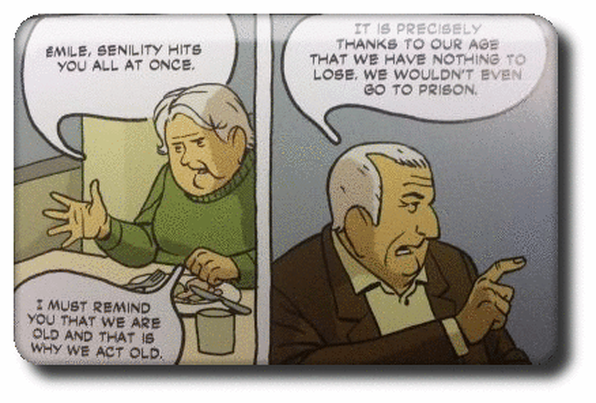
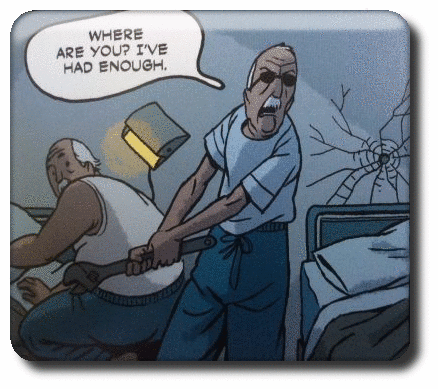
Wrinkles takes us into the lives of Ernest, a retired bank manager – who finds himself placed in a home for the elderly – and Émile, a roguish resident who takes Ernest under his wing. The book is essentially a collection of personal stories and anecdotes from both residents and staff at care homes, woven into a tragi-comic tapestry by the talented Spanish artist, Paco Roca.


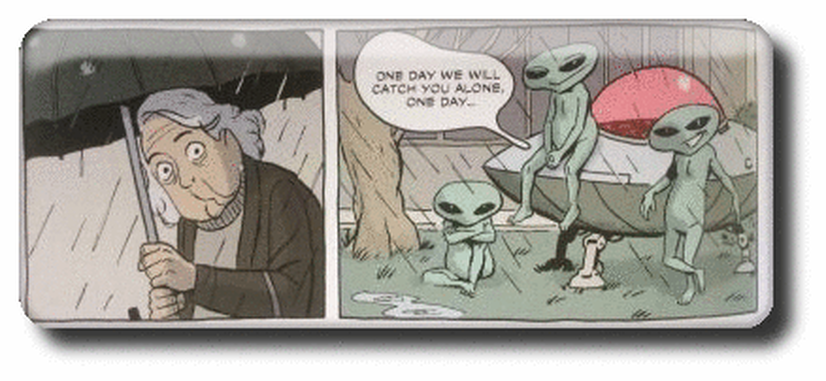
His visual style is clean and appealing to the eye, blending simple line-work and blocks of warm colour with subtle shadows and a keen eye for characterful detail. Émile’s story reminds us that every OAP was a young person once, full of love and life, yet tricked by time. Ernest’s journey is somewhat different, but it breeds compassion and consideration in the hardest of hearts.
Picture
You might think that life in a care home would offer little in the way of interest to either residents or reader; we imagine endless monotony, but Roca never lets our attention wander. He engages our sympathies and understanding of each person through natural dialogue (rather than exposition) and the marvellous trick of depicting the residents’ inner worlds when we see events from thier perspectives. It should be confusing to the senses but Roca’s narrative carries it through as though it were the most natural form of storytelling in the world.
Picture
For some readers, the trials and tribulations of the characters will be all too familiar. Alzheimer’s is a brutal disease, affecting more and more people both directly and indirectly. I would suggest that their burdens could be lightened by sharing Wrinkles with others, using it as a jumping-off point to start talking about their own experiences. For others, the truths inside these covers will be hard to handle. People don’t like talking about old age because it is scary, humiliating and inevitable. I found the book profoundly disquieting, as must surely be the intention, yet the rays of humour and hope which light up the book shine all the brighter by contrast.
Picture
Wrinkles is not meant to be a lecture or lesson and, thankfully, it never feels so heavy-handed; it is merely a window into a world we prefer not to see. It will make you laugh, it will make you angry and if you’re anything like me, you will probably shed a tear or two. There is a real love and generosity of spirit worked incrementally into the pages, like dust. It may be hard to see at times but your fingers pick it up with each turn of the page and, as you wipe your tears, it changes you. By the end you will see the world with new eyes. It is old, it is beautiful, and it matters a great deal.


Do yourself a favour and seek it out. (10 copies on eBay currently.)


* Oh, and by the way, there was a Spanish-made animation of Wrinkles made back in 2011 by the way. The US dub stars Martin Sheen and Matthew Modine. It’s available at Amazon, but I stuck two fingers up at them and snagged the blu-ray from CEX. Half as much, baby!
Picture
Written and illustrated by Paco Roca
Translated into English by Nora Goldberg
Published by Knockabout Comics
Available now!
Reading experience: 5/5

​

This review was originally posted on Geek Syndicate, along with one or two other Splashes. (Life is pretty busy right now.) Many thanks to the boys for letting me spruce it up and republish here.


​TODAY ON THE GINGER NUTS OF HORROR WEBSITE ​

[BOOK REVIEW]
​BODY SHOCKS EDITED BY BY ELLEN DATLOW

[PAPERBACKS FROM HELL] 
​THE REAPING BY BERNARD TAYLOR

Picture

THE HEART AND SOUL OF HORROR COMIC BOOK REVIEWS ​

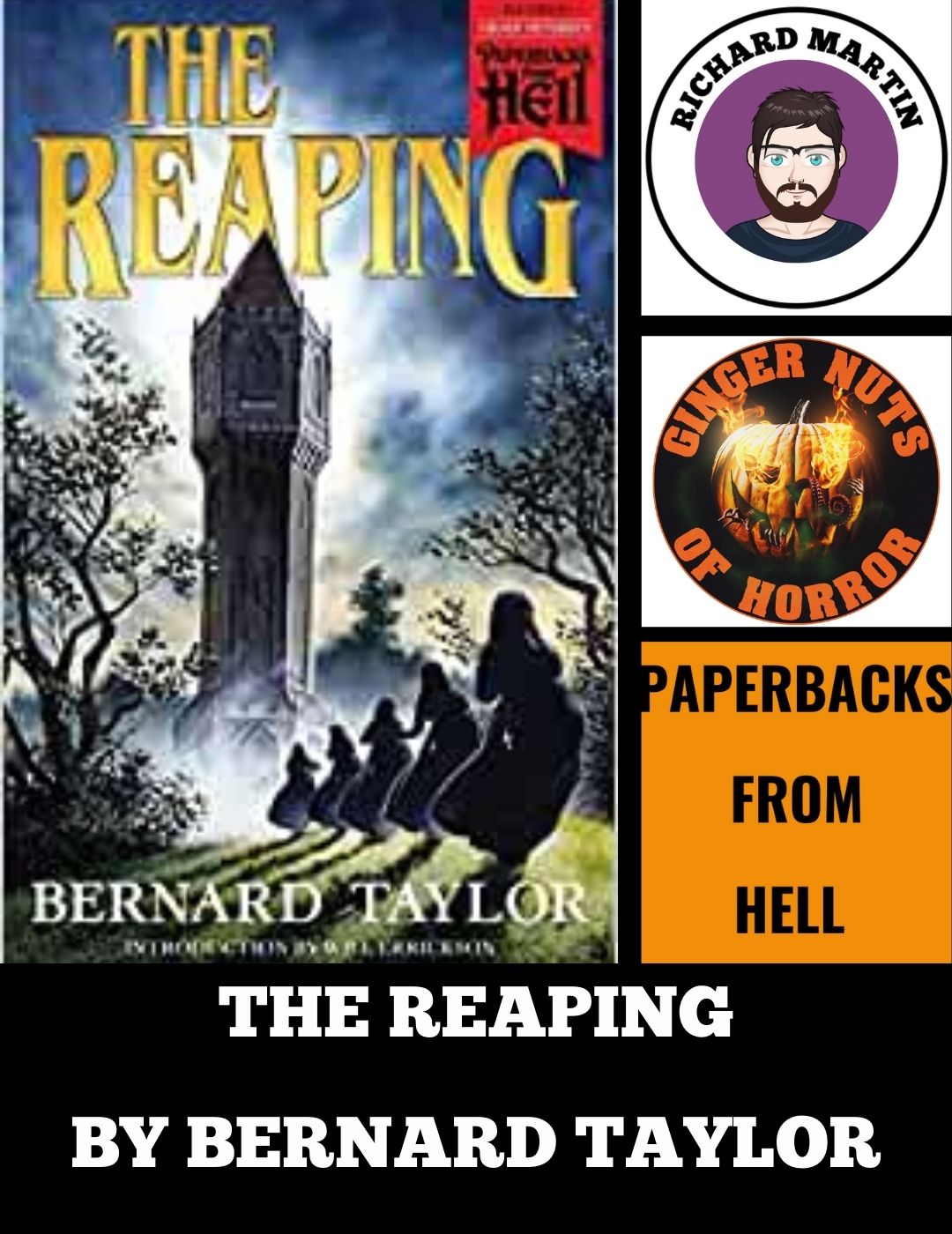
[PAPERBACKS FROM HELL] THE REAPING BY BERNARD TAYLOR

12/10/2021
Picture
The Reaping is a wildly different but equally rewarding offering to what’s come before. The premise may be well worn but the execution is superb and there are surprises aplenty in store for even the most seasoned horror reader.
The Reaping (Paperbacks from Hell) by Bernard Taylor 
Publisher ‏ : ‎ Valancourt Books 
Language ‏ : ‎ English
Paperback ‏ : ‎ 224 pages
ISBN-10 ‏ : ‎ 1948405342
ISBN-13 ‏ : ‎ 978-1948405348
Horror was doing big business in the bookstores in the 1960s. This was largely thanks to gothic literature which promised gentle tales of haunted manors and melancholy spirits on their covers. Things took a more devilish turn towards the end of the decade with the release of ‘Rosemary’s Baby’ in 1967, followed by William Peter Blatty’s ‘The Exorcist’ and Thomas Tryon’s ‘The Other in 1971, but the real fun began in 1974 with the release of two books that would open the floodgate for pulp horror.

Jaws (Peter Benchley) and The Rats (James Herbert) proved that there was an appetite out there for books that weren’t ashamed to be all-out horror. The publishing industry took note and throughout the 1970s and 1980s, companies such as Zebra, Tor and Pinnacle published a seemingly endless supply of books promising unspeakable terrors and sporting covers that had to be seen to be believed. Sometimes the content was great, other times… not so much, but one thing that you could always be guaranteed was a fun and entertaining read.

By the mid-90s, horror paperbacks were seemingly out, and thrillers were in. Gone were the lurid covers of skeletons, evil dolls, creepy kids and flesh hungry critters. The horror was still there, it just wasn’t marketed as such, treated like a shameful secret. As titles fell quickly out of print, many of the horror authors and their work became increasingly forgotten by all but the most avid fans and collectors.

Enter Will Errickson, Grady Hendrix and ‘Paperbacks From Hell’.

In 2017 Hendrix and Errickson released their seminal love letter to the horror paperbacks of a bygone era, shining a light on some long-forgotten classics and renewing interest in the mass market horror paperbacks of the 1970s and 80s. Not content to simply share their passion for these oft maligned but much missed books, thanks to their partnership with Valancourt Books, we are being treated to new reprints of the best of these decades-old, forgotten gems.

To date, thirteen reprints have been published (with a fourteenth on the way), retaining the original cover art and boasting brand new and insightful introductions from Hendrix and Errickson. In this series I’ll be reading each and every one and posting articles at Ginger Nuts of Horror looking back at the best books two decades of horror has to offer.

The next book in the series is a slow burn mystery with increasingly sinister supernatural undertones. The Reaping by Bernard Taylor, originally published in 1980, is an eerie and intriguing tale that has far more in common with the creeping dread of the likes of Rosemary’s Baby and The Other than it does with the more bombastic and visceral books synonymous with the phrase ‘Paperbacks From Hell’. There is little to no violence. Instead, The Reaping presents an intriguing premise, and then ratchets up the tension, not letting go of the reader until the final page.

Tom Rigby is a loving father and business owner whose love for painting has been replaced in recent years by his devotion to his work and family. When an opportunity to exhibit his art leads to an offer to paint the portrait of a young woman from a wealthy family, the money and the chance to have his work gain a new appreciation prove to be too enticing to turn down.

When he arrives at the sprawling grounds of Woolvercombe House it becomes increasingly clear that something is amiss. His portrait subject seems distant and nervous, the staff overtly aggressive, and the housekeeper is taking great pains to keep secrets from him. Strange noises and hushed conversations at night, and nuns secreted towers far into the manor grounds suggest all is not as it seems and, too late, Tom realises the true purpose behind his invitation, and the horrors that are in store for him.

With its grand manor houses, English gentlemen and quaint settings, The Reaping is a quiet, low-key book. The horror comes from suggestion and the pervasive feeling, which builds throughout the first half of the book, that something is not quite right. The unhurried pacing and understated approach work because the story hinges around a big act three reveal, and large portions of the book are build-up and teases that lead towards this. It may not be to every horror readers taste, but it is undeniably effective at creating a sense of dread in place of gore and bloodshed.

One of the books most refreshing elements is the character of Tom Rigby. Where generic horror tropes would dictate that the protagonist is driven to investigate and act upon the things he finds out as the book progresses, it was a surprise to find such a pragmatist as our lead. Tom has a family to think about, and a life outside of what he discovers and he remains (until his hand is well and truly forced) reluctant and even indifferent to getting involved. It comes across as genuine human reaction rather than forcing characters to respond in ways that progress the plot and it makes Tom all the more engaging and likeable.

I can’t say that I shared Toms apathetic reaction to the events that transpire during his stay at Woolvercombe House, because I found the mystery to be absolutely enthralling. So many questions get raised in these sections, and all the pieces of the puzzle seem so random and unconnected at first, I couldn’t get to the answers quick enough. What was especially satisfying is that the reader is given enough clues early on to get to the bottom of what is really happening at the house, and what its owner's true intentions are, affording us the opportunity to be one step ahead of Tom in this regard. It makes it such a satisfying reveal when it does come, that I found myself backtracking to re-read sections that hinted earlier in the book that are now shown in a different light once we learn why Tom was really brought to them.

If there were one flaw that stood out, it is that The Reaping ultimately falls victim to just how much it excels at creating an engaging mystery during the first half of the book, as the later chapters set after his stay don’t quite match that same feeling of menace and tension. The finale is action-packed and satisfying but the sections in the second half that led up to it have less urgency and forward momentum than those that both precede and follow it.
​
The Reaping may not be what fans of the Paperbacks From Hell line expect, particularly coming straight off the back of such gleefully gruesome fare as the previous book in the series (‘The Nest’) but that diversity is proving to be Valencourts biggest strength right now because The Reaping is a wildly different but equally rewarding offering to what’s come before. The premise may be well worn but the execution is superb and there are surprises aplenty in store for even the most seasoned horror reader.
        
Join me next time when I’ll be sharing my thoughts on The Tribe by Bari Wood. If you’d like to read along with this series and want to pick up copies of the books, or learn more about Valancourts’ Paperbacks From Hell line, visit their site at www.valancourtbooks.com/paperbacksfromhell

The Reaping (Paperbacks from Hell) Paperback 
by Bernard Taylor 

Picture
When Tom Rigby is commissioned to paint a young woman’s portrait at Woolvercombe House, the offer is too lucrative to refuse. But from the moment of his arrival at the secluded country mansion strange and inexplicable events begin to transpire. Soon he is drawn into an impenetrable maze of horror, and by the time he discovers the role he is intended to play in a diabolical design, it will already be too late. For the seeds of evil have been sown, and the time to reap their wicked harvest is nigh!

The classic third novel by ’70s and ’80s horror master Bernard Taylor, The Reaping (1980) returns to print at last in this edition featuring a new introduction by Will Errickson and the original cover painting by Oliver Frey.

​
‘Move over, Stephen King!’ – New York Daily News
‘Draws the reader into a web that grows gradually tighter with each turn of the page!’  – Booklist
‘Taylor works wizardry again!’ – Publishers Weekly


TODAY ON THE GINGER NUTS OF HORROR WEBSITE ​

[BOOK REVIEW]
​BODY SHOCKS EDITED BY BY ELLEN DATLOW

[SPLASHES OF DARKNESS]
​WRINKLES (WRITTEN AND ILLUSTRATED BY PACO ROCA)

Picture

THE HEART AND SOUL OF HORROR FICTION REVIEWS ​

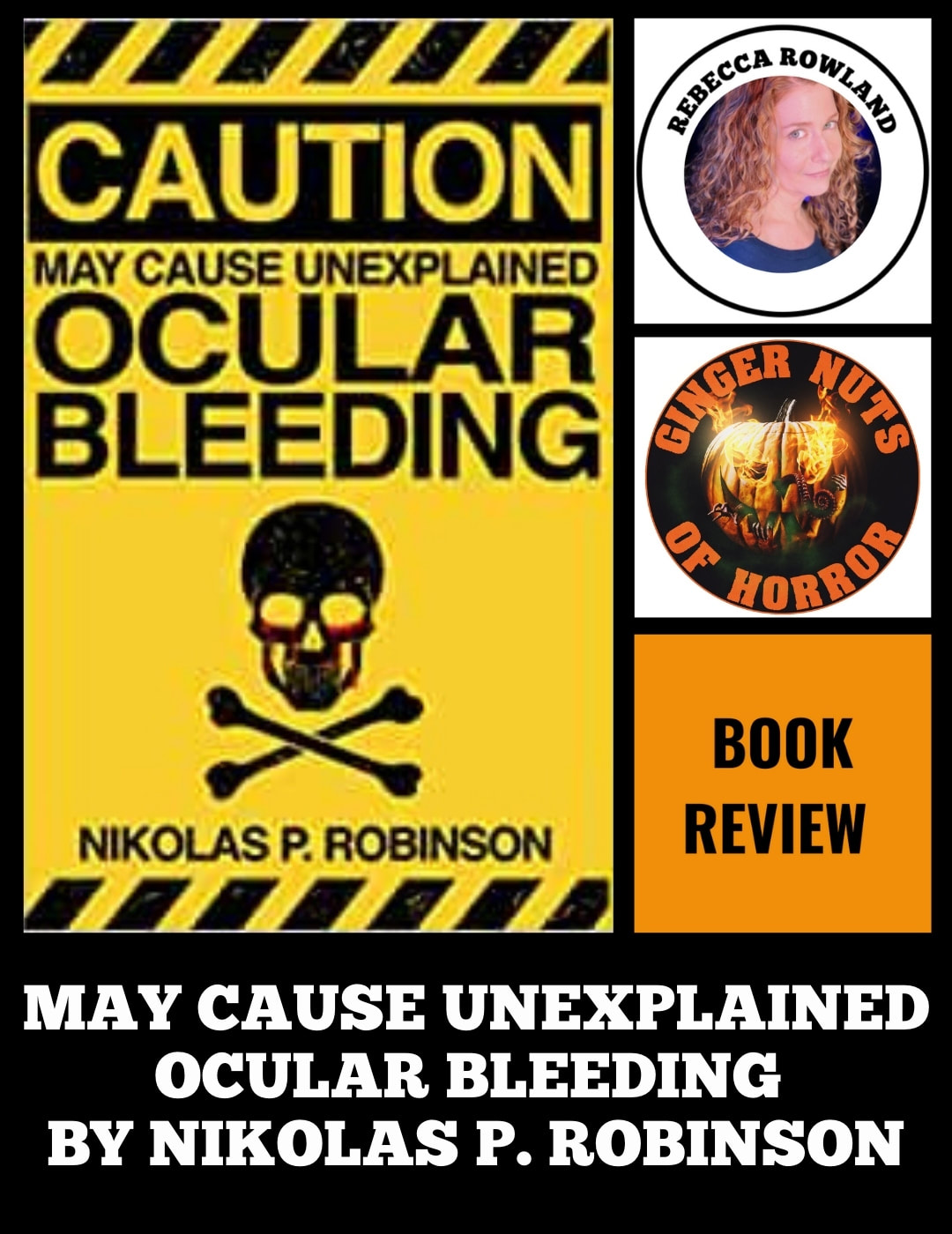
[BOOK REVIEW]  MAY CAUSE UNEXPLAINED OCULAR BLEEDING BY NIKOLAS P. ROBINSON

11/10/2021
HORROR FICTION REVIEW MAY CAUSE UNEXPLAINED OCULAR BLEEDING BY NIKOLAS P. ROBINSON
Readers should weigh that snippet of advice for all of May’s stories but also savor what’s particularly unique about this collection against the backdrop of its extreme horror label. Rather than tie up his gruesome dioramas in a tidy manner, Robinson sometimes leaves the resolution, the real horror, up to the reader’s imagination. In a genre routinely soaked with in-your-face carnage, this pushes May up to the top with the cream.
May Cause Unexplained Ocular Bleeding by Nikolas P. Robinson
(review by Rebecca Rowland)


ASIN ‏ : ‎ B09CRXYKM1
Publisher ‏ : ‎ Independently published (18 Aug. 2021)
Language ‏ : ‎ English
Paperback ‏ : ‎ 110 pages
ISBN-13 ‏ : ‎ 979-8531344892
On its surface, Nikolas P. Robinson’s newest release presents itself as traditional splatter-gore fare, but upon closer inspection, May Cause Unexplained Ocular Bleeding explores existential truth on a level rarely attempted by extreme horror writers. I first encountered Robinson’s work when the poet and dark fiction author presented at Killer Con in Austin this year (airing remotely), and his charisma and collection intrigue immediately caught my attention.
​
May is a short read, only ten stories in length, and easily may be finished in one sitting, but I would encourage readers to take their time and digest it in chunks. There isn’t a weak entry in the decade, but the stand-outs for me run the gamut in theme and gore level. In the opening tale, “Drive Me Home,” Tavor’s tree-trimming implements for his job at a landscaping business come in handy when, intoxicated with his best girl passed out beside him, he hits a pedestrian with his car. “Though the glow from his single, functioning headlight isn’t great, he can see the dark, muddied dirt surrounding the body before he’s all the way there. Far from sober, his thoughts are still swimming, and he thinks for a second that maybe the person he hit has pissed themselves before a second internal voice tells him that it’s blood. There’s so much of it, soaking into the dry earth of the road like it’s a vampire thirsting for nourishment.” But things are not what they seem, and one misstep domino-effects Tavor on a destiny for which he has not adequately prepared. 

“It’s Fine…Everything is Fine” reminded me initially of a disturbing news account I caught years ago of a naked man who, hopped up on bath salts, began biting and—literally—eating strangers like a mindless zombie in downtown Miami. Here, Robinson places the catalyst for his tale’s terror in a seemingly innocuous traffic accident. Soon after, “Hands began slapping against glass, fists pounding rhythmically into the surface…They both managed to find a moment to be grateful they’d lucked into a bank rather than something less likely to be fortified as the barrage of flesh against glass filled the deserted interior with echoes.” As witnesses watch from the lobby, what began as a fender bender quickly accelerates into a chaotic, full-blown fearfest.

The group’s tentpole entry, “The Journey,” is its most cerebral. It opens with the narrator remarking about a set of mysterious lights in the distance, intermittently visible from his city abode, and the possible power wielded by their source. If he investigates, he will “be able to see first-hand just how credible the tales have been, these rumors and whispers that spread from the places where the lights have previously appeared, these tales of transformation and strange alteration afflicting those who venture too close to curiosity.” Accompanied by a reticent trail guide, the protagonist ventures into the forest in search of answers while simultaneously quitting smoking cold turkey. Robinson marks the passage of time using a series of nicotine withdrawal benchmarks interspaced with scenes of unnerving adventure into surrealist dehumanization horror on par with William S. Burroughs’ Naked Lunch: “I came to see what it could change in me, never imagining how drastic these alterations would be. I wanted to experience something new, something truly novel. I never anticipated that I would shed my humanity in the process.”

Fans of Robinson likely will be familiar with “Horseplay,” which made its initial debut on the Godless digital platform. In the story, the closet door in the backroom of underground pornography is kicked wide open when a post-production video editor hired to clean up fetish films for distribution views a particularly unconventional sex tape featuring a cornucopia of kink that most viewers would say not only breaks the moral compass, it smashes it to bits. “I’m not sure how the tape found its way to my seller. It could be that someone else involved in the intended bestiality production had cleaned up the mess and shipped the tape off as if nothing was out of the ordinary. There’s still money to be made, after all.” If you have any qualms about content that pushes boundaries, “Horseplay” is not for you, but in it, the author skillfully builds a series of unbridled disturbing tableaus into a sly social commentary on just who should share the guilt when individuals are victimized for the sake of entertainment.
​
“Wake Up,” one of the shorter entries in the collection, is nonetheless powerful in its portrayal of an unfaithful partner, an uncomfortable sharing of a marital bed with the cuckolded spouse, and the gruesome aftermath of what appeared to be a run-of-the-mill quarrel. Don’t venture into this one with a full stomach unless you’re looking to lose a few pounds. Readers should weigh that snippet of advice for all of May’s stories but also savor what’s particularly unique about this collection against the backdrop of its extreme horror label. Rather than tie up his gruesome dioramas in a tidy manner, Robinson sometimes leaves the resolution, the real horror, up to the reader’s imagination. In a genre routinely soaked with in-your-face carnage, this pushes May up to the top with the cream.

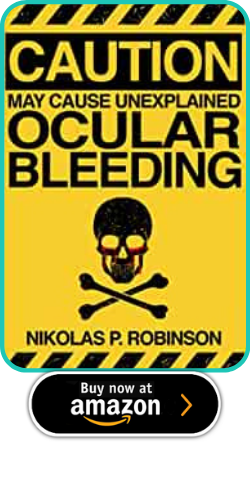
May Cause Unexplained Ocular Bleeding 
by Nikolas P Robinson 

Picture
From the gruesome, unfiltered imagination of Nikolas P. Robinson comes a collection of stories ranging from the brutal and bleak to the bizarre and surreal.

In these pages, you'll witness a drunk driver experiencing consequences worse than anything he could have imagined.
You'll see what happens when a beloved pet is accidentally sacrificed, opening the gates of Hell.

And that is only the beginning.
​

It gets worse from there.“Nikolas P. Robinson might possibly be the Neil Gaiman of extreme horror.” – Carver Pike, Splatterpunk Award nominated author of The Slaughter Box
“Imagine attending a party where—depending on which room you enter—you might get the best lay of your life, witness something unspeakable that might scar you for life, or get physically beaten within an inch of your life. That’s what reading this story collection feels like—though not necessarily in that order.” – Adrian Ludens, author of Bottled Spirits and Cobwebs


​TODAY ON THE GINGER NUTS OF HORROR WEBSITE ​

[THE HORROR OF HUMANITY]
​TINA BAKER THE WALKING TRIGGER WARNING

CENTAURWORLD:
​ A LOVECRAFTIAN BAG OF VARIOUSLY-FLAVOURED SHERBERT.

Picture

THE HEART AND SOUL OF HORROR FICTION REVIEWS ​

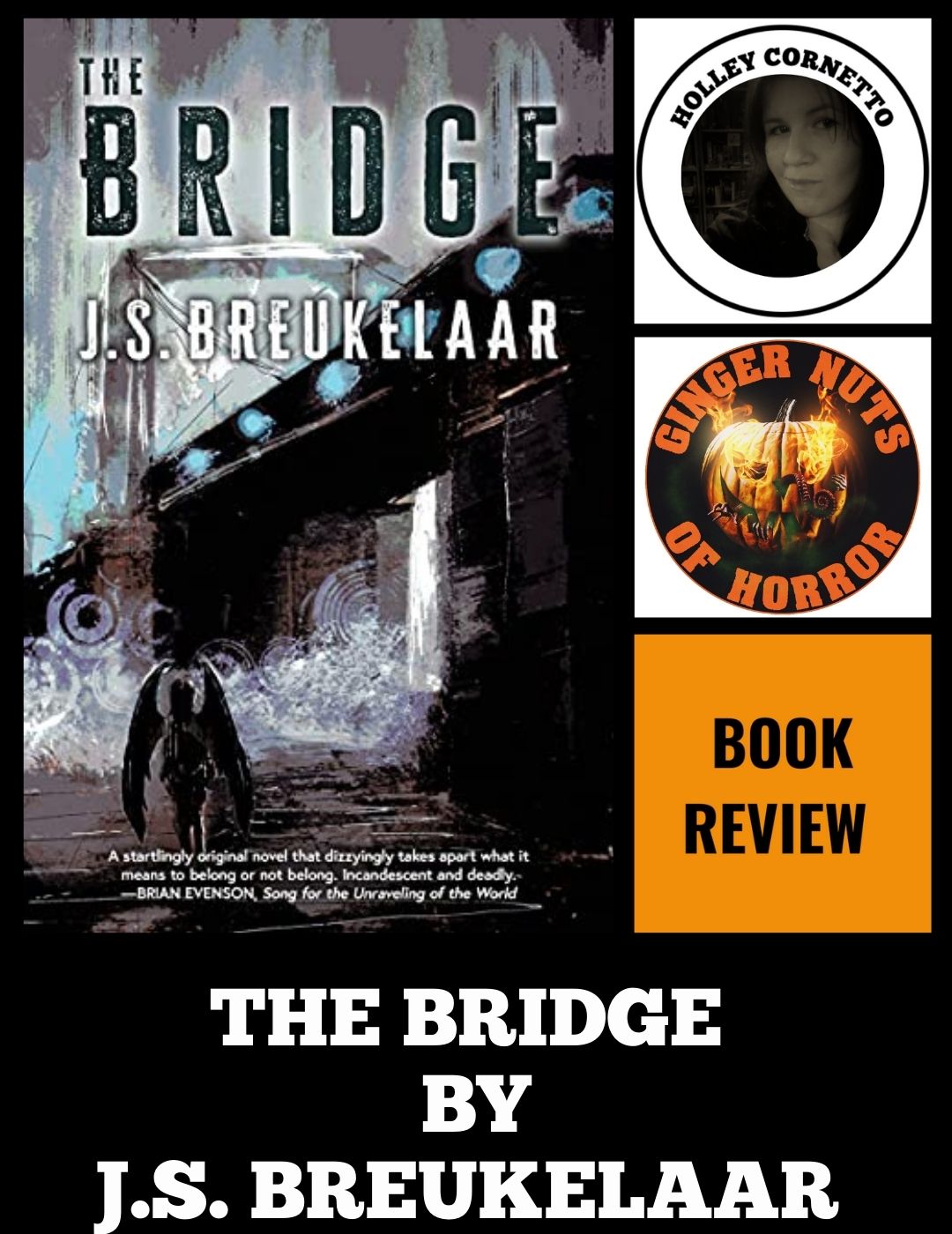
[BOOK REVIEW] THE BRIDGE BY J. S. BREUKELAAR

9/10/2021
Picture
The fact that Breukelaar created such a rich world for her characters in such a small space demonstrates her mastery of the craft.
 The Bridge by J. S. Breukelaar

Publisher ‏ : ‎ Meerkat Press
Language ‏ : ‎ English
Paperback ‏ : ‎ 260 pages
ISBN-10 ‏ : ‎ 194615444X
ISBN-13 ‏ : ‎ 978-1946154446

A book review by Holley Cornetto
In The Bridge, J. S. Breukelaar gives readers a dark fantasy with complex world-building, a fantastic plot, and well-developed characters. The Bridge tackles important concepts like memory and identity, while also shedding light on social issues like control over female bodies.
​
While reading, I couldn’t help but draw comparisons to Atwood’s famous The Handmaid’s Tale as Breukelaar’s story treads similar ground. In The Bridge, we follow Meera, who is the survivor of a cult run by a man referred to as “Father.” The creations of this cult are called “Mades,” described as “part human and part not,” of which Meera is one.

While The Bridge deals in several themes, such as grief, loss, survival, and redemption, the use of stories and story telling as a device gave this story heart, and made it standout in a way that other works making use of these themes often do not. The story is complex, and just when the reader thinks they’ve figured out what the book is about, Breukelaar adds another layer.

I was surprised by how much the author was able to include in just over 220 pages. The world felt as complete as those in fantasy books of double the length. The fact that Breukelaar created such a rich world for her characters in such a small space demonstrates her mastery of the craft.

Overall, this was a satisfying read. Admittedly, it took a few chapters before I was pulled in, but I’m glad that I stuck it out and finished it, because it turned out to be an excellent book.

Recommended for fans of dark fantasy, and/or fans of works in the vein of The Handmaid’s Tale.

The Bridge 
by J.S. Breukelaar  

Picture
"I was raised by three sisters, one a witch, one an assassin and the third just batshit crazy." And so begins The Bridge, from Shirley Jackson Award, Aurealis Award, Shadows Award, and Wonderland Award finalist, J.S. Breukelaar. Meera and her twin sister Kai are among thousands of hybrid women—called Mades—bred by the Father in his Blood Temple cult. Meera is rescued by a mysterious healer and storyteller, Narn, but her sister, Kai, does not survive the Father's "unmaking." Years later, when the cult is discovered and abolished, Meera, still racked with guilt and grief, enrolls in college to take advantage of the government's generous new Redress Program. There she can only dream of ever being real, of ever being whole again without her twin. When Narn's conjure stories buy Meera a free ride to a notorious horror reading series, she is soon the darling of the lit set, feted by the other students, finally whole, finally free of the idea that she should have died instead of her sister. But college is not all it seems—there is a price to pay for belonging to something that you don't understand. Narn has lost a sister too, and Meera agrees to try and find her if Narn will keep feed.

Picture

the heart and soul of horror fiction reviews 

[BOOK REVIEW] ONLY THE STAINS REMAIN BY ROSS JEFFERY

8/10/2021
HORROR FICTION REVIEW ONLY THE STAINS REMAIN BY ROSS JEFFERY
 Only the Stains Remain is a powerful and harrowing read which asks a lot of difficult questions, of which there are no easy answers to. Read it with caution and tread very carefully.

​What must you truly do to kill a child?

​
Only the Stains Remain by Ross Jeffery

ASIN ‏ : ‎ B099FZ287G
Publisher ‏ : ‎ Independently published (18 July 2021)
Language ‏ : ‎ English
Paperback ‏ : ‎ 136 pages
ISBN-13 ‏ : ‎ 979-8523001307

Ross Jeffery’s Only the Stains Remain is a very tough but ultimately rewarding read, which crams considerable power and heartache into its 138 pages. In its most simplistic form, it could be described as a rape and revenge story, a trope you are much more likely to see on film than in the pages of a book. Considering its content this novella is a very lyrical story, which is neither Splatterpunk, Grindhouse, or Extreme Horror and ultimately used language which was too flowery for the content matter. Here is such an example, a rather odd way of describing the repeated child rape of two boys:

“Our uncles’ appetites had matured over time as we’d been held temptingly out of reach by our mother. But with her gone, there was nothing to hold them back, and now they were ravenous and free to feast – and feast they did.”

I am not too sure whether the adult survivor of child rape, reflecting back, would refer to this brutality as “free to feast” but that is fairly typical of some of the language in the book, which on numerous occasions I struggled with. A couple of the reviewers who plugged the book in the foreword compare it to Jack Ketchum and mention the “Ketchumesque prose”, I would disagree, there is nothing “Ketchumesque” about this style of writing. Ketchum nailed words to the page, Jeffrey dances around them and makes them sound pretty. These days any novel with the theme of abuse seems to be compared to Ketchum’s The Girl Next Door but in actual fact the plot is much more similar to his lesser-known Stranglehold which is about the abuse of a boy rather than a girl.

I do not want to sound overly negative about Only the Strains Remain as I read it in two sittings and found the story of two abused brothers Jude and Kyle to be compulsive reading. Following losing their mother to cancer, their three abusive uncles move into the family home, Dwight, Lucius and Lenny. The men are completely foul and are presented as hillbilly caricatures, who initially abuse the elder of the brothers Kyle, who protects his younger sibling Jude from the worst of the torment.

As this is a rape and revenge story (initially set in 1982) the second strand moves forward some years (it does not indicate how long) to when Jude is an adult and contemplating revenge on his three uncles and father. Written in the first person, both timelines are blended together and Jeffrey wisely keeps most of the sexual violence off-screen but does not hold back in the brutal (you may find yourself cheering) revenge part of the story, even if the violence is not glorified in any way. The scenes of the uncles predatory sidling up to young Jude were particularly unsettling and the helplessness felt by the scared child oozed from the page. This was a major strength of the book, which beautifully conveyed the psychological torment felt by the kids whenever the uncles were on the prowl, and especially if they had been drinking.

Considering what goes on in this story, particularly in the way in it is framed as a revenge drama/thriller, there were too many niggling unanswered questions for my taste. Why did the boys never seem to go to school? One of the boys is abused so badly he cannot sit down, why is this abuse never picked up my anybody? Can you genuinely repeatedly burn cigarettes into children’s skin branding them and expect nobody to notice? Can you truly just bury people in your back garden or property and have no blowback? If this was some crazy type of creature feature these types of questions would be inconsequential, but in this type of story the reader has a right to answers and if not given simply come across as plot holes. The Ketchum novel I mentioned earlier, Stranglehold, does travel some of the same ground, but has no such glaring gaps in the plot.

The relationship between the two brothers was a particular strength of Only the Stains Remain and some of the pain Kyle goes through to protect his brother was difficult to take and the subsequent ripple of guilt Jude feels was just as realistic. The scenes of shared tents, branding with cigarette burns and the drawn-out scenes where the uncles chuckled about what was going to happen when the lights went out “I’m going to make you a man” was deeply unsettling and I was very glad Jeffrey shied away from anything sexually graphic.

The complicity of their father Abraham in the abuse was unforgivable and was not the strongest part of the story. Although reasons (or excuses) are given for his behaviour I found it very difficult to swallow how a father could quite openly turn a blind eye to his two children being repeatedly raped by close family members. Granted he is drunk most of the time, but they are not exactly subtle and I found this part of the story to be a stretch and again the reader has the right to question why he allows this to happen? Being an alcoholic who has lost his wife was just not a convincing enough excuse for myself.  However, It’s worth noting that I would probably not have bothered raising this question if it was not for the fact that I found the book to be so thought provoking.

Only the Stains Remain stayed me long after I had completed it and it had the potential to be developed into a much longer work. Ultimately it asks how do you kill a child? And the answer is not the physical death blow with a knife, gun or fists, but the drawn-out way in which childhoods are ended by violence, abuse and the abuse of trust, loss of innocence with the light of hope being extinguished. Only the Stains Remain is a powerful and harrowing read which asks a lot of difficult questions, of which there are no easy answers to. Read it with caution and tread very carefully.

Tony Jones

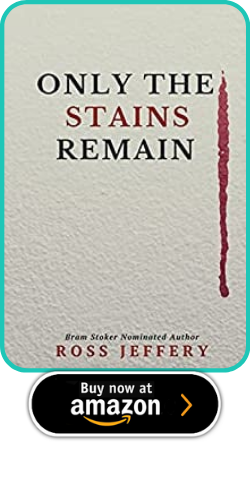
Only The Stains Remain 
by Ross Jeffery 

Picture
​Only The Stains Remain is the haunting story of Jude and Kyle, two brothers whose lives are destroyed when, following the death of their mother, their three abusive uncles Dwight, Lucius, and Lenny move in to the family home. But whilst Jude suffers to a degree, Kyle is the one who takes the brunt of their attention, submitting himself to preserve his younger brother’s innocence.

As a grown man, Jude’s mind turns to vengeance for what they have endured. He has waited a long time, but now he is strong enough, and cold-hearted enough, to do the deed. Enacting one harrowing revenge after another, Jude’s dark quest to punish the wrongs of the past will show that after all is said and done, only the stains of the past will remain.


TODAY ON THE GINGER NUTS OF HORROR WEBSITE ​

[FEATURE] THE HORROR OF MY LIFE: ​BEN EADS

Picture

THE HEART AND SOUL OF HORROR FICTION REVIEWS 

Previous
Forward
    Picture
    Picture

    RSS Feed

    Archives

    May 2023
    April 2023
    March 2023
    February 2023
    January 2023
    December 2022
    November 2022
    October 2022
    September 2022
    August 2022
    July 2022
    June 2022
    May 2022
    April 2022
    March 2022
    February 2022
    January 2022
    December 2021
    November 2021
    October 2021
    September 2021
    August 2021
    July 2021
    June 2021
    May 2021
    April 2021
    March 2021
    February 2021
    January 2021
    December 2020
    November 2020
    October 2020
    September 2020
    August 2020
    July 2020
    June 2020
    May 2020
    April 2020
    March 2020
    February 2020
    January 2020
    December 2019
    November 2019
    October 2019
    September 2019
    August 2019
    July 2019
    June 2019
    May 2019
    April 2019
    March 2019
    February 2019
    January 2019
    December 2018
    November 2018
    October 2018
    September 2018
    August 2018
    July 2018
    June 2018
    May 2018
    April 2018
    March 2018
    February 2018
    January 2018
    December 2017
    November 2017
    October 2017
    September 2017
    August 2017
    July 2017
    June 2017
    May 2017
    April 2017
    March 2017
    February 2017
    January 2017
    December 2016
    November 2016
    October 2016
    September 2016
    August 2016
    July 2016
    June 2016
    May 2016
    April 2016
    March 2016
    February 2016
    January 2016
    December 2015
    November 2015
    October 2015
    September 2015
    August 2015
    July 2015
    June 2015
    May 2015
    April 2015
    March 2015
    February 2015
    January 2015
    December 2014
    November 2014
    October 2014
    September 2014
    August 2014
    July 2014
    June 2014
    May 2014
    April 2014
    March 2014
    February 2014
    January 2014
    December 2013
    November 2013
    October 2013
    September 2013
    August 2013
    July 2013
    June 2013
    May 2013
    April 2013
    March 2013
    February 2013
    December 2012

https://l.facebook.com/l.php?u=https%3A%2F%2Fmybook.to%2Fdarkandlonelywater%3Ffbclid%3DIwAR1f9y1sr9kcIJyMhYqcFxqB6Cli4rZgfK51zja2Jaj6t62LFlKq-KzWKM8&h=AT0xU_MRoj0eOPAHuX5qasqYqb7vOj4TCfqarfJ7LCaFMS2AhU5E4FVfbtBAIg_dd5L96daFa00eim8KbVHfZe9KXoh-Y7wUeoWNYAEyzzSQ7gY32KxxcOkQdfU2xtPirmNbE33ocPAvPSJJcKcTrQ7j-hg
Picture