• HOME
  • CONTACT / FEATURE
  • FEATURES
  • FICTION REVIEWS
  • FILM REVIEWS
  • INTERVIEWS
  • YOUNG BLOOD
  • MY LIFE IN HORROR
  • FILM GUTTER
  • ARCHIVES
    • SPLASHES OF DARKNESS
    • THE MASTERS OF HORROR
    • THE DEVL'S MUSIC
    • HORROR BOOK REVIEWS
    • Challenge Kayleigh
    • ALICE IN SUMMERLAND
    • 13 FOR HALLOWEEN
    • FILMS THAT MATTER
    • BOOKS THAT MATTER
    • THE SCARLET GOSPELS
GINGER NUTS OF HORROR
  • HOME
  • CONTACT / FEATURE
  • FEATURES
  • FICTION REVIEWS
  • FILM REVIEWS
  • INTERVIEWS
  • YOUNG BLOOD
  • MY LIFE IN HORROR
  • FILM GUTTER
  • ARCHIVES
    • SPLASHES OF DARKNESS
    • THE MASTERS OF HORROR
    • THE DEVL'S MUSIC
    • HORROR BOOK REVIEWS
    • Challenge Kayleigh
    • ALICE IN SUMMERLAND
    • 13 FOR HALLOWEEN
    • FILMS THAT MATTER
    • BOOKS THAT MATTER
    • THE SCARLET GOSPELS
GINGER NUTS OF HORROR
horror review website ginger nuts of horror website
Picture

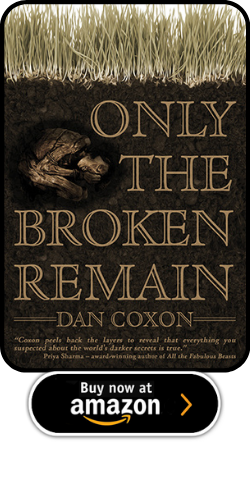
BOOK REVIEW: ONLY THE BROKEN REMAIN BY DAN COXON

17/11/2020
BOOK REVIEW- ONLY THE BROKEN REMAIN BY DAN COXON.pngBOOK REVIEW- ONLY THE BROKEN REMAIN BY DAN COXON.png
"you will get a great deal of satisfaction in knowing that you aren't the only one who found those quaint villages populated by the likes of Pugh, Pugh, Barney McGrew, Cuthbert, Dibble, Grubb to be way creepier than they let on. "
What is weird fiction, and when does weird fiction morph in horror fiction? That's a question that has been bouncing around my head for a good few weeks since finishing Only the Broken Remain, the new collection of short stories from Dan Coxon. 


While none of the stories would be classed as a horror by the more traditional or dyed in the wool horror reviewer, there is no overt horror here, no scenes of graphic violence, no classic monsters stalking you through the pages, hell there isn't even a blonde-haired, blue-eyed, square-jawed hero to save the day. Instead, you have a collection of stories that exist in the liminal areas between the genre worlds. Worlds where the mundane becomes menacing, where sadness, loneliness and despair breed stories that will crush your soul with the elegant heartache, don't come into this anthology looking for a happy ending, that's just not going to happen. Despite its lack of "horror" this collection more than any other I've read this year left me feeling emotionally beaten up.  


When describing Coxon's writing, words such as dreamlike, ambiguous, sadness, cryptic and enigmatic immediately spring to mind, the stories presented here are designed to make you think and ponder on the narratives presented. Even the most basic of stories in terms of the intent and delivery of the message, are layered in such a way that while you may initially think you have gotten everything from the story as you read it, it will live inside your head pushing away at your grey matter reveal hidden depths and meanings that you missed when you first read it.  


The opening story "Stanislav in Foxtown" is one such story on the surface it's a simple tale of a man befriending a group of urban foxes, who in return help him take a step up the ladder of life. It is perhaps the happiest story in the collection, but remember happiness is relative and the parallels between the urban decay of the town, and the mutual malice that takeaway owner has for the foxes and his immigrant worker. It is a simple but effective opener for what is to come with the rest of the collection. Coxon injects a strong sense of mystery and mysticism into the disenchanted world of Foxtown.  


Some of us dream about running away to the circus, something I've never fully understood, who would want to live in a cramped caravan surrounded by animal smells and clowns. In "Roll up, Roll Up" Robbie doesn't necessarily run away to the circus, the circus came to him. And in proper horror terms, the circus is just as chilling and frightening as your worst nightmares could ever imagine. And yet there is a small glimmer of hope here, while Robbie's role in the circus is revealed, we realise that he has finally found his place in the world, and a family to belong to. "Roll up, Roll Up" reads like a mash-up between Freaks and Cabal, with Coxon blending the terror elicited by Freaks with the sense of wonder and belonging of Cabal, while still maintaining its own identity as a short story.  


"Only the Broken Remain" is a genuinely terrifying take on the haunted house trope. Coxon elicits an all-encompassing sense of claustrophobic fear as we witness what seems to be a descent into madness from our broken protagonist. Like many of the stories here, there is a powerful sense of poignancy and sadness that envelopes the narrative. There is a lot to digest in here, its a classic example of a story that is open to many interpretations, is the house haunted, or is the haunting a manifestation of the broken life of the protagonist?   


Many of the tales also involve characters finally becoming accepting of themselves and finding release in numerous ways, "Feather and Twine" is one such story, a captivating story of a broken man finally seeing an escape from the banalities of life and world that doesn't understand him after a chance encounter with a fantastical creature. 


"Miriam is Not at Her Desk", wow what can you say about this headscratcher of a story, bursting with metaphor this is a story that is perfect for a book group, I'm not sure I fully understood it, beyond a woman disappearing in a unique way after robbing her company of a fortune. However, this is a fantastic tale that wouldn't be out of place in an episode of Black Mirror, with its hypnotic narrative evoking the dreamlike magic of aboriginal Australia. 


"Baddavine" is a killer folk horror tale, and if I were forced to name my favourite story in this excellent collection, it would have to be this one. At its heart this is a simple tale, a creature is haunting the woods, and the locals don't like it, it hasn't done anything, it hasn't killed anyone, but its nightly cries are too much for the narrow minded insular locals, and they set out to hunt it down and kill it.  


It has been close to four weeks since I read this story, and even now, I am filled with a deep sense of sadness whenever I think about the sheer heartbreaking narrative. Right from the first paragraph, Coxon makes it clear that this is going to be a story filled with dread, but that dread soon turns to abject horror as the locals devolve into brutal animals looking to kill a lost and forlorn creature. The scenes between Baddavine and the mob, are genuinely chilling, you can feel Baddavine's fear and anguish right in the centre of your soul, bringing forth a sadness that is only matched by your anger at the mob mentality of the village folk fearful of something that isn't like them.  


"Static Ritual" co-written with Dan Carpenter uses a fractured timescale of events to create a paranoia filled reductive narrative where the world is always on instant replay. Where a mysterious videotape sends the protagonist down a path of obsessive behaviour,


The final two stories I'm going to highlight, bring a little welcome light relief to the otherwise dark theme of this collection.  


"No One's Child" is a gleefully macabre tale of a WW2 evacuee being sent out to a stately country house where she clashes with the stern matriarch of the household. A chance encounter with a creature living in the depths of the house brings an opportunity for her to climbs the ranks of the house and get revenge on the matriarch. However, sometimes the status quo is better than the alternative. Mixing Three Kids and It with Basket Case, "No One's Child" revels in the dark humour presented here. 


"All the Letters in his Van" pushes the envelope of weird fiction to brush up against its crazy bizarro cousin. When a couple gets stuck in a foggy village, everything seems rather pleasant at first, but the arrival of the enigmatic Postman, things take on a much darker hue. Those of us of a certain age will love this nod to classic children's TV, and if you are like me you will get a great deal of satisfaction in knowing that you aren't the only one who found those quaint villages populated by the likes of Pugh, Pugh, Barney McGrew, Cuthbert, Dibble, Grubb to be way creepier than they let on.  


This absurdist tale is a great way to finish off this collection, while many of the stories presented here allow the characters some form a sad release from the horror of their lives "All the Letters in his Van" shows that while we might think there is an escape from it all, we are merely just trapped in the confines of some almighty deitys TV show.  


Only the Broken Remain, is the perfect anthology for 2020, with many of the stories on offer here resonating with the life that many of us have found ourselves living through this year. We have all been touched by the events in the world at large, and we have all become broken to some degree or other.  Only the Broken Remain beautifully reflects the sadness that has grown within us, with its evocative and poetic writing, combined with a powerful use of ambiguity and a profound use of a lack of conclusion to the lives etched into the beating heart of this collection, you will be left with a comforting emptiness inside from knowing that you aren't alone in being broken, battered and bruised. 

ONLY THE BROKEN REMAIN by Dan Coxon
​

Picture
I could see into the room well enough, but there was nothing there. No furniture, no ornaments. A rusted sink streaked with black and grey. An empty light fitting. Nothing more than a thick layer of dust on tired linoleum, forming a furred carpet that stretched undisturbed into the empty room beyond… There was no neighbour. It occurred to me for the first time that I might be going mad.

A young man joins a circus where the mysterious ringmaster is more interested in watching him fail. An immigrant worker forms an unlikely alliance with his housing estate’s foxes. A fraudulent accountant goes on the run, but loses herself in the dry heat of Australia.

This debut collection from Dan Coxon unearths the no man’s land between dreams and nightmares, a place where the strange is constantly threatening to seep through into our everyday reality. Populated by the lost and the downtrodden, the forgotten and the estranged, these stories follow in the tradition of Thomas Ligotti, Robert Aickman and Joel Lane. Because when the dust has settled and the blood has been washed away, Only the Broken Remain.

“Dan Coxon’s subtle, delightfully dark tales creep up on you from the shadows, then refuse to let you go. I devoured these stories about crises of identity and reality being undermined after glimpsing something inexplicable from the corner of your eye.”
—Tim Major, author of Snakeskins and Hope Island

Purchase a copy here 

Further Reading 
WEIRD HORROR FOR WEIRD TIMES: DAN COXON & GARY BUDDEN IN CONVERSATION
LONDON INCOGNITA BY GARY BUDDEN (BOOK REVIEW)
the-best-website-for-horror-promotion-orig-orig_orig
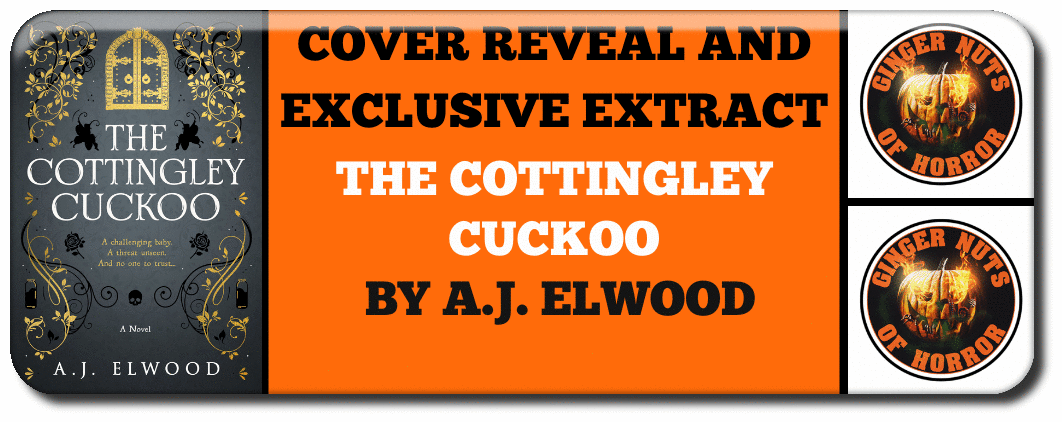
FEATURE COVER REVEAL AND EXCLUSIVE EXTRACT- THE COTTINGLEY CUCKOO A.J. ELWOOD.png

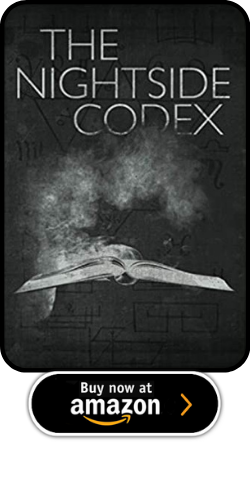
BOOK REVIEW: THE NIGHTSIDE CODEX

13/11/2020
THE NIGHTSIDE CODEX
The Nightside Codex isn’t an anthology that cries out to devoured, one story after another. For my taste, it was a little too dry and whimsical for that. It is best picked over, taking on one story at a time, before dipping into something with a touch more humour, pace and action. Then, when you’re in the mood for a bit more introspection, tackle another story. As a selection of more atmospheric samples, it could find a place in the libraries of many.
The Nightside Codex is a themed anthology of stories about unwritten works: books, documents, musical scores, theories, mystical glyphs, tattered autograph books and the like. Think ‘The King in Yellow’ type stories. Now, I might be somewhat set in my ways, but experience has taught me that getting writers to write about writing is akin putting your grandmother in a barrel and pushing her over Niagara Falls: it seldom ends well!

While there’s a world of inventive ways to address such a theme, often when writers write about writing the result is somewhat introspective. All writers – no matter how relaxed they might seem about their work – are prone to introspection when the subject arises, and keeping that out of the stories can be a challenge.

It's fair to say that a fair few of the stories in The Nightside Codex carry a degree of introspective narrative, and as interesting as it might be, it often doesn’t drive the tension needed for a suspenseful tale. Well, it doesn’t for me. A fair few of the stories have a lengthy build-up, promising some great secret to be revealed which will leave the reader reeling, but when the climax arrives, the pay-off isn’t worth the investment.

The shame of this is all the stories are well written, and all do promise something will be revealed. There was only one story in the collection which didn’t hook me in. However, when dealing with mythical texts, it’s difficult to have a grandstand ending because it would need to convey the enormous power which has been attributed to the imagined work.

If, for example, the story is based on a piece of writing which drives people insane or pushes them to strange and unusual deaths, then any revelation of the work needs to have that power. If it doesn’t, the story fails. Most writers know this, so the result is a number of stories based upon the power of a book, musical score or fabled communication, but to avoid the inevitable anti-climax the story too often veers off at the last moment, which leaves the reader feeling short-changed.

Too often in the Nightside Codex, the stories promise a mystery, create a need to understand the content of the specific text, shroud events in mystery and uncertainty, and then deliver a subtle and vague ending. That isn’t to say subtle and vague endings don’t work. I like the odd one sprinkled in a collection, but because the vast majority of tales ended without resolution, I found myself craving some action, an explosive ending, an orgy of violence or destruction. I would even have swallowed a happy-ever-after (and I hate happy-ever-after in all its forms). I just wanted a conclusion.

However, The Nightside Codex does include a couple of stories that really work. My personal favourite was Tongue-Tied by Devora Gray. To start out, it feels fragmented, but the various elements dovetail together to build a story which is compelling, tense, mysterious and entertaining. The subtle twist is unexpected, and left me with a thirst for more of Gray’s works.

Vanity by Austin James also sidesteps introspection, delivering a short but well-crafted tale of rejection, absence, revelation and vanity ... of sorts. It sits at the back end of the collection, which means some who find the subtlety of the anthology too much might never find it, but it deserves to be sought out!

The Past is a Foreign Country by Alistair Rey is another which worked well. A mysterious musical score is the centrepiece of this tale, which has an unsettling undertone of dread throughout the tale. I spent a fair amount of time after reading the story trying to imagine how the composition sounded.

Rhys Hughes’ Between the Circles is another interesting read, and while it has a somewhat lacklustre ending, it stands well without the last part. Based on The Divine Comedy, it considers the story of a swindler determined to beat Dante’s circles of Hell.
​
The Nightside Codex isn’t an anthology that cries out to devoured, one story after another. For my taste, it was a little too dry and whimsical for that. It is best picked over, taking on one story at a time, before dipping into something with a touch more humour, pace and action. Then, when you’re in the mood for a bit more introspection, tackle another story. As a selection of more atmospheric samples, it could find a place in the libraries of many.
https://smarturl.it/wmy3sl
Editor's IntroductionThere’s something fascinating about a book that was never written. It resists, for one, all the imperfections that inherently arise in language, all those insufficiently rendered thoughts and images that famously leave writers exasperated with their own work. Exasperated enough to inspire some, like Kafka, to advocate the wholesale burning of their oeuvre. Sometimes it’s worse. Imagine how many books out there never made it to print thanks to the gap between direct experience and these tiny scratches of ink we’re expected to render it by. A damned shame. One of the benefits of avoiding this insufficiency is that an unwritten book achieves exactly what it’s supposed to. Robert W. Chambers’ two-act play, “The King in Yellow,” drives its reader to madness. There’s no question of its power to do so. What horror writer wouldn’t want a taste of that? Luckily, the actual text is never allowed to interfere with Chambers’ unwritten masterpiece. That’s what makes it so fascinating—the burden of creation is thrown back into our own imaginations, letting us fill in the gaps with our own hidden madness. Barring the invention of some kind of live neuron mapping tech in the world of entertainment (you laugh, but just wait), nothing comes closer to a truly individualized media experience. No wonder writers as diverse and inventive as H.P. Lovecraft, Stanislaw Lem, and Jorge Luis Borges, to name a few better-known examples, are drawn to the unwritten manuscript. But that’s not entirely what this book is about. You’ll find more here than just the (un)written word in the classic sense—there’s musical scores, ancient glyphs, an autograph, and even an eBook. Worse, each extracts a terrible price from its reader. With the exception of Richard Thomas’ “In His House,” these stories aren’t additions to the lore of unwritten staples of horror and weird fiction. They are wholly fabricated media artifacts of each writer’s imagination, horrific in their nonexistence, dark heirs to the great and unreal Sutter Cane. We hope your imagination is a secure place since it’s there where the conjurations are soon to begin. We bid you luck on your descent into The Nightside Codex

Picture
Peter Caffrey is a writer of tales with an absurdist bent. A born and bred Londoner, he currently lives in the middle of nowhere with nothing but the North Sea and fog for company. Introduced to horror as a small child by a Mother who was too scared to watch films on her own, he has a fondness for demonic possession, crucifixion and impalements. His novels, The Devil’s Hairball and Whores Versus Sex Robots are available from Amazon. He drinks too much, exercise too little and is unlikely to change.
 
http://petercaffrey.com

the-best-website-for-horror-promotion-orig_orig
IT CUTS DEEP- A FILM REVIEW AND INTERVIEW WITH DIRECTOR NICHOLAS PAYNE SANTOS AND STAR OF THE FILM CHARLES GOULD

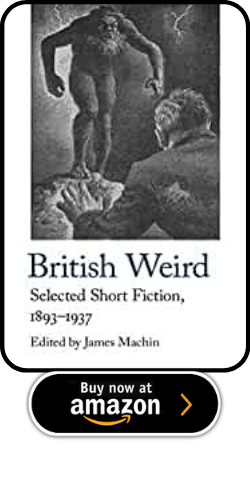
BRITISH WEIRD: SELECTED SHORT FICTION, 1893-1937 (HANDHELD PRESS)

12/11/2020
BOOK REVIEW  BRITISH WEIRD- SELECTED SHORT FICTION, 1893-1937 (HANDHELD PRESS)
Altogether Machin’s anthology is a very successful attempt to condense a long and extraordinarily rich era of quality fiction into just nine stories, also providing a good mixture of the renowned and the less well-known. It’s highly recommended for readers who are new to the stories of the period, while also rewarding long-term fans. And in answer to my question above, yes, those inter-war stories are every bit as deserving of inclusion as the pre-war ones!
As noted by Jack Sullivan in Elegant Nightmares, his now legendary study of the English ghost story, the period between 1880 and the start of WWI is often referred to as the ‘Golden Age of the Ghost Story’ due to the volume and quality of the fiction published in that time. However, James Machin’s new anthology, BRITISH WEIRD: Selected Short Fiction, 1893-1937 (Handheld Press) covers a slightly shifted window of time, starting in the Late Victorian era and ending with WWII. This tacitly makes a case for considering the inter-war writers of such stories as being on a par with the pre-war titans of British supernatural fiction, but is this claim justified?

The nine stories and one essay are in chronological order. Things get off to a fairly predictable start in 1893 with ‘Man-size in Marble’ by Edith Nesbit. I say “predictable” because this is her most popular story, but I was still glad to see her here because she is to my mind the most unfairly treated female author from this era. The quality, compassion and sheer scariness of her writing deserves far more attention than she gets. This tale of a young couple’s collision with some unusual statuary is a concise classic frightener that also pulls at the heart-strings.

John Buchan can certainly not be described as overlooked where his adventure fiction is concerned, but his supernatural writing is ignored to a ridiculous extent by the world at large. ‘No-Man’s-Land’ is a long story about the bloody roots of fairy mythology in the British Isles, in this case the Scottish Highlands. The first third is a bit hard-going due to the enormous amount of regional dialect involved (one of the characters is a shepherd), so much that even the abundant notes by Kate Macdonald still don’t cover it all. However, once it gets going it has the same readable, yarn-like quality of Buchan’s bestselling novels, augmented with a twist of clammy underground horror. The way the hero’s psyche buckles and warps over time in a fruitless attempt to accommodate the terrors he has witnessed is expertly done, too. At his most macho Buchan sometimes seems to look down on “damaged sensitives” (as he describes victims of shell-shock in The Dancing-Floor), but this story proves that he is capable of compassion for the mentally disturbed. Similarly, while Buchan can be dismissive of women (like many writers of the time) occasionally he will pull a really tough, competent female character out of the bag, and the shepherd’s quiet, hard-as-nails sister is definitely one of those. If you enjoyed Karl Edward Wagner’s ‘.220 Swift’ you should definitely check out ‘No-Man’s-Land’, and vice versa.

There is more fun for nature-lovers in ‘The Willow’ by Algernon Blackwood, who needs no introduction to fans of sylvan or “pagan” horror. Blackwood shares Buchan’s fascination with the denizens of the country’s wild places, though Blackwood’s ghosts or elementals are often less tangible and more all-engulfing. For Blackwood, everything is permeable to the weird; there are no really safe places. Of course, the kind of lonely river island where the heroes of this story pitch camp amid a population of willow trees is particularly dangerous…This is definitely one of the more obvious inclusions in the anthology, but it’s such a pleasure to read and re-read, one of the best, most beautiful and also most unnerving evocations of the weird spirit that animates the natural world.

By contrast ‘Caterpillars’ by E. F. Benson is positively chatty, at least at first, as we find our hero holidaying in a charming villa on the Italian Riviera (it often feels like Edwardian ghost story protagonists spend most of their life on holiday, recovering from some unspecified illness.) But it actually packs a very satisfactory punch of supernatural horror and is a reminder not to underestimate the dark power lurking behind the lightness of touch that made Benson so famous as a writer of comic novels.

Sadly, the next writer, John Metcalfe, never got the fame he deserved, although he has been somewhat rediscovered of late. ‘The Bad Lands’ is about a man who stumbles on a very nasty ‘thin place’ between our world and another while holidaying in a South-West coastal town. This story comes from 1920 and feels very modern from a psychological point of view. The hero is frankly described as a ‘neurotic’ but his shaky mental health record reinforces the horror of his supernatural experience, rather than discrediting it. Metcalfe posits that none of us, sane or otherwise, are safe from such places: anyone could step on one of these inter-dimensional landmines at any time. Stylistically the story is superb, too, and Metcalfe shows tremendous skill in describing the malignancy of the local scenery, a deep well of horror that is no less acute for its formlessness. I love virtually everything I’ve read by Metcalfe (see here for my review of his collection The Smoking Leg: https://darkling-tales.dreamwidth.org/112222.html ) and I do hope his collections become more widely available soon.

Things get more obscure with ‘Randall’s Round’ by Eleanor Scott. Although her collection of the same name was republished a few years ago (see my review here: https://darkling-tales.livejournal.com/163701.html) she remains largely unknown. While not up there with the Bensons and Nesbits, and more than a little derivative of MR James, she’s a very sound second-tier writer of antiquarian and folk horror, with the story chosen here being particularly on-trend at the moment.

However, it is L.A. Lewis who represents the real dark side of the moon here. I hadn’t heard of him at all until I read this, though you can find out a fair bit about him in this intriguing review of his collection ‘Tales of the Grotesque’ And LA Lewis, on this showing, is bloody good. ‘Lost Keep’ (1934) is that rare thing, a story that serves as a moral fable while retaining the power to frighten. A forerunner of stories like Dean Koontz’ famous ‘Down in the Darkness’, it deals with an age-old theme, the corrupting effect of unbridled power, embodied here in a peculiar scale model of a castle of unknown location. There are some really nifty little plot twists here, and some of the details of the keep’s horrors are surprisingly visceral for the time. And despite having a strong moral core, it nonetheless manages to feel quite nihilistic. I am very keen to find out more about Lewis now, and the inclusion of this story is a great coup for Machin.

Of course, no anthology of this kind is complete without an appearance from Arthur Machen. Machin (with an ‘i’!) has left the beaten track here, having chosen ‘N’, a later story, to represent the author. It uses one of his specialties, a framing device or prologue consisting of an urbane, curious narrator-cum-flaneur discoursing to his mates about some weird corner of London’s psychogeography.  This worked well in ‘The Three Impostors’ and ‘The White People’, for instance, though ‘N’ actually has three different nested narratives, which feels like a bit much. The discourse part - which deals with dimensions that may exist alongside each other and intersect at certain points to reveal unsuspected worlds of wonder and terror -  is overlong, and my attention was wilting by the time I got to the meat of the story, if you can describe something as elusive and mysterious as “meat”. However, there is still a genuine thrill of magic in this story for those who persevere, and a note of great pathos in its final account of a mentally disturbed young man who stumbles on the hidden glories of, er, Stoke Newington.

The last two places at Machin’s table are both given to Mary Butts, a Westcountry Crowley-botherer and modernist whose work I wasn’t familiar with until now. Her story, ‘Mappa Mundi’, aims to do for Paris what Machen’s ‘N’ does for London, attempting to lift the lid on the occult forces that imbue the city and occasionally snatch away a curious young American or two. If you thought ‘N’ was crammed with too many oblique cultural references to forgotten things, you won’t like ‘Mappa Mundi’, and I found the first half tiresome. It’s many references to magical practice and various divinities have that slight aura of smugness  characteristic of supernatural tales penned by fervent dabblers in the occult, and the coyness with which it approaches the shadowy forces at large in Paris is more often irritating than tempting. It picks up towards the end, and there isn’t any tidy over-explanation, but you’re much better off checking out Robert W Chambers’ Paris stories from his King In Yellow collection.

Butts’ second contribution is a long Essay, ‘Ghosties and Ghoulies’: Uses of the Supernatural in English Fiction. I found this more interesting, as it’s written in an approachable style, covers some of my very favourite authors, and makes some good points about the differences between types of supernatural fiction. I liked her description of what a good weird tale should evoke: “not simple horror or terror at a new and generally evil world, usually invisible but interlocked with ours; we mean also a stirring, a touching of nerves not usually sensitive, an awakening to more than fear – but to something like awareness and conviction or even memory.” I also enjoyed her pithy description of MR James as “a master of plain style like plain-chant”, and her suspicion that James himself must have experienced some kind of ghostly encounter in his past is lent some weight by the contents of ‘A Vignette’, a quite recently unearthed story of his that seems to be based on a real experience from his own youth.

But unlike the mainstream cultural media of today, Butts doesn’t confine her praise to James alone, and her assessment of EF Benson, John Buchan and Walter de la Mare is also sound (though she only discusses his poetry in passing). Her opinion of more recent writers such as Metcalfe, WF Harvey and the like is more qualified, as she seems to be turned off by anything too decadent or nihilistic or intense. Algernon Blackwood also comes in for a bit of criticism for being intermittently verbose and vague, which is deserved in my opinion.

Butts also provides a very good takedown of the trend for smug and over-polished Celtic nationalism in weird fiction, and she also takes pains to recommend superior authors from Ireland and Scotland such as “AE” and Lady Gregory. However, her greatest scorn is rightly reserved for those authors who write ghost stories solely for the purpose of proving some point or other about the afterlife. I can’t really say more without spoiling the whole essay, but it’s a very good jumping-off point for anyone interested in getting to know the best weird fictioneers of the day.

Altogether Machin’s anthology is a very successful attempt to condense a long and extraordinarily rich era of quality fiction into just nine stories, also providing a good mixture of the renowned and the less well-known. It’s highly recommended for readers who are new to the stories of the period, while also rewarding long-term fans. And in answer to my question above, yes, those inter-war stories are every bit as deserving of inclusion as the pre-war ones!
Picture
​Following the success of Handheld Press's 2019 best-selling anthology Womens Weird, British Weird is a new anthology of classic Weird short fiction by British writers, first published between the 1890s and the 1930s. Embracing the famous and the undeservedly obscure, this collection - curated by James Machin, author of Palgrave Gothic's Weird Fiction in Britain, 1880-1939 - assembles stories to thrill, entertain, and chill. Featured stories include: 'Man-Size in Marble' by Edith Nesbit (1893) 'No-Man's Land', John Buchan (1900) 'The Willows', by Algernon Blackwood 'The Man Who Went Too Far', by E F Benson (1912) 'N' by Arthur Machen (1934) 'Mappa Mundi' by Mary Butts (1937) The collection also includes Mary Butts' influential essay 'Ghosties and Ghoulies' (1933), on British supernatural writing. Machin's introduction describes the background for these excellent stories in the Weird tradition, and identifies their use of peculiarly British preoccupations in supernatural short fiction.

the-best-website-for-horror-promotion-orig_orig
film-gutter-basket-case-2-1990-dir-frank-henenlotter_orig

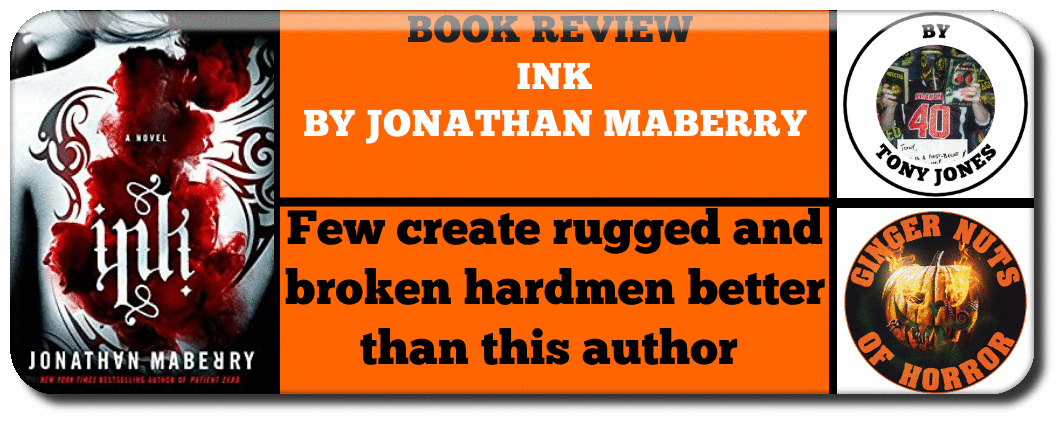
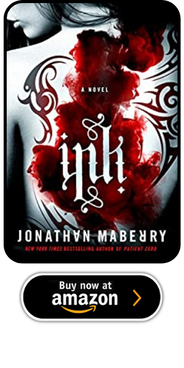
BOOK REVIEW – Ink BY ​JONATHAN MABERRY

11/11/2020
BOOK REVIEW   INK  BY ​JONATHAN MABERRY
‘Ink’ includes characters from both ‘Pine Deep’ and ‘Glimpse’
in masterful blend of horror and fantasy thriller
The prolific Jonathan Maberry closes out 2020 with yet another winner, his latest Ink is billed as a standalone novel, but don’t let that fool you, this is strongly connected to his Pine Deep Trilogy (2006-2008)  which began with Ghost Road Blues. However, if you haven’t read that earlier work do not fret, Ink, does not provide much in the way of spoilers, instead elusively refers to ‘The Troubles’ and if anything, is going to make new readers want to read Pine Deep even more. And I can guarantee 100%, that is no bad thing.
 
Down the years I have read a lot of Maberry and there is probably more cross pollination between this and other novels that I have flagged. For example, the Sheriff in Ink Malcolm Crow and Sergeant Mark Sweeney both featured in Pine Deep, who in turn mention Joe Ledger (although he does not appear directly) in passing. Anybody who knows anything about Jonathan Maberry, will recognise Ledger as the author’s most famous creation, an indestructible black-ops operative who saves the world on a daily-basis in a ten-book series which started back in 2009. Ink is a different kind of literary beast though, forgoing the smash bang wallop of Ledger for a more thoughtful and character driven work about loss, pain, and memory.
 
However, the most impressive cross-pollination with Maberry’s back catalogue is the triumphant return of Gerald ‘Monk’ Addison who first appeared in the previous, and superb standalone novel, Glimpse (2018). I loved Glimpse and Monk ranks amongst one of Maberry’s finest creations and I am not surprised he resurrects this tough guy for Ink. Maberry purists may wonder who would win in a tear-up between Monk and Joe Ledger? It is a close call, but something tells me the bad-ass Monk would just edge it. Monk did not star in Glimpse, and although Ink has an ensemble cast and a lot of characters, he steals the show with considerably more page-time than in his previous appearance. He is a private investigator and bail bondsman whose skin is covered with the tattooed faces of murder victims. He is a predator who hunts for killers and has a supernatural connection with the dead, particularly those tattooed on his body. The crux of the story revolves around when one of his most precious tattoos begins to disappear and the memories associated with it.
 
In some ways Ink could have been set anywhere, but the action opens when Monk moves to the small Pennsylvanian town of Pine Deep which is widely known as the ‘most haunted town in America’ due to ‘The Troubles’ from the earlier stories. Pine Deep is vividly described, almost presented like a character itself and I hope readers who are new to Maberry do not get frustrated with the many vague indications and pointers to the towns dark history. Also, in the climax, out of the blue something strange happened to Sergeant Sweeney, which might not make much sense unless you had read the other books. However, apart from the location Ink has more in common with Glimpse that Ghost Road Blues, in that dreams, nightmares and connections to strange celestial plains play a key role in the engrossing plot.
 
The action revolves around an intriguing mystery: an unconnected number of Pine Deep locals have tattoos which slowly begin to disappear from their skin and with the loss of the ink, the memory associated with it also begins to fade. The tattoos which disappear always seem to be those which have powerful sentimental or emotional value and losing the image is akin to having a part of their personality wiped. It is compared to a rape. Part of the reason Monk is settling in Pine Deep is because one of his oldest and most precious friends, tattoo-artist Patty Cakes, lives there. After the disappearance of the tattoo Patty has of her dead daughter on her wrist almost vanishes Monk realises that something very sinister is going on, as the emotionally distraught Patty can barely remember she had a child. Monk, who avenged the death of the girl, will do everything to bring that memory back.
 
Many other characters ripple throughout the story, connected to tattoos, such as the medium Dianna, who meets another woman experimenting with her sexuality and who then loses a tattoo which is an important symbol to her identity as a gay woman. Various others have precious memories stolen, as the thief targets the lonely, the disenfranchised, the people who need memories to anchor them to this world, with the result often being pain and death or suicide. Until the thief steals a tattoo from Monk Addison. A big, BIG, mistake.
 
I loved this element of the story and it was an interesting change of direction for Maberry, as Ink was not an action novel and was more character driven with the emotional impact of the loss the overarching theme. This had me thinking about my own tattoos, of which my favourites are those which have are the most personal to myself and connected to key periods from my life. I lived in Italy from 1996 to 1999 and followed the football team Lazio, whose symbol is the eagle, I have had this emblem proudly on my arm for over twenty years. I also have a tattoo of the punk band The Dead Kennedys and although the DKs are my no means my favourite band, the tat symbolises my lifelong love for punk rock. So Maberry is correct 100%: tattoos are much more than decorative art.
 
The bad guy also has a lot of page time in various interludes which are referred to as ‘The Lord of the Flies’ and although he was a nasty piece of work, he did not hold a candle to ‘Doctor Nine’ who was the main villain in Glimpse. For much of the time he lurked in the background, feeding on the memories in tattoos, and for the most part was exceptionally sleazy, not especially threatening. He was also killed off way too easily in an ending that could have had a bigger finish considering the whole novel was a meaty 464-pages.
 
Ink is a great addition to Maberry’s outstanding back-catalogue, of which I would also heartily recommend his YA zombie series Rot and Ruin as well as the Dead of Night trilogy and is a quirky change of direction to his recent output. Few create rugged and broken hardmen better than this author and I hope Monk Addison reappears in further novels. If you enjoyed Glimpse, you will most definitely get a kick out of Ink, and if you are a fan of Pine Deep, you will be overjoyed with this.
 
Maberry also, very kindly, also provides an extensive musical playlist at the end of the book. 

Picture
From New York Times bestselling author Jonathan Maberry comes a standalone supernatural thriller Ink, about a memory thief who feeds on the most precious of dreams.

Tattoo-artist Patty Cakes has her dead daughter’s face tattooed on the back of her hand. Day by day it begins to fade, taking with it all of Patty’s memories of her daughter. All she’s left with is the certain knowledge she has forgotten her lost child. The awareness of that loss is tearing her apart.

Monk Addison is a private investigator whose skin is covered with the tattooed faces of murder victims. He is a predator who hunts for killers, and the ghosts of all of those dead people haunt his life. Some of those faces have begun to fade, too, destroying the very souls of the dead.

All through the town of Pine Deep people are having their most precious memories stolen. The monster seems to target the lonely, the disenfranchised, the people who need memories to anchor them to this world.

Something is out there. Something cruel and evil is feeding on the memories, erasing them from the hearts and minds of people like Patty and Monk and others.

Ink is the story of a few lonely, damaged people hunting for a memory thief. When all you have are memories, there is no greater horror than forgetting.

the-best-website-for-horror-promotion_orig
Picture

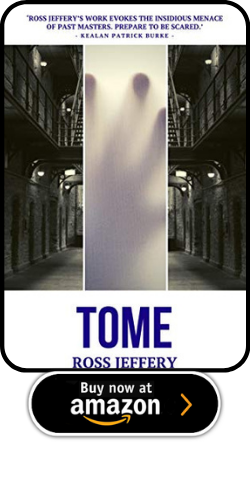
BOOK REVIEW: JUNIPER BY ROSS JEFFERY

10/11/2020
BOOK REVIEW: JUNIPER BY ROSS JEFFERY
Just today, I told my partner that if someone put a gun to my head and made me pick between my dear, darling Baby Cat and every human I know, I swear that 95% of you would be in the bin
Juniper by Ross Jeffery was a pleasure to read for review. In fact, I’d go as far as to say that since I started taking book reviews on again, this one has been one of my favourites. In the top 2. It’s about a tiny, neglected town in America. There’s some sort of apocalyptic event happening, or it’s happened, but that really isn’t the point of this book. The point is the characters.

I usually try to start a review by listing my criticisms first and then I move on to the positives, but I have to start the other way around because I can’t wait to tell you about how well the characters are written. We have a tiny cast of people here, one of whom is detestable, and I felt like I knew them. Like, really knew them. There is something deeply satisfying in reading characters as well realised as the ones in this book. I’m a character-centric reader and the most important thing to me is believing in the people that I’m reading, otherwise I just don’t care about the story.

On the note of character, I would also like to mention that there is an abusive relationship in this book (between married couple Janet and Klein), which I thought was explored respectfully and realistically. The abused party is represented as understandably troubled, though not weak, and relatable. All too often, I read relationships like this where the abuser is a raving maniac right from the beginning that somehow still snares a partner, and the victim just goes along with it without any motivation or understanding given. This was not the case in Juniper, and though this aspect of the book was unpleasant and upsetting, I must give credit to Jeffery for writing Janet as an empathetic character with agency, rather than falling into the trap of offensive stereotyping.

Another thing I really enjoyed was the prose and Jeffery’s writing style. I knew in the first chapter that I would enjoy the whole book, and I also knew that based on the quality of the writing alone, I would rate it highly. The story would have had to be absolute trash to drag it down, which it isn’t!

The setting is described wonderfully. The further into the location I went, the dirtier I felt. I got some serious Texas Chainsaw Massacre vibes in the beginning and could almost see the story through a tobacco filter, or through that haze of heat that rises from sun-boiled tarmac. It made me want to eat some nice fresh fruit and take a hot shower, but in a good way.

Now on to the things that I didn’t think were so strong... (I’m crying inside because I don’t want to knock this book at all really). This first one actually isn’t a negative for me at all because as mentioned, I mostly care about character. While the plot is interesting, I think if you read more for plot than character, you might like this a little less than I did. I was about halfway through when my partner

asked me, “how’s the book?” and I told him that it was amazing that though there didn’t seem to be loads happening, I was hooked. I read it in one sitting. Juniper’s greatest strengths are the writing itself and its characters, and I think the plot (though good!) takes a backseat, but for me, that really didn’t take away from my enjoyment at all. The pacing is great for the kind of story this is, and the tension is built really well, but this isn’t a thrill-ride, if that’s what you look for.

Next (and I’m nit-picking here), the dialogue sometimes felt a little bit unnatural. Not hammy, per se, but maybe just a bit dramatic to feel 100% real sometimes.

My one and only proper gripe with the story comes out of my very deep and serious love of cats. Oh man, do I love cats. LOVE THEM. Just today, I told my partner that if someone put a gun to my head and made me pick between my dear, darling Baby Cat and every human I know, I swear that 95% of you would be in the bin. And that’s not because I don’t like/love you all, but because Baby Cat has been with me for 11 years and she’s one of my greatest loves in life. I adore her, with her smiling little mouth and her funny, thin, little winnicky tail. She is my girly, my little whirly girly. We got Thor and Loki to join her a year back and now my days are spent just alternating between the three of them, watching them with adoration, and bending over backwards to do their bidding. In fact, let me tell you this story about Thor and the way he does everything really loudly.... *goes off on tangent about how great and unique and wonderful my cats are*

.......... and that’s why really, we should all.... Oh God, what was I talking about?! Profuse apologies. Ahem.

So, my gripe with Juniper was that I really got the distinct impression that Jeffery hates cats. Either he hates cats so didn’t realise that a few things he wrote would be deeply upsetting to someone who doesn’t, or he was intentionally trying to hurt the reader. Or it could be neither of those things and I’ve just taken it that way because... you know... I LOVE CATS I LOVE THEM SO MUCH HAVE I MENTIONED THIS. I’m fine with being upset if that’s my natural reaction to the story but I take issue with it when I feel like the writer is forcing me to cry. Don’t get me wrong, there isn’t excessive cat maiming or cruelty or anything that should put you off reading this – it’s not Cannibal Holocaust, but there were a couple of instances that I thought were just unnecessary. It reminded me of the last chapter of a fantasy novel I proofread for someone once. It was a huge battle scene that was shockingly lacking in human suffering, and yet every other paragraph was a detailed description of a horse being stabbed/killed/disembowelled/beheaded/etc. And I mean detailed. It was as if he’d written the entire book just so he could delight in mass horse slaughter. I asked him why he’d gone so hard on it and he said he really REALLY hates horses. It didn’t occur to him that most people don’t enjoy reading equestrian torture. This was nowhere near that level but gave a similar impression. Also, why was Betty so obsessed with his balls, Jeffery? WHY?!

Despite my GIANT WEIRD CAT DEFENCE, Juniper is a 4.5 out of 5 stars for me. Given that I was inexplicably personally offended by that one aspect, I hope the removal of only a mere half star tells you how great this book is. There is nothing that could justify giving it a lower rating than that, it’s almost a perfect book. Based on the synopsis, it’s not something I would have picked up on my own, and I’m so very glad it came my way. It is an absolute pleasure to read, so much so that less than a weak later, I’m reading the sequel. My TBR pile is literally over 100 books high but I bumped TOME straight to the top.

I highly recommend it, and look forward to delving into more of Jeffery’s work. Hmmmm still awkward with endings so
​
Bye.
Reviewed by K. M. Edwards ​
https://smarturl.it/vu4tsu
Juniper is the first book in Ross Jeffery’s proposed trilogy: a post-apocalyptic horror about an insane American town seemingly at the edge of reality. As Juniper suffers from scorching drought and medieval famine, the townsfolk are forced to rely on the ‘new cattle’ for food: monstrous interbred cats kept by the oppressed Janet Lehey.

But there’s a problem: Janet’s prized ginger tom, Bucky, has gone missing, flown the coop. As Janet and her deranged ex-con husband Klein intensify their search for the hulking mongrel, Betty Davis, an old woman clinging to survival on the outskirts of Juniper, discovers something large and ginger and lying half-dead by the side of the road.

She decides to take it home…

Juniper is surreal, dark, funny, and at times: excruciatingly grotesque. Buckle up for a wild ride through the dust-ridden roads of a tiny, half-forgotten American town…

the-best-website-for-horror-promotion-orig_orig
FEATURE  ​WHAT IS THE GREATEST HORROR MOVIE EVER AND WHY IS IT FRIDAY 13TH PART 6?

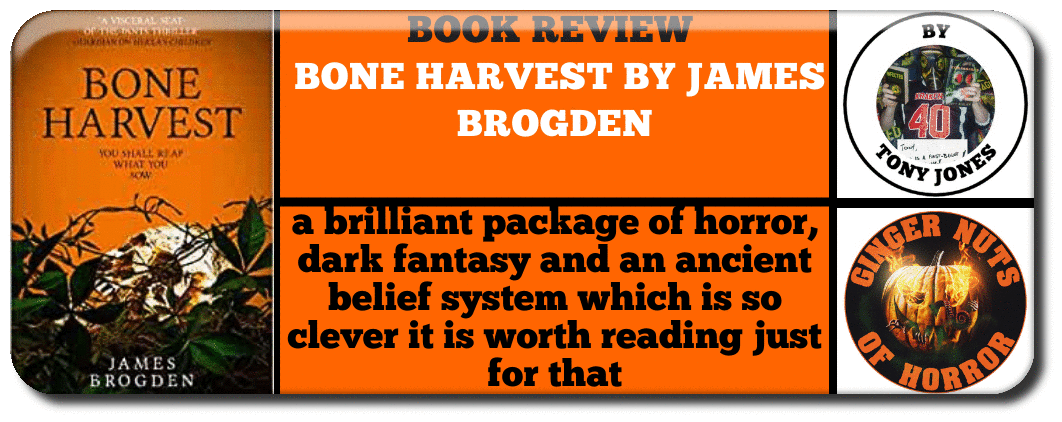
BOOK REVIEW – BONE HARVEST BY ​JAMES BROGDEN

9/11/2020
BOOK REVIEW   BONE HARVEST BY ​JAMES BROGDEN
An ancient cult invests in a village allotment!
I had previously read two other strong novels by James Brogden; however, Bone Harvest blew those other efforts out of the water and even though it was a meaty 500-pager, it really whizzed past. Neither was it a fast-paced novel, but that is no criticism, as it had a certain easy-going style which genuinely absorbed me into the action. After I had eaten up the first 100-pages I was suddenly struck by how much I was enjoying this dark and meandering story. The experience was heightened by the fact that I knew very little about the plot in advance, so to avoid spoilers, I am going to remain vague and refer to some of the plot shifts out of context. It is a brilliant book which is fiendishly well structured, and if you are into ancient cults, conspiracies, and gardening this might be a book for you.
 
Gardening. Yes, you read that right. Bizarrely, a lot of the story is set around a plot of village allotments and you may wonder whether it is possible to build a horror novel around potato, cabbage, and tomato patches? It sounds impossible, but somehow James Brogden pulls it off and there are some bizarre scenes as the mystery deepens around a dodgy garden shed which hides a nasty secret. On a couple of occasions, I almost expected Inspector Barnaby from Midsummer Murders to appear and take over the investigation!
 
In the pivotal allotment storyline Dennie Keeling leads a quiet life and spends most of her time on her plot, suffering from early-onset Alzheimer’s, on occasions she even sleeps in her shed and is accompanied by her huge Great Dane hound. Dennie is a prickly character, a busybody who knows the business of everybody and the story begins to develop when she suspects the new allotment tenants, an otherwise friendly young couple, are up to no good. She is particularly suspicious of them because they are renting a ram-shackled and overgrown allotment patch with a history none of the locals like to talk about. Dennie’s Alzheimer’s worsens as the story progresses, fused with her guilt for another matter, result in some of the strongest scenes in the book. Even the dog Viggo was a great character.
 
Although the Dennie Keeling story takes place in 2020, it takes its time reaching that point. Beginning in the trenches of the First World War, with a British deserter, turned cannibal, who is told by a fellow soldier to seek out a tiny English hamlet which follows an ancient cult, which is as far away from Christianity as you can get. This man embraces this new way of life with both hands and before long is adopted by the strange group as one of their own. Written in the third person, the cult plays a big part of the story and is incredibly well drawn, making a bizarre contrast with the pottering around on the village allotments. 
 
The cult is so well developed and cleverly presented it was truly fascinating and spread over a century the reader gets a genuine sense of how it grew, moved with the times with the various time jumps throughout the 20th century leading us to 2020. James Brodgen obviously spent a lot of time researching and creation a believable alternative pre-Christianity type of religion, which had survived so long because it deliberately flew under the radar and was very selective with who it recruited. This was a major strength of the book, but to avoid spoilers you can discover exactly how the cult works by reading it yourself. You will not be disappointed.
 
I came very close to giving this 5/5 stars, however, the reason it dropped half a star was because it lacked scares and because the reader spends so much time in the company of the cult I did not dislike them in the way that I probably should have. Actually, I rather liked both cult leaders and the youngster they later recruited also. Perhaps I was meant to feel that way as the cult was only doing what it did in order to survive for another generation. Much of this moved into dark fantasy, along with horror, and the cult fascinated me rather than give me the shivers. For comparison, this was not the case with Last Days and The Reddening, both by Adam Nevill, which featured cults which scared the crap out of me. This group was rather different, and the above comment should not be taken as a criticism as it was brought to life incredibly well.
 
After about 400-pages Bone Harvest really begins to motor and the Deenie Keeling story is superbly linked with the cult, beyond being a nosey neighbour. This was an outstanding development and played a big part in what was a highly entertaining ending. I would highly recommend this novel, which is a brilliant package of horror, dark fantasy and an ancient belief system which is so clever it is worth reading just for that. And gardening. And strawberries which taste like human flesh. Yuck.
 
4.5/5
 
Review by Tony Jones  
 ​
Picture
From the critically acclaimed author of Hekla's Children comes a dark and haunting tale of an ancient cult wreaking bloody havoc on the modern world.

YOU SHALL REAP WHAT YOU SOW

Struggling with the effects of early-onset Alzheimer's, Dennie Keeling leads a quiet life. Her husband is dead, her children are grown, and her best friend, Sarah, was convicted of murdering her abusive husband. All Dennie wants now is to be left to work her allotment in peace.
​
But when three strangers take the allotment next to hers, Dennie starts to notice strange things. Plants are flowering well before their time, shadowy figures prowl at night, and she hears strange noises coming from the newcomers' shed. Dennie soon realises that she is face to face with an ancient evil - but with her Alzheimer's steadily getting worse, who is going to believe her?

Further Reading 
HORROR FICTION REVIEW: HEKLA'S CHILDREN BY JAMES BROGDENFIVE MINUTES WITH JAMES BROGDEN 
BOOK REVIEW: THE HOLLOW TREE BY JAMES BROGDEN
THE HOLLOW TREE BY JAMES BROGDEN
THE PLAGUE STONES BY JAMES BROGDEN - BOOK REVIEW (AND A GIVEAWAY )
the-best-website-for-horror-promotion_orig
jennifer-gordon-is-beautiful-frightening-and-silent_orig

THE HEART AND SOUL OF HORROR REVIEW WEBSITES ​

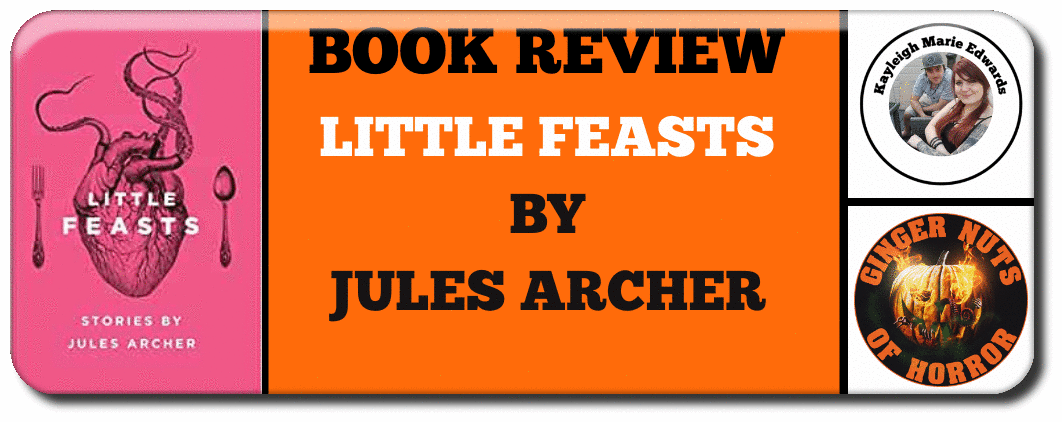
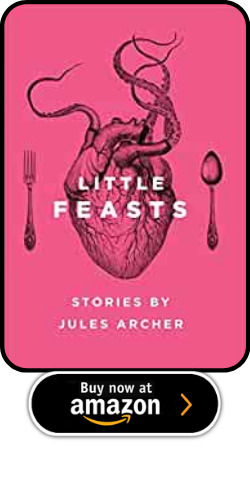
LITTLE FEASTS BY JULES ARCHER - BOOK REVIEW

4/11/2020
LITTLE FEASTS  BY  JULES ARCHER
Little Feasts is a short story/flash fiction collection by Jules Archer (already released so you can grab it right this second, if you like). I got three stories in before I made this note – “is everyone in this collection in some way unhinged?” And the answer, I discovered, is yes. If it’s not the protagonist (but it usually is), then at least one other character in every single story is in some way mentally deviant or deranged to some degree, in some capacity. What’s especially great about the book as a whole is that despite this common thread, the stories don’t get samey. I started to find it really fun to try and work out ahead of time what exactly was wrong with the character in question as I moved from story to story.

It’s hard to write about the individual stories without ruining them, as they’re all “little feasts” of horror, as the title suggests. So here is my best attempt at summarising my thoughts on each one:

In-N-Out Doesn’t Have Bacon
Melancholy. Oh no. Almost expected to hear Audrey, from somewhere, scream ‘Feed me, Seymour!’

How To Love A Monster With Average-Sized Hands
I guess a game of “catch” is out of the question.

Hard To Carry And Fit In A Trunk
One of my favourites. Warped… just… so warped.

The Ice Cream Cone
I used to like being the little spoon but I’ve changed my mind about everything to do with spoons now.

Guerilla Drive-In
Ew.

The Lie Tree
Apparently, there’s no such thing as a white lie.

Prettier Things
Another of my favourites. Crushes are so cute.

Happiness, Lies, & Reno Rush
Short but not sweet.

Skillet
The number one story in the collection for me. It’s so nice to learn passed-down recipes.

We Will Set Anything On Fire
Why? JUST WHY?

Cyberspace Soup
Just soup-er

Anne Boleyn Could Drink You Under The Table
Ah yes, true love.

Cheap Tanya
wtf

Far Away From Everyone
Hallelujah!

Everlasting Full
Another favourite. Don’t see what the problem is really. Totally relate to this character. Where are my snacks?!

Backseat Blues
Yet another favourite. Ouch, my heart!

Garbage Girl
Oh look, another favourite! Probably why some men are really afraid of periods… they know.

My L.A. Jerry
No.

Contents Of A Letter Found On A Stained Bar Napkin
Didn’t go where I expected. Still thinking about it.

This collection has left my mind as warped as most of the stories themselves. Why you do dis Jules… why? Overall, I found some stories much stronger than others, but the great thing about collections like this is that when I came across a (rare) story that I didn’t like, I was on to the next before I knew it anyway. It’s a great little Halloween read that you can either dip in and out of whenever you feel like having your world ruined for a few minutes, or you can enjoy it and have your brain smashed to bits in one glorious sitting. I give it a 4 out of 5, and recommend giving it a go.

Still haven’t worked out how to end a review so

Bye.
Review by K. M. Edwards
Picture
​Following her successes from All the Ghosts We’ve Always Had, critically-acclaimed flash fiction writer, Jules Archer, returns to the dinner table with Little Feasts, her debut short story collection. The stories are a table-long buffet of femininity, a lying tree, childhood innocence, toxic masculinity, and a 20-pound cast-iron skillet. Works within have been featured in Five:2:One, SmokeLong Quarterly, Maudlin House, PANK, and more.

the-best-website-for-horror-promotion-orig_orig
FEATURE  The Top 5 Syfy Movie Monsters You Wouldn’t Want To Find In Your House.

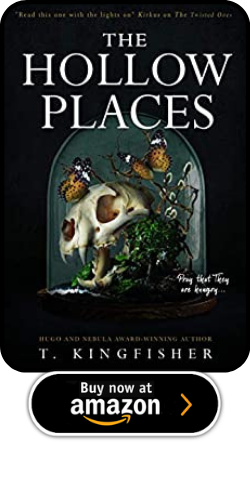
BOOK REVIEW: THE HOLLOW PLACES BY T KINGFISHER

3/11/2020
BOOK REVIEW: THE HOLLOW PLACES BY T KINGFISHER
Engaging and atmospheric blend of fantasy and horror
T Kingfisher AKA Ursula Vernon builds upon the success of The Twisted Ones (2019) with a second bizarre, highly original blend of horror with dark quirky fantasy. In the literary world Ursula Vernon is probably higher profile than Kingfisher, who has authored an impressive range of children’s fantasy novels, but if her pseudonym is going to write fiction as compellingly strange as The Hollow Places then Vernon is in for a fight to be top literary dog. However, if they are anything like the wonderful two main characters, Kara, and Simon, from The Hollow Places, then they probably get on great and enjoy chilling out over a few black coffees or something stronger!

Kingfisher acknowledges Algernon Blackwood’s The Willows in her endnotes as a key influence and if you enjoyed The Hollow Places then the 1906 original novella is worth tracking down for closer inspection or comparison. In the Blackwood classic two friends are taking a tour down the River Danube and are threatened by the willow-banks of the river, which apparently move around, although nothing is resolved, it points to the fact that there may be folds or rips in our world which can connect to the fourth (or other) dimensions. There is something of this in The Hollow Places, but this concept itself is nothing new and is frequently explored by other contemporary authors, such as Neil Gaiman in The Ocean at the End of the Lane, and goes all the way back to CS Lewis’s Narnia which is referenced several times in The Hollow Places. The Willows is also notable as it was regularly cited as one of HP Lovecraft’s favourite stories, which he also thought was particularly frightening, not a statement I would agree with personally.

There are only three primary characters in The Hollow Places who are all equally engaging, their interactions play a major part in the success of the book. Events are narrated in the first person by 34-year-old Kara who is about to get divorced, however, her worst fear is the prospect of moving back home to live with her mother whom she does not see eye-to-eye with. Instead she if offered a job and lodgings by her favourite uncle, Earl, a kindly and elderly gentleman who owns a museum of oddities. Kara has wonderful memories of hangings out with Earl from when she was a child and helping out in his ‘Glory to God Museum of Natural Wonders, Curiosities and Taxidermy’ and jumps at the chance of returning and avoiding the judgment of her mother. Sadly, early in the plot Earl takes sick and leaves Kara in charge of the museum, for the sake of the plot this was understandable, but I was disappointed to see the old man depart as the dynamics between the pair was authentic and comfy as wearing your favourite pair of slippers.

As the unassuming Earl fades from the story the barista Simon, who works in the neighbouring coffee shop enters, and plays a crucial role as the supernatural element of the story develops. Kara has known Simon for many years, without truly knowing much about him, so as things begin to get weird their friendship develops and strengthens. Considering these were the only major three characters in the book it was crucial the reader clicked with them, and I more than clicked, I loved all three and Kingfisher rounds them perfectly through Kara’s entertaining narrative voice.

Whilst Kara goes through her divorce, she busies herself by starting a huge cataloguing project of the stock of the Museum of Natural Wonders which is a wonderful location for a story and if you ever visited a place like this as a kid, the memories will come flooding back. Kingfisher genuinely brings this shop of curiosities to life and considering the entire story is built around this location, this was as crucial as the convincing characters.  The museum retains the quirky characteristics of Uncle Earl, who collects anything and everything weird and if folds in time really do exist which connect to other dimensions then this is the place!

The plot is not necessarily the strongest element of The Hollow Places as it is rather minor and one could argue potentially underdeveloped, or ripe for further development. Kara and Simon find a small hole in the back of one of the rooms (not a wardrobe!) of the museum, they look inside and are confused by the impossible dimensions of the room it leads to, which includes a bed, an ancient corpse and a bolted door which leads to another world. CS Lewis’s Narnia is mentioned several times, this novel is rather different in that Kara and Simon do not go on a series of adventures, have to save anybody, or go on a voyage of discovery which can be common in fantasy novels with similarities instead of this. For most of the time they take baby steps into this other world and Kingfisher lets her imagination run riot in this location which has strange crossovers with our own. For example, they discover an old school bus but are unsettled by the fact that the bus is a slightly different colour and that it seems like there are children alive under the plastic which lines the seats. Slowly, things begin to get more threatening and that is the core of the story.

I thought this was a great book, but if I were being hyper-critical, I would suggest that they went backwards and forwards through the hole in the wall without too much happening or major consequences slightly too often. Also, one could have argued it could have done with a bigger finish, however, the conclusion did ring tune with the rest of the rather low-key and personable tone of the book. The ending also remained faithful to the fantastical elements of the novel which was more fantasy than horror. If I recall correctly an otter popped up in Algernon Blackwood’s The Willows and in a manner of speaking an otter plays a key role in The Hollow Places also, which was a nice touch.

The Hollow Places is well worth checking out, even if it is not particularly scary it convincingly blends the likes of Neil Gaiman’s Coraline and Lewis Caroll’s Alice in Wonderland with a unique horror vision which is soaked with LSD/acid (you’ll have to blame Simon for that analogy!) Highly recommended.


Tony Jones
Check out this fantastic guest post from T. Kingfisher here 
Picture
Carrot has moved into the Wonder Museum -  an eclectic collection of taxidermy, shrunken heads, and Mystery Junk owned by her Uncle Earl. For Carrot, it’s not creepy at all: she grew up with it. What’s creepy is the corridor behind one of the museum walls. There’s just no space for a corridor there – or the concrete bunker, or the strange islands beyond the bunker’s doors, or the unseen things  in the willow trees.
Carrot has stumbled into a horrifying world, and They are watching her. Strewn among the islands are the remains of Their meals – and Their experiments. And even if she manages to make it home, she can’t stop calling Them after her…

Picture
FEATURE T KINGFISHER CROSSES THE DIMENSIONS TO AVOID THE LAUNDRY
Previous
Forward
    Picture
    Picture

    RSS Feed

    Archives

    May 2023
    April 2023
    March 2023
    February 2023
    January 2023
    December 2022
    November 2022
    October 2022
    September 2022
    August 2022
    July 2022
    June 2022
    May 2022
    April 2022
    March 2022
    February 2022
    January 2022
    December 2021
    November 2021
    October 2021
    September 2021
    August 2021
    July 2021
    June 2021
    May 2021
    April 2021
    March 2021
    February 2021
    January 2021
    December 2020
    November 2020
    October 2020
    September 2020
    August 2020
    July 2020
    June 2020
    May 2020
    April 2020
    March 2020
    February 2020
    January 2020
    December 2019
    November 2019
    October 2019
    September 2019
    August 2019
    July 2019
    June 2019
    May 2019
    April 2019
    March 2019
    February 2019
    January 2019
    December 2018
    November 2018
    October 2018
    September 2018
    August 2018
    July 2018
    June 2018
    May 2018
    April 2018
    March 2018
    February 2018
    January 2018
    December 2017
    November 2017
    October 2017
    September 2017
    August 2017
    July 2017
    June 2017
    May 2017
    April 2017
    March 2017
    February 2017
    January 2017
    December 2016
    November 2016
    October 2016
    September 2016
    August 2016
    July 2016
    June 2016
    May 2016
    April 2016
    March 2016
    February 2016
    January 2016
    December 2015
    November 2015
    October 2015
    September 2015
    August 2015
    July 2015
    June 2015
    May 2015
    April 2015
    March 2015
    February 2015
    January 2015
    December 2014
    November 2014
    October 2014
    September 2014
    August 2014
    July 2014
    June 2014
    May 2014
    April 2014
    March 2014
    February 2014
    January 2014
    December 2013
    November 2013
    October 2013
    September 2013
    August 2013
    July 2013
    June 2013
    May 2013
    April 2013
    March 2013
    February 2013
    December 2012

https://l.facebook.com/l.php?u=https%3A%2F%2Fmybook.to%2Fdarkandlonelywater%3Ffbclid%3DIwAR1f9y1sr9kcIJyMhYqcFxqB6Cli4rZgfK51zja2Jaj6t62LFlKq-KzWKM8&h=AT0xU_MRoj0eOPAHuX5qasqYqb7vOj4TCfqarfJ7LCaFMS2AhU5E4FVfbtBAIg_dd5L96daFa00eim8KbVHfZe9KXoh-Y7wUeoWNYAEyzzSQ7gY32KxxcOkQdfU2xtPirmNbE33ocPAvPSJJcKcTrQ7j-hg
Picture