

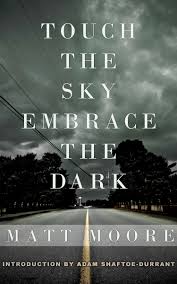
 Matt Moore's latest book Matt Moore's latest book Today's participant in this series on on going rapid fire interviews with horror authors is Matt Moore. Matt is a horror and dark science fiction writer who believes good speculative fiction can both provoke thought and reflection as well as thrill you. His work explores the theme of contrasting what is monstrous with what is human while inverting assumptions we tend to accept as “truth”.He write stories set in worlds very similar to ours, but with one or two very different things. By exploring those differences and their effects, he hopes to say something about our world. 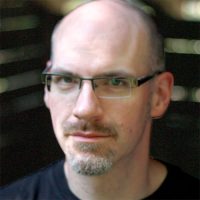 Matt Moore Matt Moore Could you tell the readers a little bit about yourself? I've been writing fiction since I could shape letters with a pencil. When my parents moved out of their house, which I had lived in from 6 months to 22 years old, they found stories of mine scribbled on lined paper in the back of drawers and shelves. So, I've always considered myself "a writer." But it wasn't until my 35 birthday I realized I was not taking my writing seriously. I'd never been published, had several unfinished novels floating around and only read sporadically. Since that realization (and never mind now many years ago that was), I have committed myself to my writing—to write, improve, learn, read, teach and help others. Do you prefer the term Horror, Weird Fiction or Dark Fiction? I think these terms are only important to those who take genre fiction seriously. To people only passingly familiar with genre fiction, "horror" gets it done. For those down in the trenches, it can be a knock-down, drag-out fight over what's what. For me, I'm comfortable with "horror", but only because it is a broad category. But I work for ChiZine Publications, which is a "dark fiction" publisher. I would consider myself in that camp as well, but only because it includes horror and I consider the science fiction I write to be "dark scifi". To put it another way, can't we all get along? Good fiction is good fiction. If it's dark or weird or horrific... well, that's for each reader to decide. Who are some of your favourite authors? David Nickle is the author I want to be when I grow up. I think his short fiction is brilliant and his novels have blown me away. I've also been impressed by everything Joel Arnold has written. His short story "Telephone" in Dark Recesses made my toes curl. And Lydia Peever, who—full confession—is a friend, does amazing things with the horrific. Her stories stay with you and you wonder "Why do they stick with me?" That's great writing. What are you reading now? Boy's Life by Robert R. McCammon. How would you describe your writing style? Do you mean prose style or the process of writing? My prose style varies. I write a lot in first person present tense, so I let the character dictate the narrative style. In third person, my style tries to not call attention to itself, but not to the Hemmingway extreme. The process of writing is one I do not advise others follow. I usually outline, knowing what the character is about, what they want and how they will react to the challenges thrown out them. But it usually takes me three or four revisions to figure out the secondary characters and keep them interesting. Then a few more revisions to make sure everything lines up and follows a logical set of events. Then a few more to remove extraneous elements that get in the way of a good story. So, all in all, the published story you're reading is something like Draft #18. Describe a typical day spent writing. Do you have any unusual writing habits? I write when I can. Lunch hour at work, over the weekend, at nights, while travelling. I find I have about three or four good hours of uninterrupted writing time in me. After that, I peter out. I also spend a lot of time doing paper edits. My marked up manuscripts are like battle maps with arrows, circles, maps, criticisms and questions. All things serve the machinery of good story telling. I'm an artist in the writing, but I'm almost an engineer when it comes to edits and revisions. I guess my only "unusual" habit would be I like to pace and talk challenges through aloud. Thinking about something is fine, but it's almost like if my mouth is going, my brain is a step-ahead, which allows me to work on two things at once. What’s your favourite food? I have too many to fit on this page. What’s your favourite album? It varies. American Idiot by Green Day, Born to Run by Bruce Springsteen, Ænima by Tool, The Downward Spiral by Nine Inch Nails. What’s the most important lesson you have learned about writing? Writing is a solitary profession and one can be as much of a prima donna artist as one wants. Once you get into publishing, it's business. Understand that. Respect the time, effort and money of others. There are plenty of other talented writers out there; what will set you apart is your business acumen. Fame and fortune, or respect? Fame. I think, finally, I'm getting respect. Fortune will never come. Not now, not in this industry. So I'd like the chance to achieve fame so I can meet some of my heroes and help others build their careers. What piece of your own work are you most proud of? My Aurora Award nominated short story "Touch the Sky, They Say", which is in my collection Touch the Sky, Embrace the Dark. I didn't realize it as the time, but it was my way of dealing with my mother's death. It's a quiet story without a lot of action, but I think it asks some important questions about motivation and life. One of the highlights of my writing career was moderating a panel on flash fiction and I had asked the panellists to select a piece of flash fiction they loved to read as part of the panel. One of them picked "Touch the Sky, They Say." Can you tell us about your last book, and can you tell us about what you are working on next? I've just released Touch the Sky, Embrace the Dark, a short story collection of previously published stories. It's a mix of science fiction and horror (and sometimes both) that I think will appeal to fans who like intelligent stories that are about more than a monster or cool technology. One of my favourite themes is what makes us human, what makes something monstrous, and are they mutually exclusive? "Full Moon Hill", for example, posits using nanotechnology to transform hardened criminals into werewolves to hunt for sport. So, in that situation, who is truly monstrous? If that idea floats your boat, I think you'll like the collection. As for what's next. there's a novel in me somewhere. Until I find it, I will continue to crank out short fiction that I hope thrills people but also makes them think. After all, that is the human condition. Our reptile brain reacts emotionally, but our cerebral cortex demands to be stimulated. And I think the best fiction—and the fiction I try to right—should do both. 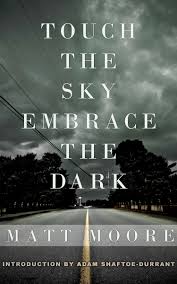 Stories of the bizarre, the terrifying, the all-too-near future.
Only able to recall the memories of others, a ghost tries to solve the mystery of his death. The zombie apocalypse is the gateway to a higher level of human consciousness. An amusement park of the future might turn you into the attraction. An engineer-turned-mercenary races to kill the savior of mankind. When the sky falls, what room is there for hope? For fans of thought-provoking horror and science fiction, this collection includes the Aurora Award-nominated "Delta Pi" and "Touch the Sky, They Say". _ "This is a writer to watch out for. I can’t wait to see what he does next." - Philip Nutman, author of Wet Work and Cities of Night Comments are closed.
|


Archives
May 2023
|
 RSS Feed

|

|