

THE WOMAN IN BLACK: ANGEL OF DEATH IS AVAILABLE ON BLU-RAY AND DVD ON 13TH JULY, COURTESY OF ENTERTAINMENT ONE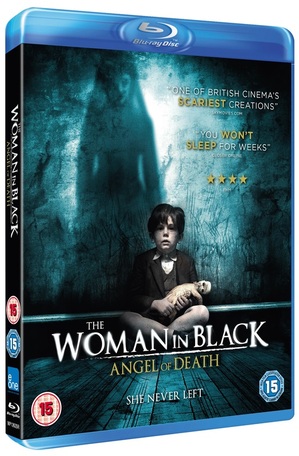 Ginger Nuts of Horror is very honoured to have Tom Harper the director of Woman In Black: Angel of Death over for a chat about the new film. Tom Harper (born 7 January 1980 in London) is a BAFTA nominated English film director. His directorial work includes Misfits, The Scouting Book for Boys (2010), This Is England '86, The Borrowers (2011), Peaky Blinders (2013), and The Woman in Black: Angel of Death. In 2014 Harper re-teamed with Jack Thorne, the writer of The Scouting Book For Boys, to make War Book which premiered at the London Film Festival and had its international premiere as the opening film of the International Festival of Film Rotterdam. Harper was also a producer on the film. He will direct the 2015 BBC TV mini-series War and Peace. Harper's film Cubs about urban fox hunting was nominated for the BAFTA Best Short Film category in 2006.The Scouting Book for Boys was filmed during September and October 2008. Firstly, can you tell me how you came on board this project and how you came to be involved? I was approached about the project, and initially I wasn’t too sure. I really liked the first film, but the characters die, so I was questioning where the story could go. Then I was told about the idea of setting it 40 years after the events of the first film with an entirely new set of characters, which I thought was more interesting. I think that the character of The Woman In Black is one that resonates with audiences around the world, proven by the novella, the play and the film. It is a clean idea for an antagonist, were she is just this vengeful bitch. I think that she could work in all manner of things. When we got on to the idea of children being evacuated to the country I thought that was a neat idea, usurping this idea that in the country the children would be safe, where, as we show in the film, they clearly aren’t safe. We also took the children into the house, which is something that didn’t happen in the first film, so it felt like it was naturally evolving. There is a more immediate jeopardy to it all with the children in the lair of the ghost. I also liked the Second World War aspect, where there is this over-arching sense of loss that permeated the country and the world. In the beginning we have these grand scenes over London during the Blitz. Was this concept of setting it during the Second World War always there? It was always there to a greater or lesser extent. Initially we began with Edward in his bedroom with his mother, but I wanted to open it out a bit to show the wider scale of the situation. I liked the idea of going from a very populated city to a very isolated place, and this contrast helped build atmosphere in the film. What involvement did Susan Hill have with the sequel? It was her idea to set the film 40 years after the events of the first film, and she fed into the concepts that were developed and fully realised by Jon Crocker. What were the key aspects of the original that you wanted to build upon with your film? The setting was key; it is a very powerful and evocative aspect of the film. With any haunted house movie there is an element of creeping around corridors generating suspense. It was felt right by all involved to retain these elements. Fundamentally, I was interested in the character of Eve and her story and how it related to the young boy, Edward. It is a fight between good and evil for the life of a child. I didn’t want to get caught up in how we would move on the story of The Woman In Black, more I wanted to focus on the drama and the story of Eve and Edward. The airfield sequence, and underwater sequence were also important because, as important as Eel Marsh House is to the story, we also want to bring it out of the house. I think that horror films over the ages always center on a primal fear, and the fear of losing a child is a core fear that can be shared and understood by many, if not all. people. How did Oaklee Pendergast cope on set with the more spooky aspects of the film? He is a brilliant actor, but completely different to Edward. At the wrap party he was throwing shapes on the dance floor, and he is very out-going young actor. He was terrifying me more than me terrifying him. One of the most iconic aspects of The Woman In Black are the creepy toys that populate the nursery of Eel Marsh House. In the first film these were original Victorian toys, did you bring these back for the sequel? Yes we did, we borrowed them once again from a collector in Scotland. He owns a load of creepy dolls and seems happy to share them. 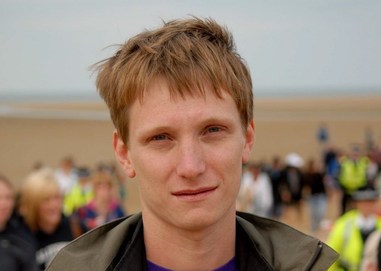 TOM HARPER DIRECTOR OF WOMAN IN BLACK: ANGEL OF DEATH Apart from the original source material, did you turn to any other films or ghost stories for inspiration? Yes and no. In the build up to the film I watched a lot of horror films, and it is a genre that I have always enjoyed and I went back and watched some classics that I hadn’t seen before. I saw a few more recent horror films to see what was working and what wasn’t. It is a genre that keeps evolving within the traditional archetypes that have been previously constructed. There is a certain level of expectation with a sequel, which is completely understandable, so you have to go with it in part, and at the same time, work out how you are going to do something different. I think one of the reasons people go to see a horror film is to see what they expect and enjoy seeing how the director plays with those expectations. What was it about Phoebe Fox that made you want to cast her? Firstly, she is a brilliant actress. For me though, it is about how she can oscillate between strength and vulnerability. She reminds me of Mia Farrow in Rosemary’s Baby, and that is important in a horror film because you want to believe that this character can be both the victim and the hero at the same time. That is exactly what Phoebe has. One great thing about making a sequel is that on one level, because of the success of the first, there is less pressure on you as a director, meaning that there isn’t an imperative to cast a recognisable face that will draw audiences into cinemas. Was there a role that Jeremy Irvine had played previously that attracted you to casting him in your film? It was partly his previous roles. We had a meeting and I realised instantly he was the perfect person for the role because he is obsessed with the Second World War and pilots. He was making a documentary about a particular pilot that he is interested in, and as soon as we sat down he started telling me about it, and that was really helpful given the period setting of the film. The airfield and the fire-pits is a very compelling and dramatically effective scene. What was the inspiration for that? I believe Jon Crocker was reading around the period and he stumbled across this account in the north of England of these dummy airfields and thought that it would be an interesting setting for this part of the plot. Again, it was also part of the desire to take The Woman In Black away from Eel Marsh House and make her more omnipresent, which is a much more terrifying prospect, because she can follow them. We wanted to give audiences more than just the haunted house. Can you tell us about what it was like working with Helen McCrory? It started off much like Phoebe, in that Helen is a fantastic actress. However, with Helen’s character there was a danger that if it wasn’t handled right then it would become this wooden and two-dimensional character. So when I cast Helen I knew that she would never let that happen and would always bring more. There is a beautiful scene in the film where she is standing in the kitchen with Phoebe discussing the death of her children and telling her that the thing that we should be most scared of is despair. Helen has this wonderful ability to bring so much to a film in such a short space of time. What would you say was the biggest challenge on this project? Without a doubt the biggest challenge on this film was filming on the causeway. We had four hours before the tide would come in, so it was off and on constantly. Even harder than that, it was very rare that we would need to film a scene when the tide was completely out; instead it was always lapping at the sides, meaning that filming was even more urgent. That was definitely a challenge. The other big challenge is creating places that don’t exist, like Eel Marsh House. That house doesn’t exist on an island anywhere, but one thing that is so potent from the novella and the first film is the marsh, and the idea of a house being built in this wilderness. I wanted to see other aspects of the house this time around so we could explore more of the areas surrounding the house to bring it to life. Follow the links below for the other interviews in our Woman In Black: Angel of Death series of cast and crew interviews An interview with Phoebe FoxAn interview with Jeremy IrvineWin one of three copies of Woman In Black: Angel of DeathComments are closed.
|


Archives
May 2023
|
 RSS Feed

|

|