

GUEST POST: HORROR FOR THE KIDS
4/7/2013
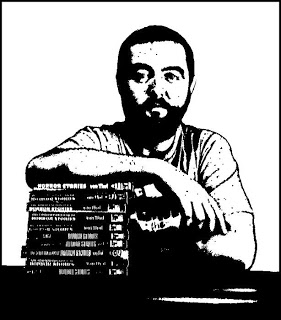 Hardly a day goes buy without another controversy in a teacup being brewed in the wonderful of genre writing. Today it's the turn of children's books. Bestselling children's author GP Taylor believes that children's literature has become too frightening and should be marked with an age certification system. Author Charlie Higson didn't like this, check out the article from The Guardian In response to this my good friend Johnny Mains, who I like to call "The UK's Horror Custodian" has kindly done a guest post in response to this new storm in a teacup. I am 36. Just informing you, so the resulting rant is kept in context.
There is a children’s author called GP Taylor who has caused a little bit of kerfuffle recently, saying that he believes that children’s books should come with some sort of certification, because they have become too frightening. Understandably there has been puzzlement at his statement, and I believe it has been one that hasn’t really been thought through, or indeed has been said with any conviction. Saying that, if you believe this article, there is supposedly a wider discussion at how children’s and teenage fiction have become more darker than stories of times past where children were free and happy and had no cares in the world to speak of. Right, before I go on – a quote from a story called ‘Arbor Day’ by Mary Danby in a children’s anthology called Nightmares 2. It was published in by Fontana in 1984, and could easily be said to be aimed at children of around 8/9 years of age: She shrieked, but the band was playing a noisy gallop, and no one heard her. She pulled away from him but his grip grew harder. Slowly she was being dragged along the path into Baxter's Copse... ...She screamed for the last time, and then damp leaves were in her mouth, and her legs and arms were held fast by wormlike tendrils that snaked around her body. She felt her feet being torn down into the earth and her skin began to dry up, to darken and crack. Agonizing pain took over her body. Sharp green shoots sprouted viciously from her face, her shoulders, out through her hair. Her sight began to fade. In her last moments of human existence she could clearly see the true nature of this handsome stranger...the man who stood so pitilessly before her was a terrifying figure of power and vengeance. This, then, was the Green Man. Yup, this girl surely led a care-free life... Mary Danby is a celebrated anthologist, known for The Armada Book of Ghost Stories which was aimed at children, the Nightmares trilogy, again for children, and then the renowned Fontana Book of Great Horror Stories which was aimed purely at an adult audience. The great-great grand-daughter of Charles Dickens and the niece of celebrated author Monica Dickens, Mary had a habit of writing stories for all of the anthologies she wrote for and this one from Armada Ghost 10 (Armada, 1978) certainly nails its colours to the mast: “Excuse me.” He tugged at her cloak. “Can we go back, now? I have to go home.” The Grey Lady turned, and he saw her face. It wasn’t the strange, crooked mouth, bright ruby red in a pale face, nor the flat, round nose … It was the eyes, blurred and expressionless, which really terrified him. The dreadful, painted face of the Grey Lady had come to life, to torment him with its horror. He screamed and clutched at the door of the carriage. “Let me out!” he shrieked. “Oh, for love of pity, let me out!” They were quite close to the river, now, and there was a thick mist which muffled the sound of the horses’ hooves as they slowed to a walk. The door would not open. Billy pushed with all his meagre strength, but it would not move. “Please!” he begged. But the Grey Lady only turned on him those smudgy eyes, with their horrible blankness. “Please let me go home …” moaned Billy. Then the red mouth smiled a crooked smile, and the sweet voice said: “But we are going home, Billy. That’s what I’ve come for. To take you home.” Just a little selection of what we were reading back then. I think this is also a good time to post the table of contents from other anthologies aimed at children from the 70s and 80s. GHOSTLY AND GHASTLY (BEAVER 1977) The Emissary - Ray Bradbury The Thing in the Cellar - David H Keller A Pair of Hands - Sir Arthur Quiller-Couch The House of the Nightmare - Edward Lucas White Miss Jemima - Walter de la Mare The Haunted Dolls House - M R James The Devil's Cure - Barbara Softly The Earlier Service - Margaret Irwin Linda - Joan Mahe Billy Bates' Story - Geoffrey Palmer and Noel Lloyd Remembering Lee - Eileen Bigland Jack in the Box - Ray Bradbury The Canterville Ghost - Oscar Wilde DEADLY NIGHTSHADE (GOLLANCZ 1977) M. R. James - Lost Hearts F. Marion Crawford - The Doll's House H. R. Wakefield - Nurses Tale Algernon Blackwood - The Attic David H. Keller - The Thing In The Cellar W. F. Harvey - The Dabblers Greye La Spina - The Tortoise-Shell Cat Joan Aiken - The Looking Glass Tree William Tenn - The Human Angle Saki - Gabriel-Ernest Robert Bloch - Sweets To The Sweet Mark Van Doren - The Witch Of Ramoth August Derleth - Twilight Play Anthony Butcher - Mr. Lupescu Conrad Aiken - Silent Snow, Secret Snow Alfred Noyes - Midnight Express Ray Bradbury - The October Game BEAVER BOOK OF HORROR (1981) Ray Bradbury - The Man Upstairs William Hope Hodgson - The Voice In The Night Joan Aiken - Who Goes Down This Dark Road? John Buchan - The Wind In The Portico R. E. Alexander - The Aerophobes H. P. Lovecraft - Pickman’s Model Paul Ernst - The Thing In The Pond Fitz-James O’Brien - What Was It? Clark Ashton Smith - The Seed From The Sepulchre Mark Ronson - Changeling THE GRUESOME BOOK (PICCOLO 1983) Ramsey Campbell - Calling Card Nigel Kneale - The Pond August Derleth - The Extra Passenger Robert Bloch - Hobo Donald A. Wollheim - Bones Brian Lumley - The Deep-Sea Conch Richard Matheson - Long Distance Call Henry Kuttner - The Graveyard Rats David Langford - 3:47 AM THE PUFFIN BOOK OF HORROR STORIES (1986) Pete Johnson - Secret Terror Stephen King - Battleground Robert Westall - The Vacancy Guy De Maupassant - The Twitch (trans Anthony Horowitz) Laurence Staig - Freebies Roald Dahl - Man From The South Kenneth Ireland - The Werewolf Mask Bram Stoker - Jonathan Harker's Journal (extract from Dracula) John Gordon -Eels Anthony Horowitz - Bath Night Look at the names! Stephen King, H.P Lovecraft, Ramsey Campbell, Bram Stoker, Ray Bradbury, Joan Aiken, M.R. James and Richard Matheson! This is who we were reading from a young age! If The Gruesome Book were to be published today there would be a true uproar! An anthology that’s one of the best of its kind, but one that certainly doesn’t hold back in any way shape or form. The stuff of true nightmares! GP Taylor, if you only knew what disgusting delights we were reading, with the full knowledge and consent of our parents. Look at what the publishers got away with. And then when we had our fill of those books we were straight onto the infamous Pan Book of Horror Stories which were certainly not for children! We were reading stories from those books to each other in the playground, seeing who could out gross who. And then the works of James Herbert, Stephen King and Shaun Hutson carried us through our teens and onto adulthood. So, children have always read the most gruesome stories they could get their hands on. Children like to be disgusted and creeped out and terrified. That’s just kids being kids. It’s certainly done no harm to many of the people I know who grew up with those books, many who have become noted authors in their own right. It certainly hasn’t done any harm to my nephews who devour all the anthologies I can throw at them – the very same ones I used to read as a child. Sadly, with many of these shock statements, a large proportion of people will take GP’s comments seriously and then censor what their children will and will not be allowed to read. Which in a way, for him, is kind of self-defeating, unless you can see it for what it really is – get more sales of the books by inquisitive adults, or children clamouring at their parents to buy them the books to see if they really are as scary as they claim to be. I for one, shant be reading them to find out. I have a feeling they’ll lack the necessary ‘bite’... JOHNNY MAINS CHUCK WENDIG
4/7/2013
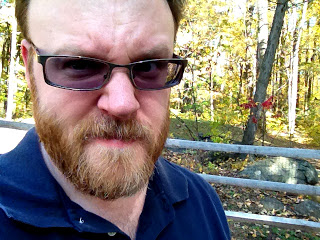 This folks is a great honour, I got the chance to interview Chuck Wending a while back. Chuck is one of those authors who not only writes interesting books, but is also just as interesting away from the pages of his novels. So sit down folks read a fascinating interview with the man himself. Hello Chuck, thank you for taking the time to do this interview. How are things with you? Uber-good. Ultra-awesome. Mega-super-dance-tastic. Thanks! Can you remember when and why you first started to write? I began writing very early on. Little stories and comic books. As to why? Egads, I’ve no idea. Brain disorder? Parents dropped me on the head? I loved stories and wanted to share them with myself, my imaginary friends, and the as-yet-uninvented-Internet. Who would you say has been the biggest influence on your writing? My sister, very early on, put a lot of great books in my hands, so she’s definitely the infection vector for all that. Early fiction influence probably falls to Robert McCammon. What do you enjoy the most about the writing process, and what you enjoy the least about it? I enjoy it all, really. That sounds silly, but I do – I may not enjoy it every moment of every day, but in the overall sense, I really do enjoy it. I do not, however, enjoy self-promotion. I do it, but it always feels a bit... sticky. Would you say you have a particular style of writing, or does it change with each new piece of writing that you do? My voice is my voice, and I can find it easily on the page though I don’t know how precisely I would define it. That being said, voice is not the same thing as genre and my hope is that I work across multiple genres. The other day the Guardian referred to my work as “New Pulp,” so I suppose that works. I believe you are a connoisseur of Bourbon, do you have a favourite brand? And who could drink who under the table yourself, or my good friend John Hornor Jacobs? I am married to my bottle of Basil Hayden’s – though, I should note I’m still a relative newcomer to Bourbon (Scotch is a far older friend). I cannot speak to JHJ’s drinking prowess, but I believe he’s strong-like-bull, so I’d dare not challenge the constitution of his mighty liver. You started writing RPG books, how did you get involved in this? I played such games as a teen, and then in my 20s I saw a writer’s all-call where White Wolf Game Studios was hiring a freelancer for their game, Hunter: The Reckoning. I applied, and wrote some pretentious foo-foo essay about the internal and external loci of fear, and somehow, my bullshit stuck. There seems to be a lot of misconceptions about writing these sort of books, how does writing a RPG book compare to writing a more traditional type of book? Well, writing is writing, and you still have to staple-gun your ass to the chair and write to spec and write to deadlines – so, the process isn’t different so much as what you’re writing. Fiction is a far slipperier beast. (That’s a hard word to say out loud. Slipperier. Slip. Ur. Ee. Urrrr. Anyway.) Fiction aims to tell my story. Writing for games is a vehicle for telling other people’s stories. Both are useful in terms for figuring out the fiddly bits of character and narrative. Do you think being a sort of writer for hire helped to hone your writing skills, and your methodology towards writing? It did. Writing as a freelance inkslinger did a great deal to divest me of many of the illusions and myths that hold writers back. It turned me into a workhorse, a craftsman – I can’t speak to the quality of my work, but I do know I’m willing to put my back into it. Which probably explains all my back problems, actually. You have a publishing deal with both Abbadon Books, and Angry Robot, and you also self publish. How do you keep everyone, including yourself, happy? BUCKETS OF COCAINE. Okay, not really. Settle down, everybody. I know you don’t measure cocaine by the bucket but rather by the “bindle.” I keep everybody happy by hitting deadlines and by trying not to suck. That, by the way, is the secret to writing. Write as much as you can. Hit your deadlines. And try not to suck. That’s really all there is to it. (Also, I have a deal with Amazon Children’s Publishing for a new YA series. Which proves that I am apparently just working my way through the alphabet, and I haven’t even gotten to the “B’s” yet.) Talking of publishing contracts, you have just signed a new book deal with Angry Robot, just weeks after the launch of your debut novel with them. At the risk of sounding trite, you must be ecstatic about this? At the risk of answering too briefly: “Yes! I am.” 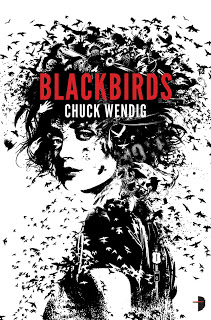 Do Abbadon, and Angry Robot, bring different things to the table in terms of how they help you as an author?
The difference for me is the work I do with Abaddon is actually work-for-hire. I don’t own any of the work with Abaddon, as opposed to Angry Robot, which publishes my original creator-owned stuff. (Double Dead, for instance, is part of their Tomes of the Dead series.) So why does an author who has two publishing deals self publish? I believe a diverse publishing resume helps the modern author not just survive but, in fact, thrive. I love both “traditional” and “self” publishing for what they offer the authors, so, fuck it, why not do both? Though, don’t discount the possibility that the answer is actually, “I am a teeny-tiny-bit crazy.” You have written a number of how to self publish books guides, who are these aimed at, the new upcoming writer or the more established writer who is looking to self publish for the first time? Any and all. If I had to pinpoint a segment, I’d say I aim my work at the professional author or hopes-to-be-professional author trying to navigate the salty froth-capped seas of New Publishing. In other words: fellow lunatics. What do you think is the biggest mistake a self published author makes? Being unprofessional. That can mean putting out work that looks like it was written and designed by a twitchy third-grader. That can mean acting like an ass-hat on public forums. That can mean fanning the flames of the completely-made-up “traditional-versus-self-publishing-war.” And what annoys you the moist about this new breed of writer, constant spamming, the constant whining about not being recognised, or something else? Ultimately, a DIY “indie” author can act however he or she wants. The only problem is, we may be islands but we remain a connected archipelago and your tides affect mine and vice versa. Garbage in the water will still reach my shores. So, self-publishers acting unprofessional makes all self-publishers look bad, regardless of the reality. Tell us about Terrible Minds? It is a digital psychic meme that will infect your mind-paths and breed its hypnotic nano-worms inside your synaptic uteri. Or: it’s a blog where I talk about writing and food and publishing and porn and booze and writing and being a father. Reading through your Blog, it feels like it is part primal scream therapy, part therapists couch, and part sound block for ideas. Have you ever published something on it that in hindsight you wished you hadn’t? Occasionally. But nothing’s ever come back to haunt me – no doom-chickens coming home to roost in the barn that is my career. Let’s talk about your novels now. How do you go about writing a novel? Do you free flow, or do you work out every little plot detail before you start writing it? I am a pantser-by-heart, plotter-by-necessity. I wish I could just make up shit as I go, but what I ultimately find is I end up lost in the woods, gibbering and fouled with my own waste. The plot unspools, the characters bump into one another, chaos takes hold. Thus, I outline because I must, not because I want to. What would you say drives your novels more, plot or character? And how do you ensure that one doesn’t swamp the other. The characters are in the driver’s seat. Here’s the secret: plot and character aren’t at war with one another provided you remember that plot is like Soylent Green – it’s made of people. Characters create and drive the plot. One thing I have noticed on your books is that the lead character is always an interesting and complex person, from Double Dead’s Coburn, Blackbirds Miriam Black and Shotgun Gravy’s Atlanta Burns. How do you go about creating a character, do you ever use “real” people as a basis for them? I roll-up D&D characters. That’s it. That’s all I do. I roll a bunch of d20s and, wham-bam-thank-you-bejeezus, complex characters. Maybe not. I don’t know how I create them – they create themselves, really, which is another way of saying that they karate kick their way out of my subconscious mind. I don’t use real people as a template, though I do look at real people I’ve known to see if certain traits make sense or seem realistic. How did you get into the mind of Atlanta Burns, was it difficult to make this female High School student believable? It wasn’t? And I don’t know why it wasn’t. Maybe high school is such an emblem burned into the mind it’s easy to go back to it? But Atlanta was very easy to write, regardless of whether she’s a boy or a girl. It must be a goldmine, living in America, when it comes to creating characters, the idea of a British version of Atlanta Burns just doesn’t seem to work? Doesn’t it? Surely you have bullies and bullied. And kids who have undergone sexual assault? And class separations? I could see a Chav version of Atlanta Burns. I don’t know that her experiences are uniquely American, though certainly the Pennsylvania setting is. When will the next instalment of Shotgun Gravy be out, and can you tell us anything about it? I’m writing it now! It’s called Bait Dog and it’s about Atlanta going up against a dog-fighting ring and how that dovetails into solving her friend’s murder. I should be done it in the next week or two – I’m scheduled to give it to backers by July, I think? And I think I’ll offer it to non-subscribers by the end of the summer. I would like to talk about Double Dead, if you don’t mind. Coburn is a prime example of a great anti hero, he goes to sleep one night as the worlds alpha predator, then wakes up and suddenly realises that he must now become humanities protector? How challenging was it to create a character, that is essentially a vile creature, that is sympathetic to the reader. We all know that he is only protecting his food source, but we as readers can’t help but like him? It’s really fun writing those types of characters, and here’s why: because it’s like almost crashing a plane. You point the nose toward the earth. You plummet toward the ground. And you get as close as humanly possible and, at the last minute, jack back on the stick and pull up and... y’know, not die. You do that, and suddenly readers are falling for a character who they have no right to fall for. Or so the hope goes. When you were writing Double Dead, how aware were you of what had gone before in zombie and vampire fiction? I’m fairly well-read in both, though I wouldn’t call myself an expert. The zombie genre and to some extent the vampire genre has become bloated with a lot of very poor examples of novels, how do you as a talented writer break through this and get your novel noticed? Write well. Be inventive. But worry less about being inventive and more about writing the best possible story you can – a story that is yours, through and through. There is a sequel planned can you tells us when it will hit the shelves and can you tell us what to expect from it? Bad Blood is already out. It’s an e-novella sequel and takes Coburn into the heart of San Francisco. Ketamine! Vampires! Orphans! And, of course, shitloads of the stumbling bumbling starving dead. In your latest book Blackbirds, Miriam Black has the power to see how and when someone will die, but is essentially powerless to anything about this? Was making her somewhat impotent a reflection on your past experience and thoughts on death? It was. Death is a great equalizer and it makes us all powerless. We are fate’s bitch. That’s Miriam. Or is, at least, at the start of the novel. Is writing a cathartic experience for you? It can be. It isn’t always. But stories that are more personal do have the whiff of exorcism about them. Other than Miriam’s ability can you tell us what the book is about? It’s about fate versus free will. It’s about choice and self-control. It’s about love in the face of death. It’s about trying to be a good person in a bad, bad world. It’s sad and funny and gory and wildly profane. Or so I intend, anyway. If you had Miriam’s power, and you shook the hand of your most hated enemy, would you gloatingly tell them how and when they were to die? And would you get a ringside seat for the moment of their death? See, the part of this question that has me jazzed is the “most hated enemy” part. I don’t know who that is. I need an archnemesis, now. Any takers? Anyway. If I had an arch-enemy, sure, I’d gloat. I’d roll in their demise the way a dog rolls in gopher shit. And I had a dog roll in gopher shit once. He loved it. Me, not so much. As mentioned earlier you have just signed a deal with Angry Robot books, in which we get to see the further adventures of Miriam. Can you tell us about these books, and have you already decided on how the series will end? Mockingbird hits in August/September, and puts Miriam on the trail of a serial killer who has it out for “bad girls.” The Cormorant will be sometime in 2013 and will put Miriam in the sights of an old enemy. There has been a huge amount of critical acclaim for the Blackbirds, how do you deal with this? Do you lap it all up, or does all the acclaim make you feel nervous about whether your next book will live up to the readers expectations? I lap it up. I stuff my face full of it. I swoon and howl at the moon. Then I get back to work and try to live up to it. I don’t feel nervous or anxious, I just want to do right by readers. Dinocalypse Now, is a very interesting concept. You have financed the publishing of this book through Kickstarter. What exactly is Kickstarter, and why did you decide to go down this route? To be clear, I didn’t finance it – the publisher, Evil Hat, did. And they didn’t just finance the Dino Now trilogy, but Fred actually financed an entire Evil Hat fiction line. (Prior to now, Evil Hat produced only game content.) I also worked with Evil Hat recently on a horror anthology, Don’t Read This Book. You initially set out to raised $5000, however the response has been unbelievable did you ever think that so much money would be raised? I hoped, but you never know. I know I have some fans here and there, and I damn sure know Evil Hat has a whole armada of fans ready to mobilize. It was a really sweet spot, I think. Doubly true when he started bringing in other great authors (Stephen Blackmoore, CE Murphy, Harry Connolly, Brian Clevinger). Is this sort of response more satisfying than glowing reviews, as essentially your fans have taken a chance and pledge their hard earned cash on one of your books? It’s very satisfying because it takes a lot for them to put their faith in something that isn’t even out. That’s a true measure of a fan and the support is overwhelming. Dinocalypse Now sounds like a love letter to the great old days of classic Pulp fiction, are you a fan of the genre? Not in a big way, more in a passing appreciation. The key for me was bringing strong characterization to the genre. Can you tell us what readers can expect from this book? Psychic dinosaurs! Non-psychic dinosaurs! Jetpacks! FDR! Gorillas in kilts! Atlantis! Shark-Men! Hawaii! Dirigibles! Two-fisted heroic action! Pow pow! Biff biff! Can you tell us about any future projects that you have coming out? The next Miriam books are on the horizon. As is my young adult “cornpunk” trilogy, the Heartland series (beginning with Popcorn). As is my criminal-underworld-meets-actual-underworld novel, The Blue Blazes, with Angry Robot. Lots to do! Chuck, it has been a great honour getting the chance to talk to you, do you have any final words for our readers? “Carpet noodle.” Thanks for having me! Please consider clicking through to my Amazon Affiliate links and purchasing a new book today. If you do you’ll help to keep me writing this blog via the small commission I get from Amazon sales GUEST POST: RICHARD SALTER
4/7/2013
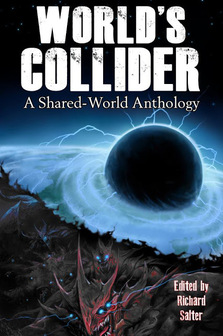 Who on Earth would want to Edit an Anthology?
People often say that writers are crazy. Perhaps they are, but it takes a special kind of insanity to want to edit a short story anthology. There’s no doubt you have to be of a certain mindset to do it. I wouldn’t say it’s harder than writing a novel – I’m doing that at the moment and it’s bloody tough! It’s a different kind of challenge, but it does take hard work and you have to be the kind of person who finishes what they start. Spreadsheets also help. PAUL EDWARDS
4/7/2013
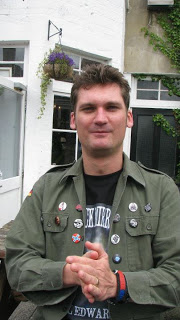 Hello folks today we have an interview with Paul Edwards. I recently reviewed Paul's debut collection Black Mirrors, and I was very impressed it. So much so I asked if Paul would like to do an interview. Thankfully he did.
JOHN LLEWELLYN PROBERT
4/7/2013
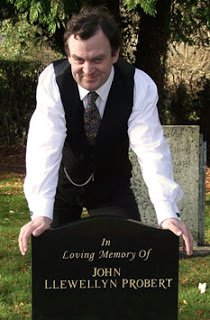 Today is a rather special day. Why's that I hear you ask? Well today's the day I get to interview my discovery of the year, John Llewellyn Probert. Yes I know I am a little slow on the uptake. So sit back and enjoy this great interview with the man who Ellen Datlow has called "Horrific and charming in equal measure"
FIVE MINUTES WITH CRAIG SAUNDERS
4/7/2013
 Craig Saunders lives in Norfolk, England, with his wife and three children. He pretends to listen to them while making up stories in his head.
A horror writer with a side order of fantasy (as Craig R. Saunders), he likes cemeteries and wizards, so it was a natural progression to drift between fantasy and horror like a drunk man weaving in and out of traffic. He doesn't leave the shed since his wife, his number one fan, hobbled him. She does, however, let him blog at www.craigrsaunders.blogspot.com, where updates and samples of all published work can be found. Also, try following his author page on Facebook (www.facebook.com/craigrsaundersauthor). He says he's not a psychopath, although he is talking about himself in third person...never a good sign. FIVE MINUTES WITH RAY CLULEY
4/7/2013
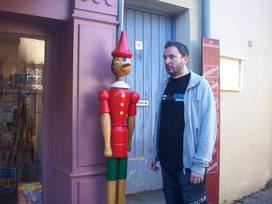 Today's Five Minutes with author is Ray Cluley. It used to be that he was a teacher who said he was a writer, but now it’s actually true. His fiction has been published in various venues including Interzone and Black Static from TTA Press, Shadows & Tall Trees from Undertow Books, and Not One of Us. His stories have also appeared in various anthologies, including a reprint in Ellen Datlow’s Best Horror of the Year 3, and a translation into French for Ténèbres 2011. His academic articles can be found in the English & Media Centre publication emagazine, a couple of which have been republished in the BFS Journal.
FIVE MINUTES WITH JASON D. BRAWN
4/7/2013
 Could you tell the readers a little bit about yourself?
My name is Jason D. Brawn and I write horror fiction, ranging from flash fiction, prose poetry to novella-length. I have been writing prose for three years now, and have now had over sixty short stories published as well as over thirty poems. Do you prefer the term Horror, Weird Fiction or Dark Fiction? Horror. I don’t mind weird fiction or dark fiction, but horror sounds better. Who are some of your favourite authors? Where do I start? Stephen King, Edgar Allan Poe, Guy N Smith, Ramsey Campbell’s short fiction, Richard Matheson, Mary Shelley, M.R. James and the list goes on and on. What are you reading now? The Nine Deaths of Dr. Valentine by John Llewellyn Probert. A good author, he is. Which book do you wish you had written? Honestly, it would have to be Salem’s Lot, by Stephen Edwin King. How would you describe your writing style? Coming from a screenwriting background, I would often describe it as visual. For me, I have to see what I’m writing, as well as using the remaining four senses. I love retro horror and my work seems to have that feel. I guess it’s me listening to the likes of Boards of Canada, Sunn O))), Fuck Buttons, Pye Corner Audio, Delia Derbyshire and lots of Dark Ambient, Drone Metal and Hauntology music, while writing. Describe typical day spent writing. Do you have any unusual writing habits? Because I work in a nine-to-five job in the City, I would always write during my lunch break and a few hours after work. I love writing and therefore can always find the time. What piece of your own work are you most proud of? For short stories, it would have to be Vain, which attacks consuming and wanting to look perfect. The story is also a reflection of today’s society, with this feeling that your face is your fortune or simply if you’re face fits, then you’ll go far. This really makes me sick, and always wanted to write a social commentary on this. Also my novelettes, now released as eBooks (REFUGE and STRANDED). These eBooks are my proudest work, where I spent valuable time getting them right for people’s consumption. Can you tell us about your last book, and can you tell us about what you are working on next? REFUGE and STRANDED are both horror novelettes, released now as separate eBooks along with a few unpublished short stories. They each have a fast pace and they also don’t hold back. They are straight horror, with occult and folklore references I researched and any reader will be in for a shock. They can both be purchased on Amazon. My next projects are writing a few short stories for anthology invites and completing a novella called Witch-Hunt about a metal band, who unwittingly visit a village and the residents immediately persecute them as witches. Also, I’m working hard on a novelette called The Burning, which pays homage to The Wicker Man, Suspiria and Sinister (my favourite horror film of the year). Thanks Jim for your continued support. Jason D. Brawn FIVE MINUTES WITH NATE ROBINSON
4/7/2013
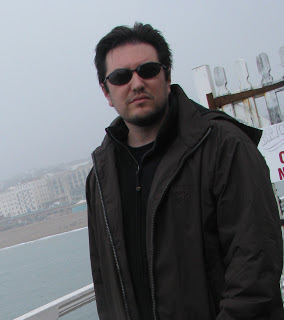
 Today we have Nathan Robinson, Nathan lives in Scunthorpe, England with his wife/editor, twin boys and a three legged cat called Dave. He's contributed to over fifteen different anthologies so far, with lots more on the horizon.
His crime thriller 'Top of the Heap' was adapted in a podcast by www.pseudopod.org to rave reviews. He is currently completing four anthologies of his own work, the first to be entitled 'Devil let me go'. |


Archives
May 2023
|
 RSS Feed

|

|