

 STEPHEN VOLK STEPHEN VOLK In Part 3 of our huge, in-depth interview with Stephen Volk, we discuss his recently-released novella 'Leytonstone' from Spectral Press... Parts one and two can be found by clicking on the links GNoH: ‘Leytonstone’ takes us back to turn of the century London, pre-World War One. How do you go about researching a period like that to ensure authenticity? SV: I didn’t research it much. I researched specifics, like cars and early films and magazine titles, but generally I pictured black and white films, silent films and so on, and obviously early Hitchcock films, and looked at old photographs. (There’s one picture, reproduced in a few books, of young Hitchcock sitting on a horse outside his father’s grocery shop, and that became a very specific scene in the story.) To be truthful, I thought of the fifties, when I was born, and thought of the generation of my grandparents, and their kind of values of strictness and social reserve and the kind of laws of punishment and parenthood and religion that would have pre-dated that in the early part of the last century – a very different set of values from today. (Funnily enough, my paternal grandfather owned a sweet shop with a gloomy back room where my nan would sit, and I think I was channelling that when I pictured the Hitchcock shop in Leytonstone. The paper bags on a hook, that kind of thing…) I did research a fair bit about Alfred Hitchcock, though, obviously, a filmmaker I’d taken a large interest in anyway, throughout my adult life, even before going to film school. Patrick McGilligan’s book ('Alfred Hitchcock: A Life in Darkness and Light') was a valuable and thorough recent top-up (which isn’t a character assassination like the Donald Spoto) but of course there are the Truffaut interviews and lots of others. And most importantly watching the movies – always the movies! My rule with research is to read book after book until you find that one is telling you what you know already, then it is time to stop researching and start writing! But more often than not I’m formulating the story as I’m going along rather than waiting for the research to end (this one started as a short story “Little H” that I wrote years ago). And authenticity can sometimes come as much from imagination, i.e. putting your senses in the scene, rather than just having the facts. Facts are actually pretty unimportant from an emotional engagement point of view. GNoH: There’s a great moment early on in the novella where you have Fred naming types of potatoes for his mother. Later on, there’s his obsession with tram routes and times. Do you think it’s likely that Hitchcock was somewhere on the autism spectrum? How did your answer to that question inform the book? 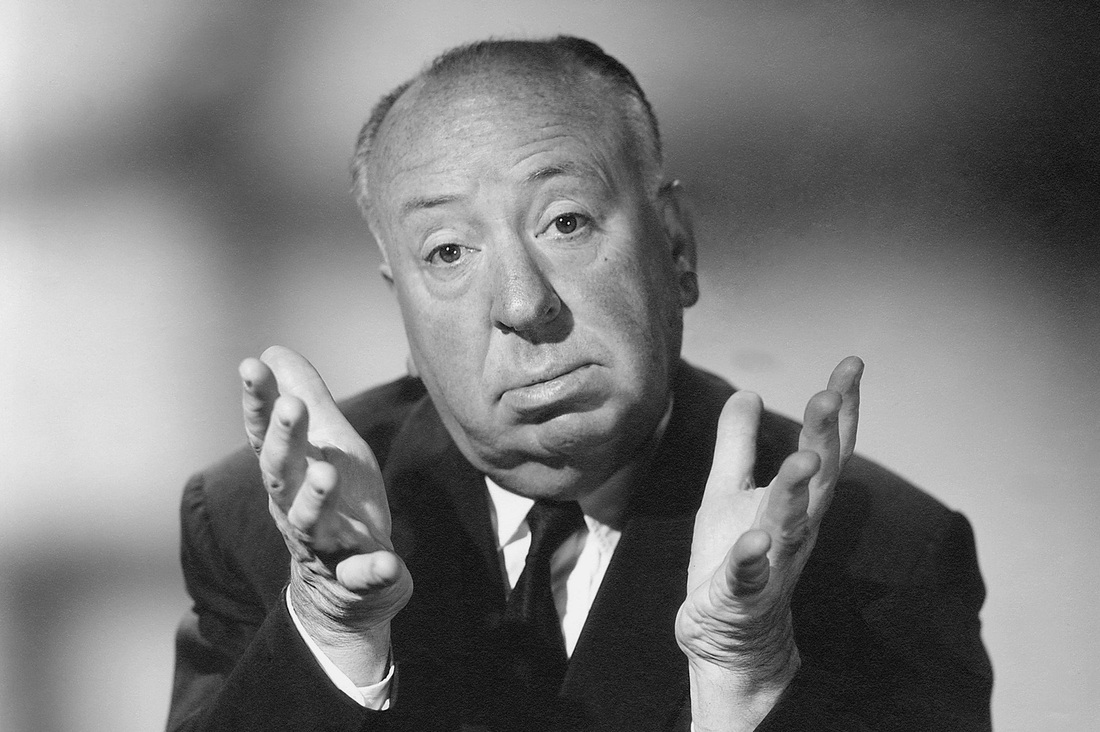 SV: Well, the thing about him memorizing tram lines and bus timetables and having shipping lines on his bedroom wall, all of that is factually accurate, so already you have a child who is quite a control freak and possibly a bit Asperger’s, to be sure. That is why I have little things like his notion of memorising maps is a way of never having the fear of getting lost – that is my attempt at grasping a kind of autistic desire to collect information to prevent being terrified, and that is useful to me in a portrait of someone who develops a career in wanting to terrify others. So those facts are useful. Others I completely rejected – for instance I didn’t want to complicate my story with him having siblings (which he did in life) and in fact he went to St Ignatius when he was much older – so this is very much a fictional idea of Hitch’s childhood. It’s not a documentary. GNoH: Later, of course, that desire for control takes a darker turn. How worried were you about striking the balance between maintaining reader sympathy with Fred whilst still telling the story you wanted to tell? Or were you not concerned about that? SV: I thought that you automatically have empathy with a child, so in a way it is my job to make that child vivid, plausible and multi-layered, and to avoid a “cute” kind of version of childhood, especially as young Fred is going to be depicted initially as a victim. Obviously you sympathise with a child weeping and wetting his pants in a police cell, yes, but one of the points of my story is, what is the consequence of that incident? What kind of character does that kind of (albeit well-meaning) parental abuse finally create? And the central conceit of the story is, really, that it created someone who wants to inflict terror, just as they themselves suffered terror, as a way of being in control of that emotion (which they never will be). That’s why Fred says to Olga Butterworth: “Now you know what it feels like to be frightened.” That’s why he does what he does, entirely. In a misguided way, it is an attempt to be understood by another person, and it’s sad and tragic. This was the overall premise I thought had something in terms of all of us who create horror, who want to create fear in others. Why? So the story was a dramatic way, I thought, to explore that. And I think I was true to the idea that trauma has consequences, and a traumatised person, far from being understanding to other victims, *might* actually turn into someone who wants to victimise – who wants there to be a victim other than themselves, so that they can feel powerful, even if it is a self-manufactured kind of power. So I was more concerned about being true to those thoughts than whether the reader would “like” Fred or not. I hate that Hollywood word “relatable” and the insistent and tiresome producer note you always get to make a character “likeable” – to make them likeable doesn’t make them interesting! GNoH: That last point reminds me of a recent piece I did about 'The Wasp Factory' – one of the things that book does for me is stand as a rebuke to the notion that your protagonist need be 'likeable' in order for a book to be compelling... SV: I think it’s a deceptive road to go down. You end up having that sickening Hollywood thing where in the first five minutes the hero (usually a blue collar Tom Cruise) shows he loves his wife, plays with his family, loves his dog, is good at work, sticks up for the underdog – and by the end you have to like him EVEN MORE! Come on! We never meet people that “good” in life: what we meet are people whose behaviour is intriguing and we may know hardly any facts about their lives (or even their name) but they are interesting in some way we can’t quite grasp. Someone can be generous and friendly, but also be passive aggressive and a martyr, or forthright in speech but also socio-phobic. Fred’s mother in the novella, for instance, is a mass of contradictions: needy, dominant, extrovert, masochistic, neurotic, pathologically nurturing, a frightened victim and a social climber. Macbeth is interesting because he is given a mixture of contradictory attributes – he is loyal, brave, heroic, but also ambitious, superstitious, driven, fearful. One example of a multi-faceted child in a story I adore is in 'The Butcher Boy' (the book by Patrick McCabe but equally the film by Neil Jordan, which is one of my favourites). In it the kid, Francie Brady, is abnormal, unpleasant, quirky, and a sociopath – but it’s hard to hate a child because a child is, by definition, both vulnerable to influence, and not fully formed. 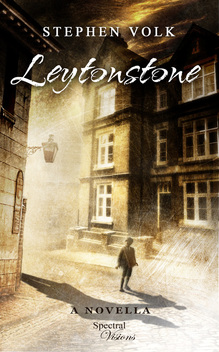 GNoH: I found the atmosphere of ‘Leytonstone’ to be claustrophobic, at times oppressively so. What choices do you make as a writer at a sentence, or even word level to help create that kind of atmosphere, without it having a sledgehammer effect? SV: Gosh. That’s very hard to analyse. Put yourself in the moment, I think, try to be descriptively honest. And try to be subtle! I always think, too, that specifics are much more effective than generalities, so instead of saying the place is “smelly” and “oppressive” you describe the exact smell, the exact sounds, the way the light falls and the exact texture of the walls – even the exact graffiti and what that sets off in a child’s head. So I suppose it is honing down, zooming in. But there is always the choice: do I describe the internal thoughts of the character, or do I describe what I see visualizing the scene? Since, for obvious reasons given the subject matter, I wanted a “filmic” sense through the prose, often I keep it quite bald and plain, as in a screenplay (and in the present tense for that reason). But I couldn’t be as terse as that all the time because the story is quite an emotional one and the enjoyment of writing it is going into young Fred’s mind occasionally and finding what makes him tick. The whole exercise, really, is about imagining what makes him tick. There have been a couple of films recently ('Hitchcock' and 'The Girl', both excellent) which try to portray how the adult Hitch “ticks”, but to me it’s a very hard task to accomplish a rounded character study of such a complex man. Almost impossible. My version was very much trying to convey the adult through the world of the child: you could say that was easier, but to me it was more interesting. The “voice” of the story, too, is quite important in one about childhood. There’s a temptation to write it with childish simplicity, which I avoided in the end. In the first page the omniscient narrative voice observes Fred’s age with a slightly acerbic tone, which I liked. Kind of knowing and observing, a bit like Hitchcock’s camera. Perhaps as I am a screenwriter, I like sentences to be simple, as a rule. Cormac McCarthy is the master of this, as in 'The Road'. But I do love it when you combine that with a word that is out of joint and a bit poetic, so that it’s not all-out showy but just vivid. When Fred’s dad washes his hands in the Belfast sink, I say “the soap is an unforgiving brick” which is almost nonsense but not quite (hopefully) and I like that. I’m Welsh and I hated it when we did it in school, but now I never cease to enjoy Dylan Thomas’s 'Under Milk Wood', and I love that line: “before you let the sun in, mind he wipes his shoes” – so maybe there’s a trace of that going on in getting the word that’s wrong that’s right. But you don’t want to be doing that in every sentence. Like I say, it’s not an exercise in showing how clever you are. The story and the subject dictates the style, and as someone once said the best the author can do is get out of the way. GNoH: You mention the omniscient voice of the book. What informed your decisions about when and how to deploy that voice, and when to stay close to a POV character? SV: It was purely instinctive. I didn’t want it totally internal because I wanted to “cut away” to scenes with Fred’s mother and father. I felt I really needed those, in order to show the psychology of the parents when the child wasn’t in the scene – which is quite important – and if I’d had a very “internal” voice to the Fred scenes, the parental scenes and so on would have stood out too much. That sounds very much as if I planned it, which isn’t true! It’s more a sense of trying things out and feeling if they are right or not. I buggered about fretting whether I could get away with the present tense, too! GNoH: That parental relationship felt at the same time deceptively complex and utterly believable. How much of that came out of research, and how much was your own imagination/intuition? SV: It started with research, to be honest. But also from the films and Hitchcock’s recurring themes and characters (like the mother figures in 'Stage Fright', 'Strangers on a Train', 'North By Northwest' or in 'The Birds'). From his biographies, it’s pretty easy to imagine Hitch having a doting and dominant mother, and I knew she was of Irish extraction (though probably not as “Irish” as I have her!) and that as an adult she was an important figure in his life. Things like him having to report on a daily basis what he did in school, is straight from research. (I immediately thought on reading that: that’s a whole scene!) And I think her Catholicism was fundamental to his upbringing. On the other hand, the temptation would have been to make his father strict and mean, as he initiated the boy’s time in the police cell, but that seemed too obvious to me. I preferred the dad to be a quiet man with his own pressures which he bore without too much complaint, as men did in those days (after all, this was before WWI, when all those men returned tight-lipped about what they’d been through). I wanted a sense Mr H was Mrs H’s carer as well as husband, in a way, that he was unhappy but that was his lot in life – that in another era they may have divorced, who knows? I somehow thought a normal, loving, and open couple could never have spawned “Hitchcock” as we know him. And therefore the special bond between mother and son has to be because of something missing between husband and wife, and while I didn’t want to spell out what that was, I thought I could portray it. But of course none of that is necessarily “real”! So basically the research gave me guidelines, pins on the map, and I joined them up, sometimes throwing away a pin or two, when I felt it all made sense, character-wise, and when I tangibly felt these characters without “faking it” and could write them in terms of their motives and attitudes. GNoH: You also mentioned the screenplay like qualities of the language at times. As an accomplished screenwriter, what do you find most challenging about working in prose, and what do you find most enjoyable? SV: The most enjoyable part is the lack of restrictions, as you can probably guess. In a script you can only describe what can be heard or seen. Nothing else, no feelings, no thoughts, nothing. In prose however you can go anywhere, divert, imply. You can create a thought or a neat idea with the use of a word – which in a screenplay is simply being “cute”. In the phrase I used above “The soap is an unforgiving brick” – you probably wouldn’t use that in a screenplay. How do you film that? You can’t. So that is a different discipline. And in a larger sense what you choose to tell. I feel a huge liberation when thinking of stories to tell as short stories or novellas – there isn’t that gigantic burden of pitching and selling a script idea, with all the questions of marketing, audience, star, budget, and what the producer and director want that all go with it. All that matters is: “Is it a story I want to tell?” The most challenging thing is probably the same – the fact that you can write anything, say anything, “go” anywhere, so the choices are endless. In the beginning I wrote stories that were pastiche, probably because I wanted some driftwood to hold onto, whether it was M.R. James or Raymond Carver! But slowly I think I’ve got more confident – not that every story isn’t a pain to work out, and to work out how to bloody write it! It is never easy. But the fact I am in control of it is important. In film and TV you sell your story, they own it and they employ you to do their changes. It isn’t yours any more. Sometimes that can be great, the collaborations can be fantastic, and sometimes it can be devastating and completely soul destroying. With prose, as my writer friends like Tim Lebbon and Mark Morris both encouraged me, “You’re the boss” and paradoxically by seeing my own unadulterated work it is not only very satisfying but makes me a better and more self-critical writer. It’s all just me! Nowhere to hide, and most certainly no-one else to blame! GNoH: Your work overall is very readable, but it also seems to me to be crafted with great care. Do you have a clear sense of how many drafts this novella went through? Was that a typical number for you, or was this easier or harder than other works? SV: This one had a weird genesis in terms of drafts. Leytonstone began as a short story, as I say (called Little H), that I wrote for my first collection ('Dark Corners', Gray Friar Press, 2006). It was just the episode in the police cell, with the punch line that it turns out to be Alfred Hitchcock as a little boy. Ba-dum-kish! Yeah, I know. I first wrote it as a short film, then put it in the book in screenplay format – which, looking back on it, was a terrible, embarrassing idea! Anyway, over the next few years I kept thinking about Little H and thinking it was only a small part of a larger story. I didn’t know if it was the first act or third act, or what else happened, but something told me in my bones there was more to be said about this little chap and his mother and father, so I started reading more about Hitch, and finding out about the Catholic school and so on, and thinking of stories of Catholic school I’d been told, and reading about Hitchcock’s thematic ideas of guilt and innocence, and thinking, if this was going to be about the origin of the Hitchcock “brand” (awful word), was it in fact some kind of symbolic tale about all of us who want to terrify and horrify? Then I realised I could write this terrified, chubby kid with not many friends, and his adventures in the playground and the first time he found out about sex, and the schoolgirls next door looking over the railings – because all these things are from my childhood, not his! Even the hole in the wall of the toilets! So I plundered all that mercilessly, and my shop-owner grandfather, and my other grandfather who owned a pub in South Wales, and the atmosphere of the Saloon and the Public Bar, all that. It was as much from my early memories as from objective research about Hitchcock. But to return to your question, I mulled about the bigger picture for a long while, and I knew the enigmatic and sinister Policeman had to figure more as a kind of nemesis figure, so I started writing scenes and for convenience’s sake I wrote them in screenplay form – it was quicker. And for once I had no plan. I knew there was a girl he would spy on and I worked out he would entrap her, and that he would face the priest. But then things fell into place. I found that Fred squirmed his way out of the accusation, with the collusion of the authorities perfectly happy to “blame” Olga, when we (and Fred) know she is completely innocent. It just fell into place and felt just right. Then the most extraordinary thing happened, which has never happened to me before. I wrote the scene where Fred takes Olga the slice of cake. And I wrote the later scene where the evil Policeman finds the handkerchief and (remember, I hadn’t planned any of this…) – I thought “He finds the handkerchief and – what would he do? Oh my GOD!!” And my heart started to hammer in my chest because it felt like the story itself had told me what to do. And I knew, absolutely KNEW, that the Policeman had to take Mrs Hitchcock to the police cell. It was horrible but it had to happen. Not only was it the perfect bookend to the police cell scene at the beginning, but everything had been set up thematically for it to be inevitable. Thus the whole story which had been about the terrible things parents do to their children in attempting to do good, also became about the sacrifices parents make for their children in ways the child will never know. And that is something that I don’t think I’ve ever seen in a story, so that excited me enormously. After that “screenplay draft” I was so excited I wrote the novella straight off, 49,000 words. Then I read it and literally didn’t know if I’d achieved what I set out to do or just had a pile of crap in my hands! It’s surprising how often you are literally that conflicted. So I asked my good mate Mark Morris to read it on the proviso that, if it wasn’t good, he would tell me. And I also gave it to the excellent and lovely Johnny Mains at the same time, begging him to similarly tell me the worst, and I was half-expecting that. But word came back from both of them that they loved it – and from Johnny that he thought it was “better than Whitstable!” – so the doubts started to wane slightly! (Only slightly!) Luckily Simon Marshall-Jones loved it too – which is just as well, as he is publishing it! I wish the doubts would take a hike sometimes, but in all honesty sometimes I think as writers we are not much more than the sum of our doubts, with a bit of general anxiety thrown in! GNoH: I found the coda in this novella to be exceptionally moving. Avoiding spoilers if possible, had you always intended to close things out like that, or did it come about during the drafting process? SV: Thank you for saying that, but I don’t think it will “spoil” the ending to discuss it, will it? It came to me early on when I was thinking of the “expanded” version because I read that, in a speech to the great and good of Hollywood shortly before he died, Hitchcock made reference to the incident in his childhood which is essentially what the novella is all about – the incarceration in the police cell (an anecdote he repeated throughout his life). He no doubt relished the punch line of the moral lesson his father gave him at the time: “That’s what happens to naughty little boys!” and I loved that for two reasons (besides the obvious echo of the line we have had earlier). Firstly, in the scene I thought it would get a big laugh from the Hollywood audience, inevitably, yet we would know the truth behind it. Secondly, I liked the implication in the question: what does happen to a naughty little boy like Alfred? This. What’s in front of him -- fame, success, wealth, a family, and the undying love of a whole generation of moviegoers. All beyond the wildest dreams of that little boy back in Leytonstone. So that irony was too tasty to omit. Maybe it would have been implicit if I ended the story with little Fred looking through the railings of his school, but I liked the idea of a vast leap into the future, imagining that the elderly Hitch at the AFI Life Achievement dinner *might* have been sitting there thinking back to that childhood incident as he told his favourite yarn… and maybe there was more, much more to it, than his deceptively cheery favourite anecdote conveyed. GNOH: 'Whitstable' and 'Leytonstone' are clearly companion pieces, for all that they have vastly different main characters and settings. Are you tempted to attempt a third novella in this series? If so, do you have any ideas for the subject? 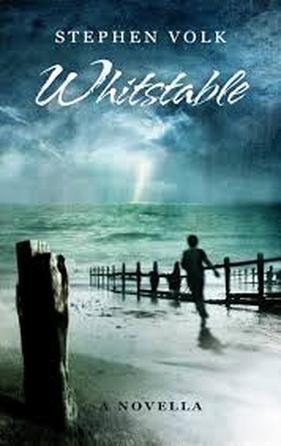 SV: Yes. Oh yes. But it’s going to be a bugger to write, and I’m not going to tell you what it is. Or who it is! It’s going to be hard and if it doesn’t work, I might change my mind entirely. But it may not be a movie-related character at all. The idea I had after Whitstable (and I was ruminating over Leytonstone) was they sat together quite well (not just the titles, which was an afterthought). So I wondered about a loose trilogy called The Dark Masters Trilogy, and what links the stories are certain thematic threads about the nature of dark fiction, and dark, malevolent things in life – the relationship between our imaginary world and real life. For each of them I wanted to focus on a different creative person, as an anchor. So I think that will be true of the third one, that’s all I can say. GNOH: Intriguing! This is normally the part when I ask which work an author has written they'd like to see on screen. However, as you're also an accomplished script writer, maybe I'll invert the question – are there any of your screenplays you'd be interested in novelising, and if so, why? SV: I think about it all the time. Not if they’ve been made. Not much point in, say, writing a novel based on Afterlife, my TV show – unless I were to write a new story. But all too often you put an awful lot of work into screenplays that, for no fault of their own, don’t get made, and it’s really tempting to dust them off and try them in a different medium. And sometimes what you discover is that your first bash wasn’t in the right medium anyway. I wrote a play which I spent over a year turning into a novel because it set me off with a million wild ideas. Ten years later, you know what? Looking back, I think it was best as a play. In another case, I wrote a screenplay I loved but, though it got great feedback, nobody would make it, or even put it in development. They said they couldn’t finance a period movie about three women in the 19th Century, forget it. So I thought “Right!” And I turned it into a play for four characters. The wonderful thing there was (aside from working directly with very talented actors) I had to tell the story in a different way. Cinematic visuals went out the window and it became storytelling theatre, eyeball to eyeball with the audience and I loved that. I loved it because I discovered what the story wanted to be. I have a screenplay sitting on my shelf which I keep circling because I keep wondering if it could be a novel. I know I’ve read novels like it. Historical, with a horror element. I can see it in my mind’s eye as a book, but I’m not quite sure how to make one aspect of it work, which is to do with how images and cutting worked in the script. Anyway, I’d be talking about putting aside at least six months clear blue water to write it and it would be a sort of crazy experiment, a step into the dark, and there might be firm ground there or there might be a dirty great hole! So it’s a risky thing to plunge into six months or nine months or a year “on spec” on something that might not even sell at the end of it! I had a book agent for a while and I think I drove him mad because I’d tell him I was going to write a novel, and he always said “in your own time – no worries” but then TV work would come up, or something else, and the novel would have to get to the back of the queue. In the end I had to say to him, “Look, I don’t deserve a book agent. Please take me off your author list. I feel bad about it.” GNOH: Finally, what does the rest of 2015 and beyond hold for you professionally? What projects should we be looking out for in the near future? SV: I’ve been working on a three-part television adaptation of Phil Rickman’s novel 'Midwinter of the Spirit', which has now finished filming. It stars Anna Maxwell Martin (The Bletchley Circle) as a C of E vicar and novice Deliverance Minister (“excorcist” to me and you), and David Threlfall (Shameless) who plays her grizzled and acerbic mentor. Phil has written a dozen or so novels featuring this character, Merrily Watkins, and she has a devoted fan following. We’re obviously hoping we’ll get the chance to make more but we won’t know until it goes out, probably in October or thereabouts, on ITV Encore which is lining up some interesting genre fare including 'The Frankenstein Chronicles'. Now I’m reading the subsequent books to see which one we want to do next, just in case. In addition I am developing a new drama series with Clerkenwell Films, the outfit who made 'Misfits' and my own paranormal series, 'Afterlife'. I’ve also got a script I wrote with Tim Lebbon which we hope will move forward this year, and another one with Lesley Manning, who directed my controversial BBC Halloween “hoax” 'Ghostwatch'. Plus many others irons in the fire. Also, on the fiction front I’m looking forward to PS Publishing bringing out my new short story collection in 2016. I think it’s going to be called 'The Parts We Play', but nothing is finalised yet. I get a steady stream of books to adapt and ideas from producers but in general I much prefer to come up with ideas on my own. It’s not being precious. I just find it hard to inherit other peoples’ obsessions or plots or characters, and can only do it very instinctively, if I think I can really add something. Anthony Mingella liked to pick a novel he fell in love with (like 'The English Patient' or 'Cold Mountain') and concentrate on it, he said, because time was precious, he only had X more films in him and it took so long to cook up something from scratch. I feel the opposite. Time is too precious to squander on other people’s ideas, putting your creative energy into the making them work, sorting out their mistakes, when in fact all that energy could be put into something that was your own, hewn from your own deep down feelings and experience. I don’t blame anyone for taking on a job to keep the wolf from the door, but I don’t think you advance your integrity as a writer by doing work for hire – you do it by going out on a limb, and sometimes doing the one thing your agent and everybody else tells you not to do: and it may not sell, even, but you know you have to do it. It’s madness, I know. Try telling your financial adviser. But a glorious kind of madness, where your thoughts and fears come out to play like elves in the middle of the night. And sometimes they plague you and sometimes you wake up and they’ve mended your shoes. That’s stories for you! Many thanks to Stephen for being so generous with his time across these three lengthy interviews. Check out our review of Leytonstone here. The novella (along with 'Whitstable' and 'The Spectral Book Of Horror Stories') is available now in multiple formants from Spectral Press. KIT POWERComments are closed.
|


Archives
May 2023
|
 RSS Feed

|

|