• HOME
  • CONTACT / FEATURE
  • FEATURES
  • FICTION REVIEWS
  • FILM REVIEWS
  • INTERVIEWS
  • YOUNG BLOOD
  • MY LIFE IN HORROR
  • FILM GUTTER
  • ARCHIVES
    • SPLASHES OF DARKNESS
    • THE MASTERS OF HORROR
    • THE DEVL'S MUSIC
    • HORROR BOOK REVIEWS
    • Challenge Kayleigh
    • ALICE IN SUMMERLAND
    • 13 FOR HALLOWEEN
    • FILMS THAT MATTER
    • BOOKS THAT MATTER
    • THE SCARLET GOSPELS
GINGER NUTS OF HORROR
  • HOME
  • CONTACT / FEATURE
  • FEATURES
  • FICTION REVIEWS
  • FILM REVIEWS
  • INTERVIEWS
  • YOUNG BLOOD
  • MY LIFE IN HORROR
  • FILM GUTTER
  • ARCHIVES
    • SPLASHES OF DARKNESS
    • THE MASTERS OF HORROR
    • THE DEVL'S MUSIC
    • HORROR BOOK REVIEWS
    • Challenge Kayleigh
    • ALICE IN SUMMERLAND
    • 13 FOR HALLOWEEN
    • FILMS THAT MATTER
    • BOOKS THAT MATTER
    • THE SCARLET GOSPELS
GINGER NUTS OF HORROR
horror review website ginger nuts of horror website

ENTER THE SHADOW BOOTH: AN INTERVIEW WITH DAVID HARTLEY

9/10/2017
Picture
As part of Ginger Nuts of Horror's support of the Kickstarter for Tales From The Shadow Booth, we have teamed up with some of the contributors for a series of exclusive interviews.  Today Ginger Nuts of Horror welcomes David Hartley. 

​Writer, performer, optimist, vegan, rabbit enthusiast, PhD student. He writes strange stories about strange things for strange people and read them out loud on various stages in Manchester and beyond. His  tales tend to be short, sharp, and weird, and more than a little unsettling. His favourite authors include John Wyndham, Ursula Le Guin, JG Ballard, China Mieville, Alan Garner, Adam Marek and Iain Banks. 

His fiction has been published in numerous places including Ambit Magazine, Black Static, Structo Magazine, Shooter Lit Mag, The Alarmist and two Boo Books anthologies; After the Fall (2014) and We Can Improve You (2015). You can find links to lots of his fiction on the Stories page.
click here to support the kickstarter

Hello David, Could you tell the readers a little bit about yourself?

Hello! I’m a writer, performer, and PhD researcher based in Manchester. I’ve been writing weird little tales for about ten years now and can often be found haunting the various spoken word stages of the rainy city.
 
On your website you mention that you took part in an apocalyptic arts event in Preston Bus Station, you have to tell us more about that. 

This was an amazing event, and such a joy to be a part of. For the uninitiated, Preston Bus Station is a bit of big deal in certain circles. For Prestonians, depending on your perspective, it’s either a big archaic eye-sore and dangerous place to be at night, or it’s a stunning example of Brutalist architecture. It’s been threatened with closure and demolition for many years but various architectural campaigns have kept it alive. Back in 2013, the Preston arts collective They Eat Culture put together this one-off live performance event inside the bus station with this apocalyptic theme – the fate of the station seemed to be fixed on destruction at that point. It was a promenade event with various performers, including a choir, an MC, a poet and me doing a madcap Choose Your Own Adventure story next to the men’s toilet. The station itself was still open and operational while the show was happening so my audience was a combination of paying customers and bemused commuters. It was a freezing cold March evening. I was wearing an A-board with ‘THE END IS NIGH’ written on it. It was one of the strangest but most brilliant events I’ve ever been involved in. The bus station is still standing.

Performing live is something that you appear to love, what is it about the live venue that you find so appealing? 

Live performance has always gone hand-in-hand with my writing and I’m never too far away from the stage. I love having the chance to inject a bit of theatricality into my stories, to bring them alive in front of a room full of people. Storytelling is one of the most ancient arts and we’ve lost a little of that by hiding behind typewriters and keyboards. Also, reading a story or poem at a spoken word night can do wonders for your evolution as a writer. You get a real sense of what works and what doesn’t, and how to make your pieces sound good, not just read well. Throw a bit of theatre in there, with accents, props, even costumes, and you’ve suddenly got a room full of people hanging on your every word. There’s no greater feeling. Plus, it really helps to sell books!

Your PhD thesis sounds fascinating, what was the main factor in you specialising in portrayal of autism in science fiction? 

My older sister Jenny is autistic so it’s always been a major part of my life. I’d stored autism to one side as a writing theme for quite a while but last year I felt ready to start tackling it, so I turned it into a PhD. The sci-fi side of things came naturally as I rarely write anything outside of SF&F. I’ve discovered that there’s a real appetite for this particular combination as it has never been seriously explored before – or at least not in any great depth. And yet autistic people themselves are often huge fans of sci-fi and fantasy. There’s something really fascinating about our culture at the heart of all this so the PhD is my way of trying to dig that out…

Out of all of the instances of autism in science fiction, which one do you think came closest to “getting it right” and which one has annoyed you the most?
 
Weirdly, the answer is the same for both of these questions. There’s one major sci-fi novel about autism: Elizabeth Moon’s Speed of Dark. In many ways Moon really nails what it is like to be autistic in a non-autistic world and the principle character, Lou, is a fascinating hero, complexly imagined and very believable. He works for a tech company who give him the opportunity to undergo experimental brain surgery to cure his autism and the novel becomes about how he battles with the decision about whether he should or not. It’s all very interesting and compelling, but then the ending is a massive let down for me which I think sends out completely the wrong message. I won’t spoil it, but I found it utterly deflating. Perhaps that was always Moon’s point, but rather than making me think, or chilling me, it just made me feel overwhelmingly sad. I think it was a misfire.
 
Far and away the best depiction of autism, for me, is Abed Nadir from the TV comedy Community. Not only in the way he is depicted, but also in the way he has powerful narrative agency for many of the best episodes of the show. Autistic characters rarely achieve any real agency – Abed is the stand-out exception.
 
Your stories have a diverse range of themes from haunted bath tubs, time travelling libraries, and an insect crime scene. Are you more comfortable writing in the fabulous and the bizarre? 
 
Yes, absolutely. The fabulous and bizarre excite me far more than the mundane and realistic. There’s some deep magic in the thrill of leaping into the fantastic and strange where you can throw normality around and make it deviant and vibrant. For me, I think a lot of it stems from my exposure to my sister’s autism. Her unusual perspective on life has always made me see things from a quirked angle where reality is not so fixed and obvious. One of the worst things a person can do is chase normality because there is no true version of normal. Autism shows us this, if we listen.

There is a move from the more literary side of the writing world into writing about the weird, traditionally this has been the domain of the lowly genre writer.  Why do you think they are doing this? 
 
They’ve perhaps finally realised its power and potential - something that genre writers have been well aware of for a long, long time! And with the frenetic nature of the modern world, where it feels impossible to get any kind of firm grip, where identity and reality are continually shifting and fracturing, sometimes at an alarming and dizzying rate – well, the weird is perhaps the only natural response.

One of your stories has been selected to appear in Shadow Booth, how did you come to appear in the anthology? 
 
The editor Dan approached me and asked for a story. I think he’d read a very dark tale of mine, ‘Pigskin’, which appeared in issue 55 of Black Static (TTA Press) and we took it from there. 

Can you tell us about some of the themes of the story? 
 
My story for Shadow Booth is one of my animal-based stories. I’ve been writing about animals for many years now – it’s one of my main thematic preoccupations. I’m a vegan and a bit of an animal rights advocate so my thoughts often run to the mistreatment of animals, which very quickly turn into dark and disturbing stories. This one, ‘Betamorphosis’, is a reversal of Kafka’s classic tale and features a cockroach who is turned into a video game character. It’s a comment on the RoboRoach – a real thing where engineers have captured and modified live cockroaches by grafting a chip onto their heads. The chip allows the engineers to control the cockroaches with a remote device – all while the insects are still alive. That sort of thing triggers all my animal welfare alarms and the story came quite naturally after that…

What has been a major influence on your writing?
 
I’ve already covered most of them above – animals, nature, autism, the theatre. Music also has a big influence I think. I often listen to music when I write and I think it really helps with me striking the right tone and rhythm. I have a long, long playlist of ambient electronica which helps transport me to the strange and distant lands of my weird worlds. Plus another playlist of dramatic classical and energetic EDM for when I need to write fight scenes or chase scenes! Music, for me, acts as a form of silence – it blocks out everything else and makes me focus right in on what I need to be doing. Along the way, it sets the right mood.


The term horror, especially when applied to fiction always carries such heavy connotations.  What’s your feeling on the term “horror” and what do you think we can do to break past these assumptions?

It does indeed carry a lot of difficult imagery – fear, gore, terror – but I think things are changing. Horror films are having a good run of things at the moment and becoming more sophisticated in their exploration of what actually scares us, rather than just making us jump or squirm. I’m think of films like Get Out and Raw and Under the Shadow.
 
It’s curious, I never really intend to write ‘horror’ stories as such but they often become quite horrible – and if they do, I tend not to temper it down. Horror still has something very profound to say and if a writer is skillful enough to remove the schlock but keep the shock, a bit of sophisticated gore or terror can take the reader to some important philosophical places. So, when people ask what sort of thing I write, I do now tend to include Horror alongside SF&F as one of the genres I work in.

What are the books and films that helped to define you as an author?

Oh, there are loads. Main ones: Frankenstein by Mary Shelley for teaching me how to shock and surprise, Elidor by Alan Garner which instilled a love of magic and how it can terrify, and pretty much everything and anything by China Mieville who is something of a god. Films: Blade Runner, Stalker by Andrei Tarkovsky, Chungking Express by Wong Kar Wai, and a clutch of films about unstable identity which came out around the turn of the millennium: Donnie Darko, Eternal Sunshine of the Spotless Mind, The Matrix and so on. I’m also very much influenced by video games, particularly the Zelda series.  

What new and upcoming authors do you think we should take notice off?

Aliya Whiteley springs to mind. Her two novellas The Beauty and The Arrival of Missives, and a number of her short stories, have made her a real one to watch. She’ll be massive. She’ll be winning prizes all over the place, just watch.

How would you describe your writing style?

Fidgety. It never really sits still. I sit down, splurge it out and let it play and dance around while I try to pin it all down into something that makes sense. I’m not particularly interested in writing to rules or specific structures. I write until I get a proper feel for the tone and direction of the story (and that can take many drafts or mere minutes) and then think if there’s anything strange I can get away with in terms of voice or the framing. It doesn’t always work but it keeps things fresh and interesting!

What aspects of writing to do you find the most difficult?

Editing I think. I’m bad at going back to a story that hasn’t worked and fixing it up. I tend to just ditch it and move on to something else. I really have to love the idea at the core of the story for me to go back to it again and again to get it right. I’ve got files full of abandoned half-stories which I’m sure I could whip into shape if I had a little more patience.

Is there one subject you would never write about as an author?

There are certain areas which have been done to death in short fiction. I’m sure there are ways to approach these topics in fresh and interesting ways, but I think they just need to be set aside for a while because, frankly, it’s getting kind of boring. So, it’s unlikely I’ll ever write about the following: a) love affairs b) getting drunk c) taking drugs d) rich people with money being sad e) cafés
 
Also, I sort of made a pact with myself right at the beginning to never write a story where the main character is a writer (King’s Misery springs to mind). It can be done well, but it’s usually a bit self-indulgent and it always suggests to me that the author has lost a bit of imagination. 
 
Writing, is not a static process, how have you developed as a writer over the years?
 
For the first few years of writing I just chased ideas and wrote about anything I could think of. This was good – it enabled me to experiment and get a ‘feel’ for sitting at a keyboard and hammering out the words. After a couple of years of this there was a turning point: I started writing about topics I had a passion for. More than that: things I was angry about. Writing then became a catharsis for dealing with injustices – for me it was writing about animals that turned me into a proper writer and made me realise that I wanted to carry on and push it as far as possible. I wrote a furious story about a robot dog which was picked up by a literary magazine. I’ve chased that fury ever since. And now I’m trying to write novels with the same drive.    

What tools do you feel are must-haves for writers?         

Patience. Achievements in writing don’t happen overnight. You have to be patient with your own brain as it works out how it wants to write. You have to get into this strange relationship with the creative core of your subconscious which absorbs the world and stores it while you get on with normal life. Then you need to set it into a comfortable nook while you start crafting together the words. All this takes practice and patience, but it comes. 

What is the best piece of advice you ever received with regards to your writing?

My dad, who is also a writer, said that you know when you’re a writer when you realise you’ve got this nagging little voice in your head saying; hey, do some writing. An instinctual impulse to write which sits inside your chest like an imp, poking you into anxiety if you’ve not written anything for a while. It can be irritating, but it’s there for life, and it reminds you that you can’t get away from it: you’re a writer. Might as well embrace it, right?

Getting your worked noticed is one of the hardest things for a writer to achieve, how have you tried to approach this subject?
 
Live performance helps a lot here because it’s an instant way of showing you and your fiction off to a ready-made crowd of people. It also opens doors. If you make yourself good at live reading, more opportunities for it will always come along, exposing you to more and more people.
 
But there’s a bigger point here: say yes to opportunities. Leap at creative endeavors when they come along and chase them down if you don’t have any. They may not always pay in actual money, but they always pay back in good faith and experience.

To many writers, the characters they write become like children, who is your favourite child, and who is your least  favourite to write for and why?

Tough question. I never really get all that close to my characters. Although, at the moment, my PhD novel is become a very personal endeavor. I’ve written my sister into the book and I’m very conscious of getting her ‘right’ and doing her justice. She’s becoming a really fun character to write because she goes against many of the conventions of narrative. She doesn’t talk or act in the way a ‘normal’ character ‘should’ in a book. I find this sort of thing deliriously exciting. 

What piece of your own work are you most proud of?
 
I had a short story called ‘Shooting an Elephant’ published in Ambit Magazine a couple of years ago. It’s probably my best story and I’m immensely proud of it. This was another result of furious anger at human treatment of animals – in this case; big game hunting. It’s a ferocious tale about violence, masculinity, terror and performance. It’ll need another airing soon no doubt. 

And are there any that you would like to forget about?

Oh there are many. Failed experiments that I’ve left languishing in abandoned files. Fortunately, I’m part of a very brutal writing group who happily and cleanly kill off stories which JUST DON’T WORK DAVID. I recently wrote a story that tried to set the Channel 4 programme First Dates in a labyrinth with minotaurs. A delicious idea, but it just didn’t go anywhere and I had to put it to sleep.  

For those who haven’t read any of your books, which of your books do you think best represents your work and why?
 
I think my collection Spiderseed which came out last year. It collects together a bunch of my flash fictions from the previous few years, including many which I’ve honed in live performance. It will introduce readers into how my mind works and what I’m trying to do with form and tone. Also, it’s got some really brilliant illustrations in it by fine artist Emmy Ingle.

Do you have a favorite line or passage from your work, and would you like to share it with us?
 
The opening line of Pigskin: “Pig was born with skin made of bacon.” I’ve always been happy with that. I’ve always been very keen on getting the opening lines of stories right – often they are the very first thing that comes into my head and the stories spin out from there.
 
The opening line of Betamorphosis was exciting to write too: “When Gyrx Gyrxsyn awoke one morning from troubled dreams, he found himself changed into a monstrous Lara Croft.” – buy Shadow Booth to read on!

What was the last great book you read, and what was the last book that disappointed you?

I very much enjoyed China Mieville’s Last Days of New Paris about the various figures from surrealist art coming to life during the WWII. It’s even better, and more bonkers, than I’ve made it seem.
 
I read a lot of non-fiction nature books and there was one which everyone got super excited about a few years ago – and I hated it. H is for Hawk by Helen Macdonald, a biographical account of the author taking on falconry while dealing with grief. I thought it was middle-class animal abuse dressed up in beautiful prose. Macdonald is a fantastic writer no doubt, but I really, really felt for the poor bird dragged through it all. No-one else seemed to care. I’m currently trying to write a riposte called B is for Bird.

What's the one question you wish you would get asked but never do?  And what would be the answer?

This set of questions has already been very thorough! I’m struggling to think of something else…
 
Ok here’s one: What do you do to get through writer’s block?
 
Answer: writer’s block is a very real thing. In the short term: long showers and long walks usually help. Putting my body and mind in a totally different situation sometimes helps to keep everything continually refreshed. Also; eat well, stay active, don’t stay up late. Basically: look after yourself, be kind to yourself.
 
And if it lasts for longer, days on end, just allow yourself a break from writing. It will come back, as long as you’ve still got that imp lodged in your chest giving you a poke. Your brain will sort things out and when you get back to it, the writing will soon flow true again.

CLICK HERE TO SUPPORT THE TALES FROM THE SHADOW BOOTH KICKSTARTER ​

RELATED POSTS 
TALES FROM THE SHADOW BOOTH: VOL 1
ENTER THE SHADOW BOOTH: AN INTERVIEW WITH SARAH READ
ENTER THE SHADOW BOOTH:  AN INTERVIEW WITH GARY BUDDEN
FACE THE STRANGE: A CASE FOR THE WEIRD AND THE EERIE BY DAN COXON

ENTER THE SHADOW BOOOTH: AN INTERVIEW WITH ANNIE NEUGEBAUER

5/10/2017
Picture
As part of Ginger Nuts of Horror's support of the Kickstarter for Tales From The Shadow Booth, we have teamed up with some of the contributors for a series of exclusive interviews.  Today Ginger Nuts of Horror welcomes Annie Neugebauer.  

Annie specializes in horror, literary fiction, poetry, gothic, and speculative fiction. Her work has appeared  in more than a hundred publications, including magazines such as Apex, Black Static, and Cemetery Dance, as well as anthologies such as Bram Stoker Award finalist The Beauty of Death and #1 Amazon bestseller Killing It Softly. My story “Hide” was included in Ellen Datlow’s recommended list for Best Horror of the Year Volume 7. Her book of poetry received an honorable mention in the Stevens Competition by the National Federation of State Poetry Societies and placed 2nd in the Edwin M. Eakin Memorial Book Publication Award by the Poetry Society of Texas. 

Annie is an active member of the  community, a founding member and past president of the Denton Writers’ Critique Group, webmaster for the Poetry Society of Texas, member of the National Federation of State Poetry Societies, and active member of the Horror Writers Association. She is a columnist at two different Writer’s Digest award-winning websites: Writer Unboxed and LitReactor.
She lives in Texas with two terribly cute cats and a husband who’s exceptionally well-prepared for the zombie apocalypse.She is  hyperactively organized and willing to share that neurosis with other writers at The Organized Writer. While you’re there, you can also find her published works, read the latest buzz about them, and browse pictures of writers’ offices at The Decorative Writer. She usually post new blogs 1-4 times a month, and she loves to read your comments! You can also find her flitting around the Twit-o-sphere @AnnieNeugebauer, and generally hanging out anywhere books live.
Hello Annie, Could you tell the readers a little bit about yourself?

Hi there! I write novels, short stories, poems, and blogs. Horror, literary fiction, and speculative work are my main genres.

And what exactly is a craftologist?

A goofy word I made up for a person who invents and does a lot of crafts. I’m big into design, aesthetics, and DIY, everything from dinky little paper throwaways to retiling our bathroom floor. (Mostly somewhere in the middle.) In fact, look for my horror-reader-geared craft tutorial on this year’s Halloween Haunts, the October blog event hosted by the Horror Writers Association. I’ll be sharing how to make your own ‘witch books’ using old hardbacks you don’t want.

And just how prepared is your husband for the zombie apocalypse?

More than your average bear, but less than your average prepper. We don’t have a secret basement stockpiled with gear, but my spousal unit happens to be the single best person to have around in an emergency that I’ve ever known. All our friends and family agree that if zombies happen, they’re headed to our house. With his survival skills and my zombie knowledge we’d be an unstoppable team.

You have had a lot of success in publishing your short stories through some amazing publications such as Apex, and Black Static. What advice would you give to up and coming authors with regards to submitting to publications such as this?

Thank you! Yes, I’m very honored by the markets who’ve published my work. My best advice: never give up. That’s the only way to crack the big markets. (You need to send in good work, obviously, but there’s some kismet to it too.) Keep a submissions chart with detailed records of dates and responses. Submit way more times and to way more markets than you think you should need to. Seriously, my submission chart is pages and pages long. The market can’t say yes if you don’t send in your work. So send, send, send.

You also write for LitReactor and Writer Unboxed, how does writing for sites such as these help a writer?

LitReactor and Write Unboxed are quite different in tone and readership, but they’ve both helped me in countless ways. They’ve enabled me to reach a wider audience and connect with people: other writers, editors, agents, and readers. LitReactor is a steady part of my income. Writer Unboxed gave me the incredible opportunity to contribute to their Writer’s Digest anthology Author In Progress. And they’ve both taught me lessons about time management, writing on deadline, and receiving impersonal reader feedback. They’re both great sites I’m grateful to be a part of.

You write in many different styles horror, literary fiction, poetry, gothic, and speculative fiction, do you have a favourite in which to write, and do you have a thematically common thread that runs through them all?
 
I always answer that horror is sort of my home base, but I could never commit to a single one. Really my favourite place to live is in the blurring of genres and styles. I like the work that falls between labels and strikes me as fresh and interesting. I have plenty of thematic threads that connect my work, but none of them are overly intentional or rigid. I just explore what thrills me and hope to find readers who feel the same.

There is a move from the more literary side of the writing world into writing about the weird, traditionally this has been the domain of the lowly genre writer. Why do you think they are doing this?

Honestly, I think the designations are somewhat arbitrary and the shifts are in perpetual cycle. I’ve largely stopped worrying about it; that’s just marketing. I write what I like, which is often a blending of literary and weird and genre, and let labels come after I’ve created something I’m happy with. Readers have distinct tastes, but they’re as vast and varied as any writer’s, so I just follow my own.

One of your stories has been selected to appear in Shadow Booth, how did you come to appear in the anthology?

I heard about it on Twitter, I think, and reached out to share my excitement for the project. Then Dan invited me to send something in for him to consider, which he thankfully liked!

Can you tell us about some of the themes of the story?
 
“That Which Never Comes” is an experimental horror story about what it means to run or hide from our fears.

What has been a major influence on your writing?

My love of books, the books I’ve read, the poetry and horror and comedy and romance and drama. I mean, everything I live and love influences my writing. Some stand-out influential authors have been Poe, King, Laurell K. Hamilton, Anne Rice, the Brontës, Ray Bradbury…
 
The term horror, especially when applied to fiction always carries such heavy connotations. What’s your feeling on the term “horror” and what do you think we can do to break past these assumptions?

I feel so passionately about this that I’ve written entire essays. Here’s the short version: horror explores fear and associated emotions. That’s it. That’s the only defining requirement. Monsters and gore and genre conventions are secondary. So the best way to break past the stigma and assumptions associated with horror is to use the label liberally and consistently – to claim all of the types and styles of horror, not just a select few. People have to get past this equating of slasher gore with horror; there’s so much more out there that’s deep and intellectual and emotionally valuable. And fun, too. Don’t forget fun. They’re all valid uses of the genre.

What are the books and films that helped to define you as an author?

I touched on this above. Poe was one of the earliest. House of Leaves came later in my life and changed me. Shirley Jackson as well. Films are slipperier for me. Wait Until Dark stands out, as does the first Paranormal Activity (I’ll fight you), Halloween, and Psycho. Eraserhead scarred me the most deeply. My passion catches easily, so I’m vastly influenced by more art than I could ever list.

What new and upcoming authors do you think we should take notice off?

This is an awesome question! I mean, the really new ones I guess I don’t necessarily know yet. But of the somewhat newer-wave contemporary authors working hard in horror, I adore Gemma Files, Gillian Flynn, Paul Tremblay, Lucy Snyder, and Justin Cronin. I’m also watching Iain Reid and Marisha Pessl.

How would you describe your writing style?

What I aim for is the tagline of my website: Sharp, dark, and beautiful.

What aspects of writing to do you find the most difficult?

Probably the non-writing accoutrement. Fear, doubt, waiting, disappointment, those types of things. The lifestyle is hard. The writing is hard sometimes too, but in such a rewarding way.

Is there one subject you would never write about as an author?


There aren’t any subjects that I can say with 100% certainty I’ll never write about, no. There are plenty that I don’t feel called to write, but I never make anything off limits – there just has to be a purpose.
 
Writing, is not a static process, how have you developed as a writer over the years?

My confidence and the clarity of my artistic vision has certainly grown. I’d like to think my skills and abilities have improved as well. I think I’ve become more comfortable being true to myself, to staying the course and not letting outside opinions influence me unless I want them to. I feel sure.

What tools do you feel are must-haves for writers?  

A computer, a word processing program, and the time + space to write. Everything else is icing.

What is the best piece of advice you ever received with regards to your writing?

It’s a quote from Lisa Morton at World Horror Con 2015. I keep it on my bookshelf as a reminder. It simply says: “Be bold.”

Getting your worked noticed is one of the hardest things for a writer to achieve, how have you tried to approach this subject?

Sheer stubborn persistence! I just keep believing that if I work hard, create good writing, and continue to put it out there then eventually people will take notice. I do the marketing stuff too, but at the end of the day I have to believe that good work rises to the top – so I put most of my effort into writing well and challenging myself.

To many writers, the characters they write become like children, who is your favourite child, and who is your least favourite to write for and why?

I’ve honestly never felt that way, maybe because I don’t always write particularly ‘likeable’ characters. More often they feel like parts of myself – or like people I would want to watch but not know. My least favorites are the ones who I struggle to make come to life; my favorites (whether villains or protagonists) are the ones who spill onto the page as if on their own. I enjoy writing characters I ‘know,’ not the ones I ‘like.’

What piece of your own work are you most proud of?

I’m proud of different projects in different ways. I’m very, very proud of the story I have forthcoming in Cemetery Dance as well as the one coming in Apex this October.

And are there any that you would like to forget about?

Of course. They live in a folder in my computer called The Cellar. I never open it. (I once wrote a cheeky horror poem about them coming back to get me.)

For those who haven’t read any of your books, which of your books do you think best represents your work and why?

Of my stories, I’d say my super short piece “Hide” in Black Static Issue 43 is fairly representative. That one was long-listed by Ellen Datlow for that year’s Best Horror and podcasted by Pseudopod, where you can listen to it for free.

Do you have a favorite line or passage from your work, and would you like to share it with us?

There’s no way I can choose a single favorite! But how about a little sneak peek at my story forthcoming in Shadow Booth?
 
It was in the closet, whatever it was. It was alive, but not breathing. Unspeaking, but audible. Invisible in the darkness of his bedroom, but absolutely present. Daniel couldn’t help but wonder if there was some seed of truth to all the monster-in-the-closet stories. Was it coincidence, or had people’s lizard brains been on to something from long since before he was born? It didn’t matter. It was in his closet now.
It had started as a faint click, like the sound of two plastic coat hangers tapping together. Click, click, click. The air conditioning wasn’t on, though. It was still spring enough to feel cool at nights. So how had the hangers clicked? The slow slide of gravity finally shifting a shirt, maybe, or a fly hitting a wrinkle just so on its path through the air, or maybe even a distant vibration snaking imperceptibly through the house, up the wall, and through the wooden rod the hangers rested on, moving them ever so slightly from beneath.
Click, click, click.
Or a long fingernail tapping the painted shell of his hollow closet door.

 
What was the last great book you read, and what was the last book that disappointed you?

Books disappoint me all the time, but I don’t like calling them out. The last great book I read was The Historian by Elizabeth Kostova. What a masterful piece of work.

What's the one question you wish you would get asked but never do? And what would be the answer?

I think every writer wants to be asked, “How can I help?” I have to make a living. You can help me do that by donating directly through my website, or – totally free to you – shopping at Amazon through my affiliate link so I get a percentage of your spending there. And of course, I want to be read. Money pays the bills, but readers are why I do this. Much of my work is available free online in various magazines and journals if you’d like to check it out – others for purchase. If you read something and enjoy it, please consider telling your friends, leaving a review on Amazon or Goodreads, or even just dropping me a note to let me know. It means the world to me.
 
Thank you for having me, Jim!

CLICK HERE TO SUPPORT THE TALES FROM THE SHADOW BOOTH KICKSTARTER 

RELATED POSTS 
TALES FROM THE SHADOW BOOTH: VOL 1
ENTER THE SHADOW BOOTH: AN INTERVIEW WITH SARAH READ
ENTER THE SHADOW BOOTH:  AN INTERVIEW WITH GARY BUDDEN
FACE THE STRANGE: A CASE FOR THE WEIRD AND THE EERIE BY DAN COXON

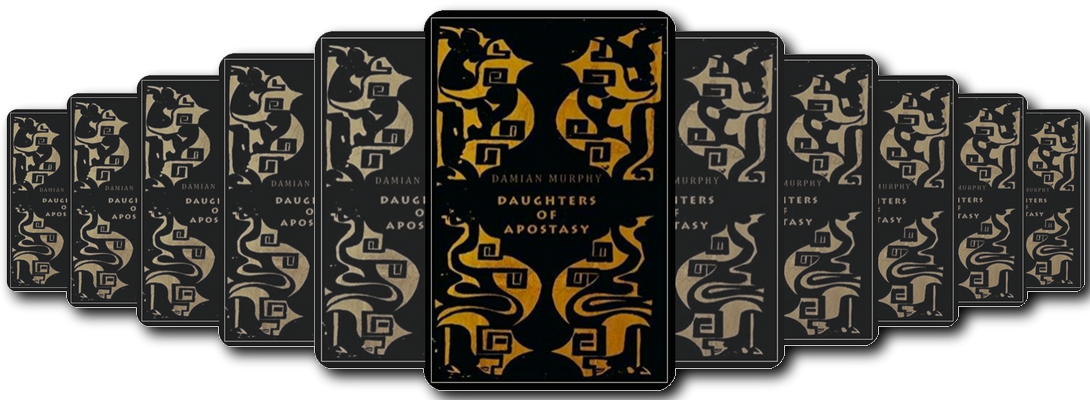
FIVE MINUTES WITH ​DAMIAN MURPHY AND HIS DAUGHTERS OF APOSTASY

4/10/2017
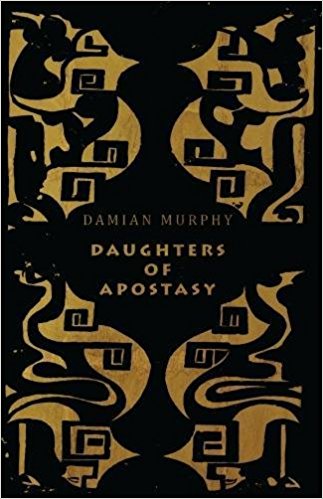
DAUGHTERS OF APOSTASY
​Damian Murphy is the author of The Academy Outside of Ingolstadt, Seduction of the Golden Pheasant, and The Exaltation of the Minotaur, among other collections and novellas. His work has been published on the Mount Abraxas, Les Éditions de L’Oubli, and L’Homme Récent imprints of Ex Occidente Press, in Bucharest, and by Zagava Books, in Dusseldorf. His latest collection, published by Snuggly Books in September of 2017, and the first to be offered in a paperback edition, is entitled Daughters of Apostasy. He was born and lives in Seattle, Washington.
 
 
Could you tell the readers a little bit about yourself?
 
I think the main thing to know is that I’ve been a practicing occultist for my entire adult life (about 25 years now). This absolutely informs every other thing I do. I’ve been told that my writing is “drenched in the occult”. A writer is supposed to write what they know, and I often feel that I know little else.
 
Other than that, I’ve been obsessed with literature, art, and cinema for as long as I can remember. I have a persistent fascination with obscurity. I often stay awake into the unacceptable hours of the night playing very old electronic games on emulators that run on a PC. 
 
 
How would you describe your writing style?
 
My writing explores aspects of the occult that, to the best of my knowledge, have rarely been explored or acknowledged in fiction (or in non-fiction, for that matter). I find myself wondering what it would be like if, say, Anaïs Nin or Andre Gide decided to write a short story or novella that’s thoroughly suffused in occult ideas and practices. This is most often where I start. Where it goes from there is another matter entirely.
 
Many of my stories are concerned with the motifs of deception, trespass, and transgression. My characters are always sneaking around, doing things they’re not really supposed to be doing, crossing boundaries, eavesdropping, or committing minor acts of theft and vandalism. There’s a tendency for them to be rewarded for their illicit efforts, though the rewards themselves may be somewhat dubious. There’s a decadent streak that runs through almost everything I write as well, and an inclination toward fetish and obsession.
 
Jean Cocteau once said that style is a matter of taking something complicated and making it simple. It’s essential to me, first and foremost, that the reader finds my stories to be easy and enjoyable, despite the fact that some very complex ideas run through them. 
 
Somebody once described my prose as ‘delicious’. This was a huge compliment to me, as that’s exactly the effect I’m aiming for.
 
 
What piece of your own work are you most proud of?
 
I go back and forth on which piece is my favorite. Currently it’s a toss-up between two pieces: ‘The Ivory Sovereign’ and ‘Seduction of the Golden Pheasant’. The former (published in Exaltation of the Minotaur) is based on the dark rides, or ride-through haunted houses, that proliferated (kind of) in the US and parts of Europe between the 1960s and 1980s. The best of these dark rides were a little odd, to say the least. I’m far more interested in rides like Flight to Mars, which spent time on Coney Island and in Seattle’s Fun Forest, among other places, than I am in Disneyland’s Haunted Mansion. In ‘The Ivory Sovereign’, an entirely different type of ride is imagined, an attraction found only in small towns across Europe and which are known as ‘Mystery Houses’. The protagonist of the story winds up wandering through the bowels of a Mystery House which may or may not have fallen into a state of malfunction.
 
‘Seduction of the Golden Pheasant’ is about a young woman that becomes obsessed with the images in her wallpaper. Charlotte Perkins Gilman’s ‘The Yellow Wallpaper’ was the starting point for that story, though it ended up going to a very different place: a stolen medallion, a masked party at a lavish chateau, an obscure (to the West) form of Taoist alchemy known as Mao Shan. 
 
 
To many writers, the characters they write become like children, who is your favourite child, and who is your least  favourite to write for and why?
 
This is definitely the case with me. So far, my favorite character is Theodora from ‘The Scourge and the Sanctuary’ (one of the stories included in Daughters of Apostasy). Theodora performs ritual operations on keys that she finds lying in the street, which she then slips beneath locked doors in order to gain access to what’s behind them. She uses Finnigan’s Wake for bibliomancy, sends periodic reports to a distant friend in which her arcane activities are described in detail, with certain omissions, and is an unrepentant, if very petty, thief. She has a poetic and slightly affected manner of speaking and thinking which I’ve adapted, with modifications, to many other stories. She serves as the prototype for several of my later characters.
 
 
For those who haven’t read any of your books, which of your  books do you think best represents your work and why?
 
Daughters of Apostasy is a great place to start. It’s the first book of my work published in an affordable, paperback format, and collects four early stories along with a new novella, ‘The Music of Exile’. As such, it encompasses a fairly wide range of styles.
 
 
What are the books and films that helped to define you as an author?
 
I tend to be attracted to works of art that emanate a sense of mystery so compelling that I find myself thinking that I would kill to know more. There’s an art to revealing just enough—not too little, not too much—to compel a reader or viewer to explore a work at a greater depth, and to try to find patterns and connections in order to further understand something that remains partially concealed.
 
Authors like Alain Robbe-Grillet, Bruno Schulz, Angela Carter, and Robert Aickman have long exerted that type of fascination on me as a reader. Gene Wolfe’s New Sun series has had a tremendous influence on the way in which I go about constructing a narrative (though some of his work has also led me to avoid writing stories that resemble elaborate crossword puzzles). Jean Cocteau and Marguerite Duras for their approach to style. Marcel Schwob’s Book of Monelle and The University of Chicago’s recent publication of The Nightwatches of Bonaventura both came as a revelations to me.
 
What I take from film is largely a matter of style and atmosphere. Bergman’s Hour of the Wolf, Robert Altman’s Three Women, Cocteau’s Orpheus—the motifs and atmospheres presented in these films are so irresistible that I’m always trying to find new ways to introduce them into my writing.
 
 
What new and upcoming authors do you think we should take notice off?
 
Some of the best fiction that I’ve read throughout the course of my lifetime has been written in the last 20 years by little-known authors. To give only a few examples: Quentin S. Crisp, Adam Cantwell, Colin Insole, Justin Isis, Brendan Connell, George Berguno, John Howard—this is anything but an exhaustive list. There’s a man who goes by the name M Kitchell that writes insanely intriguing, and often very fractured, narratives.
 
 
How important are names to you in your books? Do you choose the names based on liking the way it sounds or the meaning?
 
I tend to switch things up from story to story. Sometimes I’ll choose a name that reveals something about the character or their situation that isn’t revealed elsewhere, while in other instances I’ll choose a name that just feels right for the character. In more than one instance, the name of a character has been used to provide a major clue to part of the subtext of the story. I recently named a character after the code-name for a gaming console from the late 1970s, with good reason.
 
 
Writing, is not a static process, how have you developed as a writer over the years?
 
There’s a feedback loop between reading and writing that can be exploited in order to allow a deeper approach to both. I’ll often return to my sources of inspiration after having written something based in them only to find that there’s even more there than I had previously thought. The act of exploring another author through writing opens previously unseen doors within that author’s work. Some books are like never-ending wells—you can keep going deeper and deeper into them without ever seeming to reach an end.
 
 
Can you tell us about your last book, and can you tell us about what you are working on next?
 
The last major piece I finished is ‘The Star of Gnosia’, which will be included in a book of the same name, along with some more early pieces, published by Snuggly Books in 2018. The story concerns three siblings in their teenage years, two male, one female, who are left alone for two weeks in their expansive Spanish manor. They decide amongst themselves to attempt to reach a state of Gnostic enlightenment, each according to their own techniques, within that brief space of time.
 
Currently I’m working on a piece provisionally entitled ‘A Spy in the Panopticon’, the motifs of which include, as it states within the text itself, “an illicit broadcast, a receiving station assailed by high winds, a mechanized eye, a lethal signal, an invisible city and a geomantic conspiracy.”
 
 
Do you have a favorite line or passage from your work, and would you like to share it with us?
 
I will give a single sentence, from ‘The Hour of the Minotaur’, first published in The Gift of the Kos’mos Cometh! anthology, and which will be included in the Snuggly Books release of The Star of Gnosia in 2018:
“To be fair, I must concede that I am not a reasonable man.”

click here to purchase a copy
Picture
An act of trespass, the subtle topology of an opulent hotel, a lengthy composition involving an exiled abbess, a letter mailed to an unknown recipient, a border station concealed by inexplicable winds, an antiquated electronic game, a rite of passage modulated by a metronome, a Gnostic heresy, a ruined church, an employee engaged in illicit acts of passion: by these and several other devices do the daughters of apostasy seek to irritate the vessels of the earth. Strange wine may be distilled thereby, and thus might the obsessive aspirant perceive the tenets of a hidden doctrine.

In these five stories and novellas, the intrigues and stratagems of interlopers, initiates, poets, and bibliophiles are revealed in all their illicit splendor. By way of complex and labyrinthine routes do they come to obtain impossible relics not known even among the kings of the earth.

Forward
    Picture
    Picture

    RSS Feed

    Archives

    May 2023
    April 2023
    March 2023
    February 2023
    January 2023
    December 2022
    November 2022
    October 2022
    September 2022
    August 2022
    July 2022
    June 2022
    May 2022
    April 2022
    March 2022
    February 2022
    January 2022
    December 2021
    November 2021
    October 2021
    September 2021
    August 2021
    July 2021
    June 2021
    May 2021
    April 2021
    March 2021
    February 2021
    January 2021
    December 2020
    November 2020
    October 2020
    September 2020
    August 2020
    July 2020
    June 2020
    May 2020
    April 2020
    March 2020
    February 2020
    January 2020
    December 2019
    November 2019
    October 2019
    September 2019
    August 2019
    July 2019
    June 2019
    May 2019
    April 2019
    March 2019
    February 2019
    January 2019
    December 2018
    November 2018
    October 2018
    September 2018
    August 2018
    July 2018
    June 2018
    May 2018
    April 2018
    March 2018
    February 2018
    January 2018
    December 2017
    November 2017
    October 2017
    September 2017
    June 2017
    April 2017
    March 2017
    February 2017
    January 2017
    December 2016
    November 2016
    October 2016
    September 2016
    August 2016
    June 2016
    May 2016
    April 2016
    March 2016
    February 2016
    January 2016
    December 2015
    November 2015
    September 2015
    August 2015
    July 2015
    June 2015
    May 2015
    April 2015
    March 2015
    February 2015
    January 2015
    December 2014
    November 2014
    October 2014
    September 2014
    August 2014
    July 2014
    June 2014
    May 2014
    April 2014
    March 2014
    February 2014
    January 2014
    December 2013
    November 2013
    October 2013
    September 2013
    August 2013
    July 2013
    June 2013
    May 2013
    April 2013
    March 2013
    June 2012

https://l.facebook.com/l.php?u=https%3A%2F%2Fmybook.to%2Fdarkandlonelywater%3Ffbclid%3DIwAR1f9y1sr9kcIJyMhYqcFxqB6Cli4rZgfK51zja2Jaj6t62LFlKq-KzWKM8&h=AT0xU_MRoj0eOPAHuX5qasqYqb7vOj4TCfqarfJ7LCaFMS2AhU5E4FVfbtBAIg_dd5L96daFa00eim8KbVHfZe9KXoh-Y7wUeoWNYAEyzzSQ7gY32KxxcOkQdfU2xtPirmNbE33ocPAvPSJJcKcTrQ7j-hg
Picture