

AUTHOR INTERVIEW : GREIG BECK
11/3/2014
 GREIG BECK GREIG BECK Geig Beck is an Australian author residing in Sydney. He spent his youth surfing at Bondi Beach before entering a career in Information technology which took him around the world. After completing an MBA, he was appointed both an Australasian director of a multinational software company, and tasked with setting up the USA arm of the organisation. Today, he is still involved in IT, but spend most of his time writing... with plenty left over for surfing. Greig is the author of the rather brilliant series of novels featuring Alex Hunter and his squad of elite soldiers. The début novel in this series Beneath The Dark Ice saw Alex battling an ancient enemy that had been long buried under the Antarctic ice. It is a pure blockbuster roller-coaster of a novel that ranks as one of the most thrilling read of all time. More information about Greig and his works can be found at www.greigbeck.com, 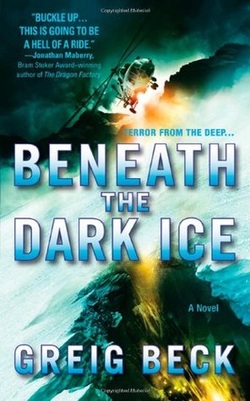 BENEATH THE DARK ICE BENEATH THE DARK ICE Hello Greig, thank you for agreeing to take part in this interview. Could you give the readers a little bit of background information about yourself? I grew up across the road from Bondi Beach in Sydney, Australia. My earliest memories were of golden sand, blue waves, sandy feet and sunburned shoulders. In my teens it was surfboard riding and endless beach days when I should have been sitting in class (at least pretending to study). Between the sunshine and waves, there were the science fiction stories - great tales by Edger Rice Burroughs, H.G.Wells and Pierre Boulle. Writers who could create whole new worlds and beings that were wondrous and exciting. The 1980s were also the halcyon days of the horror writer - King, Koontz, Herbert and above them all, stood my favourite, Graham Masterton. These were my influencers, they shape my writing even now; and they're still my favourites today. With the start of the 90s, it meant it was time to pursue a formal career. I studied computer science and then immersed myself in the financial software industry. I embarked on an MBA, and then ended up working in most of the financial capitals of the world, with it all culminating in company directorships. Today, I spend my days between software consulting, writing, travelling and enjoying time with my wife, son, and Jess, an enormous black German Shepherd. You have said that one of your aspirations is to write forever. Are you concerned that you may only have certain number of good novels inside of you? And would you stop writing if you felt the quality was dropping? I think the readers will be my weathervane there. So far, my readership globally is growing, especially across the USA, and as far as ideas go, well, there are too many stories and not enough time. The ideas are there, but for quality you need to stay fresh and feel energized about what you are writing. You need to be interested in your stories and characters, so your readers will feel the same way. Sometimes, you need a holiday from a certain character or book line and that’s why some writers, like myself, will chase another story thread or set of characters for a while. With me it was the Valkeryn series, and then Matt Kearns. While writing these other lines, new ideas arise, and next thing, you can’t wait to get back onto your main works. You’ve been writing for around seventeen years, but it was only in 2008, that you first decided to commit a story to paper. What happened in 2008 that made you decide to make this commitment? Might be a mix up in the dates here as I’m not sure where the 17 years came from. Before I was as an author, I was full time in a sales and marketing role as a director for a software company. One of my duties was to craft marketing material for sales letters, brochures, and presentations – persuasive, attractive writing, but of a business style for technology. Then, in early 2008, there was the germ of an idea rattling around in my head. I started to put it down on paper, and found the process enjoyable and relaxing. Before I knew it, I had 70,000 words in a manuscript called Beneath the Dark Ice (first called: Wake the Leviathan). I then sent it off to Pan Macmillan – I’m sure it was a complete mess, but in amongst all the tangled prose and mountains of errors someone must have seen the same thrills that I felt when writing it. Beneath the Dark Ice turned out to be Pan’s biggest selling new author book in 2009, and was soon contracted to be translated into many languages. The landscape has changed over the years, with authors such as Masterton and Herbert falling out of favour. Why do you think these once giants of the genre have slipped from the public’s eye? Perhaps only from the main stream. We have all compressed into genre silos now, and there are so many more of us than there was even only a few years ago. Masterton still has an enormous following, and he has recently been able to get access to his back catalogue to release them as eBooks. I had the good fortune to interview him, and he told me he has never been busier, and the amount of works he was still turning out was impressive. Perhaps he just needs another Manitou to blast back onto the front of our reading lists again. (I’m afraid we won’t hear from James Herbert again; he passed away in March 2013). What aspects of the writing process do you find the hardest, and which do you find to be the easiest? Without doubt, the most fun and also the easiest part of writing is the creation phase – you just get to tell the story – forget errors, grammar, repetitions, continuity, that all doesn’t matter. You just write what comes into your head. The hardest part of writing is looking through that first report back from your editor – usually containing the structural advice. Hey, remember back at school, when your assignments came back covered in red ink, or perhaps with pencil in the margin that says ‘can do better’? As well, there is the monumental amount of suggested work that comes with it… and notice how I said “work” here, because that’s what it is… work! That, to me, is the hard part of writing. How much effort and time do you put into getting the opening hook for your book right? Quite a bit. An epilogue is my fuse – this is where I light it up and launch the story. It is my motivator, and I can spend days just on a few paragraphs. I’ll also continue to return to it, fussing over it, clipping and enhancing it until I get it just right. You like to use the “cascading chapter structure” in your novels, can expand on what you mean by this? Where did you get the idea for this? It’s something I hadn’t consciously noticed this before, however thinking about it it’s a great idea. I write what I call terror thrillers – they’re a mix of horror, technothriller and action adventure all rolled into one. Reading them should be fun, exhilarating, wondrous and also scary. The opening chapters will be of a normal size (is there such a thing?), but as the story progresses, like a skateboarder on a steep hill, I pick up speed, making the chapters shorter and faster as the tension and pace starts to really accelerate. It’s like being in a race and as you begin to finish with the line in sight, you are breathing hard, sucking in breaths, faster and faster. 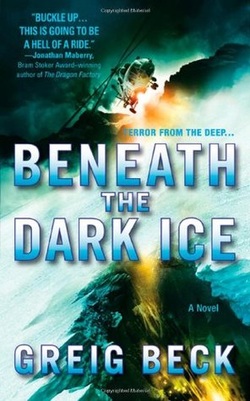 BENEATH THE DARK ICE BENEATH THE DARK ICE Your first novel Beneath The Dark Ice is a glorious mix of horror, technothriller and action adventure. I remember devouring the book on a train journey from London to Edinburgh. The book is full of great ideas, and steeped in myths and mythology. How much research did you have to do for the novel? Beneath the Dark Ice, and well as all my other novels, requires a lot of research. Of course I bend it a little sometimes and also will create something if nothing exists in the real world (that’s what we do in fiction!). But for the most part, I try and stick to what exists, or what is available historically. Even all of Alex Hunter’s abilities – the strength, the mental capabilities, enhanced senses, as well as the rages, have all been documented as occurring in individuals, many times. The internet is a great tool for research, and I also have quite a prodigious library, as I love the legends and mythology of the Greeks, Norse, Romans and other religious mythos that have such a rich matrix of tragedy, brutality, love and intrigue. But be warned, research is addictive, and can take you down all sorts of rabbit-holes – suddenly hours are gone and you’re still reading an article on marine life at the bottom of an ocean, when you should be researching life form traces in meteorites! Further adventures of Alex have seen him battle across desserts in the Middle East and the steamy jungles of South America. How do you decide on where to set the novels? Usually I pick places with secrets – they can be dense jungles, dark ocean depths, desolate deserts, or subterranean worlds (one of my favourites). The underlying myth itself will usually lead me to decide where the overall setting is going to be, and then I will home in on a single exact location as I design the story. Once that’s done then you take it down to further levels – what do the streets look like, the buildings, what plants are native to the location, animals, insects, etc, etc. What was the last great book you read, and what was the last book that disappointed you? The last great book I read was a short and sharp one of only about 100 pages by D.T.Neal – called RELICT. Here was my Amazon review: Like the legend of the Kraken? This is for you – so horrifying, and yet so plausible. As an author who has written a book about a giant sea creature, I take my hat off to Neal - this guy takes us all to school in showing what it would be like to be trapped somewhere remote by something with a monstrous size, appetite and intelligence. Great work… and now to see what else he's got! Now, for the one that recently disappointed me – I don’t like to criticise other books/authors, so I’ll just talk in generalities – this book was a huge seller in sci-fi recently in the dystopian future style. The way the author puts words together reminded of how Stephen King could make the most mundane things interesting. But then as I read on, I found my mind wandering. There just wasn’t enough happening. I put the book down, and then couldn’t pick it back up. I had too many books on my to-read list, and these days, I, like many people, will not stick with something that doesn’t have an immediate or continuing payoff. These novels share a similar theme to many of Graham Masterton’s best work, whereby you both take an old legend, or myth, and incorporate into a gripping and exciting story. Do you have a checklist of myths and legends that you would like to use? There are so many to choose from, but I’ll usually have a trigger event that sets me on a course of action. I might read about further evidence of Bigfoot, or they’ve just uncovered a cave that was considered the entrance to Hades in ancient Crete, or a forgotten temple will be found in the jungle somewhere. We humans love mystery. We love the unknown, and as science continually pushes back the magic, we still yearn for the unexpected, strange and exciting. Many of us want to believe there is something in the dark, hiding in the deepest trenches of the ocean, or in some lost kingdom in the Amazon. What would it be like if the Kraken was real, or Bigfoot, or if the Gorgons of ancient Greece really did exist? How would we deal with them? I’d like to find out, and so would my readers. 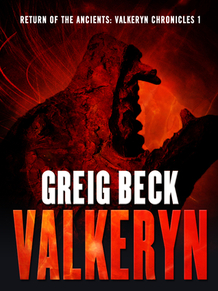 VALKERYN VALKERYN Is the Valkeryn series of books the YA series that you promised your son you would write? And if so what does he think of them. Will we ever get the chance to return to the world of Valkeryn? In 2009 my son was ten years old and came to me with an idea – ‘Dad’ he said. ‘Dogs vs Cats. But the dogs are like… people,’ I told him I’d do it, and put it on my list. It took me a few years to get around to it, and then again to finally finish the second concluding instalment, but he loved them. You might notice that the story in Valkeryn 2 – The Dark Lands, is a little harder edged, to suit his age now – 16! And will we ever get the chance to return to the world of Valkeryn? I have been bombarded with this question. My readers asking: what happens to Arn and Eilif, what happens to our world, and can I take the story forward from when Big Fen and the Guardians walk from the fire (this whole story was based on Norse Mythology around Ragnarok and the wolf god, Fenrir). I’d love to do another addition. But that will depend on workload and time, which is in short supply these days. As I’ve mentioned before: too many stories, too little time! 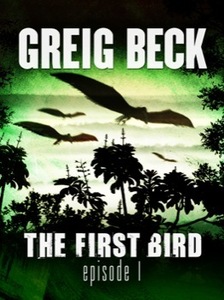 THE FIRST BIRD THE FIRST BIRD Your latest series of books has just been released as an omnibus. Can you tell us about the genesis of First Bird? It was a Danish book cover, called: The Dinosaur Feather, first published in 2008 by Sissel-Jo Gazan. It turned out to be a crime thriller and little about the underlying prehistoric creatures, but I loved the simple monochrome cover design of a soaring bird – was it an archaeopteryx? I always thought that if I had written it, it would have been, and we would have gone looking for it. A few years later, I started on The First Bird after I read an article about an explosion of bed bugs in backpackers dormitories that were becoming resistant to normal pesticides – the two ideas collided together – a horrifying infestation of an ancient parasite… and an ancient creature found in the deepest heart of the Amazon Jungle – a primordial parasite on a primordial animal – perfect! The book features the first starring role for Matt Kerns, who had a supporting role in both Beneath The Dark Ice and Black Mountain, what was it about Matt that made you promote him to a starring role? As a writer, some characters you just like – I have a few recurring ones now that play roles I enjoy, and have an enormous amount of material for. I like that Matt is everything that Alex Hunter isn’t. His expertise is in ancient languages, so it gives him scope for a lot of exploration of the underlying myths I’m employing. Matt is smart, only slightly athletic, the young intellectual, and prone to getting things wrong. Trouble always seems to find him. I’m working on another story for him now – and its perfect – can’t say too much as I’ve only just began, but this one pays homage to one of the great horror writers of the past hundred years – many readers ‘love’ his ‘craft’! The book’s central theme of an ancient biological threat coming back to destroy mankind is a very real threat to the modern world. Do you think that man’s quest for knowledge will be the cause for our ultimate downfall? Never! We’ll get through; we always do. Mankind has a wonderful ability to adapt, to adjust and work our way through things. Aside from the doomsday cults, and some nihilistic religions, we all tend to work towards a goal of betterment, with fantastic science and technology skills at our disposal. As you can see, I’m an eternal optimist! The book has been described as “Jurassic Park meets Contagion” that’s some tag line to live up to. How much attention do you give these sort of things? Personally, not much… but others do. Mainly because some comparisons can invite an attack. Beneath the Dark Ice was compared to Jules Verne’s Journey to the Centre of the Earth by one professional reviewer, and when I quoted this in an interview a few years back, I found myself under attack for daring to compare myself to one of the greats (I swear, I didn’t!) So, comparisons are great, and we enjoy them, and they are useful to inform the reading public what they should expect inside the pages, and also from a marketing perspective. But my advice is – remember your humility! Are there any reviews of your work, positive or negative that have stayed with you? Over time you get a lot of reviews – from the professional, to the average reader, to the troll. The ones that stay with you are the ones where people take the time to write to you personally and tell you what the book has meant to them, how it affected them, or those around them. One I loved the most was from a school in South Australia who had just started using reading tablets in English class (boys 12-13yrs old). The first book the boys really enjoyed was Valkeryn 1 – Return of the Ancients. The teacher said they hung on every word, and turned in some fantastic and insightful assignments – she couldn’t believe how interested it got them all in reading. That feedback meant a lot to me – especially as I had a son only slightly older. And now to the other end of the spectrum – there was a review for Beneath the Dark Ice that came out of India. The chap was another author, who delivered a page-long spray about my plot, writing style, characters, and even took offence to me being Australian and enjoying surfing! The icing on the review’s cake was when he tried to get his readers to write to Pan Macmillan to demand they stop publishing me (I must have run over his grandmother in a former life!) Paradoxically, my books now sell quite well in India and I have a lot of Indian fans, so I thank him for the great PR work. 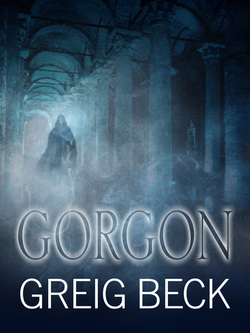 GORGON GORGON Can you tell us about what you are working on next? As usual, I work on several things at the same time. I am just finalising the editing work for the next Alex Hunter story, called GORGON (blurb below). I’ll also complete some minor editing on a short story I have finished called The Fossil (blurb below). It’s a military/monsters horror tale that was a lot of fun to write (but be warned, it’s a little brutal, as we were encouraged to really let it off the leash for this one). I’ve also begun my next Matt Kearns story, but it’s way too early to even give clues at this time. GORGON – coming soon. Alex Hunter has been found – sullen, alone, leaving a path of destruction as he wanders across America. Only the foolish get in the way of the drifter wandering the streets late at night. Across the world, something has been released by a treasure hunter in a hidden chamber of the Basilica Cisterns in Istanbul. Something hidden there by Emperor Constantine himself, and deemed by him too horrifying and dangerous to ever be set free. It now stalks the land, leaving its victims turned to stone, and is headed on a collision course with a NATO base. The Americans can't let it get there, but can't be seen to intervene. There is only one option – send in the HAWCs. But Alex and the HAWCs are not the only ones seeking out the strange being – Uli Borshov, Borshov the Beast, who has a score to settle with the Arcadian moves to intercept him, setting up a deadly collision of epic proportions where only one can survive. Join Alex Hunter as he learns to trust his former commander and colleagues again as the HAWCs challenge an age-old being straight from myth and legend. The Fossil – coming soon. Neanders Valley, Germany Klaus and Doris love exploring caves, love searching for something new and unique that the Earth’s geology can create when it has darkness, solitude, and countless eons on its side. Today, they have found the unexpected – an ancient skeleton, a fossil, embedded in the wall of a cave. Buried with it is an artefact – something unearthly in its design, something not yet dead. The two explorers find their world turned upside down as something hunts them, something determined to retrieve the artefact and destroy all trace of its existence – including anyone who has come into contact with it. Detective Ed Heisen is hell bent on finding out who or what is incinerating people, turning them to little more than mineral remnants of what they once were. But as he draws closer to the answers he seeks, he has to deal with a further complication – a team of unidentified Special Forces operatives who seem to be one step ahead of him all the time, and whose determination to find their prey is just as fierce as the things they seek. In this three-way hunt, the race is on to find the answers, to discover who or what is now stalking our world before Klaus and Doris suffer the same fate as all the others. What's the one question you wish you would get asked but never do? “Mr Beck, Steven Spielberg calling. Please, please can we make one of your books into a movie?” Ahh, it’s what all authors wish for. I’ve completed the movie (spec) script for Beneath the Dark Ice and it’s kicking around in Hollywood, so who knows… maybe one day. Thank you for taking the time to answer these questions Greig, it has been a real honour. Dear GingerNuts, the pleasure was all mine, and thank you for creating an interesting set of questions. By the way, love your blog. Thank you and regards, Greig Beck For more great interviews and reviews follow the links below HORROR AUTHOR INTERVIEWSHORROR NOVEL REVIEWSFILE UNDER HORROR AUTHOR INTERVIEWComments are closed.
|


Archives
May 2023
|
 RSS Feed

|

|