

AUTHOR INTERVIEW : MARC PASTOR
10/2/2014
 MARC PASTOR'S BARCELONA SHADOWS MARC PASTOR'S BARCELONA SHADOWS Hello folks, it's a great pleasure and an honour to present to you an interview with Marc Pastor. Marc's latest novel Barcelona Shadows, published by Pushkin Press has been receiving rave reviews since it's publication. Described by The Independent as "A horrific yet riveting piece of Catalan Gothic that is as gruesome as it is gripping" Barcelona Shadows is a triumph of a novel Marc Pastor studied criminology and crime policy, and works as a crime-scene investigator in Barcelona. He is the author of four novels: Montecristo, Barcelona Shadows, awarded the Crims de Tinta prize in 2008, L'any de la plaga and Bioko. Richly atmospheric, his work spans a range of genres, from Sci Fi to Gothic via the adventure novel. Barcelona Shadows is first book published in English. 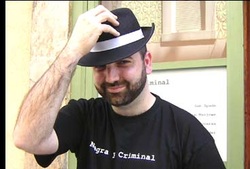 BARCELONA SHADOWS Author Marc Pastor BARCELONA SHADOWS Author Marc Pastor Could you give the readers a little bit of background information about yourself? Well, I was born in 1977, the year when Star Wars was released, so it HAD to influence me someway. I’m a 36 years old boy (boy, sure? Man, maybe, but it’s scary to think about me as an adult) who likes sci-fi and horror movies/books/comics, role-playing games, rock’n roll, miniature painting and running. I’m close to a hipster, but I’m not a damned hipster. Although I have a beard. Although I like Arcade Fire. But I insist: I’m not a hipster. Maybe a nerdster. I don’t know. I studied Criminology and I’m working at Crime Scene Department of Mossos d’Esquadra, the Catalonia Police. And sometimes, if there’s a planet alignment and I’ve got nothing to do, I write genre novels. You started reading Stephen King at an early age, what drew you to him in particular? My parents were subscribed to Círculo de Lectores, a sort of reading club. They bought one or two books each month, most of them bestsellers. So one day I saw the cover of The Stand (a bunch of masked people dancing among flames) and I told them: “I wanna read this”. So my parents thought it was a good idea to buy a book about the whole world dying of a terrible disease to a preteen child. And they were right. Almost. I had a lot of nightmares. Nightmares I STILL remember. So I wanted to read Misery. I was discovering that being scared (sometimes) can be funny. Where there any other favourite authors during this time? Lots of them. From Dean Koontz to Jules Verne. And I read a lot from Frederick Forsythe. I couldn’t believe I was reading a plot about Ajatollah Homeini and he was on TV at the same time! My mother had a few books by Robin Cook, but they were always the same, like a House chapter. I read Arthur Conan Doyle’s Sherlock Holmes, some Agatha Christie mystery stories (I prefer Miss Marple to Hercule Poirot) and Mary Higgins Clark. And I read them everywhere, all the time. How has your taste changed over the years? I enjoy genre novels, but I read everything. Maybe I can learn some clues about writing while reading a book I would never write. It’s a merge of enjoying and learning, all the time. I don’t read too much horror, ‘cause most of the horror books get me bored. I have a lot of friends who write crime fiction, so maybe it’s the genre I read more, but not the one I enjoy best. A couple of years ago I read The Odyssey, and I felt in love with it. But I’ve never read the Joyce’s Ulysses. What was the last great book you read, and what was the last book that disappointed you? I’m disappointed almost every day. If I don’t like what I’m reading, I don’t finish that book. I ain’t got enough time to spend reading something that doesn’t interest me. And I prefer not to say titles. I could say it’s because I’m being polite. Actually, it’s because I don’t remember them. There are two great books I’ve enjoyed a lot recently. Last summer I read Lauren Beukes’ The Shining Girls, and it was like WOW, psycho killers and time travel. And a very nice writing!!! I loved it! After that, I met Lauren and she’s so charming and brilliant. And I like her creepy sense of humour. The other one is David Peace’s Tokyo: Year Zero. Some people tell me that my style reminds them of David Peace, so I wanted to read him. I wouldn’t say David Peace and I have the same style, but I think we share the taste for the weird environments, sick people and rotten bloody plots. Tokyo: Year Zero drove me crazy. And I think that was his purpose, so great job David.  peus de porc peus de porc What’s your favourite food? Mmm… There’s a food for every moment… I love (L-O-V-E) “peus de porc”. Pig hands. Stewed, roasted, in carpaccio, grilled… And my weakness is sushi. I could eat sushi every day, all the time. ‘Til I die of a mercury indigestion. Oh, Japanese food! You work as a CSI, so you must have seen some terrible things. How do you cope with this? It’s my job, so I enjoy working with things that most of people are not used to seeing. There’s a wall between me and the victims. A wall of PROFESSIONALISM. I’m very empathetic and I couldn’t work if I hadn’t built this world years ago. And then there is the humour. The humour is basic for living among homicides, rapes and robberies. The CSI main characters on TV don’t have any sense of humour. They are always so serious and very affected. How can they sleep? As a CSI, what is the biggest misconception about your job? Is the ten minute DNA test isn’t it? Yes. The ten minute DNA test is a very extended belief. But much worse is when a police detective (who is supposed to know what you can do and what you cannot) comes and asks you to expand the frame of a security filmation in order to see the license plate in the reflection of a sunglasses of the man who walks down a street in a blurred black and white image. We may not be as tech-lovers as CSI, but definitely we are NOT Blade Runners. Who would be on the soundtrack to your life story? There are a couple of thousands of songs that I love, so… First of all, the one on the top, you’ll find The Eels. Mark Oliver Everett’s band makes the music I connect with. Their (actually his) music touches me very deeply. And then there’s Bruce Springsteen, and Elvis Presley, Buddy Holly, Oasis (hell yes, I spent my teenage years Brit-popping), Roxette (I’ve been a kid, too), Alanis Morrisette, Sheryl Crow, Counting Crows… and more recently, Band of Horses, The Black Keys or Frightened Rabbit. And there’s a Catalan rock band called Els Pets. You should listen to them. They are wonderful. How would you describe your writing style? Cinematographic. And surrounding. When I write, I imagine myself staying in the center of the scene, watching, listening, smelling… and describing what’s happening. Are there any reviews of your work, positive or negative that have stayed with you? Yes. I’m lucky because almost all of the reviews are very positive. But the first one I ever read was not that good. The first review I got on the internet was so destructive, and I thought: ok, it’s gonna be hard. Actually, that review was attacking the people who created the prize I won, so it wasn’t literary, it was only destructive without solid arguments. If the review has arguments, I listen to them and I learn. I don’t like writers who say: you didn’t like it because you didn’t understand it. And I know a lot of writers who say this, unfortunately. Good reviews make me feel glad, yes, but they scare me too. This reviewer will be very disappointed with my next book! I’m not gonna be that good next time, bla bla bla bla What’s the most important lesson you have learned about writing? Everybody needs to be loved. Writers show their soul to get a piece of that love. What aspects of writing to do you find the most difficult? Everything. Maybe the most difficult is finding time to write, but I think you weren’t asking about this. The hardest part is to start the engine every morning. I’m a diesel: cold, slowly at the beginning. How do you think you’ve evolved creatively? I’m less florid. I don’t spend much time describing because you can switch on the reader’ imagination with a couple of words. Of course, you gotta find these words. And I like complex structures. I was very lineal, when I began, and I feel more comfortable now creating quantum narratives (whatever it means). 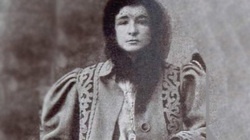 Enriqueta Martí Enriqueta Martí Who is your favourite character from your book and why? Do I have to choose? It’s hard! I think Moisès Corvo is a wonderfully dark. I had to write another book with him as the main character, because I wanted to meet Moisès again!!! The madness of Doctor Von Baumgartem makes me laugh, or the way the magician Balshoi Makarov speaks is very charming. How about your least favourite character? What makes them less appealing to you? I love all my kids! Even if they are disgusting chiefs of police who try to stop the investigation for political reasons. Well, I don’t love him, that’s true. Actually, it’s more like hate. Barcelona Shadows seems to be your breakthrough work, what is it about this book that seems to have captured the public’s imagination? I think it’s the story itself. Enriqueta’s case is fascinating. I don’t know anybody who listened to the story and hasn’t fallen in love with her. Well, uh, maybe not in love, but you understand me. She was a female serial killer in a dark, sort of Victorian Barcelona. She was evil. And the victims were children. It’s got all the ingredients to wake up your curiosity. How did you first come across thE story, and what about it called to you to write about it? I was listening to a radio show in 2004 when I first heard to Enriqueta’s story. I found it fascinating. I had to research documentation about the story. But not for writing a book, just for me. Just for curiosity. The book came later, when I saw it was an incredible and very literary story. When constructing the narrative, how did you go about separating the myth and the legend from the reality of it? It was hard at the beginning, because the papers didn’t tear apart the rumour of the facts. I was more interested on the myth created after Enriqueta’s death than trying to write her biography. I wanted to explain how a murderer become can a monster to the eyes of a city. There are a lot of real characters in the book. I included them if it was proved they were related to Enriqueta’s crimes. But there are some characters of my invention because I cannot write a real name without proof. I cannot say “mister X was a customer of Enriqueta” because mister X has X-grandchildren who could say: “My grandpa didn’t do that”. The story is narrated by Death, why did you choose to have him as the narrator? Death is the least common denominator in the story. All the characters share their life with Death. From Moisès to Enriqueta, from the body snatchers to Blackmouth, they are in touch with Death eeeeevery night. So Death can talk about them because Death knows the story better than anyone. One of the main protagonists Corvo is described no longer a defender of good folk as toughened by his experiences as he no longer believes in good folk and as an old dog, grim-faced and filled with vices. The world weary and brow beaten cop is motif that is loved by both writers and fans alike. Why do you think this is? It started as a cliché. He was supposed to be that kind of antihero, with a fast verb and easy shooting. But soon he became something else. I couldn’t control him. Every time I was writing a scene where he appeared, he himself decided what to do and what to say. He started as a cop, and he metamorphosed to a cowboy. A lone ranger. Hard outside, hurt in his soul. If he makes bad acts, is he still a good man? The book has been translated into English, I’ve often wondered about this process. How does the translated version compare to the original in terms of rhythm and voice? Does the translation ever take over from the original? I haven’t read the whole translation. Just a few pages to see that Mara’s done a great job. She’s a very good translator and we were in touch by mail very often while she was translating, and met a couple of times. At least I can read English, and I see she’s been very respectful with the original. Imagine when it was in German, for example: I couldn’t understand anything! I wanna send a kiss to my German translator, Kirsten, by the way. Actually, I wanna send a kiss and all my gratitude to all my translators. They know my book better than I do. How would you classify the novel, is crime or is it horror? Or do you not bother about genre labels? I always liked to think about it as a “Police western horror story”. “Western” in the way Sergio Leone filmed. I don’t believe in frontiers of genres. So what’s next for you? Now I’m writing something completely different. About an eighteen year-old girl who falls in love in the Pacific Ocean. Lovely, don’t you think? I’m afraid it’s gonna be a nightmare for her. And a dark dark story. Not so completely different, so. Thank you for dropping in for a chat, do you have any final words of the readers? If you arrived here it’s because you’ve got time enough to read all the questions. Could you tell me your secret? I need more time, please! 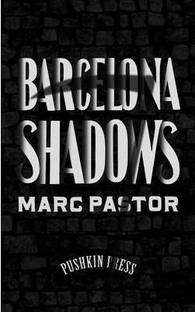 CSI meets Jack the Ripper in early 20th century Barcelona: captivating, scary and genre-breaking. In 1917, Barcelona's infamous Raval district is alive with outlandish rumours. A monster is abducting and murdering young children. The police are either powerless to prevent his terrible crimes,or indifferent to them, since they concern only the sons and daughters of prostitutes. But Inspector Moises Corvo is determined to stop the outrages, and punish their perpetrator. His inquiries take him on a tour of the Catalan capital,through slum, high-class brothel and casino, and end in a stomach-turning revelation. Barcelona Shadows is based on a true story, found by Barcelona CSI Marc Pastor in the archives of the Barcelona police. FILE UNDER HORROR AUTHOR INTERVIEWComments are closed.
|


Archives
May 2023
|
 RSS Feed

|

|