

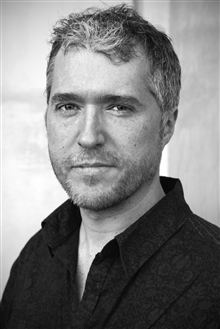
 SETH PATRICK SETH PATRICK Seth Patrick was born in Northern Ireland. An Oxford mathematics graduate, he spent the last decade working as a programmer in an award-winning games company before becoming a full-time writer. He lives in England with his wife and two young children. Reviver, his debut novel, is the first in a trilogy. Film rights have been optioned by Legendary Pictures, the company behind Inception and Man of Steel. October 09 sees the publication of Seth's novelisation of the hit television series The Returned which hit the UK in July 2013 on Channel 4. It attracted nearly eight million viewers over the eight episodes and quickly became a cult phenomenon with high-profile fans such as Stephen King. It's been shown world-wide, and won an International Emmy for Best Drama. With fantastic audience support, and amazing reviews in the press. Hello Seth, how are things with you? Great thanks, hard at work redrafting Reviver book two. How does an Oxford Mathematics graduate become a world famous author? Ahh, world famous… If only! Mind you, people can be famous without being successful, and can be successful without being famous. I’d much prefer the latter. All I want is to be successful enough to keep writing full time. As with most authors, I always knew I wanted to be a writer. At school the thing I enjoyed most was creative writing. It’s elaborate imaginative play that you can share with others. How can anything beat that? Your Novel The Reviver is the first part of a trilogy that combines horror, science fiction and crime. Have you always been a fan of genre fiction? Absolutely. When I was a kid my sister regularly got a comic called Misty, which I’d sneak a read of, and it was all SF and horror. The first books I really got stuck into were the Dr Who novelisations. After that, it was Stephen King, Clive Barker. There was no going back. And what is it about genre fiction and in particular horror that appeals to you? Above all, it’s interesting. God, so much of what is presented as ‘proper’ literature is just dull. I can enjoy a badly-written book with some great moments, be it action, scares, ideas. A well-written but mundane book has little to offer me. And well-written genre? Nothing better. I believe the inspiration for The Reviver came from you sharing a birthday with Edgar Allan Poe and two of his stories that collided in your brain. Can you expand on this please? I was hunting around for ideas for a book. Someone happened to mention the way Wikipedia has lists of famous people’s birthdays, so you can check out who you share a birthday with, and I share mine with Poe. Two Poe stories came to mind: The Facts in the Case of Monsieur Valdemar, and Murders in the Rue Morgue. The first is a creepy tale in which a man is hypnotised on the brink of death, and keeps talking even after he dies. The second is regarded as the first ever detective story. I had a flash of a detective interviewing Valdemar, and Reviver snowballed from there. I also share my birthday with Dolly Parton, but so far she’s had less of an influence. Do you ever feel constricted with the trilogy format? Or do feel that this is the length that the story needs to be? Early on, I had to decide what kind of book Reviver would be. It could have been a crime-of-the-week investigative series, where the hero somehow gets caught up in a new mystery death with each book; a series where very little changes, and it could just go on and on. I quickly realised I would hate doing that. I wanted things to change, completely move on, so book one starts as a crime procedural and explodes into a crazy SF/horror. (Some people hated that, some loved it. So it goes.) Originally, book one of Reviver was all there was ever going to be. When I finally let my wife read it her first question was ‘what comes next?’ She didn’t like my answer (‘I don’t know’) but I still couldn’t come up with an idea I liked. My agent kept pushing me for a two- or three-book pitch, and at last the basic ideas for books two and three arrived together. The trilogy just happened. Apart from good story telling how do you ensure that fans of the first part come back for the sequels? Do you employ the same tactics that the film makers of those old black and white film serials used in the 1930’s with the huge cliff-hanger? I’m still pretty new to this, but I hope the best way to bring readers back is simply to write a book they enjoy. I certainly try to make my chapters end with some kind of cliff-hanger, something that makes it hard for the reader to put the book down. It can be a minor thing, or a great big da-da-daaaaah, but there has to be something. I’d never go the black and white serial route that the old Dr Who used – the cave collapsed on top of everyone! The train hit him! Only it didn’t. Cheated! Talking of filmmaking, you have also been given the unenviable task of turning in the novelisation of the hit French drama The Returned. How did you land this gig? I was lucky. It was my own literary agency that proposed a novelisation to the TV producers, and then when they shopped it around publishers, my editor bought the rights. Whether they drew a Venn diagram or not I don’t know, but they asked me if I could do it. Given that I’d only written one book by then (and it had taken me seven years!) it was a huge show of faith in me. The drama has captured the hearts and minds of the public, what do you put this down to? The show has style, heart, great writing, and superb music (by Glasgow band Mogwai). The elements all just came together. How do you actually go about writing the novelisation? Are you given the script and a sort of crib sheet? I got the original scripts, in French, and other material they’d used for their websites. My own French is best described as ‘limited’. Well, OK, I can’t speak a word, but Google Translate did a reasonable enough job for me to get the gist. There was quite a lot in those scripts that had changed in the final show, of course, but it all feeds in. Next I had to rough out the structure. The show cuts rapidly between characters and plot threads, but I wanted to keep those cuts to a minimum and have chapters dealing with a single point-of-view or thread. There were also things I wanted to tweak, characters I wanted to make stronger, say, or inconsistencies I wanted to iron out. There were also minor things that annoyed me. One example: digging the bullet out of a patient is probably the worst thing any medic could do for a gunshot wound, so I got to change that. With novelizations the story has already been told, is there any scope for you to add in extra stuff? While there’s some extra detail already available, there’s a balance to be struck between being faithful to the show and adding things. The major addition has been to flesh out the experience of one of the dam engineers. As we learn very little about them in the show, I had plenty of freedom there. The show’s producers were very wary of letting me know anything about the second series. When they read the first draft there were a few areas that didn’t fit with their plans, so they had to give me an overview of what was going to happen. They were still very cagey, though! How helpful was your experience as a screen writer during the novelisation process? I find my screenwriting experience helpful with all my novels, as I like them to be as visual and cinematic as possible. Things that are easy to do on film can be very tricky in a novel, like rapidly hopping back and forth between the points of view of various characters, or the way a single shot can get across so much information. In a novel you need to restructure so you can take advantage of the things that are easier to do in prose than on screen. Even with Reviver, I would find myself having to alter what I’d come up with, a little like adapting the movie that was playing in my head, so some of the process was familiar. What was the hardest part of writing it? Fleshing out the backstory and inner lives of the point-of-view characters. I was always very aware that everyone who’s seen the show will have their own idea of who these people are, what they’re like, and all of that has to be much more explicit on the page. Also, I decided that we wouldn’t get point-of-view from any of the ‘returned’ characters, which made things awkward in places. A writer normally goes into a novel with a connection to the characters and the themes of the book, do you think that the fact that you were detached from the book allowed for more free flowing form of writing, or did this detachment act as a hindrance to the process? I loved the show, so I already cared about the characters and I wanted readers who haven’t seen it to connect with them, too. That probably made it harder, but in a good way. Were you ever tempted to make life a bit easier and just watch the American version while writing the book? I have no problem with subtitles. They can be a blessing – they hide flaws in the acting and dialogue that a native speaker would see, so a film or show can get the benefit of the doubt. By ‘American version’, I think you mean Resurrection, the American version of Jason Mott’s novel The Returned? It’s worth clarifying I think – the French show is titled Les Revenants, which is literally translated as ‘The Returned’, and is based on the 2004 French movie of the same name. Jason Mott’s book has a similar premise but is otherwise unconnected. There is a similar central concept to both books, have you at any time been tempted to propose a sort of shared worlds book? No, but it’s interesting how many zombie-with-a-twist shows and movies there have been, especially since 2004 when Sean of the Dead and the original French film version of The Returned were released. Now in the US we have Resurrection, and also the US remake of The Returned. NBC is producing a series called Babylon Fields, which was originally a pilot in 2007 but didn’t get picked up for a series then. In the UK there’s In The Flesh. All of these have zombies who retain their personalities and try to rejoin society. With varying levels of decay! Have you learned anything from the process that would help you with your everyday writing? Redrafting a novel is hard, hard work, in part because you have the opportunity to change everything. You worry about every part of it, and can drown in the possibilities. As I was writing The Returned, having the structure and so much of the detail nailed down took most of that worry away. It made the first draft read like it was a third draft: almost there, just needing some polish. It was so much less painful! If every book could arrive in my head that complete it would be incredible, but that’s not really how it works. I will try and plan things out more thoroughly in future, though. Redrafting a plan is far less work-intensive than redrafting a novel. Thank you for taking the time to do this interview Seth, it has been an honour. Do you have any final words for the readers? It’s been a pleasure. Final word? Don’t forget the London Horror Festival! I’ve been invited to present the award on the opening night, in their Stage Fright radio horror competition. It’s something that a few years ago I would’ve been entering (or trying to!) myself, so I’m seriously chuffed to have been asked. THE RETURNED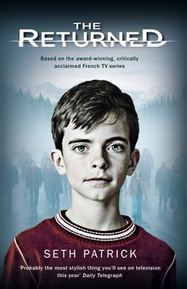 THE RETURNED THE RETURNED The Returned brings new storylines, characters and plot revelations to fans who loved the original TV seriesWHAT HAPPENS WHEN YOUR PRAYERS ARE ANSWERED? Camille: A young girl wakes cold and alone on the side of a mountain, with no memory of how she got there - and no idea that she died four years' ago. When she arrives back home, her family are both thrilled and terrified. How can such a miracle be real? Simon: A troubled young man comes back to find his fiancée is betrothed to another man. Jealous and angry, he cannot forgive that she has moved on with her life. Victor: An enigmatic boy refusing to speak, possessed with a strange intensity that gives no clues as to his intentions. He's lost. Equally as lost as the emotionally vulnerable Julie to whom Victor gives a reason for living. Serge: Tormented and driven by a hunger so overpowering that not even death could keep him from his desires . . . The Returned hit the UK in July 2013 on Channel 4. It attracted nearly eight million viewers over the eight episodes and quickly became a cult phenomenon with high-profile fans such as Stephen King. It's been shown world-wide, and won an International Emmy for Best Drama. With fantastic audience support, and amazing reviews in the press, Pan Macmillan is thrilled to be publishing novelizations of the first two series written by the author of The Reviver, Seth Patrick. REVIVER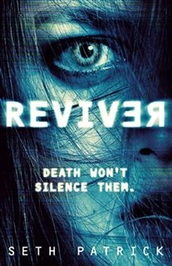 REVIVER REVIVER HE GIVES JUSTICE TO THE DEAD. Jonah Miller is a reviver. Part of a forensic investigative team, he is able to wake the recently dead and let them bear witness to their own demise. The testimony of the dead is permitted in courtrooms across the world. Forensic revival is a routine part of police investigation. But while reviving the victim of a brutal murder, he encounters a terrifying presence. Something is watching. Waiting. His superiors tell him it was only in his mind, a product of stress. Jonah is not so certain. Then Daniel Harker, a journalist and revival supporter, is murdered, and Jonah finds himself getting dragged into the hunt for answers. Working with Harker's daughter Annabel, he's determined to find those responsible and bring them to justice. Soon they uncover long-hidden truths that call into doubt everything Jonah stands for, and reveal a threat that, if not stopped in time, will put all of humanity in danger . . . THE HEART AND SOUL OF HORROR INTERVIEWS
0 Comments
Leave a Reply. |


Archives
May 2023
|


 RSS Feed

|

|