

DAVID MOODY
25/7/2013
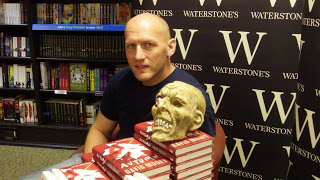 David Moody has an unhealthy fascination with the end of the world. ‘People tend to just float along on the day-to-day and assume everything’s always going to stay the same,’ he says, ‘but that’s not the case. Sooner or later something’s going to happen to screw everything up. Whether it’s a plague epidemic, an asteroid hitting the planet, climate change or the meltdown of the global economy, something’s going to get us eventually!’ 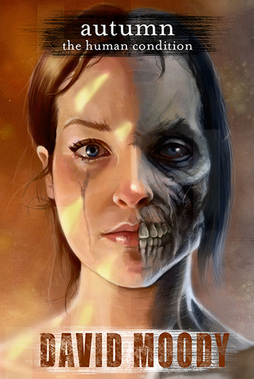 GNOH – Hi David, how are you doing? Hello! I’m good, thanks. Great to be here at one of the best-named blogs on the Internet! GNOH – How did the Halloween Horror reading go? It was a great event. You always have some trepidation approaching these things, because the usual safety net you have as a writer is taken away when you’re reading to a live audience – their reaction is immediate. The nerves were clanging even more than usual because I was reading alongside two great authors – Adam Nevill and Gary McMahon. As it was it was a really good event which went off without a hitch. I think we all enjoyed it. GNOH – So what makes you tick? A very open question! In terms of horror, it’s easier to tell you what doesn’t make me tick than what does. I’m not religious or superstitious, and that means that ghosts, demons, devils etc. don’t do anything for me at all. That’s not so great for a horror writer, because that’s a huge swathe of the genre ruled out. I’m more interested in human horror: what people will do to survive, how we cope in the face of uncertainty, how we react when the normality of our day to day lives is stripped away... GNOH – Can you remember what first kicked off your love of the horror genre? I get asked this question a lot, and I do have some very specific memories. I grew up in the 1980’s, and as every self-respecting UK horror fan knows, they were dark days for horror here. Pretty much every movie I wanted to see was labelled a video nasty and banned, and some of my earliest horror memories are sneaking back downstairs when everyone else was in bed to watch the horror double bills (usually old Universal and Hammer movies) they used to show on the BBC. My fascination with post-apocalyptic stories came from discovering War of the Worlds and Day of the Triffids in my school library (not sure what they were doing in a junior school library, but I’m glad they were there!). Finally, my fascination with zombies came from watching Romero’s Night of the Living Dead when a friend managed to get hold of a copy from America. GNOH – Your first novel Straight To You, laid the foundation for much of your work, in that it dealt with an oncoming apocalypse. What is it about this that holds your fascination so strongly? It’s not so much that I’m fascinated by the end of the world, it’s more that I can’t stand the monotony and mediocrity of life today – everything’s so sanitised and safe, and yet if you scratch under the surface you’ll find things that are seriously screwed up. In terms of telling stories, using the end of the world as a backdrop means that there’s more at stake for the characters: emotions are more extreme. I think it’s incredible just to what extent people take everything for granted and assume that things tomorrow will be the same as they are today, when that’s clearly not the case! GNOH – By the time you wrote your second novel, the internet and the whole ebook book thing was still in its infancy. How long did you fight with the decision to give your book away for free? It was actually quite a straightforward decision. It was something very few people were doing at the time (unlike today), and the book immediately gained interest because of that. I always wanted to write full-time, and in order to do that I knew I’d have to have a decent-sized audience. I figured the easiest way to get that audience was to make my book available for free to whoever wanted it, and that approach ultimately worked. Realistically, I’d probably only have managed a few sales if I’d charged for the book, and as zombies were definitely not mainstream back then, I’d probably have struggled to find a publisher. I did have a cunning plan, though, to write a series of sequels to Autumn and charge for them so, from that perspective, I was able to look at the free download as an investment. GNOH – Looking back at the decision, it was the right thing to do, and a stroke of genius. How do you think it would have gone if you were just starting out now? Do you think it’s possible for a new writer to make such an impact? I think it is possible for new writers to make an impact, but it’s a very crowded marketplace now – very different to when I started giving Autumn away in 2001. At the end of the day, though, you have to have a good book that people are going to want to read. I truly believe that good stories and good writing will always be noticed, because they’re the books which people will chose from this massive virtual slush-pile and share with their friends. Autumn’s a story about a virus, and I played on that in the marketing approach, asking people to ‘get infected’ and help me ‘spread the infection’. And the principles are still the same – people tell their friends who then tell their friends, etc. etc. Social networking makes it much easier to share these days! GNOH – The success of the book allowed you set up your own publishing house Infected Books. Even in the age of The Kindle, many authors look down their noses at others who do what you did? How did you manage to get past this snobbery. Infected Books was my way of getting past the snobbery. I hid behind the name. I’ve quite a commercial background, and I realised the importance of building a professional-looking brand. My ethos going into Infected Books was that I wanted my novels to be of a quality indistinguishable to professionally produced books – the right look, the right content, good covers and editing... I think that adhering to those self-imposed standards meant that many people weren’t aware that Infected Books was just me working in my tiny office at home! I used to get people trying to submit novels to the company and all sorts! GNOH – Do you find that you still have to justify yourself, or do you think you have risen above the misguided snobbery of some of your peers? To be honest, I couldn’t give a damn if anyone does still look down their nose at me. This answer’s going to sound arrogant, and I apologise in advance, but self-publishing has worked beautifully for me. I’ve sold more books than I could have imagined, I’ve sold film rights, I’m published in more than fifteen countries. The bottom line is that my books are read and enjoyed by lots of people. I’m far more interested in what they think rather than any misguided (as you put it) peers. The publishing industry is changing, that’s a fact, and the self-publishing/self-promoting aspects of the business are things that all authors will inevitably have to get to grips with. GNOH – You have now closed down Infected Books, what was the reason for this? I haven’t closed Infected Books down completely, I’ve mothballed it. It was a decision I reached with my editor at Thomas Dunne Books when they acquired rights to republish the Autumn series, and it was a no-brainer. They were going to publish eight of my novels, and we agreed that to keep IB open would have been an unnecessary distraction. When things were at their peak, running the business took a huge amount of time, so much so that I often didn’t have chance to write! I have a few older books, however, which I’m currently re-writing and which I’m considering putting out under the Infected Books label next year. GNOH – There is a huge flood of authors now self publishing, and yes there is a large amount of dross out there, but are there any of these authors that have caught your eye? I do get sent a huge number of manuscripts, and unfortunately I don’t get chance to read them all so I’m probably not qualified to answer this. There are other people far better than me at spotting great writers. Permuted Press, over in America, are zombie-story specialists and I think Jacob (their head-honcho) must spend half his life scouring the Internet for suitable stories. They’re having a lot of success right now with writers like Craig DiLouie, Iain McKinnon, Tony Faville and many more. Those guys were either self-published or small-press published before catching the right person’s eye, as were zombie heavyweights JL Bourne and the late Z A Recht. I always have to mention my good friend Wayne Simmons here. Originally published by Permuted, he’s gone on to publish a couple of wonderful apocalyptic novels which I love – Flu and Drop Dead Gorgeous. GNOH – Do you have any advice for the new breed of authors out there? I could probably write for hours about this, but I won’t! I’d have to go back to my golden rule with Infected Books. It’s hard to think of your finely crafted novel as ‘product’ but, in the market-place, that’s what it becomes. So you owe it to yourself to produce the highest-quality product you can. A wonderful book that’s taken years to write can be tossed aside in seconds by a reader if it doesn’t look professional. The editing, formatting and design is almost as important as the writing. I’d also caution people not to expect overnight success – you probably won’t put your book online and get thousands of visitors on day one (or even week one or month one). My first book was released in 1996 and sold next to no copies. Autumn was made available to download in 2001, and it wasn’t until 2009 that I had my first release through a major publisher. It takes time to build a following, and I’d resist the temptation to pay for adverts in magazines and the like to try and force readers your way. Best to let them find you naturally, and the best way for them to find you is through recommendations from friends. GNOH – You are perhaps best known for your Autumn books. They were written before the zombie genre really exploded, what prompted you to write a zombie novel? I mentioned earlier the effect that watching Romero’s Night of the Living Dead had on me. I’ve always loved zombies as movie monsters, mainly because as well as being adaptable to pretty much any scenario, they are the ultimate personification of ‘us’ versus ‘them’. Initially Autumn was to be an ‘empty Earth’ story where a few survivors try to make sense of a world where everyone else has died, but it was clear early on that it was missing something. The logical solution was to have the dead rise. Back in 2001, it was rare to find a zombie novel. A very different situation than today! GNOH – And what is the significance of the title? The obvious answer is that the books begin in September and the bulk of the action occurs through Autumn! It’s always been my favourite season – so atmospheric and quite melancholy after the sun and greenery of the summer. The main reason for choosing Autumn as the title, though, was because it’s a metaphor for what happens to the human race in the books. Billions of people die at the beginning of the series. They fall like dead leaves and are left lying in the gutter. Lovely, eh?! GNOH – For those readers who haven’t had the pleasure of reading the books, can you tell us about them? The Autumn books combine aspects of traditional zombie stories with a few key differences. I wanted to write something believable (or as believable as a zombie story can ever be!), and so I took the typical zombie mythos and twisted it a little bit. My zombies don’t eat flesh (I could never work out why something that’s dead would want to eat?), and you’re either dead or immune from the outset, so there are no clichéd scenes where people hide the fact that they’ve been infected until the worst possible moment when they ‘turn’ and start attacking their fellow survivors... I think, though, that there are two key differences between Autumn and other zombie stories. Firstly, the books aren’t really about the zombies – the focus is on the survivors trying to deal with their situation, and the dead are just an ever-present threat they have to be aware of. Second, the zombies (and I never actually call them that) gradually change throughout the series. They begin as pretty useless lumps of dead meat, just lumbering around. But, during the course of the books, they regain their senses and control. At the same time, however, their bodies are continuing to decay, so there’s this bizarre and frightening paradox when the dead are becoming aware of what they are and who they used to be, but at the same time they’re increasingly restricted by their worsening physical condition. GNOH – Do you provide an explanation for why there are zombies, or do you just go for a leap of faith approach? To be honest, the explanation for the reanimation of the dead is something I’ve never gone into in great detail. There’s a cause hinted at in the third book, but it’s never confirmed. There are a couple of reasons for that, the first being that it doesn’t matter! As I said, the books are about the survivors, not the zombies, so what caused the dead to rise is inconsequential to those who are immune. They just have to deal with the hand they’re dealt (as one character says to another: if you get hit by a car, does it matter what colour it is?). Secondly, the characters in the novels are all very ordinary people. I always write about normal folks rather than your typical heroes – super-soldiers, great leaders, brainy scientists etc. I think it increases the horror and believability if the reader can identify with the character on such a basic level. With that in mind, the characters in my books are never going to be in a position to find an explanation, even if they wanted to – they’re so far removed from the cause. If the unthinkable happened and a deadly plague spread around the world from, say, somewhere in Asia, then here in the UK I wouldn’t care how it started, I’d be too busy trying to make sure I didn’t catch it! GNOH – So should zombies run, or shamble? Shamble. No question. They’re dead! GNOH – Was it always your intention to write a series? Yes. I think I touched on that earlier. The risk of giving away the first book for free was less of a gamble knowing that I’d eventually have paid sequels to fall back on. Also, when you kill billions of people on the first page of the first book, you’re left with an almost infinite number of stories to tell about the few people left alive. GNOH – There are currently five novels in the series, will there be any more, and can you tell us about them? Kind of a convoluted answer for you here... I originally conceived the books as a trilogy, and published them through Infected Books (Autumn, Autumn: The City and Autumn: Purification). During the writing of Purification, I started putting together a whole load of short stories which added more background to the characters and to the series as a whole (the collection became known as Autumn: The Human Condition). In 2006 I had an idea for a very different kind of Autumn story and I started writing a fourth novel which, apart from being set in the same world, had only a tenuous connection to the previous books (Autumn: Disintegration). The deal with Thomas Dunne Books happened in 2008, before I’d had chance to release Disintegration, and so the book remained unpublished until this year (it’s out in the US in November, and here in the UK at the end of December). I signed a five book deal, and that gave me opportunity to write a final novel (Autumn: Aftermath) which wraps up the series and ties up all the loose ends from the previous books. Aftermath is out next year. In the meantime, all the short stories I’d written are gradually being made available (along with some brilliant artwork) at www.lastoftheliving.net - the official Autumn website. GNOH – What would say sets these books apart from other zombie novels? As I said, they’re about the survivors rather than the zombies. I think it’s a very human view of the apocalypse, and I hope I achieved what I set out to do to write a believable zombie story. GNOH – Do you read other zombie novels, and if so which are some of your favourites? It’s part of the job! Recently I’ve read a lot of great zombie books: Can You Survive the Zombie Apocalypse by Max Brallier, Flu and Drop Dead Gorgeous by Wayne Simmons, Tooth and Nail and The Infection by Craig DiLouie, and Remains of the Dead by Iain McKinnon. All very enjoyable stories. GNOH – There is a film adaptation of Autumn, staring Dexter Fletcher, what do you think of the film? That’s a hard question to answer, actually. There’s no denying I was disappointed with the finished product for various reasons, but I’m also still proud of certain aspects of the movie. How could I not be? The late David Carradine played a character I created, and I got to go to Canada and be a zombie! I think the film-makers had an ambitious vision, which was impossible to meet with their small budget. When Carradine died in June 2009, an unfinished copy of the movie was leaked online and the film was absolutely savaged by hundreds – thousands probably – of ‘reviewers’. At the end of the day, the film-makers approached the project with 100% conviction and enthusiasm, but that wasn’t enough to carry them through with limited resources. GNOH – How much input did you have in the film making process? I wrote a spec script for Autumn before I’d even been approached, just to see if I could write a script, and that formed the basis for their screenplay. Other than spending a week on set in December 2007, I had pretty limited involvement. That’s par for the course for a writer having a book adapted, I’m led to understand. GNOH – Are you psychic, your career as a writer seems to see you making moves into markets just before they exploded, ebooks, zombies? If so will you do my football coupon? If I was that good a psychic, I wouldn’t need to write for a living – I’d guess the lottery numbers and retire! GNOH – You are also well known for your Hater series, can you tell us about these books? People class the Hater books as another set of zombie stories, but they’re not really. The idea for the series came from looking at society and all the ways we differentiate ourselves and set ourselves apart from other people – we divide ourselves by age, sex, race, beliefs... the list goes on. I thought it would be interesting to consider a world where all those divisions were rendered irrelevant, because a new division had arisen – the Hate. The basic premise is that one third of the population (the Haters), are suddenly unable to live with the rest (the Unchanged) and have to kill them because they believe they’ll be killed if they don’t. It starts small with isolated incidents of violence, but the situation steadily worsens until we’ve reached a state of all-out war. Then things get really unpleasant. GNOH – Who or what exactly are the Haters? I think I’ve just answered that! But one of the really interesting things about the story is that it’s all about perspective, and the label ‘Hater’ is irrelevant. To deal with the Hater menace, the Unchanged authorities try to isolate and eradicate them. The Haters then strike back. Then the Unchanged try and take control... and before you know it we’re on a dangerous downward spiral. I guess one of the messages of the book is that everyone believes what they’re doing is right and just, no matter how repellent it might seem to everyone else. GNOH - Are you using these books as a way to hold up a mirror to your personal fears about the way society is going? Very definitely. I think we’re in a seriously terrifying place right now, and I don’t see things getting better. It’s interesting how the books have struck a chord. Back in the summer when there were riots up and down the UK, I was getting a constant stream of emails, Tweets and Facebook messages from people who’d been looking outside their windows and seen things which were uncomfortably reminiscent of the books. GNOH – You are about to release the latest instalment in the series, can you tell us what to expect in this instalment? Them or Us is the final book in the series, out on 17 November. There’s a scene in the first book which has a substantial effect on how you see the rest of the overall story, so it’s difficult to say too much about Them or Us without ruining Hater and Dog Blood. I’ll be vague with details and say that the war between the Haters and Unchanged is almost at its end, and there are very few people left alive. A brutal dictator is in charge of one of the last remaining settlements in the country, and it’s increasingly clear that what happens in that settlement will have a massive effect on everyone who has so far survived. Like most horror stories, it ultimately boils down to who is going to survive: will it be them, or us? GNOH – You use real locations for the first time, what is the reason for this? I’ve always been vague with locations, because I like readers to be able to identify with my stories and put their own mark on them. I’ve tried not to be too specific and use actual place names because that might affect the way someone relates to a story. What I mean by that is, I don’t want to write a key scene based around a landmark like, for example, the Rotunda in Birmingham, because one day it might disappear. Does that make sense? It sounds strange, but until Them or Us, it was how I’d always written my books. Things happen in Dog Blood, however, which make the last remaining people scatter to the extremities of the country (again, I don’t want to give too much away!). I know Lowestoft well (my mother-in-law lives there), and it seemed like the ideal location for the book because it’s out on a limb (it’s the most easterly point in the UK) and it has something of a bleak, post-apocalyptic feel to it. And if I’m honest, I can’t help thinking of Armageddon when I’m with my mother-in-law! GNOH – Why do you think there is such a market for these types of books? I think you touched on it earlier. These stories say a lot about the state of the world right now and they play on people’s fears. And as I mentioned, zombies (and Haters) are a blank canvas which can be adapted to any situation. GNOH – The novel has been optioned for a film adaptation, can you tell us how this is going? The Hater movie is the other extreme to Autumn which was a small, independent production. The Hater rights were bought by Mark Johnson (producer of the Narnia films) and Guillermo del Toro (who needs no introduction). It was frustratingly close to going into production a couple of years back, but the project stalled. It’s still alive, though! I’m talking to the production company regularly and I’m hopefully there will be some movement very soon. GNOH – So what do you like to do in your spare time? I don’t get much spare time, to be honest. I’ve got a lot of projects on the go, and we also have a large family. I work from home and my wife goes out to work, so I have to fit a lot around the family’s routine. Apart from watching as many movies as I can and reading, my two other passions are live music and distance running. I train a lot and I’m fortunate in that writing is one of the few jobs you can do while you’re exercising – I plan a heck of a lot while I’m out running. GNOH – Other than the new Hater and Autumn novels, can you tell us about any other future projects? I finished the final Autumn book a month or so back, and so this is the first opportunity I’ve had for years to write something that’s not Autumn or Hater related. I’m working on a few major projects right now: a short movie we’re hoping to shoot next summer, several new novels, and the reissue of two of my older Infected Books releases. GNOH - Many thanks for popping over David. Thanks for the great questions, Jim. I enjoyed that! You can find out more about David by going to his website http://www.djmoody.co.uk/ And you can buy his books by clicking the links below http://www.amazon.com WWW.AMAZON.CO.UK Comments are closed.
|


Archives
May 2023
|
 RSS Feed

|

|