

|
"Your garden variety noir anti-hero will quite often have a murky and troubled past, but I wanted to give my protagonist something a little further afield to allow the curtain to rise from noir to dark fantasy"  Following the release of ‘The Rib From Which I Remake The World’ (reviewed by us over here) , Ed kindly agreed to talk to us about the writing of this extraordinary novel. Ed Kurtz is the author of The Rib From Which I remake the World, Nausea, Angels of The Abyss, The Forty-Two, and A Wind of Knives, as well as numerous short stories. His work has appeared in Needle: A Magazine of Noir, Beat to a Pulp, Shotgun Honey, Thuglit, and several anthologies, including The Best American Mystery Stories 2014. Ed resides in Minnesota. Visit Ed Kurtz online at edkurtzbooks.com. Gingernuts Of Horror: Ed, thanks for taking the time to chat with us! Firstly, many congratulations on the novel. The initial critical response seems to be very favourable - how have you found the reaction to the book? Ed Kurtz: Thanks so much! I’ve found it stunning, really. Readers and reviewers appear to really dig it, and last I heard they’re scrambling to fulfill orders. Not too shabby for a book that was rejected outright five or six times before I finally sold it...and then only after pulling it out of my “retired” folder on a whim. I’m so grateful to ChiZine for taking it on, and even more so to the folks picking it up and spreading the word. It’s overwhelming, but I’m not complaining. GNoH: Can you talk to me a bit about JoJo and where he came from? I was impressed with how much humanity you brought to a fairly staple noir character - the ex-cop with the troubled past. EK: Like a lot of my novels and long fiction, The Rib started out as a few disparate concepts I wanted to play with, including the carnival/freakshow elements that Jojo plays into. He’s named for Fedor Jeftichew, who toured circuses all over the world as “Jo-Jo the Dog-Faced Boy,” a story among many I researched that were just so damned tragic. Your garden variety noir anti-hero will quite often have a murky and troubled past, but I wanted to give my protagonist something a little further afield to allow the curtain to rise from noir to dark fantasy with Jojo as the link. He’s the most human because he’s been treated as though he isn’t human at all, and on more than one front. GNoH: You didn’t shy away from portraying the ugly aspects of the racial politics of the time, but nor did they overwhelm the narrative. How do you approach tackling such subject matter, and how important was it to you to have that feature in the story? EK: I’d warrant it’s more important now than it was when I wrote the first draft of the book, with so much of that ugliness crawling out from the muck and spreading out in full view. In a broader sense issues of race and racism have been a focal point in a lot of my work, or just bigotry in general, as in my western novella A Wind of Knives, which deals with homophobic violence. I witnessed so much of this sort of nastiness growing up, but I wasn’t raised in that kind of environment at all, so I spent years well into adulthood grappling with it and trying to understand what made some people so angry and hateful. It’s not really any different now, and I can’t say I grasp it any better now than I did then, but I try to approach it naturalistically, to present the picture with as little personal comment as possible (which, of course, isn’t really possible at all). At the end of the day, I would find it absurd to set a novel in the rural American south of that era and not feature an issue like racism or segregation. And since “otherness” plays such a pivotal role in the character development in Rib, I think it works out well in the balance. GNoH: Can we talk a bit about the women, too? I thought you did a superb job of portraying real women, with actual interiority, that are all in some way constrained or trapped by the circumstance of being female in that time period. Was that something you were conscious of reaching for as you wrote, or did it more happen on the page? EK: Thank you, that’s one of my favorite things to hear. I tend to work within the boundaries of typically androcentric genres, and the noir world Jojo inhabits is definitely a descendant of the macho fantasies of Spillane and the like. But as a LGBT author who was raised in a predominantly female environment, I don’t feel like I have to work hard to subvert that, while at the same time playing into the “outsider lit” sense of noir, where women, minorities, and queer folks are considerably more “outside” than your run-of-the-mill white male antihero, whose outsider status is dictated by choices rather than genetic chance. Though I admit I occasionally enjoy the hyper-masculine milieu of Mike Hammer or Lew Archer, or even (heaven help me!) Sam Hunter, I can’t say that I really identify with it. To me those are roles, in both fiction and real life, and not at all indicative of the depth of character. Those constraints and traps plumb such depths, which is where I hope to succeed in terms of characterization. GNoH: “The Rib…” is a period piece, and the 40’s setting is a vital part of what creates the atmosphere of the story. How much research did you have to do to create that authentic 40’s vibe? And what attracted you to that time period as a writer? EK: Nearly every novel and novella I’ve done so far has been either a period piece or contained period elements. In a significant way it’s where I’m most comfortable when writing, because to me it feels like a shortcut--the world is there, I merely have to master it (or make it look like I have). The Rib is different, though, for reasons I won’t reveal lest I spoil the book, but I will say the 1940s of Litchfield, Arkansas is a strange pastiche of Hollywood noir and rural, mid-century Americana. It is in some ways the Arkansas I grew up in, in another way it’s Lonesome Rhodes’ Arkansas from A Face in the Crowd, and there’s a great deal of Jim Thompson’s influence all over it, too. I’ll generally immerse myself in a given period when I’m in the thick of it, but the trajectory of The Rib From Which I Remake the World allowed me to tinker and do some actual world-building. GNoH: And what does that immersion look like? Reading books on history? Fiction written at the time setting? Period music/movies? Something else? EK: All of the above! I love media from that period anyway, so it’s not exactly work to dive into it. The noir tropes are pretty well burned into my brain as it is, so the work was more in finding ways to subvert them. It’s quite something to have a jumble of early noir paperbacks and bizarre grimoires full of esoteric incantations and phony occultism on the desk while hammering away at the keyboard, I’ll tell you! GNoH: Similarly, the small town setting is almost a character in it’s own right. How much mental mapping/preparation did you undergo for constructing this town? And how did you plot the character relationships, especially in relation to the overarching story? It seems to me there’s a lot of moving parts to keep track of, especially in the first half of the book… EK: Litchfield and Duxom County exist in my head, in a nebulous, changeable way. They appeared first in the story “Family Bible,” in Peel Back the Skin from Grey Matter Press. I think we’ll see stories that take place there again which, as those who have read The Rib know, is both impossible and absolutely full of possibilities. I hail from Arkansas myself, and though I’m a city boy from Little Rock I’ve certainly spent my fair share of time in small, backwater towns, some of which seemed frozen in time to me. In a large sense Litchfield is synthesized from those experiences. GNoH: You mentioned Jim Thompson above as an influence, and in my review I noted King and Barker elements seemed in play also, especially in the back half of the novel (and as I think, Bradbury is clearly in the mix too). Who else would you cite as being big influences on your work? EK: Peter Straub was a big one, especially Shadowland and Floating Dragon--both ostensibly horror novels with quite strong elements of dark fantasy and reality-bending. I find it fascinating how often The Rib is compared to Bradbury’s Something Wicked This Way Comes, including quite a few assumptions that was my starting point, since at the time of this interview I’m waiting on my copy in the mail so I can find out what the hell everyone is talking about. I don’t think retroactive influence is a thing, but hell, maybe time really is a circle after all. GNoH: Hey, great minds, right? :) EK: I’ll take it! GNoH: As you’ve probably gathered, I really enjoyed the fusing of noir with supernatural elements. Do you enjoy genre collision in general? Have you ever written ‘straight’ noir (a la Thompson) and is that a genre you’d like to explore more? EK: I really love mixing genres when it works, when it isn’t forced, which otherwise risks being pretty silly. (I’m thinking of that 50s B movie The Valley of Gwangi where cowboys contend with dinosaurs!) Still, the bulk of my work thus far can probably be safely boxed into a given genre, or at least a genre umbrella. Nausea, The Forty-Two, and Angel of the Abyss are all noir novels (though, as almost always, with strong influences from my horror background). On the other hand, I consider The Forty-Two and Angel of the Abyss the first two parts of a loose trilogy that comes full circle in The Rib From Which I Remake the World. This is more or less my “dangerous cinema” triptych, and to me Rib feels like the logical wrap-up. Not to say I would be opposed to doing more of it, of course. GNoH: And on that note - what are you working on currently, and what plans do you have for 2017? EK: Next year my first collection is coming out from Down & Out Books: Nothing You Can Do. Crime, mystery, and noir tales, with a brand new Western story that’s never been published before. In the meantime I’m working on a handful of short stories and gearing up for a science fiction novel that’s been gestating in my skull for a few years. I expect it may be the darkest thing I’ve yet written. GNoH: Well, don’t let us keep you! Thanks for stopping by to chat, a real pleasure. Read our review of The Rib From Which I Remake the World Here And read Ed's Entry in The books of My Childhood here 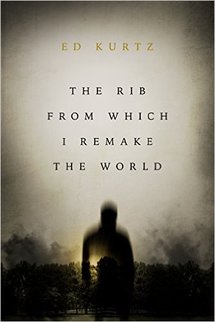 What begins with a gruesome and impossible murder soon spirals into hallucinatory waking nightmares for hotel house detective Jojo in World War II Arkansas. Black magic and a terrifying Luciferian carnival boil up to a surreal finale for the town of Litchfield, and Jojo Walker is forced to face his own identity in ways he could never have imagined. Purchase a copy from Amazon.com Purchase a copy from Amazon UK   CLICK HERE FOR MORE HORROR INTERVIEWS Comments are closed.
|


Archives
May 2023
|
 RSS Feed

|

|