

FIVE MINUTES WITH MATTHEW WARNER
24/11/2015
 Matthew Warner Matthew Warner Matthew Warner’s publishing credits span a variety of formats, including novels, short stories, screenplays, and newspapers. His first novel, The Organ Donor (2003), garnered a 5-star review from critic Feo Amante, who labeled the book a “straight-on modern classic of horror.” Publishers Weekly described his second novel, Eyes Everywhere (2006), as “disturbing … compelling and insightful.” Dramatic works include films from Darkstone Entertainment based on his screenplays, plus a radio play and stage play premiered by theaters in central Virginia. His opinion column, “Author’s Notes,” ran for five years at HorrorWorld.org and consisted of a blend of commentary, autobiography, and tutorials about the writing craft. Guide Dog Books collected the first three years of those columns into its debut non-fiction title, Horror Isn’t a 4-Letter Word: Essays on Writing & Appreciating the Genre (2008). Warner’s horror novel Blood Born (2011) is an apocalyptic monster tale set in the Washington, DC, area where he grew up. His first urban fantasy novel, The Seventh Equinox (2013), which Publishers Weekly calls “a world-shattering crisis acted out in small scale,” is set in a fictitious Shenandoah Valley town inspired by his current home of Staunton, Virginia. Warner’s latest book, Dominoes in Time (2015), reprints short stories published over a 16-year period. Warner lives with his wife, the artist Deena Warner, and sons, Owen and Thomas. In 2007, they opened a print and website design business, Deena Warner Design LLC, serving publishers and authors. He holds memberships in the Horror Writers Association and Dramatists Guild of America. Could you tell the readers a little bit about yourself? Sure, I’m a writer living in the lovely Shenandoah Valley of Virginia with my wife, Deena, and our two boys. I primarily write horror and fantasy. Since high school (more than half a lifetime ago!), I’ve been fortunate to land four published novels, three collections, two stage plays, and a smattering of screenplays. Dominoes in Time from Cemetery Dance Publications is my newest book. What do you like to do when you're not writing? My biggest leisure-time passion right now is Brazilian jiu-jitsu. It’s a submission-grappling martial art that one can practice into old age. It has kept me in shape, made me a happier person, and I would recommend it to anyone of any age. What’s your favourite food? Medium-rare steak with a dark beer or whiskey, followed by vanilla ice cream. Who would be on the soundtrack to your life story? AC/DC, Seal, Mozart, and Miles Davis, not necessarily in that order. Do you prefer the term Horror, Weird Fiction or Dark Fiction? Horror. I think “weird fiction” is a more specific term as it ties back to the days of Lovecraft. “Dark fiction” is the term we use in polite company when we’re embarrassed to use the H-word. Who are some of your favourite authors? It changes all the time. Lately, I’ve been into James Lovegrove and his Pantheon series. Before that, Ernest Cline, Jim Butcher, and Joe Hill. I’m a bit all over the place. What is your all-time favourite horror novel, and film? After all these years, it’s still It by Stephen King. Blew my mind when I was a kid, which is probably why I shouldn’t re-read it as an adult, since it wouldn’t live up to the memory. John Carpenter's The Thing still holds up as an incredible horror movie. Man, that spider head thing. Eek. If you could erase one horror cliché what would be your choice? The trope of “boobs and blood.” If that’s all filmmakers think horror is about, then that’s all the public will think it’s about, too. Which fictional character would be your perfect neighbour, and who would be your nightmare neighbour? Ned Flanders from “The Simpsons” would be the perfect neighbor. He’s essentially harmless, but he would be eccentric enough to give my family something to roll our eyes about. Jerry the vampire from Fright Night would be the nightmare neighbor. I can imagine him just sizing up my children for the dinner plate. No, thank you. What do you think of the current state of the genre? There’s a lot of cool stuff out there, and there always will be. But barring another Stephen King-like author who can capture the public’s attention, I think “horror” is past its time as a mainstream marketing term. It would help if we moved away from the same tired old monster tropes and into something fresh. What was the last great book you read, and what was the last book that disappointed you? The Sculptor graphic novel by Scott McCloud was wonderful. It was original, heart-breaking, and full of three-dimensional characters. I got most of the way through The Singularity: Heretic by David Beers and had to put it down because it was too predictable. I was disappointed because I really liked his writing style. How would you describe your writing style? I’ve always striven to be “spare”: not given to excess verbiage. I like to write short scenes, and I’m a big believer in strong plot structure. Are there any reviews of your work, positive or negative that have stayed with you? I’ve always been proud of the review Feo Amante gave my first novel, The Organ Donor. He called it a “straight-on modern classic of horror.” I framed it. What aspects of writing to do you find the most difficult? The brainstorming phase. I feel insecure and directionless when I don’t know what I’m going to write about. I resent other writers who pat themselves on the back with this “I don’t believe in writer’s block” baloney. Their imaginations are evidently so fertile that they’re not really human. I work hard to triangulate just one good idea, and then I run that motherfucker into the ground. Is there one subject you would never write about as an author? What is it? Not really. I’m not afraid of certain subjects so much as I am bored by them. I’d rather spend my valuable time writing about stuff I find interesting. If you could kill off any character from any other book who would you chose and how would they die? The fallen angel in As She Stabbed Me Gently in the Face by Carlton Mellick. That guy was supposedly immortal, but I wonder what would happen to him if he were dropped into the Sun. What do you think makes a good story? Characters who are profoundly changed by the events of a story. It’s as simple as that, but it amazes me how many stories don’t have that quality. How important are names to you in your books? Do you choose the names based on liking the way it sounds or the meaning? Sure, names are very important, and the biggest stumbling block I have is ensuring I don’t have two names that start with the same letter or look too much alike. Why make it hard for a reader to follow who’s who? How do you think you’ve evolved creatively? I think we all evolve creatively all the time, no matter what we do. In recent years, I’ve come full circle in deciding what kind of writer I want to be. I used to want to be a novelist and short story writer, and then I thought I could make headway in stage plays and screenplays. Now I’m back to prose fiction again, where I expect I’ll stay. Each specialty presents its own challenges, and I’m the most familiar with ones presented by writing books. What tools do you feel are must-haves for writers? A computer with an Internet connection and word processor, a chair, and a private place to write. Intangible tools include a good education because you gotta have something to write about. What is the best piece of advice you ever received from another author? Although I’ve never met him, Stephen Covey’s The Seven Habits of Highly Effective People had a big effect on my life. Always “sharpen the saw,” he advised, meaning always set aside some time to sharpen your skills. As a writer, that means take a course every once in awhile, or attend a workshop. I also think about “put first things first” a lot, because time management is always a challenge. How do you market your work? What avenues have you found to work best for your genre? Everything comes back to an author’s website. That’s like the authoritative encyclopedia entry and access point to a writer’s career, so it’s important to keep it updated. Beyond that, I maintain a good Facebook presence, and when a book comes out, I seek as many reviews as possible. Who is your favourite character from your book and why? In my collection Dominoes in Time, I really like the fashion model Raquel Domina in “Picture Perfect.” She’s such a stuck-up, nasty diva. And when she exposes a red mark on her butt cheek and cries, “My life is ruined!” . . . Well, that cracks me up. How about the least favourite character? What makes them less appealing to you? Brandon in “At Death We’ll Not Part” is an uncomfortable, depressing guy. He can’t navigate out of the guilt he feels over his wife’s death. At least he’s good at murder. Fame, fortune, or respect? Fame first. Fortune and respect will follow. (God, I hate myself for that answer.) What piece of your own work are you most proud of? Presently, it’s Dominoes in Time, of course. There’s nearly twenty years of blood sweat in that sucker. I’m glad those stories are seeing print again. And are there any that you would like to forget about? My stage play, Pirate Appreciation Day. Nothing wrong with the play, but getting it produced by a community theater was a terrible learning experience. For those who haven’t read any of your books, what book of yours do you think best represents your work and why? Dominoes in Time because it has a bit of everything: horror, science fiction, humor, and non-fiction. It’s a nice sampler of what I’m capable of. Can you tell us about your last book, and can you tell us about what you are working on next? Okay, are you sick of hearing about Dominoes in Time yet? It’s out from Cemetery Dance Publications as a $4.99 eBook. It collects eighteen horror and science fiction stories, and it sort of encapsulates my mission statement as a writer: it’s my job to write about the most significant event of a character’s life. I’m currently writing an urban fantasy novel while I have another one out there making the rounds. What's the one question you wish you would get asked but never do? And what would be the answer? What other writer, living or dead, would you like to write a collaboration with? And my answer: Stephen King. Because, well, duh, who wouldn’t? 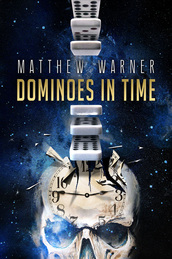 Like the first domino in a chain, the most traumatic episode of a person’s life shapes all things to come. For a fashion model, the key event is a repulsive facial blemish caused by a photographer with an unusual camera. For a man in a post-apocalyptic shelter, it’s the need for emergency medical attention from the last remaining doctor: his ex-wife. For a homeless man, it’s the realization that the backward-walking man beside him controls world events from his park bench. Matthew Warner ranges from the 19th to the 43rd century in this collection reprinting eighteen horror and science fiction stories. In the foreword and story notes, Warner describes how his life inspired these tales of infidelity, parenthood, and death. It includes some of his most popular stories, such as “Backwards Man” and “Second Wind.” Purchase a copy here THE HEART AND SOUL OF HORRORComments are closed.
|


Archives
May 2023
|
 RSS Feed

|

|