

FIVE MINUTES WITH G.B. GABBLER
1/3/2018
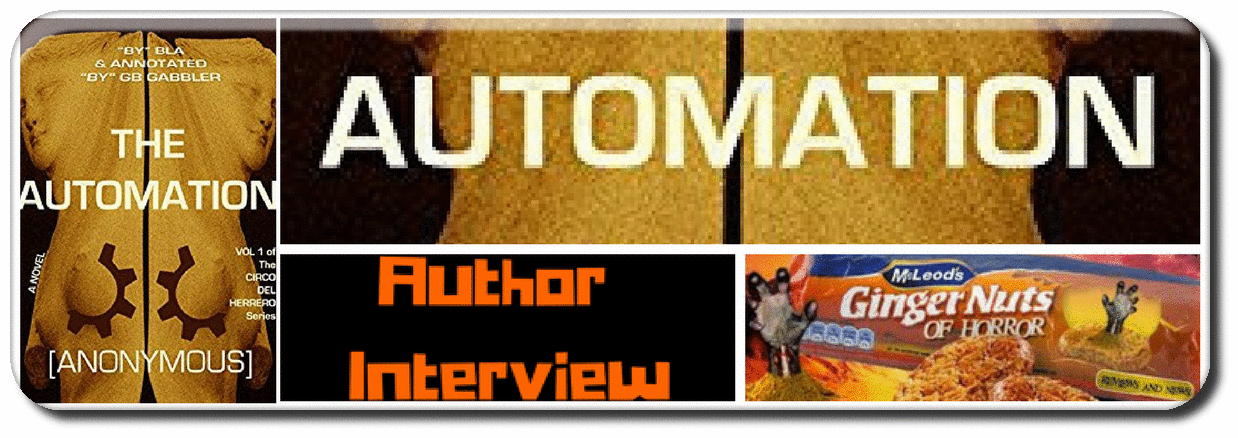 G.B. Gabbler is the editor [and half the pen name] behind The Automation and its upcoming sequel The Pre-programming. The books are part of the Circo del Herrero series (don’t worry, it’s in English). Gabbler has most recently written on the Zombie genre for TheFanzine, but has other publications under their full name. More info at circodelherreroseries.com. Could you tell the readers a little bit about yourself? I probably seem weird—promoting a book when I am only “The Editor,” but it’s a bit more complicated than that! My contribution to the novels are apparent—I’m the footnotes. I’ve taken a manuscript from my partner, B.L.A., and have not only edited it into a much more digestible story (a story that B.L.A. claims is true, but we all know that is not the case—ancient robots and gods are not walking around the earth today), but I have added annotations to the Narrator’s mythmaking. What do you like to do when you're not writing? When I’m not writing/editing, I’m trying to get my Narrator (B.L.A.) to write. Other than the horror genre, what else has been a major influence on your writing? Besides the exploding head in the first chapter of our first book, there is a horror of oedipal complexes throughout (and I mean that in the more mythic sense of the word). It’s the same grotesqueness that propels people to watch Game of Thrones, I think. We saw GOT get away with it, so I wasn’t as scared to let these horrors slide. Beyond that, there is the horror of inescapable fate and predestined outcomes—the illusion of choice. Religion—old and contemporary—shadows many of our characters. They have so much power, yet very little control over their lives. And while we’re on religion: Our work was once nicely rejected by a literary agent who said it reminded him of The Master and Margarita—a book where Satan comes down to earth and there is a talking cat. While our book deals with Greco-Roman myth, you’d be surprised how Satan and cats have worked their way into it… The term horror, especially when applied to fiction always carries such heavy connotations. What’s your feeling on the term “horror” and what do you think we can do to break past these assumptions? Oh, this is a hard one. I was recently introduced to the concept of Post-Horror when researching the film A Ghost Story--a movie we liked, by the way. For Christ's sake, the ghost in that film is represented by an absurd bed sheet but still manages to scare me into existential dread. It took what I call "bed sheet lore" and made us accept it and that is what’s chilling—something so silly can be made to feel real and believable and allegorical. On the flip side, part of how we talk about Horror now is “the old slasher no longer does the trick”—at times feeling ridiculous. Being startled at the movie theatre is more funny than scary. Funny is now scary and scary is now funny. The “Post-Horror” term itself is laughable, but part of a Post-Genre movement I’m happy to embrace. Horror will always be a descriptive term, at least. You can’t have Post-Horror without Horror. What are the books and films that helped to define you as an author? Me? Well, I guess you could say I was inspired by the Norton Anthology of Literature. So many damn footnotes. How would you describe your writing style? Marginal. Are there any reviews of your work, positive or negative that have stayed with you? The book blog called The Loaded Shelf once said my footnotes “were like eating Saturday dinner with my Grandparents and listening to [them] argue…Entertaining at first, but then you kinda wish someone would suddenly start choking…” That was the funniest thing! The reviewer has no idea just how close to murder the Narrator and I sometimes get. How important are names to you in your books? Do you choose the names based on liking the way it sounds or the meaning? As the person with the editorial role who did the obfuscating of names and dates, I did choose the names. I took a “Marvel” approach and made the names alliterative. Example: Odys Odelyn, Pepin Pound, Gwendolyn Gwendy. And of course they have double meanings and harken to other literary characters. That's part of the job. What tools do you feel are must-haves for writers? Money. If you don’t have money, you can’t promote your work. Even mainstream publishers aren’t doing as good a job of promotion these days. To many writers, the characters they write become like children, who is your favourite child, and who is your least favourite to write for and why? My favorite character is the cat in our novel. Cats and gods and Automata get along quite nicely, as you’ll see. Least favorite is a character named Mecca. Mecca is a little turd of a character that only served as a vehicle for our Narrator to explore Peter Pan Syndrome. I wanted to cut him out, but B.L.A. would not let me. I still don’t understand it. Do you have a favorite line or passage from your work, and would you like to share it with us? “Leeland doesn’t kill people. They kill themselves. They triggered their own fate.” That’s a passage from B.L.A., there. It’s about a man who is too moral to kill people, yet they find ways of ending up dead all the same. Can you tell us about your last book, and can you tell us about what you are working on next? The Pre-Programming is volume número 2 of the CIRCO series. It picks up right where The Automation left off. It’s sprinkled with just as many exploding heads—yet with a dash of suicidal cannibal, possessed young girl, and gladiator sport. What was the last great book you read, and what was the last book that disappointed you? The last great book would be The Library at Mount Char. Seriously, go buy yourself a copy. When Scott Hawkins followed me back on Twitter I almost pissed my pants. We are HUGE fans. The last book to disappoint is The Clockwork Dynasty. Why wasn’t someone like Charles V, Holy Roman Emperor and king of Spain, a focus of the book rather than Peter the Great? Charles V was known to commission actual automata. There were a lot of missed opportunities in this book that I just can’t move past. I. Don’t. Under. Stand. It. What's the one question you wish you would get asked but never do? And what would be the answer? "Are we selling the film rights to this series?" The answer is yes, but talk to me, not B.L.A. Twitter: @CircoFootnotes 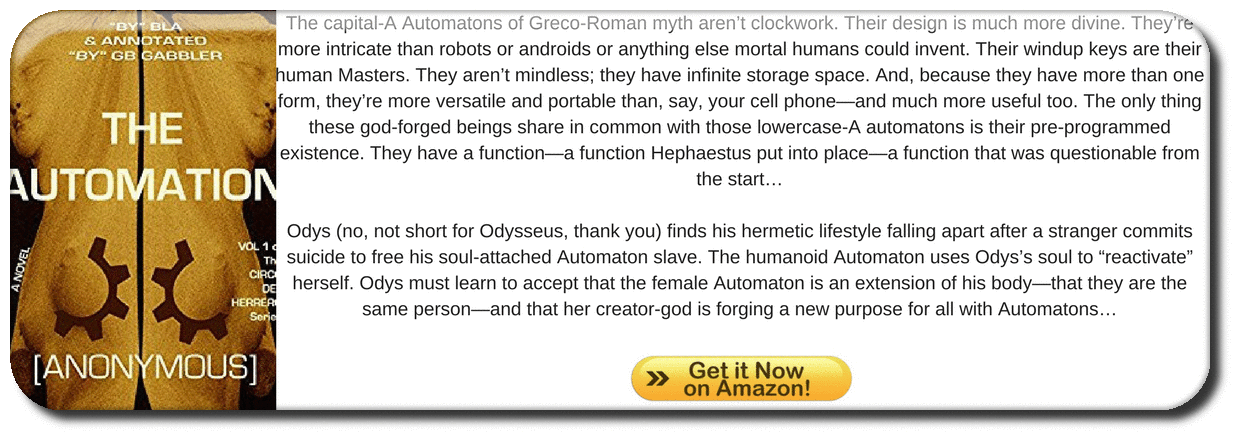  FICTION REVIEW: THE HUNGER BY ALMA KATSU
|


Archives
May 2023
|
 RSS Feed

|

|