

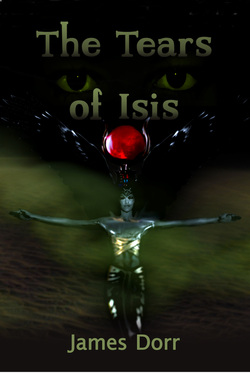
 James Dorr's Tears of Isis James Dorr's Tears of Isis Please welcome James S Dorr, to this ongoing series of horror author interviews. James Dorr is a short story writer and poet with three primarily prose collections, Strange Mistress Tales of Wonder and Romance and Darker Loves: Tales of Mystery and Regret published by Dark Regions Press and The Tears of Isis from Perpetual Motion Machine Publishing, and an illustrated all-poetry collection, Vamps (A Retrospective), from Sam's Dot Publishing/White Cat Publications. He also has a novelette, The Garden, available in electronic and print chapbook form from Damnation Books; electronic chapbooks Vanitas and I'm Dreaming of a . . . and novelette Peds from Untreed Reads Publishing; Poludnitsa in Chamberton Publishing's "Chimera" short fantasy series; and nearly four hundred individual appearances in magazines and anthologies in the US, Canada, Britain, France, Australia, Holland, and Brazil. . 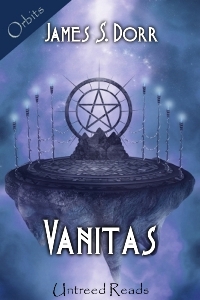 James S Dorr's Vanitas James S Dorr's Vanitas Could you tell the readers a little bit about yourself? I’m a short story writer and poet with three prose collections, one of poetry, and probably close to 400 individual publications of one sort or another ranging from Alfred Hitchcock’s Mystery Magazine to Yellow Bat Review. I live in the US, in Indiana, but with roots in the south, as well as New England and the New York/New Jersey area, while the resident cat, named Wednesday for the daughter of The Addams Family, is a native “Hoosier”. Do you prefer the term Horror, Weird Fiction or Dark Fiction? It depends on what I’m writing, really. I’d characterise myself as working mostly in dark fantasy and horror, but adding in some mystery and sf. So most of that’s dark fiction and some of it’s weird -- in fact my most recent sale has been to an anthology called Bizarro Bizarro. Who are some of your favourite authors? Ray Bradbury, Edgar Allan Poe, Allen Ginsberg (do poets count?), Bertholt Brecht. These are ones I consider especially as being influences on my own work, albeit in their own various ways. What are you reading now? A sort of strange book called The Te of Piglet by Benjamin Hoff, explaining principles of Taoism in terms of A. A. Milne’s children’s classic Winnie the Pooh. Thus far, however, I think Hoff’s earlier The Tao of Pooh is considerably better and would recommend it. How would you describe your writing style? Dark. I’d like to say quirky (in fact, a reviewer recently used that term describing my latest collection, so I think I will). My relation with the Muse is an adversarial one, somewhat like a wrestling match, so however weird or unpromising an idea I might get, I’m likely to run with it. Describe a typical day spent writing. Do you have any unusual writing habits? I’m very undisciplined, so I’m not the type to write at a certain time, or a certain number of words each day. Rather I like to pick a time when I have, preferably, at least four hours clear ahead of me (part of this because I procrastinate as well), and then work until I’m too tired to go on productively. That’s for stories in actual draft stage. Ideas, poems, beginnings and endings, shorter things in general I’ll write in newspaper margins or on the backs of envelopes and the like as they come to me, then wait for a time I can transfer them onto the computer. What’s your favourite food? You can always tempt me with a juicy steak, rare, the way vampires like to eat it. Perhaps with some onions and Cajun seasoning. (Mushrooms are good too, especially on a small filet mignon.) What’s your favourite album? New Orleans jazz. Or for something more modern, perhaps some Dave Brubeck or late Miles Davis. On the other hand, I play an instrument too, a tenor recorder as well as leading a small group, but then it’s Renaissance period dance music. What’s the most important lesson you have learned about writing? Perseverance. Victory comes not just to the bold, but also the pigheaded (in a good way). Or to borrow a line from the 1960s (specifically R. Crumb), “Keep on Truckin’”. Fame and fortune, or respect? With fame and fortune, can I buy respect? But I see the point, fame and fortune will probably not come except to the lucky or the very good (and for the latter, not always within their lifetime), but earning the respect of one’s writing peers -- and a few readers also, if one can -- is always a good thing. What piece of your own work are you most proud of? Right now my latest short fiction collection, The Tears of Isis, released just this May (2013) by Perpetual Motion Machine Publishing. Relating to the above, it’s an illustration of sorts of the fruits of respect: Editor/Publisher Max Booth III, having read examples of my work, approached me about doing a book, allowing me a completely free hand in selecting and ordering the stories (the only constraint, that it had to total at least 60,000 words). So I hope people like it. Can you tell us about your last book, and can you tell us about what you are working on next? The Tears of Isis is a collection of seventeen stories and one poem on mostly dark subjects, starting with Medusa depicted as a sculptress and ending with another sculptress on a quest to find herself in the myth of Isis, both as creatrix and vulture-winged goddess of death. In between are a variety of pieces, from fairy tales retold to borderline science fiction, but all in some was attempting to show a union of beauty with destruction, of art hand-in-hand with alienation. As for the future, I’ve been working on a series of stories set in the “Tombs”, a vast necropolis set on a far-future dying Earth. Some fifteen have been published thus far (three in The Tears of Isis, one for the first time) with a sixteenth accepted for White Cat Publications’s anthology Airships & Automatons, hopefully out by the end of the year. So possibly in a year or so a Tombs-based novel, composed of stories along the lines of something like Bradbury’s The Martian Chronicles or Amy Tan’s The Joy Luck Club? Here are some links for my blog, Facebook, and for those interested in The Tears of Isis (the ones to Amazon and Barnes & Noble could be omitted if you think them redundant -- I’ve just included them as a convenience for readers who might want to go directly to one of those sites): For More Information check out these links http://jamesdorrwriter.wordpress.com James'Facebook page: https://www.facebook.com/james.dorr.9 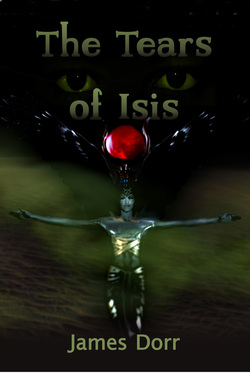 James Dorr's Tears of Isis James Dorr's Tears of Isis What is art? To a sculptor it may be the formation of beauty from stone, or some other material; to a writer the forming of words into poetry or prose. The creation or retelling of myths and wonders, bringing to them a new understanding — but beauty as well. To the Elizabethan poet Sir Philip Sidney, in his Defense of Poesy, “lifted up with the vigor of his own invention, [the poet -- or, indeed, the artist in general] doth grow, in effect, into another nature, in making things either better than nature bringeth forth, or, quite anew, forms such as never were in nature, as the heroes, demi-gods, cyclops, chimeras, furies, and such like.” And so it may be proper that the book we have here, The Tears of Isis, begins with a poem about a sculptor, a modern Medusa, and concludes with the title story of another sculptor who travels a continent for inspiration, in search of the goddess, “the Weeping Isis,” and ends with discovery of her own self.But The Tears of Isis, the book, is a journey too, encompassing, yes, “forms such as never were in nature,” as not just “La Méduse,” but also a man’s soul absorbed by an octopus, vampires both physical and metaphorical, music and retellings of Cinderella, an Ancient World caper involving the Golden Fleece of legend, a far-future recasting of Sleeping Beauty — one of three stories in The Tears of Isis set in the author’s world of the “Tombs,” another “Tombs” tale of the origin of ghouls, cockroaches spawned by war, insects by UFOs, Lovecraftian monsters called forth by candles, a woman who takes in a rat as a pet, the “death planet” Saturn and women who buy birds, the life-cycle of dragons, another “Tombs” story of love and a zombie-like form of revenge, and at last to Isis — her search to create but destroying as well, as is part of her nature, and back full circle to sculptress Medusa who “spoke to her hair at times” and “in her dreams . . . her hair hissed its/ answers.” Are these tales, then, her doing, the fever dreams of one who both creates and dismantles, who transmutes life itself into stone? And are Medusa and Isis the same, the goddess who, with her consort Osiris, rules over death and life at the same time, taking the form of both nurturing mother and flesh-eating vulture? It is for the reader to decide. If you are a book reviewer and would like a free copy of The Tears of Isis (epub, mobi or pdf) please contact us at pmmpublishing@gmail.com. For more great horror author interviews please click hereIf you liked this interview please consider sharing via the Facebook and Twitter buttons belowIf you would like to take part in this series of horror author interviews please download the questions from here5/12/2013 13:34:34
Jim, thanks -- this is very nice! I've got a link up on my blog too, as well, by now, hopefully on Facebook and, as the afternoon/evening progresses, I'll try to get it posted a few more places as well. In the meantime, if other readers would like to comment, I'll stop back in from time to time so, if people any questions for instance, fire away and I'll try to reply. 17/2/2014 21:30:13
Good post ! I just forwarded this onto a coworker who has been conducting a little research on this. 25/2/2014 00:58:52
I absolutely enjoyed every single small little bit of it. Comments are closed.
|


Archives
May 2023
|
 RSS Feed

|

|