

 Bracken MacLeod has worked as a martial arts teacher, a university philosophy instructor, for a children’s non-profit, and as a criminal and civil trial attorney. While he tries to avoid using the law education, he occasionally finds uses for the martial arts and philosophy training. His work has appeared in several magazines and anthologies including Shotgun Honey, Every Day Fiction, LampLight Magazine, Reloaded: Both Barrels Vol. 2, Ominous Realities, and most recently, Beat to a Pulp Magazine. His novel, MOUNTAIN HOME, debuted last year and WHITE KNIGHT, a novella, is now available from One Eye Press. 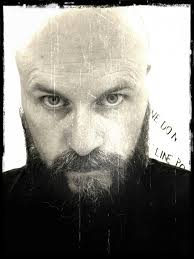 Hi Bracken could you tell the readers a little bit about yourself? Cheers! I’m a former martial arts teacher, college philosophy instructor, and trial attorney. Basically, I had a lot of fall-back careers that went nowhere before I decided to seriously devote myself to art. I’m fortunate to be in a position where I can be a full time writer and stay at home dad. As a former martial arts teacher, what would you recommend as the best way to defend yourself from an armchair critic? Don’t let people lead you around to a position where they want you to be. Miyamoto Musashi called it “holding down the pillow.” Whenever someone tries to attack you, go ahead and let them do anything that’s useless. If it won’t hurt you there’s no reason to lift a finger in defence. That’s the essence of the assault from an armchair critic. Next to nothing they can do is useful. If they’re out of reach, let ‘em swing and wear themselves out. There’s no need to close the distance and help them out. I have yet to have my nose bloodied by someone aiming at me from his mother’s basement. In all seriousness what branch of martial arts did you train? My formal training is in Shotokan Karate, starting back when I was twelve. But when I realized that Shotokan round kicks stink, I learned a better one from a Muay Thai instructor. When I discovered that Judo had better grappling and throws than I’d learned from my teachers, I started training with those guys until I plugged that hole in my repertoire. And so on. This was before the popularity of MMA and next to no one else was doing that. I wasn’t popular in the town where I used to teach because I wasn’t a “pure” martial artist focusing on being the best at Shotokan or Judo. I was interested in being the best at not getting my ass handed to me by a guy doing something different than I was. I translated that into teaching people how to defend themselves in real life instead of going to tournaments to win plastic trophies and aluminium samurai swords. These days, I concentrate on tactical avoidance. Any fight I can’t avoid goes close quarters. Elbows, knees, cheek biting, and eye gouging. The other half of holding down the pillow. You have to stop their “attack from the letter a” as Musashi puts it. You’ve also taught philosophy, isn’t that just for students who don’t want to get up early in the morning? It’s for people who like bullshit more than paychecks. I enjoyed philosophy, but fell out of love with academe very quickly. I loved teaching people about ethics and logic, but hated departmental politics and begging for scraps. It was even worse for me in a law firm. I’m not good in a hierarchical system. As a former attorney, let’s go a bit Law And Order, what would be your ideal pairing of fictional detective and lawyer if you could pick them to defend you in court? My ideal pairing would be The Operative from Red Harvest as detective and Atticus Finch from To Kill a Mockingbird as ideal defence attorney. It seems contradictory, but I’d want a detective who’d do anything to uncover the truth and an attorney who felt as strongly about my case as he did about his personal morals and integrity. What do you like to do when you're not writing? Not writing? What’s that? Kidding aside, I love live music and cocktails and art museums and brewing beer and travel and good wine. There are so many things I love to do, I have to triage them to keep time in my life for family and writing. I don’t trust any writer who doesn’t know how to live. I am certainly suspect of any writer who doesn’t like to drink! Who would be on the soundtrack to your life story? Anything that defies listener expectation and moves the goalposts in genre. Opeth, Miles Davis, Erkki-Sven Tüür, Ihsahn, Jon Langford. I’d want any band that sets out to upset its audience backing me. You describe yourself as a “secular horror writer”, could you explain this term to the readers? The thing that scares me most is real world violence. The guy with a delusion and a gun to back it up or a person committed to hurting people for his own pleasure and profit. That is horror to me. Big hairy monsters and ancient curses don’t move me much because I’ve never encountered them. But I’ve had more than a couple close calls with real bad people. I don’t think I can scare a reader if I don’t feel a real measure of fear myself while I’m writing. A real person with an understandable (even if irrational) motive is what makes the hair on my arms (I have none on my head) stand up, so that’s what I try to portray in my work. So are you still a fan of the more bug eyed monster horror? I am as long as the story is driven by character. Like I said, I’m just not all that scared of things I know don’t exist, so you have to hook me with people I want to survive and succeed and then threaten them with the Big Bad. As long as I’m invested in a person, you can throw anything at them and I’ll be on board. But a creative monster alone won’t do it. What do you think of the current state of the genre? I think that the 1980s did both amazing things for, and irreparable harm to, the genre. The splatterpunk movement got my motor running and opened the doors for writers to treat violence and the physical effects of horror as real consequences of whatever bad thing was happening on the page. At the same time, the idea of the monster as the unacknowledged protagonist (e.g., Freddy Kruger, Jason Voorhees) and victims as disposable ciphers available for “creative” kills was the worst thing that ever happened to the genre. Those are the springboards of modern genre as I see it. Having said that, I think there’s an exciting renaissance happening today, especially in cinema, with the revival of exploitation and survival horror. People call it “torture porn” like it’s something new to be railed against, but it’s the exact same thing they were doing in the 70s and early 80s just updated for a new sensibility and with higher production value. The original Texas Chain Saw Massacre, Maniac, I Spit on Your Grave, and Henry: Portrait of a Serial Killer were stories that took risks and made no apologies. That stuff is scary as hell, and I’m glad to see its intellectual progeny not just in movies like Martyrs and The Devil’s Rejects but also from really great writers like Adam Cesare and Bill Braddock. Who are some of your favourite authors? Well, I just named two. They’re tops among my favourite new writers along with Michael Rowe, Kealan Patrick Burke, Simon Logan, and John Mantooth. It should be no surprise to anyone that Jack Ketchum is a huge inspiration to me and an influence on my style. I’m also a huge fan of Joyce Carol Oates, Cormac McCarthy, Albert Camus, Andrew Vachss and James M. Cain. What is your all-time favourite horror novel, and film? That’s really hard. I think my all-time favourite horror novel is probably The Damnation Game by Clive Barker. That book got me thinking about transgression in horror prose in a completely new way. That and Off Season by Ketchum were my education in how to break the rules of traditional horror. My favourite horror movie is the 1974 The Texas Chain Saw Massacre. It’s dated and the story is way too familiar now, but when I first saw it I’d never seen anything as wild and committed to keeping the audience off balance. I think it’s an obligation of dark work to not let a reader or viewer observe the story from a completely safe place. That’s why sequels and most (but not all) remakes suck. If you could erase one horror cliché what would be your choice? The average person who becomes an instant expert in improvised traps using household items. Everyone in the home invasion story is a fucking MacGyver with access to high test wire, flash powder, and sledgehammers. You know what I have capable of jacking up intruders in my house? Red pepper flakes and Legos! Would I know how to make them explode when someone turns on the lights? Hell no! What was the last great book you read, and what was the last book that disappointed you? The last incredible book I read was “The Garden of Last Days” by Andre Dubus III. It’s been out for a while, but I put it low on the reading list because of the incredible hype it received. That was a huge mistake. That book was amazing. It’s not horror, but anyone who doesn’t read out of genre once in a while isn’t doing themselves any favors. As far as the last book that disappointed me, I don’t like to slag on other writer’s books. There are already enough critics out there willing to shit on other people’s hard work that I don’t feel any desire to add to the chorus. Instead, I’ll tell you about a book that came out in the last year that blew me away. “Jack and Jill” by Kealan Patrick Burke. That book frustrated the hell out of me on two levels. 1) Burke is such a wonderful writer that reading his work causes me painful envy. 2) It’s a novella, so it was over way too soon. How would you describe your writing style? Stripped down. All chiller; no filler. Are there any reviews of your work, positive or negative that have stayed with you? I try not to sit too long with any reviews of my work for different reasons. All of the professional reviews of my work have been very good so far. Reader reviews are about 90% glowing, so I feel very fortunate. I’ve been told by people smarter and more experienced than me in these matters to ignore reviews, both good and bad. But naturally, I like the nice things my own literary heroes like Chet Williamson and Jack Ketchum say best. The one I keep going back to is Andrew Vachss’ wonderful words about MOUNTAIN HOME. (http://www.vachss.com/media/righteous/ -- scroll down) What aspects of writing to do you find the most difficult? Making the word thingies make sense and stuff. Really though, it’s editing and keeping track of continuity. First drafts are easy. And then when I’m editing I’ll realize that a scene I put early on in the book works better after Event X, or Character Y should do something instead of Character Z. Changing those little things creates big ripples in the work that have to be accounted for and sometimes fixed. Having an eye for detail is crucial if you’re writing anything more complicated than Nights in Rodanthe. Is there one subject you would never write about as an author? What is it? No. There are subjects that I treat carefully because there’s a fine line between entertainment and exploitation. I suppose there are points of view I’d never attempt in my work because I don’t see a way to do it in a way that isn’t prurient. I could never write Lolita, not because I’m not good enough (hold your shouting until after the interview please), but because I can’t stomach the idea of telling a story from Humbert Humbert’s point of view. If you could kill off any character from any other book who would you chose and how would they die? Dexter Morgan. I’d have him get caught as a result of one of his nonsensical plot-contrivances and executed by an angry mob of readers who care about continuity and character integrity. What do you think makes a good story? CHARACTER! I don’t care how exciting the action is, how original the monster, or how well the plot unfolds, if I don’t care about at least one character’s outcome (I don’t have to like them, I just have to care whether they succeed or fail), then I will not finish reading your book. How important are names to you in your books? Do you choose the names based on liking the way it sounds or the meaning? Names are very important to me because they’re often the reader’s first impression of the character. Introducing someone as William is going to create a different mental picture for a reader than calling him Vilhjálmur. On the other hand, readers outside of Iceland might have trouble remembering Vilhjálmur’s name, so no matter how awesome it sounds, it could be a detriment to a piece not set in Reykjavik. Depends, I guess. Sometimes I’ll pick a name that has a particular meaning if a character is meant to be a representation of an idea or I want to foreshadow their arc a little. I don’t make that explicit though. Most of the time that meaning is just meant for me and my relationship to the character while I’m writing him or her. The main character in WHITE KNIGHT, however, has no name. I just call him The Prosecutor. That’s my nod to The Operative in Red Harvest. How do you think you’ve evolved creatively? I used to write obliquely, leaving things for the reader to fill in because I was afraid of offending people if I went too far. What I was doing was keeping myself from going far enough. I don’t think violence should be shied away from because it’s violence. If I want you to believe a character is having a terrible reaction to an event, I want the event to justify that reaction. For me, that means making sure the reader sees what the characters experience the way they see it. Of course, all violence on the page must serve the story. It has to either tell the reader something about a character or move the plot forward. Without one of those two things, it’s gratuitous in my opinion. But I learned that violence itself is not always gratuitous. Once I overcame that timidity, I think I freed myself to better focus on character and story and crafting compelling narratives. What is the best piece of advice you ever received from another author? The best piece of advice I ever got was from Elizabeth Bear. She told me that “writing what you know” isn’t supposed to mean you must only write about literal personal experience. It’s supposed to mean, write honestly about what you feel and understand. I’ve never been a killer, so how do I write crime and horror fiction? I write about characters’ honest emotions, motivations, and desires that come from emotional states I can relate to (on some level, at least). Write what you know in your heart! Who is your favourite character from your book and why? I think the protagonist of any author’s book ought to be their favourite. If I liked some side character better, why not write about him or her instead? Sure, I get interested in other characters as they become richer and better developed (sometimes I have little dalliances with them that have to be deleted). But at the end of the day, my favourites are always the ones in the center of the story. I put them there for a reason. Therefore, the Prosecutor in White Knight is my favourite. I think he has the most interesting perspective. He’s torn between The Right Thing To Do and what he has to do to preserve what he loves. Sometimes those roads intersect for him and other times they don’t. Either way I think the path he takes to come to terms with that conflict makes him my fav. What piece of your own work are you most proud of? It’s really hard to say. They’re all my babies; I don’t like to pick favourites. That said, there’s a piece of mine called, Thirteen Views of the Suicide Woods, coming out in Shock Totem Issue 9 that I feel represents some of my best work. I’m trying to channel the tone and spirit of that for my next novel. And are there any that you would like to forget about? I wrote a zombie story called Panic Room several years ago that I used to send around. In hindsight, while I like the idea of it (not the zombie part, the locked room part), it has terrible flaws that can’t be overcome. I wish I hadn’t sent it so many places that I admire. For those who haven’t read any of your books, what book of yours do you think best represents your work and why? I think both Mountain Home and White Knight represent different aspects of my work. MH is my character playground. I assembled a biggish cast there and let them at each other. I think that is my best character work. WK, on the other hand, is stripped down, lean and mean. It’s the part of me that likes no-bullshit get-to-the-point story telling. Both of them are reflections of the other, however. That’s not an answer to your question. People should buy ALL of my books! Can you tell us about your latest offering White Knight? WHITE KNIGHT is the story of an idealistic criminal prosecutor on the cusp of becoming jaded and cynical. In a last attempt to preserve his idealism, he makes a promise that he can’t keep to a battered woman. That promise threatens to drag him down completely and ruin everything he cares for. The book is told from the point of view of a young prosecutor who is learning that the reality of the job is nothing like what he’d imagined, how much of this is based on your past career? The first three chapters are more or less directly lifted from my experience in criminal court. The rest of the book is not anything I lived, thankfully. But it is by and large a metaphor for how I came to view what one needs to become to make it as an advocate. People start out as crusaders for a righteous cause, anxious to slay dragons. But blood and smoke dull shining armor. The book has been classed as a hardboiled Noir, how did you go about ensuring that you didn’t fall into the clichéd traps that are so prevalent in this genre? Every genre is a minefield of lazy clichés. The trick is to watch where people have already stepped. In essence, read in your genre! You can do tropes well, incidentally, if you’re conscious of what you’re doing and try to make the reader conscious that you are making Character X fit into a well-worn role for a good reason. Absent good reasons, you have to come up with new ways to tell the story. A lot of crime novel protagonists start at rock bottom. I wanted my character to be growing world-weary, not already a bitter self-medicating drunk. He’s happy in his marriage too, which goes against type. Unlike the character who wakes up alone in a rathole hotel with a pounding hangover and a burning sensation when he goes for a piss, my protagonist still has everything to lose. He’s not climbing out of a hole as much as he’s racing toward one he can’t see. I imagined this as the possible origin story for that other guy. How does a jaded dipsomaniac loser get where he is? How does he avoid that fate? Who would you say the book is aimed at? While this is a crime novella, my love of horror definitely peeks through the cracks. I’d say it’s aimed at people who love the kind of story that starts in the red and burns out the engine. It’s a crime book, but it’s also a character study and an accounting of real world horror. So what’s next for you? Right now, I’m working on a new full-length novel tentatively titled Marked about tattooing and human trafficking. Once I’m done with that, I’m going back to polish up another novella I promised to the good people at Necon E-Books about death and parenthood. That one’s called God Bless All the Dead Kids. Before either of those are published, however, I have a couple of short pieces coming out. One in Shroud Magazine and the piece I mentioned already in Shock Totem. WHITE KNIGHT BY BRACKEN MaCLEOD 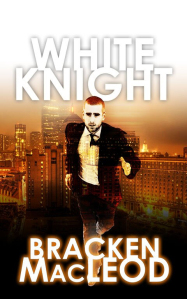 Once, he had imagined himself slaying dragons and making the monsters pay. But his armor was wearing thin as the women who drifted through his office haunted him with the same, hard-bought lie: “I want to drop the charges.” Every bruised face and split lip reminded the prosecutor of the broken home he’d escaped. So when Marisol Pierce appeared with an image of her son and a hint that she was willing to take a step away from the man abusing her, he made a promise he couldn’t keep. A promise that could cost him everything. Now, he’s in a race against time to find the boy, save the damsel, and free himself from a dragon no one can leash before everything in his world is burned to cinders. This is his last chance to be a White Knight. Some men only know how to do hard things the hard way. Purchase a copy here Find out more about Bracken by following the links belowGinger Nuts of Horror The Heart and Soul of Horror Websites18/6/2014 01:44:12
Great! Thanks for your documents, its been very helpful. Thanks again for sharing your information. 20/8/2014 00:22:18
I've just decided to create a blog, which I have been wanting to do for a while. Thanks for this post, it's really useful! Comments are closed.
|


Archives
May 2023
|
 RSS Feed

|

|