

HORROR AUTHOR INTERVIEW - GRAHAM MASTERTON
17/12/2014
 GRAHAM MASTERTON GRAHAM MASTERTON There are certain authors whose names automatically spring to mind when you ask anyone to name their favourite horror author, or to name a book that was integral to forming their love of the horror genre. Graham Masterton is one such name, without him and James Herbert I don't think I would have fallen in love with the horror genre. His books had a great impact on me. Even now after all these years I still remember the discussion I had while walking along The Kingsway in Dundee that first brought him to my attention. That same day I went to the John Menzies in Dundee and snapped up every single one of his books that they had in stock. It's a day that I will never forget. At that time I would never have dared to think that I would been given an opportunity to interview one of my all time literary heroes. So it is with great pleasure to present to you my interview with the legend that isThe Manitou Man, Graham Masterton. 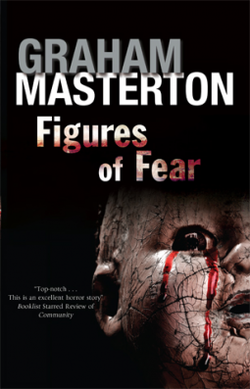 FIGURES OF FEAR FIGURES OF FEAR Hello Graham, first of all can I just say what an honour it is to have the chance to interview a true legend of writing. How are things with you? I have been working non-stop for the past four years developing my series of Irish crime novels featuring Detective Superintendent Katie Maguire. I have also written several horror novels, such as the eighth Jim Rook book Garden of Evil, ; Forest Ghost; and Plague of the Manitou, and completed a new collection of short horror stories Figures of Fear. I also wrote Drought, which was a disaster novel I had been meaning to write for the past eleven years. The publishing scene has been changed beyond recognition with the introduction of ebooks and it is essential to keep up with it, which is why I have been working so hard. It has also given me the opportunity to bring out my backlist, such as my historical novels like Rich and Railroad and Lady of Fortune and Silver, and also my “how-to” sex books, like How To Drive Your Man Wild In Bed. This could never have happened if we still had to rely on print. We are rapidly nearing Christmas, what is your ideal Christmas? And what present would you most like to receive this year? I used to love Christmas when our three sons were young. We had very lavish Christmases, with loads of food and presents. When we lived in Ireland we always had three enormous trees and we decorated the whole house. But, time passes. Our sons have all grown up and have families of their own and my wife Wiescka passed away four years ago, so I ignore Christmas these days. It has become more of a nuisance than anything else because all of my publishers take so much time off. Looking back at through all these years to the time where you were expelled from school for taking too much an interest in Jack Kerouac, Allen Ginsberg and William Burroughs than William Shakespeare, Oliver Goldsmith and Charles Dickens, are you grateful for being expelled? Do you think you would be sitting here with all these great books that you have written if you hadn’t been expelled? I don’t think it would have made much difference. I have been writing all my life, ever since I was very young. When I was eight and nine I wrote novels in the style of Jules Verne and Charles Dickens and illustrated and bound them myself in cardboard, and I wrote a 400-page vampire novel when I was 14 years old. Writing is the way that I express myself, so I think I would have written those novels anyway...maybe not exactly the same ones, but something similar. Your first proper experience of professional writing was as a reporter, what were the most important and useful lessons you learned during this period? I was very lucky to get a job with my local paper when the editors and senior reporters were all ex-Fleet Street men, so they really knew their stuff. They taught me to grab the readers’ attention immediately in the first sentence. They taught me to write logically and clearly and not to be pretentious. Most of all that experience taught me to talk to people and get their personal stories out of them. The best that any would-be writer can do is be sensitive to the feelings and problems of other people, and to listen to them when they try to express them. That is the way you find out how people’s minds work. We can’t talk about this period of your writing career without mentioning your time as assistant editor of Mayfair magazine and editor Penthouse Magazine. How did you get that job? And do you think you would do it again in this new and so called enlightened age? I did four years’ training on my local paper and then tried to get a job in Fleet Street. I applied to The Evening Standard and The Daily Telegraph and both turned me down (even though my uncle Bill was property editor of the Standard.) They both suggested I should go and work for a provincial evening paper like the Wolverhampton Evening Telegraph for a few years, to get more experience. I thought sod that. Then a girlfriend of mine said that she had seen somebody on the Tube reading a new men’s magazine called Mayfair so I wrote off to them – probably the most arrogant job-application letter ever written , saying how brilliant I was and how much they needed me. I was interviewed in the swimming-pool at the RAC Club in Pall Mall, and they gave me the job. What I only realised when I arrived on my first day was that the staff was only the publisher, the editor, me, the secretary, and the publisher’s dog. All the design and photography were farmed out. So it was you that wrote all those “I was never sure if these letters were real but I couldn’t believe what happened to me last might” type of letters. You must have a favourite of those? I wrote them for Mayfair because the magazine was in its very early days and we didn’t get many letters. Penthouse was different – we had more filthy letters than we knew what to do with. But those were comparatively innocent times. I wrote letters about seeing up a girl’s skirt as she climbed the stairs of a bus in front of me, and realising that she wasn’t wearing knickers. You have cited writers such as Lovecraft and Poe as being some of the early progenitors of your love for the horror genre. In particular you mentioned that it was there use of original mythos rather than relying on such things as vampires and werewolves that drew you into their writing? Is this something that you have deliberately done with your writing as you have never written horror story based on an atypical monster? Why write about something that has been written about a million times before? There are so many scary creatures in mythology that you never have to write about the same demon twice. What makes these mythological creatures so frightening is that they were devised by people before they had any idea what caused plagues and famines and madness and natural disasters, so they ascribed all of those misfortunes to terrifying supernatural beings. One of my writing devices is simply to take one of those legendary demons and see what happens when ordinary modern people have to fight against them. I have written one vampire novel Descendant, but it is based very much on the original Romanian legends of the strigoi, and none of the vampires go around in long black cloaks biting women’s necks. You started your fiction writing with sex books, but when that market started to go limp, you handed in a short horror novel. What prompted you to pick horror over all the other genres of writing? It was in 1975 and The Exorcist had made a considerable impact. I had five days spare in between sex books so I spent them hammering out The Manitou, which was inspired by Wiescka’s pregnancy with our first son, mixed with a Native American legend which I remembered from The Buffalo Bill Annual, 1955, about manitous, the spirits that live in trees and rocks and wind and water and buffalo. If you don’t mind I have a question from Paul M. Feeney, who is one of the contributors to Ginger Nuts of Horror :- 'During my formative teenage years, I had many a nightmare from reading the likes of Mirror, Death Dream, Death Trance (the opening scenes in particular affected me greatly), Ritual, Night Warriors, The Hymn, Walkers and many, many more of your books. To this day, I still hold some of those books as all time favourites. My question is, how do you do it? How do you manage to tap into fears that often, readers aren't even fully aware of having? And not, in my opinion, in a cheap, sensationalist way. I felt that those characters were real, that what was happening was real. I often felt real dread, real nausea reading your books (trust me, it's a good thing). The answer is to take an interest in people, what they want out of life, what motivates them and what frightens them. My training as a reporter really helped with this, because I am never afraid to ask people point blank questions which other people might be afraid to ask. Not only will they not take offence, but they are absolutely bursting to tell you their most private problems – mainly because you are a relative stranger and they can’t tell the people who are close to them. Once you have an understanding of how people’s minds work, you can create characters who are believable. You will notice in my novels how the characters have other problems apart from the main problem of dealing with a demon – debt problems, unruly children, a failing marriage, bereavement, trouble at work. This gives them a dimension which the characters in too many horror novels simply don’t have.. Of course there are several things which almost everybody is afraid of, to some extent. Fear of insects, fear of being lost, fear of the dark, fear of anybody in their family being abducted or hurt. A horror writer can play on these at any time.  THE WALKERS THE WALKERS And on a similar note, and I know it is a question that some writers hate being asked, especially when it’s put as simply as “where do you get your ideas”, but where do you get them? For instance in Walkers what prompted you to use a nursery rhyme as the mystical chant? Or a twisted version of the Green Man in Flesh and Blood? Do you set out beforehand to use them or do they come to you whilst writing the book? They tend to evolve during the course of writing the book. When I start writing a novel, I usually have only the vaguest idea of where it’s going to go. Once the characters have been created, they do all the work for me. Sometimes they refuse to do what I originally intended them do, but fitting all the awkward and disparate pieces together is what makes a book come to life, and is ultimately satisfying when everything clicks. I have used nursery rhymes a few times (for instance in The Doorkeepers) because I think there is something a little creepy about them, and most nursery rhymes were not originally intended for children but have some other meaning, either political or religious or simply scary (like “ring-a-ring-a-roses)/ 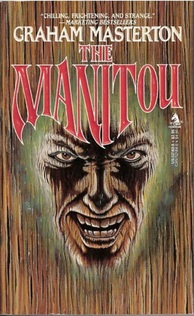 THE MANITOU THE MANITOU You have written so many books in so many different genres we would be here all year if we talked about the all, so if you don’t mind I’d like to pick out a few personal favourites of mine to talk about? Some might say that The Manitou is your defining book, even now after all these years it is a book that people still talk about and one that has spawned a number of fantastic sequels. Why do you think Harry Erskine the phony mystic and Misquamacus the Native American wonder-worker struck such a chord with your readers? Native American mysticism had never been used as the basis for a horror story very much before (with the notable exception of Algernon Blackwood’s Wendigo). The Manitou had a very positive response from Native Americans – I was taken to lunch by Sitting Bull’s great-grand-daughter at the Russian Tea Room in New York and presented with a framed print of Sitting Bull. Another aspect fof The Manitou which struck a chord was the character of Harry Erskine, who was cracking jokes even at moments of maximum terror – which is what people actually do. Although the movie had its shortcomings and now looks very dated, I think Tony Curtis was perfect for the part of Harry. Have we seen the last of these two? No...after Revenge of the Manitou, Burial, Manitou Blood and Blind Panic, a new novel Plague of the Manitou will be published early in the summer of 2015. Although I wrote it two years ago now, it resonates with the Ebola crisis that’s affecting Africa at the moment, and the symptoms of the plague are almost identical...except that its sufferers don’t quite die. 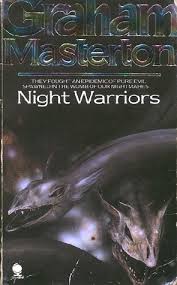 NIGHT WARRIORS NIGHT WARRIORS Another of your most popular books is The Night Warriors series, and I must admit this is probably my personal all time favourite series of horror books. The Night Warriors was the book that first introduced me to your writing, and to this day I still remember the conversation I was having with a friend while walking down the Kingsway in Dundee. I am particularly interested in the genesis of this book, where did the fantastic idea of having a group of guardians who can enter our dreams initially come from? I was interested in writing fantasy, but I have never been a great fan of sword-and-sorcery fantasy. Somehow I just thought it would be very entertaining to write a book in which the heroes and heroines are totally unexceptional people, but who become invested with extraordinary weapons and unusual powers when they are in the world of dreams. In dreams, absolutely anything can happen, but the Night Warriors still have to obey strict rules of combat, and in the final analysis they are still just ordinary men and women, with plenty of day-to-day problems to sort out, apart from the terrors they face in dreams. The book has, for me, what is probably the most unnerving scene in any book I have read. That truly disturbing scene of the eels on the beach. (As a kid I was bitten on the hand by a huge sand eel). How do you gauge and monitor your writing when it comes to scenes like this? And do you think you have ever gone too far? Occasionally I have “gone too far” as you call it on purpose. Let’s face it, a horror story has to have horror in it, or it’s not a horror story. It’s the same with my crime books. I have been criticised for making my murders too gory, but real-life murder is gory. I can’t see the point of writing what they call “cozy crime” where the worst thing that happens is that the bishop gets beaten to death with a badger in the bathroom. I have purposely written some stories that go very close to the edge, such as Eric The Pie, which led to WH Smith banning the first issue of Frighteners magazine; and Sepsis. Some readers have found Beholder, in my latest short story collection Figures of Fear to be a little on the gross side, especially if they are sensitive about anything happening to their eyes. Yet despite this scene, and those such as in the opening of The Sleepless, and that ball busting scene in The House That Jack Built they have never felt gross for the sake of being gross. How do you as a writer ensure that they are integral to the narrative rather than just being a shock piece? The grosser you are, the better you have to write, which is the challenge that I deliberately set myself. I am my own most severe critic when it comes to writing style, choice of rods, rhythm of sentences and general believability. I really enjoyed how you made the powers that the heroes wield limited within the dreamscape, while the evil they faced is almost unlimited. Did you do this as a means to keep the narrative going, or was there a deeper message about how the power of good feels so small against the almost limitless power of evil we face every day? Errmm...they are adventure stories, set in the world of dreams and nightmares. No moral messages! And how did you decide on the powers that each of our heroes had? Just invent them, so that they are complementary to each other. And always make sure that the girls are not wearing very much but have amazing powers. Just like real life. If you had the power to enter anyone’s dreams who would you most like to enter? I have a Polish girlfriend and I would love to walk about her dreams and find out what’s going on there! 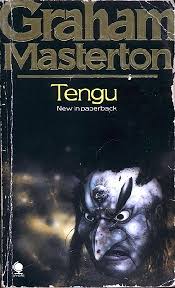 TENGU TENGU Another thing I like about your books is how they books like to buck trends, for example the happy ending where the hero gets the girl and lives happily ever after. I would say that Tengu is your one book that really shows this of particularly well. The ending of this book is truly amazing and brutal, are there any drafts where the ending isn’t quite as brutal? My US editor complained about the ending of Tengu and said that it was too apocalyptic but in the end I persuaded him otherwise. I know some readers like their books to be neatly wrapped up at the end, but real life doesn’t work like that, and even in my crime books not all of the crimes get solved and not all of the villains get brought to justice, because in reality they don’t. I remember a neighbour who read my cold war thriller Ikon coming up to me after he had finished it and said, “What happened next?” I told him, “Nothing happened next except I went down to the pub.” How important is to you to try and not deliver what the readers may expect? Readers like to be surprised. They enjoy being challenged and I think sometimes they even like to be annoyed by what they are reading. All I try to do is keep them entertained and make sure (at least for the course of the book) their disbelief is suspended. And on that note, you might not remember this, but I can remember a bit of a to-do, when you released Spirit some people took real offence at the fact that you had written a, for you, quiet ghost story. How did you feel when people got upset over this? Some people like some books and others don’t. I write what I feel like writing and if a reader doesn’t enjoy it then all I can say is, wait for the next one, it’ll be different. If I wrotenthe same type of book over and over I would go doolally. It’s bad enough writing seven Irish crime novels one after the other – I’m beginning to talk Corkinese. I’m even beginning to dream in Corkinese, do you know what I mean, like, boy? You have been in this business a long time, and perhaps one of the reasons for your longevity is your diverse styles of writing and for sake of a better a word genre jumping. You have always written in different genres, however these days you seem to be more comfortable writing in the crime genre. What prompted you to lean more towards this genre? Crime novels have a much wider audience than horror novels and I wrote the first Katie Maguire novel because I wanted to reach that larger audience. The first one White Bones was originally titled A Terrible Beauty (a quite from the Irish poet WB Yeats) and was published only in the United States, but when I joined my new UK publishers Head of Zeus I was halfway through writing Broken Angels and they took on both books and really promoted them well. They sold so well as Kindle books that they wanted more, and since I love writing about Katie and her detective work and her personal problems, and I love writing about Ireland, how could I refuse?  TAKEN FOR DEAD TAKEN FOR DEAD For those of your horror fans who haven’t followed you over to the crime side, where would you recommend a reader should start? My crime novels contain all of the elements of my horror novels except that the threat is human rather than supernatural . I have tried hard to make sure that my horror audience will not be disappointed by my crime books, and of course I will continue to write supernatural horror. I have a really scary book planned for next year. Taken for Dead is due to be released on Dec 15 and it is your latest book featuring Kate Maguire. Do you approach writing a female lead differently to writing a male lead? Of course. I have to try and think and react like a woman, rather than a man. It’sa a fascinating challenge, and the greatest compliments that I have been paid are by readers who actually thought that the books were written by a woman. My interest goes right back to Penthouse days, when I used to talk to all of the”Pets of the Month”. Most men they knew rarely raised their eyes higher than their breasts when they were talking to them, but I always made sure I questioned them about their personal lives, about their ambitions, and how they felt about themselves. Even today my best friends are women and I am rather relentless in the way I query them about the way they think and the way they feel, both emotionally and physically. Katie has her hormonal times of the month, and that affects the way she treats her colleagues and the way she thinks about the investigations she’s involved in. That never happens to Poirot. What can you tell us about this book? It’s based on the economic collapse in Ireland after the boom days of the so-called “Celtic Tiger” and the way in which some ruined Irish tycoons tried to escape responsibility for their debts. It’s also based on the vicious feuds between the criminal gangs in Limerick. There are some nasty tortures and murders, and a hefty dollop of police corruption. The books were based on and inspired by your time living in Cork. How do you decide on where to set your books? I had never read a crime thriller set in Cork and it’s such an unusual city that I decided it would be a very interesting location. The way of thinking there is very distinct from other parts of Ireland and the Corkonians have a slang all their own, which varies between the southsiders (south of the River Lee) and the “norries” in the north. And how much research do you do to get the setting right? Location is vital. It doesn’t necessarily have to be 100 percent accurate – this is fiction, after all, so if you want to move a building or two, you can. But it has to utterly believable if the story is going to work well. And of course people who are familiar with the setting always like it if you get the details right. There are some real trainspotters out there – not that I mind them picking me up. Apart from Harry, who I believe is based on your character traits, who are some of your favourite characters to write? Katie Maguire, of course; but also John Dauphin, the overweight food-loving hero of some of the Night Warriors novels (I love researching American breakfasts). Sissy Sawyer, too, the fortune-telling eccentric. Harry I think is probably the nearest to my own personality, although Jim Rook the remedial English teacher who has the power to see ghosts and demons comes a close second...he is like a younger Harry. Are you still scared of ending chapters? I have never been scared of ending chapters. Or books. There’s always another one due in a minute. I have more ideas for novels and short stories than I will ever be able to finish in my lifetime. One of your rules of writing is “Be rhythmic, and sensitive to the balance of your sentences” how does a writer find their own rhythm and how do you know when the rhythm is right? I am sent a lot of books and stories to read and to comment on, and almost always I find that awkward rhythm is the most common failing. If you can’t hear the rhythm of a sentence in your head, try reading it out loud. Every morning I read through what I wrote yesterday and check the rhythm of the sentences. It can take only one word out of place to interrupt a reader’s flow of reading -- or a word that you want to use because you want to show it off, but which jars. Always use a simple word if you can. I read somebody’s story today in which the battle noises that a character heard in his nightmare “segued” into the noise of somebody knocking on his bedroom door. Apart from the fact that “segue” is a horrible word, it completely broke the rhythm of the sentence and jolted me out of my involvement in the story. Writing prose is like writing music...that’s why I always recommend that writers try writing poetry whenever they can. Another one of your rules of writing is to avoid clichés like the plague (sorry I couldn’t help myself) have you ever looked back at some of your writing and thought damn I missed that one? Can’t think of one. On the other hand, you shouldn’t try to be too clever or obscure, especially with your similes. What would be your most valuable rule you could give to a new writer starting out today? Write something totally original and left-field, especially if you want to write horror. Forget about vampires and zombies and werewolves unless you a stunningly new twist on them. There are literally thousands of much more frightening supernatural beings in world mythology, and you can draw on them. Or invent one of your own. Looking back at your career what would you say has been your biggest regret, if any, and your happiest moment? I don’t really regret it, but I made a career error when I gave up writing horror for a while back in the late 1970s and early 1980s because I wanted to write huge historical novels and thrillers. They were all very successful, but my switching of genres confused the book trade and the readership. I have had many happy moments, but one of them was going with Wiescka to see the first private viewing of The Manitou in Hollywood, and then going to dinner at The Palm restaurant and sitting next to Paul Michael Glaser (Starsky from Starsky and Hutch) for whose movie Phobia I had written the novelization. But my happiest moment recently was visiting the Dom Dziecka orphanage in Gorzec, in south Poland, and telling scary stories to the children. Afterwards I drew caricatures for each of them, making them into Night Warriors-type characters. I still support that orphanage today. What can we expect to see from you in the near future? Another Katie Maguire novel is nearly finished. Plague of the Manitou is out in June, as far as I know. Then...who knows? That’s the great thing about writing, you never really know what you’re going to do next. Believe it or not, I have a very spooky idea based on the second-hand clothes business. Thank you for taking the time to do this interview Graham, it has been on y bucket list since I first started this website, do you have any final words for the readers? I think “thanks” is the first word that comes to mind. As I have said many times before, I am not very happy with the word “fan.” If somebody spends their own money buying a novel that you’ve written, and then gets in touch with you to tell you that they enjoyed it, then the only word that fits is “friend.” 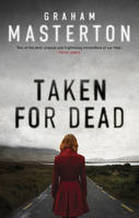 It is a sunny Saturday in county Cork, and an Irish wedding is in full swing. Drunk uncles are toasting the bride. The Ceilidh band have played for hours. But the cutting of the cake will bring the wedding to a horrifying end. For there, grinning gruesomely up from the bottom tier, is the severed head of the local baker. Katie Maguire, of the Irish Garda, does not have any leads - until another local businessman goes missing in horrific circumstances. The murders appear to link to The Kings of Erin, a terrifying gang of torturers and extortionists. But these are dangerous men. And they will stop at nothing to throw Katie off the trail...
Jon Recluse
17/12/2014 14:57:43
Fantastic interview! 18/12/2014 10:16:56
Thoughtful. Good interview with one of my favorite purveyors of weird fictions. Nice work!
The Doctor
18/12/2014 19:38:26
Great interview, mate. Masterton is a living legend who deserves more recognition of his role in the rise of popular horror. Comments are closed.
|


Archives
May 2023
|

 RSS Feed

|

|