

HORROR AUTHOR INTERVIEW : HAL BODNER
8/5/2014
 HAL BODNER HAL BODNER Hal Bodner is the author of the best selling gay vampire novel, Bite Club and the lupine sequel, The Trouble With Hairy. He tells people he was born in East Philadelphia because so few people know where Cherry Hill, New Jersey is located. The first person he saw ever saw was the doctor who delivered him, C. Everet Coop, the future US Surgeon General. Thus, Hal was ironically destined to become a heavy smoker. He moved to West Hollywood in the 1980s and has rarely left the city limits during the past several decades. Hal is so WeHo-centric that he cannot find his way around Beverly Hills, the next town over. Hal has been an entertainment lawyer, a scheduler for a 976 sex telephone line, a theater reviewer and the personal assistant to a television star. For awhile, he owned Heavy Petting, a pet boutique where all the movie stars shopped for their Pomeranians. He also owned an exotic bird shop. He has never been a waiter. He lives with assorted dogs, and birds, the most notable of which is an eighty year old irritable, flesh-eating military macaw named after his icon – Tallulah. He often quips he is a slave to fur and feathers and regrets only that he isn’t referring to mink and marabou. He does not have cats because he tends to sneeze on them. Having reached middle-age, he remembers Nixon He got “married” very late in life to an incredible man. Sadly, after five amazing, if turbulent, years he was widowed and can sometimes be found sunbathing at his husband’s grave while trying to avoid cemetery caretakers screaming at him to put his shirt back on. Hal has also written a few erotic paranormal romances -- which he refers to as “supernatural smut” -- with In Flesh and Stone and For Love of the Dead. While his salacious imagination is unbounded, he much prefers his comedic roots and he is currently pecking away at a series of bitterly humorous gay super hero novels. He recently married (legally!) an amazing man who he blushes to admit is roughly half his age and who had no idea that Liza Minnelli was Judy Garland's daughter. As a result, he has recently discovered that the use of hair dye is rarely an adequate substitute for Viagra. 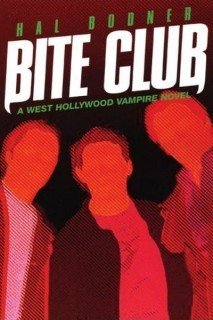 BITE CLUB BITE CLUB Hello Hal, how are thing with you? Fine. Very busy at the moment finishing up a super hero trilogy and a new romance. I don't know if you knew this but, though I'm known for my horror comedy novels, I've also written some paranormal romances. The current one will be my first "straight" romance. "Straight" in that there's nothing supernatural in it. As with all my stuff, the subject matter is still as gay as gooses! So have you and Dave sorted things out or are you still going to open that airlock? Dave and I are just fine. No matter what he claims, he asked me! As for his airlock, I always use a condom. And, insofar as the opening of "airlocks" is concerned, I have never had any complaints. NEVER! <wink, wink> Could you give the readers a little bit of background information about yourself? Um... is this like a Manhunt or an OK Cupid question? Because I'm a married man you know! <sigh> Where to begin... I've been living in Los Angeles for so long that I think I've become a native Angeleno by osmosis. I'm originally from New Jersey though. The doctor who delivered me was C. Everett Coop who later became Surgeon General of the US. He was the guy that instituted the warnings on cigarette packs. So, as my official book jacket bio says, I was destined from birth to become a heavy smoker. I spent a lot of time working in the theatre when I was younger. Strangely, though I came out to LA to practice Entertainment Law in the film biz, I actually ended up doing quite a bit of theatre stuff. At one point back in the 1990s, if something was happening onstage west of the Mississippi in a major theatre, there was a decent chance that some part of it would come across my desk. I took a couple of years off to work for Majel Barrett Roddenberry, the "First Lady of Star Trek", as her assistant. It was a very...er... turbulent time as "Mother" (which was my nickname for her) could be very difficult at times and I can be a bit prickly. She used to say that the only person she'd ever had screaming matches with like the ones she and I used to have... was Gene! I quit law and opened a frou-frou pet boutique called Heavy Petting on my fortieth birthday. It was a place where you could go an buy your Pomeranian a vicuna sweater or a diamond-encrusted kibble bowl. I ran it for a few years and closed it just after I bought my first "husband" (same sex marriage was still illegal back then) an exotic bird shop. But, when Jimmy died, I couldn't run two businesses so I shut down the doggy store. What else? Oh yes. I was very much into Gay Rights back in the eighties and nineties. I served on several West Hollywood City Commissions including the Gay & Lesbian Sheriff's Conference Committee -- we were the folks that first got anti-discrimination language into the county sheriff's hiring contracts. Then, about a year ago, I got legally married to my then-boyfriend. My husband is much younger than I am and, at first, I had some issues with that. He told me to "get over it". I try but sometimes, it's hard. I recently made him watch CABARET and he had no idea that Liza was Judy Garland's daughter! Entertainment Law that must have an interesting career? Have you ever used any of your experiences from your time as a lawyer in any of your books? I think I've used my experiences in local politics far more extensively than I have used my legal experience. Even so, there are times when you need a minor character whose background needs to be convincing, but who isn't important enough for you to go out and do a ton of research. I generally tend to make those character's lawyers or art gallery owners or other entertainment types because I'm already familiar with those worlds.  coatimundi. coatimundi. An exotic pet store owner, that’s pretty cool. The laws over in the US are a bit looser in terms of what you can legally own as a pet compared to the UK. What is the most exotic or dangerous pet you ever sold? We sold exotic birds, mostly parrots. One of my own personal pets was an 80-plus year old Military Macaw. She was the oldest one on record, for what I've been told. We did have a customer who "collected" odd animals though. It was all very illegal, of course. But I got to play with a wallaby once. Another time it was a coatimundi. You also became the Pomeranian seller to the stars, can you tell us who some of your clients were or is that bound up in client confidentiality? Nah. They simply weren't that interesting. Besides, when you live in LA and you've seen the latest teen idol (who happens to be your neighbour) drunkenly puking into your flower beds yet again, it starts to seem old hat. It would be far more interesting if I were to tell you what famous people I slept with back when I was a Hot Young Stud. But I won't! <G> Let’s get some of the quick getting to know you questions out of the way. What’s your favourite food? Marzipan. Unquestionably. Followed by roast duck. Princess cake is my favourite pastry -- mostly because it contains marzipan! And, as French as I am -- and I can be very French!-- I think that Thai is my favourite cuisine. Who would be on the soundtrack to your life story? Anything sung by Ethel Merman. I'm serious. My cell phone ring tone is Ethel singing "There's No Business Like Show Business." There is a very infamous incident when I was on a panel at a convention. The subject matter was whether or so-called "torture porn" is a legitimate or acceptable artistic genre. The conversation got intense and pretty graphic. And then, there was one of those momentary pauses that sometimes crops up in a crowded room...and my phone rang. The incongruity of it brought the house down. It was one of those moments that, to this day, people will come up to me and claim to have been there when that happened. The truth is, if everyone I meet who claims to have witnessed that actually had witnessed it, the hotel couldn't have held them all! Who are some of your favourite authors? You'll be surprised at how few of them write horror! Mary Renault is, to my mind, the greatest writer of the Twentieth Century. In the horror genre, I think I'd need to say Chelsea Quinn Yarbro. Quinn is just amazing, especially in how she manages to recreate the historic period that she's working in. Rick McCammon's recent work -- which is not horror, by the way -- with his Matthew Corbett series just blows me away. As I told him, I'm in awe of how he managed to recreate the period so believably. But, Rick's long been an American history buff so I just tell myself that it's not something he did overnight in order to avoid thinking he's super human! This next is going to sound soooo odd -- Alan Dean Foster has the most amazing flare for prose of any author I've read. A lot of his best work is hidden in sci-fi/fantasy "fluff". But then you come across a descriptive paragraph and the man's facility for language just blows you away. And finally, Dallas (Jack Ketchum). Dallas can just blow me away emotionally with some of his short work. I once confessed to him that I often don't understand what he's writing, but that it affects me anyway. He had a lot of fun with that and, a couple of years ago, he handed me something to read. I got to a certain point and I stopped and said, "I'm starting to get a weird feeling in the pit of my stomach, like I want to just cry. But I don't understand why?" Dallas just smiled that shy smile and said, "Because I wanted you to feel that way." What is your all-time favourite horror novel, and film? Unquestionably, the best horror novel I've ever read was Steam by Jay B. Laws. I'm serious. I'm not one of those people who picks something deliberately obscure just to seem knowledgeable. Steam was published by my old publisher, Alyson Books, about fifteen years before I came onto the scene. Sadly, Laws died not too long afterward, which is a shame because the novel is just brilliant. It's a haunted house story, though it's actually a haunted bath house in San Francisco,. The whole novel is a metaphor for the Plague Years, as we tend to call the AIDS epidemic in the eighties and nineties. For the traditionalists, Shirley Jackson's The Haunting of Hill House is far and away my number one choice. Insofar as short works are concerned, I think that Jan Vander Laenan's "Epistle of the Sleeping Beauty" is possibly the most devastating short story I've ever read. It blew me away and, several years after I read it, I met him and was able to gush about it which, I'm sure, embarrassed the heck out of him. As for films...er... I don't generally watch horror films. In fact, I don't even watch TV. We recently got Netflix and, to be honest, I tend to limit my viewing to old Audrey Hepburn films and these mindless TV shows they have nowadays where the leading actor runs around with his shirt off. If you could erase one horror cliché what would be your choice? My answer will probably be cliche as well -- zombies. The whole "Braaaaaains!" thing is a purely cinematic construct and the literature just followed it. I have virtually no film background from the audience point of view so, when I was asked to write a zombie book, my idea of what they were was entirely different. In my mind's eye, I saw hot, tanned island men in the Caribbean who were simply mindless and who would do whatever I wanted them to.  Which fictional character would be you perfect neighbour, Fictional? Um... any of the guys in the Abercrombie and Fitch adverts? I mean, with those perfect bodies, they cannot possibly be anything but fictional, right? What do you think of the current state of the genre? It's out of control. The whole ebook wave has enabled a lot of crap to flood the market, which is a terrible shame. And, sadly, the mainstream publishers still don't understand that people actually want to read horror. I remember an incident a few years ago when Nick Kauffman was moderating a panel and he read a list of recent NY Times best-selling novels. Almost half the list was of the horror genre! But the amazing thing was that only one of the authors themselves was a "horror" author; they were all horror books written by big name authors who mostly worked in other genres. I think that sucks. And I think a lot of it happens because the big publishing houses will look at a brilliant author like Jim Moore, for example (whose work I adore!) and because he's been published by smaller presses, the big houses don't see the sales figures of 40 or 50 thousand that they require. It's a shame because someone like Jim should be a household name. Or Dallas (Jack Ketchum) -- he's incredibly well known in the horror genre but he should be as big a name with the general public as King is. The horror community is a funny one in that is often plagued with flare ups. Why do you think that our genre is so plagued with these sort of things? I'm not sure what you mean by flare ups? Scandals? My dear, the Sci-Fi people have it head and shoulders over the Horror folks when it comes to making public spectacles of themselves! Between that huge blow up surrounding their publications and the mess at the Hugos this year, the Horror Community's occasional peccadillo is relatively minor. On the other hand, there are some very emotionally disturbed people in our genre; fortunately, most of them are on the fringe of the mainstream community. We have our feuds amongst individuals, of course. I have two very close friends whose heads would probably explode if they were ever in the same place together. Even I'm not immune. There is a well known author who will pick up and leave any room as soon as I walk in. This author simply can not deal with my flamboyance and with how overt I am. I was completely oblivious to this until a mutual friend, who was upset to the point of tears by it, pointed it out to me. Do you think the era of a full time author is now over? Yes. And no. On the one hand, I think it is far more difficult for a so-called mid-range author to make a living strictly via writing because, the truth is, very few publishers other than the very big houses pay advances. Contrariwise, it suddenly is possible for a prolific author to make a nice living in self publishing if they catch on and if they can get a high volume of work out there. The shame is that many of the so-called authors who are most capable of doing that kind of marketing are simply not very good writers. You are best known as a horror writer, but you like to describe yourself as a comedy writer. Is there a reason why you haven’t gone down the route of pure comedy? Yeah, it's true that I've been called "...the strongest voice in contemporary humour" which I found to be an amazing compliment. I actually did go the route of "pure" comedy for awhile back when I was writing for the stage. Then, of course, AIDS hit and it became very difficult to do "simple" comedy in our community any more. In the beginning years, no one was laughing. Once we got past the millennium and the cocktail was developed, our brothers and sisters were no longer literally dying in the streets after they'd been thrown out of hospices when their insurance ran out. It was at that point that I felt that the gay and lesbian community needed to laugh again -- which is part of what I tried to do with Bite Club. So tell me a joke. Hal walks into a bar and takes off his clothes. Everyone laughs... and points. Seriously, comedy is not about jokes. It's rooted in people's character, and the strange and funny things that they will do in various situations. I think the true definition of comedy is "situation in conflict with character". Then again, some snappy Noel Coward dialogue doesn't hurt either! Who would you recommend as a good comedy writer? Neil Simon was a genius. He's not written anything new in about ten years but the man's nearing ninety! Some of his early work can have you in stitches just by reading it; you don't even have to see it performed to start laughing. David Sedaris is laugh-out-loud funny when he manages to control some of the "edge" in his work. I always get the feeling that Sedaris is barely constraining something that he's angry about. Fran Lebowitz sort of defines "bitter" but... who cares? She's freaking brilliant! Anyone who would write in "Chain Smoker" as her chosen profession on her tax returns immediately becomes one of my personal heroes. And, by the way, Shirley Jackson (yes, that same Shirley Jackson) wrote an absolutely hysterical novel called Life Among the Savages and, ironically, I read that long before I even knew "The Lottery" existed. The truth is that I learned how to write comedy from paying very careful attention to other writers. It's not enough to just "be funny"; you need to learn to create a structure that's funny. People don't understand that there's a craft to writing comedy. Too many folks think that simply because they can crack a joke that means they can also write humorously. You can learn as much from Joe Orton as you can from Billy Wilder and yet their styles are universes apart. One of my favourite bits of comedy writing comes from the Broadway musical My Favorite Year. It's the wrap around for a song that Andrea Martin does when she's trying to teach another character how to be funny. My husband and I just love it and, whenever something strikes us as particularly absurd, one of us will turn to the other and imitate Martin's deadpan punchline: "Accordion lessons".  JEFF STRAND JEFF STRAND Does being a comedic horror writer make it more difficult for you to market yourself to readers? And when you add in a gay element, you must really find it hard to get your books accepted. You really don’t like making things easy for yourself do you? Yes, yes and yes! There are two aspects to what you asked. First, it's tough to get horror people to take me seriously because I write funny stuff. Moreover, I don't do funny-slash-gory stuff like Jeff Strand does. Jeff can write about an eyeball popping out of someone's head and make you laugh. The horror community is cool with that kind of macabre humour. But the stuff I do is quite different. The humour only sometimes comes out of the gore and the horror elements. One of the funniest scenes I ever wrote is when a flamboyant vampire shows up as a houseguest and slowly and unstoppably begins to take over his host's apartment. It's a hoot but the only "horror" element is that the characters happen to be vampires. There's another scene that involves a driving test which is possibly the broadest farce I've ever done. Again, the fact that it's a werewolf who is trying to get his license is secondary-- even tertiary!--to the rest of the scene. In spite of the precedent set by Robert Bloch in some of his short work, the prejudice against overtly humorous horror is deeply ingrained. When The Trouble With Hairy made the Bram Stoker award short list a couple of years ago, an editor and a writer both wrote to me separately to tell me that they would not be voting for it because they felt that funny horror was cheap and did not take the genre "seriously" enough! As for the gay content, that is indeed my bane. I've had the experience of submitting a work to an agent and the agent loves it and turns it down because they believe editors will worry that it's not "mainstream." Then, the editor gets it, also loves it, and rejects it because they fear the publisher will be uncomfortable. If we make it to the publisher, they go wild... and reject it because of the marketing department's concerns of it not having a "broad enough appeal." And, of course, when you talk to the marketing folks, they rave but worry that the reading public won't go for it. Then you point out that Bite Club sold something like 30,000 copies in the first six months -- an incredibly impressive figure for a small press book -- and they just shrug and say, "Can't you change it so that it's more mainstream?" It's homophobia in the truest sense; they're literally afraid that the books won't sell because of the gay content. This is in spite of the fact that male/male romance novels are the hottest things out there right now. Oddly, it's not because my books contain gay sex that the publishers sometimes balk. It's because my books are rooted in a distinctly gay sensibility and culture that makes them uncomfortable. It's like the old days on TV when in was okay to have gay characters so long as they were asexual in practice. Only now, it's fine to have two men fucking in an erotic romance. But when it comes to legitimizing gay people by acknowledging that we have our own distinct culture, people become very leery. Even in this permissive age, they accept the sex more easily than they accept that we are also people. What’s been the funniest rejection letter you have ever received? Nothing comes to mind. However, I did once lose my temper with a publisher who met up with her own karma a year or so later when she was unceremoniously fired. The woman was a nightmare--an egomaniacal, sadistic, vindictive ogre. We were parting ways on a book because I was the latest author to conclude that she was impossible to work with. As part of the wrap up, I had asked if she would send me the copyright documents. In the US, this is a one-page document which is filed with the Copyright Office in Washington. I told here that there was no need to send me a certified copy (which I think cost about five dollars at that time) as I would be fine if she just sent me a plain ordinary photo copy from her office machine. She responded in an email with the simple sentence, "If you want the copyright, you can look it up yourself." Can you believe it? It would have taken her a minute and a half to Xerox me a copy and a ten cent stamp to put it in the mail. Instead, she wanted to forced me to write to Washington, wait three months and pay something like $25 for a copy. It was pure spite on her part. So I sent her a letter. A couple of years later, someone came up to me at a convention and handed me a copy of the thing with the names crossed out. He said it had been making the rounds of the NY publishing people as a sort of "Can you believe what this author wrote to his editor?' kind of joke. My friend asked me if I had written it because it "sounded" like me. And, of course, it was the letter I had written to this woman. I won't reprint it here but, suffice it to say that it began with "Dear Suppurating C**t" and it just got worse from there! You said in a recent interview that you are not allowed to mention the word satire in the publishing world. Could you expand on that? It's the kiss of death! Publishers seem to think that satire is some touchy-feely, pseudo intellectual, boring thing that will cause readers to stay away in droves. One assumes they've read too much Jonathan Swift. They forget that Mel Brooks and Monty Python were both doing satire. I think some of these people assume that satire isn't funny. You have also said that “that happiness and satisfaction do not always go hand in hand with “living up to your potential” in a more traditional job.” Are you happy now, and do you think that you are living up to your potential? I have no idea how to answer that question. I don't think that anyone really lives up tot heir potential, least of all me. As for happiness...? Well, I'm dealing with stresses now that I've never encountered before in both my personal and professional life. So, I'm thinking that being contented is much more important. Happiness never ends up being what it's reputed to be. You don’t believe in writers block, can you expand on that please? Though I sometimes have a problem motivating myself to get to work and start writing, and while I sometimes find myself slammed up against literary obstacles, I'm never in the place where something "blocks" me from writing. Sure, there have been times when I've churned out 60 pages of crap but I've at least been able to get it down on paper. I never understood these people who moan that they're "blocked" and can't write. Procrastination, on the other hand, is something I not only understand but I've recently started to battle with. When I wrote the first Chris and Troy books, there was no such thing as this lovely little internet that we all waste so much time playing with! You obviously don’t have a problem in getting inspired to write, so what do you find to be the most difficult part of the writing process? For me, it's getting back into the "world" of a novel that I wrote some time ago in order to do a sequel. I grow and change as a person but the artificial worlds I've created need a consistency. It's one of the reasons Mummy Dearest has not come out yet. Although it's basically finished, it needs an edit--a massive edit, in fact--and I have difficulty putting myself back into the emotional place where I can immerse myself in that world again. It's been five years since I finished the draft and my life has changed astronomically since then. I'm no longer as "care free" as I was when I first wrote it and, with the kind of comedy in that book, the lack of emotional openness will show. Is there one subject you would never write about as an author? What is it? Nothing in particular. Probably something to do with sports because they bore the hell out of me. I also tried to write a heterosexual romance once, which was rather difficult as I haven't got a clue what straight people do sexually! Nor do I have any desire to learn any more than the minimal amount I already know about female plumbing. I was once asked to do a gay Western but I turned it down because, as I told the editor, "I know nothing about Westerns. The closest I ever came to one was when this guy in a bar bought me a drink once. I think he was wearing a cowboy hat." 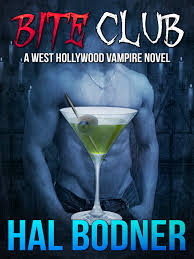 BITE CLUB BITE CLUB So let’s talk about your books in more depth. Your debut novel Bite Club, is a vampire novel that was written not so much in response to the initial outbreak of AIDS, but more as a response to what you felt was a loss of humour within the gay community to the spread of the disease. How did you approach the subject, and how does the book address this? Bite Club hearkens back to the days of what we used to call High Camp. It was a form of humour that was culturally indigenous to the Gay Community, but which was in danger of vanishing because AIDS was making us all so very grim. While the book certainly does not make fun of AIDS, almost everything else in gay (and straight!) culture was fair game. With this book I tried very much to re-create that era in the late 1970s, not as a period piece, but rather in terms of the aura that pervaded the gay community at the time. Someone once said that Bite Club was a lot like "Noel Coward with fangs." Did you always intend to use vampires as the protagonists? I suppose at that time vampires hadn’t yet fully mutated in the joke creatures that they are now? Yes. Vampires were always the obvious choice. I needed a "critter" that looked just like us and who could "pass". The great thing about the vampires in Bite Club isn't that they're blood-sucking monsters, it's that they're people. They are desperately trying to blend in so as to protect themselves. And they have no idea what "normalcy" looks like. So, when they come to this bizarre and eclectic fictional version of West Hollywood, they assume that what they see happening is perfectly normal and try to emulate it. Of course, the humans in the city are completely INSANE and take eccentricity to new heights. And the vampires, not fully understanding, are puzzled but gamely try to "fit in" anyway. In essence, Bite Club is a "fish out of water" story where the fish (the vampires) have no concept that the pond they're trying to occupy is filled with craziness that is far from normal. They have nothing to compare it to. How did you find a balance in the book, between writing a vampire story the comedy and the message in the book? I'm a sub-textual writer. I don't know how I do it. I have a close friend who gets irritated with me because I am incapable of writing a short story unless it means something. She doesn't understand that. She writes perfectly marvellous horror stories but there's nothing to them other than the plotted elements. She jokes that not everything needs to have a "deep, deep meaning" and she's right. But, for me, there needs to be some meaning, otherwise I don't see the point. What amazes me is how, when I'm really in the groove of what I'm writing, the subtext just occurs naturally. It's not like I have to pretentiously go back and put it in; there's nothing precious about it. And, it's not a "beat 'em over the head" MESSAGE either. If the reader gets it, fine. If not, also fine. Very few people, for example, realize that the very structure of Bite Club is a satire of the three-camera way of shooting a TV sit-com. The whole book is French scenes just like in the old 1970s situation comedies, and the P.O.V.s are clearly imitative of those three camera angles. I even wrote structural "close ups." I did it intentionally for my own enjoyment. If no one noticed, that was just fine. Looking back at the book after all these years do you think it still holds up in its current form, or would you consider going back and doing a revised edition? It's dated. It was written before the internet was so prevalent and before cell phones became ubiquitous. In fact, the final scene in The Trouble With Hairy had to be completely rewritten because, originally, it all hinged on the plot device of some of the characters not being able to get to a telephone in time. Nowadays, everyone's got a phone in their pocket. I think the thing that dates Bite Club the most is also the thing that I find the saddest. It was written prior to the so-called "Entitlement Age". People were soooo much different, less self-absorbed, less intent on getting what they can at the expense of others, far less likely of reach out and figuratively grab onto an incident or a comment so that they can feel "righteously" offended. They were much less concerned with demanding their "rights" simply because they could and, of course, they were far less entitled. 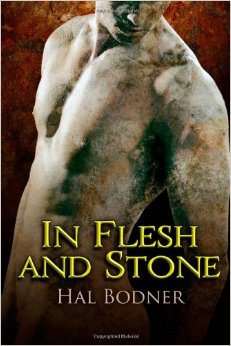 IN FLESH AND STONE BY HAL BODNER IN FLESH AND STONE BY HAL BODNER Your next book In Flesh and Stone was written in response to the sudden death of your husband. It took you almost two years to, and I hate the use of this term as I think you never truly do, come to terms with his death. When did you first feel that you had to write this book? I never felt that I "had" to write it. I had been asked to do a paranormal romance for Ravenous Romance and I had no idea how to do it. I toyed with ideas for a month or so and I was just about to turn them down. Then, one day, that first line just popped into my head out of nowhere and I jotted it down: "The only time Alex could remember being surrounded by so many naked dicks was many years ago in the steam room at the gym." I don't know why, but I amused the heck out of myself with that line. I had recently re-read Katherine Kurtz's "The Saint Patrick's Gargoyle" and I'd been wanting to do something with gargoyles. Something clicked and when I got home that night, I took the piece of paper out of my pocket and sat down at the keyboard. The novel simply flowed out of me. I think In Flesh and Stone took me about four days to write. It was a catharsis in the truest sense. There was not even a sense of being compelled; it just happened. And, interestingly, I did almost no editing. Aside from some grammatical and punctuation edits, it went to print almost as it first came out of my head and onto the screen. And do you know what? To this day, I have difficulty reading it. I recently had to do a detailed plot synopsis of it for a re-issue and I had to have Gene (my husband) read it and just tell me what happened in each chapter. Every time I tried to read it myself, I became a basket case. That last scene is just emotionally devastating. You wrote the book in a matter of days, how did you feel emotionally after you finished writing it? Do you think it helped the healing process? I think it started the healing process. I was terribly bottled up after Jimmy died, partly because it was so sudden. On Friday he was white water rafting; eleven days later he was dead. But, in truth, it was a good five years before I really was able to shed some of the heavier stuff from his death. The strangest thing about In Flesh and Stone was that I had no idea that it was cathartic when I wrote it. In fact, it wasn't until I was doing an interview a few months after the book came that that, in response to an interview question, I realized what the motivation of the book had been. The book features a lot of hot and steamy sex scenes, what makes for a good sex scene, and how do you stop it from becoming a cringe worthy passage? You must commit! If you consciously try to create hot and steamy sex, you will fail and what you write will come across as ungodly pretence. I've read some passages by authors who think that it's good writing to fit as many different synonyms for the word "prick" into a scene as they can. It gets positively silly after awhile. And yet, there are only a certain number of ways you can describe certain things of a sexual nature. The English is limited in some ways. For example, as I'm fond of saying when I'm on panels, there is a certain....er... substance that shoots, dribbles, jets, arcs, splatters, drips, explodes and flies. It is milky, translucent, pearly, thick, creamy viscous and hot. Other than that, there just aren't very many more ways to describe it without getting silly. I also think you need to be creative, no so much in your word choice, but in your approach. When I was starting out, I once complained to a more prolific romance writer that writing sex must get boring after awhile. She just shrugged and said, "You can always add things. Toys, food, more people. You can alter where it takes place and, of course, there's all that costuming." Now that I have more experience, I disagree with her. When I wrote In Flesh and Stone, I kept the sex very real in two ways. First, it was completely organic. Every sex scene had a purpose and an emotional impact. The main character learned something about himself from every encounter and, each time, he was propelled a little further along on his journey. I specifically wrote it that way. Second, I found an interesting way to present the main character. He's an artist by profession, a painter. And yet he experiences the world around him in a non-visual fashion. Much of the eroticism in In Flesh and Stone originates because Alex Restin "sees" the world as a never-ending olfactory experience. He's far more attuned to the way things smell to him than he is to simply the way they look. Over in the UK we have a yearly award for the worst sex scene in a book, are there any particularly bad sex scenes in a book you have read that you would nominate for this award? Oh yes, but I would get into trouble if I mentioned them! The one thing I will do, however, is to relate a little amusing story. A bunch of ravenous authors were in Vegas and the Acquisitions Editor was joking about how some of the reviews had remarked that a large number of Ravenous authors seemed to have a weird preoccupation with using food in sex scenes, either literally or by analogy. Someone asked what she meant and she quoted the following: "His testicles hung in their sacs like plum, sun kissed clementines, ripe for the plucking." We all cracked up and I remember scoffing, "Who the hell wrote that piece of crap line?" Lori turned to me and, dead-pan, said, "You did." And dammit if she wasn't right! I had written it. And it was a terrible line! But, I can't always be perfect, can I? <G> 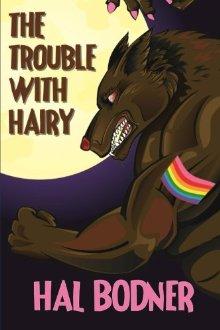 THE TROUBLE WITH HAIRY THE TROUBLE WITH HAIRY The Trouble With Hairy, is the sequel to Bite Club, you started writing it almost immediately after you finished Bite Club, but put it aside when your husband died, Yes. There was about a two year gap between when I started it and when I finished it. But, in truth, I had written most of the novel before Jimmy died. So what exactly is the trouble with hairy? Do you prefer them smooth? I married a Korean! I think he has less than twelve hairs on his body below his eyebrows! Werewolves, and Vampires are pretty over used these days, how did you approach these creatures when you came to write your books? Did try to give them unique spin? I wasn't writing strictly about vampires and werewolves. I was writing about the "alien" (in the literary sense) trying to fit in. The nifty thing, as far as I was always concerned, was that my monsters were always the more "normal" of the characters. It was the ordinary human beings that were way out in left field with their crazy antics. The vampires just sort of watched, shrugged, and assumed that they should follow suit if they wanted to remain hidden. And then, of course, the real monsters never got it quite right because they lacked the understanding of why the humans did whatever it was that they did. I think that makes things even funnier. 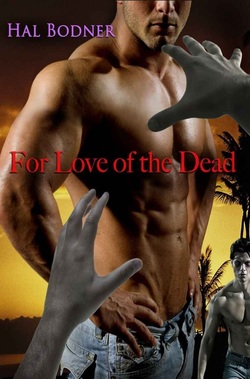 FOR THE LOVE OF THE DEAD FOR THE LOVE OF THE DEAD You have also written a book featuring the I think to be the genre’s biggest threat the risen dead. What made you write a book featuring this bane on good writing? You mean the zombie book? Ye gods, I loathe that book. It's just terrible. It never decided whether it wanted to be a paranormal romance or a gory horror novel. As a result, it's neither. Oddly, For Love of the Dead still sells better than anything else I've ever written with the exception of Bite Club. Why I wrote it is both simple and embarrassing. It was a bet. John Skipp and Brian Keene bet me that I couldn't write a gay zombie paranormal romance. I think they had visions of limbs falling off but, as I said earlier, my idea of what a zombie is was very much the traditional view. For me, the attraction of zombies was twofold -- and remember, I don't have the Night of the Living Dead in mind. First, if a zombie was a gorgeous young man from a tropical island with no free will of his own, I could do anything I wanted with him. Anything! That makes for an incredibly erotic scenario. And second, if I was to put myself in the place of the zombie, it would mean that, because I lacked a soul, there would be no ultimate accountability for my actions. I could do whatever I wanted and not have to worry about punishment, either human or divine. Again, that makes for an incredibly sexually liberating mechanism. There was also a lesser reason. Ravenous had a limit on what you can portray. Bestiality, erotic rape, paedophilia and necrophila are strict no-nos. Yet, because they were essential to the plot of In Flesh and Stone, and because I handled them tastefully, I got away with my version of the first three. They were the scenes with Sagittarius, Ares and Virgo, for those who are curious. I felt compelled to push the boundaries in For Love of the Dead and try to also get away with necrophilia. The opening scene in that book is extremely graphic and hard to read. But, strangely, it works. Even more oddly, those people who disliked the book -- and there were many of those!-- rarely said anything about that first scene. If I had it to do over again, I think I would keep it. I'd also keep the necrophilic theme of the book. The main character is, indeed, "in love" with the dead on an emotional level. It's not a sexual thing for him. He broods on the "what might have beens" of the dead as an excuse for not engaging in a living, vibrant relationship. He's stagnant and, in many ways, he is "dead" himself albeit on a non-physical level. The things that do not work, and which gum up the works of the novel, are the romance aspects. I think it really needed to be a very sick and twisted horror novel and yet, because the publisher was Ravenous, I had to try and take those elements out and replace them with things that would be more palatable to their readers. The result was a mess. If you had the power to send one the following to the vaults, never to be seen again, which would you choose. Werewolf, Vampire or Zombie? (Notice I’m not trying to stack the deck here at all) If you're talking about the cinematic "walking dead" and their ilk, I agree with you. I don't care for zombies. I don't read about them. I always thought they were kind of stupid. You are currently working the second sequel to Bite Club, what’s the hardest part of writing a series of books? Again, getting back into that particular fictional "world" that you've created. And, secondly, continuity! You don't want to re-use a name for a different character or forget that Main Street runs parallel to Grand Street and so there's no intersection of Main and Grand! How do you keep up with all the characters, and their traits? I keep a "Cast of Characters" file. It has basic stuff-- hair color, height, sometimes a description of a particularly quirky habit or a driving motivation. Can you tells about this book? What do our intrepid heroes get up to in this one? In Mummy Dearest, Troy turns out to be the reincarnation of an Egyptian Pharaoh. The Pharaoh's lover is the mummy and, through a variety of circumstances, the mummy revives and goes in search of his long lost love. There was a time when you were concerned about being as funny as you used to be, have you gotten over this fear? No. Every time I write something, I'm in terror that it will end up being either too serious or too bitter. It's my one major insecurity about my work. And it's mostly caused because I have no idea how I come up with some of the funnier things. They just slip out. Are there any reviews of your work, positive or negative that have stayed with you? Oh yes! My favourite review was for In Flesh and Stone. The critic wrote that he was so entranced by the characters, and with taking their emotional journey with them, and so affected by what they were having to deal with, that he found the sex scenes distracting. So he skipped them. And when he was finished crying with the characters, and when he was through being deeply moved by them, he "...went back with a cucumber and a bottle of baby oil to re-read just the sex scenes and found myself equally as satisfied." You can not get a review like that even if you're willing to pay for it! How do you market your work? What avenues have you found to work best for your genre? I'm terrible at marketing. That's why I still publish with traditional publishers if I ahve a choice. Who is your favourite character from your book and why? Probably Pamela Burman. She is a hoot to write! How about the least favourite character? What makes them less appealing to you? I loathed Mark Hartner in For Love of the Dead. I think that a good villain needs to have some redeeming characteristics. I couldn't find any in that character. What's the one question you wish you would get asked but never do? And what would be the answer? Well, it depends on who is asking. If it's a hot guy in his mid-thirties and my husband is out of town, having him ask me, "Can I call you and maybe come over?" would always be nice! Hal it has been a real pleasure interviewing you. It really makes my day when I get the chance to interview an author as interesting as yourself. Do you have any final words for the readers? If you haven't read Bite Club or The Trouble With Hairy yet, do so immediately! Both are available on Amazon. And stay tuned for my new gay superhero trilogy which I hope will be out by the end of 2014. Fabulous in Tights, A Study in Spandex and The Wrong Shade of Turquoise. FOR MORE INFORMATION ON HAL BODNER CLICK HERE TO VISIT HIS WEBSITE 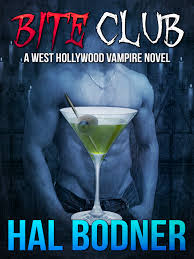 BITE CLUB BITE CLUB Welcome to West Hollywood. The Creative City. Liberal and welcoming. Free from discrimination and hatred. A safe place to live if you’re gay. But West Hollywood isn't safe anymore... Someone in town has a macabre passion for beautiful young men. Healthy, gym-toned male bodies keep turning up, tortured, drained of blood, missing parts and quite, quite dead. Someone is using the Creative City as a canvas of gruesome, sadistic creativity. Someone is using West Hollywood as a warped psychotic playground. Someone... or some thing. WeHo City Coroner Becky O’Brien is helpless to stop the accumulation of gym-toned corpses. At the end of her investigative rope, Becky calls upon the aid of an old college friend, Christopher Driscoll, who is an expert on serial killers. Rushing to her aid, Chris arrives in WeHo with his quirky boyfriend Troy in tow. Prowling the dark alleys and cruisy bars of WeHo in search of the psychotic fiend, the trio soon realizes that something possibly not human has taken up residence in Boys' Town--something with an insatiable hunger for the flesh and blood of hot young men. Following the trail of mangled corpses, Becky has another realization -- nothing is what it seems. Even her old friend Chris has secrets...dark secrets. Accompanied by the compulsively orderly Sheriff’s Captain, Clive Anderson, and West Hollywood’s irritable and outrageous octogenarian City Manager, Pamela Burman, Becky soon discovers the ominous truth behind the creature stalking West Hollywood’s pristine streets. Sexy, scary, and very, very funny, Bite Club is a macabre black comedy that'll have you screaming bloody murder. PURCHASE HAL'S BOOKS ON AMAZON.COMPURCHASE HAL'S BOOKS ON AMAZON UKTHE HORROR WEBSITE
Peter
8/5/2014 05:18:43
Wow! that was some interview. Fantastic stuff.
Paula
8/5/2014 05:29:41
This has got to be one of the most entertaining interviews I have ever read! Comments are closed.
|


Archives
May 2023
|
 RSS Feed

|

|