

HORROR AUTHOR INTERVIEW : JAKE AURELIAN
15/10/2014
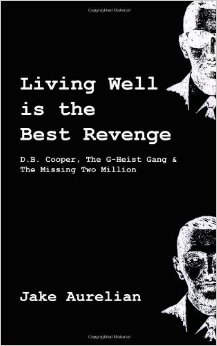 Jake Aurelian graduated from the University of Illinois in 2000 with a degree in Media Studies/Communication & Rhetoric. Aurelian has taught English and media at the college level, and to date, has written eight books (fiction; non-fiction; children's) and over 500 pop culture articles. Since 2012, his works of fiction have received eight international literary awards. On Halloween 2012, Jake Aurelian took an obscure character from his fiction books, an angry clown named Ripper, and turned the character into a stand-up comedy and online comedy video gimmick; billed as "an unpredictable cartoon character come to life," Ripper the Clown morphs truth, fiction, pop culture and social commentary into comedy chaos. As his clown alter-ego, Aurelian performs material from his books; no other author has done anything even remotely similar, and the clown character quickly gained notice from NBC, award-winning movie producers and notables within the entertainment industry. In 2014, Aurelian published the first book featuring Ripper the Clown as the main character--The Life & Mimes (& Zombie Apocalypse) Of Ripper the Clown: The Autobiography of an Unconventional Zombie. Before The Life & Mimes... was officially published, it received 2nd place for General Fiction at the 2014 Hollywood Book Festival. Aurelian's collection of gritty, quirky short fiction, Dead Wrestlers, Broken Necks & The Women Who Screwed Me Over: A Main Event of Fiction and Photography (2011) has received rave reviews on Amazon.com for its diversity of fiction genres, "the immaculate writing," the laugh-out-loud humor, "crazy scenarios" and the author's "addictive" storytelling. Dead Wrestlers... was the recipient of a Finalist Award (Short Fiction) in the 2012 Next Generation Indie Book Awards and received 2nd Place/Runner Up (General Fiction) in the 2012 Hollywood Book Festival. After reading Dead Wrestlers, Broken Necks & the Women Who Screwed Me Over, legendary and iconic pro wrestler, Jake "The Snake" Roberts, posted on his Facebook page: "This is a very good book, folks, savvy stuff ... get your copy TODAY!" Aurelian's Living Well is the Best Revenge (2012, crime fiction) received 1st Place (General Fiction) at the 2013 Hollywood Book Festival, Honorable Mention at both the 2013 New England Book Festival and 2013 London [England] Book Festival. In addition, Living Well... was the recipient of a Finalist Award (Novella) in the 2013 Next Generation Indie Book Awards. Told in a true crime style, most readers believe that Living Well is the Best Revenge is an intense work of non-fiction. We Leave With Our Guns Out! (2012, short fiction, bad romance) received Honorable Mention (General Fiction) at the 2013 Hollywood Book Festival. He is the co-author of Michale Callahan's Too Politically Sensitive (2009, true crime/political); featured on three episodes of CBS' 48 Hours and On the Case with Paula Zahn. Jake Aurelian resides in Parts Unknown. Could you tell the readers a little bit about yourself? I graduated from the University of Illinois in 2000 with a degree in Media Studies and a minor in Rhetoric/Creative Writing. I was actually writing before I could even put words to paper; as my family can attest, I was dictating stories (including Scooby Doo mysteries) to my parents and grandparents at the age of three. So writing has always been a part of me and who I am, even during phases where I completely abandoned the idea of ever being a writer ... and I always knew that, at some indiscernible point, writing would become the focus of my life. In 2009, my first book (co-author), Too Politically Sensitive (true crime) was published. Since that point, I’ve published eight books including three short story collections (of a variety of genres), a crime fiction novel, and most recently, The Life & Mimes (& Zombie Apocalypse) of Ripper the Clown: The Autobiography of an Unconventional Zombie, a zombie/horror satire, and Pete the Picky Piranha, a quirky children’s book about a little boy piranha with a bad attitude. What do you like to do when you're not writing? Since Halloween 2012, I have performed stand-up comedy, online videos and commercials based on a character from my fiction—an angry clown named Ripper. The Ripper character started as an obscure reference in my first short story collection, Dead Wrestlers, Broken Necks & The Women Who Screwed Me Over (2011) and he has appeared, in some context, in every subsequent book including as the main character in my most recent: The Life & Mimes (& Zombie Apocalypse) of Ripper the Clown: The Autobiography of an Unconventional Zombie. I liked the slasher film/serial killer first name “Ripper” juxtaposed with “The Clown”; it has a hard and dark yet strangely loveable feel to it, and appearance wise, the clown is scary and menacing but also warm and inviting. In the two year interim since that Halloween debut, the character has taken on a proverbial life of its own as “a cartoon character come to life” ... so in answer to your question, when I’m not writing books, I’m ... well ... writing and performing weird stand-up sets and dark comedy videos (pop culture spoofs, etc). My mind is always thinking about new and bizarro scenarios to put the clown. Performing quickly became just as rewarding, if not more so, than writing. I’m extremely proud what I’ve created and how the character has evolved; I don’t know of any other author who has done anything remotely similar. What’s your favourite food? Yogurt. Who would be on the soundtrack to your life story? I refer to my MP3 player as The Soundtrack of My Life. It contains an eclectic mix of music from pretty much every genre: classic rock, metal, strange and dark techno and even a few pop songs (that I secretly despise myself for liking) ... stuff from all eras ... wrestling theme songs galore ... movie soundtracks (They Live, Halloween, Puppet Master), TV themes (Rockford Files, Munsters, Addams Family) and a bunch of random songs from various artists of all which etch a moment of time in my life. If it elicits a good or even bad memory, it’s on the soundtrack. The only consistent artist is Alice Cooper; I’ve seen Alice perform live at least a dozen times; his horror-esque performances are inspiring, enthralling and completely timeless. Do you prefer the term Horror, Weird Fiction or Dark Fiction? I prefer Dark Fiction as I believe this term adequately describes the majority of my work. In my books, horror is rarely presented in a typical sense: morphing truth into fiction via the horrors of real life; the horrors that manifest when you don’t expect them; the strange and random bad experiences that seem like a nightmare or scene from a low-budget film; yet, at the same time, horrors that can be laughed at. It’s rewarding when I hear from readers who tell me they were “creeped out by this” or “creeped out by that”; the horrors I present aren’t your stereotypical horrors; the horrors I write about are strangely relatable because, in many instances, they are real or were based on some reality. The Life & Mimes (& Zombie Apocalypse) of Ripper the Clown: The Autobiography of an Unconventional Zombie follows this trend—taking and redefining the stereotypical horror and zombie genres while simultaneously spoofing them with dark satire ... and doing so in a way that even non-horror/zombie fans can enjoy and relate. And it’s fun to hear from readers who ask me if certain elements of the zombie book are real ... it makes me understand that I’ve done something right. Who are some of your favourite authors? Much like the Soundtrack of my Life, the Library of My Life is filled with random books from a variety of random authors. Most of the books in my library are non-fiction on a variety of esoteric subject matter. I’m very particular about my fiction choices. I have a lot of favourite books but only one favourite author: Hunter S. Thompson. I love the bold and fluid chaos of Hunter Thompson’s writing style coupled with the in-your-face yet sad and troubled mystique of the HST persona. Thompson’s books are all works of art. He tendered scenes of violence—such as killing a mountain lion with a ball peen hammer—with such immaculate intensity and linguistic art that the strange, twisted and disturbing images appear as masterful pieces of beauty. And during a time in my life when I needed it, HST’s gritty language and magical storytelling made me fall in the English language ... and his work made me understand the importance of discovering and formulating a distinct storytelling voice. Honourable Mention #1: Tim O’Brien: I was forced to read The Things They Carried by Tim O’Brien in one of the many college literature classes, and, probably due to immaturity and feeling burned out as a student, at the time, I hated it; years later, I rediscovered that book, and, much like with HST, I immediately became enthralled with O’Brien’s ability to turn scenes of intense sadness and horror into a peculiar beauty. His prose is unpredictable, precise, addictively haunting and should be required reading for any aspiring writer (of any genre). Honourable Mention #2: Horror author Matrin Lastrapes. Likewise, I find Lastrapes’ work addictive—the superlative narration, the excitement and intensity of the words, the relatable characters and the nuances of their lives. As someone who sprinkles pop culture references throughout my books, I appreciate those who do the same; amid the graphic darkness of Lastrapes’work, you never know when you’ll get hit by a reference that brings back various memories or nostalgia—be it Buffy the Vampire Slayer or watching WWF wrestling as a kid—yet, like a good allusion, the references are always presented smoothly so the reader appreciates them even if they are unfamiliar. Lastrapes’ meticulous presentation and techniques are masterful, and I find his style reminiscent of Tim O’Brien. What is your all-time favourite horror novel, and film? Horror novel: Dracula by Bram Stoker Horror film: (three-way tie) John Carpenter’s They Live (1988); Homicidal (1961), and Halloween (1978) If you could erase one horror cliché what would be your choice? Oh there are so, so many. But generally speaking, I’d erase the Hollywood filmmaking cliché that every contemporaneous horror film is expected to be a CGI fest. To me, this is extremely overdone to the point where it’s become boring and kind of ridiculous. This observation is more of how the genre is represented than a scenario based cliché, but regardless, for me, this is one of the biggest, overused and tiresome trends that doesn’t appear to be leaving any time soon ... and these movies make millions so not everyone agrees with my assessment. But I believe the recognizable individuality of classic films (of every genre) has pretty much been lost in recent years with every movie being a CGI cookie cutter clone of the last. Look at what Hitchcock accomplished in so many of his films without any special effects ... look at what John Carpenter did on a shoestring with the original Halloween ... look at how all Carpenter movies are distinctly Carpenter ... look at Bela Lugosi in Dracula ... as I like to present in my books, all horror doesn’t have to be shown ... and horror isn’t just special effects ... horror is a feeling, an emotion and that fine edge between calm and fright that can be stirred in an instant ... a rational thought, an irrational thought or even a memory. And for me, psychological horror and horror is how the story is presented (a la Hitchcock), and not laughable CGI blood and monsters. (The Conjuring is an example of a rare and recent horror movie that wasn’t overblown and riddled with CGI.) Which fictional character would be you perfect neighbour, and who would be your nightmare neighbour? Perfect neighbour: Carl Kolchak (Darren McGavin) from Kolchak: The Night Stalker (1972-75). The Night Stalker movie notwithstanding, we never saw where Carl Kolchak lived ... but I imagine it would be a wonderful and whimsical place—full of relics and souvenirs from all Kolchak’s paranormal adventures: Jack the Ripper’s boot, zombie salt and all sorts of blurry and inconclusive photographs of UFOs and werewolves. True, Kolchak would be a snarky, grumpy and frumpy neighbour, but he is also an unexpected hero, and the humorous and frustrated stories he could tell of his exploits would make him the perfect neighbour. And if anyone spotted a UFO or saw Bigfoot eating out of their garbage can or believed Spring-Heeled Jack was bouncing about late at night, Kolchak would be a handy guy to have in the neighbourhood. Nightmare neighbour: Carl Kolchak (Stuart Townsend) from Night Stalker (2005): I don’t like tampering with the classics. I don’t think it should be done. And granted, for what it’s worth, the 2005 reboot of Kolchak told some intense and decent stories, but aside from using the names of Carl Kolchak and Tony Vincenzo, and the fact that Kolchak is still a reporter who encounters the supernatural, there were no other real similarities to the original series. Everything we love about the original Kolchak character—his insecurities, humility, brass yet overall endearing persona and dishevelled look (rumpled gray suit and trademark hat)—are gone in this incarnation, replaced with a dark, stale and depressing character (who dresses nicely and has no trademark hat). Perhaps Night Stalker would’ve been successful had they not tried to rebrand the classic Kolchak image and simply created new characters and a new show. So ... all that said ... my nightmare neighbour would be 2005 Carl Kolchak because egad!—it was one of the worst reboots ever. And living next to this sterile and brooding Carl Kolchak would be nightmarish ... especially knowing that I could be living next to the fun Kolchak, Darren McGavin, but somehow, as fate would have it, I got stuck with Stuart Townsend. What do you think of the current state of the genre? I think the current state of the genre is that it’s a tad overdone—especially the zombie genre. And I believe this started about 10 years ago with the influx of zombie everything and everywhere. There are good zombie books and films out there, but I mean, you can only retell variations of the same story so many times. That’s one of the reasons I wrote The Life & Mimes...; I wanted to satire the recycled, standard zombie format while, at the same time, redefining it and turning it into something new and fresh. Thus far, the response from die-hard zombie fans has been 100% positive; they love the new twist and how my zombie apocalypse is presented. What was the last great book you read, and what was the last book that disappointed you? Despite writing fiction, most of the books I read are non-fiction about various weird subjects (weird history, weird Hollywood, weird autobiographies and biographies) ... and the last great book is actually a three-way-tie of non-fiction between: Deep Focus: They Live by Jonathan Letham (in-depth, minute-by-minute analysis of the film classic 1988 film They Live), The Ten Cent Plague: The Great Comic-Book Scare and How it Changed America by David Hajdu (detailing the controversial history of horror and crime comic books in the 50s) and Sundays with Vlad by Paul Bibeau (which explores the pop culture history of vampires from Count Chokula to Vlad the Impaler’s castle). I hate talking negatively about other authors, but the last book (again, non-fiction) that disappointed me was You Wouldn’t Like Me When I’m Angry: A Hulk Companion by Patrick Jankiewicz; while the author truly loves the classic Hulk TV show, the text was disappointing for a variety of reasons including glaring omissions, long-winded interviews with minor cast members, and very little insight or behind-the-scenes info on individual episodes ... in addition, formatting errors made for difficult reading. At 528 pages, I expected some in-depth coverage into this classic show, and sadly, I was disappointed; and after reading You Wouldn’t Like Me..., I did something I almost rarely do—I sold my copy on eBay. How would you describe your writing style? Raw, honest and perhaps too realistic for my own good. Are there any reviews of your work, positive or negative that have stayed with you? Every positive review stays with me and keeps me going, because as an author, it’s important to me when readers take the time to comment about my books—be it on Amazon, a blog, review site, via e-mail or in-person. It makes all the work and all the effort worth while knowing my books are enjoyed. Fortunately, with my fiction, I haven’t had to deal with many bad reviews, but one negative Amazon review has stuck with me because it’s kind of a mystery; in the scathing review, the person ripped my first short story collection, making smarmy Titanic analogies and the like, and the entire review seemed like they had some sort of grudge ... but the mystery is that the reviewer claimed I asked them for a review ... I still have no clue who this person is. What aspects of writing to do you find the most difficult? For me, the writing process has always been generally easy; the aspect that I find most difficult is, however, simultaneously a positive aspect: the creative rush. When I’m working on a new book, I live and sleep it 24 hours per day. When I’m sitting at the computer and writing, my mind moves so fast, it’s sometimes impossible to get down my thoughts because I’m always four or five lines ahead of what I’m typing; when I’m not physically writing, my mind is constantly writing. I carry around a notebook and/or record notes on my phone, and there is always a paper and pen by my bed as I tend to dream about the storyline too; sometimes I’ll wake up with a major plot idea ... and other times, it will be as simple as “that line needs this word.” So, this is obviously all positive, I relish in these moments, but it’s also the most challenging and difficult because the story consumes every part of my life, and it’s hard to focus elsewhere. And another aspect of the creative rush being negative is when the book is done ... and while I reread and edit my work several times before it goes to my editor, when the storyline is complete, it’s hard to “come down” from that rush ... I miss the characters ... I miss the excitement ... and I miss the rush ... and I feel it fading. And when it’s gone, it’s pretty damn depressing. Is there one subject you would never write about as an author? What is it? When it comes to books, I believe that anything is fair game—even if it’s controversial subject matter—as long as it’s handled and presented in a tasteful and dignified way. I discuss some pretty intense things in my fiction, and my “novel of short fiction” entitled What You Are is a good example because it’s probably my darkest and harshest work. Some of the “vignettes” in What You Are were based on a disturbing reality—stuff that I believed I would never write about, stuff that discuss reality based horrors (and dreams) and the sick absurdity of life—and all of these scenarios were discussed in a way that, as an author, I felt comfortable presenting. It’s all about presentation, style and phrasing, and I believe the most controversial or extreme subjects can be discussed if done so properly. Since my writing has segued into stand-up comedy, I must say that what can work for a piece of literature is completely different from what will work in a comedy setting, and I commentate on this subject in The Life & Mimes...: “...if you think Nazi holocaust jokes and child molestation quips are funny, you’re probably not going to have the logic or the rationale to understand why someone else doesn’t.” If you could kill off any character from any other book who would you chose and how would they die? Even though it would be nearly impossible due to Bram Stoker’s brilliantly structured narrative, I always wanted to see Jonathan Harker die in Dracula. Harker’s death would require a different ending/journal entry, and he would die in the last battle ... either via gypsies or preferably Dracula. What do you think makes a good story? A good story is one that makes the reader believe what he or she is reading is real—both in story content and presentation. The story needs to be believable ... with plots and dialogue that don’t insult the reader’s intelligence. With my aforementioned list of authors, both Hunter Thompson and Tim O’Brien’s work is obviously reflective of many real life experiences—be it a fictionalized account (O’Brien) or a journalistically presented account that was secretly fictionalized (Thompson). Likewise, the horror world of Martin Lastrapes presents intricate and genuine characters mixed with paranormal and horrific subject matter that becomes beyond believable thanks to the masterful storytelling. If a writer can accomplish this believability, then they have succeeded in telling a good story. Presentation wise, on a variety of levels, I believe the 1st person narrative provides more authenticity for the reader—one that allows for more insight. For me, the most powerful fiction is in the 1st person—case in point: the aforementioned Dracula by Bram Stoker—and I’ve utilized the 1st person narrative for the bulk of my work; with Living Well is the Best Revenge, I was able to experiment with the first person narrative, writing the book a la true crime and slowly interjecting the 1st person narrative into the mix. How important are names to you in your books? Do you choose the names based on liking the way it sounds or the meaning? Names are extremely important in my books; I want each name to fit the character; I want their personality, their behaviour, their beliefs to be represented in their name. And I like my names to be odd and different (examples: Cuthbert Rog, Muzzy Grillow, Lars Grimstone and Rane). I always say that any of my characters could be pro wrestlers because of the way their names sound. Despite starting as a name mentioned in the context of other stories, Ripper the Clown has developed into a character where the name exemplifies the above: the name is weird, it’s odd and quirky, it’s dark, it’s horrific yet it also represents the character—Ripper, the guy you can help but hate, and The Clown, the guy who you kinda like because deep down, under all the rage and violence, he’s a sweet person. Sometimes I also throw in a name or two from my favourite TV shows or movies. John Nada (Roddy Piper’s character from They Live) has appeared often, including in The Life & Mimes... where he’s the Vice President of the United States. How do you think you’ve evolved creatively? Looking at my books, in order of publication, I believe I have evolved creatively in a few ways. After years of searching for my voice, this voice kind of debuted in Dead Wrestlers... and that voice continues to grow. And after much experimentation with first person narrative, I was able to take my love of first person narration and twist it into something really unexpected and rare and take it to a new level with Living Well is the Best Revenge. Now, writing as and performing as Ripper the Clown, I believe my work evolves daily; the adaptable character can really be whatever and whoever I want whenever I want. And creatively, with The Life & Mimes... being able to rewrite and redefine a staple of horror in the zombie genre was really a breakthrough moment for me creatively. What tools do you feel are must-haves for writers? There are several: (1) the ability to write a sentence without using internet jargon or slang; (2) the ability to create a storyline that is plausible; (3) the discipline to sit down and hammer out a story or novel; (4) the discipline and desire to tone and hone the finished product into something publishable. And if you’re looking for an agent or publisher and/or you’re self-published and looking for marketing sources, you (5) must be emotionally and mentally prepared to be disappointed 99.5% of the time. And I do mean 99.5% of the time. What is the best piece of advice you ever received from another author? “I could refer you to my agent. And your work is worthy of doing so. But if I refer you, then you become my competition. So I won’t. Good luck.” This unexpected remark came from a former college professor when I approached him for help back in 2009. It wasn’t a piece of advice per se, it was a personal and professional slap in the face, but it became a piece of advice. Sadly, over the past few years, I’ve found that piss poor logic from countless others too. People who publicly claim they want to help authors but who never do ... or fragile, insecure people worried about their “spot” and unwilling to lend a proverbial helping hand—either in the writing world or comedy scene. So, that unfriendly and bitter comment by my former professor was the best piece of advice I’ve ever received from an author because it told me three things: (1) it reemphasized what I will never allow myself to be or become, (2) it made me understand that my altruistic beliefs aren’t shared by the world and (3) it made me realize that I could only rely on myself and my writing and that expecting help and support from others (who could assist) was basically setting myself up for disappointment. How do you market your work? What avenues have you found to work best for your genre? The best way I’ve marketed my books is via book competitions and festivals. To date, my fiction books have won eight literary awards including Hollywood, California, London, England and the Next Generation Indie Book Awards (considered the Sundance of book festivals.) Being able to promote books with such a variety of awards is the best marketing tool that I have encountered thus far. The awards kind of speak for the books. Who is your favourite character from your book and why? Without question: Ripper the Clown. I love the multidimensional aspects to this character; I love his brashness, I love his tender heart, I love his violent rage, I love his observations, I love how he’s a monster, a nightmare, a cartoon character come to life—something that’s feared and something that’s also admired and something that’s strangely relatable. With Ripper the Clown, everything slowly fell together, and I believe this character kind of defines my writing at this point. He evolved from a one-line mention in Dead Wrestlers... to the focal character in my universe. I’ve heard many authors comment that they write their books as if they’re watching a movie, and I can relate to this writing technique, yet, with Ripper, since I’m performing as this character, it gives me a different and unheard of perspective; as I wrote The Life & Mimes..., I wasn’t just scribing scenes from a movie in my mind ... I was writing it from the point of view of the person behind the character—literally and figuratively. What the clown would say, how he would say it, how he would react, his facial expressions, etc., everything about that character is presented not just as a writer but as the person who performs and who brought this character to life. I think it’s a rare and unheard of combination. And I’m extremely proud of my creation. I think it’s pretty cool and kind of groundbreaking. How about the least favourite character? What makes them less appealing to you? Most of the characters in my books are pretty despicable. And sadly, many are composites of people I’ve had the displeasure of meeting or knowing. One of the purely fictional characters is also my least favourite: the unnamed father in the horror short story, “The Snowman was Bleeding.” The father is discussed by his son in relation to how his dad’s erratic dysfunction (after the death of his wife) ruined the family dynamic ... and how his father’s lack of parenting created a dependant, father-esque relationship with the narrator’s older brother, Ambrose. (By the way, we never see the father until the end of the story when his dead body melts out of a snowman.) “The Snowman is Bleeding” is extremely intense, and I marvel at how the story always troubles me when I read it. The ending is so simple, but it puts a knot in my stomach. Fame, fortune, or respect? Respect. What piece of your own work are you most proud of? I’m proud of all my work, but the book I’m most proud of is The Life & Mimes... I think it’s my personal masterpiece. And are there any that you would like to forget about? No, there isn’t necessarily any work that I’d like to forget, but there are a few bits with each book that I wish I had done different. Just little stuff that I think could’ve been presented better or differently. For those who haven’t read any of your books, what book of yours do you think best represents your work and why? I believe The Life & Mimes... represents my work because it encompasses so much: my dark style juxtaposed with absurdity and mixed with various pop culture, horror, sci-fi and comedy references. Can you tell us about your last book, and can you tell us about what you are working on next? My latest novel is the previously mentioned The Life & Mimes (& Zombie Apocalypse) of Ripper the Clown: The Autobiography of an Unconventional Zombie. I loved all the characters in The Life & Mimes... and was dabbling with the idea of a sequel almost immediately ... so the next book will be a sequel of sorts to The Life & Mimes... however this sequel will be a tad different than the norm because it won’t be continuing where The Life & Mimes... ended; instead, I plan on rebooting the characters into a different storyline wherein the zombie apocalypse is avoided with the characters delving into a time travel satire (which will be loosely based on my short story, “Shaving Rasputin: The Lives & Various Times of Beck Shebang” from Dead Wrestlers...) I already have about 30 pages of notes. What's the one question you wish you would get asked but never do? And what would be the answer? My work is very personal at times, and maybe that’s why I get asked every random and intimate question in the proverbial book about my books and life. Yet here is the one question I wish someone would ask me. Question: Would you mind if I don’t ask you any invasive and deeply personal questions about your life? Answer: That would be very nice, thank you. I appreciate your courtesy. 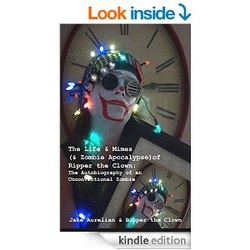 From the quirky and weird world of award-winning author Jake Aurelian comes The Life & Mimes (& Zombie Apocalypse) of Ripper the Clown: The Autobiography of an Unconventional Zombie—a chaotic and satirical journey into your untypical zombie world told from the perspective of an angry clown. Ripper the Clown is an unpredictable cartoon character come to life … a visionary, a renegade, a rogue … and a frustrated stand-up comedian … that is, until Ripper’s murder (at a holiday festival) coincides with a powerful tornado that, for reasons unknown, spawns the zombie apocalypse. Ripper enjoys the notoriety of being the world’s first zombie until an elderly zombie is brutally murdered at the hands of the living; Ripper’s crusade for zombie justice leads to the second American Civil War—“The Cold War V.2”—wherein our clown hero (using old zombie movies as stereotypical inspiration) instructs, trains and commands an army of zombie clowns against their living oppressors and the President of the United States, D.B. Cooper (yes, a legendary criminal is in the White House). The Life & Mimes (& Zombie Apocalypse) of Ripper the Clown parodies and redefines the popular zombie, horror and comic book genres, mixing biting humor and pop culture references with social commentary and political satire. In his alter-ego clown persona, Jake Aurelian has created an edgy, raw and violent, yet complex, emotional, multi-dimensional character—one that is strangely endearing and strangely relatable (as clichéd as it sounds) to readers and audiences of all ages. THE HEART AND SOUL OF HORROR INTERVIEWS
0 Comments
Leave a Reply. |


Archives
May 2023
|
 RSS Feed

|

|