

HORROR AUTHOR INTERVIEW : JAMIE BRINDLE
22/1/2014
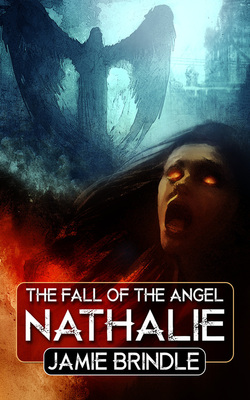 THE FALL OF THE ANGEL NATHALIE THE FALL OF THE ANGEL NATHALIE Jamie was brought up by loving ex-hippy parents who sold boomerangs for a living and had a hedge maze in their back garden. He was home-educated until the age of fourteen, before being eased gently into the idea that the world, by and large, expects you to get up earlier than is really civilised for the majority of your life. Jamie trained as a biochemist at the University of Sussex. Following graduation, he realised he would find this deeply boring, and after a brief sojourn working in a school for deaf children (which he enjoyed much more than his home-educated prejudices had led him to believe), he studied medicine at the University of Warwick. He now works as a junior doctor, and writes science fiction mainly as a way to ground himself after long shifts in the bizarre fantasy world of the NHS. He writes mainly speculative fiction, and “Theft On New Year’s Eve” is his first attempt to write a romantic story, gay, straight, or otherwise. He has recently had his first novel, “The Fall of the Angel Nathalie,” published by Bedlam, an imprint of Necro Press. This is a dark fantasy/horror novel, more details of which can be 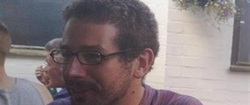 AUTHOR - JAMIE BRINDLE AUTHOR - JAMIE BRINDLE Hi Jamie, how are things with you? Hi there! Well, in a word, busy! I'm half way through my GP training, I’ve got an exam in April (that I've failed once already) and I’m getting married in August. Of course, I'm also trying to find time to write, but that seems to be a bit limited at the moment. But otherwise, well. Yes, not too bad, thanks. Could you please give the readers a little bit of background information on yourself? Hmm, OK, well I’m probably repeating a bit of what I’ve said in bio’s etc., but in a nutshell, I was born to ex-hippy parents in Bedfordshire. They sold boomerangs for a living (though my mum was a solicitor, but she pretty much retired to bring me and my brother up...then she re-trained as a therapist, which she found vastly more fulfilling). My dad decided it would be a good idea to chop down a load of the apple trees in the lovely but overgrown orchard of the house they had just bought, and planted a hedge maze a few years later. When it was big enough, he opened it to the public. I was home educated (as was my brother) until about the age of 14, when I went to a local college and did my GCSE’s and A-levels. Very difficult experience for someone who never went to school, but I got through it, give or take! Actually, I clearly remember a meeting with the careers officer. I told them I wanted to be a doctor or a writer. When they stopped laughing, they told me this was probably a bit unlikely, and advised a science degree instead. So I ended up going to Sussex University and doing a degree in Biochemistry with Neurobiology. Now, if I thought going to a local college was hard for someone who had been home educated, going to a University 100 miles away was worse. The first year was especially bad, trying to adjust I mean. But I made a few friends, got through it. Then I worked in a lab, and found this pretty unfulfilling, so I quit after about a year. I’d heard about graduate entry medicine, you see, so I thought I would give that a go. I completely failed on my first attempt - must have been the worst medical admissions interview ever, I turned up completely unprepared wearing jeans and a T-shirt! Anyway, I then got a job in a school for deaf children, doing media stuff completely unrelated to science. I went for two weeks work experience, and ended up staying for three and a half years. But I loved it. It was a great place, a great job. The only problem was, it wasn’t medicine. And I kept getting the itch, feeling that I had to be careful, that time moved quickly. So I kept re-applying, and failed a few more times. Eventually I got in to Warwick. Then I graduated - I loved the course, by the way, much more interesting than my previous degree, and I was much more confident and comfortable by now, a fact which I largely ascribe to working at the school, and generally being more confident and secure. Ironic really, given the home education thing, that I ended up working in a school...such is life! Anyway, I somehow got through the Foundation Program (the first two years of being a doctor post-qualification, a time largely dominated by not knowing what the hell is going on, and just trying to do your best while everyone shouts at you). Then I applied to GP training, which pretty much brings us up to date. Not to forget meeting my fiancé, Chloe, of course. We worked on a stroke ward together. Our eyes met over an intimate examination she was helping me with; two and a half years later, and we’re getting married. I’ve got a lot of good things out of doing medicine; meeting Chloe has been the best. During most of this time, I was writing. Or trying to. Sometimes I finished things, sometimes I didn’t. Occasionally they even got published. Anyway, that’s my past in a nutshell. Sorry if I’ve waffled a bit! Your parents sold boomerangs, has your past ever come back to hit you? (Sorry I couldn’t resist a bad Joke) Hehe, don’t worry, selling boomerangs at Covent Garden, you get used to boomerang jokes! Every day, at least one person would ask what you called a boomerang that didn’t come back. I tried to smile, but that smile got weaker and weaker as the years passed! They did work, by the way. The boomerangs, I mean. Dad must have made close to a million over the twenty years that they were the main family business, and now we have about fifteen left. But they worked, and they were a lot of fun, especially since we had access to the slightly damaged ones that we couldn’t sell. My party trick, when I was about eighteen or so and we used to have parties camping out in the orchard, was to leave one end in a campfire then throw it. Nothing quite like watching a flaming boomerang zoom around the air and then rush back at you! Obviously, I was mostly drunk when I performed this particular trick. Amazingly, no one got hurt. But it looked good. But seriously...hmm, I think maybe the past has a habit of ambushing you when you least expect it, sometimes just in little ways. And the older you get, the more this seems to happen. I suppose there’s more “past” lurking there to sneak up on you, more potential for coincidence. But specifically? Nothing really big or worth reporting, not yet. I’ll keep you posted though. I’ll send it over on a boomerang. 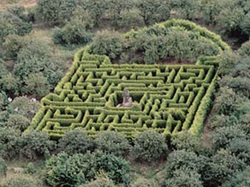 HOOHILL MAZE HOOHILL MAZE You also had a hedge maze in your back garden, was that not a bit terrifying in a Shining sort of way? Well, the thing is, growing up with it - and I’ve got pictures from when I was a kid when the trees were smaller than me - I’ve always loved that maze. Me and my brother both. Since as long as I can remember, I’ve known it like the back of my hand, every twist and turn. Which made it a bit difficult to get terrified of it, even after watching The Shining. Having said that, sometimes at night, when you go up there alone, it’s easy to get spooked by noises. Rustlings, creaks and little whistles, things like that. The thing is, occasionally we got/get people breaking in, especially at night. So that can be a bit scary. But usually, if you’re confident and keep your head, it’s easy to make them more scared of us then we are of them. I like to let loose, scream “Here’s Johnny!” or something similar, and chase them off. If we realise it’s happening, and there’s a few of us about, it’s actually quite fun. You all sneak off to different corners and suddenly start shouting and herding out the intruders. It’s amazing how you can make three or four people sound like a dozen, in the darkness, in a place that is unfamiliar. You have to remember, they usually don’t know where the hell they are or what’s going on, while my brother and I and some of our friends know the place backwards, so it’s easy to keep anticipating where people will go and jump out on them. Not that we really mind if they don’t do any damage - and 95% of the time it’s teenagers who are just mucking about, looking for something to do - but at the same time, it is private property, our home, and they often do leave rubbish there, even if they don’t break things. So we want them out! We’ve never had to hurt anyone or anything, in fact we try and avoid actually coming within eyeshot of them. Horror, in this case, seems much more effective when it’s some unknown, unseen maniac (or collection of maniacs) screaming at you and running you down! So in summary, touch wood, we tend to be the more scary things out there. I’ve rambled again! Sorry! We are all a product of our parents, how do you think your parent’s beliefs have influenced you? First off, I absolutely agree with that sentiment. Parents are really, really important in determining so much about us. I’m not sure, but maybe that’s even more true when you’re home educated. You spend more time with them and so on. Specifically, for me...well, I guess there’s religion. Neither of my parents are really religious, not really. But dad is very much of the opinion that there’s something going on, something behind the dust and the atoms, something that organised religion doesn’t touch, but which is there. “We’re all god,” he tells anyone who will listen - and he’s told me a million times at least - and I guess that has influenced me, because I have basically the same view. I’m not religious, but I’m certainly not an atheist. The whole set up is just too damn weird and bizarre. I mean, I love evolution theory, it’s so elegant and beautiful, and I don’t doubt it for a second. And I enjoy reading Richard Dawkins - though he is a bit provocative, a bit of an extremist. And I am - at least in part - a scientist. But some things go beyond that, I think it’s important to remember that. And after death? Well I don’t believe in a heaven or hell - that’s far too “human” - but I think there’s something. Something, probably, that completely transcends anything we could understand, as humans. Personally, I’ve made plans to meet at Milliway’s immediately after my own death, and make a point of inviting people to come along. You’re welcome to join us, by the way, providing you don’t have plans already. Forgive me, I’m getting off topic. I think I’ve got a pretty strong work ethic. That probably comes more from my mum than my dad, though dad isn’t a layabout. I’m a bit distrustful of authority. That’s more from my dad, though he takes it further than I do, almost to the point of paranoia sometimes. I believe in being nice to people, as long as they don’t screw you over. That’s quite a strong one, and I get that from both of them. They are both kind-hearted, probably more than I am. I believe in trusting people, in giving people a chance. That’s from mum. Dad’s a bit more cautious. And second chances? Yes, I believe in them, too, up to a point. But not getting burnt twice, that comes from my dad. I believe in love, the possibility of it, the power of it, and in friendship, and the importance of it. That’s both of them, again, I believe in reading and learning and listening to people. Again, probably both of them, especially the reading part. They both place great faith in books, they both read a lot. I believe in the need to constantly evolve as a person. That’s both of them, but probably more mum. She is a therapist, after all! Then there are the things that you kick against. After all, you can’t believe in everything your parents believe. You have to find your own identity, that’s really important, too. But thinking about it, I guess for me a large part of that was finding a middle way between the attitudes of my parents, finding when I agreed with one more than another. For instance, I’m not as paranoid or suspicious as my dad, but not as trusting as my mum. But I do believe in the importance of having a touch - just a touch - of madness in your soul. The difficult thing is keeping it at just a touch! Life with a touch of madness makes the stars brighter, let’s you see the hidden twists behind things, gives you snap moments of bravery. More than a touch, of course, is dangerous and frightening. But a touch...yes, that’s important. Oh dear, I could ramble on for ever with these questions. I’m sure that’s quite enough to be getting on with. You trained as a biochemist, as a starter for ten Bisphosphoglycerate (BPG) cannot bind to the oxygenated R state of hemoglobin because A. it is displaced from the heme by oxygen B. it is displaced from the heme by movement of the proximal histidine C. its binding pocket becomes too small to accommodate BPG D. BPG binds to the R state with the same affinity as the T state I’d have to go with C. God bless Wikipedia. You have now trained as a Doctor, why did you decide to switch from Biochemistry to medicine? Hahah, well one reason was the question above! I think a big part of it was the lack of human interaction in biochemistry. In medicine, you kind of get it all. You get the science and the learning and the research. But it’s not dry, not at all. You meet people every day, all sorts of people. And they tell you their stories. A huge part of medicine is listening. It’s listening to the stories people tell you, and then trying to make sense of them in the context of modern medical understanding. And then it’s communicating that back to them, telling them stories, trying to find a way to tell that story in a way they will understand - and believe me, that’s different for everyone. Another reason was medicine feels meaningful. Almost every day, I mean, and not just occasionally, which is what biochemistry felt like. It can be overwhelming and sad and awful, but it can also be lovely and empowering and beautiful. And if you have to spend your life working - which seems to be the deal - I think you should do something meaningful with it. Then there’s the sheer breadth of it - it touches on so many other disciplines, from statistics to biology to physics to arts and the mind. It’s much more holistic than biochemistry. Do you think that your educational training has helped your writing in any way? Yes, without a doubt. But I think there’s two levels to that. On one level, on an academic level, all knowledge can be grist to the millstone of writing. And both biochemistry and medicine is chock full of interesting ideas that can spark off or inform stories. But I think more importantly than that, and this applies to medicine much, much more than biochemistry, is the people you meet and the stories you hear and the constant emotion of it. I’m not sure you can be a writer without being invested in the world, without having some experience of it. At least, I’m sure I couldn’t. So just being in the world, doing a job like medicine, keeps me stimulated and keeps me thinking. The irony, of course, is it sucks up most of my energy and time, at least for the moment. Hopefully one day that will change, and hopefully that day isn’t too far off now, not any more. But who knows? Life’s a funny old beast, and sometimes it laughs with you, and sometimes it laughs at you.  THE BIG DEAL BY JAMIE BRINDLE THE BIG DEAL BY JAMIE BRINDLE On that note what prompted you to pick a pen and start writing fiction? Well, I always loved reading. Always. For as long as I can remember. And the things I loved most were fantastical, magical, and sometimes horrific. Writing was the natural progression of that, I think. So I’ve pretty much always wanted to write, too. I’ve got stories, small, silly things that I wrote when I was five. Also, I wonder if there’s an element of wanting to be able to express myself, to say what I want to say. I wouldn’t really call myself shy exactly, not anymore - though I was, certainly, and I still am a bit reserved - but I’m not naturally very confident, and certainly not an extrovert. Sometimes it can be difficult, having an opinion and not being able to express it. Writing offers a solution to that. How long did it take you to first get published? Oh, years! But probably that’s not a bad thing. I would say, from the time I started trying seriously to get published, it was probably about six or seven years. Then I got two short stories accepted, almost at once. “The Big Deal” was accepted by East of the Web, and another short story, “Daisy Strikes Back” was accepted by a small press magazine called Here and Now, now sadly defunct. The funny thing was, I’d completely given up hope on either of them being accepted. I had sent them off months ago, completely forgotten about them. Then they both got accepted, within twenty four hours of each other! That was odd, but lovely of course! The Big Deal, I think you ask about that later. But the other story hasn’t ever really resurfaced. Which is a minor shame, because though it’s very, very silly I do have a soft spot for it. It’s about three tramps who get cold and decide to hide inside a cow that turns out to be a top-secret government project into genetic engineering. Like I say, very silly. What was the biggest lesson you learned during this period? I suppose it was just to keep trying, to not give up. Not to get phased by rejections - there were a lot of them! - And to keep on trying. Also to be organised about what you have submitted where, as that can get confusing. Also to get feedback, if you can, and find out what you’re doing wrong. Sometimes it’s nothing, it’s a good story, but it’s just not right for that market or publisher. Sometimes, there’s a flaw in the story or in the writing or in both. The difficult part is working out which it is...and sometimes you just can’t! And the last thing is, I learnt to try not to hang all my hopes on one story. Sometimes it takes so long to get a response - and that’s not the fault of the publishers, that’s because a lot of them are one-person outfits trying to read a million stories and also hold down a day job - that there’s no point twiddling your thumbs and waiting. Once you send a story off, bang, try to forget about it and start the next one. Not always easy or possible, but a good philosophy, I think. I would imagine that being a junior Dr isn’t all that conducive to writing. How do you manage to find the time? The short answer is, these days I don’t! At the moment, I’m really struggling to find anytime at all to write. But that’s because I’m in the middle of my GP training, and it’s an especially taxing time. Hopefully it will ease. Prior to this, as a foundation doctor, and before that as a medical student, time was tight, but I could usually try and get a bit done. An evening or two a week, something like that. The exception to that is the final section of “The Fall of the Angel Nathalie”, which I wrote in a flurry of activity when I had some time off after doing a load of night shifts in 2012, and another (as yet unpublished) novel, which I had chipped away at as a foundation doctor, but which I finished when I was at home (my parent’s home, I mean) recovering from an operation on my back at the start of 2013. How would you describe your writing style? Oh, that’s difficult. Well, I’d say it’s generally got a hint of humour in it - either overtly, or lurking somewhere in the background. Sometimes dark humour, but it tends to be an element. I try and throw in some nice writing, some poetic writing, but more and more I try to not let that get in the way of the storytelling. Now I think of these lovely long sentences as little rare things that you can sprinkle into the story, but not fill it with. And linked to that is a sense of pace, a sense of rhythm, which I try to achieve, though I’m not always successful. That’s where the big long lovely sentences can trip you up. Does that answer the question? I hope so. A difficult one, like I say! You have been quoted as saying “The bottom line is you must write to convince yourself, and not bend every sentence to please some imaginary reader formed as a gestalt average of every human taste which has the potential to stumble across your words” How hard is it for you to maintain this, have you ever thought about dumbing down your style to gain a wider readership? Well, the first thing to say is that I do still believe that, absolutely I do. I think you can run yourself ragged trying to please this person or that person. People will tell you different things, because everyone has different tastes. So really, I think it’s important to listen to what advice people have to say, and if you agree with it then great; but if not, then I thank them, but tend to trust my heart. That said, I think I’m more aware than I used to be of the need for pace, to keep things moving, to keep people interested. I’m not sure I’d ever want to dumb things down, but I think I have been self-indulgent in the past. For example, and this is a bit of a silly example, but please bear with me, I love the word “diaphanous”. Love it. Think it’s beautiful. And I’ll use it here and there, and if people don’t know what it means, maybe they’ll look it up, or maybe they’ll understand it roughly from context, or maybe it won’t really bother them and they’ll move on. But I wouldn’t want to put it in a context where it was absolutely essential they knew what it meant for them to understand the thrust of the story. And I wouldn’t want to throw too many words like that in, either. A sprinkling of those words is fine -and by that I mean more uncommon words, words that not everyone will know - too many and it can slow things down. Also, it’s about writing nice, clean prose, not to mention not being pretentious. I don’t like ugly sentences, but if I can say something simply and avoid it being ugly, then I think nine times out of ten that’s what I’d try and do. The tenth time I might let myself get carried away and try to write something beautiful and pretentious! Not that I’d always succeed. Sometimes I just end up with pretentious. But the importance of a touch of madness, as I mentioned above, applies here just as elsewhere, I’d warrant! What aspect of writing do you find the easiest and what do you find the most difficult? The most difficult - that would probably be starting! That moment when you’re staring at a blank page (which can also be exciting, incidentally) - that can be horribly, unutterably awful. Sometimes it’s so scary I have to go and have a lie down, and forget about writing anything that day. The other thing is deciding if you have taken something in the wrong direction. I really, really hate that. I hate deleting things, I hate highlighting a big chunk of text and hitting the delete key! And the reason is, when I start deleting things, I start questioning everything. Where do I stop? Where did I go wrong? It’s often very, very difficult to work that out. The easiest - well, I think there are moments, there are these golden moments, when something clicks, and things just come together, and it’s like riding a wave, it’s wonderful. It’s almost as if you’re not making it up, you’re a conduit, the story is already there and you are just earthing it, like lightning striking the top of your head and shooting down into the keyboard. And that doesn’t happen all the time. But when it happens, it’s wonderful, almost the most wonderful thing in the world. And I think that links into finding the right balance between planning and spontaneity. When I don’t know where a story is going at all, I can’t write it. On the other hand, if I plan it too much, if I work every little detail out, not only do I get bored, I get stifled, and that magic, golden moment never comes. So I try to balance these aspects. The subconscious is probably really important here. Maybe those golden moments are when the doors open in your mind and the different levels of yourself come together, communicate freely. And maybe that’s why writing can be so therapeutic, too - because it’s about getting to know other parts of yourself. 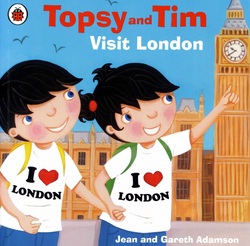 TOPSY AND TIM TOPSY AND TIM Who would you say are the biggest influences on your writing? Well, from the point of view of the first writers I loved, Tolkien would have to be up there at the top of the list. C. S. Lewis I loved. Rudyard Kipling. The Topsy and Tim books, of course. From the point of view of who has influenced me stylistically and in my thinking - I think I would have to say Terry Pratchett has been, and continues to be, a massive influence. I can’t help it. Sometimes, I even worry about it, because there are times I read something back that I wrote a year or two ago, and I think, “Blood hell, I’m just ripping off Terry Pratchett”. All I can do about that is apologise, and hope it’s not too true; and also, we all stand on the shoulders of people we admire. I don’t think we can help it. Actually, Stephan King is probably another big influence, from one point of view, and I think you can see that coming through in some of “Nathalie”, though not all of it, and it’s certainly more diluted and more mashed in with other influences. Then there’s Roald Dahl, naturally. Loved his kids books as a child, loved his adult short stories later on. I think his writing has probably influenced me in two ways - one, the dark humour. Two, the sense of needing to keep a pace to the writing, needing to keep things interesting. Also, he’s got a wonderful flare for going off at bizarre tangents and incorporating imaginative elements, even into stories that are basically set in the “real” world. Oh, and Neil Gaiman! I love Neil Gaiman! The first line in “The Graveyard Book - and I won’t quote it, but if you’ve read it, you’ll know what I mean, and if you haven’t read it, then you really should - that line is amazing, and it taught me something, very consciously, about what you say and what you don’t have to say. About painting a picture with darkness as the main colour, and how powerful that can be. Who is your favourite character from your book and why? From “Nathalie”, I would have to say Jason. Just because he was so much fun to write. And working out he had a heart, that he was redeemable, at least on some level, that was lovely. I love his brashness, his arrogance, his sense of humour, his cruelness, even. Like I say, fun to write. I mean, I like Nathalie, but Jason was probably my favourite. I liked June, too. I didn’t plan her, she’s an example of someone who just popped up, fully formed, as it were, in exactly the right place, just when I needed her. From anything I’ve written...well, it has to be Quince. I just love him. I love his pettiness and his sharpness, and he’s quite witty sometimes. Again, he’s a lot of fun to write. And when he gets Bob as a sidekick...well they’re almost a double-act, almost two sides of the same character, I suppose. Hopefully, one day I can write them a novel. Also, and I have to mention it, I’ve got a soft spot for Tina. I think she’s very vulnerable and loveable and brave. Are you a fan of horror, and if so what do you like the most about it, and what do you hate about the genre? That’s interesting, actually, because I’m not a huge horror fan, at least not when it comes to books. The only horror writer I read regularly is Stephen King (kind of obvious, I know), but I do think he’s a great story teller, and that shines through in everything he writes, horror or otherwise. Other than that, I suppose I read a bit of horror here and there, but I’m much, much more interested in fantasy. If that strays into dark fantasy, where it begins to meet horror, then I’m probably a lot more interested. What do I like about horror? The lack of inhibition, of censorship. The fact that it has the license to take us places where we are afraid to go, but part of us wants to go there anyway. Also it’s important to tackle our fears, and sometimes that’s easier to do when something is made hyper-real, dream-like, and I think horror does that well. I like the honesty of looking in the mirror and seeing the ugly side of things. Of course, that has to be balanced, but it’s important. What do I hate about it? That’s harder. I’m not sure I’d go so far as to say I hate anything about it, but there’s a lot of horror out there that doesn’t especially interest me. Gore for the sake of gore I just find pretty boring. And, in terms of movies, all that “torture porn” stuff that’s been about for the last ten years or so, well, I don’t really see the merit in it at all. There’s certainly other genres that I find more intrinsically offensive! 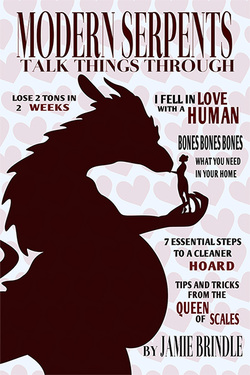 MODERN SERPENTS BY JAMIE BRINDLE MODERN SERPENTS BY JAMIE BRINDLE Let’s talk about Tina. That’s a rather unusual name for a dragon isn’t it? Yes, it is! But I think it suits her. She seemed like a Tina to me. I wanted a very normal, very down-to-earth name for her. I wanted to sign post, right from the get-go, that a) I wasn’t writing anything that was, on the surface at least, too serious, and b) that this wasn’t a world where the dragons were strange, mysterious creatures, filled with magic and glamour. No, this was a world where dragons read trashy magazines and watch reality TV shows, and struggle with their weight. I had a lot of fun mucking about with that normality in the context of the traditional fantasy conventions surrounding dragons. The story, of course, is about being different, and accepting yourself, and how you deal with it when other people don’t accept you. Hence, Tina, a dragon, falling in love with Kate, a human. Not just a lesbian relationship, but trans-species as well. Now, I have to point out, I have to be up front (and especially because Jamie is a girl’s name, too!) that neither am I a woman, nor am I gay. Nor, for that matter, am I a dragon. I’d like to think that doesn’t really matter. It might matter to some people, and if it offends some people, well, I’m sorry that they feel offended. But I’m not sorry for the story. Because, although I’m not gay, I can identify very strongly with feeling different, with feeling like an outsider, with feeling like I’m not accepted by the majority. I felt that way for a lot of my life, and I suppose on some level I still feel that way, though I’ve rationalised it a lot more than when I was eight or fifteen or even twenty one. Being home educated is probably a big part of it - though I’m aware it’s perfectly possible to go to school your whole childhood and adolescence and to still feel like an outsider. But that aside, I think on one level, we are all outsiders, or at least feel that way sometimes. So I think the bottom line is that’s what this story is about - it’s about working out who you are, and coming to terms with it, and then working out how you fit into the world around you. The story while written in a distinctly light tone, has a serious message. How important is it to you for your stories to have a message. That’s another interesting question, because I think there’s two sides to the answer. The first is, I think the story should come first, and not just be a vehicle for the message. The story has to go beyond the message - in a way, maybe it even has to distract you from the message, work at right-angles to it. And I almost never start writing a story with the idea like,”OK, I want to write a story that says it’s fine to be gay,” or, “I want to write a story that says you can’t have evil without free will”. Usually, the story comes first, and any message will naturally evolve around it, entwined within it, and feeling natural. That’s the hope, anyway. The second is, a story with absolutely no message, in the final analysis, probably feels a bit empty. A bit like snack food. I mean, being distracted or entertained is fine, that’s wonderful, but I think if there’s going to be any depth, there probably has to be something behind that. And that’s OK, as long as it’s not forced, not just stuck on there. Again, it comes back to stories evolving naturally. And I think, from my limited experience at least, that this will usually happen, at least if the story has any real potential. It doesn’t have to be forced - if it’s there, it will come out, it will be there. And that comes back to what I was saying earlier, about stories coming from somewhere deep inside, on a deeper level, and about connecting with yourself when you’re writing them. So in summary - yes, I think a message is important, but not so important that it should dominate the story or be thrust down people’s throats. Where you ever concerned that the message would take over the story and become preachy? With “Nathalie”? Hmm, maybe. Not really, though. I think there’s enough action and enough drama and enough other stuff going on, that you can take it on that level if you want, and forget all about anything deeper about free will or the nature of evil. I mean, I don’t want to be arrogant about it - there’s a lot of that stuff going on, and I’m not pretending I’m a great philosopher or anything like that. It’s not ostensibly a meditation on good and evil and free will, it just incorporates those ideas. And hopefully it does that in a way that’s not too preachy, and that doesn’t get in the way of the action or the drama. I mean, there were moments where I felt I was coming close, treading a fine line. I’m not religious, as I mentioned, though I am spiritual. The story obviously is heavily based on Christian mythology and ideas and symbolism, but I’m certainly not trying to preach a Christian message - I’m not trying to say, “You must be good, because the daemons are after your souls,” or anything like that. If there are moments where it approaches being preachy, I suppose that would be more around free will, because I do strongly believe in the link between free will and morality - I mean, how can you have one without the other? - but whenever I began to get worried that I was becoming a bit preachy, I tried to throw something else in there, either funny or dramatic or...well, less preachy, I suppose! Is this the last we have heard from Tina and Kate? For the moment, yes. I mean, I don’t have any plans to tell any more stories about them. You never know though, I suppose. But I’m happy leaving them where we left them, together and happy, at least for now.  THE BIG DEAL - JAMIE BRINDLE THE BIG DEAL - JAMIE BRINDLE The Big Deal, deals with the cycle of life and death, can you tell us what inspired you to tackle such a subject? At the time, probably about ten years ago now, I had this idea that I was going to write a collection of short stories that were about all the possible things that could happen after death, or before birth, or that might explain this great big messy Universe we find ourselves in. Rather arrogant of me, really, but I suppose I wanted to get my own thoughts in order on the subject, work out what I really believed. And “The Big Deal” was the second or third story I did in that cycle. To be honest, the others were never really that good, they never came to life in the way Quince did. Although, having said that, “Nathalie” probably owes its genesis, at least in part to that cycle of stories, too. I think at some point we all think about these things - or at least, most of us do, though some people find it uncomfortable or pointless, maybe, and don’t really want to think about it for very long. I just started turning these ideas over in my head and wondering about it, and thinking about what the possibilities might be. And so I wrote that first sentence, then the next, then the next. And it just kept coming, very naturally, and it felt right, somehow - as well as being a lot of fun - and the cyclical nature of the story suddenly clicked into place, and that felt right, too. You again employ the light hearted approach for dealing with weighty subjects, how do you ensure a balance of tone, so that the deeper meanings aren’t lost in a sea of humour? Well, first off, thank you, that’s a nice thing to say, and I hope it worked and the balance was right. I have to say, I tend not to plan it too much, I tend to go more by “feel” if you understand me. Sometimes, it feels right to have a Poor Soul make a bit of a jokey comment, and sometimes it feels right to pull back on the humour, and let the deeper subjects come to the fore. It’s very much done on instinct. I don’t have a formula, like “joke, joke, serious comment about the nature of reality, joke, mildly amusing remark, proposed insight into the functioning of consciousness,” nothing like that. It’s like riding a bike or steering a boat. You lean one way, then the other. If you feel yourself starting to list too far in one direction, you try and pull yourself back the other way. And sometimes the story goes where the story wants to go, and you just have to follow it. If Quince showed you the manner of your death, how would like to go out? Actually, I’ve thought about this before. Dropped from an enormous height, preferably with an oxygen mask and on a morphine drip, on a bright, clear, day, and placed so as to land in the garden at my parents’ house, by the tree where there’s a picture of me as a baby being held by my mum. Should be fairly quick and painless, but quite a ride first. 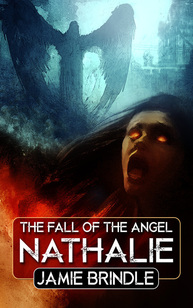 THE FALL OF THE ANGEL NATHALIE THE FALL OF THE ANGEL NATHALIE Which brings us to your excellent novel The Fall of The Angle Nathalie, is the novel a continuation of the novellas that you published through Scotopia Press, or is it a reworking of the combined novellas? Thank you, I’m glad you liked it :-) Well, it’s interesting, because Scotopia Press published the first part, and there were plans that they were going to publish the rest, but unfortunately the project fell apart, and they never did. But in a way, that worked out well for me, in the long run. Because at that time, I had a finished version of “Nathalie” - three parts, adding up to a novel almost as long as the one that was eventually published by Bedlam/Necro. But the thing is, the second and third parts were originally completely different. They followed a completely different path. Nathalie landed somewhere different, for a start, and there was a completely different supporting cast, and so on. And, you know, it was OK. It wasn’t bad. But looking back on it a few years later, I thought I could do better. And I realised some things I had done wrong, in particular to do with where I could take the overall arc of the story, and so I decided to keep that first part - up to the point where Nathalie meets the Hecatombe - because I felt that was the strongest of the three original parts, and it still felt “right” to me, and worthwhile, but to completely rewrite the rest of the story. So the version that I ended up submitting to Bedlam/Necro, and which was subsequently published, was this reworked version. And I have to say, I think it’s a much better, more cohesive, more meaningful, but also more fun and exciting story than the one I originally wrote. I was much more happy with it, and when I look back at the original parts two and three that I wrote, well, some of its OK, and some of it’s just embarrassing. But hey ho, that’s how it goes. I’m just glad I got the second chance. What caused you to make a shift intone from the light hearted to a much more serious tone in this book? That’s difficult. I mean, I’ve always tried to write in different tones. A lot of it is the mood I’m in, what I feel like writing, and I think that’s important, because you have to be honest to yourself, you can’t force yourself to write a light hearted comedy when you’re feeling awful. If you’re feeling awful, maybe you want to write something vicious and biting. That said, I knew “Nathalie” was going to be much more of a horror or a dark fantasy than a lot of the other stories I had written. Partly that was the subject - angels and daemons and free will - writing about these things, that can lead to an exploration of temptation and evil and that stuff can be pretty dark. So I knew the tone had to stay fairly consistent - obviously with some variations, but it’s essentially a fairly dark book compared to, say, “The Big Deal”. And then partly, once I had decided to go down that road, I wanted to just let things rip a bit. Which comes back to that comment about horror, about not having to inhibit the things you say or the directions you take. The subject deals with the age old question about the nature of evil and free will. Do you think some of us are borne evil, or are we a product of our environment? I think that apart from perhaps the very, very rare exception, we are much more a product of our environment than our genes. I mean, if we don’t get the things we need as kids, especially as young children, as babies even, we are much more likely to struggle to understand, or care about, the emotional needs of others, their rights, and so on. Perhaps, very, very occasionally there is something genetic, something that’s missing right from the word go. But I’m not sure about that, and I think it’s very dangerous territory to go into. I think, pretty much without exception, that we all have the capacity for good or evil (however we define those terms) and we all have the capacity to change. And do you think we have free will? Yes, I believe in free will. I think, though, that we are entering a very interesting time - provided we don’t blow ourselves up or anything - in the sense that sooner or later we’re probably going to be able to create either “real” artificial intelligences, or we are going to get the capacity to transfer our minds from this biological substrate of grey matter we call a brain into an electronic one. And I think that will raise questions about free will, about where it hides. I mean, as a thought experiment, say you could make an exact simulation of the human brain, not just down to the neuronal level, but down to the atomic level, or beyond (and incidentally, that’s just what the Blue Brain Project are doing right now using supercomputers in Switzerland, and it’s really interesting and worth a Google, if you haven’t read about it already). Now imagine this is a perfect simulation. If it’s perfect, where does free will come into play? Because we can see every neurone fire, we can predict every ion channel in every neurone that opens, we can see every decision that would be made. But will it work like that? Maybe it won’t. Maybe there’s something that lurks deeper, behind even the atoms, even the quarks, maybe there’s something there that means that whenever something comes into being that is sufficiently complex so as to be self-aware, to have consciousness, it also has something inherently unpredictable, inherently unique. And that’s not to say that I think that these hypothetical AI’s or transferred intelligences will not have free will - I just wonder if they will display unpredictable behaviour consistent with free will, which, of course, is linked to a soul, really, an essence. So I think it may well become a more complex question in years to come; on the other hand, it may be that it becomes much harder to argue for the existence of free will. But for now: yes, I believe we have it, and I believe in the importance of it. The book also question how far we would go to stop evil happening, how far could you go to stop a greater evil? Do you think you could kill someone? Well, I’m not sure any of us would ever know that for sure unless we were put in that situation. But my gut feeling? Yes, in the right (or wrong!) circumstances, I believe I could. To protect someone I love. To protect someone I don’t love, even. Out of malice or cruelty? I don’t think so. I hope not. Out of anger? Again, I don’t think so, but that one’s harder. We, all of us, have the beast within, don’t we? I know what Jason would say - it’s just a question of finding the button that lets the beast out. So what can we expect from you in the future? (Sighs) like I say, at the moment life is busy. Far too busy. So busy, I’m half mad with it. So at the moment, my writing time is severely limited. That said, I have a novel that is finished and I’m trying to find a home for. I haven’t approached Necro/Bedlam with it at this point, because it is so completely different to “Nathalie”, and not really a horror at all, although I suppose there are elements of dark fantasy. But they are only elements within a bigger story. In fact, it’s a story about stories, made up of lots of linked stories, and about what happens when stories start to break into one another, and the walls between stories become thin. It’s rather odd, and very non-linear and difficult to pitch. But who knows? I would love to find a home for it. I’m rather proud of it, if I’m honest, though it is very, very odd. Quince even pops up in it. And his brother. And a dragon, a witch, some scientists, a talking fish, and loads of other strange characters. It’s got a fairy-tale feel to it, but with a nod and a wink to several other genres. Other than that, when time allows, the next longer thing I’m working on is actually very different again - it’s a story set in the “real” world, in a fictional hospital, about the NHS and about medicine. Write about what you know, that’s what they say. So I thought it was time to give that a go. I wrote the first 10,000 words then ran out of time - now I have to do serious, not-writing things like pass exams and get married. But hopefully I will have a chance to come back to that one before too long. There’s also a sort of cyber-punk story set in a near-future dystopia that I was working on for a while, but that’s on the back burner for the moment. Thank you for answering these questions, do you have any final words for the readers? No worries, thanks for asking them, and for giving me the chance to waffle on! I’m sorry if I’ve done too much of that, I cry your pardon if it’s so. Final words for the readers? Just, well, thanks for reading, and I hope you enjoy the stories! Please share these horror author interviews on Facebook, Twitter and other social media networks. By helping to spread these reviews you are increasing the potential readership of these authors, which might just help to sell some of their books.FILE UNDER HORROR AUTHOR INTERVIEWComments are closed.
|


Archives
May 2023
|
 RSS Feed

|

|