

HORROR AUTHOR INTERVIEW - MARK ALL
16/3/2015
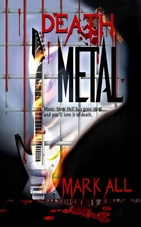
 DEATH METAL DEATH METAL Mark All is the author of the horror novel Death Metal and paranormal thrillers The Spellcaster’s Grimoire and Mystic Witch. He has won two international writing awards and contributed to Computer Legends, Lies & Lore. Death Metal received 4.5 stars from PRG Reviews. The Spellcaster’s Grimoire got 4.5 stars and 4 stars from dual reviews by the Paranormal Romance Guild, where it was nominated for the 2013 Reviewer's Choice Awards in the Urban Fantasy category. Mystic Witch received a 5 Star review from the Paranormal Romance Guild, and 3 stars (out of 4½ possible) from RT Book Reviews. Mark is a full-time author after a career as an instructional systems designer. He also held jobs ranging from gravedigger to FM radio announcer to professional rock guitarist, and still plays in a working band. Mark earned a Masters degree in computer-based education and a Bachelor of Music cum laude. Could you tell the readers a little bit about yourself? I’m a full-time author after a career as an instructional systems designer. I’ve had jobs ranging from gravedigger to FM radio announcer to playing guitar with a rock band on the road, and I still play in a working band. I got a Masters degree in computer-based education and a Bachelor of Music cum laude. My new book is the rock ’n’ roll horror novel Death Metal, and my previous books were the paranormal thrillers The Spellcaster’s Grimoire and Mystic Witch. I won two international writing awards and contributed to Computer Legends, Lies & Lore. What do you like to do when you're not writing? Besides a lot of reading and watching movies, I play in a Classic Rock cover band, mostly private events and parties. What’s your favourite food? Pizza! And coffee. Does that count as food? Who would be on the soundtrack to your life story? Judas Priest, Beethoven, Yngwie Malmsteen, Mendelsohn, Iron Maiden, Wagner, among others. Tell us a dirty little secret? Like the music business, publishing has been “disrupted,” and, as William Goldman said about Hollywood, “Nobody knows anything.” The industry is thrashing around in the digital waters. What advice would you give to your younger self? Don’t worry so much, enjoy life. Characters often find themselves in situations they aren't sure they can get themselves out of. When was the last time you found yourself in a situation that was hard to get out of and what did you do? SnowJam 2014, Metro Atlanta. With no clock to punch, I don’t get up early and watch local morning news over coffee, and didn’t know the blizzard was coming. Went to the dentist, the weather fine, left less than an hour later, and it was gridlock. Stuck in traffic for hours, and I had to pee, and verged on a panic attack for a while. I opened the window and breathed heavily. A lot. Who are some of your favourite authors? Stephen King, Dean Koontz, Robert R. McCammon, Larry Niven, Michael Crichton. What was the last great book you read, and what was the last book that disappointed you? The last great book I read was The Girl on the Train, and the last disappointment was Dr. Sleep. Put down those pitchforks and torches! You know it wasn’t as good as The Shining! What is your all-time favourite horror novel, and film? Horror Novel: It, by Stephen King. Horror Film: Alien. If that’s too SciFi, then The Shining. If you could erase one horror cliché what would it be? The fake-out ending, when everything looks okay, then the Hero or Heroine is suddenly killed at the end. It’s just a device, it’s cheating, it defeats the character’s journey, character development, and triumph. Almost bad is when a sequel begins by killing off the surviving characters from the previous film (cough, Alien 3, cough, cough), thereby changing the ending of a completed film from triumph to tragedy. Which fictional character would be you perfect neighbour, and who would be your nightmare neighbour? Perfect neighbour: John McClane from Die Hard Nightmare neighbour: Jerry Dandridge from Fright Night If you could kill off any character from any other book who would you chose and how would they die? Nick and Amy Dunne from Gone Girl, and they would poison each other. And if you had free range what fictional character would you like to write for? Sherlock Holmes, except that I don’t have the skill set to do it! What do you think of the current state of the genre? The Horror genre is tired, worn out, and therefore unpopular. However, there’s now a thriving indie publishing and small press market, and many horror authors who are non-traditionally published are developing and filling a need. What do you think is the biggest problem facing horror fiction right now? The biggest problem with the horror genre is that everything seems to have been done, done well, and then done poorly, and then done to death. As the world moves on, with constant product being produced, it’s more and more difficult to create original ideas. It’s also very difficult to scare people, for the same reason—after the last century’s glut of horror novels and especially films, we’ve seen everything, and a lot of it has been hard to top. Are there any reviews of your work, positive or negative that have stayed with you? None in particular, but I always like to hear that the pace was breakneck, and most especially when a reviewer comments on the dialog or characters. What aspects of writing to do you find the most difficult? Coming up with an original idea that contributes something new to the genre, rather than rehashing old tropes. Is there one subject you would never write about as an author? What is it? I’d never write about rape, serial killers, and violence against women. It’s not only disturbing, it’s too real, not an escape from everyday life at all. And I worry about presenting that sort of thing as entertainment. What do you think makes a good story? A character transcending his or her old self and addressing their greatest need, fear, or problem that’s preventing them from living an authentic life. How important are names to you in your books? Names aren’t too important, but should suit the characters, yet without being too on the nose or blatantly meaningful to the character’s role or personality, which pulls the reader out of the experience. Some of the best characters have bland, common names, such as most of Stephen King’s, which makes them seem like real people. What tools do you feel are must-haves for writers? A working knowledge of story structure, which can be found mostly in screenwriting books such as Save the Cat and The Writer’s Journey. What is the best piece of advice you ever received from another author? “Shitty first drafts,” from Anne Lamott’s Bird by Bird, and “I can fix a bad page, but I can’t fix a blank page,” which has been attributed to Nora Roberts. You have to just get in there and start writing, not worrying about how good it is, not editing it as you go, but get that first draft down and fix it later. What is the most demeaning thing said about you as a writer? I’ve so far had only positive reviews that I’m aware of, but one reviewer said that one of my witch books was light, or thin, or something like that. Well, I’m not Jonathan Franzen or James Joyce, that’s for sure! How do you market your work? What avenues have you found to work best for your genre? Facebook is my primary social media channel, both my personal timeline and my author page, although I’m on Twitter, Pinterest, and others. A good plan is to find what you’re comfortable with and not try to do everything. And you have to provide some of your real self, and engaging content, not just a bunch of “Buy my book!” posts, which will get you ignored. I seek reviews from great review sites and blogs. What did not seem to work well was an expensive and time consuming blog tour, which produced no clear impact on sales. The problem with Internet marketing, which even the huge publishers have, is that there’s no way to accurately quantify the effects of your social media marketing on sales. Who is your favourite character from your book and why? Although David Fairburn is the primary protagonist, I like the “co-protagonist” Jessica Chandler most. She’s funny and hot and women in general interest me more than men. How about the least favourite character? What makes them less appealing to you? I hate Vince Buckley, the antagonist returned from the dead. Writers often like villains the best, finding them more interesting, but the Bad Guy usually is a reflection of the Hero’s primary flaw, weakness, or dark side, a “shadow” of the protagonist, who tempts the Hero to give in to his worst nature. Besides the hacking people up with an axe. What piece of your own work are you most proud of? I’m most proud of Death Metal. Most authors like their newest or current work the best, but this book is my first published all-out horror novel (in the previous 2, about witches, I sneaked a horror novel out there with the trappings of a paranormal, with a little humor and romance). It has the most depth of character, the most serious explorations and tone, and my best plot so far. It also depicts the rock ’n’ roll life of a working musician, which I think is of interest to people and I wanted to share. Okay, and maybe relive a bit. And are there any that you would like to forget about? Only the ones I started that never went anywhere. Well, some of those were okay, too. But the first three novels I wrote, in spite of not being quite good enough to publish, had the essential elements of my writing, had the fast action pace, characters, and hopefully humorous dialogue I liked, and were good stories, although flawed. For those who haven’t read any of your books, what book of yours do you think best represents your work and why? Death Metal is my best and most representative—writers develop with every book and become more themselves, better able to manifest their internal worlds into the “reality” of a book. What are you working on right now? I’m currently working on The Northampton Horror, the story of another universe intersecting with ours in modern suburbia, with strong H. P. Lovecraft elements. What's the one question you wish you would get asked but never do? And what would be the answer? How do you write a good story? For me, the answer lies in structure, not only three act/Save the Cat/the Hero’s Journey, but creating a flawed Hero/Heroine who represents a character issue of personal interest to the author and therefore readers, and an external story problem that forces him/her to confront and transcend their major life issue in order to defeat the monster/villain, as well as life an authentic life.
Comments are closed.
|


Archives
May 2023
|
 RSS Feed

|

|