

HORROR AUTHOR INTERVIEW : RUSSELL MARDELL
16/12/2013
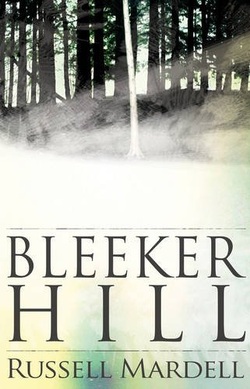 Bleeker Hill by Russell Mardell Bleeker Hill by Russell Mardell As you know the aim of this website is to introduce you all to what what in my opinion is some of best horror authors out there. It was Ghostwatch legend Stephen Volk who brought Russell Mardell to my attention. Russell was looking for outlets for his new novel Bleeker Hill, a dystopian horror novel set in a near future UK. By the time I had read the first few chapters of this excellent novel I knew I had to do a full indepth interview with Russell. Russell Mardell is a novelist, playwright, producer and sometime director based in the south west of England. His first published book was Silent Bombs Falling on Green Grass a collection of twelve weird and wonderful short stories centered around the town of Mewlish Lull. His follow up Stone Bleeding is a dark dystopian satire of reality TV and celebrity culture. Most recently he has published Bleeker Hill a dystopian horror. Russell has also written for the British stage with the plays Cool Blokes: Decent Suits, and its sequel Suits 2: Back From the Cleaners performed at the Salisbury Playhouse, and The Seventeenth Valentine and Freestate playing at The White Bear Theatre in London. Having studied film production in London he has written and directed a couple of short films, and continues to develop a number of screenplays.  Russell Mardell Russell Mardell Hello Russell, how are things with you? Fine, Jim. How are you doing? Could you give the readers a little bit of background information on your good self? I originally trained in film production and worked on a couple of short films. Film was always my first love. Novel writing was something for the future. I then got sidetracked into writing stage plays, which was great fun but utterly unsuitable as a career. I wrote my first short story collection Silent Bombs Falling on Green Grass, and that has since led on to writing and publishing two more books – Stone Bleeding and just recently Bleeker Hill. I wish I had taken the plunge with novel writing earlier. I would like to say there was a grand plan, but in all honesty it is a case of throwing mud at the walls until something sticks. I just want to write. I’m a film obsessive and music fan. If I weren’t writing I would be working with animals somewhere. I support Everton FC and wish I were slightly taller than I am. A music obsessive and a film geek? What are your three favourite films and groups, and what is about them that puts them at the top of your list? I couldn’t possibly list my favourite films. It’s an ever changing list. I grew up on trashy horror and retain a huge love of horror films, good or bad (the video nasty furore fascinates me still) Most of the films I watch regularly seem to come from the seventies – Coppola, Scorsese, Carpenter, Lumet, the usual suspects – that pre-blockbuster golden age where people took risks. Fascinating time for film, so I could probably pick three from that era and change them weekly. Favourite groups are The National and The Boxer Rebellion. The National are blessed with wondrously surreal lyrics and a lead singer I could listen to reciting the phone book. I’m a bit biased when it comes to The Boxer Rebellion as I have got to know them a little bit over the years (they let me use one of their lyrics in Stone Bleeding) and they are great guys. Also being an indie they are a great inspiration as they have chosen to carry on doing things independently, releasing on their own label and forging their own path successfully. It helps when the music is fucking cool too, of course. Can you remember what first motivated you to start writing, and has your motivation changed over the years? I really can’t remember. Writing was just something I always did, from primary school onwards. My next school wasn’t exactly the sort of place that encouraged anything creative, or indeed anything except fear and alienation - not exactly any Mr Chips’ there but plenty of hard-boiled potatoes. I won a poetry competition during that time, which felt like a nice little two fingers to them. Writing was a passion. It still is, but of course the difference now is, having chosen it as a career, I need to actually try and make some money from it. Reality sometimes sucks out the simple pleasure of it. How would you describe your writing style? Dark, quirky, ranty. Cheap therapy. What aspects of your writing do you think are the strongest and what do you think are the weakest aspects of your writing? Having come from a background of scripts and stage plays, it has always been the dialogue that I have enjoyed, and it is very much that that people have seemed to respond to. That said, with the novels I wouldn’t say any of them are particularly dialogue heavy. A number of people have said the novels feel slightly cinematic which I’m more than happy to go with.  Stephen Volk Stephen Volk Who would you say has been the biggest influence on you and your writing? Obviously a lot of writers over the years that I have loved reading – Paul Auster, William Wharton, Stephen King, more recently Dino Buzzati and Richard Matheson, they have all been influences. My Dad is a film fan and that was passed on and it was a love of film that got me in to writing. It was the part of the process that fascinated me the most. Also, many years ago, just as I was getting into writing seriously, I met the great Steve Volk (this was just after Ghostwatch, so its fair to say that meet was quite memorable for several reasons) and he was kind enough to read a few things, give some feedback and advice. I didn’t know any other writers and had absolutely no idea how to go about it as a career, so chatting to Steve was a great help. Let’s talk a bit about the mechanics of your writing. How do you go about the writing process? Are you a plotter or do you go with the flow? I have to say I go with the flow, and if there was any advice I could give to other writers it would be to plot! With Bleeker Hill there was a fair bit of plotting as it had originally been conceived as a screenplay and over the years it has found its own path in my mind. I knew where it began, and I knew where it had to get to. I think writing the way I do comes from not having a conventional publishing deal. No one is asking me to write anything specific, no one is asking for treatments, I have no one else to please but myself, so by keeping it free it makes the process more enjoyable. It also tests me as a writer and in some bizarre way I quite enjoy it. I often write myself into a corner and the next day I have to write my way out of it. I don’t recommend it as a way of working. I am actually planning more and more now, so maybe it’s starting to become like a proper grown up job. To follow on what drives your writing, does the plot and narrative take precedence over the characters, or do your characters drive the plot? I hope the characters drive the plot. I could hardly say that any of my novels have the greatest, most intricate of plots. For me the joy is always in the characters. It’s what I enjoy reading and certainly what I enjoy most about writing. As well as being a novelist, you are also a playwright and a director. Do these three creative outlets all draw from the same creative well, or do they come from different wells in your psyche? They all pretty much come from the same place and that comes from my original passion for film. It was just the medium I fell in love with first. I will happily write in whatever area anyone wants me to. I enjoy writing. I don’t care what it’s for. Directing has more often than not come about through necessity and lack of money, but it is a process I enjoy very much. And do they offer different sense of gratification? Playwriting feels like a quick buzz – a great high during the production and then a massive low after it finishes. Film is very gratifying, in large part because of all the different aspects that have to come in to play, the mix of people. Novel writing is different because by nature it’s a solitary endeavour. In some ways it’s more gratifying once its done, but there’s a whole lot of paranoia and doubt whilst you’re doing it. But for me, writing is just writing. I enjoy it no matter what it is for and just doing it is gratifying. I would imagine that being a director allows you to see the bigger picture in terms of a story’s narrative, is this the case? And does directing give you any other insights into the world of writing? Well, I’ve only ever directed things that I have written so it’s quite hard to judge. I have always come to everything as a writer first, a producer or director secondly. How does being a playwright differ to being a novelist? The most marked difference is the immediacy of stage plays. You write them, they go on for a few weeks and then they disappear (at least in my case) whereas the marketing for novels is kind of never ending. The book is always there and you are always trying to find an audience for it. What I do really like about stage plays is being able to gauge a response straight away. You sit there and watch it and you know there and then whether people like it and if it works. When an audience is responding to your words on stage it is a truly wonderful feeling. Of course with a book, you send it out into the world and you probably don’t hear anything for weeks or months, you get the odd review now and again, but often by the time you get any sizeable response you are already on to the next thing. Do you know before you start writing if what the project is going to be in terms of structure? Usually, sometimes it may change but for me the structure is fairly set.  The Cast of The Seventeenth Valentine The Cast of The Seventeenth Valentine You have written a number of plays, Cool Blokes: Decent Suits, and its sequel Suits 2: Back From the Cleaners, and The Seventeenth Valentine. Are these straightforward plays, or do they like you fiction draw upon the weird and the wonderful? Most of the plays have actually been comedies. Cool Blokes was a piss take of all those dreadful ‘Lock, Stock’ clone British gangster films that came out around the same time. It was pretty light on plot and just a barrage of acidic one-liners and insults. Great fun and not to be taken seriously. Ironically Seventeenth Valentine was my attempt at doing a romantic comedy, but some people said it was the darkest thing I’d done, which probably says a lot. I’m inclined to say that Freestate, which was my most recent play, is my favourite bit of writing, but again it’s not too weird (but I think it’s wonderful.) It seems I keep the weirdness in reserve for the novels.  Silent Bombs Falling On Green Grass Silent Bombs Falling On Green Grass Your first published book was Silent Bombs Falling on Green Grass, is a collection of connected tales set in the fictional town of Mewlish Lull. Was it always your intention to craft the book in this way? I liked the idea of a short story collection that could, in some respect, be read as a novel. There is a lot of crossover in the stories and a very deliberate flow to the order. I like short stories and I had a few knocking around that were too long for the conventional short that you could submit to a magazine and I really wanted to do something with them. It seemed the logical idea. I also liked the idea of starting off with a short story collection. I was new to this side of writing and really had no idea if there was an audience for the sort of things I was doing. Was I any good? Would people give a shit? It seemed like a good way of testing the water. Pleased to say there are enough weirdoes out there to make me carry on. The book combine a look into the dark side human of nature with some wicked humour. How did ensure that the balance of the two felt right? I didn’t. I just hoped they would. Getting that balance of light and shade is hard, but whether it works is such a subjective thing, it will work for some and be jarring for others. It worked for me and that was the only judge I could use. And just who is the man in the tub and the narrator? People who know me have seen similarities with the narrator, and it’s hard to argue with that. As for the man in the tub…it’s all there in the story!  Stone Bleeding Stone Bleeding Your second published book was Stone Bleeding. The book was written as a response to the state of the so called celebrity culture and Mayor of London. What’s your beef with them? I hate the celebrity-obsessed culture that we have now. Reality TV, the never-ending desperate clamouring for fame, celeb mags, a press that deems it acceptable and newsworthy to print pictures of celebrity cellulite and stories about which celebrity is shagging which other celebrity. This has got so tired now. It is a horrid manipulation, and I can’t believe people are still buying into this crap. It’s grubby. I find it terrifying that so many children nowadays see being famous as a career path. Where is that going to get us in a generation’s time? But what is even more frightening is that it can be – you don’t need any talent either. So much of television celebrates the idiot now that actually being talented can be detrimental. Of course it’s also infested the publishing world with footballers, TV presenters, gardeners, politicians, indeed anyone who has achieved a certain level of fame, suddenly being courted by publishers and lit agents to pen a novel. Writing a book is becoming the fall back career of choice for the famous. Shit, it’s only a book. Anyone can do it. Right? Of course, sometimes it’s these same agents or publishers that tell you that self-publishing is devaluing the publishing industry. Really? Fuck them. But more fool us for buying into this shallow, meaningless crap in the first place. With Stone Bleeding I looked at the political side of things because naturally it has happened there too. The soundbite politics and the well groomed politician that has to look good on camera to be electable. We have to hear what music they listen to or what football team they support because that somehow humanises them. Bollocks. Blair started it, then Brown was mocked for not looking comfortable on camera. Who cares? Isn’t it more important to do the job well? All the leaders we currently have are interchangeable. PR and TV savvy salesmen. Politicians will go on reality TV now with the purpose of ‘connecting with the voters,’ what bullshit. It’s all about their own ego and thirst for fame. (Or a publishing deal of course. Every politician must have a publishing deal.) If they really wanted to connect with the voters I would suggest doing their job right would be a good start. The current Mayor of London is someone who, in my opinion, has got as far as he has on the strength of his TV persona. I think there are too many people that see a lovable, slightly klutzy, harmless buffoon. I find him and his politics terrifying. That was an idea behind Stone Bleeding. What if someone utterly unsuitable got the top job because of TV exposure? Admittedly it was taken to extremes, and hopefully it could never happen in the real world… The book makes references to Hobbe’s theory; can you explain this theory in simple terms? No. I had no idea what it was! Someone mentioned that in a review and I had never heard of it. I did study Government and Politics at college so maybe subconsciously I had learned about it. Should I admit that? Stone Bleeding shouldn’t be seen as anything too deep and meaningful. It’s really just the ranting of a pissed off writer. It also started out as a play, what made you decide to convert it into a novel, and how easy was the process? I still hope to get it staged at some point. The play never really worked as it was. There was too much there and too much that had to be changed. It was pretty obvious that it worked better as a novel. Any future stage play will need a lot of reworking  Bleeker Hill Bleeker Hill This brings us to your latest novel Bleeker Hill, which is set in a near dystopian future where the UK is at war with itself. You really want to see the country burn don’t you? Ha! I really don’t. It’s more about a love of dystopian films and books. Yes, there’s certainly a lot that is informed by disillusionment in the political system, and certainly a fear of where political apathy could lead us. It follows on from the themes in Stone Bleeding, where that asked the question ‘what would you do if there were no rules anymore?’ Bleeker Hill shows us a country that has been taken over by the worst sort of pseudo-government nutjobs whilst everyone else was looking the other way. The ideas and messages behind it are all there to see, but it’s really just a backdrop to a rather old-fashioned horror story. I may well continue in that world for future books, so maybe dear old Blighty will sort itself out. Does the title of the book have any meaning? It has ties to the short story ‘Four Doors Down’ from Silent Bombs Falling on Green Grass. People that have read that may recognise a few things. In the novel, the stark, cold, and snow covered landscape of the country side features almost like a character, was it your intention to have the environment of the book mirror the dystopian nature of country in the book? Not really, it’s a nice visual contrast – blood and snow, the calmness of untouched snow and then the greying rubble of the destruction in the cities, but more importantly it was the sense of isolation it brought, as it was part of the situation that trapped the characters at Bleeker Hill. Let’s be honest, I’m ripping off The Shining. I loved the concept of The Wash, can you tell the readers about it, or would you prefer they find out about while reading? It’s funny, its meaning seems to mean different things to people - what it is, what it is for. It’s strange but fascinating. I think I shouldn’t say anything about it and let readers decide for themselves. What would you say was the biggest influence on the book? I’m a great fan of dystopian stories and horror, and the two seemed like a natural mash up. I’ve been quite open about The Shining and 1984 both being influences. But in many ways, as is often the case with me, my influences come from films. The story was originally conceived as a screenplay. There are a number of film influences in there. I always see a lot of The Day of the Dead in it (the original) and it sort of feels a bit like a zombie film to me. But without the zombies. Does the book have a message? Question people in power. Never trust people that go looking for power. It also explores the idea that people must pay for their sins, one way or another, no matter how long it takes. You’ve created some great promotional material to go with the book, I particularly like The Party Loves You bookmark. What made you decide to do this? I liked the idea of being able to offer people who bought direct from me a little something extra. Plus I was lucky enough to have two great designers working on the promotional work and I really wanted to do something else with the images, it seemed a shame not to. One of the biggest shocks for me was finding out that your books are self published. There is still a lot of prejudice against self publishing, with a lot of it coming from me. However, looking at your work it’s clear that like G. R Yeats, and Graeme Reynolds, you take a great deal of pride in your work. What annoys you the most about self published writers? I’m not sure there is as much prejudice as there once was, which is great. There shouldn’t be. There isn’t in music. I don’t think anyone cares whether a band is signed to a label or if they’ve just recorded a demo in their bedroom. You listen to it and you either like it or you don’t. Same with any art. There’s good and bad everywhere. Traditional publishing houses are rolling out crap as well as the self-published market, and there is an awful lot of good too. It’s just a question of numbers. There’s a lot of people that seem to think self-publishing is a quick path to fame and fortune just because a handful of people have done very well from it. Because of that there’s people out there bandwagon jumping, producing clones of those books that have done well, and quite often those books are not very good. The problem is some people who really shouldn’t be writing are self-publishing now for a hobby, or for a bit of fun, or just an ego trip, and they are saturating the market with crap, and helping give self-published authors a bad name. That said there is also a lot of great work out there by writers who perhaps just would never get found another way. I chose to self-publish. Neither of my first two books were sent to a publisher or even an agent. I saw no point. Both books are slightly odd, dark, not very commercial and don’t fit neatly into a little box. Was an agent going to take them on? No. Was I going to get a publisher without an agent? Unlikely. So for me I was faced with either waiting months on end for the inevitable rejection letter or just going for it and self-publishing. There was no real option. I take huge pride in my work, because it is my career. I spent so long fine-tuning, tweaking, and fiddling about with them before they went to print because I’m a perfectionist and the thought of putting a sub-standard looking book out there is unthinkable. You can’t second guess whether people will like it but you damn well better make sure it is every bit as professional looking as it can be. Make it look and feel indistinguishable from a traditionally published book and then when it is in front of a reader you are on a level playing field. They either like it or they don’t. The book looks great; did you use a professional cover artist? And how much input did you have in the cover? Yes I have worked with a good friend of mine, David Baker, on all three of my covers. He’s a terrific photographer and designer and I think we pretty much think along the same lines. He knows me and my writing and the sort of things that work for me. All three covers came fairly easily. Bleeker Hill was incredibly quick. I also worked with another mate, Stew Taylor, on some other promotional designs, the more comic book style, which seemed to fit with the story. Another very talented guy. You also used an editor; do you think it is important for all self published authors to make use of one? And how do you go about finding a good editor? It’s vital for any author to have a good editor, not just self-published ones. If a book hasn’t been professionally edited then to me it hasn’t been finished. I don’t think any author can distance themselves enough from their work to see the flab or to see what doesn’t work. You need an impartial set of eyes and someone who can turn around and tell you what is crap. Because some of it will be. Good editor and good proofreader – vital. For Bleeker Hill I used an editor I had used for my first book, Hilary Johnson, who I initially found through a writing magazine. She’s terrific. I also used the editor, Tom Bromley, who is local to me and who I found on Twitter of all places. More than happy to use either of them again. How well has the book been received? Most of the responses have been great, so it’s really encouraging. So what does the future hold for you? I’m thinking about a possible follow up to Bleeker Hill. It would go in a slightly different direction. It may even form a trilogy. I also have a number of other things on the go, it’s just a question of seeing which makes more sense to do. More than anything though there is still an awful lot of marketing to do. Always marketing. Always pimping. Thank Russell for taking the time to complete this interview; do you have any final words for the readers? The Party Loves You. Thanks Jim. BLEEKER HILL Britain of the not-too-distant future is a country at war with itself. After years of anarchy and chaos, bloodthirsty gangs and citywide destruction, The Party are now fighting to restore order through whatever means necessary - the fist, the bullet and even the terrifying practice of The Wash. It is a war between the lawless and their self-appointed judges, and neither side will relent until the other is destroyed. After an attack on their headquarters, a small band of Party members flee across the country, seeking refuge in a safe house deep in the snowy forests around Bleeker Hill. But as they near their destination, it soon becomes clear that the enemy they are running from may not be the biggest threat they will face. Because Bleeker Hill is far from safe...and they are not alone. As night closes in and the tensions within the group threaten to spiral out of control, each of them is soon forced to face a nightmare from which it might not be possible to escape. Bleeker Hill has a dark history and many stories to tell, and it will be heard...Bleeker Hill is a fast-paced thriller dealing with the dynamics of a strange dystopian society that blends into a paranormal horror story. It will appeal to fans of both of these genres, and will also be enjoyed by fans of Russell's first books, Silent Bombs Falling on Green Grass and Stone Bleeding, the second of which Bleeker Hill can be read as a follow-up to. PURCHASE RUSSELL'S BOOKS AT AMAZON.
Comments are closed.
|


Archives
May 2023
|
 RSS Feed

|

|