

 SIMON CLARK SIMON CLARK To many people of a similar age to me will cite Herbert or King as the horror author that first got them into horror. And to be honest Herbert was my first, but my true love for the genre was cemented when I read Simon Clarke for the first time. Nailed by The Heart was amazing, it was one of those rare books where I managed to devour it one sitting. Ever since that fateful day where I signed up to The Mystery and Thriller Guild and got that book as a buy one get four books free bundle, Simon Clark has remained a true love of mine. Whether his books are destroying the world, or showing the terror of a rural life, they have never been anything other than captivating, chilling and compulsive. When I got the chance to interview Simon it was a dream come true, and when I got to met him, I was in fan boy heaven. I just wish I wasn't so nervous around him, and actually managed to have proper chat with him. Maybe by next year I'll have shaken the shyness. This weekend (13 Sep 2014) sees the release of the full audio drama of Simon's amazing novel Night of The Triffids. The audio drama is released by Big Finish, and features Sam Troughton (Robin Hood, Alien vs Predator) who plays David Masen and is supported by a full cast with Nicola Bryant (Doctor Who) as Kerris Baedekker. So please read on for an amazing interview with a true giant of the genre. 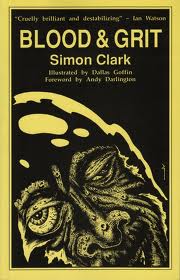 BLOOD AND GRIT BLOOD AND GRIT Hello Simon, thank you for agreeing to take part in this interview it is a great honour to get the chance to interview one of my heroes of horror. How are things with you? SC: Great thanks, and thanks for asking me aboard. It’s been almost a quarter of a century since your debut publication, did you ever think that you would be in this for the long haul? SC: Quarter of a century? Put like that it seems such a long time, but it’s passed in the blink of an eye. I certainly hoped to have a career as a writer. The diversity in retrospect has been amazing. I intended to write horror. However, I’ve written science fiction, crime. I’ve written scripts and given a talk in a maximum security prison and gone ghost hunting on television. Can you remember what made you pick up the pen and become a writer? SC: I liked to spin tall stories to family members and classmates since the age of four or so. One summer’s evening, though, I took the dog for a walk across the fields near where I lived. I’d have been thirteen or so. Suddenly I stopped as a revelation hit me. “I want to be writer,” I said to myself. “That’s what I want to do with my life.” I’d been building up to this moment subconsciously for years. I loved Doctor Who, Star Trek, monster films, ghost stories – I realized I wanted to tell those kind of stories, too. And why horror, had you always been a fan of horror and horror fiction in particular? SC: I always say that: “I didn’t pick horror, horror picked me.” I liked science fiction films and TV series but they were horror stories at heart, full of rampaging robots and menacing monsters. When I was in my early teens I felt myself drawn more and more to horror fiction. The publishing scene in 1990 was a world away from what it is now. How did your debut collection Blood and Grit come about? SC: I’d contributed short stories to a small press magazine called BBR (Back Brain Recluse) edited by Chris Reed. Chris was one of the first people to use a computer to typeset the work and he clearly saw the potential of independent publishing. One day he asked out of the blue if he could publish a book of my stories. “Great,” I enthused. “I’ve got lots of stories that you can reprint.” Chris shook his head. “I need new stories if the book’s going to have the kind of impact I’m aiming for.” So I happily sat down and wrote new stories. I was going to have my first book published. I was elated. The book has some iconic stories in it do you have favourite? SC: Thank you. ‘Skinner Lane’ has to be a favourite because it was the first big, ambitious story I’d written. It felt like a proper beginning-middle-and-end piece of fiction. I do like all the stories, though. Looking at them now I realize I’d hit a reservoir of powerful stories hidden deep inside of me. At least, that’s how it feels to me now. It was repackaged and released a few years back with some new stories, were you ever tempted to go back and polish up some of the originals? I’ve read that you describe these early stories as a bit “rough”. SC: That’s right; Blood & Grit 21 has been issued as an ebook. I only corrected obvious mistakes in the stories. They are rough in places but they have an energy that drives them along. If I’d polished them I think I’d have destroyed that current of energy that makes them work. Not that I would ever sell my copy, I believe that original signed copies of the book are going for a pretty penny, how much is an original copy worth these days? SC: I’m not sure how much you’d get for your copy if you did sell (I’m glad to hear that you don’t intend to!) but I hear copies are fetching in the region of £100. I first came across your writing thanks to that now gone and forgotten Mystery and Thriller Book Club. I’ve always wondered how good this book club was for an author. If I remember correctly I got your first book for 50p. Was the book club good for you? SC: Selling their books via book clubs was the holygrail for publishers back then. I doubt if I earned much money from them, but having those first books of mine in book club catalogues did introduced me to a wider readership. 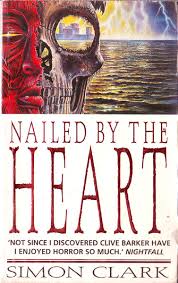 NAILED BY THE HEART NAILED BY THE HEART Over the past twenty five years or so you have produced a body of work that the majority of writers would be green with envy about. If it is ok with you I’d like to chat about some of my personal favourites. I’d have to start at the beginning, Nailed by the Heart was my first exposure to your writing. Do you think this book, and perhaps your writing career would exist without that fateful holiday to the seaside and your meeting with the disused Sea Fort? SC: I think my writing career would have existed in some form or other. I was hell-bent on becoming a writer! However, Nailed by the Heart wouldn’t have been set in a Sea Fort on the English East Coast. Originally, I planned to set the story in a villa in Spain that had been fortified, but as soon as I saw those old wartime forts that are so eerie and isolated out in the Humber estuary I thought, ‘Yes, I have my setting.’ I still have sea shells that I collected on the beaches there in a jar on one of my bookshelves. They almost have the vibe of good luck charms now as well as reminding me of that amazing time when inspiration struck. The story revolves around an ancient magic bringing the dead back to life, is this based on any real myths and legends? SC: No specific ones that I can think of. All that reading about myths and legends must have fed into the story, though. I remember one thing that fascinated me at the time was the notion of apparently dead things that continue to live. Perhaps a bit bizarrely I was struck how celery tucked in a jug of water at the back of the fridge grew new roots and shoots. That plant refused to die! Memories of the undead celery took root in my imagination and found their way into Nailed by the Heart. You have said that while writing the book you were concerned about people believing that someone would buy an abandoned sea fort and convert it into a hotel. (A point that was validated a few years later when it really did happen) is this something that you are always aware of when writing? And how do you get the balance between believability and narrative need right? SC: I heard that one of the Humber Seaforts had been bought with the intention of turning it into a rehab centre for drug addicts. That remote building stuck out in the sea is seriously nightmarish, so it struck me as a bad idea to ship patients out there. I always strive for a good balance of believability. I tend to do this by including lots of real incidents that have happened to me or that I’ve witnessed. It might not be anything amazingly dramatic. It might be a snatch of conversation I’ve heard or seeing a stoat chase a rabbit across a field. Memories of what really happened become solid building blocks in a story, which can then be embellished with the more fantastical elements such as monsters or ghosts. Blood Crazy, was a hell of wild ride. It is probably my favourite non zombie zombie novel. I loved the central premise of the book, is the reason for destruction of humankind in this book based on any real theories? SC: I never thought of it quite like that, but you’re right, it is a non zombie zombie novel. The destruction of humankind in the novel, caused by a psychological cataclysm, was partly inspired by something I read about the evolution of human minds, and the shock early humans must have experienced when they went from existing as unconscious animals to conscious thinking beings. In fact, there are theories that humans experienced, en masse, bouts of something like insanity as their (our!) minds underwent a radical upgrade from beast brain to people who could think and understand that they were individuals. What I love about this and your other apocalyptic novels is the sheer Britishness of them, did you ever consider setting them in the US, just so the books would be friendlier to a US audience? SC: Early in my writing career I wouldn’t have had the confidence to set a novel in the US and make it sound authentically American. My first visit to America was about six years after I wrote Blood Crazy. After that I felt that I could set a novel in America and make give it the authentic feel. I don’t know if making the books friendlier to a US audience was ever an issue as American readers enthusiastically embraced Blood Crazy, which begins in my home county of Yorkshire. What is the hardest thing about setting an apocalyptic novel in the UK? SC: I don’t think a UK setting presented me with any problems as such. The hard part for me was trying to make the story as good as I could possibly make it. Like a lot of great apocalyptic novels the true horror comes not from the apocalypse itself but from the levels of depravity that mankind slumps to in the aftermath. I’m referring to “carrying the can”, when you were writing these scenes did you ever wonder if you were perhaps being a little bit too bleak? SC: When civilization collapses in a story or a film it can become numbingly bleak. Midway through Blood Crazy there are party scenes when young people realize that they’ve inherited the world from the adults, there are no more annoying rules and they can do whatever the hell they want. I decided to put that contrast in there where people can help themselves to whatever they want from shops – booze, cigars, fast cars – and start having a great time. Of course, the happy times don’t last… this is a horror novel after all. And if you could make anyone run the can who would it be? SC: In the ‘carry the can’ scenes in the book the victims are handcuffed to a can full of explosive, the fuse is lit (they’re not allowed to put out the fuse), then they must run to where a key has been left. If they’re fast enough, they unlock the handcuff and throw the can away just before it goes BOOM! It would be tempting to have some of the evil people in this world run with the explosive can. But that’s barbaric, of course! Maybe the can could be filled with paint attached to a gas bottle, so instead of BOOM it goes SQUIRT. This could be the start of an interesting game show. 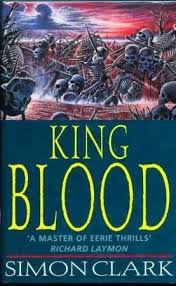 KING BLOOD KING BLOOD King Blood takes many of the themes and ideas in the previous two novels and ramps them up to maximum levels. Even after all these years the “exodus” scene still burns in my mind, especially the mother and the child. How do you go about creating such memorable scenes? SC: Fortunately for me (perhaps worrying for my family) those kind of the end-of-the-world scene occur spontaneously inside my head. In fact, images of cities being destroyed and nations falling into ruin zip through my head all the time. After all, we see what looks like rehearsals for the apocalypse on the TV news all the time. This is a tragedy of course, and I wonder if constant exposure to such terrible news stories will damage us or radically change us as a species. The book has an important twist about the Grey Men, were you ever concerned that the readers might not get the reveal as to what the Grey Men really were, and did you ever consider giving them a more traditional horror reason for being? SC: There was almost a cult of the Grey Man when I wrote the book (Grey Men being considered to be extra-terrestrials). I saw a TV documentary that suggested electricity is generated in the ground in earthquake zones, which then triggers hallucinations in people, and I thought to myself, ‘Yes, that theory has great potential for use in a novel.’ The book has just be re-released in the US as On Deadly Ground what’s the reason behind the name change? SC: The new publisher explained to me that new titles for ebooks make the ebook algorithms work better, leading to more marketing opportunities. I thought if this helped King Blood reach a new audience then it’s all to the good. 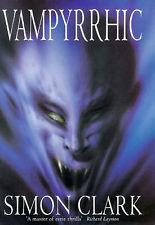 VAMPYRRHIC VAMPYRRHIC Not content with destroying the world multiple times you have also turned your hand to one of the most original takes on vampires. Why did you decide to write a vampire novel? SC: I’m not a fan of vampire novels. Back in the 90s vampires were becoming romantic, attractive figures so I saw it as a challenge to make the vampire loathsome, repellent and ultra-violent again. So I wrote Vampyrrhic. The basic idea is that Viking Vampires prey on people in an English town. The book is a gross-out fest in places. There are lots of beheadings! Vampires these days seem to have lost their sparkle, what do you rate as the last great vampire novel? SC: Matheson’s I Am Legend is awesome. Definitely my favourite. I’m sure there are new vampire novels out there that are wonderful but I’ve let my vampire reading slip, so I’d need someone to point me to the best of the new vampire stories. Your Vampires are based on Norse legends, what drew you to this source material? SC: I’ve been fascinated with Viking folklore for a long time; in fact I’m fascinated by all folklore as it was profound and important to ancient people. For them, it explained the world and what it is to be human. I’ve been reading Norse legends for years and they’ve been fermenting away in my brain. When I wrote Vampyrrhic a ‘Simonized’ version of these legends became part of the story. The Vampyrrhic books and stories must rank as the fan favourites why do you think this is? SC: Now this is the hardest question of all. I just don’t know why some books like Vampyrrhic and Blood Crazy become favourites. Perhaps I’m so close to them it’s impossible for me to see the wood for the trees. And have we seen the last of them? SC: I’d never say never! 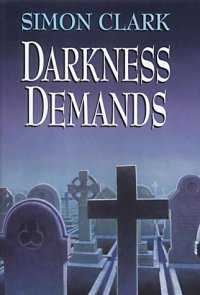 darkness demands darkness demands Which brings me to what is perhaps my favourite of your books Darkness Demands. This is one of the most genuinely creepy and chilling books that I have ever read. It also sees you writing a story about a writer, why do you think that this theme is so beloved by horror writers? SC: Thanks, I’m glad you liked the book so much. It’s my first novel that features a writer as the main character. I guess having a character as a writer means that the character will be interested in mysteries and be willing to think about them and investigate in a way that a character who works in a bank, or is a plumber, or an airline pilot is less likely to. What I’m saying is that writers are nosey by profession, and nature! Is any of the story autobiographical? SC: Only in the sense that my children were the age of the son and daughter in Darkness Demands when I was writing it. I could relate on an emotional level to a father who realizes that his family might be in danger. This is a real slow burner of a novel, which in my opinion is what makes it so great, you take your time building the sense of dread, resisting the urge to fill the book with shocks thrills. And yet the story still captivates the reader, how does a writer ensure that this sort of book doesn’t keeps the reader hooked? Was there any writer tricks that used to draw the readers in? SC: I approach most of my stories in an intuitive way, and write about things that scare me in the hope that readers will share my feelings. In this case, the plot begins when the writer discovers a letter outside his back door that demands that he leave chocolate on a grave in a local cemetery. Of course, he thinks it’s a prank. Then he discovers there is a grisly legend associated with the grave, and letters are left in people’s gardens that demand offerings. John Newton, the writer in the book, at last begins to suspect that a supernatural being is demanding offerings with menaces. People who refuse to leave trivial gifts of toys, chocolate and beer at the grave are punished in hideous ways. The main trick, I guess, was to incrementally ramp up the notion that to disobey the demand for a gift would lead to increasingly savage punishments from something that existed beyond the grave. So do you leave any tributes to Baby Bones? SC: That’s the dilemma! Do we happily walk under ladders, or neglect to throw spilt salt over our shoulders, or take a parachute jump on Friday the 13th? Superstition still lurks in the back of our minds, and if we feel vulnerable in some way we’re more likely to be give into keeping a four leaf clover or buying a St Christopher charm. So, yes, if Baby Bones asks, I will give offerings! 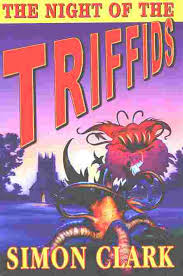 night of the triffids night of the triffids Outside of the horror genre you are probably best known for your brilliant sequel to John Wyndham’s Day of The Triffids. This must have been a dream project for you as I can see a lot of Wyndham in your work? SC: Yes, I was a big John Wyndham fan. I discovered his work at the age of 12 or so and was hooked. His books contained such big and powerful ideas. The notion that our safe and seemingly indestructible civilization could possibly collapse overnight. Those ideas of the fragility of society keep popping up in my own writing. Where you ever concerned about a backlash from his fans? SC: I was happy to take that risk. If some Wyndham fans hated The Night of the Triffids it couldn’t possibly damage their love of the original novel. What I have found is that quite a number of younger readers have discovered Wyndham’s work through The Night of the Triffids. If I’ve helped create some more fans of Wyndham then I’m more than satisfied. So how did you come to write Night of The Triffids? SC: I’ve loved The Day of the Triffids from the age of twelve and searched for a sequel. A book that good, I reasoned, must have a sequel. It would be criminal not to! I searched and searched and… and finally realized there was no sequel even though I desperately wanted to find out what happened to Bill Masen and the other survivors. Fast forward a few years and I became a writer. One day I thought: ‘You know something? I could write my own sequel. Even if it’s only for my own satisfaction of seeing what happens next.’ I revealed my idea to my then agent. To cut a long story short: he contacted the agent who represented the Wyndham estate. I wrote a few chapters to give them an idea of the book I wanted to write. And to cut an even longer story short: I wrote The Night of the Triffids. It genuinely was a labour of love. There have been a number of film and TV adaptations of the original book, which one is your favourite and which is your least favourite? SC: The BBC TV version from around thirty years ago, starring John Duttine, has to be my favourite. I’ve liked them all to a degree, but some more than others. Then I love Triffids! When writing the story you decided not to simply write a pastiche of his writing, instead you combined his style with your own. How easy was this? Did you find that his writing was easily slipped into your own? SC: I spent a lot of time reading Wyndham and listening to audio books of his work. When I started writing the first chapter I attempted to avoid consciously copying his style. Instead I hoped to marry my own style to his in a more natural way. As I wrote I felt that I had created a style that at least had a flavour of Wyndham’s. If I’d slavishly copied Wyndham’s way of writing the book would have become stilted and wooden, and not at all pleasant to read. The book deals with a lot of themes common to work, such as the frailty of the British nation, and the fact that we always seem to have that Blitz mentality whereby no matter how bad it gets we always pull together and hope for the best. Are these themes important to you on a personal level? SC: I think they are. I’m a total optimist when it comes to human beings. I believe they will triumph over adversity and we do care about each other – unless politics and national interests intervene. Of course there are anti-social individuals and downright evil ones, but we must be doing something right to become this robust species that has covered the planet from Pole to Pole. I also believe that civilization is still in its infant stage and we’re still centuries away from getting the hang of it. The book is due to be released as a full cast audio drama. How did you feel when they asked you to write the audio play for it? SC: Absolutely thrilled, and a little bit terrified. I’d never written a complete script before. However, the producer John Ainsworth gave me a lot of terrific advice about the nuts and bolts of scripting a drama, and made very astute suggestions on reading the first draft and I think we came up with an exciting script that works very well. Did you have any say in the casting? SC: John did ask my advice but I was out of my depth really. When John sent me some clips featuring Sam Troughton that’s when I realized we’d found the man who could play David Masen to perfection. Sam has the energy to play huge dramatic scenes so convincingly. He also is so good at the quieter moments when, as narrator in the drama, he becomes the listener’s friend, and it’s as if he’s revealing what happened to him in the Triffid’s world as if he’s chatting to someone he knows well. Looking back at your fabulous career, what are some of your personal highlights? SC: Big highlights have to be when I sold stories to FEAR Magazine, and to Karl Wagner’s The Year’s Best Horror, and when I sold my first two novels on the same day to Hodder & Stoughton (Nailed by the Heart/Blood Crazy). I also get such a feeling of satisfaction when I receive an email from a reader saying how much they enjoyed a particular book. There was one occasion, when I was at a convention in Texas, when a guy came up saying he hadn’t realized that I’d be there, and how much he enjoyed Blood Crazy and how much he wished he’d brought his book for me to sign. When I said I’d be around for the rest of the day he jumped into his car drove sixty miles back home, grabbed his copy of Blood Crazy, and drove all the way back for me to sign it. That meant a heck of a lot to me, because I realized how important the book was to him. What does the future hold for you? SC: On a professional level, I hope to continue doing what’s in my blood. So, fate willing, I just want to keep on writing stories that people enjoy. Thank you so much for doing this Simon, it has been a personal highlight of mine getting to ask you some questions. Do you have any final words for the readers? SC: Thank you for asking those questions. And final words for the readers? Thank you taking time out to read this interview and all the very best. CLICK HERE TO PURCHASE SIMON'S BOOKS Simon Clark's popular sequel to John Wyndham's novel to arrive as a full cast audio production!
The Night of the Triffids is a new full cast audio drama based on Simon Clark’s 2001 novel, and adapted for audio by the author. The Night of the Triffids is the official sequel to John Wyndham’s The Day of the Triffids, first published in 1951, and is fully approved by the John Wyndham estate. In the original The Day of the Triffids the Earth has been overwhelmed by killer plants and the majority of the world’s population have been struck blind. As the novel ends, Wyndham’s narrator scientist Bill Masen is escaping, with his wife and four-year-old son, to the Isle of Wight where a small colony of survivors is holding out. Simon Clark’s sequel picks up the story twenty-five years on... One morning Bill Masen’s son, David, now grown up, wakes to a world plunged into darkness. Now, the triffids have an advantage over humanity. Sam Troughton (Robin Hood, Alien vs Predator) plays David Masen and is supported by a full cast with Nicola Bryant (Doctor Who) as Kerris Baedekker. Author Simon Clark read John Wyndham’s The Day of the Triffids when he was twelve years old. He loved this brilliantly inventive Sci-Fi classic so much he searched in vain for a sequel. Many years later, he was delighted and honoured to be granted the opportunity to continue the story of those menacing walking plants in his best-selling book The Night of the Triffids, which has been translated into many different languages and won the British Fantasy Award for best novel 2002. “Writing The Night of Triffids was absolutely a labour of love,” says Simon. “Being asked to adapt my novel for the Big Finish production seemed daunting at first, but it turned out to be one of the most thrilling projects of my professional life, and gave me chance to revisit John Wyndham's Triffids, and find out just how frightening they can be.” Simon Clark’s novels include post-apocalyptic thrillers such as Blood Crazy, Stranger and On Deadly Ground (formerly King Blood), and the time travel epic The Fall. A new paperback and ebook edition of the novel of The Night of the Triffids is due to be published by Constable & Robinson in August 2014 (www.constablerobinson.com). A new film version of the original The Day of the Triffids is currently in development with Mike Newell (Harry Potter and the Goblet of Fire, Four Weddings and a Funeral) announced as director. The Night of the Triffids is released in September, priced on CD for £14.99 and as an MP3 download for £12.99 - both can be pre-ordered from here. Comments are closed.
|


Archives
May 2023
|
 RSS Feed

|

|