

HORROR INTERVIEW : IAN BROOKER
7/11/2013
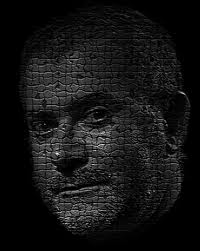 It is with great pleasure that I welcome Ian Brooker, the star of the recent fantastic film The Casebook of Eddie Brewer (You can read my review of this film here) to Ginger Nuts of Horror for one of my infamous in depth horror interviews. Ian Brooker is a very versatile character voice actor with considerable experience in the audio medium. He has appeared in over fifty radio drama productions for BBC Radio 4 & 3 and for many years played the voice of Radio Borsetshire,Wayne Foley, in The Archers. Ian has just won Best Actor in a Feature at Buffalo Screams Horror Film Festival, Buffalo NY, for his role in The Casebook of Eddie Brewer. He is a seasoned Big Finish performer having recorded innumerable audio productions for CD since his first Doctor Who adventure, Embrace the Darkness, with the Eighth Doctor, Paul McGann, in 2001. He has regularly worked with Big Finish producer, Nicholas Briggs, on his four Dalek Empire and two Cyberman series. He can be heard on nearly fifty Big Finish CDs covering the Doctor Who, Doctor Who Unbound, UNIT, 2000 AD, Sapphire & Steel and Bernice Summerfield ranges - sometimes playing several characters in one production. He is the only actor to have played both Doctor Who (the shortest-lived incarnation at the end of Full Fathom Five) and Doctor Who’s creator, Sydney Newman (with alternating Canadian and Australian accents in Rob Shearman’s Deadline), but also several weird and less than wonderful aliens including the robotic R.O.S.M, the scary Cimmerians and Solarians in Embrace the Darkness, the Dalek-like Supreme One in Deadline, the eerie Shewstone in A Storm of Angels, and the Krotons in Return of the Krotons. He also voiced the talking elephant, Surus, in Auld Mortality. For John Ainsworth’s Noise Monster audio series, Space 1889, Ian played the authority on Martian archaeology, Professor Golightly. 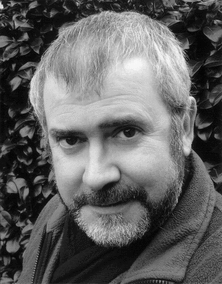 Hi Ian. How are things with you? Fine, thank you. You have had a long and varied career as an actor. Can you remember when you were first bitten by the acting bug? It was way back in the 1960s. Like so many children at that time – and again today – I pretended to be Dr Who – finding sanctuary at playtime from Daleks, Cybermen, Ice Warriors and Yeti in my TARDIS – a square metal service hatch in the corner of the playground. I was a painfully shy little boy but loved pretending to be more self-assured characters. Fortunately school offered some dramatic opportunities. In 1968 I played a rat in The Pied Piper. I remember my mother and all the other mothers having to make their children’s costumes from the pattern supplied by the school. Then there was The Hobbit in 1970 in which I was a dancing troll. We were all supposed to be bald and had to wear swimming caps with fur attached. I remember these caps being very uncomfortable as they were tight and wobbled with sweat. In both these early productions I didn’t have any lines. That was all to change at secondary school where I had even more opportunities - progressing from small walk-ons to leading parts very quickly - and eventually appearing in three drama productions a year: the inter-house play competition in the spring, the end of year summer prom/musical and from 1975 onwards a Christmas play – usually a farce like Charley’s Aunt, See How They Run and Dry Rot. Although I did a lot of drama at that time I was dissuaded from considering it as a career owing to its precarious nature. Instead I considered becoming an academic. Going to university to read History soon put me off that idea particularly after I endured my first year without a single play. I had been cast in a GTG production of Equus in my very first term but had withdrawn as I didn’t want to compromise my studies. That year 1978-9 was the most miserable of my life. The following year 1979 I auditioned for The Diary of Anne Frank as the father, Otto Frank – a production that convinced me - if I needed convincing - that I was going to be a professional actor. From then on I didn’t stop. After several plays at university and at Birmingham’s Crescent Theatre where I appeared in excellent productions of Travesties, One Flew Over the Cuckoo’s Nest, Peter Pan and Waiting for Godot - I went professional in 1983. For most of this time I hadn’t realised that I had the theatrical gene in my blood as well as the acting bug. On the death of my grandmother in 1978 I inherited a collection of family theatrical memorabilia. My interest in drama and acting hadn’t come from nowhere after all. I was actually part of a very old, large and very famous theatrical family – the Robertsons - dating back to the mid Eighteenth Century. I had had some very famous theatrical relatives too like the playwright, T.W. Robertson (1829-71) and the actress Dame Madge Kendal (1848-1935) – better known today for her association with Joseph Merrick, the Elephant Man. You have had roles in some of the nation’s favourite drama serials, such as The Archers, Big Finish’s Doctor Who and Sapphire and Steel audio dramas. Is there one role that you are particularly proud of? There have been so many roles I have loved playing – particularly for Big Finish’s audio dramas including R.O.S.M. in Embrace the Darkness, Surus the Elephant in Auld Mortality, Sydney/Sydney Newman/The Supreme One in Rob Shearman’s Deadline, and Professor Golightly for Noise Monster’s Space 1889. There was also the role of the artist Walter Greaves an assistant to James Whistler in Geoffrey Beever’s Nocturne in Blue and Gold for Radio 4. That was very special. But If I had to say just one role – it would be Eddie Brewer. I think it’s the best thing I’ve ever done. I noticed that on your website you have a page for your “voices”, where you have samples of all of the accents and styles of voice work that you do. Do you have a favourite accent to act with, and is there one that just makes you cringe? I love the Midlands Black Country accents – particularly around Lower Gornal. They sound quite different from Birmingham accents. Black Country is produced at the front of the mouth whereas in Birmingham the accents are more from the back of the nose. There aren’t any accents that really make me cringe. Except Mid-lothian Scots. I cannot bear it. That was a joke by the way! Ha. 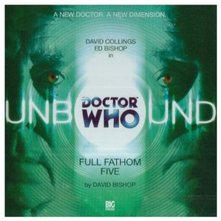 I see you also hold the record for playing The Doctor for the shortest length of time. I take it we won’t be seeing you in the anniversary special? Yes, I played the Doctor at the end of David Bishop’s Full Fathom Five for Big Finish. It was part of a Doctor Who Unbound series featuring actors whom fans had always wanted to see/hear play the Doctor and was recorded for the fortieth anniversary in 2003. David Collings’ rather nasty Doctor was shot by his companion at the end of the play and he regenerated into me. I said “Hello, I’m the Doctor. Who are you?” before she shot me as well. So I lasted ten seconds. It was all rather fun and I see that I am now included in completists’ lists of who played Doctor Who. Not bad at all. And no - you won’t be seeing me in the 50th anniversary TV special. I recorded one audio drama for the fiftieth anniversary early this year for BBC/AudioGo called Destiny of the Doctor: Shockwave by James Swallow with Sophie Aldred reprising her role as Ace – the Seventh Doctor’s companion. Are you a fan of shows like Dr Who and Sapphire and Steel? I am a big fan of classic Doctor Who – particularly the first four Doctors. I didn’t see much of Sapphire and Steel when it was first shown. Which Doctor would you most like to work with? Well I have been very lucky to have worked with five of the Doctors: Tom Baker (very briefly on a commercial), Peter Davison, Colin Baker, Paul McGann and David Tennant. I would have loved to have worked with Patrick Troughton – he was wonderful. I also loved William Hartnell but I think he would have been a lot less fun. Perhaps the new Doctor can arrange for me to take a short trip in his TARDIS to 1967 to appear in Evil of the Daleks. I could also steal the recordings and save them for future fans. I saw Patrick Troughton once in the centre of Birmingham in the mid 1980s. He was in his old Doctor costume or something similar. I was so taken by surprise that I stopped and turned. He looked at me as if to acknowledge that he knew that I knew who he was. I wish I had spoken to him. 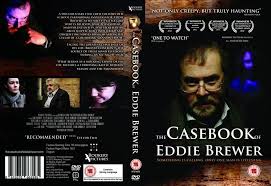 The Casebook of Eddie brewer Cover The last couple of years have seen you working on and promoting a project that is very dear to your heart The Casebook of Eddie Brewer. How did you become involved in this film? In the summer of 2010 I met up with my friend Sean Connolly for a coffee in the centre of Birmingham. He told me that there was a film being made locally that autumn/winter and asked if I would like to be involved. He didn’t tell me what it was about. As I hadn’t done any work to camera for quite a while I thought it would be a good idea. At the end of August I was sent the script by Andy Spencer – the writer/director. I had always been keen on the supernatural and paranormal as subjects for TV, film and stage drama and Andy’s script was fascinating and impressive. It was well researched, intelligent and very well structured. I knew as soon as I read the script that it was a role that I would love to play. I knew a lot about what worked in spooky dramas. In the late 80s/early 90s I had run my own theatre company Zeitgeist – performing dramatised ghost stories at stately homes and castles – and was familiar with the history of real paranormal investigations. Initially you were unsure about taking on the role if I am correct in thinking mainly because you were concerned about taking on such a big role after spending a time away from being in front of the camera. Have you always had doubts about your craft, or was this a one off feeling? My last previous work to camera was a small part in a children’s TV programme in 2000. To go from that to playing the lead in a ninety minute feature film – after having concentrated exclusively on audio and radio drama for ten years – was more than daunting – it was somewhat terrifying. Eddie Brewer is in 95% of the film. The success of the film rests on his shoulders. If I wasn’t up to it - the film would have failed and it would probably have ended my career. I was very flattered that both Sean – acting as casting director - and Andy wanted me to play it, but I had to convince myself. Part of me wanted to walk away – the other told me to grab it with both hands and make something special of it. Creative artists are often plagued by self doubt – it’s something that we have to live with. Sometimes it’s not always best to listen to those inner doubting voices but to friends who know you and your own abilities better than you know yourself. I was also three years into a part-time PhD at Birmingham University and didn’t want to jeopardise my progress on the course. But after careful consideration I decided that I had to do it. I had to play Eddie Brewer. I bet you’re glad you took the role on? You are damned right I am. How did you get yourself ready for the role of Eddie? Andy’s script was SO good that it was essentially all there on the page. I worked on the lines and the character largely on my own but if I needed clarification on the meaning of certain lines or the significance of a scene or speech I would e-mail or telephone Andy. He was very helpful. If I suggested a revision here or extra dialogue there he would consider it and in most cases accepted my suggestions. I rehearsed and rehearsed till the lines became second nature and natural so that I could give them an improvisatory feel in performance. You can never do that if you are struggling to remember lines. I also thought long and hard about the emotional and psychological journey he travels in the film concentrating on the key pivotal scenes of horrible revelation. Those scenes were challenging and required a lot of preparation. There was a lot going on in those scenes. For instance when he sees his first ghost – he is both amused and shocked. When Lucy whispers the real name of the demon in his ear – everything begins to fall into place for him. At last he realises the significance of the manifestations at Rookery House and the Blakewell’s house. I didn’t go on any paranormal investigations to get first-hand experience before playing Eddie Brewer. That came later! I had always been interested in the subject and had wanted to be a paranormal investigator. Playing Eddie Brewer was the next best thing. For such a small budget film there has been a huge amount of critical praise for it. Did you have any inclination at the start of filming that you were onto something special? Yes. It was the strength of the script. It attracted not only me but a very talented cast including Peter Wight. I knew from the moment I read it that it had tremendous potential. It’s not often that you feel the hair rising on the back of your neck when reading a script. The script wasn’t exactly explicit as to the nature of the paranormal activity – but I guessed early on what was really happening. I also knew that Rookery House would provide the ideal location for the story. The film is shot as a documentary. Was it always going to be filmed in this way or was the script amended to fit the budgetary constraints? The film was always planned to be part documentary and part objective/fourth wall. From the beginning Andy wanted the story told from multiple viewpoints: through the lens of various cameras and the lenses of the eyes of the audience. However, this is not a found footage film. We see footage through the camera’s lens as it is filmed. This allows for an objective viewpoint to intersect with the documentary footage. Andy likes to break conventions and go on to break his own conventions established in the film. During filming we stuck pretty rigidly to the script as established with the exceptions of minor textual revisions and a couple of improvised scenes. I’ve watched the film and loved it. One of the things I loved the most about it was the natural and believable acting from all of the cast members. Sometimes in documentary and found footage films the acting is so polished and unnatural. How hard is it to act natural? That is the strength of the cast – assembled by Sean Connolly. A lot of the actors were there just for the one day or for a couple of days. We ran lines and rehearsed and filmed at the locations like Rookery House which added to the atmosphere and believability. Some came fairly fresh to the scenes – only just having learned their lines. Some of these scenes therefore had an improvisatory feel to them. In my case – as I said earlier – I worked for weeks on the lines – just running them again and again so that by the time of filming I didn’t have to think about the lines at all – allowing me to concentrate on what was in Eddie’s head and what was his relationship with the camera’s lens and the camera crew. So we had different approaches: a lot of rehearsal or very little rehearsal – resulting in apparent spontaneity and naturalism. How closely did you and the other actors stick to the script? Prior to the beginning of filming I made quite a few revisions to my lines and speeches in order to clarify the meaning to the audience when the meaning was ambiguous. These amendments had been sent to Andy. On his approval the revised scenes would be sent by me to the other actors in the scene. After these revisions were incorporated into the script we didn’t depart much from the script as written. In some instances lines were changed as we rehearsed on location if circumstances required a change, and a couple of scenes were completely improvised: the scene on the CCTV at Rookery where Eddie argues with the director Laura after he realises that he has been shafted by the production company, and the scene at Roy and Carol’s house where Eddie investigates the noises from next door by testing the wall in their back room. It wasn’t until the first edits had been completed that it was felt that extra shots and scenes were required to further underline key moments and to strengthen the narrative of the film. These were shot throughout 2011. Another highlight of the film was the slow burning and gradual sense of foreboding without resorting to cheap scares. Do you think modern film audiences will connect with the film, when they are used to the cheap shock of films such as Saw and Paranormal Activity? I think the film appeals to an intelligent audience – one that appreciates subtlety, good storytelling, and character-led drama. The film is well within the tradition of the English ghost stories of M.R.James, the television dramas of Nigel Kneale and films like Night of the Demon and The Haunting. In so many modern horrors like Hammer’s recent The Woman in Black and the vastly superior Mama – there is a lack of economy. You are shown too much, too often - to the detriment of the story. In the original TV version of The Woman in Black you see the woman on only five occasions in the whole drama. This produces greater suspense and apprehension throughout and when you see her again it is even more effective and chilling. In the Hammer remake – full of the “cheap scares” you referred to – you see the woman twenty five times and each time with less impact. It is the law of diminishing returns. Mama had so much going for it in terms of performances and atmosphere, but was let down by showing too much of the “mother” – particularly at the end in not very good CGI. Economy is essential to a successful rendering of a ghost story. It’s what you don’t see that is most effective. The mind fills in the gaps. These are the films that stay with you. Modern horror is so often the cinematic equivalent of fast food. One bite, several bites and it’s gone – forgotten. I don’t think the film appeals to a younger audience used to a diet of repeated jump shocks. The Casebook of Eddie Brewer has notable scary moments but not every five minutes. It’s a character piece about the paranormal. I think the film occupies a half-way-house between the reality of paranormal investigation where very little ever happens – pace Most Haunted which as an entertainment has to satisfy its audience with lots of scares – and the contrivance of the literary or cinematic horror story which is filled with unbelievable repeated incidents capped by a facile explanation. The film also has some great dialogue. Do you have a favourite line from the film? “First rule of ghosthunting: never talk about ghosthunting.” Reading some of the reviews for the film one of the standout scenes is the one where you and a sceptic are interviewed on a local radio station. Was this always considered to be a key scene in the film? And how much time was spent on getting the scene right? Obviously it’s an important scene in that it sets up the tension between Eddie Brewer and Dr Kovac that plays out later in the film and represents their public pronouncements and their conflicting arguments on the paranormal. What they say is very significant. I acknowledge that it works very well. We filmed all the radio station scenes – the last one is audio only over the end credits - one morning in January 2011. I don’t think we did more than two takes per scene – if that. They are very good scenes – very well played by everyone. I loved the ending and the bit that appears over the credits which hints at a sequel. Will there be one? The last radio station scene exists only in audio in the final edit. However, the final shots of the film were intended to show Eddie’s mouth screaming as Grimaldi enters his head. However we are very happy with the way the film now ends. I think the audio works really well over the credits. They say “never say never again”. I am sure that Eddie Brewer will be back in some form, sometime and somewhere. Throughout the film I had wanted to show Eddie as a man on the edge – out of condition and clearly unwell. When he smells smoke at the beginning of the last radio station scene I wanted to suggest that he might be having a cerebral haemorrhage. So does he survive or not? That is left completely open. The film has been a huge hit at a number of film festivals. Does this translate into an increase in revenue for the film? I wish it did, but it doesn’t. Thank you for popping over for a chat Ian. It’s been a pleasure talking to you. Do you have any final words for the readers? No. I don’t think so. Other than buy the DVDs and Blurays! We are delighted with them. They look gorgeous. They come with comprehensive production booklets. They will make excellent and chilling Christmas presents. Here’s the link. http://www.thecasebookofeddiebrewer.com/home.html 20/8/2014 01:12:07
Valuable very touchable information. I would like to thank you for sharing your great facts. Comments are closed.
|


Archives
May 2023
|
 RSS Feed

|

|