

HORROR INTERVIEW : KEITH DEININGER
2/10/2013
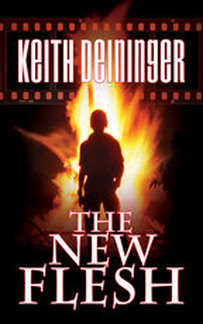 I am honoured to present this brilliant and candid interview with Keith Deininger who is one of one of the rising stars of horror fiction. An award-winning writer and poet, Keith Deininger is the author of the novellas Fevered Hills and Marrow's Pit, and the novel The New Flesh. He grew up in the American Southwest and currently resides in Albuquerque, New Mexico with his wife and their three dogs. He is cynical and a skeptic. When he's not writing, he spends his time reading and watching horror movies. He is most interested in literary horror, in the dark fantastique: fiction and film that plays with the creepy and the uncanny, that seduces and subverts our expectations, then leaves us cold but riveted, looking over our shoulders at night; understated or surreal--literary for its language, and motifs, and philosophical nature. 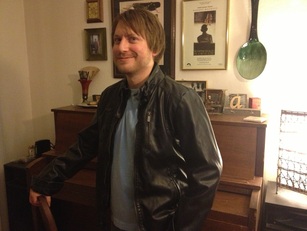 Hello Keith, how are things with you? Oh, man. Pretty good. Without much of a social life these days, I’ve been writing a lot. My regular life is mundane and that suits me just fine. I have a lot of projects planned and in the works. Everything’s peachy. Could you please give the readers a little bit of background information on yourself? I’m a thirty-two-year-old poet and fiction author living in Albuquerque, New Mexico. I went to high school in Los Alamos, New Mexico, the birthplace of the atomic bomb, but grew up as a kid in Colorado Springs. I’m married. My wife is an extremely busy teacher working with autistic kids. I’m kind of a nerd, played a lot of Dungeons and Dragons in high school and collected Magic cards voraciously for many years, including competitively in tournaments. The closest I ever came to playing sports was community youth soccer (sorry, football I believe it’s called on your side of the pond and every other place in the entire world) and hacky sack with friends (hey, it’s a sport!). Most of my family are either scientists or engineers. I work at a university bookstore. I’m the black sheep artist in the family and no one understands me. So sad. You stay in Albuquerque, when you say Albuquerque do you sing it like they do in the Prefab Sprout song? Okay, I had to look that one up. And then I had to ask: ‘What the hell was that?’ What does this English pop band from the 80s know about Albuquerque? After watching the music video, a couple of times, with my mouth hanging open, I was still completely mystified by it. There are dancing hotdogs. And, yes. Yes, we do say it like that. 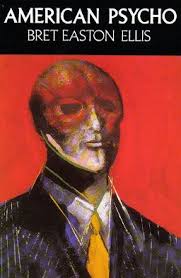 You said on your website that “I don't believe the world--the universe--is a "kind" or "compassionate" place.” That’s a pretty dark way to look at the world, what brings light into your world? Oh, geez. I did say that, didn’t I? However, dark or not, I believe it’s true. In civilized society we pretend, but if everything broke down around us, these carefully constructed illusions, and all the resources were gone, we’d all end up killing each other for whatever was left. That being said, our human intelligence allows us to discover meaning and wonderment in our lives. We all have the capability for great compassion, for bonding with others, and for self-sacrifice. We have the ability to perceive things greater than ourselves. I think there’s some light there, some meaning to it all, even it’s only in striving yet never obtaining. In the same post you also state that you believe in ghosts and psychic abilities. Have you had any experiences of these? For the record folks I see the ghost at my work every single night. Yes, I think there are spirits around us. I’ve seen some things. Creepy things. They’re always subtle—faces reflected in glass, strange movement in the distance, things that seem to have moved. I’ve felt disturbances. I believe people are connected by more than just the physical, by mental threads that weave through us, that cannot be seen, that cause us to act differently when around different people, to react as animals do when in a group or a mob situation. I believe there are so many things we’re simply incapable of perceiving and understanding, things we can never explain. You have also said that “I believe I am the kind of writer that people will either totally hate or absolutely love”. Would you ever consider changing your writing style to gain a wider audience? You mean, like write youth fiction or something? I’m not sure I could if I wanted to. I decided early on I was not going to hold back, that I was going to write about sick things without restraint, because the disturbing and the disgusting are an important part of the human experience. It’s what comes out of my head. I joke sometimes about wanting to write a ‘banned book,’ but I’m not really joking. In many ways it would be great to write something governments found offensive, that scared people into looking at society and themselves, forced them to look outside their comfortable shells, and see the world, this disgusting place. American Psycho was able to do this sort of thing, I believe, and it’s pretty crazy. I don’t know if I’ll ever write a book like that. Probably not, as my fiction is more concerned with wonderment and wandering into fantastic realms. But, I believe I will be writing more fantasy, however dark, in the future that may grab an audience wider than the unfortunately small niche market that is horror these days. Still, it would be nice to write a novel that really made an impact on the collective human consciousness. You say you believe in fear, so what scares you? Oh, man, lots of things. I think that’s why I write horror. I’m creeped out all the time. Someone will make a face and I’ll turn to my friends next to me and ask them, “Did you just see that?” And they’ll look at me like I’m crazy, having not noticed anything unusual. I shudder and turn away. I’m extra creeped out by the unknown. My scientific-minded parents always told me growing up there’s a reasonable explanation for everything, and then turn the lights on to show me there was nothing in the corner of my bedroom or closet. But then the lights would go out again, and what if there wasn’t a reasonable explanation? What if this time things were different? What if the dark really does change things and make them “bad” somehow? What really scares me is the idea that things really aren’t what we think they are. How could they be? What if one day, you wake up, are walking around outside, and you see something weird? What if, throughout the day, you continue to see these weird things, and, with a sickening drop in your gut, realize that all of your explanations, everything you took for granted and thought was truth, turned out to be some kind of sick delusion? What if it’s like that for everyone? And when we peel away at layers of reality, we begin to see the horrors beneath, and they’ve slipped into our world? What if we are those horrors? Why horror, what is it about the genre that holds your appeal? I really enjoy reading horror, and that’s led me to write it, but it’s also what excites me when I sit down to write, it’s what comes out naturally. Of course, I’ve worked on it a lot, developed methods for expressing the inexplicable things that scare me, but, to be perfectly frank, I don’t believe much of what I write is “horror” per se. I think I’m beginning my career in the horror genre because what I write is dark and I’m proud of that, but I like to think of myself as more of a writer of the imagination—alright, I’ll name drop—like Clive Barker. Barker wrote a collection of stories (Books of Blood), mostly horror, and one novel (The Damnation Game) that is a retelling of the Faust story so it’s horror, but after that, everything he’s written since has, basically, been fantasy. Not to say I’m doing the same thing Barker did with his career, but that I can only write what I write and some of my output may be difficult to classify. Let me try again: I really like complex and literary horror. I prefer Poe to Lovecraft, but I’ve read everything they both have written. I’m fascinated with the techniques of Henry James. I’ve read everything Stephen King has written up through the end of the Dark Tower books and then think he went soft. I love what I call Peter Straub’s “Classic Three” (Ghost Story, Shadowland, and Floating Dragon), and have read them many times and believe Straub’s influence can be seen in my own work. I’ve read House of Leaves cover to cover now a couple of times and think it’s a masterpiece of horror. So, I love the horror genre. I’m deeply entrenched in it. It moves me somehow. It gets my imagination spinning, and that, for me, is more valuable than anything. And what is it about the genre that you dislike? Okay, I may have touched on it a second ago, but what bothers me is how formulaic the horror genre can be. Fiction that evokes an emotional response akin to “horror” or “terror” does not have to fall into the same tired storylines. It does not have to include monsters and vampires. The genre needs some originality right now. I think there is a lot of very good horror being written and produced at the moment, and I enjoy reading much of it, but we need more fiction that “pushes the boundaries” of the genre. 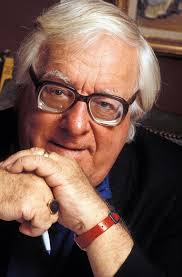 Who would you say has been the biggest influence on you and your writing? Well, I’ve already talked about them a bit, but Peter Straub and Clive Barker are big influences. Ray Bradbury is another one I greatly admire. Who in this genre hasn’t been influenced in some way by Stephen King? Ramsey Campbell, Cormac McCarthy, J. G. Ballard, are a few I’ve studied very closely, among others. Can you remember what first motivated you to start writing, and has your motivation changed over the years? I wrote a couple of stories when I was in grade school and seemed to have a natural gift with words, although I was in special education classes for reading. I was also very shy and unable to tell stories aloud, and I really wanted to tell stories so I started writing them. But I did a lot of other things first to express my creativity. I used to draw and design increasingly elaborate games. In high school I was known for my dungeon master skills in various role playing games, for the wild adventures I would create. I’ve always had a lot going on in my head and the need to express it. Then, senior year, I wrote a story for a science fiction writing contest and won first place and was handed my first one hundred dollar check as a writer by Ray Bradbury himself. After that, I was hooked, but it took me years to get serious and find the discipline I needed to become the writer I wanted to be. And how would you describe your writing style? Uh, I don’t know. It’s literary, I think. Language is very important to me and I’m all too aware of my sentence structure and word use. I’m getting better with each piece I write. I like for things to flow a certain way. I’m descriptive. I would like for readers to enjoy my style, for the language to sweep them into the story in delightfully surprising and unusual ways. And what aspects of your writing do you think are the strongest and what do you think are the weakest aspects of your writing? I’m good with description, I believe. And I’m getting better and better with character, making each one real and sympathetic. I’m good with surreal, what-the-fuck moments. And I’m pretty good with dialogue. I struggle with plotting a bit and I often struggle with organization. My head is sometimes filled with so many random bits of things I think are cool, I try to write them all and ruin the scene or the flow of the storyline. I’m often left with disjointed moments at the end of a writing session that don’t advance the story I’m trying to tell and so I have to file them away, hopefully to use later. Let’s talk a bit about the mechanics of your writing. How do you go about the writing process? Are you a plotter or do you go with the flow? So, yeah, I could never write from an outline. I’d never let one of those ugly things tell me what I should or shouldn’t be writing at any given moment. Instead, I write a ton of notes and plan certain scenes, but I try to let my characters make their own decisions. Often, I have a really awesome scene planned that I’m working toward, but then one of my characters doesn’t do what I wanted him/her to do and I have to go in a different direction. George R. R. Martin says there are two kinds of writers: architects and gardeners. Architects plan everything out before they begin and then write from their plans. Gardeners plant their ideas like seeds and nourish them and watch them grow and hope for the best. I’m a gardener. How do you deal with endings? When and how do you know that the ending to your books is satisfactory? Very carefully… Uh, okay, that’s not really an answer. Endings are not easy. I think an ending, in a lot of ways, has to come naturally. If the plot is sufficient and the characters well-drawn, the story should create its own stopping point. The question really is: when do you stop? How do you know? It depends, of course, on the effect you’re going for. All I know is that I like endings that are interesting, literary, and thought provoking, and I’ve tried to do that with my own. As a new author, how do you go about getting your name out there? A good publisher. An active and responsive online presence. I’ve done a few book signings, things like that. I’m approachable and always happy to discuss writing, literature, horror, or whatever (keithdein@gmail.com). But what I really try to keep in perspective is the fact that I am committed to my writing career long-term and will continue to write the best possible fiction I can, producing further work to consistently build my readership. I’m confident I’ll find many who appreciate what I’m doing and are as excited to read what I’ve produced as I am to write it. What would you say has been the biggest lesson that you learned with regards to self promotion? Be confident but not arrogant. I’m learning how to talk about my work, but it’s not easy for me. I’ve always been a little too humble about my accomplishments. I’ve learned that I often have to be assertive, to volunteer my work without being asked. I’ve learned that I still have a lot to learn. 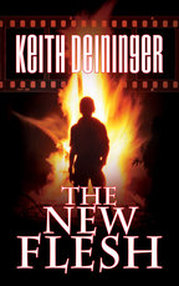 Your debut novel The New Flesh was published by DarkFuse earlier this year. How did you come to work with DarkFuse? I’m very lucky, I think. I stumbled into the right publisher at the right time. I found a publisher and an editor interested in very dark and surreal fiction. I’d poured everything I had into The New Flesh, it being the first novel I’d written that came from a personal and emotional place, but every publisher and agent I sent it to rejected it. Then, finally, one day there was a message in my inbox from Greg Gifune asking if he could see my entire manuscript as a Word document. My heart began to race. Why would he ask for something like that if he wasn’t thinking of accepting it? I didn’t sleep for several days, couldn’t stop thinking about things. When the call finally came, I was at work and I raced outside. Of all the publishers I’d sent my manuscript to, DarkFuse seemed the strongest. They were new, but that was okay; so was I. I didn’t know then what I know now about the incredible people and experience behind DarkFuse. It is very difficult to be accepted when you have almost no credentials in the publishing world and no connections; I didn’t know any writers, or editors, or anyone. It’s humbling for me to think about and I’m very grateful. I’ve done all I can to take full advantage of this amazing opportunity. And now I’ve met many people in publishing, including many writers who I am proud to call my peers and friends. DarkFuse are quickly making a name for themselves as the place to be published, what is it about them that makes them so good at getting such great authors on board? I don’t know how they do it. I know they work very hard. I know they are edgy and willing to try business techniques that have never been done before, and have the intelligence to make them work. I know they have many years of experience and know how to adapt to a changing market. I know their editors are blessed with the rare abilities to sniff out real talent and work on the smallest details. I know their art and design department is exceptional. And I know they are friendly and professional with their authors and always seem to know exactly what a manuscript needs to elevate it into a truly remarkable finished product. Would you ever consider writing a book with another author from the Dark Fuse stable, and if so who? I’m not sure how I’d like collaborating on a piece of fiction, but, if given the opportunity, I’d jump at the chance and do my best. Early on, as I was discovering the other DarkFuse writers, Ronald Malfi stuck out as my personal favourite. He knows how to write some creepy stuff. I like that. Or maybe Michael McBride. Combine his action with my surrealist imagery—could work. I don’t know. So what’s The New Flesh about? Is there a message in the book? The New Flesh is about Jake, a shy fourth-grader who has a strange fascination with fire. While his divorced parents are preoccupied with their own demons, he’s collecting lighters and books of matches he finds on his walks to and from school. You see, when he was little, he started a fire and almost burned his school down so now he’s scared of doing it again, but when he sees someone’s discarded lighter on the street, he can’t just leave it there. He has to collect it. He’s preparing for something. He’s preparing to meet the mysterious creature he calls the Melting Man--hairless and pale, with flesh that droops and morphs--who visits him in his dreams. “Come with me, Jake,” the Melting Man says. “Come and see.” And as his dreams of the Melting Man become more and more vivid, drawing towards an inevitable confrontation, Jake is forced to discover the mystery surrounding his dreams and visions, which he somehow knows have something to do with the movie his father wrote: The New Flesh. And, yes, I’d say there’s a message, some interesting interpretations that can be made. While I don’t believe it’s my place to analyze my own work, I will say there are conscious themes I weaved into the narrative that are important to me. One is my mistrust of television and its ability to affect and manipulate the dreams and attitudes of the human mind. The affect his father’s film has on Jake is a direct representation of this idea. The main protagonist Jake is loosely based on your younger self. How did it feel having such a personal character in your book? It’s a strange feeling. It makes me feel vulnerable. But, at the same time, it’s what I wanted. I was trying to write something personally meaningful in order to create a piece with emotional resonance. I’m unsure if I succeeded or not, but I know I was honest in the telling. Did you use the writing process as a means of facing some the events from your youth? Yes, I did. When I was in first grade I used to collect matches and lighters I found on the ground and hid them in a grove in the woods behind my house. I was fascinated with fire. One time I lit a fire when I was by myself and lost control of it. Luckily, my dad saw me racing to the back of the house, trying to get a bucket of water to put the fire out, and he followed me and managed to stomp it out. Also, there is alcoholism that runs in my family. Were you ever tempted to turn Jake into the clichéd American Homecoming King type character that we all wanted to be? No way. I think Jake, when he’s in high school, goes to prom, but with a friend, not a girl with whom he has any romantic connection. He doesn’t score that night. But that’s okay, because when he gets to college, he has a lot of girlfriends and loses his virginity soon enough. The book has seen some fantastic critical acclaim, do you take much notice of this sort of thing? Sure, I pay attention. There’s not much I can do with it, though. The New Flesh is out there now, out in the world, and all I can do is push it toward the right kinds of people and hope for the best. Of course, it’s great to hear positive things, but what I’m really looking for are those readers who truly appreciate my work and are moved by it. 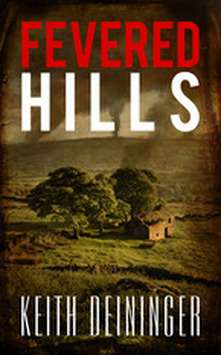 The New Flesh is actually your second publication through DarkFuse. Fevered Hills was the first DarkFuse story you published. It has been described as resembling Margaret Atwood and Joyce Carol Oates, you must be very proud of that description? What can I say? I’m good with language. It’s very flattering to hear such things. I mostly wrote poetry during my college years and I think studying poets has given me an artistic approach to “wordsmithing.” Initially the book was rejected as you have said “many, many times”, how did you keep faith in your writing during this time? I think it’s important for people to realize (especially aspiring and yet-unpublished writers) that I wrote for many years without anything ever seeing publication. I’ve written two full-length and finished novels that will never be published because they’re not good enough, but I still wrote them. It’s important to finish, even if what you finish is complete shit. About three years ago now, something clicked in my head and I realized that if I was going to make it I’d have to get serious. I’ve written every day since then and a lot of what I write just doesn’t work (even if I don’t realize it at the time), but I keep going because I know the next thing I do is going to be awesome. Even if it turns out not to be, I keep the faith in the next one, and the next one. “Destroyed landscape, wrecked world. Character travels land seeing horrible things --Imply zombie stuff in the background, but we're never sure”, so is this a zombie novel or not? Or would that be telling? Yeah, that was my original note to myself from one of my notebooks that inspired Fevered Hills. I’m still unsure myself whether there are zombies or not. It’s been pointed out to me by one of my readers that there are zombies in both Fevered Hills and The New Flesh, but I can neither confirm nor deny such allegations. 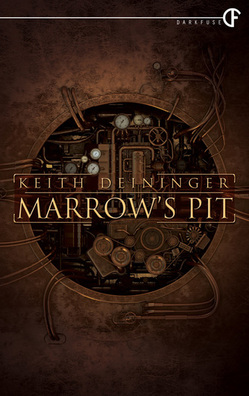 I am very intrigued by your forthcoming book from Dark Fuse Marrow’s Pit. Can you tell the readers what this book is about? Ah, Marrow’s Pit, what a crazy ride that one is. The story is about Ballard, who is having marital problems with his wife, as well as personal problems because he’s begun to question his life’s purpose. He lives in a mysterious place known only as “The Machine,” an indoor complex of apartments, and chambers and factory-like machinations. He works in The Machine like everyone else, going about his daily job without any understanding of why he is doing it; no one has known for many generations. But Ballard has seen glimpses of what’s outside The Machine, a giant crevasse in the earth, used as a place to dump waste, known as Marrow’s Pit. And then Ballard does something truly horrible (I won’t spoil it, of course), and discovers there’s more to the blackness that is Marrow’s Pit—horrible and deeply human—than simple waste and excrement. It sounds as though this is going to be another fantastic layered story, what are the main themes of the book? I write what I like to read, so Marrow’s Pit is surreal, and disturbing, and, yes, layered with complex meaning. It’s something I vomited up onto the page, and then carefully smeared into a final product. I’d say it speaks to the futility of life; not to say that life is meaningless, but that meaning must be sought after and earned. We should ask questions, and be terrified of those who don’t. So what does the future hold in store for you? Well, besides Marrow’s Pit, I have another novella entitled Shadow Animals being reviewed at this very moment, and another full-length novel entitled Out of the Jar being shopped for publication. I feel good about my writing career and think next year is going to be a big one for me. Beyond that, I don’t see an end in sight. I’m currently working on a novel that is complex, ambitious, and the most disturbing thing I’ve ever written. I also don’t see my beer intake slowing any time soon, I’ll likely never sleep well, and I’m determined to have Stephen King read one of my books and like it before he dies. Many thanks for popping over for a chat, it has been a real pleasure. Do you have any final words for the readers? It’s been great talking with you, Jim. Some tough questions, man! I’m exhausted! And to the readers: keep your mind open, question reality, and read! It’s important. If we lose our reading culture, we lose our knowledge, and our history, and ourselves! |


Archives
May 2023
|
 RSS Feed

|

|