

Horror Interview : Lisa Von Biela
19/9/2013
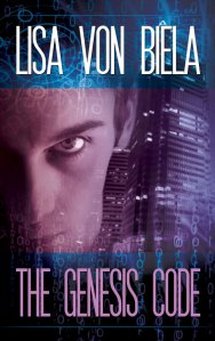 It was a great pleasure to have Lisa Von Biela over for an in depth interview. Lisa von Biela worked in Information Technology for 25 years, and still claims there is no application she cannot break in testing. She left the field to attend the University of Minnesota Law School, graduating magna cum laude in 2009. She now practices law in Seattle, Washington. One of her legal articles, a research piece published in theFood and Drug Law Journal, was cited in an amicus brief before the U.S. Supreme Court. She currently serves on the editorial board of the American Bar Association’s quarterly publication, The SciTech Lawyer.After placing 37th in the Personal Essay category of the 1999 Writer’s Digest contest, Lisa began to write short, dark fiction. Her first publication was in The Edge in 2002. She went on to publish a number of short works in various small press venues, including Gothic.net, Twilight Times, Dark Animus, AfterburnSF, and more. THE GENESIS CODE is her first novel. Look for her second novel, THE JANUS LEGACY, and her first novella, ASH AND BONE, to be published by DarkFuse in 2014 Click Read more for a fascinating interview with Lisa. 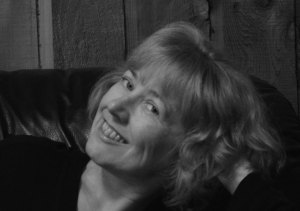 Hello Lisa, how are things with you? Things are great—busy, but great. I feel like I lead a double life these days, between practicing law and writing and all that is entailed in having a debut novel out there and more on the way! I hope all is well with you, and I want to thank you for having me here. Could you please give the readers a little bit of background information on yourself? I was always that pale, skinny kid who didn’t go outside and play because I’d much rather read a book. Back in my grade school days, the library was in a windowless basement, and that is where I spent most of my recess time. I grew up wanting to be a veterinarian, so my undergrad is in biology/pre-vet. Yet I landed in Information Technology for 25 years. Then I decided to drop out and go to law school. As far as my writing side, I recall getting on a typewriter and just pounding out stories when I was in high school or thereabouts. None of those survive today. I’m sure they were crap—although now that I think of it, I recall winning some writing contest once back in grade school. I started writing in earnest back in the late 1990’s. 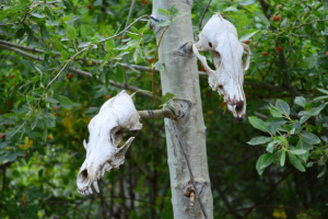 And what the hell was that campsite with all the skulls about? Have you never read a horror book? I would not have stayed around long enough to take that many photos. Horror books? Never touch the stuff. Hah. I kid, of course. My boyfriend and I like roadtripping in the middle of nowhere and photographing what we find. We happened across that site on our most recent vacation. It was a dark fiction writer’s dream campsite, although I admit I was nervous. It was public camping land, but…I wondered if someone had sort of adopted it as their own and might show up later in the night when we were all tucked into the tent. That would be a nasty surprise for all concerned. I did have trouble falling asleep because of it, but nothing bad happened and now I have fodder for a story and some cool pictures! Why horror, what is it about the genre that holds your appeal? Wow, that’s a good question. I read a lot of different types of fiction, but I do tend to gravitate toward the dark stuff. I think it’s because of the vicarious thrill ride it offers. I can go places I’d never dare go and experience things I’d never dare experience in real life, and return quite safe afterwards. I love it when the author immerses me in the story so I care what happens to the characters and I just have to keep turning the pages (or flipping the Kindle screens, in our modern world) to see what happens and who or what the menace is. And what is it about the genre that you dislike? I dislike cookie cutter plots and characters, and just plain poor writing skills. I can’t stand train-wreck sentences and poor editing—I’m a real nut about that. I want to care about the characters, even if they’re going to meet their demise pretty early in the plot. I’m also not big into blood, gore and violence for the sake of it, where it’s just the equivalent of a poorly acted B movie with a big budget for fake blood. Horror/dark fiction has the power to make you think and to feel, and it’s at its best then. Poorly written horror gives the genre a bad name. Who would you say has been the biggest influence on you and your writing? Part of the answer is Rod Serling and his gang of writers (Matheson, Beaumont) from the original Twilight Zone series. The other part of the answer is Greg Gifune—more on him later. Though brief, Twilight Zone stories always seemed to work on two levels: the characters and plot they presented, and some larger theme/greater truth as well. I try to do that in my work, to write on both those levels so the reader can experience multiple layers of entertainment and meaning. I just love the “what if” aspect of those shows, too. Do you have a favourite Twilight Zone story? We recently got the entire series on Blu-Ray and are making our way through that. It’s a total treasure, and includes audio of Rod Serling teaching a writing class. I nearly swoon when I hear him discuss his writing. So we’re seeing episodes we’ve never seen before. That said, I think my favourite remains Time Enough at Last. That’s the one with Burgess Meredith as a bookworm. There is a nuclear blast and everything is destroyed. He is alone on the earth, and becomes despondent—until he discovers he has the library and all its contents to himself. Time enough at last to read his little brains out. He’s happy as hell then. Well, until he cracks his glasses. I love that one. I am that character. Can you remember what first motivated you to start writing, and has your motivation changed over the years? I enjoyed reading so much, I thought/dreamed/hoped maybe I could produce something that other people would enjoy reading. So my original goal was to write fiction that a reader just couldn’t put down, that would be a very entertaining ride. As I felt my grasp on those basic mechanics improving, my goals became more ambitious. I wanted to write entertaining fiction that also had some larger, more serious, idea behind it. I recall this sort of transformation coming about in a short story I wrote, The Scalpel’s Path. It was a bit of a scifi piece. As part of her criminal sentence, a young woman faced mandatory brain surgery to destroy her alleged violent streak. So that’s all very cool in a scifi way. But…she really killed in self-defense; she wasn’t guilty of murder, though of course no one believed her. So here she was about to be punished in a very drastic way (destroying a bit of brain tissue, with the potential for side effects) for something she wasn’t even guilty of. So the story started delving into issues of fairness and justice. And how would you describe your writing style? I’d say it’s very visual. When I’m really in the zone, I actually watch the action in my mind as I’m drafting. I enjoy writing very vivid prose that puts the reader “right there”—and I enjoy doing it economically. I like clean, tight writing, and I like to see how vivid I can make it with no wasted words. With being a visual writer have you ever considered writing a comic? I hadn’t thought of that. I’m afraid I would get frustrated fast. I “see” things quite vividly, but my drawing skills aren’t up to the task. I wouldn’t be able to execute on what I saw, I don’t think. I have a partly completed manuscript with a working title of Sopranocats. It’s a dark comedy about a gang of cats and a gang of dogs that are constantly at war, each character with a quirky personality. Sort of a play on The Sopranos. It just screams for illustrations that I just can’t do (though I can see them all!). Your question also reminds me of a funny incident some years back. I was in a taxi with some colleagues from work on a business trip and I was recounting some story. The driver turned around and remarked that it sounded like I saw things like a cartoon playing in my head. True enough. And what aspects of your writing do you think are the strongest and what do you think are the weakest aspects of your writing? I think my prose is crisp and clean, and I pride myself in turning in the cleanest possible manuscripts. I learned how to self-edit very early in my business career, and that has served me well in fiction writing, too. I’m also a continuity nut. I’m careful about timelines and such making sense. Things don’t happen out of sequence unless there is some good reason for it, and if the guy has a car of a certain kind, it doesn’t change accidentally. I think my endings are my weakest point. My earlier short work tended to suffer from abrupt endings. I’m improving and I know it’s something I need to watch and keep working on. What do you think makes for a good ending? I want the reader to feel gutpunched with the impact. I want the reader to think about that ending, to remember it for a while. The ending needs to fit and flow with the story, yet still not be obvious and expected. I think that’s what tempts me to end stories abruptly in an effort to achieve that. I’m working on better drawing out the intensity of the final scene and letting it breathe more to accomplish what I’m trying to do without leaving the reader feeling there are pages missing. Let’s talk a bit about the mechanics of your writing. How do you go about the writing process? Are you a plotter or do you go with the flow? Definitely a plotter! I’m too much of a control freak to just sit down and write (unless it’s a very, very short piece). That is not to say I won’t deviate if something isn’t working as plotted and a new path reveals itself to me. I prepare a detailed outline in Excel before I even begin a first draft. It has color coding for Beginning, Middle, and Ending sections that helps me keep a longer work properly paced. It indicates which character’s point of view will be used in each chapter so I can balance that out. I have columns for dates I worked on chapters and their word count—this helps me track progress and get an understanding of how long it takes me to do certain things. This may sound nutty, but it works for me. I figure out the characters and their basic traits (though they will develop further as I write), the setting(s)/locations, and the needed subplots. I will also physically sketch out a timeline and see how the plot points slot into that. Then, when I’ve gotten through all that and I feel it hangs together, that it shows consistency, the characters are ready and have motivations that really do support the plot, only then do I begin the actual first draft. My outline method works for me for two reasons: I’m a control freak, and I’m very busy during the week. Unless I’m doing final edits that I can do in brief bursts without having to hold the whole book in my head, I just don’t get to it much during the week because of work and commute demands. So the outline enables me to pick up where I left off on the weekend, when I get the bulk of my writing done. You must write fantastic household chore lists? I’m afraid so. They are really something to see. I have an actual list compulsion. I have a daily list that includes household chore-type things, things from work, things from my writing side, things for other people to do…it’s really rather elaborate. I suppose I have issues, because I would freak out without my lists. How do you edit, do you edit as you write, or do you edit after each draft is finished? I edit to a certain degree as I write even the first draft, though the focus of the first draft is to get that outline into living, breathing form, albeit usually on the skeletal side at that stage. The second draft will layer in more depth to the characters, added subplots, atmosphere and description. The third draft will focus on aggressive editing. The fourth draft will be fine-tooth editing—this will be at the level of word choice and punctuation issues, repeated words, things like that. Third draft is like coarse sandpaper; fourth draft is like fine sandpaper, if you will.  How do you deal with endings? When and how do you know that the ending to your books is satisfactory? Yeah, this is the part that’s hard for me (that and coming up with a good title!). I find I need to let the ending breathe more than it typically does in the outline/first draft. Thank heavens for the great editing at DarkFuse. Greg Gifune edited The Genesis Code. He had me add one scene near the end that made it much, much better. He had me add a brief scene at the beginning and a little bit more to the final scene in The Janus Legacy—again, really making it shine! Dave Thomas edited Ash and Bone, and had me add just a little tweak at the end. I got what he was after, and was able to address it with a sentence or two, but it made all the difference. As a new author, how do you go about getting your name out there? Any which way I can! Seriously, Shane Staley, Managing Publisher at DarkFuse, has some very definite ideas about this, and I’ve been following his advice. I’ve been making myself more visible on the Internet, and focusing on activities that help spread my name around by word of mouth. I’ve got a website. I’m learning to tweet. I joined the International Thriller Writers Association and participated in online roundtables on various topics for several weeks in a row shortly after the book came out. I’ve got a ways to go to get my name out there. All my short stories were published in the small press some years back—then I dropped off the planet to go to law school, pass the bar, relocate, and establish myself in a new career and a new city. So it’s almost like starting from scratch in that way. What would you say has been the biggest lesson that you learned with regards to self promotion? It is one hell of a challenge to rise above the noise level out there. There are so many books being published and promoted. It’s a real competition just to get the attention of potential readers! You took a path that is common among writers by cutting your teeth on short stories. Did you find that this helped you when you came to write your first novel? It certainly did. There is a lot to learn about mechanics and craft that can be learned in the shorter format. I found 2000-5000 words a lot easier to wrangle and rework and learn on than trying to learn those lessons for the first time with 70,000 or more words. If you try something new and it doesn’t work, it’s much easier to chuck 3000 words and start over than an entire novel. When I first tried to write a short story, I was heavily influenced by my extensive business and technical writing experience. My first efforts were “this happened, that happened, the end” with no atmosphere whatsoever. I had to break through that, and it was much easier to do with smaller works. Your debut novel The Genesis Code was published by Dark Fuse earlier this year. How did you come to work with Dark Fuse? Ah, this is my favorite story to tell. So, remember my short story beginning? Well, I wrote a story and wanted to submit it for publication. I was hunting through the Internet and stumbled across a market called THE EDGE. I thought it would fit there and submitted it. By snail mail, mind you. Well, Greg Gifune was the editor of both THE EDGE and Burning Sky back in those days. He rejected my story—and he graciously took the time to explain why in his snail mail rejection letter. (Ironically, the first story I ever sent him was 24 x 7, the seed for The Genesis Code!) Based on his comments, I set that story aside and wrote a brand new one. After several rounds of detailed, encouraging rejections, he finally accepted Vacancy, which became my very first published story ever. I learned a ton in the process. I’ve kept in touch with Greg over the years. He’s always encouraged me and believed in my work. As I said, I fell out of the fiction world for some time after beginning law school. Then, last fall, Greg posted on Facebook that DarkFuse was looking for dark fiction of various sorts. And I had my novel manuscript that I completed right before beginning law school. I submitted it, they accepted it, I nearly passed out from the excitement, and here we are. So, Greg published my very first fiction piece, and he was the one to call me to say DarkFuse was accepting my very first novel—roughly 10 years later. Did you ever consider going down the path of self publishing? Only fleetingly. I was tempted at one point with my novel manuscript, but I felt I didn’t have a clue where and how to begin and would only make a hash of it. I’m glad I didn’t go that way. With DarkFuse I benefited from proper editing and people who know what the hell they are doing.  Dark Fuse are making a name for themselves as the place to be published, what is it about them that makes them so good at getting such great authors on board? I think it is a combination of extensive experience in the business as well as a real love of excellent dark fiction—and a desire to be the very best out there. Shane ran Delirium Books for years before starting DarkFuse. So he has the chops, and he also had connections with great authors from that period that have continued. Many Delirium authors are on the DarkFuse roster. Greg is the novel acquisitions editor. He is a very talented author himself, ran his small press magazines for years, and has an eye for new talent. Dave Thomas is the novella acquisitions editor. I had not worked with him before Ash and Bone, but I understand he’s been in the business a long time as well, and he certainly knows what he’s doing and has the eye for good fiction. Shane is absolutely tireless in coming up with ways to make DarkFuse ever more attractive to readers and authors alike. He wants to put the best possible product out there, along with perks for the Book Club members. And he makes it a real win-win proposition for the authors. The production schedule runs like a well-oiled machine. DarkFuse has been great to work with! In The Genesis Code, the protagonist gets his dream job, what would be your dream job? I would love to have a big uncluttered table with a view out the window and the ability to just sit and write all day without having to leave the house. It would be great to be able to just get up in the morning, saunter in, sit down and begin. I would love to split my time between fiction writing and non-fiction/legal writing that would create real and important change. And what would be your nightmare job? Oh, just about anything involving great heights: roofing, window washer. I can barely take two steps up a short ladder without cringing in terror! The Genesis Code originated from your unpublished short story 24 x 7. What was it about this short story that made you use it as the seed for the novel? The idea of that technology and what it was capable of, combined with the way the corporation just consumed its workers like that. It seemed like an important theme to me. Maybe it could really happen. Wouldn’t that be awful? The technology itself is starting to become a reality, from what I’ve seen in some recent news stories. 24 x 7 didn’t work as a short story because it was trying to do too much in too small a format. It needed to be a novel. So there it sat until I felt ready to try a novel-length work. Do you have another short stories ripe for picking? As far as unpublished shorts that could support a novel, I’m thinking not. I do have a number of ideas for future novels, all along that biotech-gone-bad sort of theme. And, true to form, I have a special place where I keep and nurture these things in a OneNote file. Without giving too much away, one of the narratives of the novel is the control of workers by a shady corporation. Are you wary of large corporations? Hell, yeah. It’s all a matter of motivation and survival. What’s important to a corporation? Financial survival and dominance. Without that, it would cease to exist. So how far would a corporation go for self-preservation? If you had access to the means by which OneMarket controls its workers what would you get your least favourite celebrity to do and why? Wow, this was a hard one. First I had to figure out who was my least favourite celebrity. Finally it hit me. My current least favourite celebrity would have to be Dennis Rodman. I think I would have him renounce all Internet access, move to a piece of farmland, and grow vegetables. Have him do something quiet and useful. He needs to quit messing around in North Korea. Would you say the book has a message, if so what would it be? It sure does. We are capable of creating new and fantastic technologies, but in the wrong hands, they can be used for terrible things. Beware. The book has gained some excellent reviews on Amazon.com, do you pay much attention to the whole review culture? To a certain degree. I do pay attention, but I try not to obsess. Of course, it helps that most of the reviews have been quite positive. I find the detailed feedback from readers to be fascinating. Back in my short story/small press days, a story would go out and be published, and that was that. I had no idea what readers thought. But now, with all these various venues for rating and commentary, I get to see what people think. I also get very direct interaction with readers in the DarkFuse Forum. Sometimes it’s surprising. In The Genesis Code, I intended to write the character Sheila as sympathetic. She had some quirks, but they were mainly due to some difficult times she endured shortly before the book opens. That is not how she has been received! Most of the readers who have remarked about her have wanted to smack her upside the head. I didn’t expect that at all. I enjoy being able to directly connect with my readers this way. It’s fun to see the book through other people’s eyes. Would you ever consider going back and rewriting her story to make her more sympathetic? Nah, I’ll let Sheila be. It was just a very interesting lesson in what happens when your book gets into the hands of actual readers with their own perspectives. There are so many more stories out there to write! 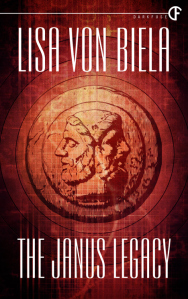 Ash and Bone, is your first novella, and it marks a bit of departure from techo-thriller to horror- noir. How do you get into the mindset to write in a different genre? Funny you should say that. The Genesis Code was the departure. My short story work was mostly horror/dark fantasy/supernatural/light sci fi (no space opera stuff). So Ash and Bone is a return to that. And it felt good to write in that genre again. It was a story well suited to the novella length. I had just turned in the manuscript for The Janus Legacy and it was going to be a while before I heard on that. I decided to try a novella length work for the first time while I waited. The inspiration for Ash and Bone was a scene from a black and white movie. It was a waterfront at night, ground wet from recent rain and a layer of thick fog. I saw that and immediately wrote it down. I *had* to write a story that began with that scene. And that’s how Ash and Bone came to be. Can you tell us about the story? In certain ways, the town of Cromwell Bay itself is a key character. That sounds like an odd thing to say, but I think it’s true. So, Eileen Maroni buys and reopens the old motel there with some ill-gotten funds. Frank Foster is passing through town after attending the funeral of his closest friend. His friend’s death was tragic and senseless, and Frank is devastated. He stops for a place to stay for the night and winds up uncovering a very dark town secret—then feels responsible for the terrible thing that happens next. And can you give any hints as to what is behind the door to room 8? Frank can tell you. The truth behind a Cromwell Bay tragedy from years ago. That’s what’s behind the door. Can you tell us about any future projects? Yes, after my multi-year fiction-writing gap, I’ve returned to it with a vengeance. I’m working on my third novel at the moment, still in the first draft. It addresses similar themes as my first two novels, but this time pitting one BigPharma company with another in a desperate race for the top of the industry—and corporate survival itself. How far will they go? Pretty damned far. This story entails some designer bacteria that get out of hand, epidemics, and all manner of trouble. I set the story about 10-15 years in the future, so an additional challenge I have in this one is what I call the “everyday electronics.” What will things like cell phones, tablets, TVs look like then? I have to envision all these things, and then weave them in seamlessly throughout the story. I already “invented” some important lab equipment that is crucial to the plot—and that I’ll bet BigPharma companies would love to have. So that’s my current novel-length project. I also just *have* to write a short story or novella based on those skulls. There is a story there. I just have to write it. May thanks for popping over for a chat, it has been a real pleasure. Do you have any final words for the readers? Thank you for having me. This has been a lot of fun! For the readers, thanks for reading! And an extra thanks to those who have read The Genesis Code. If you’d like to keep up with my doings, my website is lisavonbiela.com and my Twitter name is @lisavonbiela. THE GENESIS CODEThe Genesis Code, the mind-blowing techno-thriller debut novel from Lisa von Biela. Obedience and submission...uploaded directly to the brain... When Mark Weston is hired by OneMarket, the prestigious and premier supplier of global equity trading systems, owned by international business tycoon Simon Harris, he thinks he's found his dream job. Great pay, amazing benefits-and sure, the hours are long and the demands on his time are often extreme-but it means financial security for him and his wife Sheila, a new life and a new beginning, a fast track to success with a great company. But deep within the walls of the enigmatic OneMarket, there is something unthinkable happening that only a select few are aware of, the development of a new kind of invasive technology dubbed THE GENESIS CODE, that could not only expand Simon Harris' empire, but create a new, more efficient and obedient workforce. Mark and his coworkers have unknowingly become part of a horrifying experiment they may never be able to escape, and time is running out. A new kind of worker...a new kind of hybrid...a new kind of corporate slave... The Genesis Code...upload complete. Comments are closed.
|


Archives
May 2023
|


 RSS Feed

|

|