

 PAUL SOLET PAUL SOLET After receiving a BA in Film and Psychology from Emerson College in 2002, and a certificate in screen writing from the same school in 2003, Solet moved to Los Angeles and began working in production. He wrote and directed his highly lauded first feature, Grace, in 2008. Following its premiere at Sundance '09, where two men in the audience passed out from the intensity of the film, Grace was the darling of festivals around the globe, including SXSW, Brussels, and Gerardmer, where it won the prestigious Prix du Jury, going on to win many more, including a Vision Award at Toronto After Dark, Best Director at Albuquerque International, and a Best Film nom from Sitges Festival Internacional de Cinema Fantastic. Critically, Grace received a caliber of praise practically without precedent within the genre, called, "downright chilling" by Variety, "astonishingly wonderful" by Harry Knowles, "a horrifying meditation" by the Los Angeles Times, and "sweet, queasy perfection" by MTV's Kurt Loder. Regarded for his intense story savvy as a writer for hire as much as his eye, he has since developed projects for some of the most respected producers and directors in the business at both the studio and independent levels, while continuing to direct both his own and other writers' material. Hello Paul, how are things with you? Great, thanks for asking! It has been a few weeks since the release of your latest feature Dark Summer. How are you feeling now that your baby so to speak has finally been released into the wild? I’m delighted with the response. People have really enjoyed the movie. With something like GRACE that you’ve written yourself and had years to work on it’s quite a different experience than something like DARK SUMMER where you only have a few months to make the material your own, but I can’t help but pour my heart into everything I work on, and this is no exception, even with the limited time I had with the piece. Many people would be under the impression that all of the hard work is not over for you, but I would imagine the hard work just keeps on going with all the press and promotion you have to do. How do you keep yourself motivated during this period? People work so hard with you on a movie — the cast, the crew, the producers, right down to the marketing team — I end up energized by it. I was kind of raised in the business with this philosophy really engrained in me that your job just isn’t over once you deliver; that you have a duty to your collaborators and your audience and the movie itself to do everything you can to help get the film seen and then be available to audiences that are awesome enough to give their time to see it in any way you can, whether it’s a sell out crowd at a huge market festival or a tiny little screening for a local crowd. You stay and you talk to people and you share whatever you can of yourself. If I can help the film, I’m thrilled to do it. And it’s always so great when you get to see a movie working for people. There’s just nothing quite like watching everyone’s hard work actually pay off. There must be some parts of it that you really hate, what is your least favourite part of the process? I’m hugely fucking grateful to get to do this and I really believe there is service to be done to the film, the team, and the audience all the way through, from development to prep to production to post to promotion, so if I catch myself developing a bad attitude about something, or feeling tired, I know without a doubt it’s just a perspective problem and it’s my responsibility to remedy it as soon as possible, not anyone else’s. It’s the best job in the world and there’s nothing else I ever wanted to do, so I really try to keep that front and center no matter what. There are a lot of people trying to make movies. Really working their asses off to make something and never getting a chance, so I try to savor every minute of it. When I lose my way and my attitude slips, I try to make it right and change how I’m doing things in the future so it’s less likely to happen again. 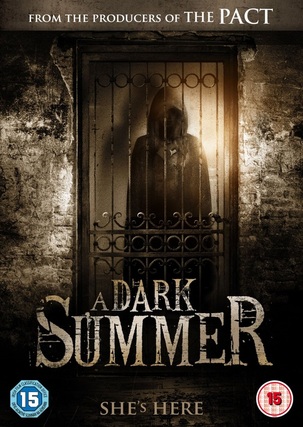 A Dark Summer How has the response been to the film so far? People have been really complimentary on so many levels. The response to this cast — to Keir Gilchrist and Grace Phipps and Stella Maeve and Maestro Harrell and, of course, to Peter Stormare — and to the craftsman — DP Zoran Popovic, composer Austin Wintory, production designer Ariana Nakata, editor Josh Ethier, costume designer Chantal Filson — has just been terrific. They just did such beautiful work, so many brave and interesting choices across the board, it’s just really terrific that people are recognizing their work. In Dark Summer the main protagonist has been placed under house arrest, have you ever done anything that would have gotten you put under house arrest? (It’s OK the interviewers code means that anything you say here is not admissible) I don’t relate to Daniel’s crime specifically but I do relate to these kids a hell of a lot. When I was a teenager I did NOT feel like a kid, so it was really important to me to honor that and cast people who were just wise way beyond their years. I remember feeling, even as an adolescent, that, with a few important exceptions, most of the adults in my life just weren’t equipped with what it would take to understand what my friends and I were experiencing; feeling like my friends and I were in a world of our own. I think that kind of sense of isolation and inability to connect and communicate is probably what leads to most of the trouble young people find themselves in, legal or otherwise. And if you were to be put under house arrest how would you fill your days? Right now the idea of house arrest isn’t scary to me. I’m surrounded by books and movies in my home, I have a wonderful chair, and music, and I can meditate. I would miss running and being outside in nature a lot, and taking pictures on the street, but I have giant windows I can open to hear the birds. I’d just have more time to write and study and shadow box in my underwear. So, basically, pretty much as things are now. What made you decide on using the house arrest as a framing angle for the whole film? That conceit came from Mike Le’s script. We knew it was a little familiar for folks because of DISTURBIA and a few others, so we did our best to do something interesting with it and pull that emerald green pulse of the anklet into the overall atmosphere of the movie so that it was making an actual thematic contribution to the piece rather than just serving as a plot contrivance to keep a character in a budget-friendly environment. Without bringing too many spoilers into it, what was the genesis of the vengeful spirit? How did you that your spirit was distinct from other ones? I’m not sure how to answer that one without spoiling the fun, but I can say I wanted Mona to exist in real physical space, rather than as some floating apparition. I wanted you to be able feel like you could actually smell her flesh rotting in that hallway. The conceit itself meant that there were certain things Mona couldn’t do to Daniel so we had to work very hard to keep her as scary as possible within those constraints. You make a rather bold move in the film by not wasting any time going into the backstory of the characters. Were you ever concerned that this might make the audience more detached emotionally from the characters? I think characters reveal themselves through their actions not their words. The first act of the movie used to be more chatty but it undercut all the mystery about Daniel’s predicament and left the first 30 minuts feeling slow because there wasn’t anything left to learn. Producer Ross Dinerstein was actually really instrumental in getting that first act cut down. He was the first to see that it was just weight we were better off without. The film also uses a distinct colour palette and some interesting camera angles and shots, is something that you try to develop as you direct more films? Thanks. Very much so, yes. I work incredibly closely with my DP Zoran to build a look and a philosophy that governs and informs that look. That is a huge part of the process. I was also lucky enough to have a terrific production designer and costume designer, who really understood the pallete I was looking for and how to use it to great effect. The unsung hero of the look of the movie is our colorist, Harris Charalambous, who did an incredible job dialing this look in. All of these folks working together made the look what it was. There’s actually a wonderful documentary that will be on the Blu-ray about this that Adam Barnick and Sergio Pinheiro, our awesome BTS team, did. In terms of giving the audience answers and a nice clean ending, you have certainly pulled the carpet from under us. Is there a reason as to why you kept so much of the film as ambiguous as you did? This is a question for Mike Le who wrote the script, but I think the nature of reveals is that you don’t get to give them early unless they are themselves misdirects to other reveals, so I think the answer is probably just for the sake of basic storytelling rhythms. Is this going to be the start of a new horror franchise? Who knows! Next up, DARK WINTER! The film was made on a pretty low budget, what the hardest thing for a filmmaker when working on a low budget? You have very little time and very few resources, but I think no matter what size movie you’re making you’re never going to have enough because you’re always aiming to push it as far as you can — or so I’m told by guys with bigger budgets than me! For this movie, we only had about 10 days of formal preproduction, and that was quite tricky because the look was really ambitious and nuanced and deeply important to us all. But every department rose to the occasion, it was just incredible what everyone was able to do with what they had, and I had great producers on this, who really found some incredible ways to stretch every dollar we had right through the entire process. And what would you say is the one thing that shooting on a low budget allows you to do that a larger budget wouldn’t? Well, you certainly have more creative freedom than you might on a larger budget where the stakes are higher for investors. It’s a tradeoff. I think if you just try to embrace the limitations early enough to allow them to inform your choices about how you are going to work, then you end up with something that feels deliberate instead of over-extended, even if some of the style was born out of your limitiations in the first place. What is next for you? I believe you have a segment in the film Tales of Halloween? Can you tell us anything about your segment in this film? I do, yes, that was so fun. I did a sort of Leone meets THE WARRIORS piece called THE WEAK AND THE WICKED with Keir Gilchrist and Grace Phipps from DARK SUMMER and Booboo Stewart from TWIGHLIGHT, and some really talented little kids. I got to bring on my favorite collaborators so Zoran shot it and Austin Wintory did the score. So psyched to show you guys that one, it was just terrific fun. I have a feature shooting this year as well, something I wrote that I am just thrilled about, but I can’t say much quite yet! Paul, it has been a pleasure chatting with you. Do you have any final words for the readers? You too! Thanks to everyone for all of the support! Much love guys! Click here for our review of Dark SummerComments are closed.
|


Archives
May 2023
|
 RSS Feed

|

|