

 My name is Jeremy Hepler. I'm a member of the Horror Writer's Association (HWA), and my debut novel, The Boulevard Monster, will published by Bloodshot Books on April 7th. In the last five years, I've had twenty-four short stories published in various small and professional markets, and in 2014, I placed second in the Panhandle Professional Writers Short Story Competition. I also worked as a slush reader and book reviewer for Lullaby Hearse and Dark Discoveries magazines. You can contact me via Facebook or Twitter (@jeremyhepler) where you will find links to my blog and Amazon author page. Could you tell the readers a little bit about yourself? Native to the Texas Panhandle, I now live in a small rural community in central Texas with my wife Tricia and son Noah. Throughout my life, I've worked jobs ranging from welder's hand to health care assistant, but writing has always been my passion. What do you like to do when you're not writing? Other than writing (and reading), I love to draw, garden, and repurpose old furniture salvaged from garage sales and dumpsters. Other than the horror genre, what else has been a major influence on your writing? The mystery and/or suspense genre, I would say. It influenced the speed and urgency of my story telling, something I think a large portion of our modern get-it-now society wants in a story. The term horror, especially when applied to fiction always carries such heavy connotations. What’s your feeling on the term “horror” and what do you think we can do to break past these assumptions? When I tell people I wrote a horror novel, a large majority of them assume it's gory or campy and/or that I'm demented . But I believe horror is an emotion that comes in a wide range of experiences that everyone touches on in life at some point. For example, as a father I consider a story about a kid with a terminal illness a horror story. Or struggling with a terminal illness personally for that matter. I also consider natural disasters and terror attacks and isolation and countless other situations and experiences horrific. Horror is an emotion, and in order to break past the assumptions of the gory, slasher definition, we just have to keep writing diverse stories that illustrate the different forms of the word and try to reach as wide of an audience as possible. A lot of good horror movements have arisen as a direct result of the socio/political climate, considering the current state of the world where do you see horror going in the next few years? Based on the socio/political climate, I think horror will probably split in two directions. One will follow the current fears, and books with end-of-the-world chaos scenarios and 1984esque themes will rise. The other will be stories that trend toward the bizarre and fantastical, stories that provide readers an absolute escape from the current state of the world. What are the books and films that helped to define you as an author? The three main books that changed the way I approached writing, changed the way I wanted to write, were The Missing by Sarah Langan, The Girl Next Door by Jack Ketchum, and Carrie by Stephen King. Sticking with the three theme, the three films that influenced my story telling the most were all films I saw as a kid in the late seventies and early eighties. They were Jaws, Friday the Thirteenth, and Close Encounters of the Third Kind. All three of these ignited my young imagination and prodded my emotions more than any others, leaving an indelible mark on me. What new and upcoming authors do you think we should take notice off? Some of my new favorites are Glenn Rolfe, Michelle Garza and Melissa Larson (The Sisters of Slaughter), Tom Deady, Greg Chapman, Kenneth W. Cain, Stephanie Wytovich, and Jason Parent. How would you describe your writing style? I would like to think my writing style is comfortable, reliable, and relatable, a proper swirl of character connection and intrigue. I would also hope that readers would equate reading my work with listening to one of their most trusted, best friends telling them about a near-death experience over a cup of coffee or pint of beer. Are there any reviews of your work, positive or negative that have stayed with you? I haven't had any reviews on The Boulevard Monster yet. I'll get back to you after it comes out on April 7th. What aspects of writing to do you find the most difficult? The aspect I find the most difficult (but it's the most rewarding in the end) is editing. I am a perfectionist and am never satisfied with editing. NEVER. I've gone back and edited stories I've already sold and had published when the feeling hits. Is there one subject you would never write about as an author? I think the only one would be the torture, rape, or mutilation of babies or small children. How important are names to you in your books? Do you choose the names based on liking the way it sounds or the meaning? I usually choose my character's names by mixing and mashing together names of people I grew up with in Borger. Occasionally, though, I choose one simply because I like the way it sounds. If there's meaning to them, I don't notice it until later. Writing, is not a static process, how have you developed as a writer over the years? I've gone from being confident when I first started writing short stories (mostly copying my idol's styles), to hopeless after I was continually rejected, then back to confident when I received a few acceptances, then hopeless, and on and on like a seesaw. Now, though, after years of studying other writers and reading everything I could and experimenting with different styles and genres, I feel like I've found my voice and reached a semi-acceptable medium of confidence and hopelessness. What tools do you feel are must-haves for writers? Reading and writing, writing and reading. And a strong rebound because rejection is a mainstay in writing. What is the best piece of advice you ever received with regards to your writing? Finish the damn story. No matter what. Finish the damn story. Getting your worked noticed is one of the hardest things for a writer to achieve, how have you tried to approach this subject? Other than self-promoting new releases and anthologies and answering any questions readers have (like this J), I feel the best decision I've made in hopes of getting my work noticed is simply connecting with other horror writers and readers online and taking every opportunity I have to get to know them and learn from them. I try to engage on a personal level, let people know I want to know them, let them get to know me, let them know where I'm coming from in my writing, and where I want to go with it in the future. Becoming a part of this community has helped me network more than anything I could've done on my own. To many writers, the characters they write become like children, who is your favourite child, and who is your least favourite to write for and why? My favorite for now is Seth Fowler, the protagonist in The Boulevard Monster. I feel connected to him on because he's a lot like me and many people in my family: a middle class, hard-working manual laborer who tries to do right by his family and will go to extraordinary lengths to provide for them. I spent almost six months helping him tell his story. To me he is as real as I am. Since my novel writing is limited, I don't have a least favorite yet. Sorry. What piece of your own work are you most proud of? My debut novel, The Boulevard Monster. And are there any that you would like to forget about? Many of my first short stories, when I thought I could write no wrong. For those who haven’t read any of your books, which of your books do you think best represents your work and why? Again, since it's my debut novel, it's The Boulevard Monster. Mainly because on some level every philosophical question of self (worth and value and credibility)that the protag Seth Fowler must face I have faced myself, allowing me to pour not only my words into Seth's story, but also my own experiences, doubts and desires. Do you have a favorite line or passage from your work, and would you like to share it with us? I don't have a favorite, so I'll share the short prologue. Prologue For the Record My name’s Seth Fowler, and I’m not delusional. Not in my understanding of the role I played in the Boulevard murders, or in my understanding of what telling my story can accomplish. Right now on Channel 10 Michelle Farmer is standing on my front lawn warning people that I should be considered armed and dangerous. There’s a little picture of me in the upper right corner of the screen—the one from my DWI arrest ten years ago—and a phone number on the bottom for viewers to call if they know my whereabouts. A ten thousand dollar reward has been offered for information leading to my arrest. In the background, Detective Morrell and a large group of officers are moving in and out of my house, collecting evidence. They searched Ryan’s apartment earlier this morning, my dad’s house shortly before that. Even if I were found and arrested and had my day in court, and even if I could afford the best lawyer Mercy has to offer, I would be found guilty. The evidence would be stacked too high. No matter how detailed my account, no matter how hard I tried to convey my true intentions, my testimony would sound too contrived, too incredible, for sensible ears. Jurors would never see me as an honest, sane, God-fearing man. I get that. I understand. I’m not writing this in hopes of clearing my name with the authorities or the public. I’m writing it so my wife Brianne and daughter Sera will know my side of the story. They need to know what happened to Ryan and my dad. They need to know about Luther and the birds. What are you working on next? I'm working on a coming-of-age horror novel called Demigod Dreams, where four teens discover and enslave a monster that has the power to turn them into gods…maybe J If you could erase one horror cliché what would be your choice? I guess it would be the "let's split up" cliché in many of the horror movies. If I was scared for my life in an isolated location that had a seedy history, and I only had a few of my closest friends with me, I'd stay with them. Or follow them if they wanted to leave. The whole "strength in numbers" thing. What was the last great book you read, and what was the last book that disappointed you? The last great one I read was The Lock Artist by Steve Hamilton. Not exactly horror, but superb and intriguing nonetheless and worth any reader's time. And the last one I read that disappointed me was Ernest Cline's Armada. Again, not exactly horror, but I try to read from all genres. I loved Ready Player One but couldn't get into Armada. What's the one question you wish you would get asked but never do? And what would be the answer? I haven't been asked many questions, so here's a dream one. Question: Can I purchase a hundred copies of The Boulevard Monster so that I can use it as a teaching tool for my college literature class? Answer: Why, yes, of course you can. 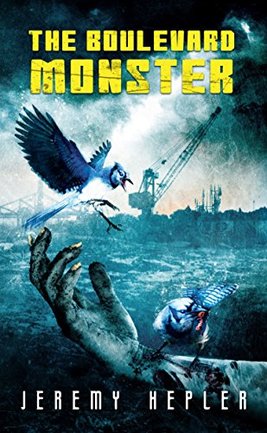 I KNOW WHAT YOU HAVE HEARD ABOUT ME You say that I am a madman. You say that I am dangerous. You say that I am the one who has been abducting women, slaughtering them, and burying their corpses all around this city for years. You are wrong, because only part of that statement is true… I AM NOT A KILLER I know that you probably won’t believe me. Not now. Not after all that has happened, but I need to tell my side of the story. You need to know how this all began. You need to hear about the birds, but most of all, you need to understand… I AM NOT THE BOULEVARD MONSTER  Comments are closed.
|


Archives
May 2023
|
 RSS Feed

|

|