

|
And if it’s someone who can put glass in your food, it becomes very fraught, you know?  Charlotte Bond and I were honored to interview John Connolly during his hectic Fantasy Con schedule in October of last year, what was supposed to have been a quick fifteen minute interview became a fascinating hour long chat with one of the giants of the genre. It is a testament to just how entertaining John is, that this interview could have carried on into the wee small hours. Today we present part one of our three part interview between myself Charlotte Bond (CB) and the legend that is John Connolly. John Connolly was born in Dublin, Ireland in 1968 and has, at various points in his life, worked as a journalist, a barman, a local government official, a waiter and a dogsbody at Harrods department store in London. He studied English in Trinity College, Dublin and journalism at Dublin City University, subsequently spending five years working as a freelance journalist forThe Irish Times newspaper, to which he continues to contribute. His first novel, Every Dead Thing, was published in 1999, and introduced the character of Charlie Parker, a former policeman hunting the killer of his wife and daughter. Dark Hollowfollowed in 2000. The third Parker novel, The Killing Kind, was published in 2001, with The White Roadfollowing in 2002. In 2003, John published his fifth novel—and first stand-alone book--Bad Men. In 2004,Nocturnes, a collection of novellas and short stories, was added to the list, and 2005 marked the publication of the fifth Charlie Parker novel, The Black Angel. John's seventh novel, The Book of Lost Things, a story about fairy stories and the power that books have to shape our world and our imaginations, was published in September 2006, followed by the next Parker novel, The Unquiet, in 2007, The Reapers, in 2008 The Lovers, in 2009, and The Whisperers, the ninth Charlie Parker novel, in 2010. The tenth Charlie Parker novel, The Burning Soul, was published in 2011, to be followed in 2012 by The Wrath of Angels. The Wolf in Winter, the twelfth Parker novel, was published in April 2014 in the UK and in October 2014 in the US. 2015 saw the publication of A Song of Shadows, the 13th Parker novel, andNight Music: Nocturnes Volume 2, the second collection of short stories. The 14th Parker novel, A Time of Torment, will be published in April 2016 in the UK and in July 2016 in the US. JM: Hi John. How are you finding Fantasy Con and what does a convention like this actually offer to a writer of your stature? JC: A writer of my stature? [Laughs at this concept] You know, it’s curious: if I go to a crime convention, because I’ve been regarded as a crime novelist now for sixteen years, most people at least have some vague idea of who I am. But really in the fantasy community, the lines of demarcation between genres are still there and so there’s a whole lot of people in the fantasy community who really have no idea who I am. I realised, the first time I came to a fantasy convention, that it was like starting again. In the same way as in the crime area, there are people who can guide you around a crime book store but wouldn’t be able to tell you a word about fantasy or horror, and it is something similar like that here. It’s like a Venn diagram where those two genres overlap is still quite thin. So it does feel a little bit like you’re flogging your wares again; you have to explain to people who are you. But that’s lovely because I’ve always written fantastic literature – not “fantastic” in the way of how wonderful it is [he says self-deprecatingly] – but I’ve always been fascinated by fantasy and the supernatural. It’s been there right from the beginning of what I’ve done. It was there when I wrote “Nocturnes” eleven years ago; it’s been there in the Samuel Johnson books; it’s been there in “The Book of Lost Things”. So it’s a community that I felt, as a reader and a writer I had a great deal in common with, but I just couldn’t quite make the connection. I was in Derby earlier this year and I had a really lovely time. The difficulty, I think, is that I’m in Ireland and, you know, there are so many of these conventions in England. If you’re in England you can hop on a train and go for the day. In Ireland, I’ve got kids and dogs and another half and you kind of have to schedule two or three days for it. So I’m very conscious of trying to make that point of connection but it is still a little bit like early days for me with the fantasy community I think. CB: After sixteen years of being a successful writer, what still challenges you in terms of writing? JC: I remember my editor was over in England. She retired a couple of years ago but kept on me and Tana French, I think, simply so that she could come to Dublin and have lunches, which is lovely. I remember saying to her that everything should be an experiment, even the things that don’t sell particularly well or don’t work have benefits in the long run. And I’ve been very fortunate. I know there are writers who complain about their publishers, and I’ve never wanted to complain about them at all. They’ve been consistently supportive throughout. Sometimes you have to meet them halfway. I mean, there’s not much point in me saying, “Can I have a million quid for my great Russian novel please?” Something like “Noctures”, I’m sure you know, was given to them for free. I don’t take an advance because it is a series of experiments. “The Gates”, those Samuel Johnson books, didn’t earn a lot. The science fiction books particularly didn’t earn a lot. They were ways of stretching myself. The analogy I often use is going to the gym: if you go to the gym (I’m a middle-aged man, I’m aware of these things now), if you go to the gym or invest in male SPANX, and then only exercise one set of muscles, those muscles will get tired and the other muscles will atrophy; you need to alternate. And writing is very similar. What I’ve learned from mystery writing is that you can keep doing the same thing over and over and over again and make a very nice living from it, because crime literature is very character-led. People have an affection for characters, and if you give them the time that they spend each year with those characters, on their holidays to Marbella or wherever it may be, they will forgive a book that you phone in simply because they got to spend time with those characters. They kind of take the long view, I suppose, of the series. And I never wanted to be one of those writers so from the beginning I went off to do other things, and I annoyed readers and lost readers because of it. I remember “The Black Angel” was the first book of mine that ever made a New York Times bestseller list in paperback. And it was a big deal for my publishers. To make the paperback I think it was like the top ten, and I never made it again afterwards because the book I wrote was “The Book of Lost Things”- 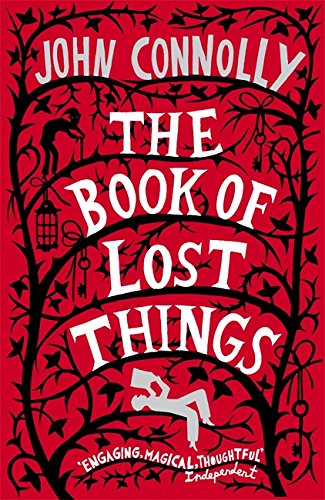 CB: Oh, I love that! JC: And I love it! [said with great enthusiasm] And my publishers, god bless them, once they’d kind of managed to compose their faces into something resembling happiness, grew to love it too but at the time the market was conditioned for another Parker book. You know, Barnes and Noble had bought in a lot of these things, they’d sold a lot of them, and they thought, “Right, here we go.” Then they were presented with this odd book about grief and fairytales and my sales never recovered in the United States from that book. But as a writer that was a huge leap for me. And it’s the book I think that possibly readers have the most affection for, which I think my own publishers now have the most affection for. So what can seem like a misstep at the time can actually turn out to be something very different. And, because of the relationship I have with Atria and Hodder and Stoughton, and because I’ve had the same editor all the way through with each of them, I think they’ve kind of signed on for the long haul. I think in some ways that lesson that we learned from “The Book of Lost Things” was good for all of us. That actually, you know, you don’t have to worry too much about this kind of stuff. The Parker books have a readership, they sell X number of copies, they’re reliable, they’re earners, but they have also bought me a little bit of mobility and a little bit of room to try different things. I’ve got publishers to say “yeah”, and like I say, I don’t ask for the same money, sometimes I don’t ask for any money at all, but the fact that it’s published, that I try it and that I see how it goes, and that it advances what I do is worth it. So everybody finds their own level of compromise on both sides. JM: And moving on from that a wee bit, would you ever consider using a pseudonym to write then? JC: It arose with the science fiction novels because that was so different and there possibly would have been benefits to doing that retrospectively, I think. Yet at the same time, when they started coming out, publishing was in kind of chaos and fluctuations of “we’re all going to be reading e-books!” and “nobody’s going to be buying books anymore!” and “it’s terrible!” So what I have at least is a name that brings in a certain number of readers. The other side is that I think perhaps there’s still a reluctance to read a book that has two names on the cover. I think there is a bit of a mental block about that. CB: Even me, who loves your work, saw two names on the cover and went “What’s that all about then?” JC: Yeah, it is a weird one so what do you do? Do you combine the two? CB: But then I saw it was your wife and I went, “Must be brilliant then.” JC: Well, yeah, absolutely. I also felt it was important because of the level of her contribution. It wasn’t, you know, me writing something on the back of an envelope and her typing it all up; it wasn’t me writing the whole book and she putting in the full-stops. It was collaborative and so therefore it was important that her name be on the book. She brought something to it that simply wouldn’t have been there otherwise. The reason why I turned to her was that I do a lot of stuff in schools – not in weird ways [he adds with almost nervous laughter], like hanging around in the bushes, like, “Hello. Do you want to see a puppy?” I meant that I would talk at school about fantasy literature, horror and writing, and what I began to notice was that if you were in a co-ed school or a girls’ school and you said “Who here reads science fiction?” not a hand would go up. Maybe, if you’re lucky, one hand would; you know, the kid who would grow up to be really interesting but was regarded as the weird kid in school at that point. But very few of them. Then if you said “Who reads “The Hunger Games”?”, you’d get a sea of hands. “Who reads “Divergent”?” – a sea of hands. Because that’s not marketed as science fiction, that’s marketed as dystopian fantasy. And what is interesting about coming to these conventions is that sometimes you get to challenge assumptions a little bit. There is still a belief, I think, among a younger generation of readers that science fiction is for boys. Fantasy is okay, you can have girls reading fantasy. Science fiction is still very, very male-led and very, very male-driven. And I was really annoyed by that. I thought, “No, that’s not right”. Then you realise that you’re talking to kids who have never seen “Alien”, who have never seen “Aliens”, who have never seen “Blade Runner”. You’re talk to kids for whom “Star Wars” is kind of old; it’s an old film, thirty years for them, maybe a bit more. So I wanted to write a piece of science fiction that was very female-led, that was very female-driven and was going to deal with sixteen year olds. But as a forty-seven year old man I know nothing about sixteen year old girls and have no business knowing anything about them, you know?! [he laughs] And so it seemed quite natural to turn to somebody. Jenny writes as well, she has her own book under submission, and she’s a journalist. What kind of home-life would I have had if I’d said, “I’m thinking of finding a female collaborator to work with – could you recommend somebody?” CB: Ouch! JC: Yeah! [general laughter as we all imagine would have been John’s fate if he’d actually said this] But the flip side of that is that most writers don’t collaborate because writing is a little dictatorship. It’s a very solitary profession. At that point, I’d probably done eighteen or nineteen books; I knew how I wrote a book. To suddenly have somebody coming in with their own views going, “Well, now, I’m not sure that’s how I would write a book,” it’s difficult, even if it’s a professional relationship. And if it’s someone who can put glass in your food, it becomes very fraught, you know? I’ve learned diplomatic skills that really the previous decade of the relationship failed to teach me in any shape or form. But, you know, she brought something to those books that I would not have been able to bring to them, simply as a male of a certain generation and a certain age. So I would have felt bad had we gone for not putting her name on the front, or putting it in tiny letters, or pseudonyms. That way lies madness. CB: I have the same thing where I’m writing a young adult novel with a teenage boy in it dealing with the apocalypse. I’ve read through it gone, “I have no clue if that’s what a teenage boy would think.” So I gave it to all my male friends who then say, “Yeah, yeah, that’s pretty much what we did in teenage years.” But you’re quite right – I think that having a female on the front would definitely be a draw for female readers. JC: Yeah, especially for female adolescents and especially, from my view, these are all part of the same universe. These books are all, you know, themes and symbols and metaphors that recur in the crime novels and the fantasy books. They’re all coming from the same writer, the same imagination and they’re part of the same journey. That was why there was a Parker story in the original “Nocturnes”. I mean, the book didn’t need to be plumped out because it was long enough, but it was to say to people, “Actually, these are not entirely separate.” I’ve never viewed them as separate, and I don’t want you to view them as separate either. But there are crime readers who will simply want to read crime fiction, while there are fantasy readers who will only want to read fantasy literature. CB: I’m always amazed that an Irishman living in Ireland can write so realistically about American life and the culture as well. How do you go about researching that kind of detail? I know you said earlier about struggling to get to English conventions because of family ties – how do you manage? Do you go over to America? JC: Yeah, I mean we have a house in Portland and I’d worked there when I was younger, about twenty-five years ago now. It’s also a literary thing as well. American literature was an escape for me when I was young. I didn’t read British literature as it was too close to home; in the same way, I’d never really think of setting a crime novel in Ireland or England. A whole range of American literature was a form of imaginative escape for me, so I was immersed in American literature. That was what I read so it’s not completely alien territory. I was very familiar with the tropes of crime fiction. I come out of journalism so I am perfectly happy researching and I’m perfectly happy asking stupid questions. I don’t believe that there’s a stupid question; if I don’t know the answer, it’s not stupid, I just don’t know the answer. So I listen a lot but the flip side of that is that I don’t want to write the way an American writes because there is no point. The Americans write perfectly good crime novels themselves. They don’t need somebody coming over doing some weird imitation like a little ventriloquist dummy. And it’s funny, those people who talk about going away to find themselves: I mean, wherever you go, there you are. Essentially you don’t really have to go very far. And for all my trying to escape this oppressive, these ideas of what an Irish writer was supposed to be, what he was supposed to write about and the heritage of what I felt was a very insular society, a very staid Conservative society – for all that, you bring of your baggage with you. But some of that baggage isn’t bad. That fascination with mythology, that sense of place, of folklore, of even something as simple as that middle European fear of the woods – that’s very much something that you find in European literature that you don’t really find in American literature to the same degree. That something which is so much a part of fairy tales and folk tales – that’s importing something European into this tradition. So in a way I’m very conscious now of almost drawing back from that. Part two will go live next Monday (25 Jan 2016)Comments are closed.
|


Archives
May 2023
|
 RSS Feed

|

|