

 Could you tell the readers a little bit about yourself? When I was six, I scrawled and illustrated my first story to keep the demons under my bed at bay. For the better part of three decades, dark stories and psychological puzzles kept me sane while I went through the motions of school, multiple university degrees and a corporate career. By my mid-thirties, the demons won. I have dedicated myself to feeding the little bastards ever since, while being a wife and a mother between the lines. In other trivia: I’m Dutch by birth, bilingual by nature, and live in the Netherlands. I believe this is the point in the biography where writers mention their pets, but we don’t have any. Although my son does very convincing impressions of puppies, kittens, and the occasional pterodactyl. Does that count? Why horror? What is appeal of the genre to you as both a fan and as a writer? My love for dark fiction and horror has been there since I can remember. As a child, I couldn’t relate to the happy-ever-after stories in children’s fiction considered appropriate for my age. So as soon as I could string words together, I wrote what wanted to read. In school, my creative writing projects dealt with injuries and death, which terrified my teacher. What appeals to me now, as an adult, is the reality of it. Fear, desolation and despair are emotions we all feel, but they are no longer socially acceptable… except in horror fiction. As LBGTQ+ fan and writer of horror, how did you when you first became immersed in the genre and found that representation that you could identify was few and far between? After the initial shock of finding out, I regarded my bisexuality as similar to my eye colour: a fact of life. I never struggled with it, so maybe that is why I didn’t actively search for representation for a long time. It is more important to me whether I can relate to a character on the whole, and their sexuality was never a deal-breaker in that respect. Perhaps that is for the better, but any queer characters in a story tend to be exclusively gay or lesbian, and that’s not me. In the horror genre, in my experience explicitly queer characters are so rare that they might as well no exist. Either sexuality doesn’t feature at all due to the nature of the plot, or if it does contain sex/erotic scenes, the story plays safe and sticks to heterosexuality, because that is still the statistical majority of the readers. Occasionally a story like that will include LGBT+ aspects, but those are often thrown in for shock value only. That isn’t representation, that’s just repulsive. These days, I don’t expect to find relatable LGBT+ characters in works of any genre, never mind bisexual main characters. But it does happen, once in a blue moon. When it does, I feel a little warmer inside. How did you discover authors that wrote about characters that you could relate to? Characters are a package deal for me, and not every character from the same author will be relatable. So finding them – authors and characters – is really a matter of chance. Other than the horror genre, what else has been a major influence on your writing? European surrealist graphic novelists of the 20th century. Like Patrick Ness does in his And the Ocean Was Our Sky, they take magical realism to an almost psychedelic level that requires the reader to not just suspend but relinquish disbelief. I enjoy that immensely, and it’s a goal to strive for in my own work. The term horror, especially when applied to fiction always carries such heavy connotations. What’s your feeling on the term “horror” and what do you think we can do to break past these assumptions? To me, it seems the term is often interpreted as a synonym for brainless carnage and gore. A great pity, since I feel everything from suspense to thrillers can – and at times should – be included in the genre. I’m a fan of occult horror myself, but history has proven that real life is sometimes more horrifying than fiction. There are so many stories and concepts that qualify, yet so many bookstores and even libraries showcase only a narrow selection. But the public can’t discover what they don’t know is out there. Fortunately, many reviewers of the genre highlight the enormous diversity of horror stories and authors. It may take time, but I believe that will go a long way to help break the mainstream prejudice that horror is just one type of story. A lot of good horror movements have arisen as a direct result of the socio/political climate, considering the current state of the world where do you see horror going in the next few years? Given the unhinged state of society at present, I expect developments in two directions. On one hand, people are angry and they want to see that anger translated in their entertainment. In the shape of more and increasingly violent dystopian zombie fics, I imagine. On the other hand, there will be people who want to escape from reality, to a time when things seem simpler. So I believe we will also see more gothic horror stories with historical settings in the near future. What are the books and films that helped to define you as an author? I took my cues from such a wide range of works in all kinds of genres and styles. None of those defined me, yet they all did. If I must name one, it would have to be the surrealistic graphic novels by the Belgian artist Eric. In recent years there has been a slow but gradual diversification within the genre, which new LBGTQ+ writers do you think we should be paying attention to? Ow, this is like asking me which new authors with green eyes I recommend. I segregate authors in only two categories: those whose work I like, and those whose work doesn’t resonate with me. The ones I like may well be LGBT+, but unless they are shouting that from the rooftops, I probably won’t realise that they are. How would you describe your writing style? My stories tend to be complex, confronting and at times demanding. I weave multiple layers through the plot, and details are important. Despite all that, many people tell me my books have a filmic flow that is easy to read. It does make sense, since for me writing is transcribing the movie that plays in my mind. Are there any reviews of your work, positive or negative that have stayed with you? I’m not a native speaker of English, so every time a reader comments on the high quality of the language in my work, that fills me with joy. One review that still puzzles me a bit was a reviewer rating my novel The Devourer with two stars, saying it was because one of the side characters was “so horrible”. That despicability was the whole point of the character, so I took this to mean I had done a good job. What aspects of writing to do you find the most difficult? Mustering the necessary concentration and focus. My mind bounces all over the place, all the time! Are there any subjects that you would never write about? Graphic child death. I write, and have written, about children who died of natural causes, but never gratuitously. Corpses and horrendous deaths in general are not a problem. But not children. Writing, is not a static process, how have you developed as a writer over the years? Because of my visual-oriented nature, I had to actively learn to engage all senses of the characters to make a scene come to life for the reader. I love to experiment with different story structures, settings, styles... There is always something new I want to try out in a project, just to see if I can pull it off. What is the best piece of advice you ever received with regards to your writing? “Be concise.” My background in law and business often acts up, and I’m constantly trying to break that habit of needlessly convoluted speech. Getting your worked noticed is one of the hardest things for a writer to achieve, how have you attempted to break through the barriers that are so often in place against LBGTQ+ writers? It’s not really my place to discuss the barriers LGBT+ authors face in the industry. Yes, I’m bisexual and not everyone accepts that fact about me, but since I’m a woman married to a man, the divergence of my sexuality is almost invisible. I don’t face the prejudice that some LGBT+ authors do. All I have to worry about is the standard industry barriers and catching readers’ attention, both of which are enough of a struggle. Many CIS white male authors use LGBTQ+ characters in their works, what’s the mistake that they make when trying to portray these characters? Stereotyping. Clothes, demeanour, interests, and of course the idea that LGBT+ life consists solely of relationship drama. As if queer people don’t have jobs or drive a car or pay their bills, same as everyone. More insidious, however, is that for these authors the acronym doesn’t continue after “LG”. They may consider writing a gay or lesbian character, but it seems they can’t fathom the various other ways people – and thus characters – can be queer. Moving on to getting your work read by unwashed masses, what do you think ins the biggest misconception about LGBTQ+ fiction? That somehow LGBT+ fiction deals with themes that have nothing to do with the predominantly heterosexual masses. I often hear arguments like “Oh, it’s all relationship drama and depression. That’s not me, so I don’t want to read that.” Certain conflicts depicted in LGBT+ fiction may indeed be less relatable to heterosexuals, but in terms of themes it’s really quite universal. There are as number of presses dedicated to LGBTQ+ fiction, do you view these as a good thing, or do you think they help to perpetuate the ongoing exclusion from mainstream presses? While the mainstream presses continue to be homophobic, dedicated presses are a key factor in getting LGBT+ fiction out into the world. That said, I do believe that it would help not to put too much emphasis on a book being LGBT+ fiction. What I mean is that there is a difference to how a press presents itself to readers and to authors. A press that is known to authors to be LGBT+ friendly could present its titles to the masses simply as good books worth reading. Humans are wired to reject what they don’t know or understand, so tying into my answer to the previous question about misconceptions among the masses: if a book is not explicitly marketed as being LGBT+ fiction, there is less chance of the masses rejecting it outright. That way, readers can discover for themselves that LGBT+ authors and characters are not ‘scary’, which in turn lowers the barriers for mainstream presses to give LGBT+ authors a fair chance. And here is the million dollar question do you agree with movements like this and things such as Women in Horror Month? If so how would you like to see sites such as Ginger Nuts of Horror tackle diversity? Any niche in a market could do with a highlight to draw attention to its existence. When you have visited 5 bookstores and in each of them, 95% of the horror section is books by Stephen King and Joe Hill, then yes, Women in Horror Month is a welcome spotlight on authors who are otherwise overlooked. The same is true for subgenres of horror. We all know about serial killers, monsters, haunted houses, and gore fests, but how about putting a spotlight on horror in science fiction? Or historical horror stories to read after you finished Frankenstein and Dracula? To me, highlighting diversity by singling out ‘popular minorities’ seems patronising, but including these movements in a range of spotlights on various lesser-known corners of the market sounds very appealing across the board. The most common phrase you hear when people object to active movements to encourage all forms of diversity is “I don’t care about the sexuality, gender, color etc etc of the writer I only care about good stories” what would you like to say to these people? That is the definition of inclusion, and if those people put their money where their mouth is, that is a fine thing. However, representation serves another purpose on a larger scale than this single individual. The influence of authors, stories and characters cannot be underestimated. Positive representation is incredibly powerful: the more you see something, the more you subconsciously accept and even like it. This ‘mere exposure effect’ is how society’s outlook on certain subjects changes over time. For that reason alone, positive representation of queer people in fiction matters. It isn’t just about the individual author or reader, but about how our society evolves. Hopefully into something less judgmental and more inclusive. To many writers, the characters they write become like children, who is your favorite child, and who is your least favorite to write for and why? If I don’t like writing a character, they have no business being in my stories. I do have several problematic children, the ones I love to hate, but I still like writing them. One of my absolute favourites is Cael Kalbrandt from The Kalbrandt Institute Archives series. He is such a bastard! The challenge with him is to let his better traits shimmer through his arrogant nature, without suggesting that these make him anything else than a psychotic manipulator. What piece of your own work are you most proud of? All my stories make me proud in one way or another. In some cases simply because I mustered the courage to write them at all, never mind finish them. For those who haven’t read any of your books, which of your books do you think best represents your work and why? For this spotlight specifically, I would recommend The Kalbrandt Institute Archives. Diversity of all kinds – character traits and backgrounds, stories, subjects, themes – is the key driver of this series. Both main characters are different variations of queer, as are multiple supporting characters. Plus people tell me it is an entertaining read. 😉 Do you have a favorite line or passage from your work, and would you like to share it with us? From The Kalbrandt Institute Archives – Book I: Hauntings ‘It’s just a research institute, for crying out loud. Of strange subjects, I’ll grant you that, but with what I can do, I’m used to freaky stuff.’ ‘Freaky?’ He snorted. ‘You fell down a rabbit hole, Eva. Haven’t you realised that yet?’ ‘The comparison crossed my mind,’ she spat back. ‘So if I’m Alice, what does that make you? The Mad Hatter or the March Hare?’ Can you tell us about your last book, and can you tell us about what you are working on next? Apart from Books III and IV of the Kalbrandt series, I’m currently writing a surrealistic novel where a ship and its crew provide a graphic allegory for depression and suicide. What was the last great book you read, and what was the last book that disappointed you? Laura Purcell’s The Silent Companions was the last book that truly captured me. Nothing I read since surpassed that. The latest disappointment was Matt Haig’s How To Stop Time. The premise was promising, but the story was too straightforward to my taste. What's the one question you wish you would get asked but never do? And what would be the answer? “Do you want another coffee?” Yes. Yes, I do. ABOUT CHRIS CHELSER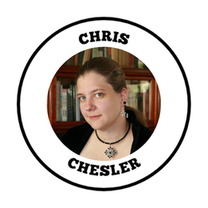 Inspired by first-hand experiences, Chris Chelser writes dark paranormal fiction about ghosts, monsters, history and the human soul. Preferring dark stories to ‘happily ever after’ since she was a child, she began writing in her teens and never stopped. She lives in the Netherlands with her family, and with the demons under her bed, which have inspired The Kalbrandt Institute Archives series, her novel The Devourer, and other work still stewing in the murky depths. Website: www.chrischelser.com Twitter: www.twitter.com/chrischelser THE KALBRANDT INSTITUTE ARCHIVES – BOOK I: HAUNTINGS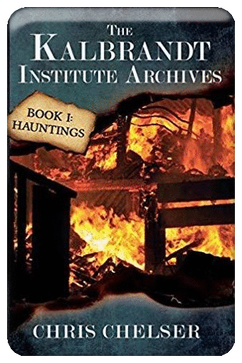 It’s her first day, and the Institute’s vast collection of rare books and ancient artefacts is already whispering to her. Here, Eva’s psychic ability to ‘read’ objects on touch isn’t weird. It is why they hired her. But the reports in the archives contain more than she bargained for. Watching through the eyes of her long-dead colleagues, Eva discovers the dark reality of her dream job: how long before she, too, becomes a memento in her boss’s collection? Amazon (paperback & Kindle) Smashwords (epub, mobi & more) THE KALBRANDT INSTITUTE ARCHIVES – BOOK II: MONSTERS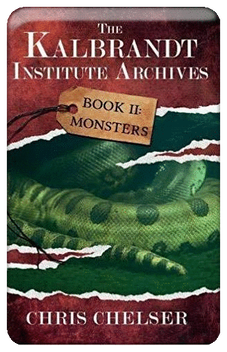 Several months after her first encounter with the archives, Eva's training relentlessly pushes her psychometric ability to the limit. While digging for memories hidden in fossilised bones and ancient documents, she discovers the true purpose of her job, and any hope she had of leaving is dashed. With the help of a new ally, Eva exposes disturbing facts about their boss. Unable to escape his grasp, they will have to find another way to fight back. Because there can be no doubt that they work for a monster... Amazon (paperback & Kindle) Smashwords (epub, mobi & more) Note: All my books are permanently free on Smashwords! 
Comments are closed.
|


Archives
May 2023
|
 RSS Feed

|

|