

 Gray Williams is the author of supernatural thrillers The End of the Line and Strange Ways. Born in Glasgow and raised in Southampton, he studied Creative Writing at Bath Spa University and has had short stories published in Abyss and Apex, Electric Spec and the Something Wicked 2013 anthology. He devours both crime thrillers and fantasy, so naturally wanted to combine the two in his writing. He now lives in East London with his wife (who fell in love with him after reading an early draft of one of his short ghost stories), where he writes, works (very different) and always gets his haircut three weeks later than he should. WEBSITE LINKS https://twitter.com/gray_books https://graywilliamsbooks.com/ https://www.amazon.co.uk/Gray-Williams/e/B07V7FYWK7/ There are whole panoplies of folktales, myths and legends we know little about or are misinformed on, having re-interpreted them through Western viewpoints. I’d love to start seeing more stories with other ways of looking at the world from people who have grown up immersed in those cultures or experiences. Could you tell the readers a little bit about yourself? Hi, I’m Gray Williams and I’m the author of two supernatural thrillers, The End of the Line and its sequel Strange Ways. Both are set in the real world with one crucial difference, magic is real, widespread and illegal in the UK. My books follow heist-artist, Amanda Coleman, as she deals with terrible demons, magic-wielding criminals, warded cops and hex-dealing politicians. I live and work in East London and I’m a big fan of horror, fantasy and SF in all its forms. And I’m happy to be here! Which one of your characters would you least like to meet in real? That’s an easy one. Reeves, the demon in my first novel, The End of the Line. Even in chains he’s horrifying. When I set out writing him I had one central concept ‘what if Hannibal Lector had psychic powers that he could use from within his glass cell?’ Safe to say the answer was terrifying. I loved writing him, with his mocking, uncaring malevolence and I relished coming up with gruesome outcomes for those who crossed his path but in real life I’d hate to think of how quickly he’d go through a lot of people. Unsurprisingly, mind control related deaths aren’t actually at the top of my bucket list. Other than the horror genre, what else has been a major influence on your writing? I’m a huge fan of crime fiction. I’ve been reading mysteries, procedurals, thrillers and whodunnits for as long as I can remember. There’s so much fun in the ‘detective with a case to solve’ model of story telling. The world starts with something wrong and our hero seeks to follow the clues to bring criminals to justice and order to chaos. It’s a great and satisfying frame work for a plot and detectives get to travel through all walks of life from penthouses to slums. Though, of course, when I started writing my books, I wanted to focus on the other side of the divide. Literature already has its Harry Dresdens, Peter Grants and Felix Castors, I wanted to write about the people who give those characters headaches. I wanted to write about the criminals who cause the chaos. The term horror, especially when applied to fiction always carries such heavy connotations. What’s your feeling on the term “horror” and what do you think we can do to break past these assumptions? Horror is like every other genre, there are great examples, there are terrible examples and there are different flavours for a variety of moods. There are horrors we go to for a proper scare, some we go to because they make us think and others because we want to sit back and have a laugh at the dodgy acting and the visible strings. Horror, for me, is all of those things and they all have their place. But the great ones, the ones that stick with me, are the ones that externalize a human struggle. Whether its grief, racism, greed, whatever, when they’re done right, the writing is top-notch, the acting, the atmosphere, wow. But that said, during virus lockdown here in London, my wife and I have taken to having a drink of a Saturday night where we sit back and watch some of the most recent Nicholas Cage films (his ongoing post-2017 ‘I need the money, I’ll do anything’ period). They might not be perfect but isn’t that the point? They make us smile! There are those who dismiss horror, who dismiss it all as crass, and when they think of it, they only see Nick Cage and splatter gore. How do we break past their assumptions? I say to hell with those people. We don’t need to please them. Even when a work comes out that does impress those people, they turn it around and say ‘well if I like it, it must not be horror’. They just appropriate it into another genre they do like. Who has time for that kind of snobbery? Horror is about reflecting the world back on itself and about having a good time and it doesn’t necessarily have to do both simultaneously. Every horror writer out there should just do their best and make the art they want to see in the world. Let the haters hate. Why do we want their approval anyway? A lot of good horror movements have arisen as a direct result of the socio/political climate, considering the current state of the world where do you see horror going in the next few years? There are a few facets of today’s societies that I think we’ll be seeing more of (and I’ll be fully welcoming). We’re having more horror that looks at racism, Get Out was great, Lovecraft Country is on the way to HBO and the trailer looks incredible, and I think that’s a good thing. Though not all writers of colour should feel the need to write about racism, those who do are a valuable voice and their perspectives should be welcomed. There’s the poverty gap and privilege. I think we’ll be seeing more interest in the wealthy and the way they look to the rest of us as disposable. That dehumanizing we’re seeing from them is already terrifying to witness on the news (‘human capital stock’, anyone?). We love to see rich people be naughty, now, with their forcing people to go out and work during a pandemic to protect their bottom line, I think people will want to explore this mentality of sacrificing the many for the sake of the few. Also, cults. We’ve seen a lot of groups in the news and on social media who ignore rigorous scientific evidence and who whole-heartedly throw themselves into conspiracies about 5G, vaccinations, the flat earth and Deep State. I think we’ll be seeing more of that in horror. Protagonists facing villains or groups who cannot change, or refuse to, despite our efforts, and evidence, continue down destructive paths, blinkered to the consequences. Given the dark, violent and at times grotesque nature of the horror genre why do you think so many people enjoy reading it? Because stories, if they are anything, are playgrounds. They allow us to explore hypotheticals without any real danger. Lots of people are picking up Stephen King’s The Stand again because they want to inhabit the idea of what the world might look like if a virus outbreak hit biblical proportions and consider how they themselves might react. Isn’t that why The Walking Dead was so successful? Haven’t we all had that conversation about what we would do, where would we go, if zombies happened? What, if anything, is currently missing from the horror genre? As I said earlier, we need more writers from different backgrounds, whether that’s in regards to race, ethnicity, gender, sexuality, neurodiversity or anything else. There are whole facets of the human experience that have only been written about at several steps removal. There are whole panoplies of folktales, myths and legends we know little about or are misinformed on, having re-interpreted them through Western viewpoints. I’d love to start seeing more stories with other ways of looking at the world from people who have grown up immersed in those cultures or experiences. What new and upcoming authors do you think we should take notice off? I’ve just enjoyed Mexican Gothic by Silvia Moreno-Garcia. I’d loved her previous book, Gods of Jade and Shadow. Mexican Gothic is set in 1950s Mexico where a young woman must visit a secluded mansion to investigate the poisoning of her best friend. The prose was immaculate and the settings and themes were great. It was a book that I could really sink into and a great addition to gothic fiction. I also recently discovered P. Djèlí Clark and his story A Dead Djinn in Cairo and I’m super intrigued. Steampunk, supernatural, Egyptian noir? Sign. Me. Up. Are there any reviews of your work, positive or negative that have stayed with you? I try to avoid reading reviews. The crushing disappointment I feel at a bad review is always far worse than the elation of a good one. So I try to stay away from it altogether. What aspects of writing to do you find the most difficult? That’s a tough one. The elements I take the longest over are human responses, I think. When I’m dropping a character into a situation, revealing some devastating new piece of information to them, I always have to give their reaction serious thought. I try to think about their background, their upbringing, how they see the world and how their experiences have shaped them. Then I try to apply that looong thread to the present moment. Would they be angry? Tearful? Shocked? Suspicious? And how would they deal with those emotions? Would they hide them? Deflect? Let them show? Humans are complex creatures and getting that reflected on the page is a delicate operation, but when you get it right, it pays dividends with the reader. Is there one subject you would never write about as an author? Sexual violence. Just no. Writing, is not a static process, how have you developed as a writer over the years? There were years when I was writing and only I and a few close friends were reading my work. That was when I developed my voice, my style and decided what subjects and themes I wanted to write about. Then I met my agent, who is a narrative genius, and she helped hone my stories to make my tales into novels. She helped teach me how to better bring out my ideas and make them better understood, more compelling and more entertaining for readers. Now I’m a published author and I’m starting to see for myself how readers react to stories in a new light. They’re a harder bunch to please then you think! So I’m still learning and developing. What is the best piece of advice you ever received with regards to your writing? Just try your best to describe the picture you see in your head. Do that well and you’re almost there. Which of your characters is your favourite? I like writing my main character, Amanda. She gets to say things and react in ways that I don’t have the nerve to do in real life. Plus, planning a job or a con for her to get involved with is fun. Which of your books best represents you? I’ve no idea! I’d probably say my latest, Strange Ways. In some small ways it has its feet set more firmly in what’s going on in the world today and holds a bit more of my feelings toward them. Can you tell us about your last book, and can you tell us about what you are working on next? Strange Ways follows on after The End of the Line. I decided that if I was writing about criminals in a world filled with magic, it was only fair to explore the idea of sending them to wizard prison. This book starts with Amanda in regular prison having been caught during a botched bank job. She’s quickly blackmailed by someone on the outside who has evidence about her involvement in the events of the previous book. To assuage them, Amanda must get herself sent to Coldwater, the notorious island prison for magic-users, in order to assassinate one of the inmates. It’s a proper thriller and there’s a lot of weird magic and action from start to finish. I’m playing with a few ideas for my next project, but I imagine it’ll be a while before you see the results! Let’s just say I’m writing a scene with a very interesting monster rampage at the moment. If you could erase one horror cliché what would be your choice? Characters splitting up or wandering off alone. I’ve played so many RPGs with friends and I’ve never had a party split up when things get scary. There’s strength in numbers, people! You got some other pressing engagement you need to be at? If something bad happened to me, if I needed to visit a haunted house or something, I’m bringing my closest twenty or thirty friends. Who, especially when they’re scared, would let themselves be alone? What was the last great book you read, and what was the last book that disappointed you? I’ve already talked briefly about Mexican Gothic. I also really enjoyed The Fisherman by John Logan. It was a very American tall-tale, and the novel said and did so much in so few pages. Gorgeously weird, it tapped into some great elements of horror. It’s about two fishermen who go to a secluded creek that, rumour has it, puts people in touch with the dead. Weird things happen. It was great. Loved it. I’m afraid I don’t talk about the books I don’t like. I certainly wouldn’t like it if someone did it to me, so I don’t do it to other people. What's the one question you wish you would get asked but never do? And what would be the answer? Can I buy your book in both ebook and audio? The answer, friends, is yes.  No magician has ever escaped Coldwater Prison.But that is exactly where Amanda Coleman, heist artist and Abra-killer, must go. Somewhere in London, a mysterious blackmailer has enough evidence to put Amanda’s head in a noose and ensure her only remaining daughter, Michaela, is right alongside her when it happens. To save Michaela, Amanda must assassinate one of Coldwater’s most infamous residents. But the only way in is as an inmate. But a notorious Abra-killer like Amanda can expect a few old enemies in a prison full of mages, and they have their own plans… A fast-paced thriller filled with magic and suspense, perfect for fans of Lauren Beukes and James Oswald. Praise for Strange Ways‘Strange Ways is a thrilling ride into a world full of dangerous magic that feels all too real. Williams is truly a master of story-telling’s darkest arts’ Mike Shackle, author of We Are the Dead ‘Different and cunning, fast-paced and thrilling, a hugely entertaining story from start to finish’ Edward Cox, author of the Relic Guild trilogy   the heart and soul of horror promotion Writers have blind spots – that’s why we can read the same typo a hundred times and not see it. Sometimes we make mistakes. This is why it’s so important to have beta readers and editors who are at the top of their game, and why we need to listen to their feedback. BIO Christopher Stanley lives on a hill in England with three sons who share a birthday but aren't triplets. He is the author of numerous prize-winning flash fictions, the darkest of which can be found spreading misery and mayhem in his debut collection, The Lamppost Huggers and Other Wretched Tales (The Arcanist, June 2020). He’s also the author of the horror novelette, The Forest is Hungry (Demain Publishing, April 2019). Could you tell the readers a little bit about yourself? I’m married. I’m a father. I have a degree in Economics and an Advanced Diploma of Proficiency in Internal Communication. I work full time in internal communication. Writing fiction is my first love. Writing, recording and performing songs is a close second—they kind of trample over each other. And horror is my favourite genre. Obviously. Which one of your characters would you least like to meet in real life and have them complain at you about they way you treated them in your work. I think it would have to be Carl, the nuisance neighbour in my novelette, The Forest is Hungry. Carl believes the rest of the world exists to serve him. He doesn’t care for social norms or for thinking things through. I’m sure he would test my patience very quickly in a work environment. Other than the horror genre, what else has been a major influence on your writing? I’ve lost track of the number of people over the years who’ve said there’s music in my writing. I don’t whether that’s true – or if it’s still true – but I suppose it comes from the amount of time I’ve spent writing songs. Perhaps I have an ear for rhythm. I don’t know. I discovered flash fiction (stories under 1,000 words) when I joined my writers group, Bath Company of Writers, and that’s been a big deal. Partly because after the twins were born, I had neither the time nor the energy to write anything longer, and partly because there are so many great opportunities to publish flash in this increasingly digital world. The term horror, especially when applied to fiction always carries such heavy connotations. What’s your feeling on the term “horror” and what do you think we can do to break past these assumptions? I know of horror writers who are uncomfortable talking about what they do. I think the conversation usually goes something like: “What do you do?” I’m a writer. “Cool! And what do you write?” Erm… I try not to worry about it. Dracula, Frankenstein, The Picture of Dorian Gray, The Haunting of Hill House, The Turn of the Screw—horror has a place in literary history that no one can take away. I also think we have a duty to keep championing the excellent work being done by current and emerging horror writers—while at the same time, promoting diverse voices—and accept that until the world bothers to pay attention, we’re the lucky ones. A lot of good horror movements have arisen as a direct result of the socio/political climate, considering the current state of the world where do you see horror going in the next few years? I’m sitting at my desk in the fourteenth week of lockdown and I honestly wouldn’t want to make any predictions for the state of the world next week, let alone in the next few years. I suppose we might see the emergence of a niche genre in the form of ‘lockdown horror’, as I suspect writers will be tempted to adopt and explore the lockdown setting, even if the story isn’t founded on a global pandemic. We might see a rise in apocalyptic fiction. And perhaps we’ll see a few more stories, like Jaws, where politics and science collide. At the same time, I think there’s still plenty of room for horror to explore tensions around race relations, sexuality and gender, wealth inequality, religious and state oppression, and our impact on the environment. These topics aren’t going away. Given the dark, violent and at times grotesque nature of the horror genre why do you think so many people enjoy reading it? People enjoy horror because it’s great! I think people read horror because they want to escape, they want to see their fears borne out in a way they can control (it’s always possible to put a book down, even if we don’t want to), and because they want to know they’re not alone in their fears. A lot of horror is also thrilling—it’s immediate and visceral, like a roller-coaster for grown-ups. What, if anything, is currently missing from the horror genre? As with most things, the horror genre needs more diversity. To keep horror rich and alive (or undead, at least), we need to hear the best of voices from around the world and from all corners of society. I wouldn’t say it’s missing from the genre, but I certainly wouldn’t take it off the agenda. In the past authors were able to write about almost anything with a far lesser degree of the fear of backlash, but this has all changed in recent years. These days authors must be more aware of representation an the depiction of things such as race and gender in their works, how aware are you of these things and what steps have you taken to ensure that your writing can’t be viewed as being offensive to a minority group? This is a terrific question, which taps into one of my greatest fears as a writer. I want the characters in my stories to be diverse. I want to test them—to put them in risky, challenging and uncomfortable situations, to find out how they respond. And I want to avoid stereotypes. But…this is easier said than done. Writers have blind spots – that’s why we can read the same typo a hundred times and not see it. Sometimes we make mistakes. This is why it’s so important to have beta readers and editors who are at the top of their game, and why we need to listen to their feedback. Does horror fiction perpetuate its own ghettoization? Labels, like ‘horror’, are useful in steering readers towards the books they’re most likely to enjoy, but they also encourage readers to neglect other genres. In this sense, does horror fiction perpetuate its own ghettoization more than, say, romance or science fiction? My answer to that would be…possibly. I used to run a club for people who were afraid of public speaking. The first rule of ‘Talk Club’ was that you have to talk. Lots of people experience a fear of public speaking and lots of people signed up to attend to the club…but not many came along. I think we have to accept that a lot of smart and rational people will steer clear of things that frighten them, and that’s what the horror genre is famous for. What new and upcoming authors do you think we should take notice off? I started reading horror again about five years ago, so I’ve had the joy of discovering many fantastic authors who are new to me…but I doubt they’ll be new to horror fans. That said, I read Lucy McKnight Hardy’s Water Shall Refuse Them and Andrew Cull’s Remains last year and both novels are written with such skill and assuredness, I’m excited to see what they publish next. Also last year, I was asked to provide a blurb for Nial Giacomelli’s debut, The Therapist—a haunting and exquisitely-written story about—you guessed it—a mysterious epidemic sweeping the globe. As a horror fan, I can honestly say I was gripped by every page. What are the books and films that helped to define you as an author? So many books, so many films—where do I start? Danielewski’s House of Leaves was the book that made me want to be a horror writer, more so than any book I’ve read before or since (although King’s The Shining is a close second). I don’t think either book defines me, but they certainly got under my skin and inspired me. Are there any reviews of your work, positive or negative that have stayed with you? The writing community is tremendously supportive, especially for a relative newcomer like me. The last review I read was for my debut novelette, The Forest is Hungry, in Kendall Reviews. The opening paragraph was “Demain Publishing has put out so many stunning releases with their stellar Short! Sharp! Shocks! series that you’d be hard pressed to pick out an absolute best. Saying that – what I read with ‘The Forest is Hungry’ would be a strong contender in that category.” This sort of feedback makes it all worthwhile. What aspects of writing to do you find the most difficult? Everything after the first draft. Developing the characters, choosing the locations, creating the plot, crafting the language—it all seems impossible until it’s finished, and when is a story ever really finished? The first draft is the easiest thing to write, and it’s also the least satisfying. Is there one subject you would never write about as an author? Semolina. I read a horror story about semolina as a child and I’ve never eaten it again since. I wouldn’t do that to anyone else. How important are names to you in your books? Do you choose the names based on liking the way it sounds or the meaning? I tend to throw in any old names when I write the first draft and then change them all to something completely different in the final draft, so the story feels fresh. It’s a great way of creating distance, which helps me be more objective when I review the story. What is the best piece of advice you ever received with regards to your writing? The best advice I’ve had wasn’t specifically in connection with my writing but it certainly helped. And it’s simple: always try to be better. Do you have a favorite line or passage from your work, and would you like to share it with us? I’m lucky in that people often quote lines of my stories back to me when they’ve read them, and it’s always a pleasure to see what lines have captured their imaginations. I don’t have a favourite line or passage but, back in May, I finished fifth in the latest Molotov Cocktail contest with a story called ‘After the Ghosts’. If you don’t mind, I’ll quote a line from that: “In horror stories, we’re taught that ghosts are anomalies—lost and lonely, limping down dimly lit corridors, scraping nails across chalkboard walls, faces twisted in pain, mortal wounds visible for all to see. In reality, they were young and vital—friends and families restored to their prime.” The rest of the story is available to read for free here. Can you tell us about your last book, and can you tell us about what you are working on next? The Lamppost Huggers and Other Wretched Tales was published by The Arcanist on 1 June 2020. It’s a collection of my darkest and weirdest flash fiction stories from the past five years, including several competition winners. Flash fiction is a fantastic vehicle for horror because it’s possible to play with all-kinds of ideas that perhaps couldn’t be sustained in the longer form. I’ve just started writing my first novel—a horror novel—although it’s way too soon to say much about it yet. I’m aiming to have a first draft completed towards the end of the year, but who knows whether the world will last that long...? I’ve also had a mini-collection of short stories accepted by Demain Publishing—I can’t say any more about this at the moment, except there will be announcement in due course. What was the last great book you read, and what was the last book that disappointed you? I’ve read some fantastic books this year but I think A Head Full of Ghosts by Paul Tremblay and Starve Acre by Andrew Michael Hurley top the list. I’ve also been enjoying Ellen Datlow’s Best Horror of the Year series. I’m not going to talk about disappointing books—everyone has their own tastes, and it’s so damned hard to get anything published, authors deserve support and encouragement.  The man trying to make sense of his life now that his demon has been exorcised. The woman who knows her son has been taken, even as he sits by her side. The scorned professor who’s found a missing work from The Planets Suite. Christopher Stanley’s debut flash fiction collection, The Lamppost Huggers and Other Wretched Tales, boasts an impressive assortment of characters trying to make sense of a world gone horribly wrong. The darkness here is home to vampires, werewolves, witches and ghosts—but it’s the monsters you’ve never heard of that should worry you the most. READ OUR REVIEW BY BEN WALKER HERE THE HEART AND SOUL OF HORROR PROMOTION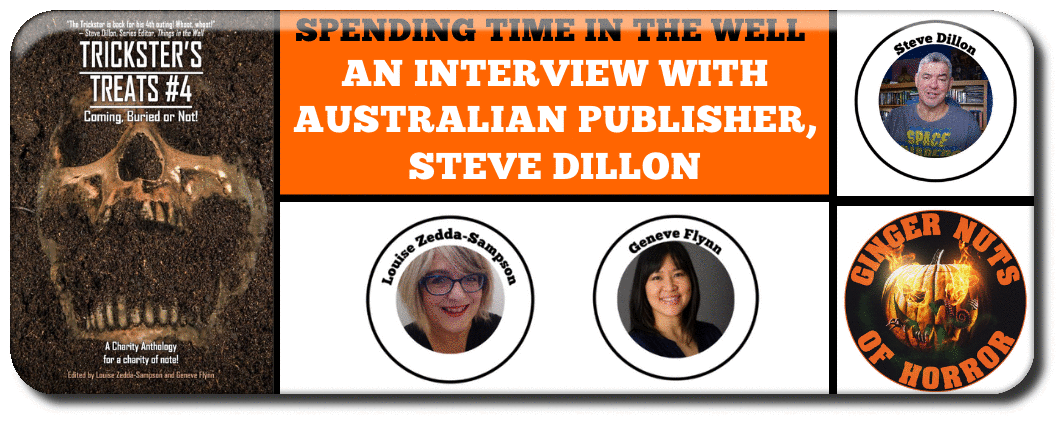 Steve Dillon is the publisher of Things in the Well – an indie Australian press that produces charity anthologies and single-author collections. Steve has been publishing since 2014. Things in the Well is the latest imprint and has produced close to 30 books with many of them, and their individual stories, nominated for and winning awards; it’s a small press doing big things. Award nominations in 2020 have comprised multiple Bram Stoker Awards, Aurealis Awards, Australasian Shadows Awards and a Shirley Jackson award, with the latter being for Steve Dillon’s novella, ‘Deeper, Darker Things.’ Steve’s anthologies have included stories by world-renowned horror writers such as Ramsey Campbell and Clive Barker. It’s not unknown either for a Lovecraft, Poe or Shelley story to have slipped into one of the earlier collections. Louise Zedda-Sampson and Geneve Flynn talk to Steve Dillon about Things in the Well. Thanks, Steve, for talking with us. How many authors do you think you’ve published? Steve: Hundreds, certainly, but the great thing is I’ve read even more. Each submission call often attracts hundreds of stories, mostly from authors I’ve never read before, some of whom have had successes with me or elsewhere, and others who I hope will achieve their successes one day. I try to give the right feedback where I can, offering suggestions or encouragement even with my rejections (when I have time) and have hopefully given a leg up here and there. One of the most memorable was when I published a Charles Dickens story in Between the Tracks. Dickens’s ‘The Signalman’ was out of copyright, but I tracked down and emailed his great, great, great granddaughter, who graciously replied to thank me because I’d asked her blessing to publish it. That was a real ‘lump-in-the-throat’ moment for me, and publishing gives me many of those moments. Things in the Well is also known to encourage and nurture new authors. How has your vision for Things in the Well grown as you’ve filled out your publishing catalogue? Steve: After having some success pulling together a book dedicated to Clive Barker’s Nightbreed/Cabal Cut (The Book of the Tribes, 2014), I was confident (and audacious) enough to aim for the highest quality right at the outset, which led to my publishing The Refuge Collection books (36 interwoven stories) between 2015–2017. I’d approached Ramsey Campbell first, then Clive Barker’s folks. I was allowed the use and modification of a Ramsey story, setting it in the fictitious shared world of Refuge, and also allowed to use and modify the Hellraiser LeMarchand box design, thanks to the original designer, the late Simon Sayce. I also incorporated aspects of the Hellraiser mythos into the Refuge story arc. Additional support flowed in from established and emerging authors, all recognising the value of the cause (to aid refugees). Things in the Well was a natural extension, the first idea being to create a railway-themed anthology (Between the Tracks, 2017) which again garnered the support of Ramsey Campbell and Clive Barker. Christopher Golden joined the ghost train, which just kept rolling from themed book to themed book, eventually forming anthologies in the first series, and many more since. The vision hasn’t really changed. I want to unearth older stories (and their authors), and present these alongside more recent stories (and less well-known authors) to both new and established readers of dark fiction. Things in the Well have an impressive list of award nominations and wins—congratulations! Steve: Of course, awards are fantastic; even to be nominated or shortlisted is a huge kind of validation that we’re doing something right as an author or editor or publisher. I’m proud of all the folks who’ve lifted the trophies, or come close to it, whether they’re for a Things in the Well publication or others. But as Jesse Owen said, ‘Gold will tarnish and the ink will fade, but what matters are the dear and good friends you make along the way’—and I’m delighted to say I’ve met some wonderful people who support me or my little crazy publishing company. Thanks to every one of my tribe for that support! And you know, when people come to me with a story they’d like me to publish, or a collection, or ideas for an anthology, (like you did with Burning Love and Bleeding Hearts, Louise!) or even asking me to co-edit with them, I’m always thrilled and flattered, although lately I’ve had to start turning opportunities away, which is regretful, but I’ve had to do it because I’m feeling like Bilbo Baggins at times, when he said he felt like butter that had been spread too thinly… You’ve produced many anthologies that support important charities. What led to this decision? How do you choose which charities to support? Steve: The Refuge Collection (2015–2017) was in response to the tragedy of the global refugee crisis, and was an attempt to help in some small way, and the books (with the help of 40 contributors and collaborators!) led to Sanctuary Australia Foundation being able to financially support the reunification of three refugee families from war-torn and famine-ridden countries, showing that we could use fictional horror stories to help those living real-world horror stories. Since then the charities have been chosen based on urgency, the latest being to support the Mental Health Foundation of New Zealand and the Save the Children Coronavirus Response. Then there’s Trickster’s Treats #4 coming up, of course, which will be for another cause, the Indigenous Literacy Foundation, and that great cause was chosen by the editors. When the coronavirus restrictions hit Australia around March, your reaction was to create an anthology to support the Save the Children Coronavirus Response. This submission call, only open for two weeks, turned into a two-volume set—Infected #1, Tales to Read at Home and Infected #2: Tales to Read Alone—because of the number of submissions received. At the time, you were also working with Tabatha Wood on the anthology Black Dogs, Black Tales. How did you find the time, and why was this important for you to do? Steve: Pulling a book together over several months is a huge amount of work. Doing two at once from my sickbed during the great pandemic was a bit over-zealous, but in retrospect I think they will be the books that people will most remember. I feel they’ve really captured a moment in our lives when mortality encroached on us all. When we all felt we might die as one collective race. I think when bad news hits, it’s important to find a way through that, and helping others is a proven way to do that. Otherwise, I think I might have curled up into a ball of depression, to be honest. What is in progress at the moment and what open calls do you have? Steve: I'm compiling my third (perhaps final?) collection of short stories and poems called Unholy Beginnings and Unhappy Endings which is a hotchpotch of styles, themes, story lengths, ideas, and so on. Some are reprints, many are newly imagined. All are dark. It's actually ready to go but I'm waiting to hear back on a few stories that have been submitted elsewhere to decide if they will be included. I'm also helping Eugene Johnson with Tales of the Lost 2, which is an invitation-only anthology and includes several internationally renowned modern Masters of Horror as well as some homegrown talent from Australia and elsewhere. There's also Lee Murray's seminal collection Grotesque Monster Stories, which is fabulous and includes a new Taine McKenna adventure among other great stories. I'm really proud that Lee chose Things in the Well to publish this one. I'm putting together what might be my last edited anthology, Outback Horrors, which comprises solely of stories from some of the best writers in Australia and New Zealand. And, of course, there will be a fourth outing for the Trickster in October! What’s next for Things in the Well? I think after this rather exhausting year I might be closing the book on Things in the Well. It's been a dark ride on a ghost train through scary places I never knew existed. But now I need to find something that energises me. Be that focusing on my own writing and painting, or poetry, or just reading, swimming, sightseeing, and generally enjoying life, I'm not sure yet. Who knows, I might squeeze out something next year, but if I do it will be very different to anything I've been involved with to date. Thanks, Steve, for taking time to chat with us. You’ve done some great things in your writing, editing and publishing career and we look forward to seeing what you (and the Trickster in you!) get up to next. Submission details for Trickster’s Treats #4: Coming, Buried or Not! below. Submissions Submissions open 15 July and close 31 July AEST. Tricksters Treats #4: Coming, Buried or Not! will be edited by Louise Zedda-Sampson and Geneve Flynn. For this call, we’re looking for things that have been buried, should be buried, could be buried or need to be buried. Undead or barely living? Sure! Buried treasure or buried secret? We want to see it. Whatever it is, dig it up or tamp it down. An element of your story must include the ‘buried’ theme. Scare us with frights, blights, wights, or anything that bites. It is, after all, for Halloween. You can find the submission requirements at https://thingsinthewell.wordpress.com/open-submissions/  the heart and soul of horror reviewsFIVE MINUTES WITH CHARLOTTE PLATT
30/6/2020
 Charlotte Platt is a young professional based in the (very) far north of Scotland writing horror and dark urban fantasy. She was born in Lancashire, grew up on the Orkney Islands, studied in Glasgow then moved up to the north Highlands. Other than writing she enjoys tea, sarcasm and walking near rivers or the sea because that’s where you find interesting things. Charlotte presented the pitch for her debut novel A Stranger’s Guide at the London Book Fair 2019 Write Stuff competition and this is now available via Silver Shamrock Publishing. Amazon - https://www.amazon.co.uk/-/e/B07VQGBC4G Curious Fictions – https://curiousfictions.com/authors/484-charlotte-platt Twitter - @Chazzaroo Could you tell the readers a little bit about yourself? I’m based at the very top of the map in Scotland and live with my fiancé who is long suffering. I travel back and forth to Orkney regularly, so I get to write during ferry rides - weather depending, I’m still not great on a boat despite having grown up on an island. I work in the legal sector outside of writing and am constantly listening to one podcast or another, which office work is great for. Why horror? What is appeal of the genre to you as both a fan and as a writer? As a fan, I like how raw and vicious horror can get without feeling the need to pull punches. We’re allowed to see the grubby underbelly that comes with horror much more readily than you are even with some crime and noir genre work, and that was always the most interesting areas for me. As a writer, it’s fun. I like getting to create creatures with unfathomable motivations or chaotic, unreasonable cult leaders only out for themselves. There’s a lot of freedom in horror because you’re not expected to pull your punches, unless it’s going in a totally different direction and coming round the back. I also thoroughly enjoy getting to play with conflicted characters which horror lets you access in a more interesting way than literary work usually. As LBGTQ+ fan and writer of horror, how did you when you first became immersed in the genre and found that representation that you could identify was few and far between? It wasn’t a huge shock – outside of titillating scenes smattered here and there, there wasn’t a huge amount of representation for me anywhere growing up, so I was great at diving into head canons and finding my own narratives. I had the same thing being the child of someone who became disabled – I can’t explain how toxic it is to a young person to see every piece of representation reflects you or a loved one ending up dead, either “nobly” or out of misplaced “sympathetic” narratives. How did you discover authors that wrote about characters that you could relate to? I was quite lucky in that I dove into Clive Barker pretty early, and I was a massive goth as a teen so Anne Rice was a must. It was pretty easy to get recommendations in that social circle as all the LGBTQ+ (out and not) kids grouped together and swapped info. Other than the horror genre, what else has been a major influence on your writing? Poetry, especially Fleurs du mal and some of the old classical like The Highwayman have certainly had an influence as there’s a lushness about the descriptions. Pablo Neruda as well, his examination of people is wonderful, and I love dipping back into Twenty Love Poems and a Song of Despair. Genre wise, crime, fantasy and cyberpunk have all been a significant element in my reading and I think this shows in my writing as well. I’m always keen on a gritty protagonist and like the reoccurring themes that come up often in these areas, though I tend to lean in more with monsters and ghosts. The term horror, especially when applied to fiction always carries such heavy connotations. What’s your feeling on the term “horror” and what do you think we can do to break past these assumptions? Personally I love horror and darker stories because it lets us examine ideas with a new lens, and I think there’s a line to tread there. Some horror is just designed to be disgusting and that’s no bad thing, it is what it is and does its job well. Some things should be repulsive. I like the wide reaching swathe horror covers and I think we should be willing to acknowledge the weird fiction and thriller aspects of that which sometimes get left out (marketing wise, at least). I think one of the ways to break past it is representation, having a wide variety of representation makes things more accessible, and we’ve seen great steps with films like Get Out in doing that. I would like to see people being able to discuss what works or doesn’t work for them in a piece without being a moral or pride mark – filtering your experiences can be useful for some people and that’s natural. There can be quite a “tough” culture about being able to watch a certain level of gore or other things and it gets boring. A lot of good horror movements have arisen as a direct result of the socio/political climate, considering the current state of the world where do you see horror going in the next few years? Well I suspect we’ll have another bunch of English language remakes of rec. which is a shame because the original is so good (subtitles are your friend!) Pandemic jokes aside, I do think we’re going to get more horror comedy because you may as well laugh at Armageddon, and more stories focused on scarcity and isolation, especially water scarcity. I would love to see a proper version of I Am Legend that looked at some of the themes without trying to soften the bleakness of the book, I feel like that would be great to have around right now. What are the books and films that helped to define you as an author? Books: the Hannibal series by Thomas Harris, The Ring by Koji Suzuki (translation, alas), Rebecca by Daphne du Maurier, The Suicide Kit by David L. Hayes and Ubik by Philip K. Dick. Also The Crow by James O’Barr which is a of course a graphic novel. Films: The Wicker Man (I know everyone says this one but growing up on an island it hits different!), Franklyn, The Thing (and the prequel too), The VVitch and rec (original not the English remake) In recent years there has been a slow but gradual diversification within the genre, which new LBGTQ+ writers do you think we should be paying attention to? Betty Rocksteady (not quite new but amazing, I love her stuff), Tabatha Wood and Cassie Daley. I’ve shared TOC with Betty and Tabatha and find them both wonderful on Twitter, and I’ve only interacted with Cassie through Twitter but she’s fabulous and recently started getting published so very much one to look out for. How would you describe your writing style? Goth and aggressively weird with a side of trauma processing. Are there any reviews of your work, positive or negative that have stayed with you? I got one particularly vicious review where the person wanted the story to be a different story entirely, and wanted changes to make it that way. That one stuck with me because it was so clear they didn’t want what I’d written but insisted on the changes. What aspects of writing to do you find the most difficult? Keeping hold of “plot bunnies” – I can get several ideas I want to pursue at once and keeping them corralled until I can work on them and give them the right level of enthusiasm is not easy. But if I do more than 3 projects at once I get burned out, so has to be done. Are there any subjects that you would never write about? Probably infertility – there’s so many ways to get it wrong, and I don’t feel like making that particular pain salsa without giving it the emotion it deserves. It’s often made into alienating or reductive narratives which ignore the emotional weight of the matter to replace it with yearning or othering which just monster reasonable grief and difficult inevitabilities. I have written stories with a loss of pregnancy before, but I think infertility itself is a different branch. Writing, is not a static process, how have you developed as a writer over the years? I’ve gotten better at working on multiple projects so I don’t get antsy with doing just one – I used to be terrible for falling out of love with one because I wanted to work on another. I am also much more aggressive in my editing which I think comes with practice. What is the best piece of advice you ever received with regards to your writing? You can’t edit a blank page so write it wrong then fix it later. Getting your worked noticed is one of the hardest things for a writer to achieve, how have you attempted to break through the barriers that are so often in place against LBGTQ+ writers? Honestly I have a thick hide for rejection so mostly brute force? That and just being upfront with the character’s orientation in text, be it explicit or implied through relationships in text (though my preference is explicit). I’ve had a few pretty othering experiences with some of my works but I don’t think they’ve been any worse for me being bi than they would have been for me being female, and the few instances where there’s been a blatant instance of biphobia I’ve been supported in challenging that. Many CIS white male authors use LGBTQ+ characters in their works, what’s the mistake that they make when trying to portray these characters? Assuming non-straight attraction is the same as straight attraction with the same relationship tropes, a la “which of you is the husband” etc. I can find that takes me out of a story completely because it’s not my experience or that of my close friends. Moving on to getting your work read, what do you think ins the biggest misconception about LGBTQ+ fiction? That it’s all about the sex – so many people seem sure we’re going to stealth in a mass orgy into every tale we tell. I’ve written a wide variety of LGBTQ+ characters and only a few have any sexual elements. One of them may in fact have been an orgy but that was essential to the plot. There are as number of presses dedicated to LGBTQ+ fiction, do you view these as a good thing, or do you think they help to perpetuate the ongoing exclusion from mainstream presses? I can see why people worry about the exclusion element but I feel it’s a good thing – if only because I can go to one of those presses and know I can access fiction where I’m not likely to encounter thing like “kill your gays”, “mandatory homophobia to show how much this character suffers” and “I kissed a girl plays in the background while two cheerleaders make out for the boys” tropes. Very tired of those. Do you agree with movements like this and things such as Women in Horror Month? If so how would you like to see sites such as Ginger Nuts of Horror tackle diversity? I do, I think it’s a good thing. I know I specifically considered using only my first initial when publishing my work because there’s still a view that women don’t really “do” horror or that it’s not really an LGBTQ+ space (despite Clive Barker, really?). I think it helps people feel comfortable about being open if they’re in the position to be, and I have to feel that’s a good thing. In relation to tackling diversity, as above I think representation is the best way to do that and giving space to voices is my preferred way to do that. And listicles of books/resources – who doesn’t love a good list of books to buy? The most common phrase you hear when people object to active movements to encourage all forms of diversity is “I don’t care about the sexuality, gender, color etc etc of the writer I only care about good stories” what would you like to say to these people? That’s great for you, the rest of us have to. It’s not a choice for everyone outside of the club. I used to explain it with the analogy of “straight bars” – where are the places it’s explicitly labelled as safe to be straight? Nowhere, it’s just safe to be. We have to have specially labelled spots, and even then a hen party might ruin a good vibe. You can refuse to care about creed and colour as much as you like but it’s privilege to do so. To many writers, the characters they write become like children, who is your favorite child, and who is your least favorite to write for and why? Favourite would have to be Faith, who is a side character in A Stranger’s Guide – she doesn’t get a huge amount of stage time in this book but I have a very clear voice for her and she will be coming back in the future. Least favourite is probably Stan in the book I’m currently working on – he’s demonic and is so cruel in thorough, vicious ways. He always tells the truth, particularly when it’s painful, and he’s constantly beside Shona is her investigations. What piece of your own work are you most proud of? A Stranger’s Guide – I have a grumpy, disaster bi main character and a variety of other LGBTQ+ characters as well as some wonderfully vicious things happening. For those who haven’t read any of your books, which of your books do you think best represents your work and why? A Stranger’s Guide is my first novel so that’s the only one I can say here. I think it represents my work well though, especially with the nature of Carter – I like my lead characters with a dose of nihilism and there’s certainly a noir influence there. Do you have a favorite line or passage from your work, and would you like to share it with us? Most of my proper favorites would be spoilers so I will hold off of those, but I do like the following description of one character Carter finds: “She shone like she was made of smoke and light. The shadow of wings that weren’t quite there hung huge over her shoulders. Her face was beautiful if a little hard, a quickness to her eyes that spoke of mistrust. She kept shimmering between looking normal and this glowing, amazing thing.” Can you tell us about your last book, and can you tell us about what you are working on next? A Stranger’s Guide is my first and latest book, which is the story of Carter Brooks coming to Glasgow to look for his missing sister. He has a terrible time. Carter doesn’t enjoy the fact he’s magically gifted, and he has to use said gift to try to seek her out with the help of the people she left behind. It was a brilliant book to write as I love Glasgow, having lived there for five years, and the city is so much fun. I’m currently working on a story based in Inverness and the Highlands and Island. This also involves some searching, as the lead character is a PI, but she’s haunted by a demon clown only she can see. Which makes the work so much easier. What was the last great book you read, and what was the last book that disappointed you? Last great book was The White Hotel by DM Thomas – I came really late to this book but it’s fabulous and visceral. The last book that disappointed me was The Ritual by Adam Nevill – this one seems to be a very marmite book and I was on the hate it side of the divide, it just didn’t gel for me. I was really looking forward to it as Nevill is a brilliant writer, but I just couldn’t get into it. What's the one question you wish you would get asked but never do? And what would be the answer? Why so many of my characters are coded as having some type of neurodivergency. My answer would be because there’s a wide selection of nerodivergent people in the word, and a lot of them may not have an official diagnosis (or want one, given the treatment of divergent people in the news) and I want to offer representation for that. It’s something I feel passionately about and while coding is not explicit I would hope people recognize traits of themselves in my lead characters.  Being able to see what you shouldn’t is useful, sometimes.Carter Brooks is new to Glasgow and looking for his sister, Sarah, who went missing three weeks ago. He must rely on the help of her friends, mentor, and the unusual diary she was investigating to track her down.As he navigates the supernatural beings within the city and discovers the life Sarah was hiding from him, Carter is obliged to use the gifts he’s rejected to uncover why someone would want to hurt her. This drags him into the path of an old and hungry god, who abducts Carter in his sleep to offer help at a steep price. With the promise of continued interference and the taunting reminder that Sarah’s time is running out, Carter must choose who to trust and what to believe before he loses her forever. THE HEART AND SOUL OF HORROR PROMOTION WEBSITES Katie has failed at a lot of things in life, but has turned out to be quite good at writing - which is fortunate because she rather enjoys it. Her interests are history, 'what if?' speculation (Sci Fi, Alternate History), and politics. She also has a long standing love of New Zealand, and emerging interests in naval and LGBT+ history. In her day job she is a business analyst for a local employer, which is also fortunate as it lets her get paid for asking difficult questions about implausible hypothetical scenarios. Katie lived overseas for a while and once stood for Parliament, but neither of these things stuck. She enjoys writing about less well known times and places, but especially about less well known people. It is her ambition to write marginalised voices back into history. She currently lives in a flat in Birmingham, UK with her long-term partner. They keep guinea pigs. All parties would quite like a garden at some point in the future, so please do buy her books. Could you tell the readers a little bit about yourself? My name is Katie, I'm 30, and I live in Birmingham, UK with my long term partner Sam and our two guinea pigs. I work as a Business Analyst, but I like to write in my spare time. When the world isn't in lock down I like to take long distance endurance walks. Why horror? What is appeal of the genre to you as both a fan and as a writer? I find that writing about things that scare me can be both cathartic and therapeutic. In my story Trapped I use the setting of a cold war bunker to explore my own fears of nuclear war, but also mental health anxiety and abusive relationship dynamics. As a reader I lean towards the more supernatural escapist side of horror fiction. Its nice to be able to switch off from real world fears, but still have that adrenaline stimulation. As LBGTQ+ genre fan and writer of horror, how did you when you first became immersed in the genre and found that representation that you could identify was few and far between? Honestly, its one of those things that is so normalised across all media and genres that it really doesn't stick out. How did you discover authors that wrote about characters that you could relate to? One of my favourite people is my friend and fellow author Lena Worwood. She's long been my 'go-to' for representation of LGBTQ+ characters. Beyond that I don't tend to specifically look out for representation. For trans women in particular there is a long history of terrible attempts at representation, through both good and ill intention. Even today you can come across awful casting decisions and characters that are little more than stereotypes. Sadly, its safer not to look. Other than the horror genre, what else has been a major influence on your writing? Digging into history, realising that people are people throughout all ages; capable of the same passions, emotions, and stupidity. Its led me in two directions, firstly in wanting to de-romanticise the past. In Travellers in an Antique Land, the story Gone With The Wind by David Flin is a great example of this. The horror in that story comes from a macabre turn of events – but the underlying ingredients, the 'true horror' if you like, comes from a deeply evil and real society build upon human slavery; one which to this day has an indecent number of apologists. History has also led me to want to discover the unknown, the forgotten, and the erased histories of marginalised people. LGBTQ+ history wasn't so much as acknowledged when I was in school, and there seems to be a long-standing assumption in popular history that 'history' itself ended in 1945. Museums and historians have done a lot of heavy lifting in allowing the post-war era to be both documented and critically understood. Even so, LGBTQ+ history, and the histories of other groups outside of the white, straight, and cis male 'norm' are still viewed as some sort of separate 'other' – much like how some bookshops have a 'Gay and Lesbian' fiction section entirely separate from the other genres. There are human stories in the past that have been forgotten or erased – all of which have led society in succession to believe that things like inter-racial marriages, gay rights, and the existence of transgender people are somehow weird and dangerous new concepts, rather than things that have always existed in society. As a writer I want to help tell these stories, to preserve both our past and our present for the benefit of the future. The term horror, especially when applied to fiction always carries such heavy connotations. What’s your feeling on the term “horror” and what do you think we can do to break past these assumptions? I don't see an issue with it in all honesty. All genres and genre-fiction carry a degree of snobbery – both towards them from literary purists, and to those outside the genre by gatekeepers. As editor and contributor to Travellers in an Antique Land, a deliberate genre-crossover, I take a 'take it or leave' it approach to culture and fiction. People can enjoy what they want to enjoy – and if they choose to self-limit within genre boundaries that's on them. Tastes vary, and I hope there is something for everyone. Talking about 'horror' specifically, I feel its such a broad genre with so many different sub-genres and styles. Any reader who approaches it with simplistic assumptions is setting themselves up as a fool. A lot of good horror movements have arisen as a direct result of the socio/political climate, considering the current state of the world where do you see horror going in the next few years? I think we're likely to see a pivot in two directions. Some people will want more escapism and utopianism, especially if things go to hell. Other people will want more dystopian fiction informed by and critiquing the the zeitgeist of the day. It will be interesting to see what happens to zombie fiction now that we have a live test case of what a modern state coping with a dangerous highly infectious disease looks like – and more crucially how people act when told to follow rules to protect their own health. No disaster film or book I've seen has ever predicted stockpiling of toilet roll – or widespread non-compliance with public health directives. Climate change and the resultant global strife are going to be the slow burn disaster that younger people take a resigned approach to, and come to accept as the new normal. I think we're likely to see an even more extreme form of 'shock horror' evolve to account for a more jaded and desensitised audience. LGBTQ+ people, and transgender people in particular have seen growing threats to their rights and lives on the part of western governments over the past few years. There is a deep well of tangible fear which is there to be tapped by upcoming artists. On the flip side, there is a point where we deal with enough trauma in our day to day lives that we no longer have the desire to let it intrude upon our recreation. For my part this is why I prefer my horror supernatural. Its nicer when you can make the monster go away by turning the television off. What are the books and films that helped to define you as an author? Its not horror genre, but Agent Lavender by Tom Black and Jack Tindale was the work that inspired me to go from a reader and occasional dabbler, to a writer willing and able to put her own work out there for criticism. The film Casablanca is a master study of bringing together character, setting, and plot. All three elements are strong on their own, but together they work to tell a unique story in a way that just wouldn't have worked in any other combination. I'm sure there are other equally good examples, but Casablanca works for me as a timeless reminder to always keep all those elements in mind when planning a new story. I'm a terrible philistine, so naturally I have only read the first third of Dostoyevsky's Crime and Punishment (English translation). Even so, the depiction of mental instability in language that was so clear, so vivid, and so functionally plain showed me that even in a 'classic' you don't need high-flowing poetry and impenetrable linguistic cleverness to write well. Words are for communicating – not for showing off. Neither a book or a film, but I want to cite Red Dwarf, if only because it sticks out in my head for the various offbeat cultural references – not least to Casablanca above. A sitcom is probably the best media to break down the idea that some culture is 'original' and some isn't. Ideas, themes, stories have all been recycled and retold since the dawn of time. In the past western era of mass bible literacy, books which we now consider classics would lift biblical themes and phases wholesale, as the 'pop culture references' of their day. Those same classic texts have since been used or adapted in countless other works and films. Films in turn continue to inspire new stories. As an author I've tried to be as well read as I can be, and to not be afraid of being thought of as derivative. Our brains are a melange of conflicting ideas and impulses at the best of times, so I'm confident that whatever I write will be unique and original in some way. At the same time I'm never afraid to draw from my experiences and from the deep well of our shared human culture. In recent years there has been a slow but gradual diversification within the genre, which new LBGTQ+ writers do you think we should be paying attention to? As above, Lena Worwood. I'd love to see more of her stuff published and out there. I do harbour a small amount of professional jealousy in how well she manages to do everything that I want to do, only better. She has an astounding depth and breadth of knowledge and influences, up to the philosophical and theological, and she combines these with a portrayal of LBGTQ+ characters informed by her own lived experience. How would you describe your writing style? Overly verbose, but that's what first drafts (and more importantly first edits) are for. I've had nothing in the way of professional or literary training. I write to tell the kind of stories that I want to tell and would want to read. I've from the school that holds that the best way to get good at writing is to write. Are there any reviews of your work, positive or negative that have stayed with you? I've generally been very fortunate with my Amazon reviews, and that kindness is always appreciated. Its the reality of feedback that constructive negative feedback takes more words to communicate than general positive feedback – though it is of course even more invaluable. I did have one review on an older book that complained of 'Americanisms' within the text. I often wondered on that. The story, and the interviews within the story were set within the sphere of British English during the early 20th Century, so naturally the occurrence of anachronistic language would be useful feedback for an attempt at realistic setting and characterisation. I am a British author who writes in UK English, so I'm curious as to what the Americanisms were and how they slipped in. My gut feeling is that some language that would be distinctly 'American' in the mid-twentieth century is totally normalised now, to the point where as someone born in the late eighties I am myself blind to it. I just wish I knew what the actual words were - it was frustrating that this particular review fell just short of giving that incredibly useful detail. But I am incredibly grateful to the reviewer regardless – for reading my work and for taking the time to review it. What aspects of writing to do you find the most difficult? Attaining and maintaining momentum. In another word, starting. It can be a struggle to trust myself to start a new project, especially when research and planning are both activities that only ever increase in possibility and complexiity once you start. It can be a challenge to know exactly when I have got just enough notes and background research to start a story – the fear always is getting half-way through a plot only for a reader to point out a plot-breaking anachronism or inaccuracy. The opening scene of Freedom's Rampart is a dramatised account of an historical meeting – with a deliberate key change. At the time I wrote it I had been unable to find a more detailed source that I later discovered – the result being that my fictional account, while accurate in the broad strokes, isn't exactly what happened in history. It doesn't remotely matter to the story, but it's the kind of 'known unknown' of which I am always conscious during my research phase. When to call time and accept the known unknowns that still exist? I also find it difficult to commit aside the time to make serious headway on a project, especially when that time becomes available only in small hours and half hours here and there. Its difficult for me to shift my focus within such timetabling, and it's also hard to feel that a project with might take thousands of hours to complete can be meaningfully undertaken in such small chunks. I know on an intellectual level that it can, but half hours are easy to waste, or be used up in a multitude of other small or urgent tasks. Stop-starting is my nemesis. Getting into the zone over the course of several continuous caffeine-fueled hours or days is the dream, albeit one that needs to compromise with reality from time to time. Are there any subjects that you would never write about? If I wrote about them here I'd be writing about them. Seriously, anything written for shock value only. Gratuitous violence, sadism, cruelty – especially anything directed at marginalised groups. I know that shock horror has its fans, but personally I feel that there is enough senseless cruelty and pain in the world as is. My writing is an escape. Sometimes that means it has a Utopian bent. Typically it means I have no interest in replicating in fiction things that are already amplified enough in non-fiction. I wrote a rape scene once. It made me feel deeply sick. I will never do that again. Writing, is not a static process, how have you developed as a writer over the years? Yes. I used to feel more confident in writing setting than in writing characters. I feel like I've definitely pivoted to a character-focused style over the last few years. I also used to really struggle to know how to accurately write female viewpoints. That has become a lot easier over time. Now I most enjoy writing female characters. What is the best piece of advice you ever received with regards to your writing? Keep writing. Its ubiquitous and spoken by many people over the years, but there's not a better piece of advice that can be given. Writing is a skill learned by practice – it cannot be 'taught' in the way that knowledge can. There are technical aspects to writing that can be taught, certainly, but they are nothing without being tested in the constant fire of experimentation and creation. Keep writing until you have finished the thing you are writing. Then write something else. As an accompanying bit of advice, feedback is good, good feedback is invaluable. Never shy away from hearing what people think of your work. Getting your worked noticed is one of the hardest things for a writer to achieve, how have you attempted to break through the barriers that are so often in place against LBGTQ+ writers? My publisher Sea Lion Press is a young, small and independent publishing house specialising in Alternative History genre writing (that is, 'what-if?' style speculation about history). I've been lucky in both time and place in having the chance to meet some of the people involved in founding SLP, and that has certainly helped me in bringing my work to their attention. SLP also hosts an online community – a blog and a discussion forum. Many online spaces, outside of LBGTQ+-specific spaces, can be extremely hostile or at best passively exclusive towards to non-LGBTQ+ persons. SLP has a wonderful moderation team and moderation policy that ensure the community remains a civil and inclusive place. Having that community within which to both test and develop my writing, and also to be myself, has been crucial to making my work fit to publish. I came out to my fellow authors long before I came out to my work colleagues. Many CIS white male authors use LGBTQ+ characters in their works, what’s the mistake that they make when trying to portray these characters? In so far as one can generalise – its not knowing LGBTQ+ characters, or their lives and existences. That doesn't mean that cis white men can't EVER write LGBTQ+ characters – just that their characters need always to be informed by actual LGBTQ+ people. Read our books. Read our memoirs and our blogs. Immerse yourself in the community as a respectful ally. It isn't our job to teach you – its your job as a writer to research the characters you want to write. Again a generalisation, but historically there's been a tendency for cis-het writers to lean on two dimensional stereotypes in their characterisation of LGBTQ+ persons. That can be understandable from an ease of narrative perspective, and for authors who have no intuitive understanding of those characters to use said stereotypes as a crutch. Unfortunately these stereotypes cause actually real world harm to LGBTQ+. For example, gay men and women have at various times been portrayed as predatory pursuers of unwilling heterosexuals – with the result that the ridiculous 'gay panic' defence became acceptable in courts of law. As the target of open bigotry has moved with the times, that same predatory stereotype is now applied to trans women by people trying to bring back segregationist legislation. Moving on to getting your work read by unwashed masses, what do you think ins the biggest misconception about LGBTQ+ fiction? That it's all about sex. I was rather disappointed. There are as number of presses dedicated to LGBTQ+ fiction, do you view these as a good thing, or do you think they help to perpetuate the ongoing exclusion from mainstream presses? Exclusion will persist as long as exclusionists are allowed to maintain it. Dismantling LGBTQ+-positive spaces won't make that exclusion stop. The end of exclusion might negate the need for dedicated spaces, but we're a long way from that yet. Its the old argument where we're damned if we complain about a lack of LGBTQ+ inclusive mainstream culture, and told to create our own; and then damned for creating our own LBGTQ+-inclusive content. Consumers who ask for LBGTQ+-inclusive content still get told that there isn't a market for it. The older I get the more Queer Nationalist I get. I'm fully aware that there are inconsistencies in my position. Do you agree with movements like this and things such as Women in Horror Month? If so how would you like to see sites such as Ginger Nuts of Horror tackle diversity? Yes, and yes. Do things your own way, but try to take a proactive effort in always bringing in new voices and new perspectives. Hatred and prejudice don't start from innate human malice, they start from well meaning people just not knowing any of 'those people'. If you never hear a trans woman's voice, or read her stories, its easier to imagine her as some evil civilisation-bending freak. If you know those voices, and you know the lived experiences of people different to yourself, then you become a better ally. The most common phrase you hear when people object to active movements to encourage all forms of diversity is “I don’t care about the sexuality, gender, color etc etc of the writer I only care about good stories” what would you like to say to these people? Why do you assume that more gay, female, or black authors means fewer good stories? Or more bad stories? Some people like to read the same story, in the same formula, time and again. That's fine, if that's what they like. Some authors have made their fortunes mining those formulaic veins. I would imagine however that most readers like to read something new, something which they haven't read before – a fresh perspective, or a new take on a premise. More diverse authors can bring those fresh perspectives to a genre, which means that everyone – including straight white men – can discover and read more new good stories than ever before. Not only is increasing diversity – bringing marginalised and excluded voices back into the conversation – a good thing in its own right, but it means more content all round. I've yet to hear anyone object to having more stories to read. To many writers, the characters they write become like children, who is your favorite child, and who is your least favorite to write for and why? I think Kei-Lee in Freedom's Rampart grew on me the most as I wrote her. There are parts of her story which, a century and a hemisphere removed, were so deeply informed by my own experiences that it was hard for me to not thereafter identify with her. I've not had a least favourite to write for. If I were not enjoying writing a character, then I couldn't imagine my readers enjoying reading about them. What piece of your own work are you most proud of? Probably a short story I wrote about a silly and futile crush I have on another girl. I wrote it in second person as a stream of consciousness, and I think it captures quite well that kind of silly sadness over some imagined and unobtainable greener pastures. It was indulgent and slightly soul-baring – I'm mostly proud of myself for having the nerve to share it with other people. For those who haven’t read any of your books, which of your books do you think best represents your work and why? I can't really answer this as most of my published work to date is in the form of short stories within collections, published under my dead name, or else in preparation for publication later this year. That said Freedom's Rampart (due June 2020) is pretty much distilled 2017-2020 Katie. It was researched and then written over a personally pretty transformative period. It also combines some of my long-standing interests (New Zealand, the Alternative History genre) with some newer subjects (naval history), and has proven a good spring board for me to research other avenues and possible follow-up stories. Trapped, in Strangers in an Antique Land, as above captures a lot of my personal fears an anxieties. Its a good introduction to my style. Do you have a favorite line or passage from your work, and would you like to share it with us? There are a few little flourishes that I've been proud of from time to time, but I think they'd all sound either trite or nonsensical out of context. Can you tell us about your last book, and can you tell us about what you are working on next? Travellers in an Antique Land is an anthology of short stories, all of which are genre cross-over between Horror and Alternate History. They range in settings from the early nineteenth century to the near future, and cover all different styles and subgenres of horror. Hopefully there is something in there for everyone – and I hope the book serves as a good bridge between two genres and communities. What was the last great book you read, and what was the last book that disappointed you? It was a re-read, but it was Stephen Baxter's Space. It was written in 2000 and the earliest chapter is set in the distant far-future year of 2020. I re-read it earlier this year, and its always amusing when the present day catches up with a near-future setting. I love it for the hard science world-building, and most of all for the colossal sense of scale covered by the storyline. Underlying it all is an exploration of the Fermi paradox – if not a horror story, the various plot twists and developments carry their own horrific implications. I'm probably being uncharitable, but the last 'bad' book that I have read was The Argonauts by Maggie Nelson. It feels like the kind of memoir that only gets published because the author already moves in high literary and media circles and knows the right people. Over however many pages the author has nothing of interest to say, or which might not have been said in fewer words. Her husband is a trans man, and yet the author makes her husband's transition about her, in so far as it gets mentioned. There are hints at interesting stories and voices, but they are never really shown as anything more than window dressing to the author's dull white upper class life. In summary its my archtypical reference for a book written about LGBTQ+ people rather than by them. What's the one question you wish you would get asked but never do? And what would be the answer? Q: Can I give you this big pile of money to cover all of your medical expenses? A: Yes please. [About writing] Q: Would you like to collaborate on/co-author a piece with me?  Confederate zombies and Frankenstein on the Nile, living nightmares and murderous institutions. Fear that grows within, and which closes in from without. Horror can take many forms. History could have taken many paths. For the first time, Sea Lion Press authors combine the two genres in this crossover collection. What if werewolves were a real threat in fifties Europe? What if we could fix the human brain? What if Shelley hadn't gone to Switzerland? What if we could save ourselves from terror? Thirteen tales of horror - thirteen tales of another doom.   the heart and soul of horror review websites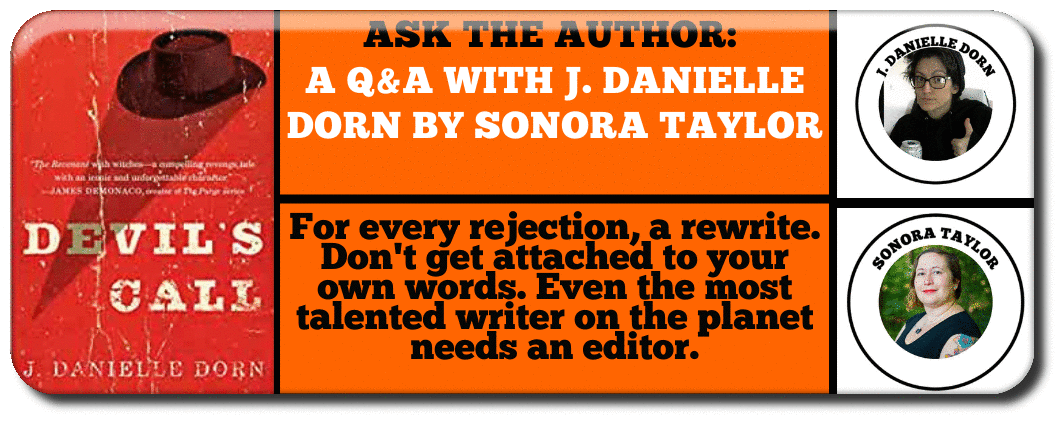 For Pride in Horror Month, I had the pleasure of interviewing author J. Danielle Dorn. Check out our conversation about their novel, Devil’s Call; anger as inspiration; and more. Sonora: How long have you been writing? J: Professionally, since 2016. Creative writing has been a hobby of mine since grade school, and I wrote a lot of research papers and essays for my psychology degree. I also participated in more National Novel Writing Months than I'd care to remember. But I didn't start getting paid to do it until my novel was picked up by Inkshares. Sonora: Tell us about your novel, Devil's Call. What was it like to write it? What was it like shopping the novel around once you were finished? J: I don't remember which of my friends sent me the link to Inkshares back in 2015, but it struck me as a Kickstarter for writers and I thought it might be fun to give it a whack. I had not been published in any capacity prior to going, "You know, I never write westerns. Or straight protagonists. Or involve pregnancy. Let's take this 'write what you know' thing and throw it out the window." The premise came first, and I decided on an epistolary format as a means of driving the story forward. In its original incarnation, the protagonist is in labor with her first child, whose father was killed at the beginning of the story, and she's preparing to face off against the [spoilers redacted] responsible for killing him. She's explaining to the baby, "When you're old enough to read, this is why your grandmother had to raise you." Explaining what it was like to write it would probably be a whole book on its own. I quit my job as a machine operator at the Genesee Brewery to move to Utah to help a friend of mine when she returned to work after having a baby, decided it would be fun to write something that's entirely against type for me, committed to it, and drank my way to a mostly-finished draft. I created a project page on Inkshares, uploaded the chapters as I finished them, got sucked into a self-destructive vortex that ended with me stepping out into traffic with the intent to end my life, and was admitted to inpatient rehab in April (I think?) 2016. I don't remember how long after my discharge from inpatient it was, but I know it was before my intensive outpatient program started when I got a call from Inkshares' then-VP of business development concerning the project. It was a little over one year between Inkshares acquiring the project and the novel's publication. There was no shopping involved, unless the literary equivalent of dumping it in a cardboard box on the side of the road counts. Sonora: Do you have any advice for writers looking to submit their work to an agent or publisher? J: Read as much as you can in the genre you're interested in publishing in. If you aren't literate, then you aren't going to be aware of what the current publishing trends are, and you won't know what agents are hungry for. Agents know what will sell, and you have to look at submissions like a sales pitch. If it's feasible, enroll in local workshops to learn the actual craft of writing as well as to get feedback from other readers. There are organizations that offer online courses and financial assistance. Seek out new opportunities to improve your skill. For every rejection, a rewrite. Don't get attached to your own words. Even the most talented writer on the planet needs an editor. Sonora: How was your experience writing and publishing Devil's Call different from writing and publishing your short stories? J: Publishing Devil's Call was like having teeth pulled, on account of when it occurred in relation to my addiction and subsequent recovery from it. I couldn't juggle my priorities, and the fact that I relapsed and became homeless and so on definitely impacted sales and my ability to go to signings or do interviews. My short stories come about the same way as Devil's Call did, i.e. out of fucking nowhere, but the difference is I'm in a much better place now than I was five years ago. I write for me first and then I rewrite for the market. Or I answer a specific call for submissions. Short stories are meant to be read in one sitting, and if I can write each act of the short story in one sitting as well, then I feel pretty good about myself. There's very little input from the editors, whereas the novel that was published in 2017 is very different from what I threw up on the website in 2016. Sonora: What inspires you? J: Anger. All the kick-ass authors I've met as a result of my serendipitous belly-flop into the world of writing. The shitty things humans do to each other, and our capacity to make those shitty things into compost. Monster Zero Ultra. Sonora: As a queer, non-binary writer, how do you feel about the horror community's treatment of LGBTQIA authors? What does the horror community do well, and where can they improve their efforts? J: Honestly, I don't feel great about it. It wasn't until what seems like the last five years or so that I began to see calls for submission that were explicit in their desire to publish a diverse range of voices, but I still feel as though I need to keep the fact that I'm a lesbian on the downlow. I definitely put off disclosing that I experience gender dysphoria and prefer they/them pronouns as long as I could. There have been several editors who've pulled together fantastic anthologies, and I'm amazed by the range of podcasts that feature original fiction or discourse on the horror genre and are produced and hosted by members of the LGBT community. Queer horror creators have been busting their asses the last few years, and the results have been amazing. This interview is taking place at what we're all hoping is the apex of the COVID-19 pandemic. I think we need to see what the industry as a whole looks like once the dust has settled before I can start pointing to specific areas that could benefit from improvement. Sonora: Do you think there needs to be more of an effort to draw attention to works by non-binary/gender-fluid authors? J: I made the decision to publish using my first initial and my middle name rather than just my first name because "Jamie Dorn" sounds like it belongs to a handsome Irish fellow who may or may not have a spectacular beard. That's not who I am. I'm a chronically depressed lesbian from Rochester, New York. My first decision was to broadcast that I'm not male as part of My Brand™ and it kind of sucks that if I hadn't done that, I'm 99% sure the assumption would have been that I was. But being presented as a female author chapped me a bit, and it took me forever to realize it's because I experience gender dysphoria because I'm non-binary. It would be great if we could live in a world where a person's ethnicity or sexual orientation or gender didn't matter, but we don't. Those things are deeply ingrained in our society, which exploits the poor and the disenfranchised, and as much as I want my response to be "My genitals and my pronouns have nothing to do with my work," that's bullshit. So my answer is "Yes, and also..." Sonora: Who are some of your favorite authors? What are some of your favorite books? J: To avoid turning this into a J. Danielle Dorn TEDx Talk, I'll keep it to queer horror authors and novels. Some of my favorite authors are Carmen Maria Machado, Caitlín R. Kiernan, Emily Carroll, Sarah Waters, and Hailey Piper. Some of my favorite books are The Luminous Dead by Caitlin Starling, My Lesbian Experience With Loneliness by Kabi Nagata, The Haunting of Hill House (obv.), White is for Witching by Helen Oyeyemi, and Animals Eat Each Other by Elle Nash. P.S. Moby-Dick is one of the gayest novels ever written. Sonora: What are you working on right now? J: My Dark Elf Necromancer in Elder Scrolls Online is kicking a supreme amount of ass now that I'm quarantined. The Amulet of Kings shall be mine. But also a novel about lesbian space pirates. It's a cosmic horror romance tentatively titled LESBIAN SPACE PIRATES. Thank you for putting up with me, you're breathtaking. Sonora: Thank you! You’re a delight. <3 About J. Danielle Dorn: J. Danielle Dorn is a military brat and former mental health paraprofessional from Rochester, New York. Kirkus Reviews named their debut novel, Devil’s Call, a ‘Must-Read Science Fiction, Fantasy & Horror Book’ in 2017. Their short fiction has been published by Madness Heart Press, Ink Heist, Tough Crime, and Witch Craft Magazine. They currently live with their adopted cat and a self-perpetuating pile of to-be-read books. About Sonora Taylor  Sonora Taylor is the author of Without Condition, The Crow's Gift and Other Tales, Please Give, and Wither and Other Stories. Her short story, "Hearts are Just 'Likes,'" was published in Camden Park Press's Quoth the Raven, an anthology of stories and poems that put a contemporary twist on the works of Edgar Allan Poe. Taylor's short stories frequently appear in The Sirens Call. Her work has also appeared in Frozen Wavelets, Mercurial Stories, Tales to Terrify, and the Ladies of Horror fiction podcast. Her third short story collection, Little Paranoias, is now available on Amazon. She lives in Arlington, Virginia, with her husband. Visit her online at sonorawrites.com.  "The Revenant with witches." --James Demonaco, screenwriter and director of The Purge series On a dark night in the summer of 1859, three men enter the home of Dr. Matthew Callahan and shoot him dead in front of his pregnant wife. Unbeknownst to them, Li Lian, his wife, hails from a long line of women gifted in ways that scare most folks--the witches of the MacPherson clan--and her need for vengeance is as vast and unforgiving as the Great Plains themselves. Written to the child she carries, Devil's Call traces Li Lian's quest, from the Nebraska Territory, to Louisiana, to the frozen Badlands, to bring to justice the monster responsible for shooting her husband in the back. This long-rifled witch will stop at nothing--and risk everything--in her showdown with evil.  Abby Gillman has discovered that with growing up, there comes a lot of blood. But nothing prepares her for the trail of blood she sees in the hallway after class - or the ghost she finds crammed inside an abandoned locker. No one believes Abby, of course. She’s only seeing things. As much as Abby wants to be believed, what she wants more is to know why she can suddenly see the dead. Unfortunately, they won’t tell her. In fact, none of them will speak to her. At all. Abby leaves for her annual summer visit to her uncle’s house with tons of questions. The visit will give her answers the ghosts won’t - but she may not like what she finds out.  the heart and soul of horror promotion Who are you? CC Adams, author of horror and dark fiction. Born and raised in the nation’s capital (London), and proud of. Usually working on something, but not slavish to it. Your signature style: Usually supernatural fiction based in and around the city. Emphasis more on a sense of eerie and malevolent menace. I can blame that on at least two sources. One is Aidan Chambers' Book Of Ghosts and hauntings, which I've had since I was 11 years old. The other one? The film Phantasm. That piano theme alone would do it. Toot your own horn: What’s been really humbling of late is the overwhelmingly positive response to Curious, If Anything, which appears in The Third Corona Book Of Horror Stories. Not all of my work is well received, and that’s okay – it goes with the territory. But to have that story loved by so many is …yeah, it's just humbling. Even the #BookTalk extract on Twitter got a lot of love. Books read: Man, I am terrible for this – seriously. I'm currently wading through Rodney V. Smith’s novel, "So I Might Be A Vampire." I first met Rodney at FanExpo in Toronto – Rodney, what was it? Summer of 2018, where you signed the copy I bought? And I’ve only just gotten around to this book now. Partly down to the pandemic, with having more time available, I’m making more of an effort to get through my TBR pile. How bad is it? I’ve got a Michael Jackson biography unread that I had since he was alive. Movies watched: The last one was the feature-length animation Planet Hulk. I actually chose this over the thriller Shadow Of The Moon which, with the benefit of hindsight, was not a good call. As much as I keep various episodes of Dexter on rotation (currently on Season 3 again), it’d be good to see him (Michael C. Hall) in something different. Which means Shadow Of The Moon will probably get a look-in this week. Games and/or music played: I’m not much of a gamer but given the current pandemic, the PS2 is getting a workout. Tekken 5 is the weapon of choice. I choose Marshall Law, and go head-to-head with the CPU on Survival Mode. Timing, sidesteps and ten-move combos are everything. My highest ranking on that is a straight 34 bouts, undefeated. I've yet to top that. As for music, I've got two bass guitars: one cheap Encore, and one Fender (Mexican Precision), the Encore gets more action. Tunes range from Garbage’s "Shut Your Mouth” to Herbie Hancock's "Chameleon" to The Black Keys' "I Got Mine", etc. Yeah, I still keep my hand in, as it were. Unless you mean music I sit and listen to? Anything goes, pretty much. Last one was Dilated Peoples’ "Work The Angles." Words written: Last work finished was a couple of weeks ago; first draft of Alchemy Of Skin came in at 32,000 words. Currently doing basic clean-up on novella One Sweet Cherry. Once that's done, it's back to final edits for There Goes Pretty. This one I'm looking forward to clearing off my deck, so I can take a breather and then knock out some new product. And I’m aware that not all creators are in the mood to create now, given the pandemic – and that's okay. Coping – and getting out of this in one piece – is what matters. It’s just, for me, this is part of how I’d cope. Future stuff: New releases are due later this year as well next year (will tease more on that one nearer the time). Currently looking to clear the next batch of work off my deck so I can get back to the next novel. As always, I've got the elevator pitch and the ending, but this time, I want to experiment with the process this time and see where it takes me. It's been a while since I’ve written some new short fiction, so I might put the new novel on hold and knock out some short work – most likely for a collection of stories woven together by a similar thread or two. I’ll see how I feel. Brain worms: Getting my weights together. This pandemic saw people buying up hand sanitiser. Then toilet rolls. And then, Olympic bars! Not that people are wiping their ass with them – and I sure as hell hope not - but they want to stay in shape so they’re looking for the good stuff. You’d be surprised how many gym specialists have been raided and sold out. It's been a while since I've been inside a gym, let alone lifting proper heavy. At least now, I’ve got a good bar and plates – more on the way. I'm not hitting 140kg (back squat) in the garden, but at least I can do front squats, clean and press, bent rows, etc. Helps keep me in some kind of shape. Some kind of sane. "London native C.C. Adams is the author behind urban horror novella But Worse Will Come. His short horror fiction appears in publications such as Turn To Ash, Weirdbook Magazine and The Black Room Manuscripts. A member of the Horror Writers Association, he still lives in the capital. This is where he lifts weights, cooks - and looks for the perfect quote to set off the next dark delicacy. Visit him at www.ccadams.com" Website - www.ccadams.com Facebook - http://www.facebook.com/MrAdamsWrites Twitter - http://www.twitter.com/MrAdamsWrites Amazon U.K. - https://www.amazon.co.uk/CC-Adams/e/B00J438GCI Amazon U.S. - https://www.amazon.com/CC-Adams/e/B00J438GCI  In response to our worldwide call, we received a total of 824 horror short story submissions for this book – adding up to a staggering total of over three million words. But we read them all, selecting only the best of the best stories to include in this book. That is why when we say this book is something special, we mean it – and that when we say it contains the best in new horror short stories, that is no hyperbole. We love horror, and the stories included in this book prove that it’s a genre where great imagination and great writing are more than possible. From the opening story “Suds and Monsters”, which might put you off washing dishes for good, to the closing story “Scythe”, which brings the proceedings to a short sharp close, each contribution will bring new horrors to unsettle you. We can guarantee you will find brilliant new horror writing here, but what you won’t find is a collection full of those who have star names (yet). We’re proud to include here both a story from at least one author who has sold books in the millions and a story from at least one author whose work has never been published before. We’ve simply included the very, very best of the stories, without fear or favour, to bring you the very best modern horror anthology possible. Ginger Snaps: Mini Interviews with Bite! Ginger Snaps is a brand new segment for Ginger Nuts of Horror. It is a quick-fire “bite-sized” interview, where your answers relate to what you’ve been doing in the past month (30 days or so). Keep your answers short and sweet, but also add your own flair where you can. Please include a brief bio, a photo that we can use, and any links that you would like us to add to the interview. THE HEART AND SOUL OF HORROR REVIEW WEBSITES Who are you? I’m Myk Pilgrim and I’m a horror writer, or at least that's what I like to tell people who don’t seem to be paying attention. I also run Deadflicks horror podcast with my wife and writing partner Pippa Bailey where we record “terrible reviews for horrible people” and occasionally manage to be insightful in between fart jokes. Your signature style: I tell myself that I write “popcorn horror” but I have no idea where I originally heard the term. Horror is supposed to be dark and gritty, but most importantly it’s supposed to be a fun time. I try to write exactly the sort of stuff that would titillate me and make me whoop and giggle and cringe as I compulsively gobble down popcorn in the cinema. Toot your own horn: Beating Phil Sloman and winning Best Legs in Horror 2019. Failing that, having my story “Brownie” published alongside Clive Barker, Ramsey Campbell, and the late Jack Ketchum in Dark Faces Evil Places 2. That whole experience will never not be insanely cool and I’m stoked that the story found a such a wonderful home. Books read: To my shame, I haven’t done nearly as much reading as I should have given the insane amount of “free” time at the moment, but my favourite read so far this year is The Guilty Feminist by Deborah Frances-White. It should be mandatory reading for all humans and those who aspire to become human. If you’re looking for something with a little more horror though, the Harrow County comics by Cullen Bunn and Tyler Crook don’t get nearly as much love as they deserve. Movies watched: A recent favourite is Satanic Panic (2019) a hilarious and gory film written by Grady Hendrix and directed by Chelsea Stardust. It’s a hoot, oozing with all the sorts of terrible things I love. Other films I’d recommend Terrified (that’s NOT the clown one), Midsommar, and the brilliant French horror show Marianne. Games and/or music played: Because there hasn’t been enough gin in all the world to take the edge off the lunacy that is now, early in the lockdown I got sucked into playing Doom 2016. It was a blast murderizing monsters and punching the crap out of beasties. It hasn’t improved my plight in the world any, but it has sure as fuck sanded the sharp corners off more than a few rough days. Musicwise, there has been a surplus of Ghost being played in our household, particularly the “Prequelle” album. We played “Dance Macabre” at our tiny social-distanced wedding the day before everything shut down in the UK. This has been the strangest honeymoon ever. Words written: I’ve just completed a story called “A Fish Doesn't Know” which will be coming out soonish on season 10 of The Wicked Library podcast and I’m stupidly excited to hear how it turns out. It was one of the harder stories I’ve written. If I normally create things with my life to art blender set at a smooth level 10, this one was created at blender level 2 and is full of chunky bits of real-life stuff. It deals with gaslighting, finding oneself, and as always, there’s a monster. If you would like something for now though, for Easter, Pippa Bailey and I read the whole of our book Poisoned Candy: Bite-sized Horror for Halloween on video whilst drinking gin. It was a right good time. https://www.facebook.com/PugnaciousPress/videos/2588934971424092/ Future stuff: Currently, in between panic attacks, I’m finishing up the edits of the first book of Pumpkin Guts – which I’m selling as Goosebumps for grown-ups. Each story is a standalone tale, but they all happen concurrently on a single Halloween night. I’m really excited to loose these blood-crusted, candy spackled, monster-infested, boobstravanganzas into the world. If you want to keep an eye on me, I vlog about how I’m getting on most weeks https://www.youtube.com/channel/UCTv-hhtfGeR8BOlJtekD7cg Brain worms: In preparation for a cosmic horror panel at Stokercon, I finally got to read Josh Malerman’s brilliant book Bird Box and this line has been rattling around in my head ever since: “our minds have ceilings, Malorie...these things...they are beyond it” In the meantime though, please wash your fucking hands. 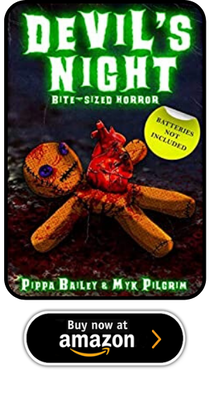 From the Authors of Poisoned Candy and the publishers of The Little Book of Harm, comes Devil's Night, a collection of bite-sized horror stories for Halloween.Halloween has returned in all its dark and depraved glory, and Devil's Night: Bite-sized horror for Halloween will satisfy your carnal urges for death, decay, and far too much sugar.Inside this short horror fiction goody bag is brimming with poisoned candy, ravenous haunted houses, casual necrophilia, yummy scrummy cat faeces, teleplasm, and of course an angry skeleton called Bob. So slip into something a lot more creepy (we suggest your Nan’s nightie) crack open a cold cider and dip into Devil's Night: Bite-sized Horror for Halloween! "Pippa Bailey and Myk Pilgrim return to form with the all-new Devil's Night collection.Simply put, the two authors deliver hard with tight sharp wit, humour and horror hand in hand. As it should be." ★★★★★ Nelson W. Pyles - author, Creator and executive producer of The Wicked Library THE HEART AND SOUL OF HORROR REVIEW WEBSITES Could you tell the readers a little bit about yourself? I am a lover of everything creative. I used to dance and sing , and when I was younger I wanted to be an entertainer. I always had a love for reading and writing. My earliest memory of reading was the book Peter Rabbit by Beatrix Potter. It was my favorite. Then my mom, who loves to read too, used to have tons of Harlequin Romance novels. So, I started reading them too. I wanted to write after reading those. From there was V.C. Andrews, and then Stephen King. I always loved horror movies, so it only made sense to read that genre. I honestly love and will read all types of books, but I am more into horror and YA fiction. Which one of your characters would you least like to meet in real life? Anasha. She is a horrible person that will use you till she can’t, and then she will kill you. She has no remorse, and being nice to people is like scratching her nails down a chalkboard. She has one agenda, and if you do not get on that bandwagon then you are against her. Other than the horror genre, what else has been a major influence on your writing? My life experience has been a major influence. I add some real things that have happened in my life in my book. I also use real people that I know in the book, even though they may not be like the characters. Except for Sebastian’s mom. He is the MC in my book and his mom is my mom. My mom could be scary if you mess with her kids, and Sebastian’s mom is the same. The term horror, especially when applied to fiction always carries such heavy connotations. What’s your feeling on the term “horror” and what do you think we can do to break past these assumptions? I think all we can do is continue to show our passion for it through movies and books. We need to show how creative and amazing horror is. Horror is different things to different people, and mostly everyone has experienced some kind of horror in their lives. If we can connect with people by writing about those different horrors maybe it will end assumptions, and receive more understanding and appreciation. I mean how creative are we to come up with the stuff that we come up with. In the end, we can’t make people do anything they do not want to do, so all we can do is try to put ourselves out there. If that doesn’t work then we can just continue to push the envelope, and prove how amazing horror is, and not care what other people think. Obviously, horror is loved by a lot of people. The books, TV shows, and movies make millions of dollars in this industry. So, we are doing something right. A lot of good horror movements have arisen as a direct result of the socio/political climate, considering the current state of the world where do you see horror going in the next few years? I just see horror becoming the go to genre for readers and writers because of what’s been going on. What we have been seeing on TV recently with the pandemic and the Black Lives Matter protests is a horror show in itself. We can all relate to it. To watch someone whose job it is to protect and serve actually killing you is scary as fuck. Real life for some of us is scarier than anything we will ever read. Reading horror can help us leave the real world and just escape for a minute, or deal with our stuff. Like I mentioned horror doesn’t always have to be grotesque. It can be real life. I read a book a couple of months ago called Ghost Boys by Jewell Parker Rhodes, and it is about black boys killed because of the color of their skin. They are ghosts and they all communicate and discuss what’s going on in the world. The one ghost boy visits the white daughter of the cop who killed him. In my opinion, this is horror and can open someone’s eyes if they are ignorant to the movement, or can help with explaining what is going on to your children. Horror has so many different types of stories within itself, and I think that it will continue to grow this way. Given the dark, violent and at times grotesque nature of the horror genre why do you think so many people enjoy reading it? Because people love to be scared. It is exciting and gets your heart racing. It allows you to use all of your emotions. It makes you use your imagination so much that you start seeing and hearing things in real life, and for me that is fantastic. It allows for people to enjoy themselves, wonder if this could really happen, and escape from reality for just a moment. What, if anything, is currently missing from the horror genre? More accolades for horror, and more POC and women horror writers. When I used to go to the bookstores to purchase books, the horror section was never as big as the non-fiction, or other fiction novels. It should be. I do not know if traditional publishing isn’t buying enough of them, but they should. We have something to say too. I also want to see horror books pushed as much as fantasy. Unfortunately, the only way I know of horror books out there is on Twitter, or if I do a search on Amazon, but they are not just pushed as they should be. Just like other novels are advertised, so should horror. What new and upcoming authors do you think we should take notice off? I think we should take notice of Cat Scully. I can’t wait for her Jennifer Strange novel. Also, Douglas L. Wilson is an indie author like myself. Right now I am reading his book Affinity’s Window. He has had some great reviews. I haven’t finished the book yet, but from the reviews it sounds like he is great at scaring people. Are there any reviews of your work, positive or negative that have stayed with you? So far the reviews have been all positive. They all stay with me because they basically can’t wait for book 2, and found that it grabbed their attention. They couldn’t put the book down, which I love hearing. I have one person that is wanting to do a review, but they are too scared to finish it to do the review. I love that too! I hope all my readers feel this way. I know that my book won’t be for everyone, but for those that it is for...I hope they truly enjoy it. That is all I can hope for. What aspects of writing to do you find the most difficult? Editing is the most difficult for me. Sometimes I can be stubborn about an idea, and it takes someone else to say that doesn’t work that I trust to think about it, and say ok. That is why after I do my edits, I then send my work to other writers that I trust, and an editor that I hire to make it better. If their edits make sense to me, and do not change my story that I am trying to tell then I will change it. However, it has to work for the story and the characters. I have changed Sebastian: The In-Between so many times. It has been third person to first person POV. Then I changed the age, then I went from it being YA to adult then back to YA. This journey has been 5 years in the making. Is there one subject you would never write about as an author? Probably erotica. Even though I started out reading Harlequin romances. I do not see myself writing about it. I may have love scenes in my books, but not straight erotica novels. There is nothing wrong with them, but I just don’t see myself writing them. Writing, is not a static process, how have you developed as a writer over the years? I have taken my time and write when I feel it. I do not want to rush it. I want the story to flow. I do not do outlines, which might be taboo, but I love just having the story play on it’s own. I have to be in a quiet space in my home. When the magic is there I sit and write until it is done. Recently, I have been so into what is going on in the world that I have been a little depressed and have not written or read anything in about two weeks. I am trying to get myself out of the funk, and start writing and reading again. I owe a few people some reviews. :) What is the best piece of advice you ever received with regards to your writing? Writing isn’t easy, to never give up, and to believe in myself because if I do not believe in my ability to write no one else will either. Which of your characters is your favourite? I have to say Bertha is my favorite. She is one of those no nonsense black grandmother types that never sugar coats anything. She loves helping people, and will not feel bad about it. She loves to eat, and has no shame on that either. She has her own style, and is very knowledgeable. Which of your books best represents you? At this time I only have one book out, even though I am working on book 2 with others in the cabinet waiting to be finished. So at this time I have to say my book Sebastian: The In-Between represents me because I put a lot of love, time and effort into this novel. I also have a main character who is bi-racial, like myself, who has an overprotective strong black woman as his mother, also like I have. Some of the things you read that Sebastian’s mother does are things that my mother has done. So if it seems over the top...that was my mom. When it came to protecting my brother and I she was no joke. Do you have a favorite line or passage from your work, and would you like to share it with us? This is one of my favorite lines because one of my teachers got sick at the smell that entered their nostrils after reading this passage: She is burning from head to toe; her skin is black, and smoke is billowing from her body. She smells like a mixture of burnt lamb and a sewer; her red curly hair is now gone, except for the little pieces that are stuck in different parts of her bald crispy scalp. Blood is falling from her eyes instead of tears. Can you tell us about your last book, and can you tell us about what you are working on next? Sebastian: The In-Between is my novel that is out now. It is about a boy who finds out that he is a part of this cursed, but magical family called In-Betweens. He also learns that he and his family that he’s never met are in danger. An evil that has been trying to kill off his family for years is now after him. It has a lot of ups and downs, twists and turns. A lot of ghosts, and different creepy looking beings. If you could erase one horror cliché what would be your choice? The damsel in distress. Women can kick ass too. We are not always weak. Now we have weak moments, like everyone...even mennn, but we can be strong, and take care of ourselves. In my book women run shit, and Sebastian is learning from them. What was the last great book you read, and what was the last book that disappointed you? The last great book I read was not a horror novel. It was Children of Blood and Bone by Tomi Adeyemi. The last great horror novel I read was The Heart Shaped Box by Joe Hill. The last book to disappoint me was A Wind in the Door by Madeleine L’Engle the second book in the series. I loved the first one A Wrinkle in Time, but I can’t get past the first chapter of the second book, so it is still sitting on my end table. Maybe I will try it again at a later date to see if I feel differently. What's the one question you wish you would get asked but never do? And what would be the answer? Would you like someone to make a movie of your book? Yes, yes I would as long as they do it justice, and stay true to the POC in my book. I want my people represented. I want to be represented.  Vanessa Dunn has a true love for creating and reading stories. She especially loves the scary ones. She is an adult that has a preference for YA novels, but really just loves to read. She loves how her favorite authors are able to place words on a page, and have it play like a movie in her mind. She hopes to be able to do the same with her present and future novels. Vanessa is originally from Boston, MA, but now lives in San Antonio, TX with her husband and three children. She prays that you all will love this story more than she does. Website Links Twitter Handle: @VanAspacia Instagram: @VanessaDunn1315 Amazon book link: https://www.amazon.com/Sebastian-Between-Vanessa-Dunn/dp/B085R72K8L BN.com book link: https://www.barnesandnoble.com/w/sebastian-vanessa-dunn/1136649017?ean=2940162747000 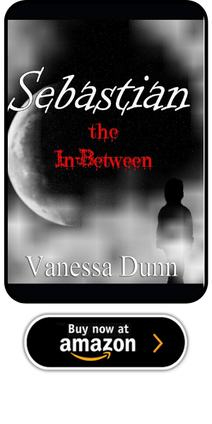 Sebastian is an outsider bullied by everyone because he is very different than us. There has always been something off about him. His best friend is his overprotective mother, Samantha. She is all the family that he has, or so he thought. At the age of 13, he witnesses a gruesome murder by a supernatural being that no one else can see, but him. That night he learns of his abilities, about what he really is, and about his mother's lies. As his world crumbles, Sebastian's newfound gift quickly becomes a curse, when he realizes that he can't control his growing powers. Especially when he almost kills his mother. Now he doesn't know who to trust, especially himself, which forces him into hiding with a stranger, who is the only one that understands him, but has an evil past of her own. Sebastian realizes that he must evolve from a shy, newly angry outcast to a fierce warrior--or die trying. As an old enemy stays close in the shadows to exterminate him, and everyone in his bloodline. Everyone that is an In-Between.  the heart and soul of horror promotion websites We are proud to announcer a special event in conjunction with Sadie Hartman and The Night Worms with Titan Books for the launch of the paperback of Tim Lebbon's excellent new novel Eden. From the bestselling author of The Silence comes a brand-new horror eco thriller. In large areas of the planet, nature is no longer humanity's friend In a time when Earth's rising oceans contain enormous islands of refuse, the Amazon rainforest is all-but destroyed, and countless species edge towards extinction, the Virgin Zones were established in an attempt to combat the change. Off-limits to humanity and given back to nature, these thirteen vast areas of land were intended to become the lungs of the world. Dylan leads a clandestine team of adventurers into Eden, the oldest of the Zones. Attracted by the challenges and dangers posed by the primal lands, extreme competitors seek to cross them with a minimum of equipment, depending only on their raw skills and courage. Not all survive. Also in Dylan's team is his daughter Jenn, and she carries a secret - Kat, his wife who abandoned them both years ago, has entered Eden ahead of them. Jenn is determined to find her mother, but neither she nor the rest of their tight-knit team are prepared for what confronts them. Nature has returned to Eden in an elemental, primeval way. And here, nature is no longer humanity's friend. |


Archives
May 2023
|
 RSS Feed

|

|