

 Katie has failed at a lot of things in life, but has turned out to be quite good at writing - which is fortunate because she rather enjoys it. Her interests are history, 'what if?' speculation (Sci Fi, Alternate History), and politics. She also has a long standing love of New Zealand, and emerging interests in naval and LGBT+ history. In her day job she is a business analyst for a local employer, which is also fortunate as it lets her get paid for asking difficult questions about implausible hypothetical scenarios. Katie lived overseas for a while and once stood for Parliament, but neither of these things stuck. She enjoys writing about less well known times and places, but especially about less well known people. It is her ambition to write marginalised voices back into history. She currently lives in a flat in Birmingham, UK with her long-term partner. They keep guinea pigs. All parties would quite like a garden at some point in the future, so please do buy her books. Could you tell the readers a little bit about yourself? My name is Katie, I'm 30, and I live in Birmingham, UK with my long term partner Sam and our two guinea pigs. I work as a Business Analyst, but I like to write in my spare time. When the world isn't in lock down I like to take long distance endurance walks. Why horror? What is appeal of the genre to you as both a fan and as a writer? I find that writing about things that scare me can be both cathartic and therapeutic. In my story Trapped I use the setting of a cold war bunker to explore my own fears of nuclear war, but also mental health anxiety and abusive relationship dynamics. As a reader I lean towards the more supernatural escapist side of horror fiction. Its nice to be able to switch off from real world fears, but still have that adrenaline stimulation. As LBGTQ+ genre fan and writer of horror, how did you when you first became immersed in the genre and found that representation that you could identify was few and far between? Honestly, its one of those things that is so normalised across all media and genres that it really doesn't stick out. How did you discover authors that wrote about characters that you could relate to? One of my favourite people is my friend and fellow author Lena Worwood. She's long been my 'go-to' for representation of LGBTQ+ characters. Beyond that I don't tend to specifically look out for representation. For trans women in particular there is a long history of terrible attempts at representation, through both good and ill intention. Even today you can come across awful casting decisions and characters that are little more than stereotypes. Sadly, its safer not to look. Other than the horror genre, what else has been a major influence on your writing? Digging into history, realising that people are people throughout all ages; capable of the same passions, emotions, and stupidity. Its led me in two directions, firstly in wanting to de-romanticise the past. In Travellers in an Antique Land, the story Gone With The Wind by David Flin is a great example of this. The horror in that story comes from a macabre turn of events – but the underlying ingredients, the 'true horror' if you like, comes from a deeply evil and real society build upon human slavery; one which to this day has an indecent number of apologists. History has also led me to want to discover the unknown, the forgotten, and the erased histories of marginalised people. LGBTQ+ history wasn't so much as acknowledged when I was in school, and there seems to be a long-standing assumption in popular history that 'history' itself ended in 1945. Museums and historians have done a lot of heavy lifting in allowing the post-war era to be both documented and critically understood. Even so, LGBTQ+ history, and the histories of other groups outside of the white, straight, and cis male 'norm' are still viewed as some sort of separate 'other' – much like how some bookshops have a 'Gay and Lesbian' fiction section entirely separate from the other genres. There are human stories in the past that have been forgotten or erased – all of which have led society in succession to believe that things like inter-racial marriages, gay rights, and the existence of transgender people are somehow weird and dangerous new concepts, rather than things that have always existed in society. As a writer I want to help tell these stories, to preserve both our past and our present for the benefit of the future. The term horror, especially when applied to fiction always carries such heavy connotations. What’s your feeling on the term “horror” and what do you think we can do to break past these assumptions? I don't see an issue with it in all honesty. All genres and genre-fiction carry a degree of snobbery – both towards them from literary purists, and to those outside the genre by gatekeepers. As editor and contributor to Travellers in an Antique Land, a deliberate genre-crossover, I take a 'take it or leave' it approach to culture and fiction. People can enjoy what they want to enjoy – and if they choose to self-limit within genre boundaries that's on them. Tastes vary, and I hope there is something for everyone. Talking about 'horror' specifically, I feel its such a broad genre with so many different sub-genres and styles. Any reader who approaches it with simplistic assumptions is setting themselves up as a fool. A lot of good horror movements have arisen as a direct result of the socio/political climate, considering the current state of the world where do you see horror going in the next few years? I think we're likely to see a pivot in two directions. Some people will want more escapism and utopianism, especially if things go to hell. Other people will want more dystopian fiction informed by and critiquing the the zeitgeist of the day. It will be interesting to see what happens to zombie fiction now that we have a live test case of what a modern state coping with a dangerous highly infectious disease looks like – and more crucially how people act when told to follow rules to protect their own health. No disaster film or book I've seen has ever predicted stockpiling of toilet roll – or widespread non-compliance with public health directives. Climate change and the resultant global strife are going to be the slow burn disaster that younger people take a resigned approach to, and come to accept as the new normal. I think we're likely to see an even more extreme form of 'shock horror' evolve to account for a more jaded and desensitised audience. LGBTQ+ people, and transgender people in particular have seen growing threats to their rights and lives on the part of western governments over the past few years. There is a deep well of tangible fear which is there to be tapped by upcoming artists. On the flip side, there is a point where we deal with enough trauma in our day to day lives that we no longer have the desire to let it intrude upon our recreation. For my part this is why I prefer my horror supernatural. Its nicer when you can make the monster go away by turning the television off. What are the books and films that helped to define you as an author? Its not horror genre, but Agent Lavender by Tom Black and Jack Tindale was the work that inspired me to go from a reader and occasional dabbler, to a writer willing and able to put her own work out there for criticism. The film Casablanca is a master study of bringing together character, setting, and plot. All three elements are strong on their own, but together they work to tell a unique story in a way that just wouldn't have worked in any other combination. I'm sure there are other equally good examples, but Casablanca works for me as a timeless reminder to always keep all those elements in mind when planning a new story. I'm a terrible philistine, so naturally I have only read the first third of Dostoyevsky's Crime and Punishment (English translation). Even so, the depiction of mental instability in language that was so clear, so vivid, and so functionally plain showed me that even in a 'classic' you don't need high-flowing poetry and impenetrable linguistic cleverness to write well. Words are for communicating – not for showing off. Neither a book or a film, but I want to cite Red Dwarf, if only because it sticks out in my head for the various offbeat cultural references – not least to Casablanca above. A sitcom is probably the best media to break down the idea that some culture is 'original' and some isn't. Ideas, themes, stories have all been recycled and retold since the dawn of time. In the past western era of mass bible literacy, books which we now consider classics would lift biblical themes and phases wholesale, as the 'pop culture references' of their day. Those same classic texts have since been used or adapted in countless other works and films. Films in turn continue to inspire new stories. As an author I've tried to be as well read as I can be, and to not be afraid of being thought of as derivative. Our brains are a melange of conflicting ideas and impulses at the best of times, so I'm confident that whatever I write will be unique and original in some way. At the same time I'm never afraid to draw from my experiences and from the deep well of our shared human culture. In recent years there has been a slow but gradual diversification within the genre, which new LBGTQ+ writers do you think we should be paying attention to? As above, Lena Worwood. I'd love to see more of her stuff published and out there. I do harbour a small amount of professional jealousy in how well she manages to do everything that I want to do, only better. She has an astounding depth and breadth of knowledge and influences, up to the philosophical and theological, and she combines these with a portrayal of LBGTQ+ characters informed by her own lived experience. How would you describe your writing style? Overly verbose, but that's what first drafts (and more importantly first edits) are for. I've had nothing in the way of professional or literary training. I write to tell the kind of stories that I want to tell and would want to read. I've from the school that holds that the best way to get good at writing is to write. Are there any reviews of your work, positive or negative that have stayed with you? I've generally been very fortunate with my Amazon reviews, and that kindness is always appreciated. Its the reality of feedback that constructive negative feedback takes more words to communicate than general positive feedback – though it is of course even more invaluable. I did have one review on an older book that complained of 'Americanisms' within the text. I often wondered on that. The story, and the interviews within the story were set within the sphere of British English during the early 20th Century, so naturally the occurrence of anachronistic language would be useful feedback for an attempt at realistic setting and characterisation. I am a British author who writes in UK English, so I'm curious as to what the Americanisms were and how they slipped in. My gut feeling is that some language that would be distinctly 'American' in the mid-twentieth century is totally normalised now, to the point where as someone born in the late eighties I am myself blind to it. I just wish I knew what the actual words were - it was frustrating that this particular review fell just short of giving that incredibly useful detail. But I am incredibly grateful to the reviewer regardless – for reading my work and for taking the time to review it. What aspects of writing to do you find the most difficult? Attaining and maintaining momentum. In another word, starting. It can be a struggle to trust myself to start a new project, especially when research and planning are both activities that only ever increase in possibility and complexiity once you start. It can be a challenge to know exactly when I have got just enough notes and background research to start a story – the fear always is getting half-way through a plot only for a reader to point out a plot-breaking anachronism or inaccuracy. The opening scene of Freedom's Rampart is a dramatised account of an historical meeting – with a deliberate key change. At the time I wrote it I had been unable to find a more detailed source that I later discovered – the result being that my fictional account, while accurate in the broad strokes, isn't exactly what happened in history. It doesn't remotely matter to the story, but it's the kind of 'known unknown' of which I am always conscious during my research phase. When to call time and accept the known unknowns that still exist? I also find it difficult to commit aside the time to make serious headway on a project, especially when that time becomes available only in small hours and half hours here and there. Its difficult for me to shift my focus within such timetabling, and it's also hard to feel that a project with might take thousands of hours to complete can be meaningfully undertaken in such small chunks. I know on an intellectual level that it can, but half hours are easy to waste, or be used up in a multitude of other small or urgent tasks. Stop-starting is my nemesis. Getting into the zone over the course of several continuous caffeine-fueled hours or days is the dream, albeit one that needs to compromise with reality from time to time. Are there any subjects that you would never write about? If I wrote about them here I'd be writing about them. Seriously, anything written for shock value only. Gratuitous violence, sadism, cruelty – especially anything directed at marginalised groups. I know that shock horror has its fans, but personally I feel that there is enough senseless cruelty and pain in the world as is. My writing is an escape. Sometimes that means it has a Utopian bent. Typically it means I have no interest in replicating in fiction things that are already amplified enough in non-fiction. I wrote a rape scene once. It made me feel deeply sick. I will never do that again. Writing, is not a static process, how have you developed as a writer over the years? Yes. I used to feel more confident in writing setting than in writing characters. I feel like I've definitely pivoted to a character-focused style over the last few years. I also used to really struggle to know how to accurately write female viewpoints. That has become a lot easier over time. Now I most enjoy writing female characters. What is the best piece of advice you ever received with regards to your writing? Keep writing. Its ubiquitous and spoken by many people over the years, but there's not a better piece of advice that can be given. Writing is a skill learned by practice – it cannot be 'taught' in the way that knowledge can. There are technical aspects to writing that can be taught, certainly, but they are nothing without being tested in the constant fire of experimentation and creation. Keep writing until you have finished the thing you are writing. Then write something else. As an accompanying bit of advice, feedback is good, good feedback is invaluable. Never shy away from hearing what people think of your work. Getting your worked noticed is one of the hardest things for a writer to achieve, how have you attempted to break through the barriers that are so often in place against LBGTQ+ writers? My publisher Sea Lion Press is a young, small and independent publishing house specialising in Alternative History genre writing (that is, 'what-if?' style speculation about history). I've been lucky in both time and place in having the chance to meet some of the people involved in founding SLP, and that has certainly helped me in bringing my work to their attention. SLP also hosts an online community – a blog and a discussion forum. Many online spaces, outside of LBGTQ+-specific spaces, can be extremely hostile or at best passively exclusive towards to non-LGBTQ+ persons. SLP has a wonderful moderation team and moderation policy that ensure the community remains a civil and inclusive place. Having that community within which to both test and develop my writing, and also to be myself, has been crucial to making my work fit to publish. I came out to my fellow authors long before I came out to my work colleagues. Many CIS white male authors use LGBTQ+ characters in their works, what’s the mistake that they make when trying to portray these characters? In so far as one can generalise – its not knowing LGBTQ+ characters, or their lives and existences. That doesn't mean that cis white men can't EVER write LGBTQ+ characters – just that their characters need always to be informed by actual LGBTQ+ people. Read our books. Read our memoirs and our blogs. Immerse yourself in the community as a respectful ally. It isn't our job to teach you – its your job as a writer to research the characters you want to write. Again a generalisation, but historically there's been a tendency for cis-het writers to lean on two dimensional stereotypes in their characterisation of LGBTQ+ persons. That can be understandable from an ease of narrative perspective, and for authors who have no intuitive understanding of those characters to use said stereotypes as a crutch. Unfortunately these stereotypes cause actually real world harm to LGBTQ+. For example, gay men and women have at various times been portrayed as predatory pursuers of unwilling heterosexuals – with the result that the ridiculous 'gay panic' defence became acceptable in courts of law. As the target of open bigotry has moved with the times, that same predatory stereotype is now applied to trans women by people trying to bring back segregationist legislation. Moving on to getting your work read by unwashed masses, what do you think ins the biggest misconception about LGBTQ+ fiction? That it's all about sex. I was rather disappointed. There are as number of presses dedicated to LGBTQ+ fiction, do you view these as a good thing, or do you think they help to perpetuate the ongoing exclusion from mainstream presses? Exclusion will persist as long as exclusionists are allowed to maintain it. Dismantling LGBTQ+-positive spaces won't make that exclusion stop. The end of exclusion might negate the need for dedicated spaces, but we're a long way from that yet. Its the old argument where we're damned if we complain about a lack of LGBTQ+ inclusive mainstream culture, and told to create our own; and then damned for creating our own LBGTQ+-inclusive content. Consumers who ask for LBGTQ+-inclusive content still get told that there isn't a market for it. The older I get the more Queer Nationalist I get. I'm fully aware that there are inconsistencies in my position. Do you agree with movements like this and things such as Women in Horror Month? If so how would you like to see sites such as Ginger Nuts of Horror tackle diversity? Yes, and yes. Do things your own way, but try to take a proactive effort in always bringing in new voices and new perspectives. Hatred and prejudice don't start from innate human malice, they start from well meaning people just not knowing any of 'those people'. If you never hear a trans woman's voice, or read her stories, its easier to imagine her as some evil civilisation-bending freak. If you know those voices, and you know the lived experiences of people different to yourself, then you become a better ally. The most common phrase you hear when people object to active movements to encourage all forms of diversity is “I don’t care about the sexuality, gender, color etc etc of the writer I only care about good stories” what would you like to say to these people? Why do you assume that more gay, female, or black authors means fewer good stories? Or more bad stories? Some people like to read the same story, in the same formula, time and again. That's fine, if that's what they like. Some authors have made their fortunes mining those formulaic veins. I would imagine however that most readers like to read something new, something which they haven't read before – a fresh perspective, or a new take on a premise. More diverse authors can bring those fresh perspectives to a genre, which means that everyone – including straight white men – can discover and read more new good stories than ever before. Not only is increasing diversity – bringing marginalised and excluded voices back into the conversation – a good thing in its own right, but it means more content all round. I've yet to hear anyone object to having more stories to read. To many writers, the characters they write become like children, who is your favorite child, and who is your least favorite to write for and why? I think Kei-Lee in Freedom's Rampart grew on me the most as I wrote her. There are parts of her story which, a century and a hemisphere removed, were so deeply informed by my own experiences that it was hard for me to not thereafter identify with her. I've not had a least favourite to write for. If I were not enjoying writing a character, then I couldn't imagine my readers enjoying reading about them. What piece of your own work are you most proud of? Probably a short story I wrote about a silly and futile crush I have on another girl. I wrote it in second person as a stream of consciousness, and I think it captures quite well that kind of silly sadness over some imagined and unobtainable greener pastures. It was indulgent and slightly soul-baring – I'm mostly proud of myself for having the nerve to share it with other people. For those who haven’t read any of your books, which of your books do you think best represents your work and why? I can't really answer this as most of my published work to date is in the form of short stories within collections, published under my dead name, or else in preparation for publication later this year. That said Freedom's Rampart (due June 2020) is pretty much distilled 2017-2020 Katie. It was researched and then written over a personally pretty transformative period. It also combines some of my long-standing interests (New Zealand, the Alternative History genre) with some newer subjects (naval history), and has proven a good spring board for me to research other avenues and possible follow-up stories. Trapped, in Strangers in an Antique Land, as above captures a lot of my personal fears an anxieties. Its a good introduction to my style. Do you have a favorite line or passage from your work, and would you like to share it with us? There are a few little flourishes that I've been proud of from time to time, but I think they'd all sound either trite or nonsensical out of context. Can you tell us about your last book, and can you tell us about what you are working on next? Travellers in an Antique Land is an anthology of short stories, all of which are genre cross-over between Horror and Alternate History. They range in settings from the early nineteenth century to the near future, and cover all different styles and subgenres of horror. Hopefully there is something in there for everyone – and I hope the book serves as a good bridge between two genres and communities. What was the last great book you read, and what was the last book that disappointed you? It was a re-read, but it was Stephen Baxter's Space. It was written in 2000 and the earliest chapter is set in the distant far-future year of 2020. I re-read it earlier this year, and its always amusing when the present day catches up with a near-future setting. I love it for the hard science world-building, and most of all for the colossal sense of scale covered by the storyline. Underlying it all is an exploration of the Fermi paradox – if not a horror story, the various plot twists and developments carry their own horrific implications. I'm probably being uncharitable, but the last 'bad' book that I have read was The Argonauts by Maggie Nelson. It feels like the kind of memoir that only gets published because the author already moves in high literary and media circles and knows the right people. Over however many pages the author has nothing of interest to say, or which might not have been said in fewer words. Her husband is a trans man, and yet the author makes her husband's transition about her, in so far as it gets mentioned. There are hints at interesting stories and voices, but they are never really shown as anything more than window dressing to the author's dull white upper class life. In summary its my archtypical reference for a book written about LGBTQ+ people rather than by them. What's the one question you wish you would get asked but never do? And what would be the answer? Q: Can I give you this big pile of money to cover all of your medical expenses? A: Yes please. [About writing] Q: Would you like to collaborate on/co-author a piece with me? 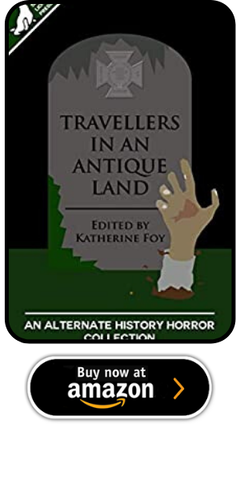 Confederate zombies and Frankenstein on the Nile, living nightmares and murderous institutions. Fear that grows within, and which closes in from without. Horror can take many forms. History could have taken many paths. For the first time, Sea Lion Press authors combine the two genres in this crossover collection. What if werewolves were a real threat in fifties Europe? What if we could fix the human brain? What if Shelley hadn't gone to Switzerland? What if we could save ourselves from terror? Thirteen tales of horror - thirteen tales of another doom.   the heart and soul of horror review websitesComments are closed.
|


Archives
May 2023
|
 RSS Feed

|

|