

A SPARK OF GENIUS: EM DEHANEY
6/11/2017
 Em Dehaney is a mother of two, a writer of fantasy and a drinker of tea. Born in Gravesend, England, her writing is inspired by the dark and decadent history of her home town. She is made of tea, cake, blood and magic. By night she is The Black Nun, editor and whip-cracker at Burdizzo Books. By day you can always find her at http://www.emdehaney.com/ or lurking about on Facebook posting pictures of witches. https://www.facebook.com/emdehaney/ Her poem ‘Here We Come A-Wassailing’ features in the Burdizzo Books 12Days Christmas anthology and will soon be released as an illustrated novelette. Her short story ‘The Mermaid’s Purse’ can be found in the Fossil Lake anthology Sharkasaurus. All available on her Amazon page. Could you tell the readers a little bit about yourself? You know that opening scene in the film Goodfellas? “As far back as I can remember, I always wanted to be a gangster”? Well, substitute ‘gangster’ for ‘writer’, and substitute a kid running away from an exploding car with a kid sitting in the corner scribbling in a notebook, and you’re there. What do you like to do when you're not writing? Spending money I don’t have on kitsch print dresses, drinking copious amounts of alcohol and making mix-cds (not playlists, I like kicking it old school). Other than the horror genre, what else has been a major influence on your writing? I read and write all sorts. My first novel is urban historical fantasy, I have a YA novel in the planning, I write poetry, horror, sci-fi, whatever takes my fancy. I think genre shouldn’t be a boundary, you should just write what you love. I love to read fantasy, historical fiction, horror, so called “literary fiction”, whatever that means. I also love factual books and true crime. I always have about three or four books on the go at any one time. At the moment I’m reading a book about Hurricane Katrina, a historical fiction about The Great Fire of London, Anno Dracula by Kim Newman and Something Wicked This Way Comes by the genius that is Ray Bradbury. I am also a huge music lover and am a sucker for a rock biography. The term horror, especially when applied to fiction always carries such heavy connotations. What’s your feeling on the term “horror” and what do you think we can do to break past these assumptions? It is ironic that the horror community is, for the most part, the kindest, most generous, friendly and funniest bunch of lovelies you could hope to meet, and yet somehow ‘horror writer’ brings these negative connotations. Some people seem unable to separate the art from the artist. You write books about murdering people, therefore you must want to murder people. Horror books and films aren’t for everyone but that’s fine. I can’t stand chick-lit or rom-coms. A lot of good horror movements have arisen as a direct result of the socio/political climate, considering the current state of the world where do you see horror going in the next few years? Post-apocalyptic horror is where it’s at for me. Natural disasters, man-made disasters, war, famine, potential nuclear destruction. I read Cormac McCarthy’s The Road this summer. I read it in one sitting, and it is one of the scariest books I’ve ever read. Not badged as a ‘horror’ novel, but horror nonetheless. We have two post-apocalyptic tales in our latest anthology Sparks: ‘I’m Your Electric Man’ by Dani Brown and ‘Final Charge’ by Peter Germany. I’ve just written ‘A Story of Monsters, a post-apocalypse campfire tale and am currently working on a zombie story set in post-Katrina New Orleans. What are the books and films that helped to define you as an author? It always has to be Stephen King, for so many reasons. His books had a massive impact on me as a youngster, Carrie and Misery in particular. The originality in both form and content. And he introduced me to Bradbury and Lovecraft. Ok, so he has written a couple of stinkers in his time, but even his worst is better than most writers could dream of being. He gets classed as ‘just’ a horror writer, when really he writes epics of the modern condition, the failed American dream, hopes and fears for the future, dreams of the past and the loss of innocence. They just sometimes happen to have vampires or ghosts or possessed cars in them. His ‘On Writing’ should be mandatory for anyone even thinking of picking up a pen. Another massive influence on my writing is the early Poppy Z. Brite novels. I remember getting New Orleans vampire tale Lost Souls when I was about 12 and devouring it in a day. The descriptions are so rich and colourful they almost hurt your eyes. You can taste the chartreuse, inhale the clove cigarette smoke. Brite’s follow up novel Drawing Blood just blew me away. It’s the story of a computer hacker falling in love with the only surviving son of a comic book artist who murdered his family then himself. It is a Deep South hallucinogenic horror, with plenty of sex and tech thrown in (all very dated now I’m sure, I haven’t read it in an while). The use of drugs as a portal to other worlds is something I have used in my own fiction. What new and upcoming authors do you think we should take notice off? My partner in crime at Burdizzo Books Matthew Cash has got a new book coming out soon called Fur, which is awesome (and I’m not just saying that). Jonathan Butcher is another one to watch. There was a real buzz around his recent release What Good Girls Do, a real thought provoking book, if hard to read at times. Burdizzo are working with him on a future release and it is hugely exciting. How would you describe your writing style? I tend to bring humour into a lot of my writing, as I’m generally a bit of a piss-taker. I’m quite proud to say that top fantasy publishing house Gollancz rejected my novel because it was too funny and there isn’t ‘a market for funny fantasy books’. I’m sure Terry Pratchett disagree, were he still around. Are there any reviews of your work, positive or negative that have stayed with you? I have dealt with a lot of rejections of my debut novel, from various publishers and agents, and the funny thing is, they were all positive. I’ve yet to be totally slated. I’m sure my time will come. You can’t consider yourself a success unless someone really hates what you do. What aspects of writing to do you find the most difficult? Finding time. I am a mum of two with a job and a house to keep running. I’ve heard some writers who say “You make time. You don’t do the housework, you don’t watch TV, you don’t do anything else, you just write.” Those people don’t have a two year old. I manage to cram the writing in when I can, but I very rarely get a quiet hour or two now to really get into the zone, like I did when my son had just been born. I wrote my first novel, about 80’000 words, in 8 months while on maternity leave. I have been writing my second novel for about a year and I’m barely past 25k. Is there one subject you would never write about as an author? I personally am not a fan of extreme sexual violence in my books, but that’s not to criticize those who do write about this kind of thing. It all depends on the context and how it is written. There are lots of subjects that are considered taboo, but we still need to confront them through fiction. The difference is if these things are written about as titillation or to drive the story and the themes of the book forward. Extreme misogyny, violence, homophobia, rape, child abuse or racism purely for the sake of being shocking is not for me. How important are names to you in your books? Do you choose the names based on liking the way it sounds or the meaning? I have various methods of choosing names for my characters. Sometimes they come to me, fully formed characters with their names. Other times it is as result of historic research. And other than that, I just like to collect unusual names that I come across in my life (I deal with a lot of different names from all around the world in my day job as a background screening analyst). Writing, is not a static process, how have you developed as a writer over the years? I’ve found editing for Burdizzo has made me much more aware of my own writing. I think critiquing others, either through editing or through critiquing sites like Scribophile is a great way to learn. That and reading a lot in a wide range of genre. And writing a lot. There is no substitute for practice. What tools do you feel are must-haves for writers? An imagination. Other than that, it doesn’t really matter. Pencil? Fountain pen? Scrivener? The blood of your enemies? Who cares as long as you write. What is the best piece of advice you ever received with regards to your writing? Two pieces of advice, both from successful published authors. The first was “You are not an aspiring writer. If you write, you are writer.” The second was, when I said my writing was never good enough and how I would read books and feel I could never write anything as good as that. “When you read a novel, it is the end of a very long process that starts with a shitty first draft just like yours, so don’t give up.” Never give up has become my writing motto. Getting your worked noticed is one of the hardest things for a writer to achieve, how have you tried to approach this subject? I use social media to promote myself and my work, mainly Instagram, Twitter, Facebook. I also blog, I record podcasts and I answer questions for Gingernuts of Horror! For all the criticism that social media gets, I have made the best connections, both personal and professional, through it. It is the new way to network, when we can’t get out to all the conventions and book fairs, it keeps you a part of the community. I have made links with artists who are now working with us at Burdizzo, other writers, put those writers in touch with screenwriters and actresses, and I have made some lifelong friends. To many writers, the characters they write become like children, who is your favourite child, and who is your least favourite to write for and why? My favourite child is literally a child: Mikey from my Sharkasurus story ‘The Mermaid’s Purse’. He is a kid who is abused and neglected by his horrible mother, but takes his bloody revenge with the help of his pet shark. I have an emotional attachment to him and I would like pick his story up again, later on in life. My least favourite characters always end up getting killed off in horrible ways (head smashed in with a bass guitar, dick pulled off and insides eaten by harpies, shredded by a shark) so I still enjoy writing them. What piece of your own work are you most proud of? My first ever publication was my Christmas poem ‘Here We Come A-Wassailing’. I’m proud because it was my first piece in print and a stranger liked it enough to put it in their book (because that was what Matthew Cash at Burdizzo Books was back then). I’m double proud of it now as we have enlisted the services of Polish artist Krzysztof Wronksi and are turning it into an illustrated mini-graphic novel type thing. And are there any that you would like to forget about? A lot of terrible poetry I wrote whilst at University! For those who haven’t read any of your books, which of your books do you think best represents your work and why? Well, I’ve only written one book so far, which has yet to be published. Do you have a favorite line or passage from your work, and would you like to share it with us? This, from the current novel I am working on, The Lady of The Dead. ‘The Lady of The Dead comes for you. First, she will eat the stars.’ Ethel yanked Tommy’s arm, pulling him in close enough to feel her breath on his face. It smelled of rotten flowers. A voice came from deep within her, harsh and mocking. It was both infinite and intimate, a legion of voices in unison whispering in his ear. ‘Then she will eat your heart.’ Can you tell us about your last book, and can you tell us about what you are working on next? My first novel, The Golden Virginian, is a tale of tea and cake, weed and water, magic and murder, full of riverside town history mixed in with urban fantasy. I am currently working on the sequel, The Lady of The Dead. It features the real life 1661 murder of a Transylvanian prince, Mexican folklore and Romany gypsies. If you could erase one horror cliché what would be your choice? ‘What’s that noise?’ ‘Why don’t you go and investigate on your own?’ ‘Ok, you stay here and get murdered. I’ll go off and get murdered.’ What was the last great book you read, and what was the last book that disappointed you? I really wanted to like Kraken by China Mieville. I mean, what’s not to like right? Giant squid gods, paranormal Police departments, a parallel supernatural London, talking tattoos, It’s right up my street. Yet, for some reason I failed to finish it. I’m more disappointed with myself than the book. I’ve already mentioned The Road by Cormac McCarthy. I really enjoyed Paul Kane’s Sherlock Holmes and The Servants of Hell. I also loved M.R. Carey’s The Girl With All The Gifts. What's the one question you wish you would get asked but never do? And what would be the answer? ‘Hi, I’m from – insert name of famous publishing house here – please can we give you a million pound book deal, within which you will retain full creative control over your creations?’ Me: ‘Where do I sign?’ Yes, I am very proud of being a indie and producing our own books outside of the traditional publishing world, but I would still love the validation and the exposure that comes with a book deal. I know it isn’t always a fairy tale ending, but deep down we all secretly want to be able to make a (good) living out of our writing.  A SPARK OF GENIUS: PIPPA BAILEY
2/11/2017
 Pippa Bailey lives in rural Shropshire, England. Principally a horror writer, independent reviewer, and YouTube personality. Her supernatural, and sci-fi stories have featured in several anthologies, and zines. Her debut novel LUX is due for release summer 2018. Could you tell the readers a little bit about yourself? I’m what is commonly referred to as a RAF brat. Having grown up bouncing around military bases before finally settling in Shropshire, I’ve always had a bit of a disjointed life. I feel very much like a nomad without a real home. I think that need to belong has greatly influenced my characters. I do have a day job, which I enjoy very much. But I suppose that come with the territory of writing horror. I work for a Magistrates criminal court as an usher. I spend my day in black robes working with legal advisers, lawyers, and criminals. It can be exciting, but it can also be incredibly harrowing. Every day I see people on the worst day of their lives. I’m a bit of a gym bunny, you’ll find me there most week days. It helps me work through the necessary evils of my day job. Clears my mind. I was a writer from a young age, with achievement awards (which I still have) for short horror stories at primary school. I started writing again as an adult after an accident a few years ago left me unable to walk for 3 months. I couldn’t return to work, so I needed something to fill my time. Boom. I started writing. What do you like to do when you're not writing? When I’m not writing I’m probably reading. I have a relatively large collection of indie horror comics and graphic novels, slowly collected over the last few years. They tend to keep me entertained, when I’m not delving into larger works of fiction. I will admit I am addicted to watching “Lets Play”. When I’m winding down at the end of the night you’ll find me on YouTube watching Game Grumps, (loud idiots playing games, being sarcastic and voice acting.) I love it. Other than the horror genre, what else has been a major influence on your writing? I think other than the horror genre, locations have been a large influence on my writing. I have been lucky enough to grow up in an area steeped in history. I have spent the last 20 years in a tiny village in Shropshire, called Albrighton. Its full title being, Albrighton, Home of the English Rose. It’s mentioned in the Doomsday book of 1066, and is potentially far older than that. The village sporadically ends up in the news. In January a 700-year-old templar cave was discovered under a field at the far end of the village boundaries. We also have the world famous “David Austen Roses” rose garden, which I visit several times a year. Large sections of this strange little village have made their way into my literary world under the guise of Alnwick. The term horror, especially when applied to fiction always carries such heavy connotations. What’s your feeling on the term “horror” and what do you think we can do to break past these assumptions? I think that horror is one of the most versatile genres to work within. Unfortunately, not everyone sees it the same way. When talking to non-horror readers about my writing there is an automatic assumption that horror equals disgusting, or bad. Yes, I will admit, with horror you’re more likely to come across the extremes of human nature, and, or of the supernatural world. But that doesn’t have to equate shock value. With the recent release of the film IT (2017). I feel that it has done a great service to those of us working in the horror industry, by making the genre more accessible to those who wouldn’t traditionally approach it. Small changes like this in the minds of the general-public is turning the tide on the assumption that horror equals bad. A lot of good horror movements have arisen as a direct result of the socio/political climate, considering the current state of the world where do you see horror going in the next few years? The world today is a scary place. It can be said that it has always been a scary place, but now due to social media we see more of the dark side that was once hidden away. People seem more able, certainly in the literary community to approach these topics with an openness you don’t see in the media. In the last few years there seems to have been a resurgence in the horror genre. With TV shows like Stranger Things, and American Horror Story. I can see a new audience enjoying the thrill of what we have to offer, and I hope in the future this continues. What are the books and films that helped to define you as an author? The first thing that springs to mind when looking at my influences would be the TV show Buffy the Vampire Slayer. It had a huge impact on my teenage years. When you’re leaving childhood, still vulnerable and starting to question your place in the world. Then BLAM. This powerhouse of a woman appears, kicking arse, and lusting after some dark and brooding man. It helped me never shy away from making my female characters strong, funny and open to love, no matter how many times it has destroyed them. Clive Barker’s Cabal, had an earlier influence on me. Having spent years staring at the cover of the book on my dad’s shelf he let me read it. I was completely blown away. This was my first introduction to anything of a sexual nature. And the innate darkness of people. I loved it. It sent me on my own dark path. It taught me that you shouldn’t mince your words. If you’re going to write a powerful scene. Do it, and do it well. What new and upcoming authors do you think we should take notice off? I am currently enjoying reading works from Mark Cassell and Lydian Faust, who both had releases this year. Mark with Hell Cat of the Holt and In the Company of False Gods. Lydian with Forest Underground. Both authors are spectacular world builders and the ambience they create is second to none. I can’t rate them highly enough. I see them both winning awards in the future. How would you describe your writing style? I lean towards supernatural horror, and with that I tend to find a familiar pattern within my stories. A punchy start, slow build, and an incredibly destructive scene, the pinnacle of action for the character. I don’t like to use gratuitous gore, I tend to punctuate with pockets of nastiness, give the reader a taste of how bad it could get. Let their mind fill in the blanks. Are there any reviews of your work, positive or negative that have stayed with you? As my work has mostly been in anthologies it doesn’t always get picked up on individually. Though I do have a review from my first ever story Scarred. Reading that someone felt that passionately about my words nearly left me in tears. I felt proud of myself for the first time. It was a really great feeling that I hope I repeat. What aspects of writing to do you find the most difficult? I will openly admit I have dyslexia. I struggle with grammar and sentence structure. You probably won’t see that in my work because I have such fantastic support when it comes to editing. I have been very lucky to have become a Padawan of sorts to a far superior author. I have a huge collection of books on writing I was advised to get, and I’m slowly working my way through those. I can see myself steadily improving, but it is hard work. Editing takes me a very long time, because I’m constantly questioning myself, not on the content of the story, but on my ability to write. Is there one subject you would never write about as an author? I don’t think there is. I choose to write supernatural horror because that’s what I like to read. I’m comfortable writing about any taboos as I’ve learned from my day job to distance myself from things. Genre wise, I’m not interested in writing non-fiction, nor am I about history, or romance. How important are names to you in your books? Do you choose the names based on liking the way it sounds or the meaning? I do tend to take my time over a character’s name, sometimes a character feels a certain way, or I want their name to meet something. I do the same with place names. I sometimes sneak in detail from my own world. Such as using the same number of letters in a name, as the real person the character is based upon. Or in my novel there is a school called Austin Albrights. Which is an amalgamation of David Austin Roses and Albrighton. Writing, is not a static process, how have you developed as a writer over the years? I’m still a newbie, so I am on my journey of discovery and learning. I’ve had a lot of support, and have been lucky enough to be mentored by a fantastic author. I’ve started studying my weak point, grammar and sentence structure. I’m taking my time to better my skills. I recommend picking up books from Rayne Hall, her work is invaluable when improving your skills. What tools do you feel are must-haves for writers? Note pads, pencils, and flash cards. I was given a box of writers’ tools as a birthday gift. I think I have used everything in the box multiple times. It’s one of the most generous, thoughtful gifts I’ve ever been given. I highly recommend you go and make your own. What is the best piece of advice you ever received with regards to your writing? Study writing, study your own work. Study the intricacies of what makes your work shine, find it in others and take notes. Keep notepads everywhere. Getting your worked noticed is one of the hardest things for a writer to achieve, how have you tried to approach this subject? I was networking long before I was writing. I used to run an independent review company, and I have done PA and admin for several comic books, artists and authors. Marketing and getting your work noticed is a lot about thinking outside the box, and making the right connections. Also creating a brand, an image is very important. Knowing the right people, gets your work in the right places. To many writers, the characters they write become like children, who is your favourite child, and who is your least favourite to write for and why? My favourite is Finn, he’s one of the main characters in my novel series. I love his quirks, his awkward nature and how he unabashedly makes a fool of himself. “Oops. Here,” he said, helping her take a bite, “of course, when I tell this story it’s going to be the other way around.” “Hmm?” Alex muttered. “Oh, I’ll be the one being hand fed by someone gorgeous,” said Finn grinning, “while tied up.” – Least would be the woman in my first story, scarred. I have a lot of contempt for her and who she is. But I wrote her that way, and I don’t think I’d write someone like her again. And are there any that you would like to forget about? No none of my characters deserve to be forgotten, but several could be improved. For those who haven’t read any of your books, which of your books do you think best represents your work and why? As I have only short stories available to the public currently I’d recommend my story from sparks when it is released, as I feel my skill level has improved greatly between this story and some of my earlier works. Do you have a favorite line or passage from your work, and would you like to share it with us? Yes, but it’s a little racy. The room darkened as she massaged him, shrouding him in a shadow he couldn’t fully comprehend. She made quick work of extracting the first few moans from his parched lips. Hands falling silently from the keyboard, twitching at his sides. He had lost this game of pleasure again, his slick cock aching in her grip. She knew how to bring him to the point of no return, waiting for the carnality of his relief. – From a flash fiction story called Behind you. Can you tell us about your last book, and can you tell us about what you are working on next? I’m currently editing a couple stories for 2 anthologies this year. I am also still working on my labor of love, a novel called Lux, which is part 1 of a 6-part series. And I have a novella in the works. Based in the same world as the novel, but takes place 5 years prior. If you could erase one horror cliché what would be your choice? I don’t enjoy the notion of a damsel in destress. I’m also not a big fan of zombies. What was the last great book you read, and what was the last book that disappointed you? Last book I read was Forest Underground by Lydian Faust. It’s fantastic. The last book that disappointed me was a book I was asked to review. I won’t name names, but it took me 4 hours to read 25 pages. I had to contact the publisher and ask if they had looked at the book themselves, as it had some major issues. What's the one question you wish you would get asked but never do? And what would be the answer I’ll leave people guessing, and yes.  By Tony Jones  Today we have the great pleasure of interviewing the Queen of American YA horror Amy Lukavics, who since her debut novel in 2015 has become one of the leading lights on the YA horror scene. Amy now has three outstanding horror novels under her belt, “Daughters Unto Devils” (2015), “The Woman in the Walls” (2016) and the very recently published “Ravenous” (2017). Although all three novels are unique experiences, Amy excels in creating strong believable teenage female characters, brooding horror in familiar family settings with freaky supernatural riffs, a combination which is perfect for captivating teenage readers. Ginger Nuts of Horror has been a fan of Amy for a while and our reviews of her two previous novels can be found behind the links below. When we reviewed her debut novel we wrote “there is a new kid on the block in the world of YA horror.” How right we were… Daughters unto Devils: Woman in the Walls: I have been involved professionally with YA literature for over two decades and have a lifelong interest in horror, and in all those years I can think of very few YA authors who have written three such vividly strong YA horror novels in succession to begin their career. This is one of the reasons I am very surprised Amy has been overlooked thus far for the YA section of the prestigious Bram Stoker Award which is presented annually by the Horror Writer’s Association? I have read virtually all short-listed books over the last few years, and sure there are some good books featured, but I see the omission of Amy as a major oversight from the HWA. Let’s hope they do not make the same mistake again and “The Ravenous” gets the nomination a novel of its quality richly deserves. Onto the interview. GNoH: Family, or family/parental issues, are an interconnecting theme in all three of your novels. What’s your fascination with what goes on behind the curtains? Amy: I've always been intrigued by stories that delve into family relationships; between siblings, between parents, between grandparents. I just think those dynamics are well worth exploring in fiction, and my characters always become more complex and interesting when I tap into the emotions they have surrounding their family members. GNoH: Although all three novels are obviously for teens, they are only a small step away from fully fledged adult horror fiction, is this something we can expect from you in the future? Amy: I absolutely plan on breaking into the adult market eventually! I'm working on my first adult horror now and I'm very excited to see what becomes of it. GNoH: Apart from the obvious big sellers in the teen market, which YA horror writers do you read/recommend? The obscurer the better, we know it all… Amy: I'm really into Kaitlin Ward, Cat Winters, Emily Carroll, and Dawn Kurtagich. All for different reasons, but every one of them has successfully creeped me out and/or just filled me with pure horror delight. I was also blown away recently by “My Best Friend's Exorcism” by Grady Hendrix, it was just insanely good. GNoH: What did you read as a teenager and which authors currently have had the greatest influence on you, horror or otherwise? Amy: As a teen I read whatever I could get from the school library--Laurie Halse Anderson, Jeffrey Eugenides, Sylvia Plath, RL Stine. I read plenty of Stephen King too, of course, and also never really lost my childhood obsession with the “Scary Stories to Tell in the Dark” books. As far as influences go, currently I find myself the most inspired by Shirley Jackson, Jennifer McMahon, Paul Tremblay, Joe Hill, Megan Abbott, Stephanie Kuehn, and Gillian Flynn. GNoH: There are a distinct lack of men/boys/boyfriends in all three of your novels, why do you write such female driven fiction? This is not a criticism! Only an observation… Amy: It's not necessarily something I've done on purpose, but at the same time I've always written the books that I would want to read myself. And it just so happens that most of my favourite stories, horror or not, are centred around women. I especially love a good female villain! GNoH: I think you reveal the inspiration to your latest novel “The Ravenous” through a sequence in the book itself when the sisters are watching TV. Tell us what attracted you to The Blood Benders story? Amy: I'd had an idea about a sister book similar to “The Virgin Suicides” simmering in my head for months, but there was some big piece missing that keep the idea from feeling whole, so I never pursued it. Then one random day, my husband sent me a link with the message “thought you'd be interested in this.” It was an article all about The Bloody Benders, a serial killer family from the early 1870's. The story was absolutely horrifying, and the 'killer family' element promptly transformed my simmering sisters story into “The Ravenous”. GNoH: Your debut novel “Daughters unto Devils” is set in the prairie lands of old America. You could probably count the number of YA supernatural stories set in this period on one hand. What attracted you to it? Amy: “Daughters unto Devils” was my first attempt at a horror novel, which I'd been wanting to do for years but had not yet been confident enough to try. But after I wrote a few contemporary novels that never sold, I figured I might as well write what would give me the most joy. I knew I wanted it to be a historical horror, and was going through potential settings in my head before I came across the thought, “What if Little House on the Prairie had been a possession horror?” And it was like a light switch going off...I had to do it! GNoH: Your protagonists thus far have all been damaged but very engaging teenage girls. Is there much of yourself in these characters? You really put these girls through the wringer! There might even be a career as a ‘straight’ YA writer waiting for you? Amy: While none of my characters are directly inspired by myself, I can certainly relate to some of the feelings they've experienced—the pressure they put on themselves for whatever reason, or the constant worrying they endure (I'm most certainly a worrier!) As far as the damaged element goes, well...who isn't damaged in one way or the other? Ha-ha! GNoH: Although for the most part your novels only have sporadic moments of bone crunching violence, I’m thinking of the hammer and eyeball scene in “The Ravenous” do you feel you’re holding the blood back a bit for your youthful audience or has your editor reigned you in? Amy: No, never, and I get asked this question quite a bit. I'm extremely fortunate to have an editor who totally gets my stories and has never once commented that I needed to pull back on violence or gore, which was a delightful surprise. Some people insist that YA horror needs to be less gory than adult as well as have a happy ending, both things of which I disagree with. GNoH: If you had a 100% guarantee one of your novels was to be filmed which would it be? Who would star in it? Amy: Oh man, that's a hard question. I feel like “The Women in the Walls” could make for a really eerie and atmospheric movie, but there's also so much potential cast-wise when it comes to “The Ravenous”. I always thought it'd be awesome to have Taylor Swift to play the 'bad' sister, Juliet, and to have Shannon Purser (Barb from Stranger Things!) play Mona. GNoH: When I read “The Women in the Walls” one of the things I really liked about it was the vagueness of where and when it was set. I’m also pretty sure there was no social media and I don’t think either of the girls either mentioned boyfriends… It is all very ‘unteenlike’ but helped create a tremendous atmosphere of isolation. Was this deliberate? What were the influences behind this ghost story? Amy: It was deliberate. One of the most important things about the setting for “The Women in the Walls” was that it was isolated. This meant keeping the cast small and doing what I could to deny them instant access to the outside world, so I left social media out of it. As far as influences go, I was really inspired by the trailer (the movie itself had not yet come out) for “Crimson Peak”. I wanted to capture that dark, eerie, Gothic vibe in my own story! GNoH: Getting back to your latest novel “The Ravenous” which features five sisters… I had already thought of “The Virgin Suicides” by Jeffrey Eugenides before the sisters started watching the film. I take it this was both deliberate and that you’re a fan? Amy: Yep, I was very inspired by “The Virgin Suicides” for “The Ravenous”. I first discovered the book in high school and ended up loving it so much that I went back to highlight all of my favourite passages like a total geek. I am also a big fan of the Sofia Coppola movie adaptation, and the soundtrack as well. GNoH: “The Ravenous” is seen through the eyes of one of the middle sisters Mona, who was both a sympathetic and sad character, I’m particularly thinking of her telephone friend, which had a fantastic reveal. Why were you so tough on her? Perhaps it’s tough being the middle sibling… Amy: Ha! See, I don't really view it as me being tough on my characters, because they aren't pre-existing beings that I inflict horror upon on a whim. Usually when I come up with a character, I already have a pretty good idea of what will happen to them ultimately, even before the more personal details about their struggles come to me, so their experiences are pretty built in from the get-go. Mona was fun to write because of how many conflicting feelings she had on everything from her living situation to her sisters to her mother. And being the middle sibling absolutely had an influence on her character, the poor dear. GNoH: What is the best piece of advice you ever received from another author? Amy: It wasn't really advice, but I was really inspired by Paul Tremblay when I was fortunate enough to do a panel with him at San Diego ComicCon in 2016. He was just such a genuinely nice guy who was so encouraging when I mentioned that I wanted to break into the adult market one day. It really meant a lot to me to see someone represent the horror community in such a positive and welcoming way, and it made me want to work hard and write the best books that I possibly can. GNoH: Can you tell us about your future projects? Amy: My next book, out fall of 2018, is called “Nightingale” and is a psychological horror that takes place in an asylum in the 1950's. I am so, so excited for it! GNoH: Amy Lukavics, the Queen of YA American Horror, It has been an absolute pleasure having you on The Ginger Nuts of Horror and we wish you all the best for “The Ravenous” and future projects. Tony Jones  DAUGHTERS UNTO DEVILS BY AMY LUKAVICS
|


 This is a public service announcement on behalf of Burdizzo Books. Ghosts in the machine? Killer currents? Demonic disturbances? Then you need Sparks! Keep your family safe from bulbs and batteries that go bump in the night by reading Sparks. 15 electrifying tales of horror, sci-fi, bizarro and fantasy. Visit post-apocalyptic nightmare worlds, listen to recordings of the dead, feel the friction of electric lady love and be struck by lightning from the past. Plug in, turn on, tune in and get buzzed. Sparks – it’s alive! |  A secret cult operates at the zoo Carla works at. They pay doesn't keep food in her cupboards. All her clothes are second hand. There isn't enough money to cope with management, preferred employees and customers. Starving before her wages land in her pay packet, Carla walks up the hill to steal some food from the zoo. She isn't alone. Induction night for the cult happens at the same place. They need sacrifices to the old Gods to maintain power. Carla knew management were too stupid to keep power on their own. She didn't realize the help was supernatural. She hides, looking for morsels to ear. Management know someone is there. Left with no choice, and nothing to eat, Carla must overthrow the cult. It isn't a simple case of one bad employer, but many. For underpaid, under-appreciated employees everywhere, Carla stands up aided by a new God. |
RELATED POSTS
CHILDHOOD FEARS: THE WAY YOU MAKE ME FEEL BY DANI BROWN
HORROR NEWS: BURDIZZO BOOKS UNLEASHES SPARKS A CHARITY ANTHOLOGY
A SPARK OF GENIUS: AN INTERVIEW WITH MATTHEW CASH
A SPARK OF GENIUS: CHRISTOPHER LAW
A SPARK OF GENIUS: AN INTERVIEW WITH ASH HARTWEL
A SPARK OF GENIUS: AN INTERVIEW WITH MARK CASSELL
Sparks is the new charity anthology from Burdizzo books and to help support and spread word of it Ginger Nuts of Horror has been running a series on interviews and articles with the contributing authors today The man behind the book, Matty-Bob, or to use his Sunday name Matthew Cash takes the spotlight in today's "A Spark of genius"
Matthew Cash has been a avid reader since however old he was when he learnt to read. He still remembers standing alongside the teacher's desk in his first ever primary school class and reading sentences out and learning to pause when he came to a dot. He has been releasing stuff for over two years, through numerous publishers and his own label Burdizzo Books.
Could you tell the readers a little bit about yourself?
I'm Matty-Bob, I'm a father of two, a full time carer, and I love to read.
What do you like to do when you're not writing?
Read. Haha. Entertainment wise I am spread between three favourite pastimes, reading, listening to music and watching the occasional film. I'm a fan of walking and getting out socialising but unfortunately it's not something I can do as regularly as I want to.
I love spending time with my family, days out with the kids (when they're not being unruly) and thinking about writing.
Other than the horror genre, what else has been a major influence on your writing?
Earthbound science fiction, the likes of H. G. Wells and John Wyndham. I like the weirdness of Haruki Murakami and Neil Gaiman.
The term horror, especially when applied to fiction always carries such heavy connotations. What’s your feeling on the term “horror” and what do you think we can do to break past these assumptions?
Being a fan means it obviously conjures up excitement, floor to ceiling walls covered in VHS tapes in the video rental shops of my youth, boldly stepping around the back of the children's section and into the darker horror one. Going into bookshops and heading straight for that section.
I don't think we can break past the assumptions that the term ‘horror’ brings. It's a genre that's been about for a long time and it has many different guises. Where scares are concerned there's not really a lot that beats stuff happening in the world everyday. I think the sub-genres need to be clearly labelled as it is a broad spectrum. Horror can be so many different things, and I think people need to see it's not just about monsters, slashers and murderous possessed dolls.
A lot of good horror movements have arisen as a direct result of the socio/political climate, considering the current state of the world where do you see horror going in the next few years?
I think it will stray away from the usual tropes and focus on real life horrors as in my experience they are the most effective.
What are the books and films that helped to define you as an author?
James Herbert's Fog, Shrine and Moon.
Stephen King's It, The Stand, and Pet Semetary.
Stephen Laws’ Ghost Train and The Frighteners.
The original Amityville Horror film, the Halloween franchise, The Wicker Man and all the old Hammer Horror films.
What new and upcoming authors do you think we should take notice off?
Jonathan Butcher. Em Dehaney. G. H. Finn. Pippa Bailey. And anyone else in our anthologies.
How would you describe your writing style?
I wouldn't.
Are there any reviews of your work, positive or negative that have stayed with you?
Not as such but I always try and get something constructive from the reviews that are left. I'm eager to learn and always wanting to better myself.
What aspects of writing to do you find the most difficult?
Finding the bloody time to do it.
Is there one subject you would never write about as an author?
Not really. I go with what ever subject is talking to me. If a subject is taboo to me then I will either avoid writing it or write at a level I'm comfortable with.
How important are names to you in your books? Do you choose the names based on liking the way it sounds or the meaning?
They've never been too much of a priority for me, mostly I use the first names that pop into my head, unless it's something daft.
Writing, is not a static process, how have you developed as a writer over the years?
I have listened to my peers. A long time ago Graeme Reynolds told me that writing was like a muscle and it needs regular exercise. It's true, to be a writer means you have to write as frequently as you can, about whatever you can. I've learnt to not worry about word counts, to write the story that needs to be written.
What tools do you feel are must-haves for writers?
Notebooks or similar apps on your phone. You never know when you're going to get sudden inspiration, or even ten minutes to jot something down. I've lost count of the amount of times I've whipped my phone out whilst waiting for the kids to finish school because I've had an idea, or phrase that needs recording.
What is the best piece of advice you ever received with regards to your writing?
As above, Graeme ‘High Moor’ Reynolds. Writing is like a muscle, use it or lose it.
Getting your worked noticed is one of the hardest things for a writer to achieve, how have you tried to approach this subject?
By knuckling down and trying to produce the best stuff I can, and surrounding myself with people who I can trust to tell me if something isn't working.
To many writers, the characters they write become like children, who is your favourite child, and who is your least favourite to write for and why?
My favourite has to be Diddy Dave Diamond, my scandalous celebrity comedian gone Jigsaw on people. The endless cheesy jokes and his fearlessness.
And are there any that you would like to forget about?
No, they all have their places.
For those who haven’t read any of your books, which of your books do you think best represents your work and why?
Pinprick - as I'm not just about the offensive and gore. I like good writing, and good storylines. I would rather have a book full of weirdness with one or two horribly graphic scenes than one chock-a-block with blood and guts.
Do you have a favorite line or passage from your work, and would you like to share it with us?
“The blackbirds swirled in the sky like a ebony hurricane, blotting out the bright sun.
John turned to his parents who too were raising their arms in herald to the coming of their God.” ‘Morning Has Broken’- The Reverend Burdizzo’s Hymn Book
Can you tell us about your last book, and can you tell us about what you are working on next?
My last solo release was Krackerjack2. I'm still working on finishing the first draft of my next novel FUR, I've started what might become a children's story, and I have the second part of a collaboration with Jonathan Butcher to continue.
If you could erase one horror cliché what would be your choice?
Where people split up for various reasons.
What was the last great book you read, and what was the last book that disappointed you?
Tip Of The Iceberg by Ash Hartwell. And as for disappointment Rivers Of London by Ben Aaronvitch.
What's the one question you wish you would get asked but never do? And what would be the answer
This one, and the question would be the answer.
Matthew Cash has been a avid reader since however old he was when he learnt to read. He still remembers standing alongside the teacher's desk in his first ever primary school class and reading sentences out and learning to pause when he came to a dot. He has been releasing stuff for over two years, through numerous publishers and his own label Burdizzo Books.
Could you tell the readers a little bit about yourself?
I'm Matty-Bob, I'm a father of two, a full time carer, and I love to read.
What do you like to do when you're not writing?
Read. Haha. Entertainment wise I am spread between three favourite pastimes, reading, listening to music and watching the occasional film. I'm a fan of walking and getting out socialising but unfortunately it's not something I can do as regularly as I want to.
I love spending time with my family, days out with the kids (when they're not being unruly) and thinking about writing.
Other than the horror genre, what else has been a major influence on your writing?
Earthbound science fiction, the likes of H. G. Wells and John Wyndham. I like the weirdness of Haruki Murakami and Neil Gaiman.
The term horror, especially when applied to fiction always carries such heavy connotations. What’s your feeling on the term “horror” and what do you think we can do to break past these assumptions?
Being a fan means it obviously conjures up excitement, floor to ceiling walls covered in VHS tapes in the video rental shops of my youth, boldly stepping around the back of the children's section and into the darker horror one. Going into bookshops and heading straight for that section.
I don't think we can break past the assumptions that the term ‘horror’ brings. It's a genre that's been about for a long time and it has many different guises. Where scares are concerned there's not really a lot that beats stuff happening in the world everyday. I think the sub-genres need to be clearly labelled as it is a broad spectrum. Horror can be so many different things, and I think people need to see it's not just about monsters, slashers and murderous possessed dolls.
A lot of good horror movements have arisen as a direct result of the socio/political climate, considering the current state of the world where do you see horror going in the next few years?
I think it will stray away from the usual tropes and focus on real life horrors as in my experience they are the most effective.
What are the books and films that helped to define you as an author?
James Herbert's Fog, Shrine and Moon.
Stephen King's It, The Stand, and Pet Semetary.
Stephen Laws’ Ghost Train and The Frighteners.
The original Amityville Horror film, the Halloween franchise, The Wicker Man and all the old Hammer Horror films.
What new and upcoming authors do you think we should take notice off?
Jonathan Butcher. Em Dehaney. G. H. Finn. Pippa Bailey. And anyone else in our anthologies.
How would you describe your writing style?
I wouldn't.
Are there any reviews of your work, positive or negative that have stayed with you?
Not as such but I always try and get something constructive from the reviews that are left. I'm eager to learn and always wanting to better myself.
What aspects of writing to do you find the most difficult?
Finding the bloody time to do it.
Is there one subject you would never write about as an author?
Not really. I go with what ever subject is talking to me. If a subject is taboo to me then I will either avoid writing it or write at a level I'm comfortable with.
How important are names to you in your books? Do you choose the names based on liking the way it sounds or the meaning?
They've never been too much of a priority for me, mostly I use the first names that pop into my head, unless it's something daft.
Writing, is not a static process, how have you developed as a writer over the years?
I have listened to my peers. A long time ago Graeme Reynolds told me that writing was like a muscle and it needs regular exercise. It's true, to be a writer means you have to write as frequently as you can, about whatever you can. I've learnt to not worry about word counts, to write the story that needs to be written.
What tools do you feel are must-haves for writers?
Notebooks or similar apps on your phone. You never know when you're going to get sudden inspiration, or even ten minutes to jot something down. I've lost count of the amount of times I've whipped my phone out whilst waiting for the kids to finish school because I've had an idea, or phrase that needs recording.
What is the best piece of advice you ever received with regards to your writing?
As above, Graeme ‘High Moor’ Reynolds. Writing is like a muscle, use it or lose it.
Getting your worked noticed is one of the hardest things for a writer to achieve, how have you tried to approach this subject?
By knuckling down and trying to produce the best stuff I can, and surrounding myself with people who I can trust to tell me if something isn't working.
To many writers, the characters they write become like children, who is your favourite child, and who is your least favourite to write for and why?
My favourite has to be Diddy Dave Diamond, my scandalous celebrity comedian gone Jigsaw on people. The endless cheesy jokes and his fearlessness.
And are there any that you would like to forget about?
No, they all have their places.
For those who haven’t read any of your books, which of your books do you think best represents your work and why?
Pinprick - as I'm not just about the offensive and gore. I like good writing, and good storylines. I would rather have a book full of weirdness with one or two horribly graphic scenes than one chock-a-block with blood and guts.
Do you have a favorite line or passage from your work, and would you like to share it with us?
“The blackbirds swirled in the sky like a ebony hurricane, blotting out the bright sun.
John turned to his parents who too were raising their arms in herald to the coming of their God.” ‘Morning Has Broken’- The Reverend Burdizzo’s Hymn Book
Can you tell us about your last book, and can you tell us about what you are working on next?
My last solo release was Krackerjack2. I'm still working on finishing the first draft of my next novel FUR, I've started what might become a children's story, and I have the second part of a collaboration with Jonathan Butcher to continue.
If you could erase one horror cliché what would be your choice?
Where people split up for various reasons.
What was the last great book you read, and what was the last book that disappointed you?
Tip Of The Iceberg by Ash Hartwell. And as for disappointment Rivers Of London by Ben Aaronvitch.
What's the one question you wish you would get asked but never do? And what would be the answer
This one, and the question would be the answer.
 This is a public service announcement on behalf of Burdizzo Books. Ghosts in the machine? Killer currents? Demonic disturbances? Then you need Sparks! Keep your family safe from bulbs and batteries that go bump in the night by reading Sparks. 15 electrifying tales of horror, sci-fi, bizarro and fantasy. Visit post-apocalyptic nightmare worlds, listen to recordings of the dead, feel the friction of electric lady love and be struck by lightning from the past. Plug in, turn on, tune in and get buzzed. Sparks – it’s alive! |  Five people wake up in a warehouse, bound to chairs. Before each of them, tacked to the wall are their witness testimonies. They each played a part in labelling one of Britain's most loved family entertainers a paedophile and sex offender. Clearly revenge is the reason they have been brought here, but the man they accused is supposed to be dead. Opportunity knocks and Diddy Dave Diamond has one last game show to host and it's a knock out. |
A SPARK OF GENIUS: CHRISTOPHER LAW
23/10/2017
To help promote the new charity anthology Sparks (which has become the most purchased book from the Ginger Nuts of Horror's Amazon Associate account) an electric themed anthology to raise money for Resources for Autism, Ginger Nuts of Horror is bringing you a series of interview with the authors involved in the anthology. Christopher Law takes the spotlight today.
Christopher Law is the author of Chaos Tales I and Chaos Tales II: Hell TV, plus a half-dozen or so anthology contributions. If you're not sure enough to buy, there are a bunch of free stories and blogs at https://evilscribbles.wordpress.com/
Could you tell the readers a little bit about yourself?
I've not had a haircut since 2001 but still can't grow a beard. Shaving is an inconvenience I gladly endure for not being balding or greying at forty. I'm vegetarian, often prefer cats to people and have been known to get teary-eyed at roadkill. Basically, I'm a libtard snowflake.
What do you like to do when you're not writing?
I fly superhero wingsuits and am secretly the biggest vlogger you never heard of. Or, I read, visit my family and friends, drink more than I should and – this week – binge on Vikings. I'm still on Prime's thirty day freebie and when it's free you should make yourself sick.
Other than the horror genre, what else has been a major influence on your writing?
With regards to what I write, it is sword and sorcery fantasy. I don't really read fantasy these days, and when I do it tends to be my childhood favourites (Middle Earth, Pern and Midkemia, mostly). I also love a good dollop of classic sci-fi – I'm currently reading Asimov's Foundation Saga and thinking about an early K. Dick binge.
With regards to how I write – the whole process from three word scrap blu-tacked to the wall to something I believe in – the writers and communities I've met online, plus the support from my immediate circle of friends and betas, have made me take it sort-of seriously. My writing is better as a result, although I still mostly do it because when I was twelve I didn't want to stop making stories with my action figures. I was too old to be playing with toys, I knew that, and words were the only way to keep playing the game.
The term horror, especially when applied to fiction always carries such heavy connotations. What’s your feeling on the term “horror” and what do you think we can do to break past these assumptions?
Horror should be brutal and heavy, like decent metal. A Horror story should take you somewhere vile and uncomfortable, and leave you glad to be back in your own world. If you return with an increased desire to make sure that your actual world never resembles the story you just escaped from – alive and all – then that's just gravy.
That said – and my often avowed love of torture-porn and nasty-just-to-be-nasty should be acknowledged here – I also think us Horror producers could sometime take a little more care with what we make (there is so much badly done work) and how we sell it to the world. I don't want kids reading a lot of what I write and read and there's no harm in advertising that.
A lot of good horror movements have arisen as a direct result of the socio/political climate, considering the current state of the world where do you see horror going in the next few years?
Hard to answer without putting another hat on; impossible in a reasonably short answer. My other ambition – the one I thought would lead to a career in thinktanks or teaching – was to be a Historian (with the capital letter). That didn't work out.
Horror will either go into a long lull as our planet and species endures some quite horrific wars and calamities, after which there will be a period of melancholy and ghosts, or we will tell enough scary stories that people recoil and make their real lives better.
If it's the latter – my preferred option – Horror will become more refined, exquisite and brutal. Other people can decide its worth and purpose; I just want the blood, terror and monsters.
What are the books and films that helped to define you as an author?
Films: The 1970's animated LOTR; Hellraiser; Alien/Aliens; Krull (everyone pretty much dies, I was five and laser guns); Heathers: Star Wars (and all the other Star Warsers, except the Ewok flicks)
Books: I'd be happier if this was a music category. The books I enjoy reading are not the ones I learn from. It's horribly arrogant to state but I've learned more from trying not to be like alien abduction phase Shaun Hutson than I'll ever get from trying to be like <insertfavouriteauthor>.
I'll never be as good as my idols, but I can, I hope, be a little better than the worst of my peers.
What new and upcoming authors do you think we should take notice off?
Oh, just the ones I'm friends with. And me.
How would you describe your writing style?
About the same as the worst of my peers. Maybe a little better.
Are there any reviews of your work, positive or negative that have stayed with you?
I'm long-winded and often too passive a narrator, but I have written at least one story that has made every reader squirm. I'm a Horror Hack – being told I wrote something that lingered is my catnip.
What aspects of writing to do you find the most difficult?
Dialogue. I prefer a rather old-fashioned way of writing, with most of my character's conversations given in summary, because writing direct speech is one of the few things harder than actually speaking to people.
Is there one subject you would never write about as an author?
My hopes and dreams for the people I love. I write Horror; the happy shite is for my real life.
How important are names to you in your books? Do you choose the names based on liking the way it sounds or the meaning?
An eternal pain in the arse. Some characters are decent enough to arrive with a name (although, when that name is Kitten Sweet, I'd have rather she didn't – with that name, at least). I'd be quite happy only ever using he, she and it, but it just doesn't work past a few thousand words.
Writing, is not a static process, how have you developed as a writer over the years?
My stories feel the same as they ever have, and I essentially approach it the same way – sit down and brain-fart in the hope of something good.
I have, however, learned to edit, plan, edit again and also embrace my shite-drafts – before every first-draft, there must be shite.
I wouldn't have done any of that without an awful lot of help, which is the biggest change in the way I write now to the way I did a decade ago. I used to hide everything I wrote; now I still hide most of it but the stuff I share is either liked or helped. I've been in a couple of group-writes – both in limbo – but the fun is worth it.
What tools do you feel are must-haves for writers?
It's a good job you're not crunching for a market research agency, or trying to sell crap. These are horribly open questions...
1) Sentience
2) Language
3) Alcohol/Caffeine/Nicotine/Other
4)Cthulu's resonance in your soul
What is the best piece of advice you ever received with regards to your writing?
Don't stop. Edit. Spell-check. Don't stop.
Getting your worked noticed is one of the hardest things for a writer to achieve, how have you tried to approach this subject?
Isn't this getting noticed? I don't know what more I can do, when confronted with this world of sand and my ostrich convictions.
To many writers, the characters they write become like children, who is your favourite child, and who is your least favourite to write for and why?
Maria gets both of these for me. I wrote the first version of her story when I was nineteen and the last about a decade ago. It's ready to be published but it isn't supernatural or silly like everything else I write, and it is also really rather grim, so I'm sitting on it.
She's my favourite because she is so vital to write about, and my least because I know how the story goes.
And are there any that you would like to forget about?
Not so far, unless you include Sockface and Leftie (sock pockets I created one evening when I was nine after being sent to my room for being devastatingly funny (didn't mean to make my sister cry, but – I can be a shit. I snuck down later and claimed my forfeited ice-cream).
For those who haven’t read any of your books, which of your books do you think best represents your work and why?
Chaos Tales II: Hell TV
I love an epic tale. The only thing better than reading an epic is writing one, and feeling so, so certain you're outdoing them all. When you get the words right; the bit I'm working on.
This is the first proper look at my version of Hell but I've got the backstory. I have some friends advising me to self-publish the novels, but I'm not sure.
Do you have a favorite line or passage from your work, and would you like to share it with us?
Hate breeds its own clarity.
Can you tell us about your last book, and can you tell us about what you are working on next?
My last few print appearances have been in Burdizzo anthologies; my last solo effort was Chaos II. I'm not good at the business side of things and, well, minimum wage ain't great, so a lot of things have stalled just now.
I am, however, almost done with the final proof of Chaos III. There'll be a delay while I get the money for a cover, and discover all the errors after uploading to kdp, but I'm working on it.
If you could erase one horror cliché what would be your choice?
None. When I'm rich I'll pay people to filter out the shite so I only see the genius; in the meantime, I'll make do.
What was the last great book you read, and what was the last book that disappointed you?
The last great book was Asimov's Foundation. I've read it once before, sometime around 1986, and my new copy was a birthday present (with the next two books included!)
The last to disappoint me was The Scarlet Gospel.
What's the one question you wish you would get asked but never do? And what would be the answer
Would you like an advance on that novel?
I dunno, what's in it for me? You said there'd be booze...
Christopher Law is the author of Chaos Tales I and Chaos Tales II: Hell TV, plus a half-dozen or so anthology contributions. If you're not sure enough to buy, there are a bunch of free stories and blogs at https://evilscribbles.wordpress.com/
Could you tell the readers a little bit about yourself?
I've not had a haircut since 2001 but still can't grow a beard. Shaving is an inconvenience I gladly endure for not being balding or greying at forty. I'm vegetarian, often prefer cats to people and have been known to get teary-eyed at roadkill. Basically, I'm a libtard snowflake.
What do you like to do when you're not writing?
I fly superhero wingsuits and am secretly the biggest vlogger you never heard of. Or, I read, visit my family and friends, drink more than I should and – this week – binge on Vikings. I'm still on Prime's thirty day freebie and when it's free you should make yourself sick.
Other than the horror genre, what else has been a major influence on your writing?
With regards to what I write, it is sword and sorcery fantasy. I don't really read fantasy these days, and when I do it tends to be my childhood favourites (Middle Earth, Pern and Midkemia, mostly). I also love a good dollop of classic sci-fi – I'm currently reading Asimov's Foundation Saga and thinking about an early K. Dick binge.
With regards to how I write – the whole process from three word scrap blu-tacked to the wall to something I believe in – the writers and communities I've met online, plus the support from my immediate circle of friends and betas, have made me take it sort-of seriously. My writing is better as a result, although I still mostly do it because when I was twelve I didn't want to stop making stories with my action figures. I was too old to be playing with toys, I knew that, and words were the only way to keep playing the game.
The term horror, especially when applied to fiction always carries such heavy connotations. What’s your feeling on the term “horror” and what do you think we can do to break past these assumptions?
Horror should be brutal and heavy, like decent metal. A Horror story should take you somewhere vile and uncomfortable, and leave you glad to be back in your own world. If you return with an increased desire to make sure that your actual world never resembles the story you just escaped from – alive and all – then that's just gravy.
That said – and my often avowed love of torture-porn and nasty-just-to-be-nasty should be acknowledged here – I also think us Horror producers could sometime take a little more care with what we make (there is so much badly done work) and how we sell it to the world. I don't want kids reading a lot of what I write and read and there's no harm in advertising that.
A lot of good horror movements have arisen as a direct result of the socio/political climate, considering the current state of the world where do you see horror going in the next few years?
Hard to answer without putting another hat on; impossible in a reasonably short answer. My other ambition – the one I thought would lead to a career in thinktanks or teaching – was to be a Historian (with the capital letter). That didn't work out.
Horror will either go into a long lull as our planet and species endures some quite horrific wars and calamities, after which there will be a period of melancholy and ghosts, or we will tell enough scary stories that people recoil and make their real lives better.
If it's the latter – my preferred option – Horror will become more refined, exquisite and brutal. Other people can decide its worth and purpose; I just want the blood, terror and monsters.
What are the books and films that helped to define you as an author?
Films: The 1970's animated LOTR; Hellraiser; Alien/Aliens; Krull (everyone pretty much dies, I was five and laser guns); Heathers: Star Wars (and all the other Star Warsers, except the Ewok flicks)
Books: I'd be happier if this was a music category. The books I enjoy reading are not the ones I learn from. It's horribly arrogant to state but I've learned more from trying not to be like alien abduction phase Shaun Hutson than I'll ever get from trying to be like <insertfavouriteauthor>.
I'll never be as good as my idols, but I can, I hope, be a little better than the worst of my peers.
What new and upcoming authors do you think we should take notice off?
Oh, just the ones I'm friends with. And me.
How would you describe your writing style?
About the same as the worst of my peers. Maybe a little better.
Are there any reviews of your work, positive or negative that have stayed with you?
I'm long-winded and often too passive a narrator, but I have written at least one story that has made every reader squirm. I'm a Horror Hack – being told I wrote something that lingered is my catnip.
What aspects of writing to do you find the most difficult?
Dialogue. I prefer a rather old-fashioned way of writing, with most of my character's conversations given in summary, because writing direct speech is one of the few things harder than actually speaking to people.
Is there one subject you would never write about as an author?
My hopes and dreams for the people I love. I write Horror; the happy shite is for my real life.
How important are names to you in your books? Do you choose the names based on liking the way it sounds or the meaning?
An eternal pain in the arse. Some characters are decent enough to arrive with a name (although, when that name is Kitten Sweet, I'd have rather she didn't – with that name, at least). I'd be quite happy only ever using he, she and it, but it just doesn't work past a few thousand words.
Writing, is not a static process, how have you developed as a writer over the years?
My stories feel the same as they ever have, and I essentially approach it the same way – sit down and brain-fart in the hope of something good.
I have, however, learned to edit, plan, edit again and also embrace my shite-drafts – before every first-draft, there must be shite.
I wouldn't have done any of that without an awful lot of help, which is the biggest change in the way I write now to the way I did a decade ago. I used to hide everything I wrote; now I still hide most of it but the stuff I share is either liked or helped. I've been in a couple of group-writes – both in limbo – but the fun is worth it.
What tools do you feel are must-haves for writers?
It's a good job you're not crunching for a market research agency, or trying to sell crap. These are horribly open questions...
1) Sentience
2) Language
3) Alcohol/Caffeine/Nicotine/Other
4)Cthulu's resonance in your soul
What is the best piece of advice you ever received with regards to your writing?
Don't stop. Edit. Spell-check. Don't stop.
Getting your worked noticed is one of the hardest things for a writer to achieve, how have you tried to approach this subject?
Isn't this getting noticed? I don't know what more I can do, when confronted with this world of sand and my ostrich convictions.
To many writers, the characters they write become like children, who is your favourite child, and who is your least favourite to write for and why?
Maria gets both of these for me. I wrote the first version of her story when I was nineteen and the last about a decade ago. It's ready to be published but it isn't supernatural or silly like everything else I write, and it is also really rather grim, so I'm sitting on it.
She's my favourite because she is so vital to write about, and my least because I know how the story goes.
And are there any that you would like to forget about?
Not so far, unless you include Sockface and Leftie (sock pockets I created one evening when I was nine after being sent to my room for being devastatingly funny (didn't mean to make my sister cry, but – I can be a shit. I snuck down later and claimed my forfeited ice-cream).
For those who haven’t read any of your books, which of your books do you think best represents your work and why?
Chaos Tales II: Hell TV
I love an epic tale. The only thing better than reading an epic is writing one, and feeling so, so certain you're outdoing them all. When you get the words right; the bit I'm working on.
This is the first proper look at my version of Hell but I've got the backstory. I have some friends advising me to self-publish the novels, but I'm not sure.
Do you have a favorite line or passage from your work, and would you like to share it with us?
Hate breeds its own clarity.
Can you tell us about your last book, and can you tell us about what you are working on next?
My last few print appearances have been in Burdizzo anthologies; my last solo effort was Chaos II. I'm not good at the business side of things and, well, minimum wage ain't great, so a lot of things have stalled just now.
I am, however, almost done with the final proof of Chaos III. There'll be a delay while I get the money for a cover, and discover all the errors after uploading to kdp, but I'm working on it.
If you could erase one horror cliché what would be your choice?
None. When I'm rich I'll pay people to filter out the shite so I only see the genius; in the meantime, I'll make do.
What was the last great book you read, and what was the last book that disappointed you?
The last great book was Asimov's Foundation. I've read it once before, sometime around 1986, and my new copy was a birthday present (with the next two books included!)
The last to disappoint me was The Scarlet Gospel.
What's the one question you wish you would get asked but never do? And what would be the answer
Would you like an advance on that novel?
I dunno, what's in it for me? You said there'd be booze...
 This is a public service announcement on behalf of Burdizzo Books. Ghosts in the machine? Killer currents? Demonic disturbances? Then you need Sparks! Keep your family safe from bulbs and batteries that go bump in the night by reading Sparks. 15 electrifying tales of horror, sci-fi, bizarro and fantasy. Visit post-apocalyptic nightmare worlds, listen to recordings of the dead, feel the friction of electric lady love and be struck by lightning from the past. Plug in, turn on, tune in and get buzzed. Sparks – it’s alive! |  Ever wondered what happens when mathematics gets really out of control? Or if murderous teens had the self-control and foresight to plan as well as they thought they could? Maybe you've been sure that, somewhere out there, your perfect double is trying to ruin your life, or that there really are ghosts in the ruins and they mean you harm. What if your surgeons don't wish you well, or the OAP upstairs is after your soul? These questions and more are answered in this collection of chillers and shockers by Christopher Law, the new kid on the blood-splattered block. |
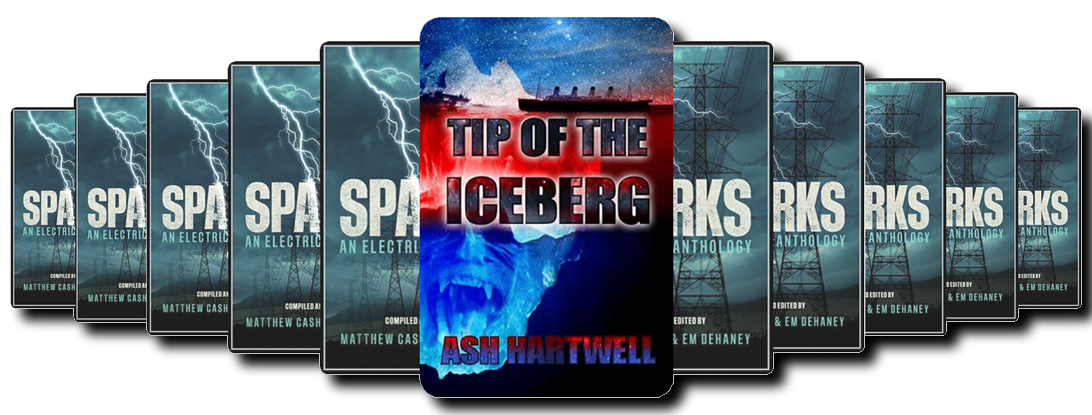
To help promote the new charity anthology Sparks an electric themed anthology to raise money for Resources for Autism, Ginger Nuts of Horror is bringing you a series of interview with the authors involved in the anthology. Today it is the turn of Ash Hartwell to feature in the spotlight.
Ash Hartwell was born in Maine in New England but lives in Old England. His stories have appeared in numerous anthologies including Rejected For Content, The Black Room Manuscripts and Monsters v Zombies. He had a collection of his own stories Zombies, Vamps and Fiends published in 2015 by JEA. 2017 saw Stitched Smile Publications (where he is a VIP Author) publish his debut novel Tip Of The Iceberg. He is currently writing his second novel and putting the finishing touches to a short novella which he hopes will be published early 2019.
Could you tell the readers a little bit about yourself?
I didn’t start writing until I’d turned forty so came into it later in life although it had long been a dream of mine. I spent the previous years working in the retail sector then as a nurse, working in a busy ICU. I’m married to Nicki, who is my muse but always sleeps with one eye open, and we have four children, although they are nearly all grown up (or should that be “all nearly grown up). We share our house with many cats and a lot of dogs.
What do you like to do when you're not writing?
Reading, obviously, and films. I also enjoy watching several different sports and generally spending time with the family.
Other than the horror genre, what else has been a major influence on your writing?
My grandmother encouraged me to read when I was young and she appeared to enjoy the more fantastical element in literature so I think it was instilled in me at an early age. My father enjoyed Arthur Conan Doyle’s Sherlock Holmes stories and several people had spotted his influence in my stories. My novel is set in 1912 and falls very much into the later Holmes era.
I also think my time in health care had an influence in twisting my creative side into something darker than it once was, there is nothing like a bloody trauma to corrupt the soul.
The term horror, especially when applied to fiction always carries such heavy connotations. What’s your feeling on the term “horror” and what do you think we can do to break past these assumptions?
I think people associate the term horror with the more extreme end of the genre. They expect blood and gore liberally spread throughout the book regardless of its relevance to the story. I think for that reason many ‘horror’ authors find themselves shoehorned into a different label ie ‘thriller’ or ‘paranormal thriller’ as opposed to ‘horror-paranormal’ or ‘horror-supernatural’. Most traditional book shops view horror as Stephen King with a dash of James Herbert and Neil Gaiman. Others such as Adam Nevill and Shaun Hutson are edging in but the limited horror space is still filled with safe anthologies featuring Shelly, James, Poe and Lovecraft.
How do we change it? Simple. Get people reading horror books from horror authors and shouting about it. Go and ask for horror titles from your local bookshop. They can order them. The success of the film IT should help refocus the public’s interest plus Sarah Pinborough topping the Sunday Times best sellers list gives us an opening to force our twisted beliefs right down the reader’s throats. (smiley face)
A lot of good horror movements have arisen as a direct result of the socio/political climate, considering the current state of the world where do you see horror going in the next few years?
Apocalyptic fear or a search for a dystopian new world order. Look at American Horror Story; cult. Zombies will feature but I think other fears will also surface, think Cloverfield and 10 Cloverfield Lane.
What are the books and films that helped to define you as an author?
The one book that started my love of the genre was James Herbert’s The Rats. Him and Richard Laymon dominated my reading list for twenty years – and I still pop back and revisit them occasionally. I love the old Hammer films, and The Exorcist and Omen. So many films over the years have had an effect it’s hard to narrow it down.
What new and upcoming authors do you think we should take notice off?
Adam Nevill, although I think it fair to say he’s already arrived. Duncan Bradshaw, JR Park and Sparks own David Court are all under-appreciated so search them out. Gary Mcmahon, AJ Brown, CC Adams Daniel Marc Chant and many others I haven’t got space for. Oh…and me, obviously! lol
How would you describe your writing style?
Erm… Well edited! Lol I hate these types of questions because I think others are better placed to define my style. I write how I feel I want to write. I like to think it’s literal and unrestricted. Not sure how to define it really. I’ll settle for – brilliant!
Are there any reviews of your work, positive or negative that have stayed with you?
Yes. Being compared to Conan Doyle was humbling. JR Park also waxed lyrical about Tip Of The Iceberg which left me speechless when I read it. I think when a writer you admire acknowledges your work it means so much more.
What aspects of writing to do you find the most difficult?
Spooling and gamma. Lol. Really – letting the work go to an editor.
Is there one subject you would never write about as an author?
Probably more than one but it depends on the angle you take on a subject. Will I use a subject for shock value alone? No.
How important are names to you in your books? Do you choose the names based on liking the way it sounds or the meaning?
In Tip Of The Iceberg which is set on the Titanic many of the names are real people who were there. Other names I looked at passenger lists to make sure they were time period correct. Some names I use in stories have specific meaning some are just right for the character. You know when you hit on the right name. Think Scarlett O’Hara in Gone With The Wind or Atticus Finch in To Kill A Mockingbird.
Writing, is not a static process, how have you developed as a writer over the years?
More economical with those horrible filler words. I listened to every piece of advice I was given and listened to every editor – especially those that rejected stories. If you want to improve these are the people to ask for advice. Many are surprisingly helpful if you ask nicely. I have always tried to keep moving upwards in my submissions – it’s easy to pick low hanging fruit but It won’t help you develop.
What tools do you feel are must-haves for writers?
Thesaurus. Patience. Thick skin.
What is the best piece of advice you ever received with regards to your writing?
Take your time. When you finish a story put it away for a while and look at it with fresh eyes.
Getting your worked noticed is one of the hardest things for a writer to achieve, how have you tried to approach this subject?
I’m really bad at this. Facebook, web page, readings and book signings. I also did a panel at Edge-Lit which was terrifying but fun. I’m looking in to things like Thunderclap etc so maybe you should ask me again in a few months.
To many writers, the characters they write become like children, who is your favourite child, and who is your least favourite to write for and why?
My favourite is always the one I’m writing at the time – as is the least favourite. I liked a character in my novel so much I think they may get a second outing but I won’t say who as it will spoil the book (which you are all downloading now, I hope 😊)
And are there any that you would like to forget about?
No – because each is a part of my development as a writer and so important in some way to me.
For those who haven’t read any of your books, which of your books do you think best represents your work and why?
Tip Of The Iceberg (my only novel) But I think the story I wrote for The Black Room Manuscripts vol 3 is a little special.
Do you have a favorite line or passage from your work, and would you like to share it with us?
Not really ever thought about it. Here’s one I like. The speaker is an old sailor giving advice to a young man out to make his fortune. They are playing cards. “Take my advice lad, travel through life like it’s a game of cards. Hold ‘em or fold ‘em, but do it with belief, not fear.”
Can you tell us about what you are working on next?
I’ve just finished a novella about a paramedic who arrives at a call out, then sits back and lets them die. Taunting them as they slip away. But he encounters the daughter of one of his victims when she starts work as a student paramedic at his ambulance station. Who knows the truth of what happened the day her father died?
If you could erase one horror cliché what would be your choice?
The predictability of the order of death in slasher movies.
What was the last great book you read, and what was the last book that disappointed you?
Rich Hawkins The Last Plague was great. If a book disappoints me I don’t ever tell.
What's the one question you wish you would get asked but never do? And what would be the answer
Do you want this pallet full of bundled up cash?
Yes.
Ash Hartwell was born in Maine in New England but lives in Old England. His stories have appeared in numerous anthologies including Rejected For Content, The Black Room Manuscripts and Monsters v Zombies. He had a collection of his own stories Zombies, Vamps and Fiends published in 2015 by JEA. 2017 saw Stitched Smile Publications (where he is a VIP Author) publish his debut novel Tip Of The Iceberg. He is currently writing his second novel and putting the finishing touches to a short novella which he hopes will be published early 2019.
Could you tell the readers a little bit about yourself?
I didn’t start writing until I’d turned forty so came into it later in life although it had long been a dream of mine. I spent the previous years working in the retail sector then as a nurse, working in a busy ICU. I’m married to Nicki, who is my muse but always sleeps with one eye open, and we have four children, although they are nearly all grown up (or should that be “all nearly grown up). We share our house with many cats and a lot of dogs.
What do you like to do when you're not writing?
Reading, obviously, and films. I also enjoy watching several different sports and generally spending time with the family.
Other than the horror genre, what else has been a major influence on your writing?
My grandmother encouraged me to read when I was young and she appeared to enjoy the more fantastical element in literature so I think it was instilled in me at an early age. My father enjoyed Arthur Conan Doyle’s Sherlock Holmes stories and several people had spotted his influence in my stories. My novel is set in 1912 and falls very much into the later Holmes era.
I also think my time in health care had an influence in twisting my creative side into something darker than it once was, there is nothing like a bloody trauma to corrupt the soul.
The term horror, especially when applied to fiction always carries such heavy connotations. What’s your feeling on the term “horror” and what do you think we can do to break past these assumptions?
I think people associate the term horror with the more extreme end of the genre. They expect blood and gore liberally spread throughout the book regardless of its relevance to the story. I think for that reason many ‘horror’ authors find themselves shoehorned into a different label ie ‘thriller’ or ‘paranormal thriller’ as opposed to ‘horror-paranormal’ or ‘horror-supernatural’. Most traditional book shops view horror as Stephen King with a dash of James Herbert and Neil Gaiman. Others such as Adam Nevill and Shaun Hutson are edging in but the limited horror space is still filled with safe anthologies featuring Shelly, James, Poe and Lovecraft.
How do we change it? Simple. Get people reading horror books from horror authors and shouting about it. Go and ask for horror titles from your local bookshop. They can order them. The success of the film IT should help refocus the public’s interest plus Sarah Pinborough topping the Sunday Times best sellers list gives us an opening to force our twisted beliefs right down the reader’s throats. (smiley face)
A lot of good horror movements have arisen as a direct result of the socio/political climate, considering the current state of the world where do you see horror going in the next few years?
Apocalyptic fear or a search for a dystopian new world order. Look at American Horror Story; cult. Zombies will feature but I think other fears will also surface, think Cloverfield and 10 Cloverfield Lane.
What are the books and films that helped to define you as an author?
The one book that started my love of the genre was James Herbert’s The Rats. Him and Richard Laymon dominated my reading list for twenty years – and I still pop back and revisit them occasionally. I love the old Hammer films, and The Exorcist and Omen. So many films over the years have had an effect it’s hard to narrow it down.
What new and upcoming authors do you think we should take notice off?
Adam Nevill, although I think it fair to say he’s already arrived. Duncan Bradshaw, JR Park and Sparks own David Court are all under-appreciated so search them out. Gary Mcmahon, AJ Brown, CC Adams Daniel Marc Chant and many others I haven’t got space for. Oh…and me, obviously! lol
How would you describe your writing style?
Erm… Well edited! Lol I hate these types of questions because I think others are better placed to define my style. I write how I feel I want to write. I like to think it’s literal and unrestricted. Not sure how to define it really. I’ll settle for – brilliant!
Are there any reviews of your work, positive or negative that have stayed with you?
Yes. Being compared to Conan Doyle was humbling. JR Park also waxed lyrical about Tip Of The Iceberg which left me speechless when I read it. I think when a writer you admire acknowledges your work it means so much more.
What aspects of writing to do you find the most difficult?
Spooling and gamma. Lol. Really – letting the work go to an editor.
Is there one subject you would never write about as an author?
Probably more than one but it depends on the angle you take on a subject. Will I use a subject for shock value alone? No.
How important are names to you in your books? Do you choose the names based on liking the way it sounds or the meaning?
In Tip Of The Iceberg which is set on the Titanic many of the names are real people who were there. Other names I looked at passenger lists to make sure they were time period correct. Some names I use in stories have specific meaning some are just right for the character. You know when you hit on the right name. Think Scarlett O’Hara in Gone With The Wind or Atticus Finch in To Kill A Mockingbird.
Writing, is not a static process, how have you developed as a writer over the years?
More economical with those horrible filler words. I listened to every piece of advice I was given and listened to every editor – especially those that rejected stories. If you want to improve these are the people to ask for advice. Many are surprisingly helpful if you ask nicely. I have always tried to keep moving upwards in my submissions – it’s easy to pick low hanging fruit but It won’t help you develop.
What tools do you feel are must-haves for writers?
Thesaurus. Patience. Thick skin.
What is the best piece of advice you ever received with regards to your writing?
Take your time. When you finish a story put it away for a while and look at it with fresh eyes.
Getting your worked noticed is one of the hardest things for a writer to achieve, how have you tried to approach this subject?
I’m really bad at this. Facebook, web page, readings and book signings. I also did a panel at Edge-Lit which was terrifying but fun. I’m looking in to things like Thunderclap etc so maybe you should ask me again in a few months.
To many writers, the characters they write become like children, who is your favourite child, and who is your least favourite to write for and why?
My favourite is always the one I’m writing at the time – as is the least favourite. I liked a character in my novel so much I think they may get a second outing but I won’t say who as it will spoil the book (which you are all downloading now, I hope 😊)
And are there any that you would like to forget about?
No – because each is a part of my development as a writer and so important in some way to me.
For those who haven’t read any of your books, which of your books do you think best represents your work and why?
Tip Of The Iceberg (my only novel) But I think the story I wrote for The Black Room Manuscripts vol 3 is a little special.
Do you have a favorite line or passage from your work, and would you like to share it with us?
Not really ever thought about it. Here’s one I like. The speaker is an old sailor giving advice to a young man out to make his fortune. They are playing cards. “Take my advice lad, travel through life like it’s a game of cards. Hold ‘em or fold ‘em, but do it with belief, not fear.”
Can you tell us about what you are working on next?
I’ve just finished a novella about a paramedic who arrives at a call out, then sits back and lets them die. Taunting them as they slip away. But he encounters the daughter of one of his victims when she starts work as a student paramedic at his ambulance station. Who knows the truth of what happened the day her father died?
If you could erase one horror cliché what would be your choice?
The predictability of the order of death in slasher movies.
What was the last great book you read, and what was the last book that disappointed you?
Rich Hawkins The Last Plague was great. If a book disappoints me I don’t ever tell.
What's the one question you wish you would get asked but never do? And what would be the answer
Do you want this pallet full of bundled up cash?
Yes.
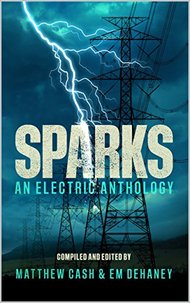 This is a public service announcement on behalf of Burdizzo Books. Ghosts in the machine? Killer currents? Demonic disturbances? Then you need Sparks! Keep your family safe from bulbs and batteries that go bump in the night by reading Sparks. 15 electrifying tales of horror, sci-fi, bizarro and fantasy. Visit post-apocalyptic nightmare worlds, listen to recordings of the dead, feel the friction of electric lady love and be struck by lightning from the past. Plug in, turn on, tune in and get buzzed. Sparks – it’s alive! | 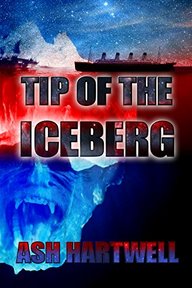 Esme Jackson grew up in the slums around the Southampton docks with dreams of travel and a better life for her sister. Bridget Grafton was born to Boston wealth and married to an arrogant, violent English industrialist. The two young women board RMS Titanic for her maiden voyage. Separated by money and divided by class, their lives become fatally entwined by a single act of humanity. Murder, deceit, betrayal, and friendship—all set against the violent destruction of the social order in the face of a rapidly spreading deadly virus. The voyage quickly becomes a struggle for survival... |
As part of Ginger Nuts of Horror's support of the Kickstarter for Tales From The Shadow Booth, we have teamed up with some of the contributors for a series of exclusive interviews. Today Ginger Nuts of Horror welcomes Stephen Hargadon. Born in London, Stephen Hargadon now lives and works in the north of England.
His short stories have been published in a number of places, including Black Static, Structo and Popshot magazines, the Irish Post, and on the LossLit website. His non-fiction has appeared on Litro.co.uk (including a well-received article on the joys of secondhand bookshops).
He has recently finished a novel.
To support this wonderful Kickstarter click here for the full details
- Shortlisted for the 2017 Observer/Anthony Burgess prize for Arts Journalism
- Runner-up 2016 Irish Post Short Story Competition
His short stories have been published in a number of places, including Black Static, Structo and Popshot magazines, the Irish Post, and on the LossLit website. His non-fiction has appeared on Litro.co.uk (including a well-received article on the joys of secondhand bookshops).
He has recently finished a novel.
To support this wonderful Kickstarter click here for the full details
Hello Stephen, Could you tell the readers a little bit about yourself?
I’ve had stories published in a number of places, online and in print. But Black Static is where my work has appeared most often – they’ve published nine of my stories, the most recent being ‘Langwell Sorrow’ and the first being ‘World of Trevor’ back in 2014. In fact ‘World of Trevor’ was my first story to be published anywhere – so, in terms of writing, I’m something of a newcomer, a stripling, although my face and hair suggest otherwise. I have an MA in Creative Writing from Manchester Metropolitan University. have yet to publish a book. I was born in Ilford, Essex, and now live in the north of England. I’ve done a variety of jobs over the years, most of them with ‘assistant’ in the title. I’ve recently finished writing a novel.
You have a very interesting viewpoint with regards to your fiction, “the finished thing, the completed text, is not as interesting as the act, the process of writing, the way in which words spark more words. Once it’s done, it’s time to move on” from this would it be fair to say that you write because you have to write, is writing something that you have to do?
I’d like to say I write because I have to write. That’s what most writers say. And certainly the process of writing, of being led by the words, of trying to harness them into something new and unique, something true, well, it’s a peculiarly absorbing task, occasionally rewarding, often frustrating. It’s a kind of involved daydream – which makes it sound easy, as if it’s a question of waiting for the words to arrive. Of course it is not easy at all. You hunt for the words. Sometimes they want to be found. Do I have to write? Probably not. The truth is that I spent much of my adult life not writing. Hours, days, weeks went by without a word being written on paper. I seemed to get by. I muddled through. I got drunk. I always wanted to write. But who doesn’t? There were plenty of words and stories in my head. Tomorrow I’ll write. Tomorrow I’ll be a different person. The urge or need to write – if indeed it was truly there at the time – came out in other forms – in booze, mostly. (Or rather drink thwarted or perverted the impulse. That’s another story, one I’m going to write.) The pubs are full of mumblers. I was a mumbler. Now, I suppose, I mumble on paper. If I stop writing I know I will not die. It’s not like breathing or eating or sleeping. But I know that if I stop writing something bad will happen.
With this in mind, if you don’t have any particular favourites, how would you go about selecting stories for a career spanning collection of your own work?
I don’t tend to read my stories once they’re finished. I don’t re-read the ones that are published. There’s always something I want to change. But I suppose I do have favourites. And others that I am not so keen on (it’d be rude of me to name them). As for a career-spanning collection – I wish. Although I’m silver-haired, and no longer lean, I’m still in my infancy when it comes to writing. But I have enough stories for a decent collection. Perhaps a collection of weird or dark tales. A lot of my stories seem to go down that route.
You have been shortlisted for a number of prestigious awards do you think these awards once they have been announced have any lasting impact on an author?
Well, I was shortlisted for the Observer / Anthony Burgess prize for arts journalism earlier this year. That was a treat. Burgess is one of my favourite writers. I never made it to the prize giving. Storm Doris was on the rampage, up-ending dustbins from Maidstone to Morecombe. All the trains to London were cancelled. I went home and watched a film instead as Doris ransacked the back garden. So I didn’t even get to see myself lose. In 2016 I was a runner-up in the Irish Post writing competition, another surprise. The Irish Post is a paper I remember from childhood. I suppose such things boost one’s confidence. They have a certain utilitarian value. I’m not sure about lasting impact. You write a story. Someone thinks it’s good. Someone else gives it an award. Someone else thinks it is rubbish. The story itself remains the same.
Your stories have been described as ‘strange beasts: wise, witty, and wonderfully dark. Each one is a thing entirely of its own kind, capable of surprising as much in the first reading as in the second and third.’ Do you always set out to write a story that ticks these boxes, or have you ever been tempted to write a more basic point A to point B type of story?
I’m always tempted to write a nice, simple story, full of good clean fun. I don’t know what happens. I don’t set out to write ‘weird’ or ‘strange’ stories at all. That quote is from Helen Marshall, who taught me briefly while I was studying at Manchester Metropolitan University. We had a couple of good chats about writing. When I start a story, I’m not always sure where it’s going to go. I start with a line of dialogue, perhaps. Or a situation, a voice. Perhaps I have an idea of how it’ll end. But the journey can change everything. Sometimes, as I get deeper into a story, there’s a click, a moment of recognition, and I know how it all comes together. Then it is almost a race to get the thing finished, before the arrival of boredom, before the thing goes flat. That click can be a moment of danger. If you suddenly realise what you’re writing about – ah, this story is all about this or that – well, that’s the point at which all the magic, all the ambiguity can be written out of the story.
You wrote a fascinating article for Litro on the joy of second hand book shops, where did your lover for them come from?
I’m not sure, really. There was a secondhand bookshop in Ilford, where I grew up. Edward Terry. The E in Edward, I seem to remember, was missing from the sign above the door. But I didn’t visit it as a child. I suppose a love of secondhand bookshops goes with a love of reading. It springs from the same place. In a new town or strange place, my head is always turned by the sight of a dusty old bookshop. Once upon a time I used to ogle pubs in the same way. You never quite know what you’re going to find in a secondhand bookshop. I do like them, even if they’re disappointing.
And what has been your most prized discovery from a second hand bookshop?
I was thrilled in my early twenties to find BS Johnson’s Christy Malry’s Own Double Entry in Edward Terry. It wasn’t a particularly rare edition, a King Penguin. I’d heard of this writer. He written a novel in a box (and that was the book I really wanted to find, forgotten and unappreciated in a bargain bin). I was always on the look-out for his stuff. This was in the days before the web. You couldn’t click a button and order a copy. Finding books was often a matter of chance. Collections were built slowly. You read what you could find. Or afford. I think it was a Saturday afternoon when I found Christy Malry. I went to Valentine’s Park with a couple of beers and read most of it in a sitting. Asian lads played cricket on the grass. The internet has changed how I browse in secondhand bookshops. I no longer hunt for favourite authors with the zeal I once had. I’m jaded, I suppose. Or lazy. I know it’s all there on the internet. I was in Whitby recently and there’s a little bookshop down one of the twisting side streets. I found a book called The Romance of Essex Inns, generously annotated in pencil by a previous owner, a good find. That’s the sort of thing I look out for these days.
There is a move from the more literary side of the writing world into writing about the weird, traditionally this has been the domain of the lowly genre writer. Why do you think they are doing this?
It’s not something, I must admit, that I’ve been aware of. I don’t really see much value in being wilfully or deliberately ‘weird’. I don’t tend to think of writing – or my writing at any rate – in terms of genre. I suppose my imagination tends towards what could be called the ‘weird’. I recently read a story by Krzhizhanovsky, ‘Quadraturin’. A man lives in a poky room or bedsit. He is sold a tin of paint, ‘an agent for biggerizing rooms’. He coats his room with the substance. His room grows and grows … He becomes lost within this expanding room … It’s a great story. Weird, phantasmagoric, absurd. But somehow true and believable, mundane, real. Life is weird. Thoughts are strange. It is inevitable that words arrange themselves into weird or strange stories.
One of your stories has been selected to appear in Shadow Booth, how did you come to appear in the anthology?
Dan Coxon invited me to submit a story. I didn’t know him, I hadn’t met him. It was nice to be invited. I think he knows my work from my stories in Black Static. It came out of the blue. I was happy to contribute.
Can you tell us about some of the themes of the story?
It’s set in an office. Spreadsheets feature strongly. Being glib, I could call it a story about a haunted spreadsheet. Stare into the spreadsheet for long enough and the spreadsheet will stare into you. I suppose it touches on the strangeness of office life. The strangeness of exchanging one’s time, one’s life, for money. The conversations, the routines. The politics, the petty ambitions, the loneliness, the fear, the daydreams, the boredom. It’s a kind of chunnering but inescapable horror.
What has been a major influence on your writing?
That’s hard to say. I really don’t know. I have authors I admire, authors I like to read. But I don’t know if they’ve influenced me. Influences come from many directions.
The term horror, especially when applied to fiction always carries such heavy connotations. What’s your feeling on the term “horror” and what do you think we can do to break past these assumptions?
I suppose most people think of films when they think of “horror”. They think of monsters, ghouls, Dracula, zombies, psychopaths, buckets of blood and glossy guts, screaming women and flashing knives. In terms of fiction, “horror” is perhaps associated, rightly or wrongly, with a kind of cheap thrill, with producing a shock or a jolt. I don’t think labels are particularly helpful. If something’s good, it’s good. I wrote a story called ‘The Visitors’, which appeared in Black Static. I think it was my third story they bought. I read a review online, on a horror site, which said something like, ‘it’s well written but I don’t know what this has to do with horror’. I took that as a compliment. I knew I must doing something right.
What are the books and films that helped to define you as an author?
There’s so many favourite books and films. I don’t know if they define me though. The list changes. Here’s a few, in no particular order, off the top of my head, as a new day, full of softness and melting blue, fills the window in front of me. A Matter of Life and Death. ‘The Nose’. ‘The Overcoat’. ‘Interference’ by LP Hartley. The short stories of VS Pritchett and Elspeth Davie. Casque D’Or. Rear Window. Amicus. Halloween. The Baby. Bad Timing. Anthony Burgess. Down Among the Meths Men. The Texas Chainsaw Massacre. The London Nobody Knows. Iris Murdoch. Prelude to a Certain Midnight. Repulsion. The Servant. ‘The Daemon Lover’ by Shirley Jackson. Keats … I could go on and on …
What new and upcoming authors do you think we should take notice off?
Naomi Hamill. How to be a Kosovan Bride has just been published by Salt. Dan Coxon’s anthology contains plenty of upcoming talent while Black Static has a great track record of encouraging new writers. There’s plenty of interesting, fresh writing to be found in so many small magazines, from Gorse to Popshot. Such publications deserve our support.
How would you describe your writing style?
I find it hard to describe my own writing. But this from Anthony Burgess strikes me as pertinent: ‘Language exists less to record the actual than to liberate the imagination.’
What aspects of writing to do you find the most difficult?
Editing or excising a cherished scene or a carefully worked passage is always difficult. And sometimes the words just don’t seem to flow. Or the mind is sluggish. Or tired. That’s when it’s difficult.
Is there one subject you would never write about as an author?
It’s not really something I think about. The subject is bound up with style. I never sit down and think: I’ll write a story about this topic or that topic. It’s more vague. I start with an image. Or a line. A character. A face. A situation. It goes from there. I usually know if a story is going to be dark. That’s about it.
Writing, is not a static process, how have you developed as a writer over the years?
I’ve not been writing for very long. My face is old but my words are young. I’m not sure how I’ve developed since ‘World of Trevor’ was published in Black Static back in 2014. I’m probably more inclined, these days, to attempt stories that do not have an overtly weird or supernatural element. But often they end up being weird anyway.
What tools do you feel are must-haves for writers?
Nose, eyes, ears, shears.
What is the best piece of advice you ever received with regards to your writing?
Turn down the volume.
Getting your worked noticed is one of the hardest things for a writer to achieve, how have you tried to approach this subject?
You just have to keep at it. There’s no secret. It’s difficult. When I wrote ‘World of Trevor’, it was just a story to me, a pub tale, a Mancunian pub tale. I didn’t think of it as a ‘weird tale’, although it had dark themes. It got rejected by a few literary mags. So I sent it to Black Static, not sure if they’d like it. They did. Andy Cox has published quite a few of my stories now. You build up slowly. I know there’s a few people out there who rate my stuff, who like what I write. The next step is to get a collection published. And to get my novel out there, too. Rejection and indifference – that comes with the territory.
To many writers, the characters they write become like children, who is your favourite child, and who is your least favourite to write for and why?
I don’t really see my characters as children. I’m a bad parent in that respect. I often forget their names.
What piece of your own work are you most proud of?
That’s difficult. At the moment I guess it’s ‘Langwell Sorrow’ in Black Static 60.
And are there any that you would like to forget about?
I’m more or less satisfied with everything that’s found its way into the real world of readers. There are probably some unpublished things that I am happy to let rot.
For those who haven’t read any of your books, which of your books do you think best represents your work and why?
My name has yet to appear on a spine. The stories in various issues of Black Static represent my darker imaginings. ‘The Bury Line’, ‘The Toilet’, ‘McMara’s Rock, ‘Mittens’, and so on. There’s ‘Through the Flowers’, too, which appeared in Popshot Magazine (illustrated with macabre invention by Kate O’Hara).
Do you have a favorite line or passage from your work, and would you like to share it with us?
Sometimes I read a line and can’t remember coming up with it. Did I write that? But I don’t have a favourite. I do enjoy some of things my characters say. I like to eavesdrop.
What was the last great book you read, and what was the last book that disappointed you?
I’ve just finished The Sea by John Banville, which is very good. I loved Zero K by DeLillo. I read a short story not long ago by Angela Readman. The narrator cuts her boyfriend in two. (It’s in the collection Don’t Try This At Home.) On one level, it’s a fairy story, a ‘weird tale’ – preposterous, flirting with whimsicality – but it conveys some very real and sad truths about the relationships between men and women, about loneliness, about performing a role in life, about disillusionment. At the start of the year I read LJ Davis’s blistering A Meaningful Life. Very funny. I was disappointed by Thomas Tyron’s The Other, which I’d been looking forward to. Some wonderful writing but it just didn’t excite me. Or frighten me. I remember it as a long, hazy, sunny dream. Perhaps that’s not such a bad thing. Perhaps I should give it another go.
What's the one question you wish you would get asked but never do? And what would be the answer?
I don’t know. But the answer is silence.
I’ve had stories published in a number of places, online and in print. But Black Static is where my work has appeared most often – they’ve published nine of my stories, the most recent being ‘Langwell Sorrow’ and the first being ‘World of Trevor’ back in 2014. In fact ‘World of Trevor’ was my first story to be published anywhere – so, in terms of writing, I’m something of a newcomer, a stripling, although my face and hair suggest otherwise. I have an MA in Creative Writing from Manchester Metropolitan University. have yet to publish a book. I was born in Ilford, Essex, and now live in the north of England. I’ve done a variety of jobs over the years, most of them with ‘assistant’ in the title. I’ve recently finished writing a novel.
You have a very interesting viewpoint with regards to your fiction, “the finished thing, the completed text, is not as interesting as the act, the process of writing, the way in which words spark more words. Once it’s done, it’s time to move on” from this would it be fair to say that you write because you have to write, is writing something that you have to do?
I’d like to say I write because I have to write. That’s what most writers say. And certainly the process of writing, of being led by the words, of trying to harness them into something new and unique, something true, well, it’s a peculiarly absorbing task, occasionally rewarding, often frustrating. It’s a kind of involved daydream – which makes it sound easy, as if it’s a question of waiting for the words to arrive. Of course it is not easy at all. You hunt for the words. Sometimes they want to be found. Do I have to write? Probably not. The truth is that I spent much of my adult life not writing. Hours, days, weeks went by without a word being written on paper. I seemed to get by. I muddled through. I got drunk. I always wanted to write. But who doesn’t? There were plenty of words and stories in my head. Tomorrow I’ll write. Tomorrow I’ll be a different person. The urge or need to write – if indeed it was truly there at the time – came out in other forms – in booze, mostly. (Or rather drink thwarted or perverted the impulse. That’s another story, one I’m going to write.) The pubs are full of mumblers. I was a mumbler. Now, I suppose, I mumble on paper. If I stop writing I know I will not die. It’s not like breathing or eating or sleeping. But I know that if I stop writing something bad will happen.
With this in mind, if you don’t have any particular favourites, how would you go about selecting stories for a career spanning collection of your own work?
I don’t tend to read my stories once they’re finished. I don’t re-read the ones that are published. There’s always something I want to change. But I suppose I do have favourites. And others that I am not so keen on (it’d be rude of me to name them). As for a career-spanning collection – I wish. Although I’m silver-haired, and no longer lean, I’m still in my infancy when it comes to writing. But I have enough stories for a decent collection. Perhaps a collection of weird or dark tales. A lot of my stories seem to go down that route.
You have been shortlisted for a number of prestigious awards do you think these awards once they have been announced have any lasting impact on an author?
Well, I was shortlisted for the Observer / Anthony Burgess prize for arts journalism earlier this year. That was a treat. Burgess is one of my favourite writers. I never made it to the prize giving. Storm Doris was on the rampage, up-ending dustbins from Maidstone to Morecombe. All the trains to London were cancelled. I went home and watched a film instead as Doris ransacked the back garden. So I didn’t even get to see myself lose. In 2016 I was a runner-up in the Irish Post writing competition, another surprise. The Irish Post is a paper I remember from childhood. I suppose such things boost one’s confidence. They have a certain utilitarian value. I’m not sure about lasting impact. You write a story. Someone thinks it’s good. Someone else gives it an award. Someone else thinks it is rubbish. The story itself remains the same.
Your stories have been described as ‘strange beasts: wise, witty, and wonderfully dark. Each one is a thing entirely of its own kind, capable of surprising as much in the first reading as in the second and third.’ Do you always set out to write a story that ticks these boxes, or have you ever been tempted to write a more basic point A to point B type of story?
I’m always tempted to write a nice, simple story, full of good clean fun. I don’t know what happens. I don’t set out to write ‘weird’ or ‘strange’ stories at all. That quote is from Helen Marshall, who taught me briefly while I was studying at Manchester Metropolitan University. We had a couple of good chats about writing. When I start a story, I’m not always sure where it’s going to go. I start with a line of dialogue, perhaps. Or a situation, a voice. Perhaps I have an idea of how it’ll end. But the journey can change everything. Sometimes, as I get deeper into a story, there’s a click, a moment of recognition, and I know how it all comes together. Then it is almost a race to get the thing finished, before the arrival of boredom, before the thing goes flat. That click can be a moment of danger. If you suddenly realise what you’re writing about – ah, this story is all about this or that – well, that’s the point at which all the magic, all the ambiguity can be written out of the story.
You wrote a fascinating article for Litro on the joy of second hand book shops, where did your lover for them come from?
I’m not sure, really. There was a secondhand bookshop in Ilford, where I grew up. Edward Terry. The E in Edward, I seem to remember, was missing from the sign above the door. But I didn’t visit it as a child. I suppose a love of secondhand bookshops goes with a love of reading. It springs from the same place. In a new town or strange place, my head is always turned by the sight of a dusty old bookshop. Once upon a time I used to ogle pubs in the same way. You never quite know what you’re going to find in a secondhand bookshop. I do like them, even if they’re disappointing.
And what has been your most prized discovery from a second hand bookshop?
I was thrilled in my early twenties to find BS Johnson’s Christy Malry’s Own Double Entry in Edward Terry. It wasn’t a particularly rare edition, a King Penguin. I’d heard of this writer. He written a novel in a box (and that was the book I really wanted to find, forgotten and unappreciated in a bargain bin). I was always on the look-out for his stuff. This was in the days before the web. You couldn’t click a button and order a copy. Finding books was often a matter of chance. Collections were built slowly. You read what you could find. Or afford. I think it was a Saturday afternoon when I found Christy Malry. I went to Valentine’s Park with a couple of beers and read most of it in a sitting. Asian lads played cricket on the grass. The internet has changed how I browse in secondhand bookshops. I no longer hunt for favourite authors with the zeal I once had. I’m jaded, I suppose. Or lazy. I know it’s all there on the internet. I was in Whitby recently and there’s a little bookshop down one of the twisting side streets. I found a book called The Romance of Essex Inns, generously annotated in pencil by a previous owner, a good find. That’s the sort of thing I look out for these days.
There is a move from the more literary side of the writing world into writing about the weird, traditionally this has been the domain of the lowly genre writer. Why do you think they are doing this?
It’s not something, I must admit, that I’ve been aware of. I don’t really see much value in being wilfully or deliberately ‘weird’. I don’t tend to think of writing – or my writing at any rate – in terms of genre. I suppose my imagination tends towards what could be called the ‘weird’. I recently read a story by Krzhizhanovsky, ‘Quadraturin’. A man lives in a poky room or bedsit. He is sold a tin of paint, ‘an agent for biggerizing rooms’. He coats his room with the substance. His room grows and grows … He becomes lost within this expanding room … It’s a great story. Weird, phantasmagoric, absurd. But somehow true and believable, mundane, real. Life is weird. Thoughts are strange. It is inevitable that words arrange themselves into weird or strange stories.
One of your stories has been selected to appear in Shadow Booth, how did you come to appear in the anthology?
Dan Coxon invited me to submit a story. I didn’t know him, I hadn’t met him. It was nice to be invited. I think he knows my work from my stories in Black Static. It came out of the blue. I was happy to contribute.
Can you tell us about some of the themes of the story?
It’s set in an office. Spreadsheets feature strongly. Being glib, I could call it a story about a haunted spreadsheet. Stare into the spreadsheet for long enough and the spreadsheet will stare into you. I suppose it touches on the strangeness of office life. The strangeness of exchanging one’s time, one’s life, for money. The conversations, the routines. The politics, the petty ambitions, the loneliness, the fear, the daydreams, the boredom. It’s a kind of chunnering but inescapable horror.
What has been a major influence on your writing?
That’s hard to say. I really don’t know. I have authors I admire, authors I like to read. But I don’t know if they’ve influenced me. Influences come from many directions.
The term horror, especially when applied to fiction always carries such heavy connotations. What’s your feeling on the term “horror” and what do you think we can do to break past these assumptions?
I suppose most people think of films when they think of “horror”. They think of monsters, ghouls, Dracula, zombies, psychopaths, buckets of blood and glossy guts, screaming women and flashing knives. In terms of fiction, “horror” is perhaps associated, rightly or wrongly, with a kind of cheap thrill, with producing a shock or a jolt. I don’t think labels are particularly helpful. If something’s good, it’s good. I wrote a story called ‘The Visitors’, which appeared in Black Static. I think it was my third story they bought. I read a review online, on a horror site, which said something like, ‘it’s well written but I don’t know what this has to do with horror’. I took that as a compliment. I knew I must doing something right.
What are the books and films that helped to define you as an author?
There’s so many favourite books and films. I don’t know if they define me though. The list changes. Here’s a few, in no particular order, off the top of my head, as a new day, full of softness and melting blue, fills the window in front of me. A Matter of Life and Death. ‘The Nose’. ‘The Overcoat’. ‘Interference’ by LP Hartley. The short stories of VS Pritchett and Elspeth Davie. Casque D’Or. Rear Window. Amicus. Halloween. The Baby. Bad Timing. Anthony Burgess. Down Among the Meths Men. The Texas Chainsaw Massacre. The London Nobody Knows. Iris Murdoch. Prelude to a Certain Midnight. Repulsion. The Servant. ‘The Daemon Lover’ by Shirley Jackson. Keats … I could go on and on …
What new and upcoming authors do you think we should take notice off?
Naomi Hamill. How to be a Kosovan Bride has just been published by Salt. Dan Coxon’s anthology contains plenty of upcoming talent while Black Static has a great track record of encouraging new writers. There’s plenty of interesting, fresh writing to be found in so many small magazines, from Gorse to Popshot. Such publications deserve our support.
How would you describe your writing style?
I find it hard to describe my own writing. But this from Anthony Burgess strikes me as pertinent: ‘Language exists less to record the actual than to liberate the imagination.’
What aspects of writing to do you find the most difficult?
Editing or excising a cherished scene or a carefully worked passage is always difficult. And sometimes the words just don’t seem to flow. Or the mind is sluggish. Or tired. That’s when it’s difficult.
Is there one subject you would never write about as an author?
It’s not really something I think about. The subject is bound up with style. I never sit down and think: I’ll write a story about this topic or that topic. It’s more vague. I start with an image. Or a line. A character. A face. A situation. It goes from there. I usually know if a story is going to be dark. That’s about it.
Writing, is not a static process, how have you developed as a writer over the years?
I’ve not been writing for very long. My face is old but my words are young. I’m not sure how I’ve developed since ‘World of Trevor’ was published in Black Static back in 2014. I’m probably more inclined, these days, to attempt stories that do not have an overtly weird or supernatural element. But often they end up being weird anyway.
What tools do you feel are must-haves for writers?
Nose, eyes, ears, shears.
What is the best piece of advice you ever received with regards to your writing?
Turn down the volume.
Getting your worked noticed is one of the hardest things for a writer to achieve, how have you tried to approach this subject?
You just have to keep at it. There’s no secret. It’s difficult. When I wrote ‘World of Trevor’, it was just a story to me, a pub tale, a Mancunian pub tale. I didn’t think of it as a ‘weird tale’, although it had dark themes. It got rejected by a few literary mags. So I sent it to Black Static, not sure if they’d like it. They did. Andy Cox has published quite a few of my stories now. You build up slowly. I know there’s a few people out there who rate my stuff, who like what I write. The next step is to get a collection published. And to get my novel out there, too. Rejection and indifference – that comes with the territory.
To many writers, the characters they write become like children, who is your favourite child, and who is your least favourite to write for and why?
I don’t really see my characters as children. I’m a bad parent in that respect. I often forget their names.
What piece of your own work are you most proud of?
That’s difficult. At the moment I guess it’s ‘Langwell Sorrow’ in Black Static 60.
And are there any that you would like to forget about?
I’m more or less satisfied with everything that’s found its way into the real world of readers. There are probably some unpublished things that I am happy to let rot.
For those who haven’t read any of your books, which of your books do you think best represents your work and why?
My name has yet to appear on a spine. The stories in various issues of Black Static represent my darker imaginings. ‘The Bury Line’, ‘The Toilet’, ‘McMara’s Rock, ‘Mittens’, and so on. There’s ‘Through the Flowers’, too, which appeared in Popshot Magazine (illustrated with macabre invention by Kate O’Hara).
Do you have a favorite line or passage from your work, and would you like to share it with us?
Sometimes I read a line and can’t remember coming up with it. Did I write that? But I don’t have a favourite. I do enjoy some of things my characters say. I like to eavesdrop.
What was the last great book you read, and what was the last book that disappointed you?
I’ve just finished The Sea by John Banville, which is very good. I loved Zero K by DeLillo. I read a short story not long ago by Angela Readman. The narrator cuts her boyfriend in two. (It’s in the collection Don’t Try This At Home.) On one level, it’s a fairy story, a ‘weird tale’ – preposterous, flirting with whimsicality – but it conveys some very real and sad truths about the relationships between men and women, about loneliness, about performing a role in life, about disillusionment. At the start of the year I read LJ Davis’s blistering A Meaningful Life. Very funny. I was disappointed by Thomas Tyron’s The Other, which I’d been looking forward to. Some wonderful writing but it just didn’t excite me. Or frighten me. I remember it as a long, hazy, sunny dream. Perhaps that’s not such a bad thing. Perhaps I should give it another go.
What's the one question you wish you would get asked but never do? And what would be the answer?
I don’t know. But the answer is silence.
CLICK HERE TO SUPPORT THE TALES FROM THE SHADOW BOOTH KICKSTARTER
RELATED POSTS
FACE THE STRANGE: A CASE FOR THE WEIRD AND THE EERIE BY DAN COXON
ENTER THE SHADOW BOOTH: AN INTERVIEW WITH SARAH READ
ENTER THE SHADOW BOOTH: AN INTERVIEW WITH GARY BUDDEN
To help promote the new charity anthology Sparks an electric themed anthology to raise money for Resources for Autism,Burdizzo Publishing. Ginger Nuts of Horror is bringing you a series of interview with the authors involved in the anthology. Today it is the turn of Lex H Jones to feature in the spotlight.
Lex H Jones is a British cross-genre author, horror fan and rock music enthusiast who lives in Sheffield, North England.
He has written articles for websites the Gingernuts of Horror and the Horrifically Horrifying Horror Blog on various subjects covering books, films, videogames and music. Lex’s first published novel is titled “Nick and Abe”, and he also has several short horror stories published in anthologies. When not working on his own writing Lex also contributes to the proofing and editing process for other authors.
You can find out more aboutr Lex and his work from the following links
His official Facebook page is: Lex H Jones , Amazon author page, Twitter
Could you tell the readers a little bit about yourself?
I was born and educated in Sheffied, where I still live at the time of writing this. I have more cats than I ever chose to adopt, as they just seem to find their way to my home. I also own three chinchillas, which are only moderately less annoying than the cats.
I’ve been doing writing as a serious thing (rather than purely for my own amusement) for about eight years now. I got my first novel, ‘Nick and Abe’ published at the start of 2016, and since then I’ve had quite a few short stories published in various horror anthologies. My current project is a series of 3 ‘weird fiction’ children’s books, for which I’ve also commissioned an artist to do the illustrations.
What do you like to do when you're not writing?
Whilst it’s probably a fairly standard answer for a writer, I like to read a lot. Not just books, but I’m also a big comic book fan too. I also love a good comedy podcast, it completely transforms a long journey. It’s probably fair to say I’m also very social, I love to have random daytrips with friends to obscure places, or have a games night, and I also spend an awful lot of time watching films.
Other than the horror genre, what else has been a major influence on your writing?
Sacrilegious as it may be to say so here, I’m not actually a horror writer. I do write horror stuff sometimes, but I’m as likely to write crime, fantasy, or a children’s book. So my writing is influenced by a wide spectrum of things depending which genre I’m currently focusing on!
The term horror, especially when applied to fiction always carries such heavy connotations. What’s your feeling on the term “horror” and what do you think we can do to break past these assumptions?
I think there is a very negative opinion that horror is somehow lesser than other genres. It’s seen by some writer-types as almost like a sub-genre. There’s a snobbery against it that something like crime or science fiction doesn’t seem to get. Personally I think that is massively unfair. Some of the most talented people putting pen to paper (or finger to keyboard) right now are in the horror genre, and people might see that if they were able to look past their own preconceptions.
As for what I think of as ‘horror’, it is a wonderfully wide term. Personally I love the supernatural. My favourite horror stories always include it in some way, subtle or otherwise. I think that’s probably because I’m very much a rationalist atheist in real life. I have no problem walking through a graveyard or dark wood because I am under no delusion that anything monstrous is lurking there (random perverts aside). However in a book where the supernatural is real, I’m transported to a world where there’s suddenly a lot more to be afraid of, and in the bizarre way that the human mind works, I find that appealing.
A lot of good horror movements have arisen as a direct result of the socio/political climate, considering the current state of the world where do you see horror going in the next few years?
I think there’s going to be increasing focus on the horror of abused authority. You only have to turn on the news to see the dangers of the ‘wrong’ people being given power, and it’s a form of horror all its own. The helplessness that comes from it is chilling. Two men with daft haircuts, neither of whom should be anywhere near a seat of power, could start a nuclear war tomorrow, something that either ends or completely ruins the lives of millions of people, and there’s nothing we can do about it. I think a lot of people will be feeling that, and I’ve already seen themed anthologies, films and TV series starting to take on a similar tone to reflect this. The idea of a ghost in your house suddenly seems less scary when there’s a mental Oompa Loompa having a row with what could basically be 1960s Thunderbirds Oriental stereotype villain, and they both have nuclear weapons.
What are the books and films that helped to define you as an author?
The first horror stories I remember reading and truly digesting, that weren’t aimed at children, were short ghost stories by M.R James. A little later I came to Poe, and Lovecraft and Machen. The greatest compliments I’ve had about my work have referenced the clear influence of one of those names, and whilst I would never use that comparison myself, it’s nice that other people thought to mention it.
What I love about M.R James’ ghost stories is that, more often than not, they’re very subtle. There’s often no witness to the terrifying thing that just happened, which makes it all the scarier. Imagine being the victim of a terrifying haunting, only to find you had no evidence with which to convince anybody of the reality of it? That’d probably drive you mad. It’s a bit different to typical American ghost story where the entire house turns into a giant face or something, which surely the entire street must notice. I’d like to think my work carries some of that same subtlety, but then again I’ll probably do a big House Face at some point.
What new and upcoming authors do you think we should take notice off?
I don’t know how “new and upcoming” these folks are because they’re pretty well established, but Rich Hawkins, Kit Power and Adam Neville immediately spring to mind.
How would you describe your writing style?
When I’m doing horror, as mentioned above I like to try and keep it subtle. That’s not always possible depending on the story, but where possible, I like to aim for it. I have no problem with gore, and I admire those who can write it so effectively that it can make the reader feel ill. There’s an art to that, and I defy anyone who says it’s cheap or easy to do. But it’s not what I like to write myself, so if you’re a fan of really brutal hard-core stuff, then my stories may not be really be for you.
Are there any reviews of your work, positive or negative that have stayed with you?
My favourite review of Nick and Abe, my novel, was somebody who emailed me to say that it made them go and call their mother, with whom they’d not spoken in a year. I won’t give away too much of the book, but the plot is strongly focussed on the idea of repairing broken relationships whilst you still can. So to hear from somebody for whom it had inspired a real-life version of that was heart-warming.
What aspects of writing to do you find the most difficult?
Starting a new book or story. I always have all the ideas running around in my head, but when it comes to making a start, I just stare at a blank page. Once the story gets running then I get into a flow and it all just pours out. But that first chapter, first page, first paragraph even, is always hard.
Is there one subject you would never write about as an author?
I’m very lucky in that I’ve had a relatively nice life up to now. Yes, I’ve had some issues with mental health and some experiences I’d rather not have, and made some mistakes I wish I could take back (who hasn’t?). But I’ve never been the victim of any serious abuse or trauma. As a result, I wouldn’t feel right writing about such things. For people who have sadly suffered such events, I understand the cathartic benefit of writing it down and making people aware, I really do. Getting stuff out of your head is often a good thing. But because I haven’t gone through that, it’s not an area in which I want to place my head.
How important are names to you in your books? Do you choose the names based on liking the way it sounds or the meaning?
This one really does vary an awful lot. Some characters pop into my head with their name attached so strongly that they couldn’t possibly be called anything else. Some get a name halfway through my writing the book. Others are named a particular thing for particular reason. In my novel, for instance, Nick is called Nick because he’s the Devil, and an old name for the Devil is ‘Ol’Nick’.
Writing, is not a static process, how have you developed as a writer over the years?
I plan things out a lot more now. I’ll have reams of notes and sketches and random scribbles before I start a story. I’ve found that’s become useful as time’s gone on, both to remind me of those little bits that pop into the mind during a shower or just before falling asleep, but also as it clears my mind to focus on other stuff. I do have a day job and a life beyond writing, so I am unfortunately forced to spend a lot of my time in the real world, meaning my head space is often required for far more boring things than ghost or monster stories.
What tools do you feel are must-haves for writers?
Someone to talk to about it. Not necessarily the process itself, but about your ideas. Even if it’s just someone to tell you something is crap. That’s often important to hear.
What is the best piece of advice you ever received with regards to your writing?
Don’t stop doing it. It’s such a clichéd thing to say isn’t it, but it’s so valuable because it’s so tempting to ignore each time it gets hard. But if you stop, you’ll never get further than you are now. So just keep writing.
Getting your worked noticed is one of the hardest things for a writer to achieve, how have you tried to approach this subject?
I’ve been lucky enough to be given opportunities to talk about my writing, particularly on this site where Jim has frequently been very gracious in that regard. I’ve also built up a good network of reviewers, bloggers and other writers, which has given me the chance to feature in anthologies alongside authors who are far, far better at all this than I am.
To many writers, the characters they write become like children, who is your favourite child, and who is your least favourite to write for and why?
My favourite character to write is one who the public at large haven’t even been properly introduced to yet. My largest project, which is constantly on-again off-again, is a series that focuses on a character called Harkins. He’s essentially a Victorian detective with the sixth sense, except that he’s more Danny Dyer than he is Sherlock Holmes. I love writing him, I’ve spent so long doing it that it often feels like he writes his own dialogue. At some point I’ll approach a publisher with this series.
My least favourite was actually the character of Oolu, which is the name given to Cthulhu in the first of my children’s books, ‘The Old One and The Sea’ (the Foreword for which was written by this site’s own Mr Mcleod.) Because Oolu doesn’t speak (I made that decision early on and stuck to it, for my sins) having him communicate with anyone else in the book was, frankly, a massive pain in the arse. I found ways round it, and I’ve been told by both my editor and subsequent readers that it worked well, which was a huge relief.
And are there any that you would like to forget about?
Same answer. If I ever have Oolu in another book I’m having him buy one of those little voice boxes that Stephen Hawking has. Stay silent now, you massive green prick.
For those who haven’t read any of your books, which of your books do you think best represents your work and why?
At the time of writing this, I only have one full length novel out there and several short horror stories. If you’re a horror fan, which would make sense given the website this interview is on, than I’d recommend any of the horror anthologies I’m lucky enough to have been featured in. I always make sure to add these to my author page on amazon, so you can find them all there if needed. However if you’re not strictly a horror reader, then I would suggest my novel ‘Nick and Abe’ as a good introduction to my work.
Do you have a favorite line or passage from your work, and would you like to share it with us?
I’m going to say ‘no’ to that one, because I worry that sort of thing never really works out of context. There may be particular scenes or dialogue I was proud of, rightly or wrongly, but pasted here without the context I’m not sure how well any of them would come across.
Can you tell us about your last book, and can you tell us about what you are working on next?
The last book I wrote was ‘The Old One and The Sea’, a children’s book re-telling the origin of the Cthulhu mythos in a different way. I’ve not sent it to any potential publishers yet, I’m just waiting on completion of some artwork. However it’s been read by a fair few people now, with several other authors providing blurb comments and such, and the response has been great. I can’t wait to get this one out there, as the thought of it possibly being the first ‘horror’ book a child reads is very exciting to me.
My next one is the second book in my children’s trilogy. They’re not linked in terms of character or narrative, but there’s thematic links and some subtle suggestion that they might be set in the same world. This one is called ‘Time and Frozen Tide’, and follows a young penguin (bear with me) who finds a T-Rex egg when some permafrost thaws. The cast of characters includes two human ghosts (a Victorian explorer and a WW2 fighter pilot), and there’s a whole mythology around the Southern Lights, time travel, the spirit world and all sorts of stuff. I am aware of how crazy it sounds so you’ll just have to trust me that it all flows together.
If you could erase one horror cliché what would be your choice?
The “not finishing someone” off thing. You’ve stabbed him in the leg, he’s fallen, so you just assume that’s the end of it. No, take that knife whilst he’s prone and push it through his throat. It’s not worth the risk, you know he’ll just get up and chase you in a minute if you don’t.
What was the last great book you read, and what was the last book that disappointed you?
I just read Night Music by John Connolly, and really enjoyed it. It’s a great collection of stories. Before that I read a bunch of graphic novels and the one that stands out as disappointing me was a massive Marvel Comics event called Secret Wars (not to be confused with the 1980s story of the same name.) It’s a good premise, lots of good characters….and it just goes nowhere. In true Marvel fashion, anything of significance gets magically undone, there’s no real consequence to anything, and you just come away feeling like you wasted your time. DC are much better at doing stories that have lasting impact.
What's the one question you wish you would get asked but never do? And what would be the answer
This one. And my answer would be “this one”. That just messed your head up, didn’t it?
But seriously, I’ve always liked the question ‘if you could go back to any point in history when would it be and what would you do?’ The answer isn’t dinosaurs or the Victorian era or anything like that, I’d just like to go back and meet my grandad when he was a young man. I was very close with him, but obviously I only ever knew him as a man in his late sixties onwards. I’d love to have met him when he was about my age (early-mid thirties). Perhaps I’d walk into the local pub where he went after work (he was an ambulance driver for a steelworks) and strike up a conversation with him. Maybe we’d get on. Maybe we wouldn’t, and without the Teflon coating of “he’s my grandson” he’d think I was some Goth twat who talked too much. Actually he wouldn’t, he didn’t have a judgemental bone in his body. Who knows, but it’d be nice to find out, and to get that opportunity to see him in his prime.
One final thought, Emma Dehaney is the loveliest person I’ve ever worked with and her editing skills are top notch. Was….was that OK? Can I have my cat back now please? Preferably with all its feet attached.
Lex H Jones is a British cross-genre author, horror fan and rock music enthusiast who lives in Sheffield, North England.
He has written articles for websites the Gingernuts of Horror and the Horrifically Horrifying Horror Blog on various subjects covering books, films, videogames and music. Lex’s first published novel is titled “Nick and Abe”, and he also has several short horror stories published in anthologies. When not working on his own writing Lex also contributes to the proofing and editing process for other authors.
You can find out more aboutr Lex and his work from the following links
His official Facebook page is: Lex H Jones , Amazon author page, Twitter
Could you tell the readers a little bit about yourself?
I was born and educated in Sheffied, where I still live at the time of writing this. I have more cats than I ever chose to adopt, as they just seem to find their way to my home. I also own three chinchillas, which are only moderately less annoying than the cats.
I’ve been doing writing as a serious thing (rather than purely for my own amusement) for about eight years now. I got my first novel, ‘Nick and Abe’ published at the start of 2016, and since then I’ve had quite a few short stories published in various horror anthologies. My current project is a series of 3 ‘weird fiction’ children’s books, for which I’ve also commissioned an artist to do the illustrations.
What do you like to do when you're not writing?
Whilst it’s probably a fairly standard answer for a writer, I like to read a lot. Not just books, but I’m also a big comic book fan too. I also love a good comedy podcast, it completely transforms a long journey. It’s probably fair to say I’m also very social, I love to have random daytrips with friends to obscure places, or have a games night, and I also spend an awful lot of time watching films.
Other than the horror genre, what else has been a major influence on your writing?
Sacrilegious as it may be to say so here, I’m not actually a horror writer. I do write horror stuff sometimes, but I’m as likely to write crime, fantasy, or a children’s book. So my writing is influenced by a wide spectrum of things depending which genre I’m currently focusing on!
The term horror, especially when applied to fiction always carries such heavy connotations. What’s your feeling on the term “horror” and what do you think we can do to break past these assumptions?
I think there is a very negative opinion that horror is somehow lesser than other genres. It’s seen by some writer-types as almost like a sub-genre. There’s a snobbery against it that something like crime or science fiction doesn’t seem to get. Personally I think that is massively unfair. Some of the most talented people putting pen to paper (or finger to keyboard) right now are in the horror genre, and people might see that if they were able to look past their own preconceptions.
As for what I think of as ‘horror’, it is a wonderfully wide term. Personally I love the supernatural. My favourite horror stories always include it in some way, subtle or otherwise. I think that’s probably because I’m very much a rationalist atheist in real life. I have no problem walking through a graveyard or dark wood because I am under no delusion that anything monstrous is lurking there (random perverts aside). However in a book where the supernatural is real, I’m transported to a world where there’s suddenly a lot more to be afraid of, and in the bizarre way that the human mind works, I find that appealing.
A lot of good horror movements have arisen as a direct result of the socio/political climate, considering the current state of the world where do you see horror going in the next few years?
I think there’s going to be increasing focus on the horror of abused authority. You only have to turn on the news to see the dangers of the ‘wrong’ people being given power, and it’s a form of horror all its own. The helplessness that comes from it is chilling. Two men with daft haircuts, neither of whom should be anywhere near a seat of power, could start a nuclear war tomorrow, something that either ends or completely ruins the lives of millions of people, and there’s nothing we can do about it. I think a lot of people will be feeling that, and I’ve already seen themed anthologies, films and TV series starting to take on a similar tone to reflect this. The idea of a ghost in your house suddenly seems less scary when there’s a mental Oompa Loompa having a row with what could basically be 1960s Thunderbirds Oriental stereotype villain, and they both have nuclear weapons.
What are the books and films that helped to define you as an author?
The first horror stories I remember reading and truly digesting, that weren’t aimed at children, were short ghost stories by M.R James. A little later I came to Poe, and Lovecraft and Machen. The greatest compliments I’ve had about my work have referenced the clear influence of one of those names, and whilst I would never use that comparison myself, it’s nice that other people thought to mention it.
What I love about M.R James’ ghost stories is that, more often than not, they’re very subtle. There’s often no witness to the terrifying thing that just happened, which makes it all the scarier. Imagine being the victim of a terrifying haunting, only to find you had no evidence with which to convince anybody of the reality of it? That’d probably drive you mad. It’s a bit different to typical American ghost story where the entire house turns into a giant face or something, which surely the entire street must notice. I’d like to think my work carries some of that same subtlety, but then again I’ll probably do a big House Face at some point.
What new and upcoming authors do you think we should take notice off?
I don’t know how “new and upcoming” these folks are because they’re pretty well established, but Rich Hawkins, Kit Power and Adam Neville immediately spring to mind.
How would you describe your writing style?
When I’m doing horror, as mentioned above I like to try and keep it subtle. That’s not always possible depending on the story, but where possible, I like to aim for it. I have no problem with gore, and I admire those who can write it so effectively that it can make the reader feel ill. There’s an art to that, and I defy anyone who says it’s cheap or easy to do. But it’s not what I like to write myself, so if you’re a fan of really brutal hard-core stuff, then my stories may not be really be for you.
Are there any reviews of your work, positive or negative that have stayed with you?
My favourite review of Nick and Abe, my novel, was somebody who emailed me to say that it made them go and call their mother, with whom they’d not spoken in a year. I won’t give away too much of the book, but the plot is strongly focussed on the idea of repairing broken relationships whilst you still can. So to hear from somebody for whom it had inspired a real-life version of that was heart-warming.
What aspects of writing to do you find the most difficult?
Starting a new book or story. I always have all the ideas running around in my head, but when it comes to making a start, I just stare at a blank page. Once the story gets running then I get into a flow and it all just pours out. But that first chapter, first page, first paragraph even, is always hard.
Is there one subject you would never write about as an author?
I’m very lucky in that I’ve had a relatively nice life up to now. Yes, I’ve had some issues with mental health and some experiences I’d rather not have, and made some mistakes I wish I could take back (who hasn’t?). But I’ve never been the victim of any serious abuse or trauma. As a result, I wouldn’t feel right writing about such things. For people who have sadly suffered such events, I understand the cathartic benefit of writing it down and making people aware, I really do. Getting stuff out of your head is often a good thing. But because I haven’t gone through that, it’s not an area in which I want to place my head.
How important are names to you in your books? Do you choose the names based on liking the way it sounds or the meaning?
This one really does vary an awful lot. Some characters pop into my head with their name attached so strongly that they couldn’t possibly be called anything else. Some get a name halfway through my writing the book. Others are named a particular thing for particular reason. In my novel, for instance, Nick is called Nick because he’s the Devil, and an old name for the Devil is ‘Ol’Nick’.
Writing, is not a static process, how have you developed as a writer over the years?
I plan things out a lot more now. I’ll have reams of notes and sketches and random scribbles before I start a story. I’ve found that’s become useful as time’s gone on, both to remind me of those little bits that pop into the mind during a shower or just before falling asleep, but also as it clears my mind to focus on other stuff. I do have a day job and a life beyond writing, so I am unfortunately forced to spend a lot of my time in the real world, meaning my head space is often required for far more boring things than ghost or monster stories.
What tools do you feel are must-haves for writers?
Someone to talk to about it. Not necessarily the process itself, but about your ideas. Even if it’s just someone to tell you something is crap. That’s often important to hear.
What is the best piece of advice you ever received with regards to your writing?
Don’t stop doing it. It’s such a clichéd thing to say isn’t it, but it’s so valuable because it’s so tempting to ignore each time it gets hard. But if you stop, you’ll never get further than you are now. So just keep writing.
Getting your worked noticed is one of the hardest things for a writer to achieve, how have you tried to approach this subject?
I’ve been lucky enough to be given opportunities to talk about my writing, particularly on this site where Jim has frequently been very gracious in that regard. I’ve also built up a good network of reviewers, bloggers and other writers, which has given me the chance to feature in anthologies alongside authors who are far, far better at all this than I am.
To many writers, the characters they write become like children, who is your favourite child, and who is your least favourite to write for and why?
My favourite character to write is one who the public at large haven’t even been properly introduced to yet. My largest project, which is constantly on-again off-again, is a series that focuses on a character called Harkins. He’s essentially a Victorian detective with the sixth sense, except that he’s more Danny Dyer than he is Sherlock Holmes. I love writing him, I’ve spent so long doing it that it often feels like he writes his own dialogue. At some point I’ll approach a publisher with this series.
My least favourite was actually the character of Oolu, which is the name given to Cthulhu in the first of my children’s books, ‘The Old One and The Sea’ (the Foreword for which was written by this site’s own Mr Mcleod.) Because Oolu doesn’t speak (I made that decision early on and stuck to it, for my sins) having him communicate with anyone else in the book was, frankly, a massive pain in the arse. I found ways round it, and I’ve been told by both my editor and subsequent readers that it worked well, which was a huge relief.
And are there any that you would like to forget about?
Same answer. If I ever have Oolu in another book I’m having him buy one of those little voice boxes that Stephen Hawking has. Stay silent now, you massive green prick.
For those who haven’t read any of your books, which of your books do you think best represents your work and why?
At the time of writing this, I only have one full length novel out there and several short horror stories. If you’re a horror fan, which would make sense given the website this interview is on, than I’d recommend any of the horror anthologies I’m lucky enough to have been featured in. I always make sure to add these to my author page on amazon, so you can find them all there if needed. However if you’re not strictly a horror reader, then I would suggest my novel ‘Nick and Abe’ as a good introduction to my work.
Do you have a favorite line or passage from your work, and would you like to share it with us?
I’m going to say ‘no’ to that one, because I worry that sort of thing never really works out of context. There may be particular scenes or dialogue I was proud of, rightly or wrongly, but pasted here without the context I’m not sure how well any of them would come across.
Can you tell us about your last book, and can you tell us about what you are working on next?
The last book I wrote was ‘The Old One and The Sea’, a children’s book re-telling the origin of the Cthulhu mythos in a different way. I’ve not sent it to any potential publishers yet, I’m just waiting on completion of some artwork. However it’s been read by a fair few people now, with several other authors providing blurb comments and such, and the response has been great. I can’t wait to get this one out there, as the thought of it possibly being the first ‘horror’ book a child reads is very exciting to me.
My next one is the second book in my children’s trilogy. They’re not linked in terms of character or narrative, but there’s thematic links and some subtle suggestion that they might be set in the same world. This one is called ‘Time and Frozen Tide’, and follows a young penguin (bear with me) who finds a T-Rex egg when some permafrost thaws. The cast of characters includes two human ghosts (a Victorian explorer and a WW2 fighter pilot), and there’s a whole mythology around the Southern Lights, time travel, the spirit world and all sorts of stuff. I am aware of how crazy it sounds so you’ll just have to trust me that it all flows together.
If you could erase one horror cliché what would be your choice?
The “not finishing someone” off thing. You’ve stabbed him in the leg, he’s fallen, so you just assume that’s the end of it. No, take that knife whilst he’s prone and push it through his throat. It’s not worth the risk, you know he’ll just get up and chase you in a minute if you don’t.
What was the last great book you read, and what was the last book that disappointed you?
I just read Night Music by John Connolly, and really enjoyed it. It’s a great collection of stories. Before that I read a bunch of graphic novels and the one that stands out as disappointing me was a massive Marvel Comics event called Secret Wars (not to be confused with the 1980s story of the same name.) It’s a good premise, lots of good characters….and it just goes nowhere. In true Marvel fashion, anything of significance gets magically undone, there’s no real consequence to anything, and you just come away feeling like you wasted your time. DC are much better at doing stories that have lasting impact.
What's the one question you wish you would get asked but never do? And what would be the answer
This one. And my answer would be “this one”. That just messed your head up, didn’t it?
But seriously, I’ve always liked the question ‘if you could go back to any point in history when would it be and what would you do?’ The answer isn’t dinosaurs or the Victorian era or anything like that, I’d just like to go back and meet my grandad when he was a young man. I was very close with him, but obviously I only ever knew him as a man in his late sixties onwards. I’d love to have met him when he was about my age (early-mid thirties). Perhaps I’d walk into the local pub where he went after work (he was an ambulance driver for a steelworks) and strike up a conversation with him. Maybe we’d get on. Maybe we wouldn’t, and without the Teflon coating of “he’s my grandson” he’d think I was some Goth twat who talked too much. Actually he wouldn’t, he didn’t have a judgemental bone in his body. Who knows, but it’d be nice to find out, and to get that opportunity to see him in his prime.
One final thought, Emma Dehaney is the loveliest person I’ve ever worked with and her editing skills are top notch. Was….was that OK? Can I have my cat back now please? Preferably with all its feet attached.
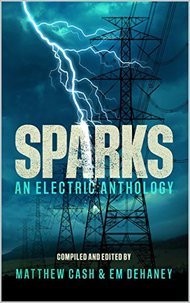 This is a public service announcement on behalf of Burdizzo Books. Ghosts in the machine? Killer currents? Demonic disturbances? Then you need Sparks! Keep your family safe from bulbs and batteries that go bump in the night by reading Sparks. 15 electrifying tales of horror, sci-fi, bizarro and fantasy. Visit post-apocalyptic nightmare worlds, listen to recordings of the dead, feel the friction of electric lady love and be struck by lightning from the past. Plug in, turn on, tune in and get buzzed. Sparks – it’s alive! |  Every once in a while, God and Lucifer visit the earth and make a wager. Now it’s time for the next one; the most daring yet, and quite possibly the last. “This venture to live as men for a full year had been such a hilarious idea to start with. Prove Abe wrong… again… then head back to their respective domains and gloat about it forever. Only it hadn’t worked out that way. Things were different now. Having omniscient sight removed from him actually made Nick see things more clearly than he ever had. There’s harm in getting too close to a picture, but a different sort of harm comes from getting too far away from it.” What starts as a simple contest becomes something more as their newfound humanity forces them to revaluate their relationship not only with the world, but with each other as father and son. |
Related Posts
A SPARK OF GENIUS: AN INTERVIEW WITH MARK CASSELL
CHILDHOOD FEARS: LEX JONES RETURNS TO HIS PAST


 RSS Feed
Archives
May 2023
April 2023
March 2023
February 2023
January 2023
December 2022
November 2022
October 2022
September 2022
August 2022
July 2022
June 2022
May 2022
April 2022
March 2022
February 2022
January 2022
December 2021
November 2021
October 2021
September 2021
August 2021
July 2021
June 2021
May 2021
April 2021
March 2021
February 2021
January 2021
December 2020
November 2020
October 2020
September 2020
August 2020
July 2020
June 2020
May 2020
April 2020
March 2020
February 2020
January 2020
December 2019
November 2019
October 2019
September 2019
August 2019
July 2019
June 2019
May 2019
April 2019
March 2019
February 2019
January 2019
December 2018
November 2018
October 2018
September 2018
August 2018
July 2018
June 2018
May 2018
April 2018
March 2018
February 2018
January 2018
December 2017
November 2017
October 2017
September 2017
June 2017
April 2017
March 2017
February 2017
January 2017
December 2016
November 2016
October 2016
September 2016
August 2016
June 2016
May 2016
April 2016
March 2016
February 2016
January 2016
December 2015
November 2015
September 2015
August 2015
July 2015
June 2015
May 2015
April 2015
March 2015
February 2015
January 2015
December 2014
November 2014
October 2014
September 2014
August 2014
July 2014
June 2014
May 2014
April 2014
March 2014
February 2014
January 2014
December 2013
November 2013
October 2013
September 2013
August 2013
July 2013
June 2013
May 2013
April 2013
March 2013
June 2012

|

|