

FIVE MINUTES WITH ROBERT KENT
14/10/2017
 Robert Kent is the author of the horror novels The Book of David and All Together Now: A Zombie Story, the middle grade novel Banneker Bones and the Giant Robot Bees, and the novellas Pizza Delivery and All Right Now: A Short Zombie Story. The first chapter in his serial horror novel, The Book of David, is permanently free to download. He runs the popular blog for writers, MIDDLE GRADE NINJA, which features interviews and guest posts from over 500 authors, literary agents, and other publishing professionals, and was the recipient of Middle Shelf Magazine’s Best Blog award. He is a proud member of SCBWI, The Horror Writers Association of America, and the Young Adult Cannibals. Robert Kent holds degrees in Literature and Creative Writing from Indiana University and owns over 900 Batman action figures. He lives with his family in Indianapolis where he teaches courses at the Indiana Writers Center and is hard at work on his next book. Could you tell the readers a little bit about yourself? I'm a stay-at-home dad to a demanding three-year-old and I overhear a whole lot of Daniel Tiger's Neighborhood (I try never to look directly into it), which makes me long to write much filthier stories than I might otherwise if I were allowed to watch The Walking Dead while my little one is awake. I'm convinced there would be far less violence and profanity in The Book of David if I didn't have to hear "Won't you ride along with me?" more than three times in a day. What do you like to do when you're not writing? I'm an avid reader and audiobook listener. I also genuinely enjoy long walks, but not in a dating profile kind of way. More in a figuring-out-story-details-hopefully-without-getting-hit-by-a-truck-Stephen-King-style kind of way. I'm also a lover of videogames with the sound turned down so I can listen to a book. But videogames don't get played so often, alas, because I'm usually writing or parenting. It would perhaps be fairer to say I'm a man who dreams of one day finishing Horizon Zero Dawn. Other than the horror genre, what else has been a major influence on your writing? I have a degree in literature, so I've at least read a lot of great books. I love novels of all types and would put non-horror stories like Memoires of a Geisha and The Martian at the top of my favorite books list. I also write books for children, which is the focus of my blog (though I interview horror authors there as well, such as my hero, Jack Ketchum). I try to read as widely as possible and have forced myself to read stand-out novels from genres I'm not otherwise interested in, such as Twilight (technically horror, I guess) or Gone with the Wind (not bad if you can overlook being encouraged to root for the Klan). There are elements of horror in most genres and the best horror incorporates elements from other genres. I like to read about characters solving mysteries and finding true love while being murdered:) The term horror, especially when applied to fiction always carries such heavy connotations. What’s your feeling on the term “horror” and what do you think we can do to break past these assumptions? I like horror novels, obviously, and when I see that a book is listed in the horror section, I'll at least read its description, if not a sample. I like that so many of my novels are classified as "horror" because it means they're in good company and I would be interested in them if I didn't already know how they ended. As for assumptions, there are some types of readers who prefer to steer clear of anything that might upset them, which is unfortunate, as it's good for you to be upset occasionally. It's also true that bad horror is more noticeable than bad fiction in other genres because horror is so very do or die. A horror story is either scary or it isn't. A mystery can be obvious, implausibly solved, but still enjoyable to readers if the detective's kitten gets up to adorable antics. A non-scary horror story can't necessarily win over horror hounds with a cute romantic subplot. Being a horror fan often means having to wade through some not great stories to find gold, but that's part of the fun. It makes finding something really scary all the more special. Non fans aren't always willing to put up with such a hit or miss genre. Me, I'll never claim Bait 3D is a great movie, but I own a copy and love to rewatch it with friends because sharks in a grocery store is my idea of a good time. A lot of good horror movements have arisen as a direct result of the socio/political climate, considering the current state of the world where do you see horror going in the next few years? Zombies are likely to stay popular under the Trump Whitehouse as is other post apocalypse stuff since we're being forced to consider the possibility of such a world tweet by tweet. The It movie making so much cash means we're probably going to see a lot of Stephen King remakes. My own novel, The Book of David, is very much a story in part about a small Indiana town revolting against the forces of economic inequality and the growing realization for most Americans that its government of the people has mostly left the people behind. A lot of bankers die in that story because I'm still pissed off about the bailouts of the largest financial institutions. David Walters sees a coming ending of The United States because the insanity I'm watching in the news has me wondering if my country's going to survive an openly racist president who doesn't care we know he's lying. What are the books and films that helped to define you as an author? Almost too many influences to name them all. Stephen King and Roald Dahl are the authors I've spent the most time studying, though the work of Ira Levin, JK Rowling, Michael Crichton, John Irving, and Frank Miller have all been tremendous sources of inspiration as well. I'd also credit comedians such as Bill Hicks, Bill Burr, George Carlin, Chris Rock, and Ellen DeGeneres for helping me to find my voice. As for films, I can't get enough Quentin Tarantino or Steven Spielberg. I think The Exorcist is the film that scared me the most (the book also kept me up late), but I'm always up for another Paranormal Activity. I revisited The Conjuring 1 and 2 while writing The Book of David, and I'm a sucker for anything with a superhero in it. What new and upcoming authors do you think we should take notice of? I've got so many writer friends, I should list them all, but I'll just say that I think Laura Martin's Edge of Extinction novels are amazing. As for horror, I greatly enjoyed Courtney Summers' This is Not a Test, and Amy Lukavics is keeping her good company in YA horror. He may already have up and came, but I look forward to Joe Hill's books. How would you describe your writing style? It varies a little depending on the story, but typically I use a lot of short paragraphs and short chapters, which usually end on cliffhangers. I like to keep things moving, but I always focus on character as the reader won't be scared if they don't care if our heroes live or die. I also like to make the reader laugh where I can to make them comfortable before I show them something awful. The Book of David is my homage to Stephen King, so I intentionally aped his style and made multiple references to his work. I wrote him an open letter to tell him just how much his work has influenced my own. Are there any reviews of your work, positive or negative that have stayed with you? I'm always thrilled to read that a reader was terrified reading something I wrote. That's pretty much the whole reason I'm writing these scary stories. The reviews that really stayed with me were the ones written about The Book of David's fourth installment because it ended on a huge cliffhanger and it took me 7 months to get the fifth installment published. I was thrilled the reviewers were pissed about the wait because it meant they were hooked, but I felt very guilty about being so late to complete the story. What aspects of writing do you find the most difficult? The middle of a story, especially a long one, is usually the hardest part. The initial excitement of the opening is done, but the joy of completion seems forever away. Worse is the fifth or sixth draft, where there's hard work that still needs to be done, but I'm ready to start the next story. Is there one subject you would never write about as an author? I like to think not, but I'd have to have a really good reason to write a story about a little girl and her love for a horse. As I review middle grade books at Middle Grade Ninja, I've read more than one such book, and I don't think I have anything to add on the subject (unless the horse is allowed murder the little girl). How important are names to you in your books? Do you choose the names based on liking the way it sounds or the meaning? Depends on the character and their significance to the story. I keep a phonebook handy for most character names. However, The Book of David contains a lot of religious horror and it's not a coincidence that David's son is named Peter or that his father is named Abraham or that he's haunted by a painting named Sexy Jesus. Writing, is not a static process, how have you developed as a writer over the years? I've taken a lot of writing classes, attended a lot of conferences, and joined a few critique groups. I also teach classes on writing, which is the best way to learn. But the best thing I've done for my writing is to keep doing it. I've been writing seriously for more than two decades, and I've read a lot of different books during that time. No writer can develop without a whole lot of writing and reading. What tools do you feel are must-haves for writers? Something to write on and something to write with, though I prefer a laptop. Only writing is writing, so make sure you do that first, then seek out things to accentuate it. Beyond that, I strongly recommend a critique group. God knows my books are better for mine. I also strongly recommend reading and rereading Story by Robert McKee. That book changed my life. A lava lamp is also nice to look at when you're considering the precise wording of a new sentence. What is the best piece of advice you ever received with regards to your writing? I had a writing instructor insist that I start a horror story at the first instance of violence, because the class agreed that the first five pages of the story was too slow and things didn't get interesting until the killer was threatening the protagonist. After that, the class was unanimous that the story was scary. I argued those first five pages were where we got to know the character so we would care about him when it mattered. But the instructor was a big deal author, so I cut those five pages. When I submitted the story to a new workshop, no one found it scary. They didn't care about the character, so they didn't care what happened to him. I realized the big deal author, while not entirely wrong, hadn't been entirely right either. That's when it hit me that no one knows how to write perfectly all the time. We're all figuring this out as we go and doing the best we can. I rewrote the five pages to three pages and opened with a promise of the violence to come on page four, thus hooking the reader and keeping them hooked because they cared about the protagonist. That version of the story got published. Getting your work noticed is one of the hardest things for a writer to achieve, how have you tried to approach this subject? A little bit of everything and I'm still trying new things, like this interview. I've done book signings, given talks at conferences, and appeared on various websites. I also maintain my own blog focused on promoting books and authors, things that potential readers are likely to be interested in. But my number one marketing strategy has always been to publish the best possible book and make sure that it's one I would want to read. Fans of my work have blogged about it and shared it on social media, giving me a far wider reach than I could hope to achieve on my own. If they like your book, readers are the best PR people there are. To many writers, the characters they write become like children. Who is your favourite child, and who is your least favourite to write for and why? I love them all, of course, and they're all my favorite when I'm writing them. My favorite character in a horror story has been Sexy Jesus in The Book of David because He's particularly foul-mouthed and says loads of offensive things while appearing as our Lord and Savior. Having an erotic depiction of Jesus say things like, "My mouth's as dry as your grandmother's wrinkled cunt," gives me the titillating thrill of being really naughty. I don't know that I have a least favorite. If I can't stand writing about someone, I know the reader probably won't like them either. I love a good villain or even a slightly obnoxious character because they make stories fun. I either find a way to love a character, or they don't make the final cut. What piece of your own work are you most proud of? Impossible question. I love everything I've published and I'm proud of it all or I wouldn't have put my name on it. At the moment, the work I'm proudest of is The Book of David as I really like that story and I've just finished it. But I'm nearly convinced my newest work in progress will be my best ever, which may or may not be true, but I need to think so to finish it. And are there any that you would like to forget about? I wrote a story in college about a dying hooker that I hated when I wrote it. All these years later, I still hate it. A lot of my classmates declared it my best work, but they're wrong. That terrible story is on a shelf and there it will forever stay because the world is better off not reading it. For those who haven’t read any of your books, which of your books do you think best represents your work and why? Probably All Together Now: A Zombie Story. It's really violent, but written from the perspective of a rather innocent 15-year-old and his 6-year-old brother. The young voices display some of my middle grade sensibility, but the unrelenting bleakness of a post apocalypse is the stuff of an adult's nightmare. The readers who love that book usually tell me it snuck up on them because they thought I was playing nice and that story gets particularly mean before the end. Readers tell me it haunts them because they thought they were safe. I like that in a story. Do you have a favorite line or passage from your work, and would you like to share it with us? Several, but here's one from The Book of David that's not a spoiler (bonus points if you catch the Stephen King reference): Sexy Jesus scrunched His features and twisted His lips, grunting as though He were taking a particularly difficult dump. When He opened His eyes, he said, "My word is a lamp from My feet and a light unto your path." "What does that even me—" David stopped speaking once Sexy Jesus walked away from him, leaving glowing footprints radiating in His wake, bright enough to illuminate the ground around them. Sexy Jesus strode across the desert, and David followed. The lighted foot prints showed David the way, but they disappeared after he'd passed them, simply shutting off as though someone were throwing a switch. He varied his pace until he was satisfied that the footprints weren't on any kind of timer, but were deliberately waiting to fade until he passed them, as though to prevent him from seeing the path back. "Hey, Davey," Sexy Jesus called over His shoulder. "I don't see any of your glowing footprints. Do you?" "You know I don't." "Huh. I guess if you look down and see only one set of footprints in the sand, I must be carrying your bitch ass." He laughed uproariously, snorting before He got Himself under control. Can you tell us about your last book, and can you tell us about what you are working on next? My next book is Banneker Bones 2, as I try to alternate between horror stories and friendly middle grade books to give myself a little break. My last was The Book of David, and you can download the first of five installments FREE. Here's the description: "The Lord has appointed you to a special duty in these last days and given your life a unique purpose. Will you turn away from the myriad temptations of this wicked world and answer His righteous calling?" The Walters family has just purchased the perfect home if only it weren't located in the small hick town of Harrington, Indiana, and if only it weren't haunted. David Walters is an atheist now, but his minister father taught him from a young age that Satan would one day deceive all mankind by pretending his demons were extraterrestrials. The day the Walters family moves in, they spot a flying saucer outside their new home. Things only get stranger from there. David Walters is about to learn what it means to be truly haunted, forcing him to confront his past, fight for his family, his soul, and his sanity. If you could erase one horror cliché what would be your choice? I hate it when cats jump out and make loud noises for an early jump. Unless the cat is actually the killer. Then it's okay:) What was the last great book you read, and what was the last book that disappointed you? I just this week finally got around to reading Game of Thrones. I'm shamefully late, I know, but it lived up to the hype and I'm looking forward to A Clash of Kings. As for disappointing me, it takes a lot to irritate me so much I'll publically reveal I didn't care for your book:) Probably the last writer who did that was Robert Heinlein in Time Enough for Love, which was a pretty good time travel story... until our hero went back in time to have sex with his mom, then into the future to have sex with his daughters. What the hell, Heinlein? What's the one question you wish you would get asked but never do? And what would be the answer? "Wouldn't you love it if everyone who read this interview downloaded at least the first part of The Book of David, which is free, and gave it a shot?" Excellent question. I would love that. And thanks for having me. This was fun.  "The Lord has appointed you to a special duty in these last days and given your life a unique purpose. Will you turn away from the myriad temptations of this wicked world and answer His righteous calling?"
The Walters family has just purchased the perfect home if only it weren't located in the small hick town of Harrington, Indiana, and if only it weren't haunted. David Walters is an atheist now, but his minister father taught him from a young age that Satan would one day deceive all mankind by pretending his demons were extraterrestrials. The day the Walters family moves in, they spot a flying saucer outside their new home. Things only get stranger from there. David Walters is about to learn what it means to be truly haunted, forcing him to confront his past, fight for his family, his soul, and his sanity. This is a compilation of all five chapters of THE BOOK OF DAVID, a serialized tale of terror from Robert Kent, author of ALL TOGETHER NOW: A ZOMBIE STORY and PIZZA DELIVERY. WARNING This horror story is intended for a mature audience. It's filled with adult language, situations, and themes. It's in no way appropriate for the easily offended or younger readers of BANNEKER BONES AND THE GIANT ROBOT BEES.  As part of Ginger Nuts of Horror's support of the Kickstarter for Tales From The Shadow Booth, we have teamed up with some of the contributors for a series of exclusive interviews. Today Ginger Nuts of Horror welcomes Joseph Sale. Joseph Sale is a novelist, writing coach, editor, graphic designer, artist, critic and gamer. His first novel, The Darkest Touch, was published by Dark Hall Press in 2014. Since, he has authored Seven Dark Stars, Across the Bitter Sea, Orifice, The Meaning of the Dark, Nekyia and more. Under the pseudonym Alan Robson (his grandfather's name), he won third place in Storgy's Exit Earth anthology competition, judged by Diane Cook. He is the creator of †3 Dark, a unique publishing project born in 2017 showcasing the work of 13 writers including Richard Thomas and Moira Katson; each story is accompanied by original concept art from Shawn Langley and with cover art by Grand Failure. He contributes feature-pieces, film, TV, and book reviews. and fiction, to Storgy Magazine. He also writes for GameSpew, and has an enduring love of video-games. His short fiction has appeared in Silver Blade, Fiction Vortex, Nonbinary Review, Edgar Allan Poet and Storgy Magazine, as well as in anthologies such as Dark Hall Press's Technological Horror and Storgy's Exit Earth. In 2014 he was nominated for the Sundress Award for Literary Excellence. In his spare time he plays badminton, watches Two Best Friends Play and puts on his DM hat, concocting fiendish dungeons for his friends to battle through. Hello Joseph, Could you tell the readers a little bit about yourself? Hi! I’m Joseph Sale and I’m a Brit obsessed with all things dark and weird. I grew up on the coast and have an enduring love of the sea. I write I guess what you could call horror but I’m also interested in fantasy and science fiction so I regularly cross them all over. I’m mainly writing novels, as that seems to be the medium I most connect with – the extended story with a longer running time and more room to play with the characters. I’ve published six over the last three years. Recently I’ve started to fall in love with the short story, after going on Richard Thomas’ Advanced Creative Writing Course in May of this year. That was a real eye-opener, and inspired me to write a whole lot of short stories, one of which is appearing in Shadow Booth. My short story ‘When The Tide Comes In’, entered under the pseudonym Alan Robson, won third prize in STORGY Magazine’s Exit Earth anthology competition. I’ve been writing professionally for eight years now and don’t plan on stopping anytime soon. You quit your job in February of this year to focus on writing full time, how is it going seven months after you made that momentous decision? Very kind of you to ask! That moment of stepping away from work was so amazing, so liberating, I honestly was tearful the first few days. However, life is yin and yang, a sine-wave curve going up and then dipping, and it didn’t last forever. 13Dark, my publishing project and the primary reason for my stepping away – was such an amazing project but I think I over-estimated my ability to fully convey what it was going to be to people. I’m introducing a bunch of new writers no one has ever heard of – it’s a big risk for people to take that chance and I didn’t account for that. So although we did get funded, we didn’t get enough to make it into a fully-fledged business. And although I earn from my writing and coaching, it’s not enough, especially near London, so I am now back at work – a different job – doing 40 to 45 hours a week and fitting everything else in around that. It’s exhausting, but no worse than what most people in the UK have to do to survive. And at least I have a job, which is something in this economy. Summoning the energy to write is very difficult and draining at times, but luckily I’ve always erred towards a disciplined writing practice. You completed a degree in creative writing, was your degree path deliberately chosen with an aim to hone your writing skills? Absolutely! I almost didn’t go to University, because of some misguided sense that it would mean forever conforming to some kind of aristocracy... Thankfully my mother talked me into sense and found this course. It was one of the best experiences of my life and I’ll never forget it. Quite apart from working with some of the best lecturers I could possibly have asked for: Richard Thomas (author of The Kills), Luke Kennard (author of The Transition), Elsa Braekkan-Payne, Philippa Semper, Hugh Adlington, so many more I don’t have time to name drop here. Quite apart from working with them, I also became friends with amazing fellow students, many of which I have not only enduring friendships with to this day but also writing partnerships. We still send each other work to feedback on and bounce ideas off each other. I’m currently co-writing something very exciting with one of my coursemates – but it must remain a secret for now. On what side of the divide do you stand with regards to anyone and everyone can write, or there has to be an innate germ of talent there that needs to be nurtured? I honestly think that anyone can learn to write and that writing is a very healing experience. I don’t think everyone is a prophet or a poet – not everyone can become a defining voice that is remembered for all time – but certainly everyone can be taught how to write and make a contribution. I think it’s the same for any skill. Anyone can learn how to swim, but a certain few people, whether through God or through genes, whichever your preference, are born to swim. They glide through the water like a dolphin, it comes naturally to them. For writers like Stephen King, this is clearly the case. Yes, he had to learn the practical skills and build up that knowledge over a number of years, but it was always innate, natural to him. So I guess I’m cheating and saying that both can be true! You published your first novel through Dark Hall Press, can you tell us of the experience you had submitting the novel, and the subsequent publishing process with Dark Hall? That was a really magical experience, one that gave me the confidence to keep writing. I was at university at the time and I’d had this idea for this novel about comicbook supervillains, but making them into real, three-dimensional, and also slightly pathetic characters. I wanted their superpowers to be next-to-nothing – the smallest of small advantages. I submitted to Dark Hall after a string of rejections and waited. They said if I didn’t hear back in three weeks, it was a rejection. On the 21st day I found an email in my inbox! I couldn’t believe it. And you know, all those TV shows where people get good news and jump up and down like lunatics completely have it wrong. I just sat there at my desk brain-dead. It was like my circuits had been fried. I eventually staggered to my feet, went to the local Tesco Express and bought a single beer and a chocolate bar. I sat in the kitchen, drinking that beer and eating that chocolate bar. That was my celebration. I couldn’t stop thinking about this quote from Homer’s Odyssey when Odysseus finally has come home and slaughtered the suitors. He sees the maid dancing on the corpses of the suitors, overjoyed at how her oppressors have been overthrown. Odysseus brings her up on it: “It is wrong to exalt over the slain. Gloat in silence.” I sat there and I gloated in silence and it was glorious. Later, my friends very kindly threw a surprise party for me to “properly” celebrate it – it was one of the sweetest things that’s ever been done for me. The subsequent publishing process was pretty rapid. William Reneham, the Editor at Dark Hall, was very enthusiastic about the work and encouraging. He made some great suggestions, but all pretty minor. Then we released it out into the world. It wasn’t as successful as I hoped, I think possibly because there was a small problem with the release and ISBNs getting mixed up – not Dark Hall’s fault but the printer’s. Even so, at one point it did come #6 in the Kindle charts for Horror! I think that whole experience was a big learning curve. Getting published doesn’t mean an instant 50,000 copies sold and a film deal. Those are things you have to work towards over a long, long time. I’m still in touch with Dark Hall. At one point we were going to work on another project together but for various reasons it didn’t pan out. You should check out their other books like Shane Stadler’s Exoskeleton, that’s a killer novel. William Reneham’s own novella Night Harbor is also definitely worth a read. With a view to being as diplomatic as you can, in your role as a writing coach have you ever encountered a writer where you just wanted to say please stop, this isn’t for you? You know what, never. All of the writers I’ve worked with have been so talented. It’s pretty humbling when they’re coming to you for advice. And on a more positive note have you coached someone who you felt, “wow this person is going to go places”? Almost every time I think that. It’s so exciting, especially when you send them feedback and see how it’s implemented, and that the story is now able to shine. You have to scrape the muck away sometimes – the confused sentences, the personal intrusive writerly thoughts, the baggage – the stuff that’s getting in the way of the story, to see what lies beneath is really this beautiful artifact. To talk about some writers specifically I’ve coached – you really want to check out Tice Cin, Jamie Parry-Bruce and Matthew Blackwell. Tice is published in the first issue of 13Dark, called Dead Voices. Her story Under Soil is one of the most sensual and terrifying pieces I’ve read in a while. Her storytelling is really unique. Jamie is doing loads of amazing things – including an audio-book series called Out of the Wild that you can find on YouTube, read by a professional voice-actor. Matthew Blackwell is another one to watch. His writing is again quite different because his influences are mostly screenplay, Lynch, that kind of dark, weird stuff, so you never know what he’s going to do next. He has an amazing short story published up at STORGY magazine called After The End – which you can read for free – it was the winner of a short story competition I hosted a while back and is featured in the special hardback edition of my collection Seven Dark Stars: Blackness Absolute. Your collection Nekyia, is themed around the four horsemen of the apocalypse, what made you decide to write a collection of stories based around them. Nekyia evolved over a long, long period of time. I started writing a novella called The Contained which was partly inspired by the video-game SCP: Containment Breach. It revolved around a scientist, Fred Lazarus, trapped in an underground facility with all of nature’s abhorrent anomalies – things that needed containing – and another scientist who’d caused the facility to go into meltdown: Dr Monaghan. Dr Monaghan was the first of the horsemen, although I didn’t know it at the time. I’ve always been fascinated by the horsemen and the Book of Revelations. I think the imagery in that book – regardless of what you think about its content – is just mind-blowing. Surreal, disturbing, and yet so apt for so many situations. Whether we create the meaning ourselves or there is implicit meaning, the result is the same, there is something about this text that speaks to us. I’ve always enjoyed modern renderings of ancient ideas. I loved Good Omens by Neil Gaiman and the late master Terry Pratchett. That was funny but also beautiful and dark and moving. The four horseman in that are brilliant. I wanted to go even further away from source, but despite the massive difference in tone, Good Omens was a reference for me. It took me a long while to work out what I was doing. I was kind of writing these four horsemen unconsciously. I came to write a novella called City of Illusion and in that story found my second horseman, Yin. Dr Monaghan was War – only nowadays wars are fought by people in labcoats pushing buttons. Yin was Pestilence, only his kind of plague was one of the mind – after all, we’re far more scared of mental health deterioration. We’ll take the disintegration of our bodies – actively encourage it in fact – but speak the word dementia and it’ll put the fear of God in anyone. I ended up writing four novellas – despite being continually told that novellas couldn’t sell – and each one was about a different horseman. Only after I’d completed all four did I see that they were a set and came together. So I started to edit them all again to bring them into line. After I put them together, this was only half of what would become Nekyia. At the end of the fourth novella, I had kind of drawn all the characters to the same place, but the story wasn’t finished. I had to tell the final story about what happened when they got there. This became a novel called The Fifth Horseman. The four horseman combined with this novel came to 170,000 words. There was talk of serialising it, but in the end, I thought it worked better as one (long) reading experience. I wanted people to get a similar vibe to The Stand. King’s work was a big influence for Nekyia. I was trying to go for a little bit more of a poetic style, but in essence, I wanted to emulate King’s multi-verse full of twisted villains. The Stand is one of my favourite novels of all time – it’s so mind-blowingly epic in how it deals with the concept of good and evil on a modern stage – and that was another reference point for me. In terms of the multi-verse aspect, there are allusions to most of my books in Nekyia including The Darkest Touch (one of the horsemen is a returning character from that). Nekyia was nominated for the Guardian’s “Not The Booker” Prize. Sadly, it didn’t get anywhere. But it was lovely of so many people to put it forward. And if you could be one of the horsemen, which one would you be, and why, and what would you name your horse? Ah man that’s so tough. Probably I’d be Death, because then at least that’s without suffering. I’d get to be the merciful one, swooping in and taking souls in the night. War is going to bludgeon you to death. Pestilence will rot you away like a Nurgle Plaguebearer. Famine is going to make you waste away. Death is the merciful one, one swift chik of his scythe and you’re done. But having said that, Dr Monaghan was so much fun to write. I mean it was just an absolute joy to get inside his fucked-up head. So, being him for a day would be fun too. As to my horse, I would try and resist the temptation to name it something too cool – because it’s never as cool out loud as it is in your head. The horse would probably be black as I’d be Death, so “Crow Bag” would be a good name for a horse, I think. “Crow Bag” is a derogatory term for an incompetent soldier in the military. The “Crow” stands for Combat Recruit of War. It’s kind of affectionate in a bizarre way, and it gets in a reference to crows, which are black. Maybe I’m over thinking it! There is a move from the more literary side of the writing world into writing about the weird, traditionally this has been the domain of the lowly genre writer. Why do you think they are doing this? Because the average literary fiction writer sells 263 copies of their book a year! I’m being cruel, but I think people are starting to see that people want to read stories, not exercises in style. Style is great when it comes hand in hand with a great tale, but on its own, it’s just masturbation really. A dash of the supernatural is a great way to turn a scene from mundane to interesting and to introduce a necessary dimension of plot without having to work too hard. Of course, I also think for a lot of writers it’s a genuine shift of consciousness because of the times we live in. “May you live in interesting times,” so the Chinese saying goes, and boy are we. That naturally has an affect on us. We must also consider the move towards the Weird in TV: Game of Thrones, True Detective (primarily season 1), Twin Peaks, these shows are such masterpieces and they demonstrate that genre fiction can be deep, insightful, true to human nature. The weirdness of those shows is a big part of what makes them great. One of your stories has been selected to appear in Shadow Booth, how did you come to appear in the anthology? I was very lucky. Dan Coxon reached out to me out of the blue. I think he had read a couple of my stories up at STORGY magazine. I then placed third in that Exit Earth competition – and a lot of people were surprised because I’d done it under a pseudonym, even creating a fake email and PayPal account as a front. So that ironically did the reverse of what I intended and when it came out it was me, drew a lot of attention. At that point he emailed me and asked if I wanted to be part of his new journal, Shadow Booth, alongside Richard Thomas, Paul Tremblay and Gary Budden. I mean, it was an instant yes! I couldn’t believe it. He said he wanted longer short stories which was right up my street. I sent him something, but it wasn’t really what he was looking for, more dark fantasy than weird, uncanny, eerie, which is what the Shadow Booth is going to be all about. He very graciously said I could have another shot. There was this story I’d been working on for a while, a really short 2,000 word one, and I thought it might be a good fit, so I edited it and sent it off. Dan came back five minutes later with a yes – it was a much better fit. Can you tell us about some of the themes of the story? The story is called City of the Nightwatchers, and is really a tale about voyeurism and our increasing move in society towards watching rather than doing. Studies have shown that we’re actually having less sex than people in the 1920s. It seems crazy given our modern values and being less uptight about the topic, but the fact is, back in the day, if you wanted sex you had to just go out and get it. Now, we watch porn. I’ve heard stories from single friends that they’ve been midway through the act and realised their partner is filming them without their permission. Even when we’re actually doing it, we’re still in the mindset of watching ourselves doing it. It’s madness. In City of the Nightwatchers, I tried to show it as a physical change as well as a mental one. I drew a lot from the film Nightcrawler, which is really a neo-noir masterpiece, and tackles similar themes. What has been a major influence on your writing? All sorts of things can pull into a writer’s work but perhaps a more unusual influence for me are video-games. The work of Hideo Kojima and Hidetaka Miyazaki is particularly inspiring to me. With the Metal Gear Solid series, Kojima told an unprecedented story. It really is an epic of our time, dealing with all the major themes of existence but in such quirky and unique ways. In creating Solid Snake, he has created an archetypal hero of our age. It’s amazing he got the opportunity to tell that story with virtually no inhibitions on his vision. The term horror, especially when applied to fiction always carries such heavy connotations. What’s your feeling on the term “horror” and what do you think we can do to break past these assumptions? You’re right. There are a lot of negative associations with horror: cheap and nasty, shallow and thrill-driven. In reality, it’s like any other genre in that there are good and bad examples of it. Good horror is deeply rooted in empathy as Stephen King once observed, and hence we actually have to have three-dimensional characters, real plots, real human issues and drama, as well as weird or disturbing elements. I actually think a lot is happening already to break past these assumptions. The success of the new It film and, as I mentioned earlier, TV that draws on horror elements, is really bringing horror back to the forefront of people’s minds and showing what it can do when it’s well done. I think the 80s were a real renaissance for the horror movie genre with films like The Thing and many other classics, but hopefully we can get back to that. Television is especially promising these days as the writers seem to have more control as opposed to producers and conglomerates. What are the books and films that helped to define you as an author? Wow, this is such a hard question as there are so many important films and books that’ve influenced me. The Lord of the Rings will always be an enduring influence on me. The power of that story and prose, the sheer grandeur and beauty of it, that will be in my heart forever. The Stand was another turning point for me that helped me see what modern literature, particularly the modern novel, could do. Game of Thrones, or A Song of Ice and Fire as the book series is called, is similarly a major influence. The complexity of its characters, the three-dimensional morality, all of this is something I’d love to emulate in my own work. What new and upcoming authors do you think we should take notice off? I’ve mentioned a few already, but let me mention a few more. Grady Hendrix, whilst now he’s becoming more well known in the horror field, is still relatively unknown. His book My Best Friend’s Exorcism is one of the best books I’ve read in years. It’s a work of sublimity, for sure. All of the writers I’m publishing at 13Dark are a must too: Eden Royce, Veronica Magenta Nero, Christa Wojciechowski, Moira Katson, Tomek Dzido, Anthony Self, Ross Jeffery, Samuel Parr and Andy Cashmore. They are all incredible and most have short stories you can check out online. How would you describe your writing style? My writing has changed a lot since I first started and is still changing. I used to write very much in imitation of King. I was going for that direct style that really pulls you in. I’ve realised now that’s not really me. I’m more tangential as a person. I come to things the wrong – or just a different way – and I needed to let my writing reflect that. I also have synesthesia which means my senses are very intermixed, so I focus a lot on very intense imagery when I write. That’s kind of my signature, if you will, and the thing that hasn’t really changed from day one of writing. Really out-there similes and metaphors. It doesn’t always work, nothing does, but I like to think that at least I’ve tried to be original in some way. What aspects of writing to do you find the most difficult? Once, it was dialogue. But things change. After writing The Meaning of the Dark, dialogue became one of my favourite aspects of narrative. That novel is almost entirely dialogue because it’s a transcript of an audio recording, so it tested me to my limits with what I could do and how authentic I could make it sound. Now, I think the thing I find hardest is actually the plotting. I never have problems with characters and settings, or even character arcs and subplots, but the central arc is the challenge, getting it just right. I guess that’s what writing is all about! Is there one subject you would never write about as an author? This is a tricky one! I guess as a horror writer there’s a lot that’s not off limits and that’s why I like horror. I’ve always been drawn to darker literature and felt inhibited when I first started writing because I couldn’t write about the things I was interested in: addiction, psychological disturbance, acts of extreme violence, the darkest versions of ourselves. Horror allowed me to open up and write about those things. I like to think empathy is also an important part of writing too – understanding what it’s like to be someone else – but of course without falling into the trap of cultural appropriation. There are some things which have happened to me which I feel unable to write about. I’m not sure I ever will. Not until I break my pen, perhaps. And even then, only by the grace of God. Writing, is not a static process, how have you developed as a writer over the years? I think the main thing that’s changed in me is how I approach emotion in writing. My early novels have the hallmarks of a young madman – a monodimensional lunatic writing about one thing with maniacal zest. I didn’t want to write about the everyday. I wanted every scene to be as weird and off-the-wall as possible. I couldn’t stand any form of sentiment. Even in just a few years, I’ve mellowed. I’m now much more interested in the interiors of my characters, and those everyday conversations, and those long relationship histories. From this connection to reality and real people comes a little bit more of a catharsis. I also think this means I’m putting a lot more of myself in my work. My own doubts and fears and feelings and personality – I’m opening up. I was so determined that my writing would not be therapy, would not be just somebody downloading about ‘personal issues’, that I think I choked myself up. Hence my books were really like books written by someone else, some cold impersonal author. Now I’ve let go a little, people are noticing and saying there’s a lot more of an emotional kick waiting at the end of my books. I think what happened was I was forced to confront a lot of my prejudices and faults as a person and this in turn affected the writing at a deep level. I also just read more, practiced more, got deeper into the craft. I see the merit in things now which I never would have acknowledged before. What tools do you feel are must-haves for writers? I guess this question can be answered on a number of levels, both literal and practical, and emotional. On the practical side, the ideas notepad is a must. Always take it with you. Always take a pen. Be ready to jot down a spark of inspiration at any time. On a more technical side, I recommend the project management tool Trello for mood-boarding and plotting your novels. You can attach pictures (I use images of actors and concept art from films) for your characters and places, write descriptions. It can really be as deep as you want. The whole program is free and works like a digital post-it note board. Genius. On an emotional level, observation is a key tool. To observe not just what someone is doing but why. Only then can you do the same for your characters. What is the best piece of advice you ever received with regards to your writing? I’ve received lots of generous and helpful advice over the years, and I’m grateful for every word it. I’ve had some wonderful teachers. The best piece, something I come back to over and over, is probably something I read in a book by Tristine Rainer: Your Life As Story. She posits that the climax of a book should be: ‘Something lost so something is gained’. That’s one of the things I talk about a lot when coaching writers. It’s one of the best ways to get your ending to that place where it hits like a hammer. Getting your worked noticed is one of the hardest things for a writer to achieve, how have you tried to approach this subject? Man, it’s almost impossible, or it can feel it, but literally my tactic has been keep going and make friends. At the end of the day, if you keep looking to the future where one day you’ll be recognised and it’ll solve all your problems, you’ll grow bitter and resent the now. I’ve learned this the hard way. Love what you do and be as original as possible. Don’t write what you think will sell. It brings temporary fruits, granted, but never long term. People only started noticing me when I said: ‘Fuck it, I’m just going to do my own thing and write weirdly intense novels and awkward-length novellas’. As soon as I gave up trying to write a best-seller, people saw what I was doing and took notice. Albeit, my following is still pretty minimal, but it’s climbing every day. One of the things that’s boosted others’ awareness of me is the fact I’m boosting awareness of others – paradoxical, I know! I realised that lots of people feel very, very lost. They’re looking for something new but they’re not sure what. I help them find great writers and artists by recommending them. I don’t do it for money or anything, just because I love introducing people to cool stuff. There are writers out there of such immense talent they should be getting all the book deals and film and series deals, but they remain obscure. I love nothing more than showing people the way to their work. As a result, lots of people start following me to get at these other writers and artists I’m promoting. They also follow for free writing advice. I’ve become known as someone who makes good recommendations, in short. If they also see one of my books while they stop by, then that’s an added bonus! To many writers, the characters they write become like children, who is your favourite child, and who is your least favourite to write for and why? This is so, so true. But as Stephen King said: “Kill your darlings!”. My favourite “child” by far is Michael Banner. He is a recurring character in my fiction. Currently he’s appeared in three novels and a short story. In brief, he is a mad one-eyed prophet – the cause of nuclear holocaust on multiple worlds – an incarnation of all that is antithesis. Exactly what he is remains to be seen but there are hints. His nickname is ‘The Prince’, but it’s not what you think. He is really a dark and deep part of myself, I think. I had this terrible demon in me and the only way I could deal with it was by putting him on the page. I just didn’t count on him coming to life and taking over! Post-Nekyia I feel very at peace with this alter ego however. I think I learned to assimilate and understand him. As I said, writing can be very healing in that way. The least favourite is really hard because generally I try to create characters who at least I love! Haha. Sarah in City of Illusion is definitely a candidate. She was so highly strung I felt myself getting wound up writing in her head. What piece of your own work are you most proud of? This is hard. My partner insists that The Meaning of the Dark is my best work. Quite a lot of people agree. I think, though, I’m most proud of Nekyia. Perhaps because it took 5 years to come together. Perhaps because it is just so big. Also I’m contrary. And are there any that you would like to forget about? Oh yes! Lots. Many don’t even get to print or even beta-readers! And there are novels I would re-write now. Like Who’s Afraid of the Slenderman? I’d probably write very differently now. I was very young and inexperienced. The Door In The Mountain too. That was something I wrote as an online fantasy series when I was 17. People really seemed to enjoy it actually. I guess it had a B-movie feel to it, and they can be quite charming precisely because of their imperfections. But were I to write a fantasy novel like that now, or more accurately a Sword & Sorcery novel, I’d do virtually everything different. Still. I don’t think I want to take it down. If people read it and leave a bad review, I’ll consider it late-learning! For those who haven’t read any of your books, which of your books do you think best represents your work and why? I think The Meaning of the Dark is very much what I’m about. It’s about loneliness and despair and technological isolation, but also this strange, fragile hope that people have even in the most dire of all situations. Pilot 93, the protagonist, is pushed to the very limits of human endurance and I pushed myself to the limit to write those 30,000 words. At the time I was working 60 hours a week, had no real time to write properly, and felt like my life had lost all meaning. Everything was falling apart, even the things I thought were most solid, like my relationship with friends, family and my partner. But even in that absolute dark, virtually near suicide, I found there was this strange flicker of something that kept me going. I couldn’t end it all. There was something drawing me on. I came out the other side of that book a very different person. And I like to think that’s reflected in the reading experience. Do you have a favorite line or passage from your work, and would you like to share it with us? Ah, you are far too kind. Here is an extract from my story Night Drive. I hope you like it: But there is nothing: no station, no hope. The cassette continues its dark litany as my rearview turns opaque, no longer reflecting anything, the road both before and after becoming invisible. A blackness arrives which makes tree and road and car indivisible from one another. My breathing is an interruption of the hissing noise which reigns like a god. The blackness fits into every space, closes around the car like a blanket falling over it, or the walls of a tunnel. I pop my seatbelt and lie back, for a moment feeling the shadow of another long embrace in the dark, for a moment remembering that children’s tears wash the shrine of Dahaka. The cassette cuts out and I feel a presence in the back of the car, a person. The darkness deepens and deepens until it is agony to even hold open one’s eyes. I whisper her name, a fleeting string of syllables the night swallows. She answers with my own, as we share a final communion. What was the last great book you read, and what was the last book that disappointed you? 100 Best Video Games (That Never Existed) by Nate Crowley was the last book I read that blew me away. Man, that guy can write. He’s witty and so knowledgeable about not only the genre of video games but human nature too. It’s basically a post-truth book detailing 100 groundbreaking, iconic video games – none of which are real. There’s a kind of hidden narrative through the whole thing. I was lucky enough to interview him for STORGY magazine about that book. It’s a genius work. In terms of disappointment, I think The Hidden People by Alison Littlewood. There were some sterling passages in there but it didn’t carry the ending for me. I also felt there were a lot of places the narrative was twisted to suit an agenda. I guess, at the end of the day, I’m a believer – the supernatural is my jam. I felt like The Hidden People was kind of making fun of people like me, and Gothic, rather than pastiching it in a celebratory way. Of course that may not have been Alison’s intent, but it’s how I felt. Contrast this with Nate Crowley’s 100 Best Video Games which satirizes gamers, games and the gaming industry at every level whilst also clearly displaying an unbounded passion, love and respect for it. What's the one question you wish you would get asked but never do? And what would be the answer? This is a very hard question to answer indeed! I’d love to be asked about certain specific scenes in my books – particularly in Nekyia. Because the weirdest parts of it are the most real. I know that’s a cliché, but I’m being serious. It’s been a wild ride. Long may it continue. Praise the Sun! CLICK HERE TO SUPPORT THE TALES FROM THE SHADOW BOOTH KICKSTARTER
 To help promote the new charity anthology Sparks an electric themed anthology to raise money for Resources for Autism, Burdizzo Publishing. Ginger Nuts of Horror is bringing you a series of interview with the authors involved in the anthology. Today it is Mark Cassell's turn to feature in the spotlight. Mark Cassell lives in a rural part of the UK where he often dreams of dystopian futures, peculiar creatures, and flitting shadows. Primarily a horror writer, his steampunk, dark fantasy, and SF stories have featured in many reputable anthologies and zines. His best-selling debut novel THE SHADOW FABRIC (2014) started what has now become an expanding mythos of demons, devices, and deceit. Other published work includes SINISTER STITCHES (2015), CHAOS HALO 1.0 (2016), HELL CAT OF THE HOLT (2017), and most recently IN THE COMPANY OF FALSE GODS (2017). To snatch up Mark's free stories, go to www.markcassell.com or visit the website www.theshadowfabric.co.uk. Could you tell the readers a little bit about yourself? Every school report said something along the lines of, “If Mark would spend more time on his work rather than entertaining his class mates, he would accomplish so much.” And that, my friends, sums me up a quarter of a century later. What do you like to do when you're not writing? Throwing weights around in the gym, sleeping, and… um… yeah, sleeping. Other than the horror genre, what else has been a major influence on your writing? Steampunk and sci-fi. However, even when I write in both those genres, I will still sprinkle some horror into the mix. Just to make it glisten, you know? The term horror, especially when applied to fiction always carries such heavy connotations. What’s your feeling on the term “horror” and what do you think we can do to break past these assumptions? There are varying levels of horror. My novella, Hell Cat of the Holt, begins with a car crash, which in itself is horrific, right? The story then follows a lady who’s lost her cat. Again, this is horror to anyone whose pet goes missing. The horror levels then escalate. Big time. So, for the horror genre, how about having a child go missing? That’s pretty damn horrific. Okay, so let’s drop it down a few notches: what about your winning lottery ticket, and discovering you’ve lost it? Imagine your frantic search around the house. And through the rush of blood in your ears, you realise that far-away humming sound is the washing machine on the final spin… A story does not need gratuitous gore to be labelled horror, it doesn’t need a gun and a headshot, nor does it require frayed rope digging into a character’s wrists as an unseen captor lurks in the shadows. Every story needs emotion, and us as horror writers have chosen our genre. So we make certain our readers feel precisely that. We will never break the taboo when it comes to horror, and quite frankly, it is that which makes me proud to stand among the ranks of horror entertainers. A lot of good horror movements have arisen as a direct result of the socio/political climate, considering the current state of the world where do you see horror going in the next few years? Every time I turn on the news, there’s horror. I don’t know whether the world is getting worse, or the media slaps it across our faces so much it seems that way. Regardless of whether the shelves in Waterstones are tagged with Horror, or those books are hidden in the Science Fiction and Fantasy section, our beloved genre is here to stay. What are the books and films that helped to define you as an author? The book that I can say was the catalyst is James Herbert’s Magic Cottage. As for a film, it would have to be Clive Barker’s Hellraiser, whose written work inspired me as much as Herbert’s. Another author who massively influenced me was Shaun Hutson. I can add here – and I’m still jumping around with excitement – that I’ll soon share pages in an anthology with him and several other of my literary heroes from the 80s and 90s. In fact, I’ve managed to nab a movie role in which Mr. Hutson is the script consultant, but that’s a whole other story. What new and upcoming authors do you think we should take notice of? This list could be endless. But I’m going to choose a guy whose work I’ve recently been getting into: Duncan Ralston. I’ve not long finished reading his Salvage. Such a brilliant, haunting story. How would you describe your writing style? Creepy, scary, and intelligent. This last is how I’ve been labelled, so please don’t think I’m riding the arrogance wagon. My work can be complex, like one big puzzle, and is perhaps why that particular word was used when referring to my work. Are there any reviews of your work, positive or negative that have stayed with you? Yeah, my debut novel, The Shadow Fabric, received a three-star review which simply said, “Not read yet.” However, I guess it evens out all the others which are four and five-stars (yay!), but I find it incredible someone would think it’s okay to write such a thing as a review and to give it a star rating. What aspects of writing do you find the most difficult? When that procrastination demon leaps on my shoulders and refuses to let go. Is there one subject you would never write about as an author? Only one? I have several: child abuse, animal abuse, gore for the sake of gore. Oh, and weak females who trip over while fleeing from a bloke with an axe. How important are names to you in your books? Do you choose the names based on liking the way it sounds or the meaning?" I hate choosing names for my characters. I have no idea why, but I find this the second most difficult aspect in writing. Typically, I snatch up a name and go with it, then later in the story as the character’s trait shines through, I’ll rename them to suit. Writing is not a static process, how have you developed as a writer over the years? My first stuff was shit, I read so many how-to books I went cross-eyed, and then my stuff started to get published. However, I am still learning. And that is something I believe every writer, at whichever stage in their career, must remember it’s so important to keep learning, keep developing the gameplay. What tools do you feel are must-haves for writers? Dedication to a project. It’s way too easy to get excited by a shiny new idea and lose momentum with your current project. So, if dedication was a tool that could be kept on the desk, then I’d constantly polish the damn thing. What is the best piece of advice you ever received with regards to your writing? “Re-write that, it’s shit.” This is something we all need to recognise, because every one of us is capable of writing complete shite, no matter how many years we’ve been in the game. Getting your work noticed is one of the hardest things for a writer to achieve, how have you tried to approach this subject? Be sure to entertain with not only your words, but as a human. And be nice. Don’t be a dick. To many writers, the characters they write become like children, who is your favourite child, and who is your least favourite to write for and why? The main character in The Shadow Fabric, who’s also the guy from several short stories in the expanding mythos, is Leo and has always been a favourite of mine. He’s a confused character, yet strong, fun, and down to earth even when the crazy shit is going down. My least favourite? As a writer, if we have a least favourite character, then we should sculpt them into one who strives to be the favourite. Each and every character cannot be weak, no matter how incidental. And are there any that you would like to forget about? Again, if I want to forget about any of my characters, then I’m not writing them well. Think about it, the readers will forget about them… and that is not good wordsmithing. At all. Does this all make me sound like I’m hard on myself? Perhaps I am. That’s got me thinking now… For those who haven’t read any of your books, which of your books do you think best represents your work and why? Each of my books are standalone stories, however, my supernatural work is all in the Shadow Fabric mythos. The one which perhaps represents that mythos as a whole, would be Hell Cat of the Holt because it explores demons, ghosts, and a black cat legend. Plus, it has a healthy balance of horror on a human level, as well as an other-worldly level. Do you have a favourite line or passage from your work, and would you like to share it with us? From Hell Cat of the Holt: More to myself than to him, I said: “Where are their heads?” Again, bile rose in my throat. Somehow, I managed to swallow it down, the bitterness snatching me from my daze. In the space of twenty-four hours – had it been that long? – I had seen the Black Cat for myself, a ghost, and now this Frankenstein horror. The woven skin and bone, of jean material and T-shirt and shirts, was like a patchwork quilt. But it was the stitches, they … they somehow twitched as though with a life of their own. I remembered how Leo had mentioned the darkness was sentient, a veil between worlds, he’d said. Those stitches were indeed a part of the Shadow Fabric. If I’d ever needed proof, then here it was. On the floor below this nightmare, a heap of crimson muck had soaked into the carpet. What I assumed had been the thumps we’d heard were fleshy sacks of muscle and offal that quivered amid barbed vines – similar to the one I’d stepped over in Pippa’s garden. The vines snaked and twitched, flexing upwards as though trying to reach for the appendages above. “Leo …” I whispered. Can you tell us about your last book, and can you tell us about what you are working on next? I’ve just released In the Company of False Gods, a Lovecraftian steampunk horror. Its tagline: “He had no idea his creation would take him to the threshold between worlds.” It jumped to #4 on Amazon’s fantasy and steampunk charts. I am currently juggling three projects: a larger piece in the Shadow Fabric mythos puzzle, another story in my steampunk world, and also a random short story. If you could erase one horror cliché what would be your choice? The hooded man on a book cover. Seriously, lose the hood, dammit. It’s like chiseled abs on an erotic romance cover. What was the last great book you read, and what was the last book that disappointed you? I’ve just finished Lydian Faust’s Forest Underground, and gave it a five-star review. Seriously, for a debut, that is one fine book. The one that disappointed me was, sadly, James Herbert’s Shrine. I just could not get into it and actually gave up halfway through. What's the one question you wish you would get asked but never do? And what would be the answer? Generous Person: “No catch, would you like a million pounds?” Mark Cassell: “Too right, I would. Yes please.”
RELATED POSTS
 As part of Ginger Nuts of Horror's support of the Kickstarter for Tales From The Shadow Booth, we have teamed up with some of the contributors for a series of exclusive interviews. Today Ginger Nuts of Horror welcomes David Hartley. Writer, performer, optimist, vegan, rabbit enthusiast, PhD student. He writes strange stories about strange things for strange people and read them out loud on various stages in Manchester and beyond. His tales tend to be short, sharp, and weird, and more than a little unsettling. His favourite authors include John Wyndham, Ursula Le Guin, JG Ballard, China Mieville, Alan Garner, Adam Marek and Iain Banks. His fiction has been published in numerous places including Ambit Magazine, Black Static, Structo Magazine, Shooter Lit Mag, The Alarmist and two Boo Books anthologies; After the Fall (2014) and We Can Improve You (2015). You can find links to lots of his fiction on the Stories page. Hello David, Could you tell the readers a little bit about yourself? Hello! I’m a writer, performer, and PhD researcher based in Manchester. I’ve been writing weird little tales for about ten years now and can often be found haunting the various spoken word stages of the rainy city. On your website you mention that you took part in an apocalyptic arts event in Preston Bus Station, you have to tell us more about that. This was an amazing event, and such a joy to be a part of. For the uninitiated, Preston Bus Station is a bit of big deal in certain circles. For Prestonians, depending on your perspective, it’s either a big archaic eye-sore and dangerous place to be at night, or it’s a stunning example of Brutalist architecture. It’s been threatened with closure and demolition for many years but various architectural campaigns have kept it alive. Back in 2013, the Preston arts collective They Eat Culture put together this one-off live performance event inside the bus station with this apocalyptic theme – the fate of the station seemed to be fixed on destruction at that point. It was a promenade event with various performers, including a choir, an MC, a poet and me doing a madcap Choose Your Own Adventure story next to the men’s toilet. The station itself was still open and operational while the show was happening so my audience was a combination of paying customers and bemused commuters. It was a freezing cold March evening. I was wearing an A-board with ‘THE END IS NIGH’ written on it. It was one of the strangest but most brilliant events I’ve ever been involved in. The bus station is still standing. Performing live is something that you appear to love, what is it about the live venue that you find so appealing? Live performance has always gone hand-in-hand with my writing and I’m never too far away from the stage. I love having the chance to inject a bit of theatricality into my stories, to bring them alive in front of a room full of people. Storytelling is one of the most ancient arts and we’ve lost a little of that by hiding behind typewriters and keyboards. Also, reading a story or poem at a spoken word night can do wonders for your evolution as a writer. You get a real sense of what works and what doesn’t, and how to make your pieces sound good, not just read well. Throw a bit of theatre in there, with accents, props, even costumes, and you’ve suddenly got a room full of people hanging on your every word. There’s no greater feeling. Plus, it really helps to sell books! Your PhD thesis sounds fascinating, what was the main factor in you specialising in portrayal of autism in science fiction? My older sister Jenny is autistic so it’s always been a major part of my life. I’d stored autism to one side as a writing theme for quite a while but last year I felt ready to start tackling it, so I turned it into a PhD. The sci-fi side of things came naturally as I rarely write anything outside of SF&F. I’ve discovered that there’s a real appetite for this particular combination as it has never been seriously explored before – or at least not in any great depth. And yet autistic people themselves are often huge fans of sci-fi and fantasy. There’s something really fascinating about our culture at the heart of all this so the PhD is my way of trying to dig that out… Out of all of the instances of autism in science fiction, which one do you think came closest to “getting it right” and which one has annoyed you the most? Weirdly, the answer is the same for both of these questions. There’s one major sci-fi novel about autism: Elizabeth Moon’s Speed of Dark. In many ways Moon really nails what it is like to be autistic in a non-autistic world and the principle character, Lou, is a fascinating hero, complexly imagined and very believable. He works for a tech company who give him the opportunity to undergo experimental brain surgery to cure his autism and the novel becomes about how he battles with the decision about whether he should or not. It’s all very interesting and compelling, but then the ending is a massive let down for me which I think sends out completely the wrong message. I won’t spoil it, but I found it utterly deflating. Perhaps that was always Moon’s point, but rather than making me think, or chilling me, it just made me feel overwhelmingly sad. I think it was a misfire. Far and away the best depiction of autism, for me, is Abed Nadir from the TV comedy Community. Not only in the way he is depicted, but also in the way he has powerful narrative agency for many of the best episodes of the show. Autistic characters rarely achieve any real agency – Abed is the stand-out exception. Your stories have a diverse range of themes from haunted bath tubs, time travelling libraries, and an insect crime scene. Are you more comfortable writing in the fabulous and the bizarre? Yes, absolutely. The fabulous and bizarre excite me far more than the mundane and realistic. There’s some deep magic in the thrill of leaping into the fantastic and strange where you can throw normality around and make it deviant and vibrant. For me, I think a lot of it stems from my exposure to my sister’s autism. Her unusual perspective on life has always made me see things from a quirked angle where reality is not so fixed and obvious. One of the worst things a person can do is chase normality because there is no true version of normal. Autism shows us this, if we listen. There is a move from the more literary side of the writing world into writing about the weird, traditionally this has been the domain of the lowly genre writer. Why do you think they are doing this? They’ve perhaps finally realised its power and potential - something that genre writers have been well aware of for a long, long time! And with the frenetic nature of the modern world, where it feels impossible to get any kind of firm grip, where identity and reality are continually shifting and fracturing, sometimes at an alarming and dizzying rate – well, the weird is perhaps the only natural response. One of your stories has been selected to appear in Shadow Booth, how did you come to appear in the anthology? The editor Dan approached me and asked for a story. I think he’d read a very dark tale of mine, ‘Pigskin’, which appeared in issue 55 of Black Static (TTA Press) and we took it from there. Can you tell us about some of the themes of the story? My story for Shadow Booth is one of my animal-based stories. I’ve been writing about animals for many years now – it’s one of my main thematic preoccupations. I’m a vegan and a bit of an animal rights advocate so my thoughts often run to the mistreatment of animals, which very quickly turn into dark and disturbing stories. This one, ‘Betamorphosis’, is a reversal of Kafka’s classic tale and features a cockroach who is turned into a video game character. It’s a comment on the RoboRoach – a real thing where engineers have captured and modified live cockroaches by grafting a chip onto their heads. The chip allows the engineers to control the cockroaches with a remote device – all while the insects are still alive. That sort of thing triggers all my animal welfare alarms and the story came quite naturally after that… What has been a major influence on your writing? I’ve already covered most of them above – animals, nature, autism, the theatre. Music also has a big influence I think. I often listen to music when I write and I think it really helps with me striking the right tone and rhythm. I have a long, long playlist of ambient electronica which helps transport me to the strange and distant lands of my weird worlds. Plus another playlist of dramatic classical and energetic EDM for when I need to write fight scenes or chase scenes! Music, for me, acts as a form of silence – it blocks out everything else and makes me focus right in on what I need to be doing. Along the way, it sets the right mood. The term horror, especially when applied to fiction always carries such heavy connotations. What’s your feeling on the term “horror” and what do you think we can do to break past these assumptions? It does indeed carry a lot of difficult imagery – fear, gore, terror – but I think things are changing. Horror films are having a good run of things at the moment and becoming more sophisticated in their exploration of what actually scares us, rather than just making us jump or squirm. I’m think of films like Get Out and Raw and Under the Shadow. It’s curious, I never really intend to write ‘horror’ stories as such but they often become quite horrible – and if they do, I tend not to temper it down. Horror still has something very profound to say and if a writer is skillful enough to remove the schlock but keep the shock, a bit of sophisticated gore or terror can take the reader to some important philosophical places. So, when people ask what sort of thing I write, I do now tend to include Horror alongside SF&F as one of the genres I work in. What are the books and films that helped to define you as an author? Oh, there are loads. Main ones: Frankenstein by Mary Shelley for teaching me how to shock and surprise, Elidor by Alan Garner which instilled a love of magic and how it can terrify, and pretty much everything and anything by China Mieville who is something of a god. Films: Blade Runner, Stalker by Andrei Tarkovsky, Chungking Express by Wong Kar Wai, and a clutch of films about unstable identity which came out around the turn of the millennium: Donnie Darko, Eternal Sunshine of the Spotless Mind, The Matrix and so on. I’m also very much influenced by video games, particularly the Zelda series. What new and upcoming authors do you think we should take notice off? Aliya Whiteley springs to mind. Her two novellas The Beauty and The Arrival of Missives, and a number of her short stories, have made her a real one to watch. She’ll be massive. She’ll be winning prizes all over the place, just watch. How would you describe your writing style? Fidgety. It never really sits still. I sit down, splurge it out and let it play and dance around while I try to pin it all down into something that makes sense. I’m not particularly interested in writing to rules or specific structures. I write until I get a proper feel for the tone and direction of the story (and that can take many drafts or mere minutes) and then think if there’s anything strange I can get away with in terms of voice or the framing. It doesn’t always work but it keeps things fresh and interesting! What aspects of writing to do you find the most difficult? Editing I think. I’m bad at going back to a story that hasn’t worked and fixing it up. I tend to just ditch it and move on to something else. I really have to love the idea at the core of the story for me to go back to it again and again to get it right. I’ve got files full of abandoned half-stories which I’m sure I could whip into shape if I had a little more patience. Is there one subject you would never write about as an author? There are certain areas which have been done to death in short fiction. I’m sure there are ways to approach these topics in fresh and interesting ways, but I think they just need to be set aside for a while because, frankly, it’s getting kind of boring. So, it’s unlikely I’ll ever write about the following: a) love affairs b) getting drunk c) taking drugs d) rich people with money being sad e) cafés Also, I sort of made a pact with myself right at the beginning to never write a story where the main character is a writer (King’s Misery springs to mind). It can be done well, but it’s usually a bit self-indulgent and it always suggests to me that the author has lost a bit of imagination. Writing, is not a static process, how have you developed as a writer over the years? For the first few years of writing I just chased ideas and wrote about anything I could think of. This was good – it enabled me to experiment and get a ‘feel’ for sitting at a keyboard and hammering out the words. After a couple of years of this there was a turning point: I started writing about topics I had a passion for. More than that: things I was angry about. Writing then became a catharsis for dealing with injustices – for me it was writing about animals that turned me into a proper writer and made me realise that I wanted to carry on and push it as far as possible. I wrote a furious story about a robot dog which was picked up by a literary magazine. I’ve chased that fury ever since. And now I’m trying to write novels with the same drive. What tools do you feel are must-haves for writers? Patience. Achievements in writing don’t happen overnight. You have to be patient with your own brain as it works out how it wants to write. You have to get into this strange relationship with the creative core of your subconscious which absorbs the world and stores it while you get on with normal life. Then you need to set it into a comfortable nook while you start crafting together the words. All this takes practice and patience, but it comes. What is the best piece of advice you ever received with regards to your writing? My dad, who is also a writer, said that you know when you’re a writer when you realise you’ve got this nagging little voice in your head saying; hey, do some writing. An instinctual impulse to write which sits inside your chest like an imp, poking you into anxiety if you’ve not written anything for a while. It can be irritating, but it’s there for life, and it reminds you that you can’t get away from it: you’re a writer. Might as well embrace it, right? Getting your worked noticed is one of the hardest things for a writer to achieve, how have you tried to approach this subject? Live performance helps a lot here because it’s an instant way of showing you and your fiction off to a ready-made crowd of people. It also opens doors. If you make yourself good at live reading, more opportunities for it will always come along, exposing you to more and more people. But there’s a bigger point here: say yes to opportunities. Leap at creative endeavors when they come along and chase them down if you don’t have any. They may not always pay in actual money, but they always pay back in good faith and experience. To many writers, the characters they write become like children, who is your favourite child, and who is your least favourite to write for and why? Tough question. I never really get all that close to my characters. Although, at the moment, my PhD novel is become a very personal endeavor. I’ve written my sister into the book and I’m very conscious of getting her ‘right’ and doing her justice. She’s becoming a really fun character to write because she goes against many of the conventions of narrative. She doesn’t talk or act in the way a ‘normal’ character ‘should’ in a book. I find this sort of thing deliriously exciting. What piece of your own work are you most proud of? I had a short story called ‘Shooting an Elephant’ published in Ambit Magazine a couple of years ago. It’s probably my best story and I’m immensely proud of it. This was another result of furious anger at human treatment of animals – in this case; big game hunting. It’s a ferocious tale about violence, masculinity, terror and performance. It’ll need another airing soon no doubt. And are there any that you would like to forget about? Oh there are many. Failed experiments that I’ve left languishing in abandoned files. Fortunately, I’m part of a very brutal writing group who happily and cleanly kill off stories which JUST DON’T WORK DAVID. I recently wrote a story that tried to set the Channel 4 programme First Dates in a labyrinth with minotaurs. A delicious idea, but it just didn’t go anywhere and I had to put it to sleep. For those who haven’t read any of your books, which of your books do you think best represents your work and why? I think my collection Spiderseed which came out last year. It collects together a bunch of my flash fictions from the previous few years, including many which I’ve honed in live performance. It will introduce readers into how my mind works and what I’m trying to do with form and tone. Also, it’s got some really brilliant illustrations in it by fine artist Emmy Ingle. Do you have a favorite line or passage from your work, and would you like to share it with us? The opening line of Pigskin: “Pig was born with skin made of bacon.” I’ve always been happy with that. I’ve always been very keen on getting the opening lines of stories right – often they are the very first thing that comes into my head and the stories spin out from there. The opening line of Betamorphosis was exciting to write too: “When Gyrx Gyrxsyn awoke one morning from troubled dreams, he found himself changed into a monstrous Lara Croft.” – buy Shadow Booth to read on! What was the last great book you read, and what was the last book that disappointed you? I very much enjoyed China Mieville’s Last Days of New Paris about the various figures from surrealist art coming to life during the WWII. It’s even better, and more bonkers, than I’ve made it seem. I read a lot of non-fiction nature books and there was one which everyone got super excited about a few years ago – and I hated it. H is for Hawk by Helen Macdonald, a biographical account of the author taking on falconry while dealing with grief. I thought it was middle-class animal abuse dressed up in beautiful prose. Macdonald is a fantastic writer no doubt, but I really, really felt for the poor bird dragged through it all. No-one else seemed to care. I’m currently trying to write a riposte called B is for Bird. What's the one question you wish you would get asked but never do? And what would be the answer? This set of questions has already been very thorough! I’m struggling to think of something else… Ok here’s one: What do you do to get through writer’s block? Answer: writer’s block is a very real thing. In the short term: long showers and long walks usually help. Putting my body and mind in a totally different situation sometimes helps to keep everything continually refreshed. Also; eat well, stay active, don’t stay up late. Basically: look after yourself, be kind to yourself. And if it lasts for longer, days on end, just allow yourself a break from writing. It will come back, as long as you’ve still got that imp lodged in your chest giving you a poke. Your brain will sort things out and when you get back to it, the writing will soon flow true again. CLICK HERE TO SUPPORT THE TALES FROM THE SHADOW BOOTH KICKSTARTER RELATED POSTS
|


Archives
May 2023
|
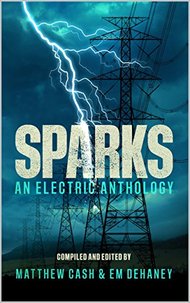

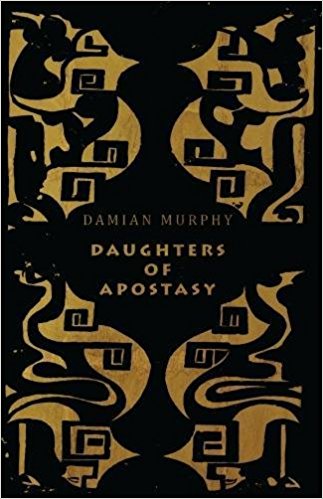
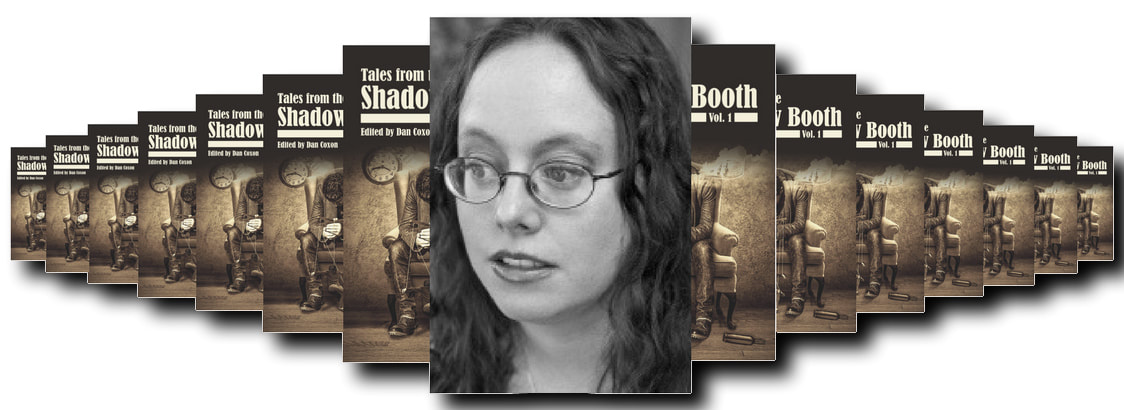


 RSS Feed

|

|