

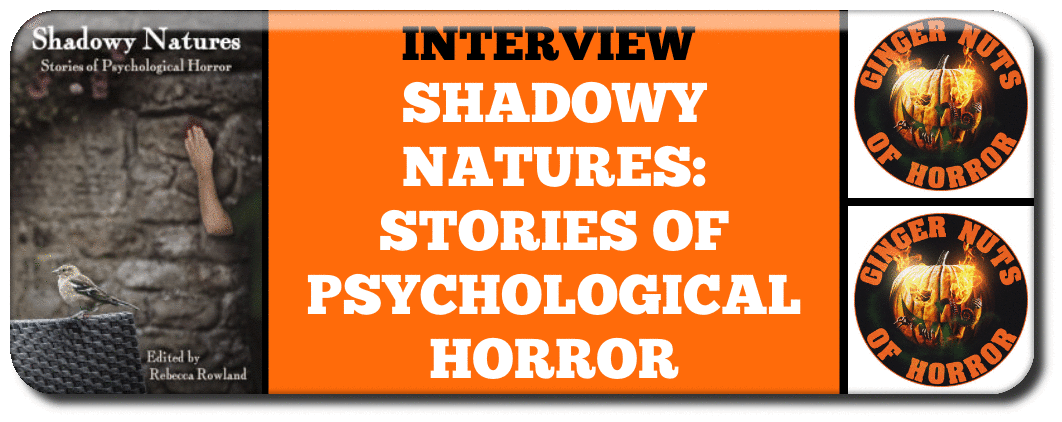
 Five minutes with the three U.K. authors, Barrie Darke, Liam Hogan, and Louis Stephenson, appearing in Shadowy Natures: Stories of Psychological Horror, available everywhere on September 10 from Dark Ink Books. Shadowy Natures is a collection of psychological horror stories. What is unique about psychological horror as a subgenre? What about it appeals to horror fans? Is it a subgenre in which you often write? Why or why not? LIAM HOGAN: One of the forgotten tricks from the age of CGI-less cinema is that things you don't see can be scarier than those you do. Perhaps modern cinema isn't the ideal medium for horror, for that very reason! And perhaps, because cinema means we've all seen what a vampire looks like, a lot of the imagined creature horror is no longer as horrible as it could be. But when the threat has no obvious form, when you can almost convince yourself it isn't real, then the horror isn't a jump shock. It's a cold bath, leeching away your warmth and comfort... LOUIS STEPHENSON: Agreed. A lot of horror requires you to really stretch your suspension of disbelief, but I find the psychological approach is a great tool for things to just go wild and still be effective because acknowledging that it’s all in the mind can give it a stronger sense of reality. I wouldn’t say I write about it exclusively, but I think every good story has a significant element of the psychological in it because you are creating a character or characters with their own thoughts and feelings, and how they react and are affected by each moment that bears some personal significance to them. BARRIE DARKE: I suppose some horror fans want the horror to be grounded in uncomfortable reality. A psychological element does that nicely, throws you back into the workings of your own misbegotten head. In one or two sentences, tell us what your Shadowy Natures story is about. BARRIE: “The Wolf Gang” is about a man who stays over at a work colleague’s house one night, where he spots something that strikes him as, let’s say, unusual. It’s a long night, and a long morning, too. LIAM: “Cuckoo” deals with half-remembered traumatic childhood memories and a sibling rivalry inspired by what never, ever gets talked about. And what doesn't get talked about turns out to have a much bigger effect than what is. LOUIS: “Itch” should hit everyone a little bit too close to home. The leading lady of my tale of terror becomes increasingly afraid that she may have been infected by the same ghastly condition as her older brother when he moves back in with the family. So interestingly, each of your Shadowy Natures stories contains an element of home or home life, one that is upended or is deceptive. How does the setting or theme of “the home” lend itself to the horror genre? LOUIS: It’s one of the most effective ways to unnerve your audience, in very much the same way the villain or threat would your main character, because you are invading somewhere that they consider to be the safest place on earth and turning it against them. BARRIE: “The Wolf Gang” was inspired by a What if? moment I had while watching a film with a domestic setting. While the home is supposed to be your safe haven, most of the terrible things that happen to you, that make you the broken-down wretch you are today, take place in the home. So that contradiction is a juicy one to explore. LIAM: There is something about a home you grew up in that inks it deep into the memory. And with short stories I think you need that familiarity to save pages--world building space is at such a premium. I've written a few stories lately where the secrets the walls hide begin to seep out again. The familiar is not always comforting. A lot of good horror movements have arisen as a direct result of the socio/political climate. Considering the current state of the world today, where do you see horror going in the next few years? LIAM: There will no doubt be a glut of people writing about pandemics, (zombies optional?) but most will go unpublished; who wants to read about a horror they've just lived through? The more interesting questions perhaps are how society reshapes itself afterwards—or how it argues its way back to where it was. Stories about isolation, fear of others, the powers governments decide they'd rather not relinquish... LOUIS: Art reflects poignant moments in history. How can it not? There will also be those who sniff out an opportunity. That said, being locked down is not going to change what a person wants to write. If anything, it has given some of us more time to work on the stories we want to tell. BARRIE: Maybe the global situation is too big to tackle head on, so horror will dive underground and reflect it on the personal level: mental breakdown stories, life collapses, family horror, the psyche as a battleground. More like The Shining than The Stand. On that note, given the dark, violent and at times grotesque nature of the horror genre, why do you think so many people enjoy reading it? BARRIE: I think most people believe they aren’t very far from being dark, violent and grotesque at the best of times themselves. Whether they actually are or not, of course, is a different matter. Life often feels like it has the potential to be a horror story far more often than a spy thriller, say, or a satire set in a University. LIAM: For me the horror has to be in some way fitting. And that doesn't just mean as a punishment for being bad. In some cases, it's for making decisions that to you and I probably signify nothing. But, to a person in the cellar of a cabin in the woods... Well. Given that, the best horror (the best stories...) to me have a kind of inevitability. It was always going to end like this. And if you can write that, then however horrible, it's a what if experiment readers can buy into. That said, I've written a couple of stories some of my family members can't read, and I'm still not entirely sure if I should be proud or concerned. LOUIS: Fascination. We have always been captivated by destruction. Every genre has its substitute, whether it’s taking out an entire building with an explosion in an action thriller novel, or a bride falling face first through a giant wedding cake in a romantic comedy. Ours just happens to have a little more blood. The term horror, especially when applied to fiction, always carries such heavy connotations. What’s your feeling on the term horror, and what do you think we can do to break past previous assumptions? LOUIS: I don’t think that will happen. But I do think we could try changing our response to criticism. Stop bloody apologizing for a bit of absolutely harmless fiction, be proud and stand up for ourselves. BARRIE: I don’t mind it at all. I think it should be heavy, should be off-putting to some; should be the snarling, flick-knife wielding brat of the literary family. LIAM: Thankfully, there are alternative descriptions! Gothic, or dark, or noir. When I see the word horror it's a little like seeing the word funny. I'm going to be reading the piece with a big part of me sitting on the sides asking: “is this scary? Is this working on me?” I'm not overly keen to describe stories of mine as horror, (or indeed, comic), I'd rather the reader made the judgment. But twisted... yeah, I'll happily describe my short stories as that! Writing is not a static process. How have you developed as a writer over the years? What aspects of writing, if any, do you find the most difficult? The most rewarding? LIAM: I trained myself to write 2000 word stories for submissions to Liars' League, and then had to train myself to write different length stories for other markets (I'm still working on that!). Over the years, I've definitely got better at editing my work. Writing is a deceptively simple activity. You don't need any special equipment, you can do it pretty much anywhere. And yet, perfecting a story is tricky. Sometimes, a story resists polishing. Sometimes, you need to come back to it after a decent spell of time. I have a LOT of stories to come back to, and I always worry I never will. LOUIS: For me, it’s been a process of finding the balance of how much description is necessary in each instance. More often than not, I will be quite direct and blunt during a violent act as a way of stunning my reader. Then, hopefully, they won’t know what hit them. When needed I can paint a pretty nasty picture, but in those cases, the mood will dictate whether what is happening is portrayed as a thing of beauty, or just a gross, mess of fireworks. A great death is always a reward to write and to read. BARRIE: Recently I’ve been going over stories I wrote when I was just starting out, to see if they could be rewritten, so this has been on my mind a lot. The main improvement is that now I can see through to the point of a story/scene a lot more efficiently. There’s not so much flailing around. Things are a lot tighter and a lot shorter. Endings are the hardest part for me. All those big scenes to orchestrate just when you’re starting to flag. The most rewarding thing is the mix of imagination and craft. Taking these cloudy visions and wrestling them into something solidly readable. Writing isn’t just dreaming, it’s using a hammer and chisel. For those who haven’t read any of your stories, which of your stories do you think best represents your work and why? LOUIS: I’m hoping that my contribution to Shadowy Natures will showcase my darkness, creativity and some substance. I do like to leave a lasting impression. LIAM: This is a little like being asked to choose your favourite child, isn't it? Although, this being horror, perhaps like being asked to choose someone else's favourite child... Let’s go with “Feathers,” which I've read out a few times at events and was read out for me at Liars' League. It's short, it's playful, and yet it has the kind of bittersweet darkness that is very much me. BARRIE: I don’t know–in fact, I hope there isn’t one. I want to jump around, reinvent myself every now and again. What you are working on now/next? BARRIE: I’m currently polishing a collection of short stories, which should be out at the end of October. There’s a lot of genre hopping, a lot of variety, but I hope it’s still cohesive–there’s been a lot of swapping stories in and out, a lot of shuffling of the running order. LOUIS: I’m straddling two projects at the moment. One is a collection of short horror stories, and a novella in which a paramedic who lives on a small island comes to the realization that he is the main focus of a maniac that leaves young men by the side of the road for him to rescue from death. LIAM: Short stories, as per usual! A number of them, which will either be finished or discarded by the time this interview is released. But by then, there will be a number more I'll be working on... I'd like to cobble together a collection or two, Sci-Fi and something in the general area of Shadowy Natures - somewhat dark but not requiring explicit fantasy or Sci-fi elements. That'd “complete” a trilogy with my existing dark fantasy short story collection, Happy Ending Not Guaranteed.  Barrie Darke lives in Newcastle upon Tyne, in the north-east of England. He has had several plays performed, and has worked with the BBC, but prose was always the main thing. While working on the next novel–he’s always working on the next novel–he sends short stories out everywhere. This gathers in a lot of rejections, but also a fair few acceptances: more than 50 and counting, anyway, which is enough to keep the confidence going. He teaches Creative Writing, in more than one venue, on more than one evening a week. @BarrieDarke, and on Amazon 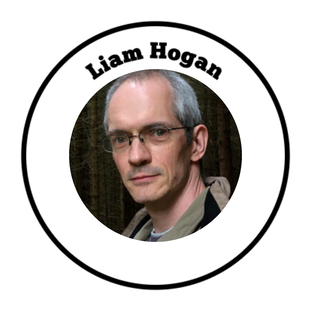 Liam Hogan is an award winning short story writer, with stories in Best of British Science Fiction 2016, and Best of British Fantasy 2018 (NewCon Press). He’s been published by Analog, Daily Science Fiction, and Flametree Press, among others. He helps host Liars’ League London, volunteers at the creative writing charity Ministry of Stories, and lives and avoids work in London.  Louis Stephenson (“Itch”) is a horror writer based in the Northwest of England. A Nightmare on Elm Street (1984) is the first horror movie he ever saw, and much like its director, Wes Craven, Louis' stories are inspired by his most terrifying nightmares, such as his works, “TUNNEL” and “bad.dreamer84” from the short horror anthologies The Stuff of Nightmares (2019) and Dark Ink's Ghosts, Goblins, Murder & Madness (2018), respectively. With the release of Shadowy Natures, he is making things personal with his disturbing tale, “Itch,” which is inspired by Louis' real life, as he suffers from a severe form of psoriasis. In spite of this, he has a wonderful family and keeps his head high with making music, watching great horror movies, and eating cheeseburgers. check out sam kurd's review of shadowy natures here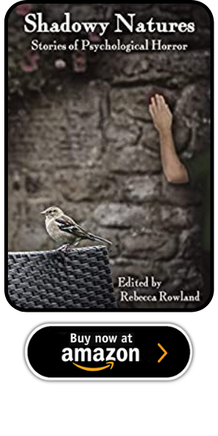 With its twenty-one stories of serial killers and sociopaths, fixations and fetishes, breakdowns and bad decisions crafted by authors as diverse as their writing styles, Shadowy Natures leads fans of psychological horror down dark and treacherous roads to destinations they will be too unsettled to leave. From unique twists on traditional terror tropes to fresh frights found in the most innocuous of places, these tales will surprise and unnerve even the most veteran horror fans. Featuring brand new fiction from Jeremy Billingsley, C.W. Blackwell, Barrie Darke, Matthew R. Davis, Christina Delia, KC Grifant, Liam Hogan, K.N. Johnson, Thomas Kearnes, Rudy Kremberg, Scotty Milder, Bryan Miller, Hollee Nelson, Elin Olausson, James Edward O’Brien, Andrew Punzo, Lee Rozelle, Joseph Rubas, Paul Stansfield, Louis Stephenson, and Thomas Vaughn.   Comments are closed.
|


Archives
May 2023
|
 RSS Feed

|

|