

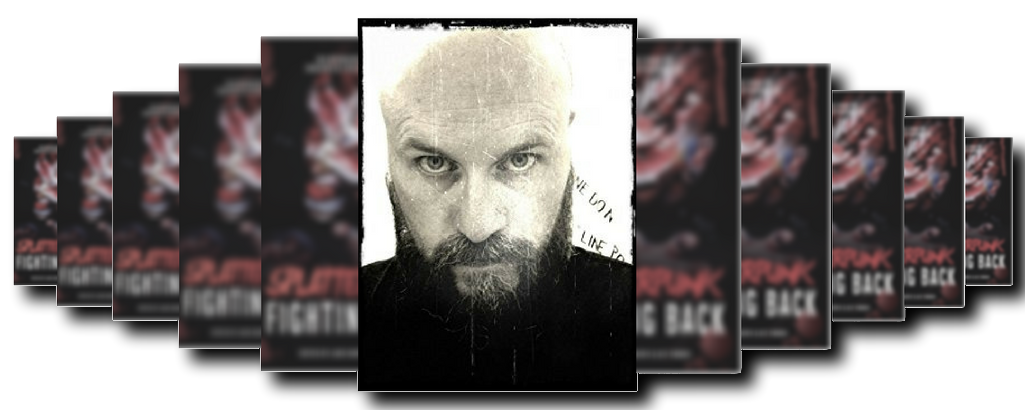
 To celebrate the launch of the new charity anthology Splatterpunk: Fighting Back from Jack Bantry's Splatterpunk Zine Ginger Nuts of Horror brings you a series of interviews with some of the contributors to the anthology. Today Ginger Nuts of Horror is honoured to welcome Bracken Macleod to the interview chair. Bracken MacLeod has worked as a martial arts teacher, a university philosophy instructor, for a children's non-profit, and as a trial attorney. He is the author of the novels, Mountain Home, Stranded, and Come to Dust. His short fiction has appeared in several magazines and anthologies including LampLight, ThugLit, and Splatterpunk and has been collected in 13 Views of the Suicide Woods by ChiZine Publications. He lives outside of Boston with his wife and son, where he is at work on his next novel. Could you tell the readers a little bit about yourself? A: I’m the author of a short story collection titled 13 Views of the Suicide Woods, and three novels. The first of those, Mountain Home, was just newly re-released in an author’s preferred edition by Haverhill House Press in October. I’ve done a lot of things before I came to be a writer, but whatever I gave up previously, I’m presently an insufferable bastard. What does Splatterpunk mean to you? What attracts you to writing in this genre? A: Splatterpunk to me started as a reaction to traditional quiet horror, the same way Punk music was a reaction and an answer to the love and peace music of the ‘60s. Given that the Splatterpunk subgenre is thirty years old now, I think it has evolved from a reaction into a heated conversation with quiet horror. But it’s still an inversion of the inherent conservatism of traditional horror where the status quo is what has to be restored in order for the protagonists to prevail. Splatterpunk (if it is truly to retain its punk credibility) has to be about how the horror of the world changes us and forces us to live differently (if we can live at all), instead of how do we get back to those quiet days before the shit hit the fan. If there isn’t something that its in an argument with, it’s not fucking punk! You don’t lace up your Dr. Martens to go on a garden tour. You put ‘em on to go kick shit down. What do you most enjoy about the short story format? What do you find challenging? A: What I enjoy about short story writing is the challenge of creating well-realized situations and characters in very little space. I think of myself primarily as a novelist, and when I’m writing novels, I have hundreds of pages to stretch out and let this person’s dilemma unfurl. A short piece forces me to think in an entirely different way about problems and solutions and about what makes a person interesting enough to want to know what happens to them. You have to use big knives for short story writing. This is no place for a leisurely dissection; you gotta hack at the meat to get to the bone in short time. Other than the horror genre, what else has been a major influence on your writing? A: Strictly limiting myself to written fiction, I’d say that the crime and literary genres (yes, “literary” is a genre with its own tropes and reader expectations) are my biggest influences as a writer along with horror. Books by Cormac McCarthy and James M. Cain taught me that the real heart of any story is always about people, not situations. Not monsters. Without real, well-fleshed out people facing terrible adversity, I don’t care about your monsters. And if the characters at the center of your story aren’t interesting enough for me to feel invested in either their success or failure, then I don’t give a shit about how many clever kills or unexpected twists an author can throw in. What piece of your own work are you most proud of? Which book or story do you think is a good ‘jumping on’ point for new readers? A: That’s hard. I’m proud of everything I’ve done for different reasons. I think Mountain Home is my best expression of the idea that the villain is the hero of her own tale, while Stranded captures everything I ever wanted to do with a paranoid supernatural thriller. But I’d have to say that Come to Dust is probably my favorite thing I’ve written so far. It’s the book I had to get closest to in order to get it out. I went deep into some really dark places to make that book have the kind of feeling I was going for. For a new reader, I suppose it depends on what they’re looking for. Mountain Home is an all chiller, no filler siege novel. Come to Dust is a meditation on family and death in the context of dead children coming back to life (not zombies). And Stranded is my sci-fi horror love letter to stories like John Carpenter’s The Thing and Jacob’s Ladder. Pick your poison! Can you tell us about your last book, and can you tell us about what you are working on next? I discussed my last book in the answer above, but what I’m working on now is a home invasion thriller about a couple who buy a house with stolen money from a man who isn’t ready to give it up. His secrets and theirs collide in a way that could cost all of them everything. It’s about all those little expenses that aren’t part of the asking price, and can sink the deal if you aren’t prepared for them. The book is tentatively titled Closing Costs. This one’s a “secular horror” thriller more like Mountain Home than either Stranded or Come to Dust. check out bracken's books on amazonpurchase a copy of splatterpunk fighting back here SPLATTERPUNK’S NOT DEAD: FIGHTING BACK EXCLUSIVE COVER REVEAL!Comments are closed.
|


Archives
May 2023
|
 RSS Feed

|

|