

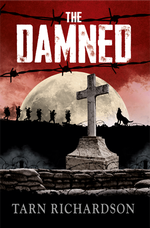
 TARN RICHARDSON TARN RICHARDSON Tarn Richardson was born in Bristol in 1972 and developed an unhealthy interest in ghosts, ghouls and things that go bump in the night from a very young age. When he was seven, he moved to a remote seventeenth century farmhouse near Taunton, Somerset, rumoured to be haunted by the ghost of a little girl - the news being the icing on the cake as far as Tarn was concerned. He’s worked for IBM working as a copywriter, writing scripts for CDs and content for the very first web sites, as well as murder mystery dinner party games, including titles for The Whodunnit Murder Mystery Company. In 2014, he was offered a three book deal with Duckworth Overlook. THE DAMNED is his debut novel, the first in a trilogy featuring troubled inquisitor Poldek Tacit. Hello Tarn, how are things with you? Hello Ginger Nuts of Horror. In a word, hectic! I am up against it, hurtling fast towards a deadline to complete the manuscript for the second book in The Darkest Hand trilogy, The Fallen, whilst trying to help organise the book launch for book one, The Damned, now just a few weeks away. My current working day is 5am to 11pm. I am surviving on unhealthy amounts of caffeine and adrenaline. I’m also, if truth be told, having the time of my life! Let’s get the basic getting to know you questions out of the way first. What are your favourite book, film, and album? Well, the first two are easy. Favourite book? Lord of the Rings. Favourite film? This is Spinal Tap. As for Favourite album? That’s not so easy! Do I really have to pick just one?! My musical tastes change like the seasons. Dylan’s ‘Blood on the Tracks’, Neil Young’s ‘Rust Never Sleeps’, Eels’ ‘Souljacker’, Pink Floyd’s ‘Animals’, Kvelertak’s first album (a Norwegian black metal band) all feature. But, if pushed against the wall with a knife pressed to my guts, for the melodic beauty of it, ELO’s ‘Out of the Blue’ takes me away to ‘places’ every time. Why horror? Because it’s the most adaptable and encompassing genre of them all. The thing about horror is that it can incorporate different genres without compromising itself or the punch it can deliver. If anything, incorporating genres into horror helps to underpin and enhance it. Love, historical fiction, thrillers, science fiction, they can all sit very comfortably under the umbrella of ‘horror’, expanding what it is you’re trying to say. It’s a lot more difficult to do that with other genres. Horror is the perfect foil against which to reflect political, social and environmental issues. Using horror as the backdrop, you build and improve on the themes you’re trying to bring across to the reader. It’s a mirror against which the fears and concerns of the day can be held. Who would say has been the biggest influence on your writing? That’s a tough question! There have been so many influences I have drawn upon, and still draw upon, from writers to musicians to people I’ve met. Begrudgingly, I will admit that the biggest influence, in terms of driving me to write with passion, are the idiots of the world, the people all of us meet everyday of our lives, in meetings, on the morning and evening commute, in public places, the imbeciles of society who wind the hell out of us, frustrate and antagonise with their attitudes and arrogance and opinions. You know who I’m talking about. He, or she, is probably sitting next to you right now. I met a lot of them when I worked in advertising. After witnessing all the nonsense and absurdity of that industry, it was easy to I channel the anger and passion I felt into one of the messages of The Damned. 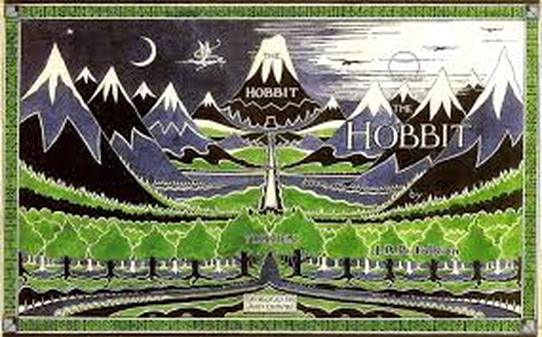 You came to the realisation that you wanted to be a writer when your primary school teacher read Tolkien’s The Hobbit to you. What was it about that book in particular that grabbed you so much? That book spoke to me. There was an immediate connection, quite dramatic for an eight year old! The language Tolkien used, the characters he presented, the lands he had created. Everything about it just seemed to fit. It felt as if I understood every aspect of Tolkien’s world. A light went on in my head. I thought, ‘Ah, so there really is a magical world beyond this one in which we inhabit.’ And I wanted to explore it further. And so I did. Have any of your kids read the book and had a similar reaction to it? I’ve read the Hobbit to my eldest and I’m about half way through with my youngest. Both have enjoyed it, but I think it’s a little tame for modern tastes, especially with all the more immediate books and games and films and, of course, the internet at their disposal. I’ve also been battling, particularly with the youngest, against comparisons between the excellent book and the hugely disappointing films! Dwarves and Elves falling in love?! We need to protect our children against this filth! We both are of a similar age and have had a similar experience with regards to reading at school. Would you say that the way reading is taught and encouraged in school today has changed from when we were there? It feels that it’s more about the mechanics rather than inspiring the kids to read. No, I have to disagree! I think things have radically improved. From what I see, kids are encouraged so much more to read and to draw upon a far richer and more varied vein of books than we ever had when we were young. When I was at school, all we seemed to have were Willard Price stories, ‘Choose your own adventure’ books, and, of course, Tolkien. That, and books from the ghastly structured english curriculum. At least that’s how it seemed to me. It’s no surprise that the only books I had read by the time I was fourteen were ‘The Hobbit’ and ‘Lord of the Rings’, although I had read them many times over! I look at school libraries and kids’ book shelves in shops today, as well as my own kids’ shelves, and think, ‘Wow! There’s so much variety and choice here! And so many exciting titles too!’ The stories are edgy, the topics are exciting, and the covers look great. I live with great envy for the youth of today! After leaving school you went to Art College, what did you study there? Well, I was supposed to be studying art, but I mainly studied ‘how to get away with it for a year whilst writing stories for myself and Dungeons and Dragons adventures for my mates’! I wasn’t ready for the big bad world and thought a year at art college would give me time to prepare. It didn’t, but I had a great time. You have said that you spent to much time writing rather than actually studying for your course. How did your time at college help to shape you as a writer? It gave me a chance to observe people, the time to slow down and watch and listen to people and begin to work people out. I’ve never had time for people who talk fluff and bluster, and you meet a lot of people at art college who do that! Realising the world has its fair share of these sorts of people gave me something to start setting my writing against, to give it an edge, rather than just sauntering along with high-fantasy whimsy. Attending art college requires personnel discipline and drive, because it can be fairly directionless unless you have the skills to know how to grab hold of the course and use it to better yourself. I didn’t, or didn’t want to, at the time. What writing gave me was the direction, drive and ambition I needed both with work and life generally. Having been brought up in a education system which prided itself on producing complete purposeful children, in hindsight I was woefully prepared for the real world, and ironically, purposeless in what I wanted to do and achieve. Writing sorted that out for me, made me realise just how hard you have to work to achieve results, just how many hours you sit on your backside trying to produce decent prose, just how lonely it can be writing - and working out whether you like the solitude or loathe it. I quickly realised that I love the solitude writing brings. You have had some interesting writing jobs, writing scripts for Cd’s is one of those. Can you explain exactly what that was? I joined IBM back in 1995. 20 years ago! The internet was a just mewling infant then and so most of our work at the Interactive Media Centre in Basingstoke, where I worked, was spent developing interactive CD roms - ‘fun’ computer programs run off a CD. I would write the script that would guide the user through the ‘experience’. Once written, it would then be recorded by a voice over artist. I remember one CD I helped create and wrote featured a German chef-come-IT specialist who recommended the brilliant IBM IT infrastructure and who went by the name of ‘Bern De-Toast’. It was a great place to hone your skills as a writer, to learn to write to a brief and to a precise structure. I’m immeasurably thankful for my time there. You also wrote murder mystery games, you must be a real hoot at dinner parties. But in all seriousness did these writing gigs help to develop the more technical and time management side of your writing? I started off writing murder mystery games for my mates and it progressed from there. I sent some games I’d written off and they got picked up by a games company who liked them. It was a natural progression on, and a more accessible one, from writing the D&D adventures I’d spent years writing. These dinner party games built on all the hooks and structural elements I had learnt from writing roleplaying adventures; riddles, hints, characters, tone, a sense of threat and danger, scenarios and settings. That sort of thing. I was in my element. Just loved writing what were ‘acceptable’ roleplaying games for people who would turn their noses up at playing Dungeons & Dragons. Where you still writing fiction during this time? On and off. I was finishing, badly, my degree in Media and Design at Portsmouth Polytechnic (I think it might have become a Uni by the time I left) and starting my first ‘proper’ job writing for IBM, so free time was a premium. I recall writing more short stories rather than anything ‘big’. I know that when I started writing for a living at IBM, I certainly started to write less in my own time. And I had nothing to say or rally against at that time in my life and therefore little passion to write. After all, I had a good job, I was having a great time. The impoverished, defiant writer had gone, for the time being at least! 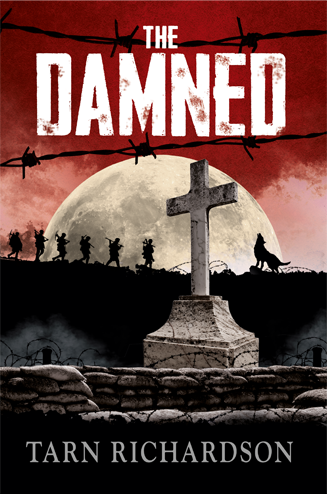 CLICK TO PURCHASE Prior to your deal with Duckworth Publishing, did you have any of your fiction published elsewhere? No. The Damned is the first work of fiction I’ve ever completed and felt confident enough about of putting under the eyes of people. I’ve written a lot, but not finished very much! Endings are always a struggle for me! And talking about Duckworth, how did the deal come about? I finished my first manuscript of The Damned at the start of 2013, or a decent go at it, and had sent it off to Lucas Alexander Whitley (LAW) in London, a literary agency I had long admired, with authors on their books such as Andy McNab, Kate Mosse, Simon Toyne, Tom Cain, Michael Rowbotham! Big hitters and highly regarded in the market. Anyway, like a badge of honour, I had the original manuscript rejected by them, but Ben at LAW (who later became my agent there) replied with an entire side of A4 in which he said he liked the overall feel (mainly the synopsis!), but with reservations and a whole load of suggestions. Now, I’d had rejections before, usually consisting of one liners saying, “The world doesn’t need another MiddleEarth.” But with this fantastic rejection, and I really did think it was fantastic, I felt I was clearly on to something. Ben had taken the time to think about what was wrong with the manuscript and tell me. He obviously felt there was enough to warrant his time on such a response. That made me realise there was more than enough to warrant my time to improve what I had written. I rewrote the entire thing in three months, sent it back and the rest is, as they say, history. There was still a lot of work to do to get it into some semblance of shape, but between us we kicked the manuscript around for another 6 months, and at the start of 2014 sent it out to prospective publishing houses. I think Duckworth liked the merging of historical fact (WW1) and horror (werewolves). They’d just achieved huge success with World War Z and were on the look out for something to follow this up. I’m not for a minute saying The Damned is it, but it’s step in the right direction and, well, you never know! In this day and age of self-publishing, what does a publisher like Duckworth offer that a self publishing route doesn’t? In a nutshell, scrutiny. Andrew Lockett, who was my brilliant editor at Duckworth, scrutinised every fact, every detail in the book, as well as the short free ebook prequel, The Hunted, checking historical facts and figures. His dedication was as inspiring as it was invaluable to help me write the most complete novel possible. I would never have got this level of attention and focus had I been writing on my own and then self-publishing The Damned. And Ben at LAW was great to throw ideas against and to advise on structure. As a team we worked very well. I writer’s lot in life can be a lonely one and to have others you can call upon is very welcome. The Arc of your first book The Damned looks gorgeous did you have any input in the design of the book? Thank you. Yes, I think I almost drove Duckworth round the bend because of my insistence of what the cover should look like! Coming from a creative background, as well as having an artist for a wife, I think I pushed my luck, and the patience of my publisher, very hard, but we got there in the end and it looks fantastic! I knew I wanted something with real standout and we achieved that. The book has just been published, how do you feel at this moment in time? Knackered! Ha! I honestly haven’t given it much thought. I haven’t had time! I’ve been so busy with other things, head down working, but aware that the launch date is creeping ever closer. It’s strange that the one thing I’ve longed to achieve in over 20 years of writing is about to happen, and I simply don’t have the time to acknowledge it and take it all in. Maybe on the night of the book launch I will, or maybe when book two is all done and dusted I can sit back with a large drink and go, “Ahhh!” The book is set during World War One. Why did decide on this particular setting? The book materialised out of a trip I took to the trenches in France and Belgium with my father and brother-in-law on the historical search of two of my great uncles who went out to fight in the great war, one of whom didn’t come back. It was an incredible trip, inspiring and moving, and I really felt motivated to write a series of novels based on the experiences of soldiers fighting in the Great War. It was an incredible conflict, for all the wrong reasons. We had just come out of the industrial age, perfecting ways of killing lots of people very easily, but military strategy was yet to catch up. We still had a very brutal, almost medieval attitude and approach to warfare, whilst all the time innovation and technological developments were creeping from the design table into soldiers’ hands. It’s the perfect backdrop for a bleak dark story but, due to the subject matter, needs to be treated with respect, which I hope I’ve done. The comic book writer Pat Mills described the First World War as the first real Sci-Fi war and I think he’s spot on. So many of the weapons, strategies and attitudes from the conflict border on science fiction. One of my biggest complaints about historical fiction is the lack of sense of place, particularly in terms of dialogue. How did you ensure that your characters sound true to the setting without resorting to lots of “by joves” and “jolly good shows”? Research! There are loads of excellent books available which not only describe events within the war, but also document precise experiences and attitudes of the soldiers, courtesy of their very own hand written diaries and notes. I also spent a lot of time at The National Archives at Kew reading the war diaries, which give you a real sense of morale and mood amongst the men, even though they were intended to be written as statement of fact, rather than possess any emotional qualities. There’s also books, such as Trench Talk by Peter Doyle, which documents sayings and language used. We think of that era as one of the stiff upper lip and lots of ‘wizard japes’, and in many ways it was. But it was brutal and animalistic as well, and people behaved accordingly. We think we’ve evolved and moved on in today’s society but we’re not a million miles different from what we were like back then. And in that pressured awful world of the trenches, tops blew, fists flew, and language could be as brutal as the fighting. While the book is set during the Great War, it is more of backdrop to the real conflict between Tacit and his foes. How did you get the balance right between the two conflicts? That’s my agent’s input. To begin with I set out to write this WW1 epic spread over five books. A ghastly unpalatable affair trying to blend the style of Band of Brothers with the epic fantasy of Game of Thrones. Horrendous. Werewolves and the supernatural were there, but very much in the background. Ben, my agent, suggested flipping this and bringing the exciting intriguing bits of horror to the front and using WW1 solely as a backdrop. He was, of course, absolutely right. It has been a while since I’ve read a horror book where the main protagonist is a child of prophecy. Is Tacit’s role in the book inspired by your love of David Edding’s novels? Ha! How did you find out about David Eddings?! I loved David Eddings’ book when younger, but his books never occurred to me when writing The Damned. I’ve always been partial to a ‘child of prophecy’ sort of story line. It immediately gives gravitas and weight to a tale, as well as a brooding sense of destiny. With stories like this one of the main problems is how much do you reveal early on. How did you decide on where and when to reveal Tacit’s potential future? Intuition, I think. Maybe years of writing adventures for D&D and murder mystery games has given me a feel for pace and when and where to reveal new revelations. If honest, a lot of it comes together by chance when you’re writing. It falls out of you and onto the page and you find yourself thinking, “Okay, that’s obviously where that surprise or signpost is supposed to go then!” He is a bit of gruff character, if you had to describe him in terms of a bit of this and a bit of that using film protagonists who would be the main constituent parts be? Ooh, good question! The first time I met my agent, I described Tacit as ‘Judge Dredd in the trenches’, someone ruthlessly dispensing justice regardless of the moral rights and wrongs of what he was doing. Of course, Dredd is unwavering, whereas Tacit has serious issues. There’s a lot of Clint Eastwood from Unforgiven in there, disillusionment and loss. Deckkard, from Blade Runner, adds a dash of the understated hero. Blade is probably in there too, someone who deals with the forces of hell with both panache and ruthless efficiency. 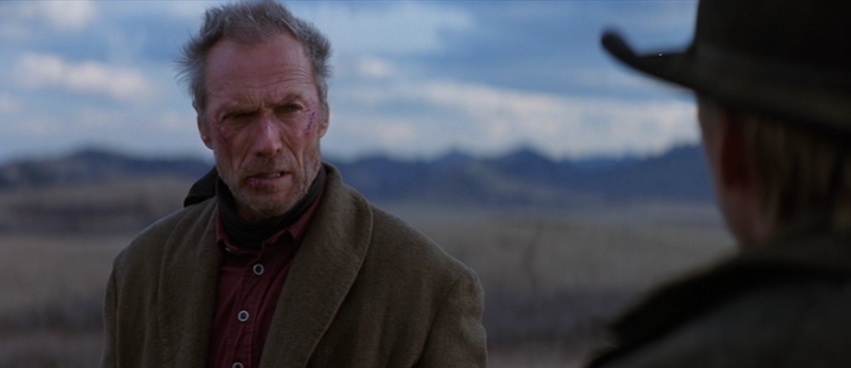 Do you like him as a person? Hmm. I need to think carefully about this. As a writer, I love him and I’m lucky to have him. But if I met Tacit in real life, I’d probably, wisely, keep my distance. First impression of Tacit is grim, but as you dig deeper, perhaps an understanding begins to reveal itself. He’s as damaged as he is savage and unhinged. But to try and get close to him ... that would be hard. If I ever met him in real life I’d hope I’d give him the benefit of the doubt and, at the end of a night, sling my arm about him and tell him everything’ll be okay. However, by doing that, I suspect I’d end up crippled, or worse. Who did you have as a mental image when you came up with the character of Sandrine? I was rather attracted to her. Me too! Okay, this is an awkward but honest truth. I used to sing in a rock band who toured pubs and clubs around Wiltshire and Hampshire. I was dreadful, but the band behind me were great, and at the end of gigs was always being propositioned by women! Nothing like this had ever happened to me before, and it certainly didn’t come down to my musical abilities or looks! For a middle aged happily married man who’s best days were behind him, this was astounding! After gigs and all this adoration from these confident, desirous women, I would go home and scribble down ideas for characters and possible stories based on these advances and, from out of them, Sandrine appeared. She’s the concentration of all of those experiences; confident, determined women, knowing what they want and how to get it! The big bad monsters in the book are werewolves, what made you pick these creatures? My youngest son! I was sitting down reading a book to him one night and he stopped me and said that he was bored with it. I was particularly disappointed because it was one of my favourite kid’s books, but I found another book to read. Same reaction. So I asked him what he would write a book about which would keep him entertained and he said, “World War One and Werewolves” and a light went on and I thought, “Ooh, that’s a nice idea!” Werewolves and World War One are the perfect fit - Monsters we are lest monsters we become. I can’t believe they not been used before in the trenches. Werewolves are monsters, but only in order to satisfy their base needs, to try and stop themselves from becoming even worse monsters. And for many of the soldiers in the Great War, it was exactly the same. They were monsters lest monsters they became. Unlike vampires and zombies, werewolves have never really had a huge showing in the literary world, why do you think this is? They are not an easy monster to control. They’ve always been cast as feral, controllable beasts who lack compassion and are full of rage, anger and bloodlust. As a result I think they’ve always been seen as being hard to pin metaphors on, which is, of course, where monsters work best. You’ve got zombies, mindless mirrors to our own consumer driven world. Vampires, arrogant, narcissistic individuals out for personal gain. But werewolves? They’ve often proved tricky to use to represent to our attitudes and fears within the modern world. The eureka moment for me came when they aligned with World War One, soldiers doing dreadful things in order to live in hell for another day, much the same as werewolves being forced to feed to live for one more day in torment. 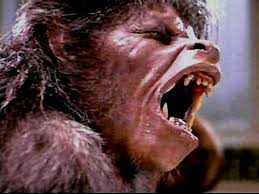 Who are your favourite literary or film werewolves? Has to be ‘An American werewolf in London’. That was a huge film when I was growing up, particularly Jenny Agutter! But like you say, werewolves have been very poorly represented in books and films throughout the years, which is a real shame. They deserve better! I hope I’ve done them proud. The origin of what creates werewolves in your book is a novel idea. Is this based on any legends or myths? Yes. When I was growing up there was this book called The Beaver Book of Horror by Daniel Farson. That was my bible as a kid. I read it religiously, cover to cover and back again. But the one chapter which I read more than any other was the one about werewolves. They fascinated me, the fact that man would become one of them, and then return back to normal man after their bloodlust and the moon’s cycle had passed. I remembered repeatedly checking my palms for hairs! When I started researching them more deeply, I was amazed to find this whole history of werewolves, going back all the way to Roman times, about their alleged folklore and creation, the curses, the heroic stories, the anecdotes, what werewolves are supposed to represent, how they came to be. And their association with the Catholic Church. I wont say anything more, otherwise I’ll spoil the surprises in the book, but everything came together really nicely. At times if felt as if it was a book destined to be written! The book also takes to strong look at the morality of war and religion. Is the book a reaction to anything that has happened to you? Primarily what I saw and heard and read about at the French and Belgium front during my visit there in 2012. The stories I heard, many of them from soldiers who believed they were fighting for God, or with God’s will, were heart-breaking. Onward Christian soldiers, and all that. You can trace the decline of religion, particularly christianity, after the end of WW1. Here you had two enemies fighting each other, both in the name of the same religion, and yet the one thing which bound them together was the same God. If God was on both their sides, then how was this possible? If this was the case, either God was wrong, the conflict was wrong, or maybe they were both wrong? You don’t shy away from highlighting some of the atrocities committed by the Church in the name of God. Do you think that the church is ever justified in some of these actions? No. In my opinion, violence is never an answer. And, from what I can see, religion has been the reason for most of the wars over the centuries, perhaps for all time, the urge, desire, and probably ignorance and arrogance, to attempt to instill one God into the lives of others. Religion can be a force for such good, but when put in the hands of fanatics, it’s incredibly dangerous. You are currently working on the second novel in the trilogy. This has been a difficult second novel. Why do you think you have had such a hard time with the book? From what I’ve heard and since learnt, the middle books of trilogies are always difficult, because they’re often a bridge between the exciting start and even more (hopefully) exciting conclusion! You’re desperate not for them simply to become the bridge between the two. I’ve spoken to other authors about writing a trilogy and they’ve all said that book two is difficult, the tricky second album, whereas book three is usually much easier. I hope so! Also, I want to write an even better book than The Damned with The Fallen. The Damned’s been really well received. We’ve had wonderful reviews. So I am putting pressure on myself, wanting to keep readers thinking ‘Goodness me, this is fantastic! And book two is even better still!’ Can you tell us about what we can expect from the second book? The action from World War One takes place on the Italian front, between Italian and Austro-Hungarian soldiers. So little is known about this front, largely because it took place in a small, largely inaccessible part of Europe and so little of the fighting influenced the final outcome of the war, which makes the carnage all the more criminal and sickening. It was brutal and claimed the lives of three quarters of a million Italians and about the same number of Austro-Hungarians. The numbers just make you want to weep. If you imagine the Somme, but fought on hard rock at 40 degree angled mountainside climbs, that’s what many of the battles were like. The Italians used to joke about the western front, saying they wished they were there because when a shell landed in France it often went straight into the mud whereas on the Italian front, shrapnel blasts could travel up to a kilometer away after striking the hard mountainside. No one was ever safe on the Italian front. Anyway, into this dreadful conflict, the usual suspects from The Damned make a return, more brutal and unhinged than ever. With the imminent launch of The Damned how are you preparing for it? Are you having a launch event for the book? Yes, I’m having a private event for it in Salisbury. A celebration with lots of food, drink, music, and waiters dressed as werewolves! Friends, family, my publisher, agent and fellow authors will be there. We hope to make even Tacit impressed with our wild abandon! And then the weekend after, I’m doing a book signing at Waterstones Salisbury. Hopefully I will have recovered by then! Thanking for taking the time to take part in this interview, do you have final words for the readers? Please buy The Damned! If you do, I hope you enjoy it. It’s written from the heart, with a lot of love and sincerity. Whether you like horror, historical fiction, a love story or thriller, there’s plenty within it to satisfy, I hope, most readers. And do tell me what you think when you have read it, either directly from my site or on Amazon or Good Reads. It’s always great to get feedback, regardless of what it’s like!
Follow the links below for more great horror interviews. HORROR AUTHOR INTERVIEWSEXTREME HORROR INTERVIEWS
Dawn AngryPuppy
26/5/2015 08:01:23
As I'm not a fiction writer, I can't comment on why werewolves are not the subject of more books, but as a reader, I'll give you my opinion. Graeme's High Moor series are the only werewolf books I've read in years, but I think it's harder to humanize werewolves than it is vampires and zombies. Zombies, as we all know, are dead people, or people infected with a virus, so people relate to them. Vampires have a certain sensuality and appeal to them that makes them popular, especially given that they're basically immortal. Werewolves are people who turn into mindless killing machines at every full moon, and that's it. Again, I have only read HM and HM 2, but the characters Graeme has created are more realistic and human, because of the constant struggle they go through when they become werewolves, and after they see the destruction they caused. Perhaps it's more difficult to create these types of characters? I don't know and I could be way off, but to me, that's what makes a werewolf book different. It's got to have solid character development from the start, or it just won't work. 26/5/2015 08:07:00
As much as anything I think that a lot of writers struggle to escape from the tropes. Werewolf mythology is very much bogged down by the legacy of the old Lon Chaney wolfman movies and I think a lot of people struggle to come up with a way to portray them differently. So you basically end up with the two different camps of werewolf - the movie wolfman type of character and the conscious, self aware and all too often a bit wet (twilight) type of wolf that is, in actual fact, closer to the original legends than the ravening wolf man. Unfortunately, it means that we end up with certain cliches within werewolf literature that I myself will admit I am guilty of and, infact, celebrate. The concept of a pack, for example, crops up time and time again (usually within the paranormal genre rather than horror) because it mirrors how wolves behave in the wild although mine are modeled on a paramilitary version of the Russian mafia. It can be difficult to put an original take on these things and often people go too far. That's why I've kinda embraced the old tropes and given them a slightly different spin than some of the others. I went back to basics then ran with it. That said, it only takes one werewolf movie to really break out the way that American Werewolf did, or one werewolf novel to really take off and the genre will start getting a lot of attention in the same way that vamps and zombies did. Look at most zombie stories and most are just retreading what Romero did thirty years ago. Maybe its going to be the werewolf's turn soon 26/5/2015 15:29:35
Firstly, thank you for your comments and clearly I must read Graeme's "High Moor" series! Comments are closed.
|


Archives
May 2023
|
 RSS Feed

|

|