

THOMAS OLDE HEUVELT
2/5/2016
 THOMAS OLDE HEUVELT THOMAS OLDE HEUVELT Dutch novelist Thomas Olde Heuvelt (1983) is the author of five novels and many short stories of the fantastic. His short fiction has appeared in English, Dutch and Chinese, among other languages. He won a 2015 Hugo Award for his novelette The Day the World Turned Upside Down. He has also been awarded the Harland Award for best Dutch fantasty on multiple occasions, and was nominated for the World Fantasy Award. Olde Heuvelt wrote his debut novel at the age of sixteen. He studied English language and American literature in his hometown of Nijmegen and at the University of Ottawa in Canada. Since, he has become a bestselling author in The Netherlands and Belgium. He calls Roald Dahl and Stephen King the literary heroes of his childhood, creating a love for grim and dark fiction. HEX is Olde Heuvelt's world wide debut. Warner Bros is currently developing a TV series based on the book. Hello Thomas, how are you doing? I'm very well, how about you? I'm doing very well. I've always wondered how an author feels prior to release of their new book. "Hex" is looking to be sort of your big break out novel in the UK and the US. How anxious are you feeling right now? I'm really happy about it. It's such an odd feeling for an European author, Dutch author like me, to have a book out in the Anglo-Saxon world. It's pretty rare. It doesn't happen often. It's been a childhood of dream of mine to make that happen. I worked really hard for that to actually, you know, starting each step to make it work with translating short fiction, then won an award with that. That kind of got things going. It's an amazing feeling when you walk into ... I'm right now in Waterstone's in London and there's a big stacks of my books. I got a message from a reader in Tasmania this morning who has just bought my book in a store in Tasmania. That's just unreal to me. How big is genre fiction in the Netherlands? There is hardly any literature of the fantastic in Holland. The classical Dutch novels, they are stories usually about nothingness. They're not fun books about nothingness, they're serious stories about nothingness. That's what they try to force fifteen year olds in high schools to read, classical Dutch novels, which celebrate nothingness. Then I started studying American literature and British literature and they're actually stories with plots and stuff happens. Some even have ghosts. I was like, this is a huge discovery for me. I'm really more drawn to American literature and British literature than to my home country's literature because that's very, very Calvinistic, very ... at least the classics ... I mean it's changing a little bit of course. I'm much more drawn to the more plot based literature you have over here and in America. 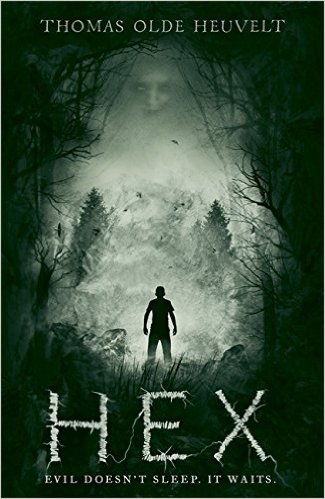 click to purchase How did you go about writing the novel? Did you write it in Dutch first, then translate it to English? Or did you go for the straight English version? I wrote it in Dutch. It's been out in Holland for a couple of years already. Then a translator, an American translator translated the book. I then re-voiced it in my own voice. That's what I always do with translation. In English you can do that, because I studied English literature and English language. I wouldn't go as far as translate my own work. I don't think that's a good idea but I do rework the translation of my stories and my novel into my own voice. My voice in English is a little different than my voice is in Dutch. It's a thing I like to do so I can be in control of it. It's a great process. It took up a lot of time writing the book in the first place, in the Netherlands it took me four months. The whole rewrite and translation stages of the English novel took me a year. It was a lot of fun to do and I learned a lot. Every language has its own words that can't be easily translated into other words such as the Scottish have this word "dreich" which means sort of cold, wet, windy, horrible. Is there any phrases that you found from the original text difficult to put into English terms? Not in the kind of gloomy aspect of words because actually I find that in English language there's a lot more ways to express horror and gloominess and mystery and that kind of emotion. There is one word, however, in Dutch, the word 'gezellig' which is untranslatable to other languages. It's a very Dutch concept. It means something like cozy, but not altogether and every writer who dealt with translation or every journalist that has dealt with translation never finds a way to translate the word 'gezellig'. Okay. It's odd. It's like, 'gezellig' is a feeling that you have when you have a couple of people over like family or friends. It feels warm and it feels nice and it feels welcoming in the home, it feels 'gezellig'. There's not really a concept for it in languages other than Dutch On a similar note, why did you choose to set the book in the US? The original novel was actually set in the Netherlands. I don't know if you realize that I changed the location for the American edition to the upper Hudson Valley. I did that because ... Now Hex obviously, it's a horror novel. It's pretty scary. I think to really scare your readers you need to create this perfect sense of familiarity. Of course! Draw the reader in, in this perfect sense of familiarity. Then once you've got them hooked, destroy it, rip it to pieces, of course. First you need that sense of familiarity before you can really get to their core emotions of fright and being scared. If I read a horror novel that's set in Pakistan or Azerbaijan or any other country that I don't feel at home or that I know little about, then I probably would be wondering all the time about what's the norm for these people. Apart from the things like what it looks like, how do you pronounce their names, mostly what's the natural thing for these people? What are they scared of and what is unnatural to them? If you don't know that you can never really get that sense of familiarity. I figured this book is going to be marketed all over the world. I figured the Netherlands is this really tiny, small country in Europe. There's an American reader or a reader from Tasmania will read about the Netherlands, they would have that same feeling that I would with a book that's set in Azerbaijan. They wouldn't get the core emotions of these people, I think. In order to really scare them ... I love to scare readers. I got all these messages from the Netherlands from readers who sent me emails saying like they couldn't sleep for nights in a row or they had to sleep with the lights on. That's, of course, you know with a scary book like this if that happens, you've done your job. To really make that happen I felt I had to relocate it to a location they would be familiar with. I never really thought about it that way. How did you actually go about getting that feel for a small American town? When I think of small town American horror novels I always imagine pumpkins on the veranda and autumn leaves tumbling through the streets in autumn. I've lived in that region. Not actually in the United States side of the region but I lived in Ottawa for a while. I traveled a lot through upstate New York. I have friends there as well. I've been traveling that region often. I actually went to the exact location where I set the novel. It's a completely fictional town, Blackspring, set in the Westpoint area where the military base is. I actually went there to actually research and see what a town there looked like. You want to get it right of course, right? In a novel like this which is in the real world although it's a fictional town it still has to feel genuine. It has to feel like it's true to that region. I actually went there to research it. On a similar note, in terms of the way the characters speak in the novel, I found it to be very naturalistic and it didn't feel jarring. How did you make them sound real and not like an over used cliche of American teenagers? I think in the situation they're in, they're not cliched people, right? They're living in this town which has all these restrictions and rules. They've grown up under a curse, basically. I think they're not cliched kids and the grownups aren't cliched grownups. They all have their own unique backgrounds there of course. I think that kind of helps. Technically, from a writing perspective ... As I originally wrote the book in Dutch, which is my native language, of course ... The translator, she's American, and the editor who worked on it is also American, they both made sure that it was American enough to be real but definitely to avoid the kind of stereotypical thing that would be just off for readers. Does that make sense? It does, yes. What element first inspired the story? Was it Blackspring itself, the residence, or Catherine? What was the germ of idea for the novel? It was definitely the witch. I always wanted to write a story about a witch ever since I think I was traumatized by Roald Dahl's novel The Witches as a child. I was seven years old when I read that book. I saw the movie the same year. I was like seven, it was 1990 I think. The movie where Anjelica Huston plays a Grand High Witch and the moment when she takes off that mask ... I don't know, have you actually seen that move? Yes, as a nineteen year old it's scared the living daylights out of me as well. I was shocked. I was traumatized. I didn't trust any women anymore for the next six months. I went to a game and all these women were wearing gloves like witches in the book. I think ever since then I was obsessed by the witches somehow, you know, the scary part of witchcraft. Then at age, I think fifteen, I saw the Blair Witch Project. There's a lot of people who hate it and a lot of people who love it. I'm one of those who love it. The scary part there is, of course, that you never get to see the witch. That is the strength of that movie. You never ever see the witch. I wanted to write a book about this witch haunting this town. I think my witch has a bit of both. She's pretty, the way she looks is pretty gruesome with her eyes sewn shut and her mouth sewn shut. Then at the same time exactly because of that you never really know ... If she can't see their eyes she don't know what's inside of them, right? That makes her, I think, really creepy. She becomes this iconic horror figure that works really well for readers. That's part of ... that gave me the spark basically ... What really made it work for me is that she's actually not the thing that's most scary in the book. She's not treated as this scary supernatural phenomenon. People are used to her. When she appears in the bathroom or the kitchen for the hundredth time , people just hang a dish cloth over her face and life continues. That really made it work. 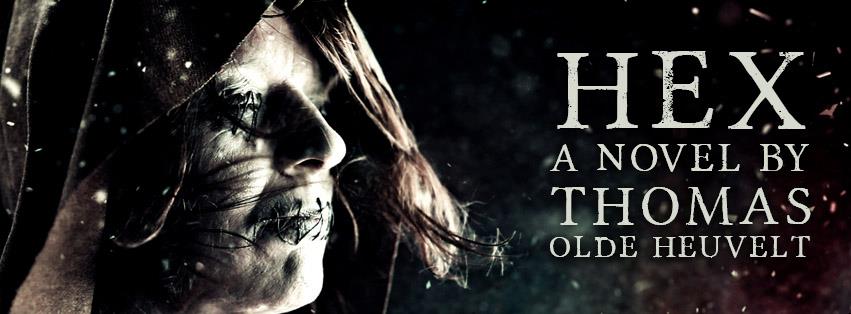 Yeah. She's certainly a very unique character. She is one of my favorite characters of recent years. Thank you! You've managed to create both a horror novel and a social commentary piece. Was that intentional or was this something that developed as you were writing the novel? No, definitely. I think, like I said, the scariest thing in this book is not the supernatural part. It's what these humans in a situation where the carpet is drawn from underneath their feet, you've got this elemental strangeness, how do people react to that? That's the real scary part. It's just one big dark spiral that goes darker and darker. It's a book about human depravity, how people react in such a situation. I think that part is much more scary than the part with the witch. Also because ... you know these horror films where they show you the ghost too often? That happens so often, that you have a film and they show you the monster or the ghost and as soon as they've showed it to you, it's not scary anymore. You know what it looks like, you know what it is. It has a face. I think that the strength of Hex ... You see the witch from page one and she appears all the time and that's the thing. She's not scary any more. It's what these people do, it's their innermost fears that's the scary part. That's what, that's the thing that never is predictable, how will the people react and deteriorate during the time of the novel. The town has a very strict set of rules. Are you a natural follower of rules or are you a bit of a rebel? What's the one law you wish you could break without any consequence? Wow. I am a bit of a rebel. I guess I was that since childhood. I wanted to become an airline pilot when I was a kid. I had this big scrapbook full of newspaper clippings whenever a plane would crash. Somehow that fascinated me. I used to take airplane models that my grandpa gave me for my birthday, you know these airplane models that you had to glue together and tape them and decorate them. I did all that work and then I took a sledge hammer and I crushed them. I burned the [inaudible 00:16:45] a bit. I had my toy ambulances surround them, circling around them. I had then made this perfect crash scene. I showed it to my mom and it's like tada, you know . She didn't really appreciate that. I could well imagine, yeah. I guess the rebel-ness was always a bit there, I guess. I don't know if I would actually break laws, because I'm kind of a wuss and the same time. I mean I do pretty horrible stuff in my books. Every now and then it's like the sense of rebellion kind of comes seeping up. Usually it sticks with fantasy. The characters in the books are, for want of a better word, pretty flawed. What made you decide against having an actual all out and out hero? I don't believe in all ultimate heroes. They're usually pretty boring characters, I think. Every human being has it's weaknesses and its dark side, especially if you're confronted with extreme situations. How would you react? Could you be driven to do something really nice? Could you be driven to do something appalling? I think we all could and we probably imagine ourselves not doing such things but that is imagining ourselves from a safe situation. Take that safety away and I think it totally changes the situation. There's nothing worse than ... I remember the Dean Koontz books from the 1980s where every hero was a dashing male who never did anything wrong. They just became boring and dull and repetitive. Yeah. I think that's something the genre's managed to kick, don't you think? Do you think we're in a good position now in terms of characters in our books? Yeah, exactly. I think it becomes much more human. Therefore, it's also like you said earlier, it's like a social portrait of what a society would do if something, if you add this element of strangeness, of outer-ness basically. You never know what you would do. People react differently. That's what I've tried to portray as well, that with all these different people in town, that react differently. Her presence ... the one starts to rebel, the other sacrifices stuff to her to get on her good side. It's really interesting to explore what the human reaction to darkness would be like. Definitely not heroism I think. One of the things I got from the book was the bond between a father and a son. Did you draw on any personal experiences of this for the book? Actually, not really, because my father died when I was three. It's not drawn from my own experience. Then again, the loss of a loved one is very much present, both in the book and in my own personal life. I think that's a struggle that everybody goes through. It's also, I think, any human's biggest fear. Whatever lost one you, whether it's your wife or husband or whether it's your child or your mother or whoever. It's one of our biggest fears, I think, to ever lose them. That's to the core of any human emotion horror and grief and sadness that all of us have within, I think. That's something I think we all can relate to, and I personally myself as well. If you could sum up one overriding message for the readers to take away from "Hex," what would that message be? I think I don't necessarily want them to ... I don't care ... Let me put it this way, I don't care too much about which social lesson they learn from the book. I want them to sleep with the lights on. That's my core goal with this book. I really love all the emails I get from readers and the balance of those, and now from all the ... I see all these UK reviews coming out and that people are genuinely scared about it. That makes me really happy because that kind of tells you in the English version of the novel as well. That people are really just, it touches their basic human emotions of fear that they imagine her standing next to their beds for nights on end. If that happens I know I did my job well. Yeah. I think Catherine's replaced the horrible nun that used to live under my bed. She's certainly a scary character. What's next for you now that's this book's basically in the bag and out in the big wide world? Yeah, I'm going on a tour through the US this summer. In June and July I'll be in the US touring events and bookstores. I'm also finishing up a new novel. I'm three quarters through basically and it will probably come out next year. It will probably be almost simultaneously come out here in Britain and in Holland. Excellent, cool. Well, thank you for doing this Thomas. It's been a pleasure talking to you. Thank you for having me. We'll hopefully have our review ... We're going to have to do two reviews. I've got myself and one of my reviewers. We've both read the book and we both absolutely loved it. Thanks. Happy to hear that. Thank you so much. Did it reach you as a translation or were you really, you didn't notice that it was a translation? I didn't feel, if I didn't know it had been translated, I would never have known. That makes me happy. I'll let you get on with the rest of your day. Thomas, it's been a great pleasure talking to you. Thank you very much. Thank you, thank you for having me. I'll look forward to seeing the interview.  Whoever is born here, is doomed to stay until death. Whoever comes to stay, never leaves.
Welcome to Black Spring, the seemingly picturesque Hudson Valley town haunted by the Black Rock Witch, a seventeenth-century woman whose eyes and mouth are sewn shut. Blind and silenced, she walks the streets and enters homes at will. She stands next to children's beds for nights on end. So accustomed to her have the townsfolk become that they often forget she's there. Or what a threat she poses. Because if the stitches are ever cut open, the story goes, the whole town will die. The curse must not be allowed to spread. The elders of Black Spring have used high-tech surveillance to quarantine the town. Frustrated with being kept in lockdown, the town's teenagers decide to break the strict regulations and go viral with the haunting. But, in so doing, they send the town spiraling into a dark nightmare. Comments are closed.
|


Archives
May 2023
|
 RSS Feed

|

|