

WOMEN IN HORROR: ALIAS, WOOD AND JONES
13/2/2019
 In honour of February being Women In Horror Month, horror and speculative fiction author, Penny Jones (U.K.) and writer of the weird and the strange, Tabatha Wood (New Zealand) get together by the power of the Internet to talk candidly about the genre, their influences, and what they think the future holds for female horror writers. TW - So I’ll start with the most obvious question: why did you start writing scary stories? PJ - I've always written dark stories, but I don't really see them as horror, more that they are a slightly skewed version of life. I've never really enjoyed rollercoasters, but I think the adrenaline rush that people get from them, is the same as the one I get from reading or writing dark fiction. It's like; "I'm powerful, I can destroy the monster." How about you? TW - Honestly, I think I was just a bit of a weird, loner kid and I was really drawn to other odd and unusual things. I used to read a lot of male-penned slasher stuff when I was younger, all guts and gore, and it wasn’t until I was older that I found Susan Hill and Daphne du Maurier were writing stories which were far more scary. I liked that. I wanted to do that myself. I totally understand that feeling of power and I love that I can get under people’s skin. PJ - For me it is more a wanting to hold the mirror up to people, so they can look more closely at themselves. Do you think that because you identified as "the weird kid/ loner" you were looking for people like yourself which you maybe couldn't find in what people might consider more mainstream fiction? TW - Oh, absolutely. It was like, I didn’t understand the “normal” stuff in the same way. It just didn’t make me tick. My mother was always weirded out by it. I think she was probably worried I was going to start acting out the torture stuff. Become a serial killer… or a dentist. PJ - I was really lucky, my family were always really supportive. And although people would probably say that yes, I was the weird kid, I wasn't a loner, and my friends were always really supportive and interested. Even my teachers liked my dark stories. My parents looked out for age-appropriate books and movies for me. TW - I think I’m just a cliché, I definitely fit into the “strange kid” box. I often feel that way even now, although I don’t mind so much. I remember reading (Stephen King’s) “Carrie” for the first time, and while I had never experienced that level of extreme bullying or ostracism, I still identified with her. I think that was the first time for me where I found a dark character who fought back. She was weird and she was the “monster” but I wanted her to win. It was oddly refreshing. You said your parents found books and movies for you, who do you cite as your influences? I think the very first horror book I read was a Christopher Pike “Point Horror”, although I also have a memory of a short story involving flies which scared the absolute pants off me. I’ve never really liked insect-based horror since. PJ - As a kid, I remember wanting to buy an anthology called "The Green Ghost and other stories”. It was for sale at one of those book fairs that came to the schools. The woman at the fair wouldn't sell it to me, and my mum had to come in and tell them to let me have it. So that one has a special place in my heart. Other than that, as a child I would sneak out and read my parent's Pan book of Horror, although I wasn't allowed to. I was especially traumatised by Alex White's stories in those books. My parents only had two vetoes on what horror I was allowed, and they were the Pan book of Horror and (Mary Shelley’s) “Frankenstein”; the first because they thought they were too gruesome and would give me nightmares - they were right - the second because they thought science was so close to making the story a reality, that I would have difficulty separating fact from fiction. I know your parents were not as understanding as mine over horror, so no point in asking what they thought was unsuitable for you, but do you think there are any books or topics you wouldn't want your own children reading or watching? TW - To be fair, they never stopped me from reading it, but I know my mother and grandmother would have much preferred me to read “nicer” things. As a parent now, I do find myself cringing a little bit as I’m certain I read about things that weren’t appropriate for my age, sex as well as horror, but it also doesn’t seem to have done me too much harm. I knew it was fiction, so I was able to compartmentalise it. It was my own imagination which was worse, I think. My youngest kid hates horror and scary stuff, but my eldest adores it. We’ve watched “Aliens” and “Stranger Things” and “Buffy the Vampire Slayer” together, and he’s very into special effects stuff. He’s like me in that he is able to separate the reality from the story, so I know he’s okay with it. I wouldn’t let him watch any of the “Saw” movies or “Hellraiser” type stuff just yet, and I don’t think I will ever be happy about them watching “Seven”. That movie messed me up. PJ - I think that often as a child if something is too mature you just don't pick up on it. I watched “Beetlejuice” when I was 8 and I rewatched it with a friend and her daughter when I was older and her daughter was 8. My friend and I were shocked at the whorehouse scene in the model town, and the pussy grabbing scene. We just hadn't registered those as being about sex when we saw it as kids. TW - I think there is a bit of that, yes. I also think a lot of it is also about safety. Watching a scary movie with your mum, and knowing you can talk about anything that upsets you, is much different to watching it on your own and being disturbed by something which you then can’t fully process. Reading horror really takes you out of that safe space. PJ – At least with horror you kind of know what to expect, you’re ready for the storyline to turn nasty. I don't do torture at all, but I tend to find that a lot of mainstream television, films and books, have more overt torture than horror does. Often in horror the torture is implied rather than overt. One of my least favourite scenes is in “Spectre” when James Bond is having his skull drilled into. It isn't the drilling that is the torture to me though, it is the fact that he will no longer remember who Madeleine is. It is such a violation, having that taken away from you. TW - I feel much the same way about “Eternal Sunshine of the Spotless Mind.” It’s not a horror or scary movie at all, but the whole premise is so disturbing and problematic, and yet also strangely tragic. I get so conflicted not knowing how to feel, or who to root for. PJ - I’ve not seen that, but just read the outline of it, and it sounds amazing, so I will have to now. Is there anything that you want to read or watch, but you're too much of a wimp to? For me it is “Saw”. I think the concept sounds amazing, but although I know it isn't "Torture Porn" I'm still struggling to get over the gruesomeness of it. I'm just too scared to watch it. TW - I have to say, “Saw” isn’t really that bad, I actually like it for being so clever. It works so well because it puts the characters in situations where they have to make terrible choices - choices that you can identify with. I don’t really enjoy watching gory or ultra-violent movies, I have a real aversion to blood. I came over all funny while watching “I Don’t Feel At Home in this World Anymore” because of a finger-breaking scene. I’ve noticed the rise of very ultra-violent television in recent years, programs like “The Walking Dead” for example, and “Punisher”, and I have to say I don’t like it. I feel really uncomfortable about that being normalised or glamourised. That episode with Glenn in TWD, I think you know which one I’m referring to, I just couldn’t watch it. I’d already read the comics and I knew what was coming and I actually threw the damn comic across the room when I read it, I was so angry. Then they made it a “thing” in the TV show, like it was cool and edgy to show something so graphic. They took away the humanity completely. Anything that taps into the human element fascinates me. Explorations of our fragility and morality, the choices we make to keep ourselves and our loved ones alive. I’m not so interested in the good versus evil, man versus monsters stuff, unless the monster is the man. It took me six seasons before I realised the humans were the walking dead! I think the comics were much better at exploring the human side of things, the characters certainly felt more real to me than those on screen. PJ - I never got into TWD, mainly because there was very little human element. For me horror is to root for humanity to overcome the adversities they face. If you don't care for the character, how can you care if they succeed or not? It was strange, I didn't really care for the recent (Netflix) adaptation of “The Haunting of Hill House” for the same reason. The characters although very human, were not very likeable, and after about episode 4, I just wanted them all to die. However I love Shirley Jackson's work, and it was very true to her style, her characters are usually very unlikeable. All I can put it down to is that Jackson's novels are quite short, and I can put up with a disagreeable protagonist for two-hundred pages, but not for ten hours So, you’ve said what sort of things interest you. What scares you? TW - What scares me? So many things. I think the biggest one for me is the thought of going blind. Probably because it could be a very real possibility if I don’t look after my health and keep my Diabetes under good control. The next one would be dementia or losing my marbles. I can’t face the thought of not being me any more. Drowning is another one. Insects under the skin - eugh! Losing my kids and my husband. Burning to death. Yeah, I think I’m pretty much terrified of everything! PJ - I'm scared of everything. I’m a naturally anxious person. But I always laugh and say I'm the most optimistic pessimist you could ever meet. If something scares me, I'll jump in with both feet, but I’ll be pretty sure it'll be as bad as I think it will be. I did a charity bungee jump as a teenager, thinking the person would push me off, and they told me they weren't allowed to. I did jump, and afterwards people said, “I bet you were glad you did it, I bet it felt like flying?” No, no it didn’t. It felt like falling, falling to my death, and then just as I was about to die, being ripped back up and having to go through that sensation over and over again. The losing my marbles one is a strong one for me too, again it’s that loss of self that is so scary. I mean, I'm a mental health nurse and I've worked in hospitals so I know the horror movie image of it isn't usually that accurate, but the thought of not being in control is terrifying. Saying that, “American Horror Story: Asylum” is a really truthful portrayal of mental health hospitals at the time. Minus the aliens, of course. TW - I have a lot of anxiety, about pretty much everything, but like you I won’t let it stop me. It’s got nothing to do with a rush or a thrill, I don’t get any endorphins afterwards, in fact I usually just feel exhausted, but not doing something seems far scarier. Becoming old and boring and “safe” just isn’t an option for me. No disrespect meant to any of my family, but I feel like they’ve been safe all of their lives. I’m the kind of kid who climbs the mountain because I can, because it’s there. The idea that you could live your whole life and not climb it just perplexes me. Do you ever use events or experiences from your own life in your stories? PJ - All the time. There is a little bit of me in all of my characters, even the baddies. My stories usually contain at least an ounce of truth to them. For example, when I wrote "Non-Standard Construction" I had been resealing my sink, and had got a sliver of sealant wedged down in my nail bed. Every time I typed I got a sharp stabbing pain! I think you need to be truthful with your characters to make them real to your readers, and for me that is saying what would I do in this situation? Or, what have I done in that situation? What about You? TW - I definitely at least try to “write what you know”. Most of my monsters end up being people anyway, so if they’re not based on me, they might be based on people I’ve known. At the moment I feel like I’m living in the “Truman Show”. I write a story and a few days afterwards I’ll see a news article or a Facebook post which seems to echo what I’ve written. I’m beginning to think I’m either going mad or I’ve turned precognitive! I wrote a short horror story based on a New Zealand grasshopper called a wētā. In my story it loses a leg. My husband went for a walk the other day and came across a wētā just sitting on the grass, missing a leg. It was freaky. I suppose that just emphasises the elements of truth within my writing. Putting in enough details so it seems real and believable, while also making it weird and unsettling. I read an interview with Natalie Wilson, professor of Women’s Studies and Literature at CSUSM. She suggests that: “Horror texts and the monsters that populate them register our natural traumas. They say a lot about our current events and ways of thinking.” It seemed like zombies and vampires were everywhere until recently. Now it’s all about space exploration and off-world travel. Where do you think modern horror as a genre fits into society today, and what can it teach us? PJ - I think that for me it is looking at dehumanisation. Sadly though, that is a horror genre that has already had popularity because of similar societal factors in the past. I think it is why (Margaret Atwood’s) “The Handmaid's Tale” was so popular. The increase of the popularity in far right politics scares me more than anything else at the moment. Though apparently this reoccurrence is a natural human response. If you look through history, you have a surge of what we term “liberal political wins”, such as: gay marriage, women's rights, equal rights. This is countered with a retaliation from the more extreme right wing, but afterwards the balance is always in the favour of the liberal. As a species, humanity cannot manage too much change at once, so there has to be some return to our past mistakes, to make our future more sustainable. If we had a utopia thrust upon us, humanity would make it into a dystopia. As a race we really do think that there is no such thing as a free lunch. TW - I agree. Humans as a species seem to love making things irrationally difficult for themselves. It’s like we find it hard to accept real happiness can be possible. There is this overwhelming anxiety that we shouldn’t get too comfortable because something will always come along and snatch all our comfort away from us. In contrast, there is also a huge amount of denial amongst politicians and world leaders about real problems that can actually destroy us. It’s interesting that you mention “The Handmaid’s Tale”, especially in the midst of #metoo. I think a lot of people - men particularly - fail to understand just how real that could be. That’s also quite an interesting thing for me as a female writer, my idea of horror might be quite different to that of a male one. I don’t just mean the usual tropes of “monsters in the womb” and the fear of being assaulted. (Ira Levin’s) “Rosemary’s Baby” for example, is not frightening to me because she is incubating a demon, but because she is forced to do so. Her body is overcome by man as much as monster. I wonder if it would be even more terrifying if Levin had changed Rosemary into “Richard”. To amplify that lack of choice and body autonomy even more. PJ - Yes, I think our concept of horror is very individual. From a completely abstract point of view, what is horror for women is not going to be the most horrific for men. But I also think it goes deeper than that. Our background such as our class or standing in society affects our fears. Laura Mauro really gets this in her novella "Naming the Bones,” the concept that you can be working class, and not just be typecast as the scumbag. I think that diversity is needed within the genre, if horror is really going to appeal to everyone. TW - That goes for race too. (The movie) “Get Out” being a great example. Diversity and representation are always going to be important in any genre, but it’s really interesting to see how those concepts are being used in modern examples to create stories which are not typically horror, but still incredibly frightening. The rise of “disability horror” is one I’m regarding with a cautious interest at the moment, as I think it has the propensity to backfire, but movies such as “Hush”, ‘The Quiet Place” and “Bird Box” have increased in popularity, and I suspect that is tied very strongly into the element of control and the deep-rooted fear that we are all such fragile creatures, susceptible to many mortal dangers. What we take for granted can so easily be taken away from us, and that makes us vulnerable, and scared. So, as you know, February is Women in Horror Month. Genres such as sci-fi and horror have always been very typically dominated by men. What sort of issues do you think modern female horror writers face which men don’t? Are there any, or is it a more level playing field now? PJ - I think it is a more level playing field now. I'm really new to the scene, and I've heard the stories of how hard it was to be part of the scene in the ‘80s and ‘90s. It seems strange that the genre that focuses on the “Outsider”, was seen as being less accepting of those who weren't "male, pale and middle class”, as I've often heard it termed. I wasn't there, I can't comment on then; but now seems to be a golden time for women writers in horror. The last three British Fantasy Society short story winners were all female: Laura Mauro, Georgina Bruce and Priya Sharma. They all have collections either out or coming out with Undertow Publications, and I would seriously suggest if you want to see what the UK horror scene is producing at the moment then you couldn't do better than read their work. I hope that Women in Horror month will actually soon become obsolete, not because I don't like it, but because there will be parity between the sexes in the horror genre. I think now is the time to start looking at where else there may be a requirement for more diversity in our reading materials and authors. If we want to scare people with our horror, we need to know everybody's fears, and the best way to do that is to read as widely as possible. TW - I totally agree. Women In Horror Month is a brilliant initiative, but I look forwards to the day when the gender distinction is irrelevant. Here in New Zealand I still seem to find more male horror authors than female, but there are some amazing paranormal and speculative fiction writers out there too: Eleanor Gill; Cat Conner - especially her Byte series; Lee Murray; J. C. Hart; and the dark tales of Elizabeth Knox, most notably “Wake.” Their writing is fresh and powerful and really exciting. There is also an interesting sub-genre of the Kiwi Gothic. (NZ horror writer) William Cook has said: “it points to a strong emphasis on settler anxiety derived from the confrontation with a hostile and alien environment”. I am curious to see if, or how, this will change and grow in the wake of destructive climate change and depletion of the world’s natural resources. I think a lot of the real horrors in our world are what’s out there waiting for us. The impending crises many humans don’t want to acknowledge. Maybe through reading and writing about them, we can scare people into preparing for the inevitable. 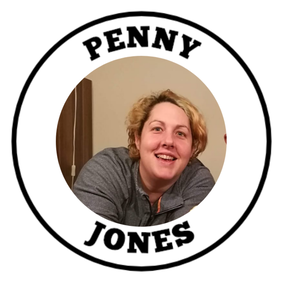 Penny Jones is writer of horror, speculative fiction, and the occasional poem. She lives in Leicestershire with her long suffering husband. Her short stories have been published in a number of anthologies. Notable works include: “Non-Standard Construction,” “Swimming Out To Sea,” “The Farm,” and “Along the Long Road.” You can find her online at https://www.penny-jones.com 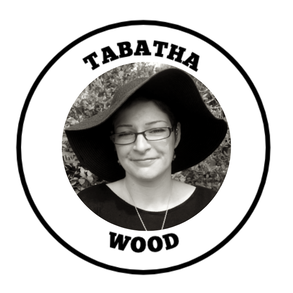 Tabatha Wood also writes horror shorts and other unsettling fiction. She emigrated to Wellington in 2017 with her husband and two children. Her debut collection of horror and speculative fiction: “Dark Winds Over Wellington: Chilling Tales of the Weird & The Strange” will be published in March 2019. You can find her at http://tabathawood.com   Comments are closed.
|


Archives
May 2023
|
 RSS Feed

|

|