

AN INTERVIEW WITH STEPHEN VOLK : PART 2
22/6/2015
 Stephen Volk Stephen Volk In Part 2 of our massive Stephen Volk interview, Stephen opens up about 'Newspaper Heart', the Shirley Jackson Award-nominated novella that closes the first 'Spectral Book Of Horror Stories' anthology. Read on more to find out about the inspirations behind the story, the drafting process, and a fascinating diversion into the relationship between Greek tragedy and horror... GNOH: ‘Newspaper Heart’ seemed to me to be, at least in part, a commentary on a very British custom that has a very dark undertone. Can you remember when it occurred to you that this tradition was fertile grounds for a horror story? SV: I can remember pretty exactly, because the novella was inspired by a true story, believe it or not. When my brother was eight or nine (I’m guessing, as it was a long time ago, but it was before I went off to college, in the late sixties or early seventies) he became obsessed by a Guy he’d made for Guy Fawkes Night. He sat it at the dinner table, wanted it to have its own plate, took it to bed with him, it had an eerie baby-like plastic mask – in effect, everything that happens in Newspaper Heart, including the dad (my dad) being pretty pissed off with it. And as Bonfire Night grew nearer and nearer, my brother became worried and agitated what would happen to his “Guy”. I don’t remember anything else very distinctly, apart from the atmosphere of the house and the nature of the Guy, slumped on the settee as we watched TV, like a surrogate member of the family. Many years later – affected (you might say infected) by such films as Dead of Night with its hideous, dwarfish ventriloquist doll, and other manikins of horror in films and stories – it struck me that a sinister Guy Fawkes effigy would be the stuff of horror, so to speak. So that came first, and the background of Bonfire Night came second, the bonfires and fireworks and all that. (As a sidebar remark, I’ve always been fascinated by Guy Fawkes and the Gunpowder Plot as the potential catalyst for an English revolution, and once wrote a screenplay about it.) The subject struck me as very British – it could never be explained to an American audience, this peculiar anti-Catholic festival we have on one night of the year – but nevertheless it appealed to me, as strange and visceral in its own way as Halloween. 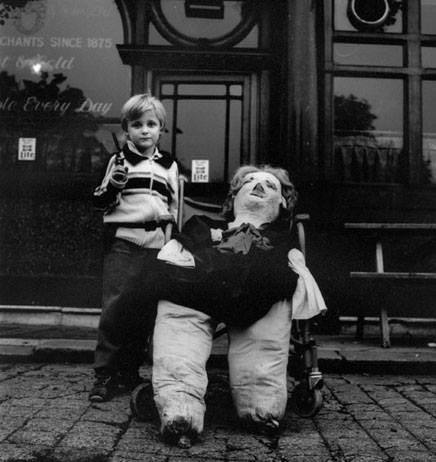 GNOH: Is that a common occurrence for you, that a real-life event should feed so closely into a story? SV: No, not at all. Never as much as this one! Though I’ve recently written a story based on something my mother told me. I’d been thinking about it a while, an intriguing and bizarre thing that happened quite recently in my home town, and it suddenly occurred to me how to write it – how to make that leap from it being an anecdote to a story. That’s the important thing. You don’t just have something in life delivered like a parcel through the letter box, a readymade story. It will be an element, but incomplete, and it is up to the writer to a) spot its potential, and then b) know what to do with the raw substance of it: because we all have interesting things happen to us or that we hear about, and whereas many become yarns or bar-room tales, few become published stories. GNOH: ‘Newspaper Heart’ is a period piece, albeit recent history. What was it about that era that you felt lent itself well to this tale? SV: I didn’t feel I chose the period it was set in, really. I wrote it set in the early seventies because that’s when it happened in real life, with my brother. But to be honest I don’t think “Guys” are made any more, are they? I don’t see them about, and I don’t see “Penny for the Guy” happening on the streets before November 5th like it did when I was a kid. So that was the main reason, rather than make it the eighties or something. I thought it safe in terms of description and authenticity to put it in a setting I knew all too well, because I’d lived there. Also there is something about communications (mobile phones, computers, etc) and family units that feels different today and in putting the story in the past it felt easier to give the family a kind of isolation. Mental illness had more of a social taboo then, for instance. School was different. (In an early draft I had a friendly teacher showing an interest, but it was one character too many and fell by the wayside.) But my mother, as a housewife in that era, was quite isolated once my dad went to work and that was my template. I liked Iris being alone in the house with this inanimate object. When I was a child not everybody had a phone and I can remember when we didn’t. GNOH: This story is resolutely grounded in a time, place, and domestic setting. What were the choices you made as a writer to invoke that sense of place? SV: As I say, I opted to stick to the setting I knew. I was born in Pontypridd, South Wales, and this novella is set in the exact street I grew up in – in the exact house in fact. It’s weird but I found I couldn’t tell it any other way. I’m not saying everything that happens is true! Obviously not! But rather than say “I’m going to set it in Leeds, or London,” I thought “That’s daft, I’ll set it where it was”. As I said in relation to some of your questions on Leytonstone [in part 3 of this interview, publishing in July - Ed], I used a lot of detail from my upbringing, a lot of specifics, because the only childhood you really know inside out is your own. Whether it’s Airfix kits or Doctor Who. (Actually the Doctor Who Radio Times cover was an in-joke for Mark Morris, a massive Doctor Who fan and the editor of the 'Spectral Book of Horror Stories', where the story appeared.) Again, I like domestic minutiae to give realism, but I can’t fake it so I try to remember – it’s far easier! My parents are not the basis for the boy’s mother and father but they were the start point. But mainly I knew and could taste and smell that house – where my mother (now 87) still lives, in actual fact. I could walk around it in my head. I knew which light switch was for the middle room and which was upstairs, and where the scullery was in relation to the TV set in the sitting room. GNOH: As with Leytonstone, the relationship between the parents is almost a character in its own right. Do you find your screenwriting background helps you with the 'show, don't tell' aspects of these kinds of relationships? There's a lot unsaid between the two that nonetheless is communicated to the reader... SV: Perhaps. I don’t know. There’s Raymond Carver, a prose writer. He’s all “show not tell”, of course – which is why screenwriters revere him so much. He can tell you everything about a couple in the way they have breakfast! I suppose it is “filmic” to discover by behaviour because you have to. I love that about cinema. In a book you can tell the reader why a man is waiting for this girl he has been obsessed with for 40 years and followed to Africa and he married her sister but her sister has now died: in a film all you have is the man and the chair and a cigarette, and I love that discipline of how you convey information by what people do and say, and that old Harold Pinter idea that dialogue is there to obscure the truth not to deliver it. Because actually I think that is how we experience other people in life: they don’t come with an introductory paragraph or with an attached bio. Also, I suppose with regard the husband and wife in both stories, I find it frankly boring just conveying the usual “he loves her, she loves him” (and therefore you WILL like them) which is bollocks. It’s always much more interesting if there’s a screw loose, if one wheel of the trolley wobbles, that’s what actors like, a flaw or a foible because you can play that. And from a writer’s point of view it’s thinking about how people do that in life and replicating it, but also serving the needs of the story. It’s a massive moment in Newspaper Heart when Iris thinks “Does he think of blood when he thinks of me?” and I wondered if that was too much too early, but I just stuck a pin there, and hoped it worked, and then kind of sailed away from it as if it hadn’t happened. GNOH: The story is, if you’ll forgive the pun, something of a ‘slow burn’ (albeit one I found very hard to put down). How do you make decisions of pacing when it comes to a tale like this? What do you consider when striking a balance between effective characterisation and tension building, and the need to build momentum and keep the pages turning? SV: Pacing! Decisions? (Laughs hysterically!) Well, let me pretend it was intentional! But Mark will tell you it wasn’t. I set out to write a story about six thousand words, knowing that the main tension and horror comes at the end, which was fine. But I was emailing Mark saying, “It’s not going to be six it’s going to be more like eight,” then: “It’s not going to be ten it’ll be more like twelve!” But Mark was cool. I sent it to him at about 17,000 words, saying, I realise it might be far too long for the anthology, but he said: “No sweat mate. I quite like the idea of a big novella in the book, like those David Case stories in the Pan books.” I said: “Well, see if you like it first!” But luckily he did! But I did plan it scene by scene: the construction of the Guy itself, the boy from school comes home, gets bitten, that kind of important turning point, I even planned what happens on the exact days of the week prior to Nov 5th that year – down to obsessing with what was on TV every night! I’m a dogged planner, probably because I’m used to doing treatments before I write scripts. I think getting into Iris’s head just made the story spread. Of course there’s always the option to cut, cut swathes if necessary, but once I had it down on paper I actually thought it would diminish the story, that it needs the build up and the sense of character to make it work at the end. A small story with the same ending may have been a bit “meh” – a plot with a gag. I don’t know. You can only go by your own instinct but I didn’t feel the build-up was boring. I think as soon as they make the Guy you know something is gathering steam, so hopefully there is suspense: there’s a bit of a Frankenstein quality hopefully, and a mystery or an enigma about Iris you want to understand and you will by the end in terms of what is this gulf between her and her husband. So again it’s a horror story but the horror story element is there to magnify and heighten the story of these people, this emotional situation between son, father and mother. So I think suspense and involvement is partly to do with threat and danger, but it doesn’t have to be some hairy monster hammering on the door – the monster can be a secret, something unsaid, unresolved – it can just be the unravelling of something Not Quite Right. Which in this case is the effigy, or doll – which in classic fashion is supposed to be inert but instead has the characteristics of something living, this being one of Freud’s famous examples of the Uncanny, of course. Which is absolutely the core of this story. Repression, the other absolute Freudian idea, being the other element. The desire and the repression of the desire. GNOH: As you note, Iris contains a significant enigma, which you explore gradually as the story unfolds. Can you remember the point in the planning when that part of the story came to you? Or did that emerge in the writing? It struck me that while the story would have functioned without that element, it adds a real richness and set of layers to proceedings... SV: I tried to construct this story many times. I tried it from the boy’s point of view, for one thing. I don’t know why but it didn’t work. And I told it with the “presence” linked to the guy being the boy’s dead grandfather. I had some notes at one stage, ages ago, that steered me in that direction and it made it kind of sentimental, which was totally wrong. It messed it up, in fact. So a few years later I resurrected it and thought, no, it isn’t the boy’s point of view – maybe it’s the dad’s, since he is active at the end, but no, I made it the mother’s. I liked, firstly, the idea of this housebound housewife and her thoughts, and also it struck me quite forcibly the core of this has to come from some flaw in the husband and wife’s relationship, something unresolved in the past which manifests in “the Guy”, and I made that the most potent thing imaginable – the death of a child. That immediately chimed with my memory of the mask my brother put on his Guy being that of a baby, which was extraordinary. I thought, is that too on the nose, or is it telling me what to do with the story? So I played with that and I think it worked. So the dead child, the baby mask, the woman’s point of view, her fragility, it all come together as the way to tell the story in the form it finally took. So, after having the bare bones for a decade or two, it got written. Though, as I say, the catalyst happened over 40 years ago! GNOH: I found the climactic moments of the story to be incredibly stressful – the dread of the inevitable. Did you always know the moment you'd call 'cut' on the action, or is there an earlier draft that moves beyond the published ending? SV: No, never. William Friedkin says the scariest thing in horror is a slow tracking shot towards a closed door, and he is right. Once the door is opened the horror becomes seen and defined and is never as bad as one’s imagination. And in a prose story you don’t have to show, you can imply in the way M R James implies, and the reader’s imagination does the work. When I was halfway through writing this story (I think I may even have been writing something else entirely, maybe on the train back from London…) the last paragraph occurred to me, which is to say Iris’s emotional reaction to what she sees, the mix of terrible dread and absolute desire, and feeling her heart crushed, and I thought “like paper”, like paper being burned, and I thought the Guy itself has a heart made of paper, and that has a kind of echo of the Tin Man in Oz and all that, so that gave me my title Newspaper Heart, which I thought was perfect. Before that (embarrassing to admit) it had just been called The Guy, which is a terrible title! But I’m really glad you found the ending stressful. That’s incredibly hard to achieve. In fact I couldn’t tell you how to do it. I think a lot of storytelling is about set-ups and pay-offs. The work you do with character and information early on is what creates tension later: you can’t just have nothing and expect terror and suspense to happen out of thin air. So I thought if I’d done my job well you’d be thinking, “Oh God, they’re not really going to do it, oh God, what will happen when that poor little boy finds out?” And of course by then, I hope, nobody is being a bad person or a villain. The father thinks he is doing the right thing for his lad and the mum definitely believe she is doing it to protect her son, and the son certainly isn’t guilty in any way and it’s heading for something horrendous to happen and nobody really deserves it – they’ve only been human beings all along, and this is what they get. So it is a shock but it’s also strangely inevitable, because you’ve set up your ducks in a row and it has to be this way. I think. I really do only “think”, because you never can know. GNOH: The comment about set-ups and pay-offs is an interesting one – it reminds me of the language of comedy with set ups and punch lines. Do you see similarities between comedy and horror in that way? SV: Oh, yes. I’m forever in script meetings talking about this “gag” or that “gag” when it isn’t for humourous effect at all! But it’s a beat, a punctuation mark in action – “that would be a good gag at the end of that sequence”. I wrote a piece for the BFS Journal called, I think, “Ten Ways that Horror and Comedy Are Really The Same Thing”. Of course they’re *not* the same thing, and they don’t set out with the same aim: however I think they do operate in similar ways. First of all, as a writer you must have a natural instinct for what is horrifying or creepy – a “horror bone” as Jeremy Dyson calls it, just like a “funny bone” for comedy, and if you don’t have it you won’t be funny and you can’t be scary however much technique you learn. Secondly, there is a rhythm to the way horror is written (especially for the screen), the same as the rhythm of a scene in slapstick comedy, or verbal comedy – in both cases it’s almost musical. You can see this when a really good director does suspense, it’s almost orchestral. Slow, slow, a turn, a look, a step, another step, bang! Also there’s a mystery to horror just like there’s a mystery to comedy – what makes something funny? What makes something scary? They can both be about sudden turns in expectation. Somebody once said: comedy is when *you* slip on a banana skin, tragedy is when *I* slip on a banana skin – so in horror maybe the only difference is the hurt is real. I think the best comedy, like the best horror, tells an uncomfortable truth, which is why, to me sometimes the very best films blend horror and comedy into black comedy – look at Kubrick, Tarantino, or the Coen Brothers, or the League of Gentlemen guys. I think if you can pull it off that’s the apotheosis, the best. I also think that in comedy as with horror there is no middle ground. You either get a laugh or you don’t, and similarly, it’s either scary or it’s not. 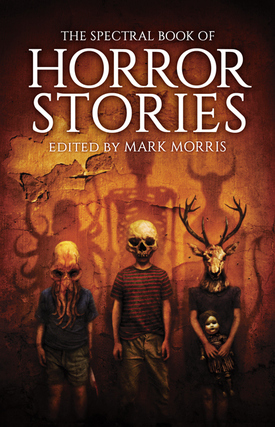 GNOH: You mention how nobody is acting out of bad intentions, yet the ending is so horrible for all concerned. In that sense, do you think horror is the modern inheritor of the Greek Tragedy tradition? SV: Possibly. I don’t know enough about it to say. We certainly employ a lot of ideas from Greek tragedy. Shakespeare did. The idea of “Catharsis” is always trotted out when people try to analyse horror academically. But Greek theatre at root was a very different thing from the proscenium arch type theatre we see today, let alone modern film storytelling or novels – it was primal, it was religious, it was communing with the gods, it was about blood and sacrifice. In fact I’d say it evolved out of sacrificial rituals, almost where the blood-letting was tied into making the community feel united, elated and refreshed. Now maybe those blood-letting rituals are on screen – but I don’t think horror should be sheer catharsis to make us feel purged, I like the genre to make us feel differently too – think about the world around us, the present day, not an escape from it. I hate the word “escapism”, in fact, which feels like reneging on the ability of literature and art to illuminate and to challenge which is, I think, its fundamental role. Neil Gaiman recently quoted C. S. Lewis as saying “There’s only one class of people who don’t like escape, and that’s jailers” and added “I’ve never had anything against escapist literature, because I figure escape is a good thing: going to a different place, learning things, and coming back with things you might not have known” – that’s great, but too often “escapism” implies something shallow and forgettable – and who wants to write something shallow and forgettable? In the same article (In the New Statesman) Kazuo Ishiguro says, if he senses a writer is weaving as story “that will not tell me anything emotionally or intellectually about the (world) I live in, I would lose patience and say ‘I can’t be bothered to go there; why do I want to go there?’” I basically feel the same. It’s like when people say a film is “entertainment” – sod that! Entertainment is Bruce Forsyth doing tap dancing at the London Palladium and the audience loving it and feeling good. Horror, and art generally, shouldn’t be seeking to make people feel good – that is just propaganda, a Valium to sedate the masses – it should be, as someone once said, telling you what somebody doesn’t want you to know: everything else is advertising. The trouble is, unlike with Greek Tragedy the imperative with storytelling today is to make money, whether via film-making or publishing. It doesn’t have a social role – or rather, that is a side effect – the role is capitalism. That’s it. And the people who fund both things think you do that by making people happy. Dumb, but happy. So the minute you step into dark fiction or challenging fiction, that’s literally a risk. A massive risk to their investment. GNOH: Given that the market prefers nice people doing nice things, then, why is your fiction is so grounded in reality, do you think? That drive to portray real people living real, messy lives, which events then intrude upon? It's certainly a very strong element in all three novellas we're discussing... SV: It’s funny you should think that, because outside the genre fiction world, say in television, I’m seen as a non-realist writer. A bit of an odd-ball. After all, I write about the supernatural, ghosts, weird stuff, things that aren’t exactly the social realism of the likes of Jimmy McGovern or even Paul Abbott. But you’re right in that I like to write about intrusions on real life rather than say, out and out invented fantasy worlds: even the science fiction I write is usually an off-kilter version of today, usually with people not far different from us. I think it’s a question of plausibility. The abiding aim is to convince. I like stories to seduce me into thinking they really happened, however outrageous they are and sometimes the more outrageous the concept the harder you have to work at creating a reality that supports it. I know he is derided nowadays but Dennis Wheatley was great at this – he’d convey exotic ideas like astral projection and dress them up in such a convincing world, you’d go along with it. Nigel Kneale was wonderful at getting the balance right as well. To me, if a story starts “Thongg was not cut out to be a fire warrior on the boiling lakes of the planet Ven-Dorr” I am already saying, sorry, this isn’t for me, because it doesn’t convince, it’s not “relatable” as Hollywood says. Star Wars and Alien worked because you recognised and knew the characters and it was therefore strangely plausible because it was emotionally grounded. So I want to be plausible but I’m not a huge fan of social realism, to be honest. There is a snobbery about it in film and TV culture that I loathe. If you make a really tedious sub-Ken Loach film on a council estate it will always be applauded as worthy, however bad it is – and sometimes they are utter crap, with bad acting and all the rest of it, and no one will call them out on it. It’s like The Emperor’s New Clothes. “Messy lives” is another question. If it’s a perfect family with no flaws, far from being more involved and more scared for them, I don’t really care because it’s obviously a concoction, and untruthful. Do you remember the remake of Cape Fear? Steven Spielberg was going to direct it and his template was to create a nice, happy family you loved that was then visited by this vile monster from the past. Martin Scorsese took over the reins and he said, no, my taste is to make it a fucked-up family: it just makes it more interesting. In the Spielberg version the family did no wrong, in the Scorsese version they are imperfect, multi-faceted and therefore almost complicit in their own fates. It’s two opposite approaches and though I’ve been made to do the former loads of times in screenplays for hire, I much prefer the latter. I prefer to engage with characters who are not simplistic, have dubious motives, make mistakes, carry burdens, that kind of thing – are even unlikeable. I suppose I think there is no such thing as the hero in real life. Surely real life tells us they have feet of clay and that the perfect family never is? But the mixture of a kind of naturalism and the unnatural is what excites me, generally. That’s why I love genre. The real world with something “unreal” added. The nearest I come to realism is with crime stories – but there I think the crime is the intrusion, the committing of an act beyond the pale, and the effects that sets in motion. So either way it’s some catalyst that puts a crack in normality, and you watch the consequences play out, and that tells you about character. Join us in July for Part 3 of this interview, when Stephen will be discussing in similar depth the writing of his new novella from Spectral Press – a companion volume to 'Whitstable’. Whereas a fictional Peter Cushing was the “star” of that story, ‘Leytonstone’ features Alfred Hitchcock as a ten year old boy in turn of the century London... Read the previous interview with Stephen Volk on the subject of Whitstable Kit PowerClick here for a special Retrozone review of GhostwatchComments are closed.
|


Archives
May 2023
|
 RSS Feed

|

|