

 Could you tell the readers a little bit about yourself? I’m a licensed nursing home administrator by day, a writer, editor/anthologist, armchair critic, and pop culture enthusiast by night. Oh, yeah…and I’m a gay man. Guess that last bit makes my appearance in the hallowed halls of Ginger Nuts rather relevant this month, yes? Why horror? What is appeal of the genre to you as both a fan and as a writer? I’m less certain that I chose horror; I think horror chose me. Truthfully, from as far back as I can remember, I was drawn to all things dark. As a kid, my earliest recollections of being terrified were watching made-for-TV movies from the 70s like DON’T BE AFRAID OF THE DARK, GARGOYLES, and TRILOGY OF TERROR. I can still remember damn near pissing myself when that little Zuni fetish doll from the latter chased poor cross-eyed Karen Black around her apartment! As I got a little older, my Dad would take me to the movies as part of our weekend “buddy days”. They were usually Irwin Allen disaster flicks or movies with a lot of car chases, but then a little film called JAWS was released. I was eight-years-old and can still feel the knot in my stomach the first time I heard the opening notes of the film’s now-legendary theme music. I think I only made up to the point where skinny-dipping Chrissie gets slammed into the buoy before I pleaded with my Dad to leave. It would take three subsequent tries before I could make it through the entire film, each time making it a little further into the movie before my ever-patient father heard the desperation of the “Please, Daddy…can we leave now?” in my voice. JAWS was a rite of passage for me; it was the first time I needed to summon and sustain any sense of real bravery. When I finally saw those end credits, it was a mark of accomplishment…a hint of manhood, if you will. 1978 was a game changer for me — the cusp of adolescence and the release of John Carpenter’s HALLOWEEN. If JAWS hooked me, HALLOWEEN reeled me in and cemented what would become a lifelong adoration of both slasher films and a certain actress named Jamie Lee Curtis. As LBGTQ+ fan and writer of horror, how did you when you first became immersed in the genre and found that representation that you could identify was few and far between? I came of age in the 80s at the advent of the AIDS epidemic when gay men, especially, were demonized. There was no representation of us anywhere, unless the story included a gay man dying of the disease. So you got used to digging for the representation…searching for the queer subtext. Sometimes you even saw shit that wasn’t there because you were so desperate to see something…anything…that remotely came off as gay. My own identity came from within—I was lucky. I didn’t find many of the gay sub-cultures relatable at the time I was coming up through the ranks; I guess I’m what you called an “old soul.” I wanted to see the romance, the couplings and mundane heteronormative portrayals that came—and were lambasted by some—later. In horror, the few LGBTQ+ characters were either repressed to the point of being driven to homicide (think DRESSED TO KILL or SLEEPAWAY CAMP) or easy—even deserving—victims (think THE FAN or the horror-adjacent CRUISING). So representation in horror, for me at least, came through the extrapolation of gay subtext through wistful cinematic eyes in films like A Nightmare on Elm Street 2: Freddy’s Revenge and The Lost Boys and Fright Night. It would be years before I’d see actual lead gay male characters in horror films like HELLBENT and PITCHFORK. How did you discover authors that wrote about characters that you could relate to? For some reason, it seemed easier to find and gain access to queer content in horror fiction. Maybe it was the fact that books with LGBTQ+ characters and content were shelved separately in bookstores and often flew under everyone’s radar. I mean, I can remember reading CLOSER, the first in Dennis Cooper’s series of five novels known as the George Miles cycle, in the late ‘80s and being blown away by that intersection of sex and violence set against a queer backdrop. Then there was Lewis Gannet’s THE LIVING ONE, which profoundly influenced the idea that I could write about scary things happening with gay characters and events. Other than the horror genre, what else has been a major influence on your writing? Films. Especially slasher films. The term horror, especially when applied to fiction always carries such heavy connotations. What’s your feeling on the term “horror” and what do you think we can do to break past these assumptions? I think labels—especially in the age of the Internet—have largely been relegated to nothing more than marketing tags. They help consumers with a particular interest zero in on books of potential relevance to them. For me, the more labels the better. I think the negative connotations associated with the term “horror” in the past are largely a thing of the past…a generational stigma that we’re aging out of, thankfully. The current crop of horror writers out there are certainly doing their part in moving past long-time genre tropes. Consider Paul Tremblay’s A Cabin at the End of the World—I’d slap that with “horror,” “LGBT,” “thriller,” “non-traditional families,” “apocalypse,” “religion,” “multi-cultural families,” “home invasion,” and “eschatology” tags. Books just aren’t consigned to one category anymore, so I don’t think the more inauspicious chapters of horror’s history can hurt the genre anymore. A lot of good horror movements have arisen as a direct result of the socio/political climate, considering the current state of the world where do you see horror going in the next few years? In this socio-political climate, the only way for horror is up. It’s an interesting dichotomy; people feel skittish as the larger world around them unravels and they turn to horror. You’d think escapist rom-coms would be the fallback when the world turns to shit, but no—it’s material that will scare them even more. What are the books and films that helped to define you as an author? There are three books that I credit with defining me as a writer: Jack Ketchum’s OFF SEASON, which conveyed the naked brutality of horror better than anything I’d read before—or since; Peter Straub’s SHADLOWLAND, through which I’d experience my first true sense of character development (and, to this day, I’ve long-harbored the suspicion that Tom and Del were more than friends); and Agatha Christie’s AND THEN THERE WERE NONE, which taught me about plot complexity and the exhilarating joy of throwing the reader for a loop at story’s end. As far as cinematic influences, I’ve ingested so many slashers since seeing HALLOWEEN at the age of ten that the formula just creeps naturally into my work. There’s something very methodical about the slasher formula, something almost comforting as a writer. My first novel, THE LITERARY SIX, was really a hybrid of Christie’s AND THEN THERE WERE NONE and the slasher flick APRIL FOOL’S DAY, with cozy elements of the classic whodunit blended with a grittier slasher reality. I have a great affection for the slasher film, and I attempted to pay homage to the genre with LIT6 (the book’s Internet dubbing). I was fascinated with the idea of updating the teenage slasher experience when I sat down to write the book, wondering what would happen if the characters within the story had aged along with the audience. How would their adult minds cope with the onslaught of slasher violence? What new or better developed skills would they bring to the table in warding off evil? What would the effects of the violence be on the survivor(s)? I suspect that future works may continue that exploration of a classic whodunit mood integrated with a slasher aesthetic. One of the best blurbs I got for LIT6 cited it as “the book Agatha Christie would have written if she married John Carpenter,” so I’m still hoping that the English cozy-meets-slasher film hybrid will become my genre niche. LOL! In recent years there has been a slow but gradual diversification within the genre, which new LBGTQ+ writers do you think we should be paying attention to? There are some amazing horror writers in the LGBTQ+ community writing excellent books. Lee Thomas is a favorite—so much so that I invited him to contribute to both volumes of UNSPEAKABLE HORROR, as well as a non-fiction anthology I put together a few years back on slasher films called BUTCHER KNIVES AND BODY COUNTS: Essays on the Formula, Frights, and Fun of the Slasher Film. Lee is a fantastic writer, equally outstanding in the short story realm and novels. I’d recommend his short story collections LIKE LIGHT FOR FLIES and IN THE CLOSET, UNDER THE BED before delving into his novels DISTORTION and THE DUST OF WONDERLAND. Michael Rowe is another exceptional writer. He was the editor of the groundbreaking QUEER FEAR anthologies back in the early 2000’s and has emerged in recent years as an first-rate novelist with ENTER, NIGHT and WILD FELL. Others queer writers and writers of queer works I’d recommend would include Tom Cardamone, Douglas Clegg, Caitlìn R. Kiernan, Lucy A. Snyder, Gemma Files, Marshall Moore, and I’d be remiss if I didn’t mention a favorite—Laird Barron’s novella “Mysterium Tremendum,” from his 2010 Night Shade collection Occultation and other Stories. And keep an eye out for a young writer named J. Daniel Stone. He’s got some wickedly good writing chops, as is evident in his 2017 short story collection Lovebites & Razorlines. How would you describe your writing style? I honestly wouldn’t. I’ll leave that up to the readers and critics of the world. Are there any reviews of your work, positive or negative that have stayed with you? So many fellow writers have been kind with blurbs and reviewers generous with their critical reviews—you’ll never hear me fixate on the few negative reviews I’ve received over the years. Hands down, my favorite blurb from a review ever came from a website called Retro Slashers. The reviewer, Ross Horsley, had very kind words for THE LITERARY SIX: “The Literary Six is a literary treat for fans of good old-fashioned slashers and proves that you don’t have to rely on a battered ex-rental tape and a miracle of VCR tracking to get that authentic fix. When it comes to gripping and intelligent slashers, it seems the pen is mightier than the machete.” What aspects of writing to do you find the most difficult? Honestly, I’m a terrible procrastinator. I get easily sidetracked from my own writing, especially when an intriguing anthology project comes my way. Maintaining focus for me is always a challenge. I’m an idea guy—I have folders and folders with sub-folders of novel ideas and outlines on my laptop just waiting to see the light of day. I marvel when people say they can’t come up with ideas for stories since I projectile vomit them. Are there any subjects that you would never write about? Animal abuse. I’m super-triggered by even the suggestion of it. I’m the guy who bursts into tears when the ASPCA commercial with Sarah McLaughlin’s song “Angel” comes on. Other than that, if a topic—however taboo or distasteful to some—is germane to the story I feel compelled to write, nothing is off the table. Storytelling is about truth, and sometimes the truth is ugly and uncomfortable. Writing, is not a static process, how have you developed as a writer over the years? I’ve gotten more vicious during the editing process. I love words and the symmetry of words when crafting a story so it was always difficult for me to kill a sentence or paragraph I’d fallen in love with. I’ve worked hard on training myself to keep somewhat of an emotional detachment from the words themselves and focus more on structure and pacing. That makes it easier to excise clunky passages from a work, even though the words themselves might be poetry on the page and perfection to the literary ear when considered outside the story. What is the best piece of advice you ever received with regards to your writing? I did some private workshopping back in ’07 with Jonathan Maberry—who’s a love of a guy and a hell of a good writer—and he told me, point blank, that I had had overused my villain in my first novel. His advice: “This is a common wrinkle in suspense writing of any kind. As authors we love our villains. We imagine complex motivations for them and want them onstage so we can play with their twisted morals and skewed motives. The reader, however, is a participant in the creative process of any book and if we let the reader take a good hard look at the monster then the monster gets less frightening. Sure, the villain may still be threatening to the characters in the story, but the reader can see the greasepaint and zippers on the monster if he’s on screen too long.” Getting your worked noticed is one of the hardest things for a writer to achieve, how have you attempted to break through the barriers that are so often in place against LBGTQ+ writers? Honestly, I’ve never consciously tried to break through any barriers—real or perceived. I just write the stories I’m moved to write, try to polish them with as thorough an edit as possible, and then submit them to markets in which I’d like to see them find a home. As with any profession, I think it’s equally important to network and establish good will, forging positive relationships with editors. Every time you submit something—be it short story or novel proposal—it’s like going on a job interview. It’s vital to put your best foot forward. Many CIS white male authors use LGBTQ+ characters in their works, what’s the mistake that they make when trying to portray these characters? There are two—both at opposite ends of the same spectrum. Many define the LGBTQ+ character expressly by his/her/their sexuality. Sexual orientation is an aspect of the human condition—it’s not the human condition. I’ve cringed when writers oversexualize the LGBTQ+ characters—especially gay male characters—in a story. Sex is a human function that occurs naturally at, primarily, logical times—not in the middle of a zombie infestation. It makes me nuts when gay male characters are eyeballs-deep in the horror and suddenly want to fuck like rabbits. Conversely, I’ve also seen CIS white male authors make the exact opposite mistake by neutering their LGBTQ+ characters, relegating their sexual orientation to a mere footnote in some expository introduction. There is no coupling, no romantic interest, and certainly no actual sexual contact. They’ve essentially rendered their LGBTQ+ characters asexual. Interestingly, straight male writers will often make both mistakes within the same story—the lesbian characters will be full-on sex maniacs while the gay male characters are effectively eunuchs. Moving on to getting your work read by unwashed masses, what do you think is the biggest misconception about LGBTQ+ fiction? I think the biggest misconceptions about LGBTQ+ fiction are the same as the misconceptions and stereotypes the community faces in real life—the conflation of sexual orientation and gender identity with promiscuity, hedonism, behavioral deviancy. I think LGBTQ+ fiction largely suffers from the misperception that the stories and characters won’t be relatable when, in fact, gay, bisexual, and trans men and women grapple with the same universal truths as the rest of society—because they are a part of society. I think traditional readers approach LGBTQ+ fiction skeptically thinking in terms of stereotypes and an exclusionary “otherness.” There are as number of presses dedicated to LGBTQ+ fiction, do you view these as a good thing, or do you think they help to perpetuate the ongoing exclusion from mainstream presses? I look at dedicated LGBTQ+ presses the same way I’d look at a movie studio if I were producing a horror film. Would I partner with a smaller studio like, say, Blumhouse that specializes in making and marketing such content or would I chance it with a larger, more generic studio that casts its content net far and wide? Honestly, without dedicated presses, there are more than a few works of LGBTQ+ fiction that might never have seen the light of day. That said, I don’t really believe that the name of the publishing house on the book’s spine limits or increases an audience; marketing does. I should mention that there is a wonderful small press outfit right now called Valancourt Books located in Richmond, Virginia, that’s run by a lovely married gay couple, James Jenkins and Ryan Cagle. They’ve been doing a bang-up job of republishing modern works of gay interest and/or from the horror genre from as recent as the 1970s or 1980s that have been long out of print. Valancourt has reprinted many works last published in the 1980s by the now-defunct Gay Men's Press in their Gay Modern Classics series. And here is the million dollar question do you agree with movements like this and things such as Women in Horror Month? If so how would you like to see sites such as Ginger Nuts of Horror tackle diversity? Absolutely. I see no downside to shining a light on underrepresented segments of society. If anything, awareness of people different from us makes for a more evolved human race with the potential to improve everything from basic social interactions to the arts. Sure, we all want to see ourselves reflected back in films, TV, and fiction, but how boring to see only our reflections. The most common phrase you hear when people object to active movements to encourage all forms of diversity is “I don’t care about the sexuality, gender, color, etc. of the writer I only care about good stories” what would you like to say to these people? Almost without fail, people who say this are white heterosexual males. It’s a defense mechanism. There seems to be a subconscious thought process that by allowing others to sit at the table there may be less room for them—or that they may be forced to sit somewhere else entirely. We see this reflected in the uptick of white nationalism on the global stage. It’s sad and scary—and this notion is without any demonstrable merit. Right now there is nothing more genuinely frightening in the world than insecure straight white guys who perceive themselves as “under attack.” What piece of your own work are you most proud of? I’d have to say the first volume in the Unspeakable Horror series—UNSPEAKABLE HORROR: FROM THE SHADOWS OF THE CLOSET. One of the first people who reached out to me after THE LITERARY SIX was released back in 2006 was an author and poet named Chad Helder. Like many LGBT horror fans, he had long felt underrepresented as a gay man in the genre and was drawn to the gay and bisexual themes and characters of my novel. To make a long story short, we developed a virtual friendship and Chad asked me if I’d be interested in contributing to his queer horror blog, aptly named UNSPEAKABLE HORROR. Of course I jumped at the chance. About a year later, just as I was preparing to launch my now-defunct Dark Scribe Press, the idea struck me that the UH moniker would be the perfect anchor for an anthology series — much in the way Michael Rowe’s idea for the groundbreaking QUEER FEAR anthologies was. I asked Chad if he’d like to co-edit with me, we developed submissions criteria and put out the call. Thus, the UNSPEAKABLE HORROR brand was born and the rest, as they say, is history. That first anthology went on to win the prestigious Bram Stoker Award for Superior Achievement in an Anthology. It was the first time in the sponsoring organization’s (then) 22-year history that an expressly LGBT-themed anthology had ever won. I can still remember getting back to my hotel room late at night following the awards banquet and after-parties and turning on my computer to, literally, hundreds of congratulatory emails and social media postings. Fellow writers from both the horror and LGBT literature circles, authors I look up to and admire immensely, were offering their heartfelt congratulations from around the globe. It was at that moment when I realized Chad and I had accomplished something remarkable. For those who haven’t read any of your books, which of your books do you think best represents your work and why? As far as books, I’d have to again cite my work as an editor on the Unspeakable Horror anthologies. I think those represent my taste and literary aesthetic best. As far as my own writing, I’d say some of my shorter fiction—notably, “Matinee” from the Night Shadows: Queer Horror anthology (Bold Strokes Books, 2012) edited by Greg Herren and J.M. Redman and, more recently, “The London Encounter” from FANTASTIC TALES OF TERROR: HISTORY’S DARKEST SECRETS edited by Eugene Johnson and published by Crystal Lake Publishing last year. The latter is a horror-historical reimagining of the last night of Judy Garland’s life set in the London mews house she rented and shared with her fifth husband. Can you tell us about your last book, and can you tell us about what you are working on next? The last book was an anthology I edited—UNSPEAKABLE HORROR 2: ABOMINATIONS OF DESIRE. It was the long-awaited follow-up to the first volume and featured some wonderful writers I was anxious to work with like Gemma Files, Stephen Graham Jones, Helen Marshall, and David Nickle. This collection centers around the abstract of desire gone bad. Desire, when distorted to the level of atrocity, can be a thing of horror indeed. What am I working on now? It’s a question I dread because I never know what to say since my process is so painstakingly slow. I won’t lie: I have some kind of literary attention-deficit disorder. I typically juggle multiple projects simultaneously so… I’ve got my first short fiction collection in the works while still working on my second novel while trying to keep my hands off my third novel, which I began at the same time as the second. Likely, it will be fourth project that sees the light of day first—and something of a departure for me. Back in 2015, I relocated to the state of Michigan for a year with my fiancé. While there, I challenged myself to start reading more poetry and then I started to intensively study and work within the form. Surprisingly, a collection of decidedly horror-themed verse has emerged. I’ve literally only showed it to one beta reader—a dear friend and colleague who’s very well-respected within the horror writing community—and she went crazy over it. That feedback has now energized me to finish it and find it a fitting home. What was the last great book you read, and what was the last book that disappointed you? My favorite book from last year was, surprisingly, not horror. It was The Great Believers by Rebecca Makkai. It’s a wonderful novel that toggles back and forth between the height of the AIDS crisis in 1980s Chicago and contemporary Paris where the aftereffects of loss are still keenly felt some three decades later. The novel that disappointed me? Reluctantly, I’d have to say My Sister, the Serial Killer by Oyinkan Braithwaite. Too absurdist for my taste. What's the one question you wish you would get asked but never do? And what would be the answer? Easy. The question I’d love to be asked but never am is: “So, Mr. Liaguno, how does it feel to be longtime best friends with Jamie Lee Curtis?” The answer would be the alarm clock ringing in my ear before I could respond. ABOUT VINCE LIAGUNO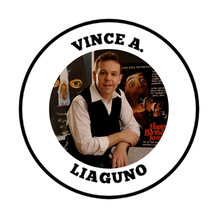 Vince Liaguno is the Bram Stoker Award-winning editor of UNSPEAKABLE HORROR: FROM THE SHADOWS OF THE CLOSET (Dark Scribe Press 2008), an anthology of queer horror fiction, which he co-edited with Chad Helder. His debut novel, 2006’s THE LITERARY SIX, was a tribute to the slasher films of the 80’s and won an Independent Publisher Award (IPPY) for Horror and was named a finalist in ForeWord Magazine’s Book of the Year Awards in the Gay/Lesbian Fiction category. More recently, he edited BUTCHER KNIVES & BODY COUNTS (Dark Scribe Press, 2011)—a collection of essays on the formula, frights, and fun of the slasher film—as well as the second volume in the UNSPEAKABLE HORROR series, subtitled ABOMINATIONS OF DESIRE (Evil Jester Press, 2017). He’s currently at work on his second novel. He currently resides on the eastern end of Long Island, New York, where he is a licensed nursing home administrator by day and a writer, anthologist, and pop culture enthusiast by night. He is a member (and former Secretary) of the Horror Writers Association (HWA) and a member of the National Book Critics Circle (NBCC). For more information and to follow Vince on social Media please follow the links below Author Website: www.VinceLiaguno.com Facebook: https://www.facebook.com/vince.liaguno Twitter: https://twitter.com/VinceLiaguno Goodreads: https://www.goodreads.com/VinceLiaguno  
Comments are closed.
|


Archives
May 2023
|
 RSS Feed

|

|