

 Please tell us who you are, and why you chose to review horror? My name is Lydia Schoch. I’m a speculative fiction author, blogger, and reviewer. Horror appeals to me because it drags our deepest fears as human beings out of the corners of our minds so they can be examined critically. There’s something about facing fears head-on that makes them a little less scary to me in stories and in real life. Reading and reviewing horror is like figuring out what’s causing that eerie tapping noise in the next room instead of pretending like it doesn’t exist or assuming you already know it’s a benign sound and rolling back over to go to sleep. How long have you been reviewing for, and where can we find you? I’ve been a reviewer for 9 years. You can find my reviews at https://lydiaschoch.com and https://www.goodreads.com/author/show/8186591.Lydia_Schoch. I’ve also written some reviews for GN Horror which can be read here: https://gingernutsofhorror.com/apps/search?q=lydia+schoch. Do you have a mission statement regarding what you hope to achieve with your reviews and website? I believe in uplifting and promoting indie authors in the horror genre (as well as all other speculative fiction genres), especially when they belong to any underrepresented groups. While not everything I review is indie and I certainly do review the work of straight white men as well, I think there’s something to be said for doing my part to draw attention to authors and works that generally don’t receive as much attention as they deserve. As Gandhi once said, “Whatever changes you would like to effect in our society has to begin with you.” What's been the biggest hurdle you have faced in your time as a horror reviewer? My biggest hurdle as a horror reviewer is finding enough short stories and novellas written by and about people who aren’t straight, cisgender, able-bodied, white men! They are so ubiquitous that I have to work to keep my editorial calendar a bit more balanced when deciding what to read and review next. I have a strong preference for shorter works in general, so that already narrows the playing field when I’m thinking about what to read next. If anyone knows of good places to find lists of these sorts of horror stories, please do speak up. What's your prefered subgenre of horror? Supernatural horror is always my preferred subgenre. I’m endlessly intrigued by restless spirits finding peace many years after their untimely deaths. The funny thing is, I don’t actually believe in the existence of ghosts in our world and am undecided on the existence of an afterlife in general. I simply love the idea that it’s never too late for justice and healing to prevail even if that’s not always how these tales turn out. How would you describe your reviewing style? I’d describe my review style as thorough, honest, kind, but a little tough. I do not give out four or five star reviews easily, so it’s a big deal when I rate a book so highly! With that being said, I review the way I do because I want every author to reach his or her potential and amaze their future audiences. It’s thrilling to give out a perfect star rating to someone I gave two or three stars to for their last work. I literally cheer out loud for them each time that happens. What was the biggest low point of your time as a reviewer, and what has been the highpoint? I once had an author attempt to start an argument with me about some weak and inconsistent character development I noticed in their story and mentioned in my review. I chose not to engage with that person. It can be hard to take constructive criticism, especially for people who haven’t had many experiences reading lower-rated reviews of their work. Luckily, most authors understand that reviewers do the work we do out of a love for the genre(s) we read and a genuine desire for all authors to improve and succeed. The highpoint for me as a reviewer happens every time someone decides to buy a book as a result of one of my reviews or an author thanks me for the time and effort I put into reviewing their work. It’s wonderful to be appreciated and to encourage the sales of more books! How do you organise your time as a reviewer, do you have any tips for other reviewers? Organizing my reviewing time begins with carefully selecting what I want to read. Generally, I say yes to books that excite me and pass on the ones I only feel lukewarm about unless I happen to have a lot of extra time on my hands that week and nothing in my queue. Once I know what I’m going to read, I block out time on my online calendar for reading and reviewing. If I reach the end of that hour (or those hours) and I’m almost finished, I’ll keep chugging along if possible that day. It’s nice to write those last few paragraphs while I’m still in the zone. The beautiful thing about reviewing short stories and novellas is that sometimes I can finish multiple reviews on the same day. That always makes me feel quite productive! I’ve also found that it’s best for me to take at least two days off a week when I don’t think about reviews at all. Resting makes a big difference in how much and how often I can review. It’s no different than taking a rest day from exercise, Do you have a favourite review of yours? I thought this one was well done: https://lydiaschoch.com/solitary-fear-a-review-of-christmas-eve-on-a-haunted-hulk/ The concept of Victorian Christmas ghost stories in general is spectacular as well. I look forward to continuing this blogging series next December. Sadly horror is a genre that is still "ruled" by white males, have you had any negative responses from the because you are a woman reviewing horror? Yes, I have had negative experiences with men who only seem to want to interact with other straight white men. It hasn’t always been easy for me to determine if their behaviour is due to me being a woman or me being queer. Maybe it’s a little bit of both? At any rate, gatekeeping is unfortunately alive and well in the horror community (as well as the speculative fiction community in general). I use the mute and block button liberally with anyone who isn’t willing to listen to reason. It’s been my experience that change happens slowly at times, but it is happening. All I can control is my own behaviour and who I associate with. I do my best to be a warm and welcoming presence in these communities as well as to guide new folks to people and sites I know will treat them kindly. In terms of the genre itself there is still a nasty lingering concept of the woman only being there as a focus for violence, terror or as the damsel in distress, what's your reaction to this? I loathe those stories and do my best to avoid them unless the blurb indicates that it will be making fun of this trope. Horror writers are such a creative bunch. Surely they can come up with some fresh storylines! Do you have any recommendations for books that allow women to break past this stereotype? Let’s Play White by Chesya Burke is an excellent example of how to write scary stories by and about women without falling into this trap. I wrote a glowing review of it here: https://lydiaschoch.com/a-review-of-lets-play-white-by-chesya-burke/ What was the last good book you read, and what are you planning on reading next? I recently read “Boo and the Boy - A Ghost Story” by Wayne Barrett and will be reviewing it on my blog in the early spring. It was an excellent middle grade paranormal horror tale about someone who wakes up in the desert, realizes they’re dead, and has no idea what happened. Next on my list is an eerie short story by Madeleine L’Engle called “The Fact of the Matter.” The description of it says its paranormal horror, but that’s all I know about it so far!  Lydia Schoch is a science fiction and fantasy author from Toronto who has been blogging on various platforms since the early 2000s and publishing books since 2014. She is a big fan of Buffy the Vampire Slayer and The Handmaid’s Tale. She is not a big fan of brussels sprouts. You can also connect with Lydia on Twitter, Goodreads, or through the contact form below. Please note that this blog does not accept guest posts or sponsored content. This site is always updated on Mondays and Thursdays. Additionally, it often participates in the Top Ten Tuesday and Weekly Wednesday Blogging Challenge blog hops. As of May 6, 2019, Lydia has begun interviewing people who love speculative fiction. If you’d like to be interviewed, follow the instructions in this post. Elsewhere on the Web BLOGGING AS AN ART, PRIVACY & MORE || BLOGLETTERS INTERVIEW WITH LYDIA Interview with Lydia Schoch Gif Interview with Lydia Schoch    Please tell us who you are, and why you chose to review horror? I’m Christine Morgan, a writer and occasional editor as well as reviewer, and horror’s been my primary true love since I was a kid. Reviewing it is a good way to share that love, as well as support the genre, and maybe introduce others to works or authors they might’ve missed. How long have you been reviewing for, and where can we find you? I was a regular contributor to Nick Cato’s “The Horror Fiction Review” for many years, since way back when it was a photocopied and stapled ‘zine and throughout its online run (http://thehorrorfictionreview.blogspot.com/). It’s been on hiatus lately, so I’ve been posting to my own site (https://christinemariemorgan.wordpress.com/reviews/review-archives/) as well as Amazon. Do you have a mission statement regarding what you hope to achieve with your reviews and website? Oh, that’s way too lofty for the likes of me; I just started out doing reviews of books I’d read and liked. Then it sort of snowballed from there, until people were actually sending me things to read. As mentioned above, being able to support and share my love of the genre is mission statement enough. What's been the biggest hurdle you have faced in your time as a horror reviewer? So many books, so little time! My TBR pile tends to hover between 50 and 70, no matter how fast I try to get ahead of it. Which is not a bad problem to have. I’m never without plenty of options. What's your prefered subgenre of horror? My tastes are encompassing and eclectic, but I do have a special love for extreme horror and bizarro. How would you describe your reviewing style? Casual, personal, and chatty; I like to focus on what my reading experience of any given book was like, what it meant to and how it affected me (though I have been known to gripe about editing/proofreading issues). What was the biggest low point of your time as a reviewer, and what has been the highpoint? For low points, I guess there’ve been the occasional backlashes from people who disagreed, but so far (knock on wood) I haven’t gotten the full death-threat attacks some others have. For high point, definitely when Edward Lee emailed me to thank me for reviewing several of his books; we struck up a correspondence and he’s become a mentor and dear friend. How do you organise your time as a reviewer, do you have any tips for other reviewers? Pretty much my whole life revolved around books one way or another; I’m always either writing, editing, proofreading, or reading and reviewing. But my schedule is subject to the whims of fate; I do a lot of it at work on the overnight shift so it depends on how much downtime I happen to have. Do you have a favourite review of yours? There’ve been far too many to choose from! I think I reviewed over 120 books in 2020 alone! Luckily, I am a fast reader, but even so, that’s a lot. Sadly horror is a genre that is still "ruled" by white males, have you had any negative responses from the because you are a woman reviewing horror? If I did, I either didn’t notice or have forgotten, or was more occupied with negative responses for being a woman writing it. But I stopped putting up with that kind of nonsense a long time ago. Anyone who still thinks “girls can’t do horror” has clearly not been paying attention. Their loss. In terms of the genre itself there is still a nasty lingering concept of the woman only being there as a focus for violence, terror or as the damsel in distress, what's your reaction to this? Pff, it’s hardly only this genre; that’s been a thing in just about every genre for ages. I could rant and rail about it, but I prefer to do my best to concentrate on countering it in my own work as well as celebrating it in the works of others. Well, and calling it out when I (still way too often) run across it, but I’m spiteful that way. Do you have any recommendations for books that allow women to break past this stereotype? There are a lot of great women doing a lot of great stuff, on the creative end as well as the business end and everywhere in between. Look at Rose O’Keefe, publishing dynamo ... Liv Rainey-Smith, woodcut artist ... tell them “girls can’t,” I dare you. Writers like Monica J. O-Rourke, Mary SanGiovanni, Damien Angelica Walters (if she has yet to write a dud, ever, I’ve not seen it). And must give a special shout-out to Gina Ranalli, who kicks all kinds of butt anyway but whose latest book -- All Men Are Trash -- is the “We’re Not Gonna Take It” anthem we all need. What was the last good book you read, and what are you planning on reading next? CM: Among my fave recent reads lately have been the latest two in the Death’s Head Press “Splatter Western” series, The Thirteenth Koyote by Kristopher Triana (who, for a dude, especially an extreme horror dude, writes female characters phenomenally well), and Red Station by rising star Kenzie Jennings. Coming up next ... let me check my TBR list ... looks like the anthologies Welcome To Splatter Club from Blood Bound Books and Bloodstains from Splatterpunk Zine are on deck, so, it’s gonna get messy!  Christine Morgan grew up in the high desert of Southern California, and fled for the cooler rainier climes of the Pacific Northwest as soon as she was of age. She graduated from Humboldt State University with a psychology degree, and has worked in the field of residential psychiatric care ever since (usually on the overnight shift, because it often means she can write on the company clock). Twice-divorced, and twice a cancer survivor, she currently lives in Portland Oregon, bossed around by three demanding cats as well as the porch-critters she’s taken to feeding. Dubbed “the Martha Stewart of extreme horror” for her disturbing baked goods and craft projects as well as her stories, she has one now-adult long-suffering daughter who usually wins whenever her friends compete to see who has the weirdest parents. Her most recent books include: Lakehouse Infernal, White Death, The Night Silver River Run Red, Dawn Of The Living Impaired And Other Messed-Up Zombie Stories, and Visceral (with Patrick C. Harrison III). Over a hundred of her short stories have appeared in various anthologies, magazines, and online venues. She also reviews, takes on edit and proofreading gigs, and can be found online at https://christinemariemorgan.wordpress.com/, as well as on Facebook (https://www.facebook.com/christinemorganauthor) and Twitter (https://twitter.com/CMorganAuthor).   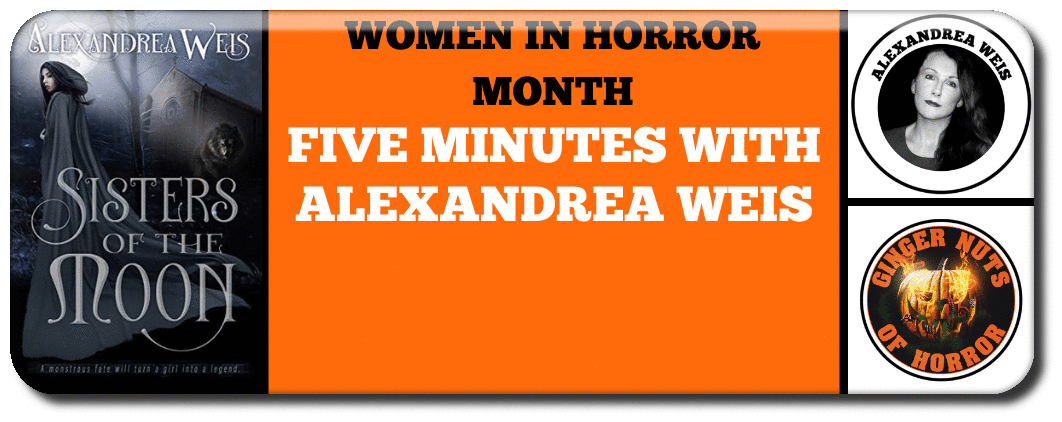 Could you tell the readers a little bit about yourself? I am a nurse, a wildlife rehabber, and an award-winning author of over thirty published novels. When I’m not at my computer, I’m taking care of orphaned and injured wildlife in Southeast Louisiana. To get the ball rolling and get everyone relaxed, here is a hopefully lighthearted question to break the ice, which one of your characters would you least like to meet in real life and have them complain at you about they way you treated them in your work. I would choose Alarik, the head of the blackcoats pack in Sister of the Moon. He is sinister and shadowy, and his evil oozes from the pages. I’d hate to run into him in a dark alley. I’m sure he will have a few heated recommendations on how to write his character in future installments. Other than the horror genre, what else has been a major influence on your writing? Thriller and suspense genres. I love these storylines because of the multi-faceted layers and the psychological complexity of the characters. It’s also fun to keep guessing how the story will end. The term horror, especially when applied to fiction always carries such heavy connotations. What’s your feeling on the term “horror” and what do you think we can do to break past these assumptions? We can move away from horror’s “heavy” mantle with more comedy and lighthearted characters woven into storylines. Family themes, as opposed to individuals fighting a killer, could also help broaden those horizons. Pushing the limits redefines any tradition. The more we explore new ways to create horror, the greater our chance of redefining what constitutes the genre. A lot of good horror movements have arisen as a direct result of the socio/political climate, considering the current state of the world where do you see horror going in the next few years? I’m sure readers will want to read more spins on plague and disaster stories since they feel more connected to these events. Perhaps everything we have learned from living in the time of Corona will change how we approach such works. We could see an evolution of the zombie sub-genre from mindless creatures to people made outcasts by a plague, which has turned them into carriers feared by the uninfected. More horrific plagues based on diseases that can or do exist. As a nurse, I have seen quite a lot of these. Or monsters created by vaccines meant to save humanity. In addition, I see horror novels taking on more subject matter like Get Out and A Quiet Place. Given the dark, violent and at times grotesque nature of the horror genre why do you think so many people enjoy reading it? Horror offers readers a way to explore the rush of confronting what scares them without suffering through the trauma. You are never truly alive until you are absolutely terrified. And who doesn’t love to curl up with a scary book at night, especially around Halloween. What, if anything, is currently missing from the horror genre? My only complaint is the lack of tangible and compelling characters. I find this more so in movies than books, but I still feel so many authors are mired in getting the graphic details right, they forget the most terrifying aspect of any story—making their characters disturbingly real. If you could meet this person on the street, if they become real to you as a reader, that is more frightening than all the blood and gore. What are the books and films that helped to define you as an author? All the works of Edgar Allan Poe, Frankenstein by Mary Shelly, The Haunting of Hill House by Shirley Jackson, Ghost Story by Peter Straub, The Shining and Pet Cemetery by Stephen King, and of course, The Witching Hour by Anne Rice. Films such as The Exorcist, Halloween, The Lost Boys, Psycho, The Mist, The Birds, Return of the Living Dead, Rosemary’s Baby, The Others, The Thing (1982), Fright Night (1985), and anything with Vincent Price! Are there any reviews of your work, positive or negative that have stayed with you? The bad ones stay with me more than the good, and I use those constructive comments to better my writing. I believe authors listen to what readers tell them. Criticism is how we grow, but the brutal reviews do give you pause. What aspects of writing to do you find the most difficult? Editing. Putting the story together and fleshing out the characters is the challenge, but editing can sometimes make you question your work as well as sanity. How important are names to you in your books? Do you choose the names based on liking the way it sounds or the meaning? I struggle with names. Sometimes I lift names from things I see around my office or from the spines of other books. I once gave a character the last name of Propel after my water bottle. I usually worry more about the names after I have the characters down and become familiar with them. My agent tortures me over character names. lol Writing, is not a static process, how have you developed as a writer over the years? I believe we are always evolving, and I have learned so much about the craft and my voice. How I put stories together has changed dramatically. I feel I have become more succinct and learned how to say the most by using the fewest words possible. But that could change over time and is dependent on the genre of book. What is the best piece of advice you ever received with regards to your writing? Never stop writing. The more you write, the better you will get. For those who haven’t read any of your books, which of your books do you think best represents your work and why? The St. Benedict Series co-authored with Lucas Astor, which includes Death by the River and the upcoming A River of Secrets, are some of my favorites because of the suspense, character development, and horror aspects. Also, the upcoming YA horror/thriller Have You Seen Me?. The characters and plot are some of my best work, and it was also so much fun to write. Do you have a favorite line or passage from your work, and would you like to share it with us? “A witch is what men call a woman they cannot control.” ~Sisters of the Moon “The thick, heavy convent door shut, sending a thud reverberating throughout the columned hall. Durra shuddered. She’d heard that sound many times during her years of slavery. It signaled the end of her freedom.” ~Sisters of the Moon Can you tell us about your last book, and can you tell us about what you are working on next? Sisters of the Moon is a new take on the werewolf genre inspired by a lesser known mythology with a religion and female-centered theme. I expand the lore, create a hierarchy that will be explored in upcoming books, and build a world where these dark creatures live. Set in medieval Bavaria, historical figures are woven into the tale and add a unique twist. This holiday season, I have a romance with a supernatural twist called The Christmas Spirit. I can never get too far away from my horror roots and blending the otherworldly with a light-hearted Christmas tale was a thrilling challenge. If you could erase one horror cliché what would be your choice? The damsel in distress. Please, let’s start writing more kick-ass women who save the men for a change.  Alexandrea Weis, RN-CS, PhD, is a multi-award-winning author, screenwriter, advanced practice registered nurse, and historian who was born and raised in the French Quarter of New Orleans. Having grown up in the motion picture industry as the daughter of a director, she learned to tell stories from a different perspective. Infusing the rich tapestry of her hometown into her novels, she believes that creating vivid characters makes a story moving and memorable. A member of the Horror Writers Association and International Thriller Writers Association, Weis writes supernatural, horror, mystery, and thrillers. She lives with her husband and pets in New Orleans where she is a permitted/certified wildlife rehabber with the Louisiana Wildlife and Fisheries and rescues orphaned and injured animals. WEBSITE LINKS Facebook: https://www.facebook.com/authoralexandreaweis/ Webpage: http://www.alexandreaweis.com/ Twitter: https://twitter.com/alexandreaweis Instagram: https://www.instagram.com/alexandreaweis/ Amazon: http://www.amazon.com/Alexandrea-Weis/e/B0028OJO6C/ref=sr_ntt_srch_lnk_3?qid=1433989356&sr=1-3 Goodreads: https://www.goodreads.com/author/show/1211671.Alexandrea_Weis  On an island in Lake Obersee, where The Sisters of St. Gertrude abide, a destitute Moor named Durra arrives. Sold for taxes, she and her two companions tend to the nuns and their collection of cats. At night, she combs the library for details on the order, the remote island, and the beasts howling outside her window. But when a prank reveals the sisters’ gruesome secret, Durra is forced to accept a new fate. Bestowed an unearthly power, she must choose between life as a nun or living among the monsters beyond the convent walls. Her path is about to change the tide in the ultimate war. The war between good and evil.   Please tell us who you are, and why you chose to review horror? I’m Elle – reviewer, writer and editor. I’ve always had a love for Horror as a genre, and not that long ago starting picking up more indie books, thanks to all the awesome people I met on Twitter. I wanted to talk about them, and delve into the indie horror scene a bit more. How long have you been reviewing for, and where can we find you? I’ve been reviewing on and off for a long time – I used to review books under a pseudonym, then dropped that and set up my blog ‘Unwrapping Words’ on my website, elleturpitt.com after a short break. I also edit and contribute for divinationhollow.com, which I’ve been of since the original inception of DHR in 2019, then took over the blog later on and have been working on it since with my wonderful co-admin, Ellen Avigliano. Do you have a mission statement regarding what you hope to achieve with your reviews and website? When I started my original blog, I was just happy to talk about books. Now, especially with Divination Hollow, we’re keen to promote voices – not just writers – who have been typically underrepresented in Dark Fiction. What's been the biggest hurdle you have faced in your time as a horror reviewer? Navigating social media and the ‘issues’ there. Honestly, the community seems to thrive off drama, and though for me this has lessened in recent months, when it does pop up it often seems to be authors or other reviewers trying to police how reviews are written. And when real, actual issues are raised, so many try to sweep it under the rug or throw it in with other ‘drama’ when it’s not. I’ve had to just realise that a) I write my reviews how I want, and b) whatever I say on social media, I can only be happy with it if I stick to my own principals. This might mean pissing some people off, but it is what it is. What’s your preferred subgenre of horror? I don’t think I have a preferred subgenre – I like anything written well with an element of supernatural/paranormal. Much more than I like ‘realistic’ stuff. I am especially fond of haunting and ghost stories, though. How would you describe your reviewing style? I like to think unapologetic. If I really love something, you’ll know. If I had a bad experience with a book, the review might become a bit ranty, but that depends on why I didn’t enjoy it. What was the biggest low point of your time as a reviewer, and what has been the highpoint? Low point…finding out someone I considered a friend was actually only really using me to boost their own career, and was more concerned about preserving a ‘relationship’ with a publisher than the friendship, and used gaslighting techniques when it was pointed out a particular book was heavily misogynistic and made light of sexual assault. Highpoints outweigh that. And there’s been a few. It’s always a thrill to have an author, reviewer, or other creatives reach out to say they love Divination Hollow. I was able to take part in BBNYA last year and will be doing it again this year, am taking part in the Final Girl Film Festival to review panels and films, and of course, I got to run a short story competition with Divination Hollow last year. How do you organise your time as a reviewer, do you have any tips for other reviewers? I read when I can, this sometimes means in 5-minute blocks between doing other stuff. I always make an effort to read before bed, and when I’m in the office, I read on my lunchbreak. I’m not hugely organised with time, but I just slot things into my normal routines. What I would suggest to other reviewers is don’t be afraid to turn down books, don’t force yourself through a book you’re not enjoying, and don’t let others police your reviews. Do you have a favourite review of yours? I actually don’t. I’ve read and reviewed so much good stuff in the last year alone, it’s hard to pinpoint one particular review I’m really proud of. Sadly horror is a genre that is still "ruled" by white males, have you had any negative responses from the because you are a woman reviewing horror? I don’t think I’ve had negative responses because I’m a woman reviewing horror, but I have had others who seem all too happy to treat me differently because I am a woman. I’ve also seen some absolute awful attitudes in the Horror community, from both men and women, and again, being treated differently than someone else because they’re a man, that’s actually more common than most men probably realise. In terms of the genre itself there is still a nasty lingering concept of the woman only being there as a focus for violence, terror or as the damsel in distress, what's your reaction to this? It’s very much tied into misogyny, and it is absolutely amazing the pushback when we get when we ask men not to do this, or to actually do their research. We’re not saying you can’t kill women in fiction, but to be aware of what you’re actually doing. Even when there’s a large ‘cast’ and multiple characters die, the violence against women (or generally people who aren’t cis het white men) is more extreme. I think men need to be more conscious of this, and of the fact we’re not there to be saved, or serve as a lesson. We’re more than someone’s mother, wife, girlfriend, sister. And please stop writing stories where women are sexually assaulted just so the menfolk can go and avenge them. Do you have any recommendations for books that allow women to break past this stereotype? There are a lot of books by women writers, especially in the indie scene, that have women at the forefront in the best ways. A couple of recent reads come to mind – Laurel Hightower’s Crossroads, V. Castro’s Goddess of Filth, M. Lopes da Silva’s Hooker. It’s also worth looking outside the genre – there are really strong female leads in Fantasy, especially in the YA area, or even look at N.K. Jemisin’s fantastic The Broken Earth trilogy. What was the last good book you read, and what are you planning on reading next? I recently finished Into the Forest and all the Way Through by Cynthia Pelayo. Powerful and heart-breaking. At the moment, I’m taking a very slight break from Horror, and am reading N.K. Jemisin’s How Long ‘til Black Future Month? and All the Tides of Fate by Adalyn Grace, which is one of the aforementioned YA Fantasy novels with a fantastic female lead.  Elle Turpitt is a writer, reviewer and editor currently living in Cardiff, Wales. She has had various short stories published, and is currently Content & Features Editor for divinationhollow.com. She also blogs at elleturpitt.com and can be found on Twitter @elleturpitt.   Today we are absolutely delighted to bring you an incredibly detailed interview with the fantastic Dave Jeffery which is themed around the subject of sequels. Dave is the perfect author for a sequel discussion as Frostbite 2: Labyrinth has just been released and the excellent A Quiet Apocalypse 2: Cathedral will soon be dropping. The interview also takes in Dave’s superb YA series Beatrice Beecham and his thoughts on other horror sequels and his future work. Read on to find out what makes him tick and why the sequel is such an important feature of the horror genre. GNOH: You have written several books with sequels Dave, I think Necropolis Rising 2: Necromancer (2014) was the first, much earlier in your career, can you tell us a little about this early series? DAVE: Necropolis Rising was my answer to a lifelong question ‘can I write an original zombie story?’ This was something that had been with me since watching Romero’s Dawn of the Dead in a flea pit cinema in Cradley Heath back in 1980. One of the issues for me was that I knew I wanted to do something different. The notion of setting it in an apocalypse didn’t appeal as Romero had pretty much closed the door on that with his seminal movie. So, for many years, I was waiting for a ‘hook’ that would grow the seeds of a story. After watching Michael Mann’s brilliant heist thriller Heat, the penny dropped. I outlined a story where a team of cyber criminals had to go into the city of Birmingham to interface with the National Criminal DNA Database so that it would work for an international criminal organisation known as The Consortium. As the heist is about to go down, members of an extreme animal rights group detonate a bomb in the apartment of a nefarious scientist who has been rumoured to be a proponent of animal experimentation, releasing a pathogen that creates a zombie outbreak. The criminal gang have no choice but to continue with the raid, unaware of what is going to face them. Add into this a teen (Thom) who has shown, not only immunity to the virus, but an ability to communicate and control the undead, and then I figured I had a narrative that said something different about the sub-genre. This was a good few years before the release of the Z-Nation explored similar concepts. I guess I just missed the boat based purely of the book’s lack of reach, although it did sell very well at the time. It was the story of Thom that had me continuing the series in Necromancer (and again in book three, Dead Empire) although there was a gap of about three years between book one and book two as other projects took over. As a character, Thom is fascinating in that he starts out as someone who is determined to challenge exploitation, but his gradual mental decline means his perspectives on morality become unstable, leading him to make catastrophic decisions for the world. This series is ongoing, and I will revisit it in the future, though when exactly I’m not quite sure. These days there’s a degree of audience burnout when the ‘Z’ word is mentioned! GNOH: I loved A Quiet Apocalypse (2019) and was delighted to hear that the sequel Cathedral was in the pipeline, was this always your intention? How early in the planning process had you decided that the location of Cathedral would merit its own story? DAVE: A Quiet Apocalypse is another story that I had on the backburner for a significant period of time. The germ of the idea came when I was working as a mental healthcare worker with the Deaf Community back in the late 90s. A hearing person suggested that the thought of being deaf was scary and this is contrary to people who are culturally Deaf who consider their deafness, not as a disability, but as integral to their sense of social identity. The book explores this concept of fear and the ambiguities of disability and empowerment, but in an extreme manner. The book started out as a short piece for an anthology that never transpired. I lost the completed draft when my computer did a software update leaving me only with my outline, but I used my recollections of the final short story to develop the piece into the novella which, to be honest, exceed my expectations in terms of critical response. During the writing of the first book, I liked the idea of Cathedral having an almost mythical presence, like Arthur’s Avalon, where it is merely referenced, and the motives of its people determined by its rumoured barbarity towards outsiders. There was no intention to write further books until after I received reviewer feedback. One of the questions consistently asked by reviewers of A Quiet Apocalypse related to what is going on outside the first-person view of its protagonist, Chris. This had me thinking that, since we have Chris’ perspective of what it is like being a hearing person enslaved by a deafened survivor, what would it be like to be someone who is deafened living in Cathedral, enslaved by their loss of hearing. It allows for the story universe to expand and gives more than a hint of life in a skewed, new world order of governance. Cathedral is a dark book, perhaps even darker than the first. It is true to say that this is not a series than leaves you warm and fuzzy. GNOH: I read that A Quiet Apocalypse is a projected trilogy, was there never any intention/projection to write this as a single novel instead of three interconnected novellas? Could it have worked as a novel? DAVE: Well, I can tell you that the third book - The Samaritan - is already written and with my publisher at Demain. As it currently stands this is going to be a trilogy however, I do have one more story to tell, but it is going to require some thought as to the format it will take. A Quiet Apocalypse was never meant to go beyond one book but the ease in which I have been able to expand the universe has shown me that there is a big, conflicted world out there that readers are keen to explore. Had I approached the story as a novel I don’t think that I would have done it differently. The first-person point of view is a deliberate device to alienate each protagonist and have the reader trapped in their worldview alongside them. This is important as it is a reflection of what it is to be deafened, what it is to be a slave, what it is to be a survivor in this cruel new world; the sense of isolation is a key antagonist and part of the experience for the reader. I can see the trilogy as a single volume, three-part omnibus in the future, and I would be comfortable with that as a format. GNOH: Frostbite (2017) is a few years old now, why decide to tackle a sequel three/four years later? DAVE: To be honest, Frostbite was sold to Severed Press as a series. My original intention was to have stand-alone books, all of which would feature a yeti story. But as is always the case at planning stage, the story took over and suddenly I wanted to do something very different to the standard survival-against-the-monster type of thing. The idea that yetis are not some savage species of mindless killers but highly intelligent and victims of the other creatures who have invaded their realm appealed to me more than a simple monster story. Frostbite 1 is a straight-forward pulp fiction yarn but with a twist, the yetis are, for once, the good guys. As the writing process kicked in, ideas for a second book were flowing nicely and I am now at the point where I am back on track with Frostbite as a series, but rather than being stand alone, it is a continuation of one bigger story. Reviewers and readers either accept the science fiction aspects or reject them, but I simply couldn’t write the same, snow-trodden path. At the time of writing, Frostbite 3: Earthfall is on the cards next year before branching out into a pure science-fiction adventure that intends to take the characters truly leftfield and off-world. In terms of timing, the gap in between the first and second book is indicative of other commitments around at the time. I had contractual agreements for two other books as well as holding down a full-time job. These days things are very different. I have retired and now write full time. This means I can tackle more than one project. This year, for example, I have written two novels and one novella, as well as numerous magazine articles and literary review pieces. I simply love what I do. GNOH: I have read Frostbite 2 and Cathedral and congratulations for producing two very different books at roughly the same time. Were you physically writing them simultaneously? How did that work? You didn’t almost slip a Yeti into Cathedral by mistake, did you? DAVE: Thank you so much for the kind words! They are two very different types of book and, in terms of order, I wrote the Frostbite 2 first and then sent the draft to my beta readers for comments. As I waited for the draft to return, I began Cathedral. It’s an interesting process writing in this staggered way, but I found it highly effective and, to my surprise, it aided rather than impeded creativity. Can you imagine a yeti loose in the world of A Quiet Apocalypse? That’s a book in itself! GNOH: Your werewolf romp Tooth and Claw (2019) is crying out for a sequel, there are so many ways that story could evolve, do you have any plans? DAVE: Ooh, then I guess you’ll be pleased to know that Grinning Skull Press have already accepted a pitch for a second book which I plan to write next year. It will focus on the relationships of Alana and Ian and takes place two years after the events of Tooth & Claw. The two are now married and have established a small company originally dedicated to finding and destroying the werewolf clan, with no success. This has now expanded into hunting down all malevolent supernatural creatures which will bring them into contention with sinister forces, including the wolf pack who are tasked with executing our tenacious protagonists. It is also a vehicle to give the reader background on the wolf-pack and its origins. It looks as though this is a bigger story so don’t be surprised if there’s a third book at some point! GNOH: If a publisher gave you a wedge of cash in advance for a quartet of novels, if you could choose the direction, would you go for yetis or werewolves? DAVE: I think it would have to be werewolves as they are my favourite supernatural creature based purely on the scope they offer to stories. You can have a straight horror piece, or a tragic love story, a philosophical tale, a comedy - there are many routes that you can take. GNOH: When it comes to the sequels I have mentioned above, do you write them on spec, or do you already have publisher interest? DAVE: With the exception of the Frostbite series, the ideas for follow up stories tend to come during the writing phase of the original books, and I tend to approach publishers if I get a decent idea for another. This is how it was with both the Necropolis Rising series and Tooth & Claw. The idea of writing Cathedral came after A Quiet Apocalypse had been out a few months and reviewers and readers were voicing how keen they were to know more about what goes on in that world. I pitched to Demain Publishing the concept of another book and this was accepted very quickly. The Samaritan was a natural progression and I’d decided on writing a third title when Cathedral was in its second draft phase. It is the first time that I have ever written two books set in the same universe back-to-back. Emotionally, it was a gruelling experience, but I guess I’m finally learning after all these years! GNOH: I am a huge fan of the Beatrice Beecham novels which are aimed at the younger end of the YA audience, but I doubt they have sold the number of copies they deserve to. What would you pinpoint at the reasons? I would suggest the change in publishers as a factor and the lack of clarity in the order in which the books should be read. Perhaps they need a rebranding? Your thoughts…. DAVE: Thank you so much. Coming from someone I consider to be the guru and a true champion of the YA horror scene, that is a massive compliment! I think the Beatrice Beecham series has been a victim of multiple issues over the years. You’re right in that having multiple books listed through multiple publishers doesn’t help matters, but it is not the only issue, so I shall attempt to clarify things as I see them . The first book (Fearsome Feast) was written and released as a self-published title back in 2007 and was very much a whodunit in the vein of The Hardy Boys and Nancy Drew. By the time I had written the second book (Fete of Fate) I was in two minds about self-publishing again or trying to reach out to independent, small presses. Through my mental health work, I became aware of Chipmunka Publishing who specialised in mental health books, and had approached them with my second novel, mental health themed Finding Jericho (2008) which they accepted. Out of interest I asked if they did books that were not overtly mental health related and they said they would consider it if the title had a strong massage of empowerment. As this tenet is central to the Beatrice books, they took on both Fearsome Feast and Fete of Fate, although the second book was released in two parts, this fragmentation a portent of what was to happen to Beatrice over the coming years. The series was met with favourable reviews, there was interest from several county council libraries in the UK but only if the covers changed to make them more appealing to a younger readership. Due to ‘brand’ issues the publisher was reluctant to do that and we lost out on expanding the reach of Beatrice and her friends. It was at this point I parted company with Chipmunka, and Beatrice sat in limbo for a while until another fledgling small press (who went under after some significant controversy so will not be named here!) took on the concept of Beatrice but this time with a supernatural aspect. So, rather than Hardy Boys and Nancy Drew, Beatrice leaned towards Scooby-Doo, Monster Squad and The Goonies, battling supernatural forces in a series of chapbooks. As I say, this publisher went south but not before I pulled all my titles from them. Then came the wonderful Dark Continents Publishing who had already signed up the Necropolis Rising series and my Campfire Chillers YA collection, and put all the chapbooks into one volume that became Houseful of Horrors. In my mind, this is the bridging book between the Beatrice series as whodunit and her transition to supernatural adventure when she was finally taken on by Crystal Lake Publishing for the next two books, Cryptic Crypt and Ship of Shadows. When Dark Continents sadly folded, Crossroad Press took on Houseful of Horrors and, at my suggestion, Fearsome Feast and Fete of Fate, so at least all three books had stability in terms of publisher. Getting back to the question, I guess, with the constant flux in publishers, Beatrice has lost her sense of identity, and how to clearly identify the chronology of the books is a part of this, as well as what the future holds for her and the townsfolk of Dorsal Finn. Not helped, of course, by the next book The Devil Device, being back with Crossroad Press because of their digital and audio slant that has proven to be effective for Houseful of Horrors. I think we’re not going to know the true outcome for Beatrice until things consolidate, but as to when that might occur, your guess is as good as mine! But I’ve had the firm belief that Beatrice and Co. will have their day; it just isn’t for now. GNOH: Of recent horror fiction you have read what would you love to see have a sequel? I appreciate some authors never do sequels! DAVE: Difficult one this, because the strength of Paul Tremblay’s Cabin at the End of the World comes from its wonderfully ambiguous ending. But, for purely selfish reasons, I’d love to see where Tremblay takes those characters, and what lies beyond those woods, if was given opportunity to do so. GNOH: When it comes to the bestselling authors of the genre do you think the sequel is predominately about the cash advance? For example, there was an argument that Stephen King’s sequel to The Shining, might have started out as a different story which was shoe-horned into the Shining universe….. DAVE: I guess this is one for those ‘bestselling’ writers, but for me, I couldn’t write a sequel unless I truly had something else to say about either the story or the characters. I’m not in this for money, I barely make any from writing, and it’s never been the reason why I do it. For me it’s about transporting others to another world, to entertain them and, in some instances, to make them think. I know that may sound pious but it’s 100% true. GNOH: Which are your personal favourite horror novel sequences? DAVE: The Exorcist and Legion by William Peter Blatty spring immediately to mind, as does James Herbert’s The Rats, Lair and Domain. More recently I have enjoyed David Moody’s Autumn and Hater series. GNOH: Can you think of any occasions when the sequel has topped the original? DAVE: Personally, I think Legion is a better book than the Exorcist, and Domain is a better book than its prequels. But the important thing is that the original books laid the foundation for that greatness, so I prefer to look at a series as a whole. GNOH: What are your feelings of authors carrying on the series of others? It is more common with thrillers, science fiction, fantasy than horror I guess….. DAVE: For me, if there is a solid affiliation with the source material and its creator, then it makes sense. I’m thinking particularly of Frank Herbert’s Dune series and those that followed his death. There was a such a demand from fans that the continuation - in prequel form at least – with his son, Brian Herbert, and writer Kevin J. Anderson at the helm, was an obvious way forward. My understanding is that Lee Child’s Jack Reacher books are going to be continued by his son, too. Again, keeping it in the family with people who have intimate knowledge as to how the character and stories developed over the years, and therefore respectful when continuing the franchise. Where this kind of loses me is when books become public domain, and anyone can stake a claim. I find this creates a climate where, for good or ill, original material is plundered by those who see a chance to make a quick buck or capitalise on their own lack of originality. I’m sad to say, this is something I have seen in writers irrespective of their ability. There’s no escaping the reality that it is often the originality of the story that hooks people into investing in a book, and its characters. People will have other views, of course, but this is mine. GNOH: If you were knocked over by a bus tomorrow (heaven forbid!) which author would you like to see complete the Cathedral series in your sad absence? DAVE: I guess the previous response is a lead-in to my answer to this question. This is something that I have already discussed with my son, Thomas and we have an agreement that, should the demand be there and I’m not, he will continue with it. He’s been there from day one and is completely aware of the story, how it came to be and what direction it should go in. He’s a great writer in his own right. I can’t say too much at this point but expect something from him next year! I also need to point out that there are plenty of writers out there that I admire and would have no issue continuing the series should it ever be needed. But, just like the arrangement with Herbert and Anderson, it would need to be a collaborative approach with my son. GNOH: Of all your books which are you most proud of? DAVE: I have two, and for very different reasons. First – Cathedral, based purely on how ‘right’ it felt as I was putting it together. Sometimes, as a writer, you kind of know when things are clicking, and the ease in which this story developed and flowed told me I’d hit on something of value. Secondly is Finding Jericho (Demain Publishing), my contemporary mental health novel that explores the societal stigmatisation of the mentally ill. This is an important book for me as it is a culmination of a life’s work in mental health and my drive to raise awareness of mental illness in wider society. As a book it has been well-received, and this is perhaps my greatest literary achievement to date. GNOH: Do you have other projects in the pipeline not connected to your ongoing series? I have a novel that I intend to complete next year. It is called Hymns for Dead Stars (Demain Publishing) and can be described as ‘Event Horizon meets Midsommar’. This will be my first true foray into sci-fi horror and, as the premise suggests, I’m planning on having horrific fun walking around in that particular world. What I can tell you is that it is definitely not going to be a series! GNOH: Which author (living or dead) would you most like to see reading A Quiet Apocalypse on the bus? DAVE: Hopefully, this isn’t the same bus that runs me over! Gosh, so many authors, but given the post-apocalyptic premise and the consistent reviewer comments likening the tone of A Quiet Apocalypse to The Road, I’d have to say Cormac McCarthy. I consider The Road to be an incredible, humane piece of work and it would be a jaw-dropping honour to have him reading what I do. GNOH: Dave Jeffrey it is always a pleasure to have you on Ginger Nuts of Horror and thanks for answering our questions so fully, you are a tremendous ambassador for the horror genre. The very best of luck with your two current projects and good fortune going forward into 2021. Tony Jones  CATHEDRAL ... The world has changed. So have the rules. In the silence of a quiet apocalypse, there is Cathedral. It is a city like no other, sanctuary for the survivors of a terrible plague that has deafened the world. The walls protect the small community. Rituals and laws maintain order to prevent a return to chaos. But Cathedral is a dangerous and complex place. For citizens like Sarah and newcomer Paul it can be either home or prison. They just have to decide where their loyalties lie… (cover by Adrian Baldwin; central art piece by Dark Artist Roberto Segate)    Hosts was unleashed onto VOD on Sky Store, iTunes and Amazon last Monday and Ginger Nuts of Horror is honoured to bring you this round robin interview with the stars of one of the horror highlights of 2020. Please give a warm welcome to Neal Ward, Nadia Lamin, Frank Jakeman, Samantha Loxley, Jennifer K Preston, and Buddy Skelton Hello everyone, firstly congratulations on the success of Hosts, it's a fantastic film. How has the reaction from your friends and family been? Neal Ward (NW) Friends and family have always been incredibly supportive of all my work! Without their support id probably of jacked this career in along time ago! It’s a struggle 90% of the time with 10% of the time actually being fun! Which is usually the filming of a production! The rest of the time and stree can seriopusly get in the bin! Buddy Skelton (BS) Everyone absolutely loved it even my Nan ! Whos not a horror fan at all, she was definitely scared and jumpy through the whole movie Jennifer Preston (JP) So much love and support from family and friends. As it was already released in the US last Oct and I’m half american.lotsof them have already watched it – they thought it was incredible – and shocking! Frank Jakeman (FP) Everyone’s really thrilled and cannot believe that we achieved such high production values with such a small budget. Samantha Loxly (SL) Thanks so much for the congrats, glad you guys enjoyed it! It’s still a novelty for me to hear from anyone who’s watched the film and I don’t think that’s gonna fade anytime soon - it really does mean such a lot. Reactions so far from friends & fam have been unanimous in that each has said they’re glad to have known me before viewing (aka, they realise i’m not actually THAT evil in real life!) Also the majority have mentioned their appreciation for how the audience members have a chance to familiarise them- selves with the characters before any mayhem starts, you know, get to know them and their personal dynamics - which is great to hear, since having such a connection makes the whole story which then unfolds something every viewer can feel more included in. And are you fed up with saying "no not that movie"? NW I don’t know what your talking about what other film? Theres only one film with an S a T a H and an O in it! Theres only one other Host and that’s the incredible ‘The Host’ by Bong Joon Ho!!! BS No as I think it’s a great film title and our Hosts really stands out. JP Actually it hasn’t been too bad. They’re such different movies and a lot of people are starting to know there are two different ones. FJ No, those guys made a great movie and I’m really pleased for them, and it’s a success! SL In all honesty, no - but great question! That made me chuck- le. This whole ‘Hosts / Host’ subject crops up quite a lot. Of course it’s a bit unfortunate for our films to have such similar titles, but each is so different from the other that be- sides their name and genre I don’t really think they can be compared. I watched Host during lockdown last year and thought it was really well done. So much praise has to be given to their cast & crew for creating something within such a new-found medium (aka zoom call) and making it into a truly gripping film. Nadia Lamin (NL) Haha, not really actually it's just one of them things isn't it. I watched a round table interview with a bunch of famous comedians, and one of the questions was, why do you stand up? And I got me thinking, why do you act? And what do you think you would be doing if you weren't acting? NW I'm not good at anything else! If I wasn’t acting I'd probably be dead! (said in an Alan Patridge voice) BS I'd be a school!! I really love the acting process from learning my lines to creating and developing my character allowing me to be people that I'm really not to munching popcorn with my family whilst we then watch it! JP I think for a lot of actors, acting is just something they HAVE to do – we are storytellers and we need a creative outlet. Once you experience being on set or on stage there’s no going back! FJ It’s something I always wanted to do. Every time I saw a great film, it made me want to ‘have a go’! SL Growing up I remember watching a play and thinking, I can really relate to one of the character’s angst. I remember watching a film, seeing this one tiny moment and thought the same thing. I remember watching an animated film with a really sad story, and listening to the voices I felt as if they had said something I didn’t have the ability to actually ex- press myself. Over time I realised that others felt the same kind of connec- tion but it hit home for them in different ways. The redemptive power of theatre, as they say - making a connection with characters I’d never met truly made me want to be a part of the industry. For me, acting is about how you get words on a page to be- come a 3D person who is as equally complex, troubled, joy- ful and infinitely intricate as you. If I didn’t go into acting, I’d have been a vet - equines, specifically. My whole family are doctors or medical profes- sionals. I have huge respect and gratitude for the NHS, but ‘people’ medicine was never for me. I did a fair bit of work experience at veterinary practices throughout 6th form and I can tell you, gelding a yearling isn’t quite as gory Hosts turned out to be. And that’s saying something! NL I guess it's because I love to be creative. I am passionate about the art of performance and I guess I also love being inspired by inspiring people and stories. I get to learn about so many different things along the way too. It's something that I know I need to keep on doing and feel lucky to have the ability to do so. I can't really see myself doing anything other than something creative really- maybe wildlife photography? But that's a maybe.  How did you all get involved in the film? NW Rich and Adam were looking for the best actor in the world to be in their film! Naturally they came to me!!!!…… as they couldn’t afford Daniel day Lewis. BS My good friend Neal Ward who I have worked with before (he wasn’t very nice to me then either!) recommended me for the role of Ben. JP I did a lot of theatre when I was younger but was always keen to get into film, just didn’t know how. It’s a very different way of acting. In theatre you project a lot of emotion outwards and ‘show’ everything to the audience, but with film you want to draw the audience in everything is expressed in the eyes. Much more interesting to watch. I studied film acting when I lived in Prague and was cast in some big studio projects there, including Britannia season 1Sky Amazon TV series. Then when we came back to the UK I was cast as the lead on Amazon Prime movie “Susan” and won 4 best actress awards for it. FJ I knew Richard Oakes and had already done a couple of films with Neal Ward. SL I was actually a last minute casting for Hosts - another ac- tress had been confirmed for the role but a day or two be- fore shooting was due to begin she had to pull out. Luckily for me, Neal Ward (who plays Jack) had suggested me to Adam and Rich and thus, with a little over 24hrs notice, I got a call asking if I’d take the role, and that’s how it happened. It was the best last-minute ‘in at the deep end’ decision I’ve ever made. NL So I 've worked with the directors before, co-writing their first feature film script DIRGE, and later down the line, when HOSTS was born, I was very lucky to have been offered the role of Lauren in HOSTS. We're all very close and have been creating together for a while and I hope to continue to do so in the not-so-distant future. The directors Adam Leader and Richard Oakes come across as being great to work with, and they have a level of passion for the genre that is a joy to see, how were they to work with? NW it was like working with the chuckle brothers!!! Non stop laughter and wouldn’t stop until they achieved what they set out to do! BS Both were fantastic and gave me great direction and advice on set. JP They are exactly as they come across – brilliantly creative and the nicest human beings – absolute pleasure to work with them. Hope to again very soon. FJ They were so easy to work with – there was a ‘family’ feel on set from Day 1. We spent most of our time laughing and joking about, which makes for a really relaxed atmosphere on set SL Adam and Rich are great fun as directors, they split the role seamlessly between the camera-side and the acting-side. They work well together in relaying what they want from the scene in a way which makes sense, in both technical terms and the more emotional/characterful sides of the script. Having the two of them on set really worked - having the op- tion to speak with either of them about any queries was hugely beneficial. NL Total breeze, I had worked on a short film with Richard (that's where we met) and I loved his creativity and cinematography, after that, I met Adam and had the pleasure in writing a film with him. They're so passionate and encouraging, you feed of their energy and it would be a dream come true to be able to work with them again! Samantha and Neal, you were friends before the filming started, did your friendship help with your portrayal as the two psychopaths of the film? NW I'd only actually met sam a couple of times before filming. She's a friend of one of my best friends April Kelly (awesome actress and incredible producer at Mini Productions) so we'd only really hung out at parties and knitting evenings! Sam's really easy to get on with anyway so it was quite easy just to bounce off each other and play with the scenes! Unhinged is my forte so a psychopathic entity is second nature. SL Oh massively. After a certain point early on, there isn’t really any dialogue between our characters - communication from that point on is via gesture or, seemingly, not at all. There seems to be an unspoken understanding when it comes to their intentions and each of them carries out their part with- out the need of discussion. It would be incredibly hard to have such an unspoken, icy rapport as they have without somewhat knowing your part- ner in crime (as it were). Also, when the cameras are off, its always nice to have a debrief with a friend who has just had to be as evil as you! How much input and direction did Adam and Richard give for how your characters came across on screen, were they open to your ideas for this? NW Yeah they were open to ideas for sure! The boys had some specifics but they usually let me have free reign once the principle idea is there! Like the lick of Nadia's face was improvised! I just really felt like licking her face! The blood looked tasty! BS Definitely it helped me a lot to be able to make Ben my own JP Adam and Richard are very collaborative Directors to work with. They had some great ideas of how to bring these characters to life but they were really open to our ideas too. FJ Most of the direction came from Adam. He was so sure of what he wanted and his ‘vision’, that you felt in safe hands. I couldn’t believe he hadn’t directed before. SL In the early scenes there is a lot of specificity in terms of de- tails they really needed in order for the story to make sense, and I think that’s where a lot of the intricate direction took place. Further into the shoot, it felt as though they liked what I was doing with Lucy’s character and apart from a few things here and there, they were very open to accepting what I brought to the scenes. NL They're always open to ideas and hearing what you have to say. We have a lot of trust in one another and that's the foundation you need to make a film work. We talked about the characters before the shoot but time was not on our side and with a small budgets we were improvising as we went along, however the key with improv is that you need to know what you want, and the boys did. Hosts was made on a shoestring budget, not that you would guess from watching it, how does working on a low budget film affect the actors? NW We don’t eat for week of the month after filming! It's only really the money that affects me. I still approach any script with the same dedication, its just the difference between going to Mauritius or Pontins! Put it this way I ve not been to Mauritius yet! But I'm a platinum member of the crocodile club! BS To me it makes no difference with whatever they are paying me or the size of the set I still give it my all always and the love and passion from the rest of the cast and crew is usually strong as we all want to be there whatever the budget! JP I really think that the degree of professionalism on this set was so high, it actually felt like working on a big budget set. The guys worked hard in the planning stage so every minute was used well. The only differences were really the amount of time we had to film everything – it was very intense and pressured timeline. But the team worked so well together we made it work! FJ Big budget films can feel cold and intimidating. Low budget independent films always have that comfy family, ‘we’re all in this together’ feel. I love low budget indies – there’s also more of a sense of achievement. SL For me it seems that so long as everyone is properly in- formed from the beginning about the pay rate, schedule and accommodation (if applicable) then it doesn’t cause any is- sues. In terms of working on a low budget films, there is some se- curity in knowing there is actually a budget - a lot of actors have worked in the theatre at some stage and there you have the uncertainty of any budget at all. NL I guess it doesn't give you a lot of time. Normally with low budgets comes compact schedules, but you only felt it on days with heavy/intense scenes (so every scene I was pretty much involved with hahah) However that being said, you also get to be more creative and utilise your skills more. The film was shot mainly at night, how did you cope with living as a night owl? NW I'm a night owl anyways! Im always online on playstation socializing! PSN: allstarward87 hit me up! Lockdowns lonely! BS I loved it! It took a bit of adjusting but being around the right people made it fun and we all rallied and helped wake each other up when the tiredness hit. JP Night shoots are pretty exhausting but we had amazing catering so lots of bacon butties. And the adrenalin keeps you going. FJ The first few nights were OK, but the second week was a killer – we were like zombies by the end! SL In general I went insane and played Uno and Dobble. I highly recommend Uno and Dobble. External night shoots are always going to be cold, so that wasn’t exactly a surprise, although it was absolute brass monkeys out there. NL Oh god I am the worst when it comes to staying up late and the boys know this, and often take the mick! But I got through it, I think you just run off of the adrenaline! The film gets a bit extreme in places, did any of you have any issues with what you were asked to do? NW Me personally, no….. I've don’t a lot worse for Rich and Adam on other concept trailers! BS Being that this was my 1st horror film I didn’t know what to expect but the SFX girls Kate and Kailey were fantastic they let me get involved with making the blood and Mums brains! So it didn’t seem extreme at all once we started filming JP Horror films are so much fun to make – Kate the MUA was incredible with her gore – she really transformed the film. As far as showing something extreme, its still make believe and I only have an issue with what I’m asked to do if it isn’t an essential part of the story we are telling – this was all part of the crazy ride this family went through and the shocking violence was essential to the plot in my opinion. FJ No, not at all. SL I guess they seem extreme on the other side of the lens, but I didn’t feel at any stage that anything was too demanding. The loft scene is quite harsh but I think most of us agreed that the angst was largely due to the resident spiders. NL It did get quite extreme, and Lauren went to hell and back, I would be lying if I didn't say it was exhausting but I was never asked to anything I wasn't comfortable or confident with. They really looked after us. One of my two favourite scenes was the dinner scene, without giving too much away, what are your thoughts on that scene? Were you all aware of what was about to happen? NW I don’t like to talk about it I leave the scene before the good parts! hahaha BS Oh yes and I couldn’t wait, the scene to me was perfectly written and acted by all and I got to have brains sploshed all over me JP Its such an incredible scene – the moments building up to it really make it all the more shocking – As Cassie, the mum, I feel my role in the film was to lull our audience into a place of calm before the big shock to make it all the more of a roller coaster ride! FJ We all knew about this scene because it was in the script, but it was still a tough one to pull off. SL Yes. Yes I was. That scene was SUCH fun for me. It’s not very often you get to play a character so seething and malicious, but here I did. As horrible as it sounds I en- joyed it massively. At this point Lucy’s character has all the power, she’s hold- ing all the cards as it were, and she waits and watches the others with a calm and collected sense of excitement. Loved it. (Also I ate all the roast potatoes in between takes so that’s a bonus) NL Oh we knew! But I think it beat any expectation in our minds. I will never forget watching back the rushes on that scene and just gasping. That was probably one of my favourite scenes to film, because you got to play the prelude through to the aftermath and the 360 summersault to finish. How many takes did it take to shoot that scene? And is there any cut footage of the moments after it, I'd love to see your reactions to hammer time? BS I think there was only two as there were only two mum bodies JP We basically had one chance to get that bit right because of the special effects and time constraints. We shot the rest of the scene from a few different angles – but the really gory part could only be done ONCE!! FJ We did the dialogue up to the ‘incident’ a couple of times, but I think we could only do the dialogue after the ‘incident’ once because we couldn’t re-dress the set! SL I couldn’t say how many takes it was, but I can say that they managed to find the world’s heaviest hammer (besides Mjolnir) and hand it to me, the clumsiest and least-muscled member of the gang. Got the job done though didn’t I?! (I may be exaggerating about the hammer . . . ) NL It took all day, and the reactions we have are in the film! Samantha, what was going through your head when you went all DIY? JP Well I do know she was worried the hammer might fly out of her hand and do some serious damage! SL In all honesty, at first it took all my brainpower to maneuver a pair of pliers, two wisdom teeth and half a cup of blood in my mouth, whilst simultaneously trying to look menacingly chilled and in control. I found it quite tricky to get across the joy Lucy feels during this scene, but then I remembered the character Patrick Hoegstetter from Stephen King’s IT. I guess that kinda spurred me on. Nasty as that is. Overall, it was really quite fun in the end. How did Buddy react to that scene? NW Perfectly. He was the most professional out of all the cast and crew! JP He is such a professional – amazing actor and great to work with. He played his role amazingly and I’m pretty sure loved every minute! FJ Buddy was great – he knew it was all make-believe, and handled it like a pro. SL Buddy is such a pro! He handled the whole scene amazingly - we’d had a chance to get to know each other a bit by the time we shot this (mostly over card games in the green room) and it was great working with him. It didn’t seem like I scared him tooooo much by the end! NL He was a gem, I sat beside him and he just went with it, we all had a lot of fun to be honest for such a horrific scene, we laughed ALOT off camera. My other favourite scene was the attic scene, and that's another scene that seemed ripe for the cast corpsing like crazy. How do you manage to keep a straight face, when one of you is drolling all over another cast member? NW We were all so tired for that scene its all a blur! SL It was quite a strange scenario, but thinking back to that scene there really wasn’t an awful lot of corpsing as I re- member. The lot of us always had a laugh on set once the cameras were off anyway so I guess the only corpsing might have been my nervous apologetic laughter towards Nadia, due to feeling embarrassed I’d just gobbed all over her head! When I watched that scene I thought, no way in hell can anyone have that much salvia, were there any special effects in that scene? NW I mean if it wasn’t her saliva then who's was it????? And if it was she needs to see a doctor asap! JP Ha Ha YES SL There really was quite a lot wasn’t there?! Kate Griffiths, our wonderful makeup artist, made up a batch of fake spit which she diligently filled me up with before each take, so I was genuinely dribbling over Nadia in that scene - although it wasn’t actually my own dribble. Definitely an experience to remember. NL I don't think there was a lot of corpsing actually, The attic for me was the hardest scene to do, it was incredibly emotional and quite a small space for lots of people (also ridiculously hot). We all just took to it like champs and worked through bit by bit. It's not easy holding that level of emotion for a long time and I think the directors wanted to be respectful to all of us, and try get through it without any distractions. In Horror films, unlike almost every other genre, it's the villain or monster that gets all of the attention when anyone talks about it; for example, everyone talks about Pinhead. Still, nobody talks about Kirsty, why do you think that is? NW I think for exactly that reason…some people are sick of herEos always winning…sometime life is shit! So the villIans deserve a bit of credibility! Plus playing a villain is so much more fun!!! FJ The villain is always more interesting. We all remember Darth Vader but have to think a little harder to bring Luke Skywalker to mind. SL I like to think that the fascination for the ‘monster’ happens because said monster does something which most people can’t imagine - and by that I mean, most people can’t imag- ine killing someone or putting them through torturous situa- tions. I kinda feel that the attention for the ‘villain’ is height- ened because they do something that none of us would ever do - and that whole display of the unknown creates massive curiosity. I guess it's the cinematic alternative to rubbernecking. Hosts, ends with one of those classic cliffhanger endings, has there been any mention of a sequel, or do you think the film ends just as it should? NW I purposesly moved when I supposed to not be to try and cement my return! But Rich just froze the frame! Lol dammit! I mean the ending is open to interpretation if the fans want a sequel im sure there would be! Maybe a trip to maritius is on the cards finally! BS Yes I do it ends at a perfect place hopefully leaving people wanting to see more FJ I think it should end as it did. It’s hard to make a sequel when most of the cast is dead! SL I have actually written a sequel-worthy alternate ending for Hosts where Lucy gets on a horse and rides off into the sunset accompanied by a creepy and mysterious sound- track. Approval is pending. Fingers are crossed. NL Never say never! If you could go back and redo any part of the film, what you choose to "fix"? NW Nothing it perfect the way it is. The task was completed! On to the next! FJ Not a thing. SL You are your own worst critic when it comes to watching yourself on screen, so there are quite a few things to choose from I guess! The first part of the film would be my main worry, this is where Lucy is overexcited, bubbly and ulti- mately very much like me, I think that’s why I find it the hardest part to watch. NL None of them, it's all about the process of learning from your mistakes, and moving forward onto the next film. Did you take any mementoes from the set, don't worry I won't tell Adam and Richard NW I placed dibbs on the jacket and xmas jumper! BS Just lots of lovely photos and plenty of memories! JP Just a lot of fake blood in my fingernails and hair that took weeks to get rid of! FJ I lent all my Taxidermy to Richard so now all the bugs and bones are back home. It makes me smile when I see them in the movie. SL I actually didn’t - but Adam took one of mine. Maybe that’s something you should ask him about . . . NL I have my Lauren dress actually but they know about that! Picture this scenario, Hosts is real, but you get to invite anyone in the world for a meal, who do you invite to get "Hosted"? NW Christian Bale! I think we all know why! JP Ha ha! Couldn’t say! Couldn’t wish that fate on anyone! FJ The mother-in-law!!! SL I’m gonna have to answer this question on behalf of Lucy. Without giving too much away in terms of spoilers, in re- gards to my behaviour at the dinner table, I guess i’d have to invite guests who’ve earned their place there. My first thoughts for potential options would therefore be Hitler, Joseph Fritzl and Voldemort. Pass the salt. It's been a horrible 12 months or so for everyone, how has it been for you as actors? NW Very quiet! Very very quiet! BS Fortunately I have managed to work a little in the pandemic but I did lose a great job I was looking forward to due to the lock down fingers crossed it will be picked up again. JP Ive been excited to see how people are going to react to Hosts, but been busy with some other projects – two other horrors in fact – watch out for ‘Karli” and “Hidden Woman” later this year. FJ The lockdown is a bummer but I’m keeping busy, with a few new things in the pipeline. SL In all honesty it’s not been great work-wise, I’m sure many other actors out there can say the same. Little Miss Rona’s arrival meant almost all theatre and film work had to be put on hold indefinitely. There have been a few things crop up here and there but in general, the arts have been hit pretty hard. That might sound negative, and I guess it is, but it’s true - a lot of people in the performing industries have had their work dry up this past year . Hosts was truly a shining light in the dark - I felt so lucky to have something exciting in the post-production pipeline NL It's been a rollercoaster of emotions but it is what it is, the whole world has been suffering to some degree and we've just had to adapt and move forward. I try to stay as positive as possible just for my own mental health, but it hasn't been easy. However saying that I gained a lot from 2020 and am thankful for that. What can we expect to see you in next? NW The queue at the job centre! I don’t even have an agent! That’s how bad it is! Hopefully hosts changes that! BS I have a small part in the new Rise of the Footsoliders film it’s the 4th gangster style film in the franchise, also I shall be playing Keir in the Apple tv sci-fi series called Foundation JP As Mrs Grinwell in Amazon Studios ‘Wheel of Time”, as Amanda in ‘Karli” co-directed with Paul Gerrard who is known as one of the original concept Artists for Hellraiser, and Mike Clarke, known for the feature “The Sand Sea” and as Hannah in the ‘Lore” which is a horror anthology feature film directed by award winning directors Patrick Ryder and James Bushe. FJ Feature Films FAITH and NEST OF VAMPIRES both due to be released Summer 2021. SL You mean aside from the Hosts sequel . . . ? There are a few little things I worked on last year which are yet to come out. I guess the biggest role was where I played the lead in a film called ‘Election Night’ which is in post pro- duction at the moment, so that’s due to be out later this year. NL I wrapped on a film called Giddy Stratospheres which is a tragi-comedy about the 2000's Indie Music Scene in London directed and written by Laura Jean Marsh. I play a very different character to Lauren, I think a lot of people will be quite surprised haha, and I have a few other things in the pipeline but nothing is certain. Why should people seek out Hosts, give us your elevator pitch? (note you should all go and see it, it was one of my Top 5 films of last year) NW Watch hosts for the Total Film's "kill of the year 2020" and also because were all awesome and some scenes will haunt you forever! BS It’s a great film that has everything in it ! its a great script great actors scary jumps and a horror scene that will leave you slightly shocked JP It’s a home invasion thriller with a twist – stylish and shocking with amazing acting and action! It takes you on a gory shocking roller coaster ride. And did I mention the acting? FJ The characters are so well written and developed, that is makes you care about what happens to them. This is something a lot of horror films fail to do. NL It's original, it's independent, it's beautiful in its own messed up, bloody thirsty way, and it'll knock your heads off! Thanks, everyone for taking the time to answer these questions, do you have any final words for Ginger Nuts' readers? NW Final words: end, last, bottom and zyzzyya! Thanks for all your support of our little film! Its been a great ride! JP Thanks so much for taking an interest in our film – we are sooo proud of what we have achieved and absolutely chuffed with all the amazing reviews and reactions – hope you love it too!! FJ DON’T MISS HOSTS! SL Would just love to say how grateful I am (as we all are) for each and every person out there who takes an interest and/ or watches our film. It was amazing to work on and it’s equally amazing to share it - so thank you! NL Thank you for your support and so happy you loved the movie! Please continue to support the film, and the cast and crew! Watch out for these directors, the sky's the limit with them! Hosts is now available on VOD on Sky Store, iTunes and Amazon related articles  NEAR DEATH RICHARD WALL CONFESSES ALL
20/1/2021
  Born in England in the 1960s, Richard grew up in a small market town in rural Herefordshire before joining the Royal Navy. After 22 years in the submarine service and having travelled extensively, he now lives and write in rural Worcestershire. Richard's stories reflect his life-long fascination with the dark underbelly of American culture; be it tales of the Wild West, the simmering menace of the Deep South, the poetry of Charles Bukowski, or Langston Hughes, the writing of Andrew Vachss and John Steinbeck, or the music of Charley Patton, Son House, Johnny Cash, or Tom Waits. WEBSITE LINKS Website: https://richardwall.org Amazon page: mybook.to/NearDeath Book Trailer: https://youtu.be/RPOgGLX-MYM Could you tell the readers a little bit about yourself? I’m a 50-something writer from Worcestershire, and author of the novels Fat Man Blues (self-published in 2015) and Near Death (Burning Chair Publishing 2020), and a bunch of short stories. My heart is in the Deep South of the USA and my writing reflects my borderline obsession with mid-20th Century American culture. Which one of your characters would you least like to meet in real life? Fat Man from my first novel, Fat Man Blues. He’s an agent of the devil and a mean motor-scooter. Fat Man will search out your weakness and exploit it to mess you up, just because he can. Other than the horror genre, what else has been a major influence on your writing? Pretty much everything I read has an indirect influence on how I write. At the moment I’m re-reading the ‘Burke’ series of crime thrillers of US author, Andrew Vachss, mainly because they’re such great novels. I particularly like his style of writing, and his stories, set in the NYC underworld of the 70s, 80s & 90s reflect his ongoing real-life campaign as a lawyer and activist fighting against child abuse. The horror depicted within these tales is often understated but no less powerful. I found Barbara working in a massage parlor in Times Square. She had run away from her home in another state. Her nights were endless, ugly sex — dulled by cocaine and pills — with a stream of faceless strangers. Fifteen years old, she turned over her earnings to a brutal pimp. As we were driving away, I asked her, "Don't kids run away to find a better life than what they left behind?" "I did find a better life," she told me. From: Today's Victim Could Be Tomorrow's Predator by Andrew Vachss Originally published in Parade Magazine, June 3, 1990 The term horror, especially when applied to fiction always carries such heavy connotations. What’s your feeling on the term “horror” and what do you think we can do to break past these assumptions? When I hear the term “horror” applied to fiction I think of Stephen King, Clive Barker, Graham Masterton et al, all of whom are renowned for dark stories of the supernatural or paranormal. I think these parameters could be widened to encompass all genres that report the horror found in everyday life. A lot of good horror movements have arisen as a direct result of the socio/political climate, considering the current state of the world where do you see horror going in the next few years? Where to begin…? The 21st Century has seen the rise of enough real-life monsters and communities of hate to spawn a dozen new sub-genres of horror. Given the dark, violent and at times grotesque nature of the horror genre why do you think so many people enjoy reading it? I grew up in the 60s and 70s on a weekly diet of Doctor Who (Jon Pertwee/Tom Baker vintage). Every week a Dalek or a Cyberman or a Sea Devil would scare the bejeesus out of me and send me scurrying to peep through my hand from behind the sofa, but every week I went back for more. I guess as a species, we’re hard-wired to be drawn to forbidden fruit in all of its guises, and horror fiction puts the reader into situations that most would run away from in real life. What, if anything, is currently missing from the horror genre? You can never have too many car chases. What new and upcoming authors do you think we should take notice off? Lex Jones, Emma Dehaney, Matty-Bob Cash. Are there any reviews of your work, positive or negative that have stayed with you? This one (shown here unedited): To be fair, 'Near Death' scared the hell out of me, but it's a compelling read that pulls you along and into its strange and dark tale. It's hard to get out of it when you get into it. I would compare it to the the works of Truman Capote, though there are passages that reminded me of Toni Morrisons novel, 'Jazz' and Ray Celestin's 'Axe Man's Jazz'. Its cinematic in places taking in touches of the film noir genre and films like 'Casualties of War', 'The Green Mile' and maybe 'The Exorcist'. Throw in the mix the book of Revelation and the book of Ezekiel the prophet and countless Delta blues songs that talk about hell hounds on your trail and you get the idea. It's a great book and like Richards previous book, 'Fat Man Blues', it deserves to find a wider readership and become a movie that makes readers complain that the film isn't as good as the book. What aspects of writing to do you find the most difficult? Plotting a novel; I’ve given up trying and now let the characters show me what’s going to happen. Is there one subject you would never write about as an author? Gratuitous sexual violence, and romantic comedies. Writing, is not a static process, how have you developed as a writer over the years? I’ve learned to trust my instincts and to try not to worry that no one will read my stuff. I recently collaborated with Hull musician, Half Deaf Clatch on a trilogy of concept albums based around a supernatural spaghetti western outlaw. It was a vanity project, pure self-indulgence. Clatch had the idea for the album and I offered to write a short story. Neither of us thought it would come to anything but the response was incredible, so much so that we ended working on a trilogy. That made me think that if people liked something as off the wall as that, then maybe there was hope for me as a writer. What is the best piece of advice you ever received with regards to your writing? Find your own voice. You may not write like Stephen King, but he doesn’t write like you. Which of your characters is your favourite? Vinnie De Matteo (from Near Death), a feral street lawyer from New York City. The sergeant put his hand over the receiver and nodded to Vinnie. “What’s your name?” he said. Vinnie sighed. “Gimme that,” He reached across the desk, and snatched the phone from the sergeant’s hand. “This is Vincent De Matteo,” he yelled. “Attorney at Law. What’s your name, dickwad? No, forget that, I don’t care. You tell Detective Montgomerie, or whichever mouth-breather is questioning my client, that if I’m not sitting next to him in three minutes I’m calling the press with the full story of what happened at Detective Thompson’s apartment. You got that?” A pause. Vinnie nodded into the phone. “Well, I’m very glad to hear that. You got two and a half minutes.” Which of your books best represents you? Fat Man Blues. The novel was born out of a pilgrimage to the Mississippi Delta and tells the story of a white, middle-aged blues enthusiast from England who is offered a chance to see the real blues of 1930s Mississippi. Do you have a favorite line or passage from your work, and would you like to share it with us? From Near Death: The pictures Eugene handed to me showed what Hickey had done to the two youngest girls. They were taken in the hallway of the property. In the background, propped against the inside of the large oak front door, were the bodies of William Howell and his wife. Both were naked and covered in blood. Their heads were tipped forward, their bodies held upright because Hickey had lifted their arms to the surrender position and nailed their hands to the door. “Coroner said that they were still alive when he done that,” said Eugene. “Two nails through each hand, so they couldn’t pull free. And then the sonofabitch cut away their eyelids so they had to watch what he did to their kids.” I stumbled across Eugene’s apartment and burst into the bathroom just in time to vomit into the bathtub. Sirens blasted through my head, mingled with screams from a faraway land. That night I turned my back on the existence of God. After which, Eugene and I drank every damn drop of liquor in his apartment. Can you tell us about your last book, and can you tell us about what you are working on next? My last book was Near Death, a paranormal crime thriller set in New York in 1962. Sing Sing Prison, 1962. Troubled prison chaplain, John Henry Beauregard, gives the last rites to Joseph Hickey, a psychopath sentenced to death for killing a young family in New York State. After witnessing Hickey’s execution, John Henry quits his job and moves to a cabin in the Appalachian Mountains in South Carolina. Soon after, another family is murdered in identical circumstances, and John Henry is drawn into a mystery that has devastating consequences and leads to a showdown where his life and soul are at stake. Right now I’m working on the sequel. No idea what’s going to happen yet, but that’s half the fun. If you could erase one horror cliché what would be your choice? Interesting question. Can’t think of a book cliché, but I swear at the TV when characters go down into a darkened basement without switching on the lights. What was the last great book you read, and what was the last book that disappointed you? Last great book I read was ‘Blue Belle’ by Andrew Vachss Burke is given a purseful of dirty money to find the infamous Ghost Van that is cutting a lethal swath among the teenage prostitutes in the 'hood. He also gets help in the form of a stripper named Belle, whose moves on the runway are outclassed only by what she can do in a getaway car. But not even Burke is prepared for the evil that is behind the Ghost Van or for the sheer menace of its guardian, a cadaverous karate expert who enjoys killing so much that he has named himself after death. Last great book that disappointed me was ‘A Clockwork Orange’. I re-read it a few weeks ago and it hasn’t aged well. What's the one question you wish you would get asked but never do? “Hey Rich, Quentin Tarantino here, please may I buy the rights to adapt your novel to a movie?” And what would be the answer? Hell yes!  "See you on the other side, Preacher Man.” These are the last words of Joseph Hickey, a psychopath executed at Sing Sing prison for the murder of the Howell family in New York State. After giving the last rites and watching Hickey die, troubled prison chaplain John Henry Beauregard quits his job to start a new life in the Appalachian Mountains. Hickey's death should have been the end of the nightmare, but then another family is murdered in identical circumstances, and John Henry is called back to New York to give the last rites to the killer. As the killings continue, John Henry is drawn into a mystery with devastating consequences. Is it possible to commit murder from beyond the grave? Can John Henry stop the endless cycle of torment and solve the mystery before it is too late? Near Death is the second chilling novel from Richard Wall, author of the acclaimed Amazon #1 bestseller, Fat Man Blues. With troubled heroes and a terrifyingly unstoppable villain clashing in authentic 1960s America, Near Death is a book you will not be able to put down.  AUTHOR INTERVIEW: JACOB STEVEN MOHR
13/1/2021
 There are a few I can think of off the top of my head, but I don’t want to place any artificial limits on myself. Anybody can write anything. No subject is off the table. Although I suppose there are a few subjects I just have no interest in. Competitive eating, for example. Or woodcarving. Or jazz. Don't buy the hype: Jacob Steven Mohr was not raised by wolves. Feral children are capable of many things, but weaving wild words into flesh and fantasy isn't one of them. Lucky us. If it were, we'd all be speaking Wolf. Mohr's work has previously appeared in Outrageous Fortune, Aurora Wolf, Liquid Imagination, and Body Parts Magazin, as well as on the stage of the Browncoat Theater in Wilmington, NC. He lives in Columbus, Ohio. Could you tell the readers a little bit about yourself? I really didn’t get into horror much at all until I was in late high school. I was a big fraidy-cat for a lot of my life. I think that’s why I’m so fascinated by it now—the world of horror had such huge power over me as a child, and now not only can I take the punches but I can dish them back out. I guess I evolved, but I couldn’t begin to tell you how the change happened. I only know that I’m better off for it. Which one of your characters would you least like to meet in real? Lutz Visgara, 100%. He’s the villain of The Unwelcome, and he’s probably the only truly unredeemable character I’ve ever written. He’s the complete monster, the total package. He’s a killer and a predator—and you’d never know any of it, looking at him. We have this idea that monsters (and monstrous humans) look a certain way. We like to think we’d know, just by looking at somebody, whether they would hurt us or not. Lutz has no tells. He’s one big poker face, and he’s capable of an extraordinary amount of evil. Maybe worst of all—he does not care about you at all. He doesn’t even really believe you exist. How do you reason with somebody who denies your humanity? How do you fight back? Other than the horror genre, what else has been a major influence on your writing? In college, I did a big year-long project on short story cycles or “composite novels”—and the books I read for and around that project were huge influences on my style and my career. We’re talking Olive Kitteridge; we’re talking Knockemstiff; we’re talking Winesburg, Ohio. All these are very different from the books I ended up writing, but my first novel was in fact a composite novel. I borrowed techniques I’d studied in these other more realistic projects and applied them to temper my own admittedly fabulist sensibilities. I don’t know how successful I ultimately was, but that book did get published. That certainly felt like success at the time. The term horror, especially when applied to fiction always carries such heavy connotations. What’s your feeling on the term “horror” and what do you think we can do to break past these assumptions? I remember for the longest time thinking that “horror” and “slasher” were the same thing. Ghostface from the movie Scream was emblematic of that for me. But we’re already breaking past assumptions. We’re kind of in a post-cliché world. Everybody’s so genre-savvy thanks to the Internet and film essayists; everybody’s kind of an expert. That’s got its own problems, but it’s forced horror to return to some classic forms of horror storytelling and to focus on the storytelling and the characters in a way that the genre had previously ignored for a long time. Horror used to be a genre of storytelling that hated its characters. Now we’re back to creating heroes. Now we’re back to creating empathy—and I think that’s a good thing for the continuing health of the genre. A lot of good horror movements have arisen as a direct result of the socio/political climate, considering the current state of the world where do you see horror going in the next few years? Well, obviously we’re going to be seeing a great deal of pandemic/medical horror in the next few years or so. But that’s the easy answer. I think we’re going to see a good amount of horror that explores class conflict and racial tensions. Horror really isn’t much different than any other genre in that regard, however: Art always reflects the era in which it’s created. That’s why art is always inherently political. However, horror is uniquely suited to capture certain tensions and zeitgeists because of the primal nature of the genre. Fear is our basest emotion. It might very well have been the first emotion. It’s certainly our most important. It’s survival-based. Given the dark, violent and at times grotesque nature of the horror genre why do you think so many people enjoy reading it? I imagine it has a great deal to do with the dark, violent, and at times grotesque nature of the genre. What, if anything, is currently missing from the horror genre? Honestly—happy endings. Horror is dark by nature, and allows us to explore the darkness in our own natures, but my favorite stories are the ones where the heroes win. I think that ‘cautionary tale’ horror has run its course for a while. I want to see brave Coraline best The Other Mother with nothing but her bravery and her wits. I don’t think anybody wants to see the bad guy win another round right now. It’s just kind of gauche. What new and upcoming authors do you think we should take notice of? There’s a fellow in London by the name of Jon Richter who’s doing terrific work in the world of short form horror. He’s got two books of short fiction out now you absolutely should not sleep on. What aspects of writing to do you find the most difficult? The first half of any project is always the toughest for me. The spigot opens very gradually, for whatever reason—but once I’ve got the damned thing open, the words flow and flow. I usually write the last third of any project in about two or three weeks, in a white heat. Then I overexert myself and I get sick for a while, and then it’s on to editing. Is there one subject you would never write about as an author? There are a few I can think of off the top of my head, but I don’t want to place any artificial limits on myself. Anybody can write anything. No subject is off the table. Although I suppose there are a few subjects I just have no interest in. Competitive eating, for example. Or woodcarving. Or jazz. Writing is not a static process. How have you developed as a writer over the years? I think that my style has gotten sparer and sparer over the course of the last few years. I began as a very flowery writer; I think that came out of trying to meet word count quotas on school essays. Now I’m reading people like James Ellroy a whole lot, and that’s hacked down my word counts. I’m telling longer stories, but using less and less words to tell them. Soon I’ll be down to just subject-verb in every sentence. What is the best piece of advice you ever received with regards to your writing? “Read just as much as you write.” I think a lot of authors get trapped in their own fictions and forget to experience others’ work. That’s how your writing gets incestuous and inbred. If you don’t read, you start plagiarizing yourself, when you should be plagiarizing the world. I’ve been guilty of that for sure. Which of your characters is your favorite? Kait Brecker, the heroine of my upcoming novel The Unwelcome. She starts the book off as this nasty little spitfire; she’s a cat with her hackles raised at all times. But I think a lot of people feel like that these days, constantly under psychic attack from a world that doesn’t care about our comfort in the slightest. And she’s got this surprising strength to her as well, a strength that’s born out of her fierce loyalty to her best friend, even when that loyalty puts her through the shit. I love Kait because she goes through the worst horror I’ve ever put a character through, and she wins. She beats all the odds. She’s a better character than I am a writer. Which of your books best represents you? The Book of Apparitions has so many autobiographical elements to it that I have to choose it. That’s the book that’s the clearest reflection of who I was at the time I was writing it, and because I wrote it over the course of four years you can really track a kind of metamorphosis through it. And there are so many characters in it who are based very closely off of real-life people that I know and love that the novel comes off as a family portrait of sorts. And it’s got the first appearance of The Fat Orange Cat, which my sister Carolyn will tell you is Very Important. Do you have a favorite line or passage from your work, and would you like to share it with us? My favorite part of The Unwelcome is the whole of Chapter 19, which is titled simply: “Flesh.” I like it because it’s the one chapter told from the point of view of the monster. It begins like this: He was the Alice-body. He was curled in the front seat of the station wagon. He was the Ben-body. He was sleeping beside her in the cabin’s double bed. He was the Riley-body. He inhaled sweet nicotine smoke under cold, unfamiliar stars. He was the Lutz-body. He was waiting in the flesh among the trees, peering through frosted windows. He watched the empty world turn against him through another pair of unblinking eyes, and another and another and another. The change was easy. A touch, a mental twitch, a chemical flashpoint—then the surging, pleasurable warmth of a new skin, eyes flickering open, the flesh smooth and welcoming. There was no effort, no expenditure of power. He had taken a dozen bodies this week alone, perhaps more. Now he would take one more, and one more besides, and then he and Heart-Brecker would come together and rest. Then the flesh would welcome them both. They would walk out together into the bright and empty world, and they would never come back. Can you tell us about your last book, and can you tell us about what you are working on next? My last book was called Daughter of Man, a dark fantasy novella. In a lot of ways, it’s a superhero origin story told from street level where all the collateral damage is happening. And my work-in-progress is another fantasy, a kind of fantasy-noir project called Devil City. I’m tremendously excited about that one, but I don’t want to share too much yet about it. I’m still in the early stages of writing. If you could erase one horror cliché what would be your choice? I’d click the button to delete the “everybody dies” ending—in a heartbeat. I said before I like my heroes to win. I like evil to be defeated. I think the point of night is the sunrise at the end, not the darkness. Even horror deserves a happy ending.  Kait’s volcanic temper has already scared most of her friends away, and a bad breakup with her college boyfriend Lutz has left her crippled by guilt and painful memories. So, when she learns that her best friend Alice is planning a three-day sabbatical in a secluded mountain cabin, Kait jumps at the chance to tag along, convinced that rekindling their fractured friendship is the key to fixing whatever’s breaking down inside of her. She should have known… Lutz would never let her go so easily. After a chance roadside meeting, Kait’s jealous ex-boyfriend pursues her into the foothills, revealing the monster under his skin for the first time: a body-snatching inhuman entity capable of assimilating and adopting the guise of any human host. Lutz is determined to prove his twisted love to Kait, even if it means carving his monument to his devotion in the pilfered flesh of her closest friends. Now, with miles of snow-hushed Appalachia between them and civilization, Kait must unite her friends against this horrifying threat, and learn to embrace her own inner monster, before the shadows of her past swallow up her life for good.    Could you tell the readers a little bit about yourself? I am an American author, born to mixed race parents and part of the LGBTQ+ community. My father was in the military, and I grew up across the fabric of the United States, rarely staying in one location for more than two years. A few years ago, with nothing more than a knowing, I felt called away from my safe and lucrative corporate life to pursue a life as a writer. I couple my writing with transformational speaking. I am a certified Jack Canfield trainer and speaker. I am also a Personal Coach. Which one of your characters would you least like to meet in real life? Those that seek to end my character’s life. They are relentless in their pursuit of my main character. Are there any reviews of your work, positive or negative that have stayed with you? I don’t read reviews. I learned a long time ago, there are going to be people that love my work and those that do not. What aspects of writing to do you find the most difficult? Description. I’m still learning show versus tell, but while I found the skill a challenge, I’m better for understanding the difference and practicing the skill. As you can tell from the name of my blog, my followers are fans of horror and suspense...why should horror fans read your book? I’ve blurred the lines between fiction and non-fiction. The book is a modern twist of Joseph Campbell’s hero/heroine’s journey. I have been more intrigued by the internal journey of my main character (which can be horrifying depending on what she tells herself.) while engaging the reader in the hyperbole of the story. If your fans are interested in a deeper dive into the human psyche, they may want to pick up a copy of the book. Is there one subject you would never write about as an author? Slavery--adult and child, rape in detailed description. Writing, is not a static process, how have you developed as a writer over the years? I think I have allowed myself to simply imagine a variety of different outcomes and those outcomes are always based on perception. Allowing myself to become curious about the human condition has allowed me to take differing viewpoints. For example, I allowed my character Smythe, to voice her disapproval of the use of guns. Yet, there is a point, at which I allow her to experience a situation where using a weapon is not such a bad idea. What is the best piece of advice you ever received with regards to your writing? From my publisher she really helped me to understand --“Show the reader, don’t tell the reader.” I struggled with that, and there are areas in my novel that I think I could have done a better job of showing. Yet as with all works of art, we have the opportunity to evolve and grow into our craft. In the second novel of the series that I am currently working on, my ability to show is not such a struggle. Which of your characters is your favourite? I adore Joao, the baker. His wisdom is something I wish I had in my life years ago. Which of your books best represents you? No Place to Hide. Do you have a favorite line or passage from your work, and would you like to share it with us? There are several and all of them come from the baker--but this one stands out: “All paths are littered. You must first see, my friend, what the litter is and then turn it into treasure.” Can you tell us about your last book, and can you tell us about what you are working on next? No Place to Hide is my first book. It is the first in a series, and I am currently working on the first draft of the second book in the series. What was the last great book you read, and what was the last book that disappointed you? Great is subjective, but for me the last book that caught my attention was The Alchemist. I’ve read several works since then, but this one caught my attention because it felt so magical. And books do not disappoint me. If I feel disappointed it is perhaps an internal need to have the book to be different than what it is. Once I noticed that, I can more appreciate the art of the work.  BIO Opa Hysea Wise is an American author, born to mixed race parents. Like so many people of color, she came to experience a sense of “otherness,” which fueled her desire to discuss diversity as the woven fabric within the American tapestry. She worked as a Training and Development specialist and manager in Government and Corporate organizations. Often tasked to develop and deliver diversity courses, Opa brought a sense of understanding, compassion, and a call to action to her audience, with the firm knowledge that returning to the connection we all have would be but one step to returning to love. As both a Jack Canfield Success Coach and an author, Opa Hysea Wise looks to set a fire within the hearts of both her students and her readers. Her book No Place to Hide released on Nov. 3, 2020. WEBSITE LINKS Author Website: https://opahyseawise.com Facebook: @opahyseawise Instagram: Please tag Opa’s PR company @farrowcomms  A riveting page-turner, a woman caught in the crosshairs of an agri-business’ corporate assassin. Against hope, Smythe Windwalker Daniels anonymity is compromised and a creditable threat has been made against her life. As the threats ratchet up, she feels she has no place to hide. The danger impacts not only her life but the lives of those around her. She reluctantly accepts the FBI’s protection, hoping to testify and bring a promise of justice to a community. Smythe is a woman with vision in her eyes and fire in her soul. From a young age, Smythe was discriminated against as a mixed race girl in a predominately white neighborhood. She travels to Hawaii to escape the corporate rat race, only to get entangled in a pesticide poisoning cover-up attempt by a mega corporation. While on the run, she seeks to find meaning in events that now threaten her life. Through a series of misadventures she discovers how all events are all woven together in this tapestry called “life.” As she uses her past experience to find meaning in her present, she begins to see beauty in the midst of chaos. But the harder she tries to hide, the more difficult it is to survive. No Place to Hide is available wherever books are sold including:
Indiebound: https://www.indiebound.org/book/9781641464772 Bookshop: https://bookshop.org/books/no-place-to-hide-9781641464772/9781641464772 Walmart: https://www.walmart.com/ip/No-Place-to-Hide-Paperback/693260417 Barnes & Noble: https://www.barnesandnoble.com/w/no-place-to-hide-opa-hysea-wise/1135408818?ean=9781641464772  Kiwi horror-thriller writing duo Dan Rabarts and Lee Murray discuss collaborative writing, explosions, cow paddocks, moral ambiguity, and their newest release Blood of the Sun What made you decide to collaborate? DR: Lee and I had collaborated on a couple of anthologies as co-editors, and it turned out we worked fairly well together as a team, managing to find a line down the middle of her likes and mine to produce something that readers thought worthy of getting behind. We then threw around the idea of collaborating on some punchy novellas, something blending crime and mystery and humour, and from that brainstorm came Penny and Matiu Yee, and Hounds of the Underworld was born. The novella part of the plan got mislaid along the way, but the rest of it hung in there. LM: I’d been a fan of Dan’s writing for some time; his prose is so sharp, with keenly observed imagery, authentic characters, a profound sense of place, and frequent use of the word ‘spooling’. We’d already proved we could work together, so I sent a nervous email to test the waters. He said yes, and I may or may not have punched the air with excitement. We started small, with a novella, figuring it was easy enough to step away if the whole thing came to fisticuffs. But, as so often happens when you work with Dan, the project exploded. How does your collaboration work when you don’t even live in the town? DR: The world is a really small place when you have the internet in your pocket. While we make the most of any opportunity to put our heads together when we’re in the same place, the advent of email, instant messaging, shared documents and Zoom conferencing means we have a wide arsenal of tools at our fingertips—literally—to draw on to keep the work, the ideas, and the communication flowing. Late-night Facebook chats are a common occurrence... LM: We might have used telepathy on occasion. As collaborators, do you ever disagree? DR: Writing is all about letting the story take us where it wants to go, right? And if that means there’s a monster around the corner as they run away from an explosion, which hadn’t been discussed at any point prior to Lee handing the document back to me to write my next section, what can I say? The characters are more in charge of telling the story than any silly plot outline. I’m sure you agree, right Lee? LM: What’s a plot outline, anyway? Just a map to your destination. So what if we chose another route? Those digressions have paid off creatively, resulting in some great plot events like chop shop explosions, forklift car chases, and a dramatic rooftop tussle in the midst of a thunderstorm. Whenever Dan’s latest chapter would land in my inbox, I’d read it immediately. I couldn’t wait to see where he’d taken the story. The surprise was half the fun. And because we’ve adopted this big-sister, little-brother relationship, both in real life and on the page, if there had been a disagreement, as opposed to a digression, I would have used my bossy Lucy-van-Pelt big-sister voice, and that would likely have been the end of it. I’m sure you agree, right Dan? Where do you write? DR: Once upon a time I had a nice writing office all to myself, but I gave that up when my daughter came along and needed a bedroom, so nowadays it’s what I like to call an agile writing environment. Most often, I write at the kitchen table, sometimes (like right now) sitting on the couch, occasionally lounging in bed, or in the car. I also carry a journal most places and have been known to scribble furiously in places like the backs of boats, cozy cafés, and airport lounges. Not so much the airports lately, for obvious reasons. The one consistent answer is this: invariably in the vicinity of a cup of tea of some description. The rest is fluid. The tea is also fluid, but of a different sort. LM: Even before the pandemic, my husband and I both worked full-time from our home-office, our desks facing one another Victoria & Albert-style, in what was once the front living room. My husband is a software engineer, using two and sometimes three screens simultaneously, and, over time, they’ve got larger and larger, so now I can barely see the top of his head. Or perhaps, the point is so he can barely see me. Which might explain how we’ve managed to stay married for thirty-one years. Very often, I share my office chair with Bella, our Jack-Tzu terrier, who likes to squeeze into the space between the back of the chair and the small of my back. When I need to do some reading, the room also has a comfy couch and a couple of large leather armchairs, all with views over the neighbour’s cow paddock, including two white-faced Herefords and a red tractor. How do you manage your time and what or who suffers? DR: Time is a precious thing. I steal it where I can find it. Mainly this means getting up at Ridiculous O’Clock every morning (that’s about 5.20am to those of you who don’t use the Adjective System to reckon time) to carve out half an hour or so of writing time before the need to walk the dog and go to the day job gets in the way of the words. Writing is quite literally the thing that gets me up in the morning. I’m the one who suffers because I’m really not a morning person. Then there’s a small window late in the evening after the kids are off to bed when I can catch up on the business stuff, and I make sure I get some reading in there too. And as much as I enjoy getting to the kids’ football on Saturdays, I also secretly hope for rain some weekends so I can delay all those jobs around the house and steal some more time to write instead. LM: Time management? I have a masters’ degree in management, and yet I am incapable of organising my time. With the pandemic shifting conferences and literary events online, I’ve scarcely slept since March; it hardly seems worth the bother going to bed if I’m scheduled to appear on a 4am vlog hosted in the US, for example. I don’t like to let anyone down, so mostly it is my solo writing that suffers, squeezed in around my literary community-building work, where I juggle mentorships, award juries, and guest editing gigs. Tell us about the new release. What’s the premise behind Blood of the Sun? DR: Blood of the Sun is the epic third instalment in our supernatural-crime noir Path of Ra series, although it also works as a stand-alone, so readers who are new to the world needn’t be concerned about diving right in. In Blood of the Sun, our brother and sister sleuths, Matiu and Penny Yee, find themselves assisting with the processing of bodies left behind in the aftermath of a gang shoot-out on Auckland’s wharfs, only to discover that their own family dealings may be the reason for the slaughter. Family secrets start to unravel, both worldly and supernatural, leading to a truly explosive endgame which will light up the Auckland skyline in shades of apocalypse. The book is once again written in our Rabarts-Murray trademark he-said/she-said style, full of dark witty banter and the constant tension between the real and the eldritch. Penny remains determined to find a clean, logical solution to the mysteries that defy rational explanation, while Matiu braces himself for the veils between the human realm and the domain of gods and monsters being torn apart. LM: Here’s what our friends have to say about it: “A gripping excursion into supernatural New Zealand where the landscape is as much a character as the two leads, further cementing Lee Murray and Dan Rabarts as masters of Māori folk horror.” —Heide Goody and Iain Grant, authors of Clovenhoof. “I’m constantly amazed when two writers can work together as well as Rabarts and Murray. They knock another one out of the park with Blood of the Sun, putting Penny and Matiu in harm’s way once more. A killer addition to the genre!” — Matt Betts, author of Odd Men Out. What attracts you to the horror-thriller genre? DR: Dark supernatural forensic crime thriller fiction? Right there, that combination of elements. It gives the writers so many opportunities to lead the reader down the increasingly twisted paths the story needs to go. The opportunity to unsettle the reader with understated horror, while holding them locked within the pages because they must know how the mystery will be satisfactorily resolved using none other than science. And a little bit of magic, maybe. But don’t tell Penny. She wouldn’t believe you anyway. LM: It’s no secret that I suffer from anxiety, and the horror-thriller genre allows me to lay bare the things that steal my breath away, those shadowy shapes that twist and flutter and taunt me from the darkness. Somehow, straightjacketing those demons into straight lines on the page gives me a measure of distance, a means of processing those fears. Like a lot of horror fiction, your work contrasts themes of light and dark. Does your writing ever deal with moral ambiguity? LM: In Blood of the Sun, Dan’s character, Matiu, with his dubious parentage, is a matakite, or seer, able to glimpse beyond the mortal realm into the underworld. This straddling of light and dark is a powerful metaphor for the character, who is a slightly unhinged former gang member not long out of prison. Matiu’s seen some shady things. Done some stuff that isn’t entirely legit. He’s trying to put all that behind him, but if he needs to, he won’t hesitate to call in favours from his cellmates. After all, the ends justify the means, right? But actions don’t always speak to a person’s moral core, and deep down Matiu’s loyalties are never in question. He’d sacrifice everything for the lives of his sister, his mother, even a stranger, and nearly does on more than one occasion. It’s this moral ambiguity that gives the character his depth, and makes him so recognisable, since who among us hasn’t grappled with that blur between right and wrong? While Dan and I each write both characters, Matiu is mainly Dan’s creation and so cleverly complex that I sometimes wonder how much of Dan’s own demons have been poured onto the page. DR: I think it’s fair to say that for both Lee and I, we stray quite deeply into ideas of moral ambiguity, particularly in our short fiction. I’m thinking of some of Lee’s stories in her collection Grotesque: Monster Stories, notably Dead End Town (which was a Stoker Award finalist) and Lifeblood, published in Grimdark Magazine. Both are stories of essentially good people forced into situations where the only choices they have left to make are bad ones, landscapes where there is no right or wrong, only awful and worse. Stories where the rot at the core of our inhumanity has spread so far that it can’t be cut or burned out, has become so much a part of who we are that we can’t even see it anymore: It’s like in Beauty and the Beast, where Belle has to choose to love the beast if she’s going to rescue everyone from the witch’s curse. If I tell her the truth about Uncle Bradley, it won’t count. “Mum, please, just make him go,” I gibber. But she doesn’t hear me, and after a while I can’t hear her either. (Dead End Town; Cthulhu Deep Down Under Vol 2, 2018) Any sneak peeks about BLOOD OF THE SUN that readers won’t find on the jacket blurb? DR: Many of our supporting characters from the first two books return in this final chapter to the series, and the time has come for some unexpected secrets to be revealed. Where did mild-mannered politico Craig Tong get such quick reflexes, and who is Matiu’s mystery father? LM: So many secrets still to be uncovered. Why does Penny—with a doctorate in research science and her own consultancy business—rely on her baby brother to get her from A to B, anyway? What business do Craig Tong and Dad have being so chummy? And where the heck are Matiu’s hunches leading them this time, because, honestly, if he thinks she’s buying into his crazy ideas again… What questions do readers typically ask you about your Path of Ra series? DR: I love it when people ask about the influence that New Zealand, our landscape and culture, our sense of identity as New Zealanders has on our work, and how that impacts on the drama of the work we create. The answer is that there is an intrinsic link between the place we call home and this series of books, from the city harbours to the farm paddocks, from the volcanic skyline to the myths and legends carved into our souls. LM: It’s uplifting when devoted readers ask us to write more Penny and Matiu adventures. For the moment, we haven’t planned to extend the series beyond Blood of the Sun, but never say never! The audio version is on its way, and Dan and I are talking about adapting the series for screen, so watch this space.  Lee Murray is a multi-award-winning author-editor from Aotearoa-New Zealand (Sir Julius Vogel, Australian Shadows), and a three-time Bram Stoker Award®-nominee. Her work includes military thrillers, the Taine McKenna Adventures, supernatural crime-noir series The Path of Ra (with Dan Rabarts), and debut collection Grotesque: Monster Stories. She has edited sixteen anthologies, her latest projects being Black Cranes: Tales of Unquiet Women co-edited with Geneve Flynn, and the AHWA’s Midnight Echo #15. She is co-founder of Young NZ Writers and of the Wright-Murray Residency for Speculative Fiction Writers, HWA Mentor of the Year, and an NZSA Honorary Literary Fellow. Website: https://www.leemurray.info/ Facebook: https://www.facebook.com/groups/MonsterReaders Twitter: https://twitter.com/leemurraywriter Instagram: https://www.instagram.com/leemurray2656/ Bookbub: https://www.bookbub.com/authors/lee-murray Amazon: https://www.amazon.com/Lee-Murray/e/B0068FHSC4  Dan Rabarts is an award-winning author and editor, four-time recipient of New Zealand’s Sir Julius Vogel Award and three-time winner of the Australian Shadows Award, occasional sailor of sailing things, part-time metalhead and father of two wee miracles in a house on a hill under the southern sun. Together with Lee Murray, he co-writes the Path of Ra crime-noir thriller series from Raw Dog Screaming Press (Hounds of the Underworld, Teeth of the Wolf, Blood of the Sun) and co-edited the flash-fiction horror anthology Baby Teeth - Bite-sized Tales of Terror, and At The Edge, an anthology of Antipodean dark fiction. His steampunk-grimdark-comic fantasy series Children of Bane starts with Brothers of the Knife and continues in Sons of the Curse and Sisters of Spindrift (Omnium Gatherum Media). Dan’s science fiction, dark fantasy and horror short stories have been published in numerous venues worldwide. He also regularly narrates and produces for podcasts and audiobooks. Find him at dan.rabarts.com. Website: http://dan.rabarts.com Facebook: facebook.com/rabarts Twitter: twitter.com/rabarts Instagram: Instagram.com/dan.rabarts Amazon: https://www.amazon.com/Dan-Rabarts/e/B00NH91DAC%3F 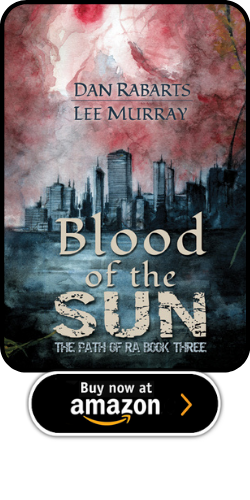 There’s been a gang massacre on Auckland’s Freyberg Wharf. Body parts everywhere. And with the police’s go-to laboratory out of action, it’s up to scientific consult Pandora (Penny) Yee to sort through the mess. It’s a hellish task, made worse by the earthquake swarms, the insufferable heat, and Cerberus’ infernal barking. And what’s got into her brother Matiu? Does it have something to do with the ship’s consignment? Or is Matiu running with the gangs again? Because if he’s involved, Penny will murder him herself… Matiu can taste the chaos in the air. All they’ve done so far is keep it at bay, but now the streets are shuddering in protest. Things are pushing up against the veil like floodwaters. The coming days promise to be dark, but there’s a bright side. He’s got this flash new car, Penny’s been too busy working to bug him, and Erica keeps scheduling their probation meetings over her lunch hour… Join Penny and Matiu Yee for the family reunion to end all family reunions, as the struggle between light and dark erupts across Auckland’s volcanic skyline. “The threads of the siblings’ disparate plots weave together much more tightly than it first appears. Rabarts and Murray write with characteristic verve, injecting the noir atmosphere with dark humor. Series readers will find much to enjoy.”—Publishers Weekly   |


Archives
May 2023
|
 RSS Feed

|

|