

 Emma J. Gibbon is a horror writer, speculative poet and librarian. She is the author of the short fiction collection, Dark Blood Comes from the Feet (Trepidatio Publishing, 2020) and her stories have appeared in various anthologies and she has a story upcoming in Would but Time Await: An Anthology of New England Folk Horror from Haverhill Publishing.. In 2020, she was nominated twice for the Rhysling Award for “Fune-RL” (Strange Horizons) and “Consumption” (Eye to the Telescope). Her poetry has also been published in Liminality, Pedestal Magazine and is upcoming in Kaleidotrope. Emma is originally from Yorkshire and now lives in Maine in a spooky little house in the woods with her husband, Steve, and three exceptional animals: Odin, Mothra, and M. Bison (also known as Grim). She is a member of the New England Horror Writers, the Science Fiction & Fantasy Poetry Association, the Angela Carter Society, and the Tuesday Mayhem Society. Her website is emmajgibbon.com. Could you tell the readers a little bit about yourself? I’m a writer, poet and public librarian. I’m originally from Yorkshire but have lived in Maine in the U.S. for the past ten years so no automated phone service from either country can understand me. I end up screaming “I just want to talk to a person” repeatedly (it usually works). To get the ball rolling and get everyone relaxed, here is a hopefully lighthearted question to break the ice, which one of your characters would you least like to meet in real life and have them complain at you about they way you treated them in your work. It’s hard to say without giving away spoilers of my new book but let’s just say there are a few characters in the stories in Dark Blood Comes from the Feet that get eviscerated by monsters of different shapes and sizes. I imagine they’d be pretty annoyed with me. I also imagine they wouldn’t be pleasant to look at, at that stage. Other than the horror genre, what else has been a major influence on your writing? Just generally existing. I often draw on the emotional experiences of my life when I write. I also use a lot of the places that I lived in and visited as settings. I’m horrible spatially so when I describe buildings and such, I usually loosely base it on a real life place so I can get my bearings. I also read a lot outside of horror so that comes into play too, but inspiration can come from anywhere. I’ve had more ideas from watching Ghost Adventures than I ever want to admit. The term horror, especially when applied to fiction always carries such heavy connotations. What’s your feeling on the term “horror” and what do you think we can do to break past these assumptions? It does, and I think for some people, you will never persuade them otherwise. Being a librarian in Maine, I come across people who emphatically don’t like horror…but have read everything Stephen King has ever published or others who are really into thrillers that in the 80s would have absolutely been marketed as horror but won’t try a horror book. I think that the regular reading public has little of a sense of how broad and varied and diverse horror can be, especially in the indie presses. I think the recent resurgence in interest in horror helps that a little but I think in general, all we can do is keep producing good work, lifting each other up by talking about stuff we enjoy, recommending them to folks and doing all we can to make sure diverse voices are heard. A lot of good horror movements have arisen as a direct result of the socio/political climate, considering the current state of the world where do you see horror going in the next few years? That’s a good question. I don’t know where it will take it, but I think the impact will be big. Just the fact of the pandemic, trauma and fear on a global scale, coupled with some of the most intense collective selfless acts that many of us will see in our lifetimes will have a profound effect on our psyche. It’s be interesting to see how it all turns out. Given the dark, violent and at times grotesque nature of the horror genre why do you think so many people enjoy reading it? I think there are many reasons people enjoy it. Catharsis can certainly be part of it. Horror can be a psychological trial run. Life is often chaotic and terrifying and horror is a way of experiencing fear that can be controlled and contained. For me, I’m attracted to dark themes. I’m deeply suspicious when everything is all sunshine and light. What, if anything, is currently missing from the horror genre? Well, you don’t know what you don’t know, right? I’m sure something will come along and we will be like “THIS! This is what was missing!” In the past authors were able to write about almost anything with a far lesser degree of the fear of backlash, but this has all changed in recent years. These days authors must be more aware of representation an the depiction of things such as race and gender in their works, how aware are you of these things and what steps have you taken to ensure that your writing can’t be viewed as being offensive to a minority group? I would say that I am aware of it and I do take steps to ensure that I am not being offensive but that I am also fully aware that I have room for improvement. For example, I have changed certain terms and words that were fine in the U.K. but are considered much more offensive in the U.S. I also try to read and research as much as I can when writing outside my own experience, and I do interrogate my own work to see if I’m falling back on my own experience as default. For example, my work at this time is entirely too white, and that is something I have to work on in the future. I don’t think it is such a burden to make sure that our fiction reflects the world we live in in this way. I would have no problem hiring a sensitivity reader, for example, or putting trigger warnings on my books if needed. Does horror fiction perpetuate it’s own ghettoization? I don’t know. I don’t think so, but then I’m probably biased. What new and upcoming authors do you think we should take notice of? I’m a bit behind the curve when it comes to new stuff as I have a TBR pile up to the ceiling but there are certain publishers who I always watch out for when they have new authors. One is Trepidatio (full disclosure: they’re the publisher of my new book), another is Undertow. I keep a close eye on what Nightscape Press is doing too. What are the books and films that helped to define you as an author? I know I will forget something key so I’m just going to list them as they come to me and hope for the best! Books: One Flew over the Cuckoo’s Nest, We Have Always Lived in the Castle (anything by Shirley Jackson, really), The Gormenghast Trilogy, Daphne du Maurier’s short stories, Salem’s Lot, The Secret History, My Sweet Audrina, House of Leaves, The Bloody Chamber, The Name of the Rose, Moby Dick Movies: Heathers, The Lost Boys, Dangerous Liaisons, Amadeus, Nightbreed, May, The Howling, Beetlejuice, The ‘Burbs, Donnie Darko, Bram Stoker’s Dracula, Bill and Ted’s Excellent Adventure Are there any reviews of your work, positive or negative that have stayed with you? There is one that kind of follows me around and I don’t mind, but it’s funny how people zone in on it. My story, “St. Scholastic’s Home for Children of the Sea,” was reviewed for a podcast when it came out in the anthology, Wicked Weird, and it was a pretty good review! The reviewers were, you know, grizzly horror dudes and they were really taken by what they saw as a happy ending. I mean, I think it’s a happy ending too, but I’m kind of grisly if not grizzly—there’s a lot of rending and tearing and blood mist in that story. They compared it to a “Horror Sound of Music”. The other part of this is, being a Brit in the U.S., people tend to think I’m a bit Mary Poppins, which I’m really not and anyone who knows accents at all knows I’m not but the fact is, any kind of Brit accent can mean you can get away with murder and they just think you’re being super charming. So somehow, the phrase “Mary Poppins of Horror” starts getting bandied around, and I don’t mind. I loved Mary Poppins as a kid, because she was clearly a witch and did what she wanted. So now, I get my first blurb for Dark Blood Comes from the Feet in from Morgan Sylvia and it literally makes me cry, when I see who she’s compared me to. But at the end she says “The Mary Poppins of Horror has arrived!” and I swear, as soon it was posted on the preorder site I got loads of messages that said “THE MARY POPPINS OF HORROR!” And I’m like, you did see I got compared to Shirley Jackson, like, twice? What aspects of writing to do you find the most difficult? Honestly, I find writing hard. I have to get out of my own way to do it. Ray Bradbury compared it to trying to make friends with cats, and it makes sense to me. I have to pretend to not care about how it turns out to do it. I think what it boils down to is that I know that I will never be able to translate the story in my head perfectly on the page. That said, I’ve tried just not writing, quitting, and I’ve never been as miserable. Is there one subject you would never write about as an author? I don’t know. The key word is never. There may be something that I wouldn’t touch right now that in the future I may change my mind about. How important are names to you in your books? Do you choose the names based on liking the way it sounds or the meaning? So, I’ve always found it weird when people struggle with this, because I just kind of know. I know what they’re called. I don’t look into the meaning or anything because it’s as if they already have their name. Writing, is not a static process, how have you developed as a writer over the years? I think that I have more of a sense of what makes a story, how it is structured and I think that has come from writing but also from a hell of a lot of reading. I also think I’ve got better at poking those sore spots, emotionally, slowing it down when it hurts. That just comes from living, I think. What is the best piece of advice you ever received with regards to your writing? I can’t say which story because it is a spoiler but my husband (who is also a writer but not a horror writer) said to me “But what if they weren’t all dead though?” and at first I told him he was being ridiculous and of course they were all dead but the more I thought about it, it lead to me writing the most satisfying end to a story of my career thus far. To many writers, the characters they write become like children, who is your favorite child, and who is your least favorite to write for and why? I really like Janine from “Janine” in Dark Blood Comes from the Feet. She’s had a really hard life and made some bad choices but she has a clear view of who she is and the only person she has ever really hurt is herself. I have a lot of sympathy for her. I’ve not met a character that I really dislike writing, even though there are some objectively awful people in my stories. I usually kill them off if they get too annoying. For those who haven’t read any of your books, which of your books do you think best represents your work and why? As I only have one book that is coming out on May 22 (and available for preorder now), I’ll go3 for that one. Dark Blood Comes from the Feet is my debut fiction collection out from Trepidatio. Do you have a favorite line or passage from your work, and would you like to share it with us? The beginning of “Black Shuck Tavern” which is in my new collection. I don’t think I’ve ever got to the heart of a story so quickly: “I’m being followed by a huge fucking dog of potentially supernatural origin.” Can you tell us about your last book, and can you tell us about what you are working on next? My last book is Dark Blood Comes from the Feet as mentioned above and as to what next…I’m still mulling it over. Quarantine brain has not helped that process. If you could erase one horror cliché what would be your choice? It’s an outdated one now, but I hope it goes away for good—the “bad” girl who always gets killed early on. This idea that they have to be virginal to live, give me a break. What was the last great book you read, and what was the last book that disappointed you? The last great book I read was Gideon the Ninth. It was just a fantastic, fun book—like Gormenghast but in space with skeletons and lesbians and a locked room mystery and SO MUCH snarky humor. The last book that disappointed me…I don’t remember anything specific but I tend to not like many popular fiction books that hit the bestseller lists that are about upper middle-class families who live in the suburbs, etc. They just don’t speak to me at all. I have a hard time connecting with their concerns or sympathizing with them. What's the one question you wish you would get asked but never do? And what would be the answer? I haven’t really been interviewed enough to be able to know. I guess since we’re still locked in at home, it would be “Would you like Indian food delivered to your door with a couple of beers?” And my answer would be: “More than all the world!” DARK BLOOD COMES FROM THE FEET Dark Blood Comes from the Feet is a strange and eclectic collection of seventeen stories from horror author and speculative poet, Emma J. Gibbon. Within its pages, you will meet secret societies who contract deadly diseases on purpose, dancers helping each other avoid "below," monstrous children who must be loved before they return to the sea, a taxidermy-obsessed mother, small blue devils in the Maine woods, a black cat that retrieves the dying, the last witch in Florida, and "a huge fucking dog of potentially supernatural origin." Visit haunted houses, a Hollywood nightclub, limbo, Whitechapel, and other stops on a death tour, and a childhood hangout that spells destruction for kids and dogs alike. Listen to a punk rock sermon in a post-apocalyptic matriarchal society, witness crustaceans that have trouble staying dead, a cannibalistic romance, a gothic love story to tuberculosis and a downtrodden wife's transformation.   the heart and soul of horror interviews Tabby: Good morning, Penny! Penny: Evening, Tabby. How are you doing in the Upside Down? Tabby: Mostly good. It was my youngest’s birthday yesterday so I’m trying to decide if I want to eat leftover trifle for breakfast. Penny: Oooh, I love trifle. I made rhubarb trifle last week. Before we start the interview properly I have an important question: Do you keep your trifle pure or adorn it with hundreds and thousands? People want to know. Tabby: It’s not a proper trifle unless it’s teeming with hundreds and thousands. It has to have that 70’s flair. Penny: Nooooo! Next you'll be telling me you put glacé cherries on. Tabby: Definitely not. I do have some standards. I do like kirsch though... Penny: I like kirsch, though not in trifle. I like baby trifle (no booze). Well, following on from trifle-gate. I suppose we should actually talk a bit about the reason why we’re actually here, your upcoming charity anthology, “Black Dogs, Black Tales” First things first. Where did the idea for the anthology come from? Tabby: The idea came about after a writer friend of mine, Mark Matthews (author of “Milk-Blood”, “All Smoke Rises” and the editor of “Lullabies for Suffering”) made a Tweet talking about doing his own editing for a collection. He had his dog, Rocky, by his side and it had a terrified expression on its face. The tweet went: “I’m sorry, it’s a grim subject, people get killed. But don’t worry, the dog never dies.” I replied jokingly, saying I wanted an anthology of horror where the dog doesn’t die, and that’s what set the ball rolling. Penny: The term “black dog” is often used to describe depression. Was mental health always going to be a central part of the anthology? Or did the idea grow from the concept that the dog never dies, and then grow to encompass depression and mental health? Tabby: The mental health part came first. It’s something I’ve always been very passionate about. I apologise that this might get a little long. I emigrated to New Zealand from the U.K. in 2017, and as much as I absolutely adore living here, making a new life away from all your family and friends is really hard. Probably even harder than you expect. Culture shock comes in waves and in unexpected ways, and as soon as you think you’re settled, something else will always happen. It tests your resilience, your ability to be flexible and forces you to find ways to cope. For me, my way was through writing. I reminded myself why we made the move, and gave myself permission to acknowledge the frustrations and the difficult parts of emigrating. I started a writing group called Well-Written that same year — a play on writing for wellness, and the Well part, a nod to Wellington (Welly). It started small, with most things happening online, but eventually it grew to include workshops and writing classes in real life. But in June 2018 I lost a friend in the U.K. due to mental illness. And it absolutely devastated me. Being so far away, there was nothing practical I could do. Mutual friends in the U.K. had each other, while time zones made it harder for me to connect and talk with people. So writing became not only helpful but crucial. It helped me make sense of my feelings when I couldn’t talk about them. Well-Written became the support network I hadn’t realised I needed, and I was also able to help others who needed a similar place to be honest and raw. Penny: I’m aware that the anthology is being published to raise money for a mental health charity. Which charity did you choose to go with? Tabby: The charity is The Mental Health Foundation of New Zealand. They do a lot of work for people who are living with mental illness, and for their families too. They work holistically and they do what they know makes and keeps people mentally well. In New Zealand, 1 in 6 adults will experience mental illness at some point in their lives. Penny: That is a staggering number, but not surprising, and unfortunately I expect it will rise with the world's current situation. How did the charity react to the concept of it being a horror anthology? I'm aware that sometimes the word "horror" can have charities quaking in their boots. Tabby: The charity were, I think, a bit bemused when I first contacted them. And obviously they were concerned that any stories which contained mental health issues were handled sensitively. But ultimately, I think they were happy that we wanted to do something to help support them. Penny: Have they seen the final stories, were there any contentious ones? Tabby: They have not. The anthology is not specifically affiliated with what the MHF do, it is separate from the charity and does not necessarily reflect their views. It is to raise money for the charity. I honestly don’t know how it will be received, I suspect it could even be quite polarising. If you don’t like dogs you might not be keen to read about them, for example. But I am massively proud of this project, and the work that everyone involved has done to make it happen. I don’t like to talk about favourites anyway, but in this case, I love every single story, poem and piece of art work that has been included. All I really wanted was to do some good, to honour the people in my life who have been hounded by their own black dogs, and in some cases have been led away by them. And I think I’ve done that. Penny: All of the stories obviously have a dog in them, but were many of the submissions directly linked to mental health? Tabby: Yes, some were. And I’d like to think even the darker ones were sensitive and very cleverly crafted. The anthology is horror, so obviously there are going to be some dark themes, but overall the anthology is hopeful and honest about mental illness. Penny: I think that's the most important purpose of fiction, and horror in particular. The ability for the author to be honest about subjects that maybe the general populace don't want to acknowledge. I do wonder sometimes if rather than it being that creative types are chased by the black dog, if it is instead that when you have been chased by him and seen the other side, it makes you want to look for answers and get those questions and explanations out there. Tabby: I can only really speak from my own experiences, but I suspect a great many creative people don’t just see things as they are, they can see the bits in between as well. The negative space which is often ignored. They can reach into that space and see how it holds everything together. They understand that you can’t have light without shadows, and also that those shadows are not always bleak and troublesome, they can have their own beauty as well. Penny: That’s lovely. So, you started your writing group locally, did you find that the majority of the submissions you received were from New Zealand, or were they more international? Tabby: The Black Dog team were based in New Zealand, the U.K., America and Canada. Ultimately, we wanted a diverse mix of stories, and it paid off. We ended up having 176 submissions from all the over the world. Penny: That nicely brings me on to my next question. You had a large and diverse editing group working with you on “Black Dogs, Black Tales”. What was the reason behind that decision? Tabby: I’d always envisioned this as a team project. It’s a large part of how I do anything. I believe in collaboration and diversity and I’m always eager to see what other people will bring to the table. I’m going to name-drop here as they were all absolutely amazing. My team was made up of co-editor Cassie Hart and sub-editors; Melanie Harding-Shaw, Jessey Mills, A.S. Mackenzie, Aiden Merchant, J.A. Sullivan, Ben Walker, Miranda Crites, Ankh Spice and publisher Steve Dillon. And of course, you! Penny: How did you manage to balance differing ideas and opinions? Tabby: Remembering the saying, “A rising tide lifts all boats” I suppose... Listen to everyone. Really listen. Sometimes decisions had to be made via the majority, other times we would collaborate and find a compromise. Penny: So it was more a case of many hands make light work, rather than too many cooks? Tabby: That’s how I felt it was. I love every single one of the team and they all had something unique and essential to offer. Obviously, I knew my team before I started this, some personally, some via online interactions. I was very lucky to work with a U.K. review site for a short while, and I got to know some excellent writers and reviewers through that. I chose people I knew I could work well with, who were talented and diligent, had shown that the quality of work they produced was of high quality, and had a good sense of humour. Penny: A good sense of humour is always needed in publishing. “Black Dogs, Black Tales” is published by Things in the Well. How did you go about choosing them? Tabby: Again, it was by happy accident. I know Steve Dillon, having been published by him in his other charity anthologies before, and I was musing the idea behind putting together a canine, charity anthology. He thought it was a great idea and offered to publish. It’s a common theme in my life that I tend to fall into doing things, or just happen to speak to the right person at the right time. Penny: Karma. Tabby: You could say that. I’m not afraid of asking for help when I need it too. I think that’s an important thing. Sometimes people get nervous about seeming needy, or looking like they can’t do things on their own. You should never be ashamed or nervous about asking for guidance or advice. There are some amazing people in the horror writing community, and everywhere else in the writing world. Penny: Can you tell me a little more about the submissions process? Tabby: All submissions were passed on to the team anonymously. Only I knew who had sent in what. In the early stages, having a large team was beneficial as we had a lot of stories to read. Each team member decided if the sub was a yes, no or maybe and added their own thoughts. I also had my own ideas, but ultimately every decision was a team one. Penny: So the anthology is a mix of short stories, poems, and illustrations. What made you decide to look at different mediums, rather than stick to it being purely short stories? Tabby: When we chose the stories, we wanted a strong, varied selection. Some of the stories deal with grief and loss, some take a metaphorical look at depression and other mental illnesses. The only rule was that the dog could not die, which some writers told me was quite a challenge. There is a trope in horror where killing off the dog can amplify emotion or serve as a motivator to further the plot. I wanted to avoid that. When we put out the callout, I only asked for stories, but when people got in touch and said, “I want to support this anthology and charity, but I want to donate a poem or art,” I was more than happy to accept those mediums. And I think it adds something extra to the final project. Penny: I agree, and the cover art is very atmospheric. Tabby: I love the cover! It was designed by François Vaillancourt, a Canadian artist who has also worked with Steven King and Richard Chizmar. He got in touch and offered to design the cover to support the charity. He is an incredibly talented artist and lovely person. I have been so honoured to work with him. Penny: Tabby, your story “Night Wolves” is included in the anthology. I'm aware that it had to go through the blind submission process, how did that feel seeing it going through the different stages of the reading process? Were you watching it with you editor or your writer head on? Tabby: Okay, so I never actually intended to include my own story, I was persuaded by the team to do so, and I was initially going to add it under a pen name. Pretty much everyone on the team threw something into the ring, and that was quite hard, because of course I knew whose stories they were but no one else did. When I added mine I had zero expectations. It was honestly a massive surprise that the whole team liked it. Because they were a tough crowd! Even then, I had a lot of anxiety over whether I should include it. Because as I said, this anthology is not about me, it’s about the team, and about doing something good. Penny: What made you overcome that anxiety and decide to include it? Tabby: When ten different people are telling you “this is a good story, it needs to be included” you stop listening to the anxiety demons and impostor gremlins and start listening to the voices of those who support you. It’s very easy to fall into that trap of self-sabotage. It’s important to believe in yourself and your work, and do all you can to rise above any doubts. Penny: When you were finalising the contents of the anthology, were the team still working blindly or did they know who the authors were? Were they happy with the mix of authors? Tabby: The team knew some of the authors by that point. For example, I approached Australian authors Kaaron Warren and Alan Baxter for stories directly, and Alan also wrote the Foreword. Diversity was something I was really keen to ensure, but I had an interesting experience with that. I would say that maybe two-thirds of submissions were from white males, and these were also the stories that the team liked the most. All the stories were read anonymously, and I did start to worry a little bit, because I really wanted to have a good, varied selection. I didn’t want to influence my team’s decisions, so it was a bit of a moral quandary! Luckily, I didn’t need to. When it came down to final choices, the stories were a good, strong mix of voices. Every single story was picked on merit and the strength of the storytelling, and we had an amazing selection to choose from. Whittling it down to only seventeen stories was a real challenge. Penny: What were your most and least favourite bits of the process? Tabby: My most favourite bit was reading the stories. We had so many brilliant submissions from a wealth of diverse voices. My least favourite was sending rejection emails. I know how that feels, receiving the email in your inbox and that rush of excitement and terror, only to have your hopes dashed. I utterly hated being the one to do that to someone. I did as much as I could to ensure any bad news was as kind as possible. There were definitely a few moments where I was a little worried about the team not liking a story, and subsequently having to be that person who tells a well-respected, popular author we don’t want their story. That was pretty daunting. Penny: What are you working on now, and would you do this again? Tabby: I’m planning a nonfiction horror project at the moment which will hopefully become a book next year. I’m also working on some stories to submit to some other charity anthology call outs, and I’m writing a YA fantasy books for my kids, because in the midst of all this world chaos and uncertainty, they are my most important audience. Would I do this again? Probably. I suspect the universe will nudge me into doing something similar in the future. Penny: Finally, is there anything else you'd like to add? Tabby: Yes... Buy the book! Support the charity! Black Dogs, Black Tales - Where the Dogs Don’t Die: A Charity Anthology for the Mental Health Foundation of New Zealand From the Introduction by Tabatha Wood: "What follows is a varied collection of dark canine tales that will excite, thrill and captivate readers, while supporting a truly worthwhile cause. And above all else, you know the dog won’t die." CONTENTS: Foreword by Alan Baxter Introduction by Tabatha Wood Nero by Shannon Elizabeth Gardner (Artwork) Hunted by Dion Winton-Polak (Poem) Black Cloud Sunshine by Dan Rabarts  The Dead Way by J.C. Hart Vision Thing by Matthew R. Davis Shifting in the Black by L.L. Asher Synaesthete by Melanie Harding-Shaw Fossil Bluff by P.J. Blakey-Novis A Handshake in Darkness by Miranda Crites (Artwork) Night Wolves by Tabatha Wood The Honeymoon’s Over by E.E. King Black and Tan by M.E. Proctor Ding Dong Bell by Steve Dillon (Poem) The Gaze Dogs of Nine Waterfall by Kaaron Warren Park Life by Ian J. Middleton Grey Dog by John Linwood Grant Use a Shovel by Galina Trefil Banjo by Chloe Herczeg (Artwork) I am Become by Hari Navarro Yellow Dog by Alan Baxter Redbone by Justin Guleserian The Feather Wall by Octavia Cade This Dog’s Life by Dion Winton-Polak (Poem) And Don’t You Ever Look Back by Falco Verholen (Artwork) From the Foreword by Alan Baxter: "As the stories in this book point out, dogs are the best, and we should all try to be a little bit more like them. Except the butt-sniffing. We don’t need that. Unless it’s your personal kink, in which case, enjoy! Meanwhile, read this book, be transported by the dark tales, and enriched by the wagging tails. And remember, you are awesome." 17 short dark fiction stories, some poems, some illustrations. featuring dogs that you know won't die...   THE HEART AND SOUL OF HORROR INTERVIEWS Who are you? Hi, I’m Hailey Piper! I’m the author of horror novellas Benny Rose, the Cannibal King, An Invitation to Darkness, and The Possession of Natalie Glasgow. Your signature style: Horror stories with sincere tone, often queer characters, and as in real life, there’s always some kind of monster. Toot your own horn: My debut novel, The Verses of Aeg, releases in late 2020, so I’m pretty excited about that. Books read: Recently I’ve enjoyed Food Fright by Nico Bell and The Empress of Salt and Fortune by Ngih Vo. Movies watched: Recently I’ve watched The Girl With All The Gifts and The Dragon Dentist, and I liked both of them. Games and/or music played: I finished the Resident Evil 2 remake the other day, and I’ve been on a pretty strong Janelle Monae kick of late. Words written: I finished a short story last week, and revisions and editing are going strong on bigger projects. Future stuff: Two stories coming up soon are “Fitting Room for Two” in the anthology Not Just a Pretty Face and “Jormungandr’s Dance” on The Arcanist. Brain worms: There’s a species of squid where the female is a couple hundred times larger than the male. I think dimorphism is really interesting. Hailey Piper Hailey Piper is a writer of horror and dark fantasy and a member of the Horror Writers Association. She is the author of horror novellas The Possession of Natalie Glasgow and Benny Rose, the Cannibal King, and her short fiction appears in publications such as Daily Science Fiction, The Arcanist, The Bronzeville Bee, Tales to Terrify, Planet Scumm, Blood Bath Literary Zine, and many more. Her debut dark fantasy novel, The Verses of Aeg, will be published by Bronzeville Books in late 2020. Having grown up in the creepy woods of New York, she now lives with her wife in Maryland, where she haunts their apartment making spooky noises. Find her on Twitter via @HaileyPiperSays and on Instagram via @haileypiperfights. Benny Rose, the Cannibal King (Rewind or Die Book 3) by Hailey Piper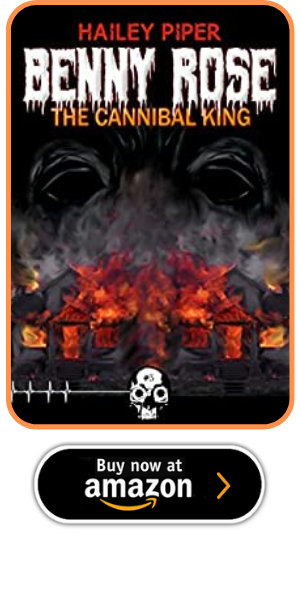 Blackwood, Vermont has one legend to its name--Benny Rose, the Cannibal King. Every local kid knows him and tells his stories, especially on Halloween. When a new girl moves to town in the autumn of 1987, the legend inspires high school junior Desiree St. Fleur and her friends to pull a Benny Rose-themed prank. A few laughs and screams, and they'll have a Happy Halloween. But a vicious storm crashes into Blackwood and interrupts the festivities. Soon the girls find themselves trapped and hunted in a strange neighborhood where no one will help them. There's nothing made-up about Benny Rose this Halloween night. The truth is coming, and it's hungry. "Hailey Piper is a major new voice in the horror genre, and Benny Rose, the Cannibal King is the perfect place to start with her work. A short and magnificent shock to the system, this one has got everything: great characters, fantastic vintage horror vibes, and a terrifying urban legend at the center of it all. Keep an eye on Hailey's work; she is seriously going places." --Gwendolyn Kiste, Bram Stoker Award-winning author of The Rust Maidens   BIO Joe Albanese is a writer from South Jersey. His work can be found in publications across the U.S. and in ten other countries. Joe is the author of Benevolent King, Candy Apple Red, For the Blood is the Life, Caina, Smash and Grab, and a poetry collection, Cocktails with a Dead Man. WEBSITE LINKS https://twitter.com/JoeAlba88 https://www.goodreads.com/author/show/17770507.Joe_Albanese https://www.amazon.com/Joe-Albanese/e/B07B6SVZ4G/ref=dp_byline_cont_book_1 Could you tell the readers a little bit about yourself? I first started writing about six or seven years ago when my friend asked if I’d write a screenplay with him. He was high at the time. I was only drunk. It didn't turn out so well. Our only script together was terrible. He stopped shortly after our first script. I tried a couple more on my own. Since then I switched to writing books and poetry where I found more success and enjoyment. Most of my books are some sort of crime fiction, from crime-horror, crime-comedy, to even erotic-crime. To get the ball rolling and get everyone relaxed, here is a hopefully lighthearted question to break the ice, which one of your characters would you least like to meet in real life and have them complain at you about they way you treated them in your work. The vampire in For the Blood is the Life is not someone I’d want to run into. He’s not a big fan of having his secrets revealed, so I doubt any form of writing about him would get me on his good side. If you read the book, you’d know how that would turn out for me. Other than the horror genre, what else has been a major influence on your writing? I went to college for Criminal Justice. I lost interest in getting a “real” job in that field, but since most of my stories have some sort of criminal element to them, I guess it stuck with me. So my parents didn't waste their money, at least not entirely. The term horror, especially when applied to fiction always carries such heavy connotations. What’s your feeling on the term “horror” and what do you think we can do to break past these assumptions? I certainly watch more horror movies than read horror stories because of time constraints, so most of my opinions come from that. Horror tends to be low-budget, which means more people can make them, which means there are so many of them. My Netflix account (aka my sister’s account that I stole) is filled with horror recommendations because I watch so many. Much like how action movies seem to be mindless, horror tends to be emotionless: a bunch of characters you don’t care about, just waiting to see who will be offed next. I tried to put more emotion in For the Blood is the Life. While there are certainly horror influences to be found in it, the biggest influence was Kramer vs. Kramer. I hope more writers put an emotional element in their stories. A lot of good horror movements have arisen as a direct result of the socio/political climate, considering the current state of the world where do you see horror going in the next few years? I’d like to give an original answer to this that will enlighten everyone, but all I can do is point to Black Mirror. That’s way ahead of anything I could even guess. Given the dark, violent and at times grotesque nature of the horror genre why do you think so many people enjoy reading it? I can only say whey I enjoy it, and maybe others will feel the same way. I need to feel something when I read. I almost never feel secondhand sadness or joy from characters on books, I don’t know why. But i do feel fear. Nothing gets your heart racing like reading a scary passage in the middle of the night and all of a sudden something goes bump in the night. What, if anything, is currently missing from the horror genre? If I knew what was missing, I’d have written it already to be ahead of the game. In the past authors were able to write about almost anything with a far lesser degree of the fear of backlash, but this has all changed in recent years. These days authors must be more aware of representation an the depiction of things such as race and gender in their works, how aware are you of these things and what steps have you taken to ensure that your writing can’t be viewed as being offensive to a minority group? You need to represent people accurately…but only if it’s in a positive light. Everyone says they hate stereotypes, but you’ll never hear someone complain that they were stereoptyped in a way that makes them look good. There are gay or lesbian characters in all but one of my fiction books. Sometimes they’re good, others bad. So I just write what I think will be best for the story. If people think it’s good representation, good. If not, oh well. You can't please everyone. Does horror fiction perpetuate it’s own ghettoization? Bad or unoriginal horror fiction certainly does. Thankfully there are plenty of innovative creators who are breaking the mold when it comes to horror that it’s no longer restricted to what we’ve seen or read so much of and grown tired of. What new and upcoming authors do you think we should take notice off? I recently read a book by Chris DeVito, Kakorrhaphiophobia. Yes, I had to look up the spelling. No, I don't know how to pronounce it. That was really scary and I look forward to reading more of his work. Honestly I don’t read as many new authors as I should. I always complain not enough readers read my work because I’m a new author. I guess I’m part of the problem. What are the books and films that helped to define you as an author? My poetry was greatly influenced by Charles Bukowksi. Not that our styles are that similar, but I was never a fan of poetry until I read several of his books. My fiction is probably an amalgam of all the fiction I’ve ever read, from R.L. Stine as a kid to James Joyce as an adult. Are there any reviews of your work, positive or negative that have stayed with you? The review I enjoy the most came form a nice young girl who read Caina. She said something along the lines of “As a young, Christian girl I did not like having those words in my head as I tried to go to bed.” Which words exactly, I have no idea, because Caina is probably the least offensive book I’ve written. Sure there’s some profanity, but it’s pretty tame. She gave it three stars though, which is much better than I expected considering how damaging it was to her emotionally. What aspects of writing to do you find the most difficult? “Where do you get your ideas?” Fuck if I know! If I knew that, I’d be there more often and never run out of ideas or get writer’s block. Is there one subject you would never write about as an author? I’d always try to stay away from politics. Either seriously or with a jokes. People are so defensive nowadays that if you write something they agree with, they’ll automatically give it more credit than it deserves, saying it’s great writing or hilarious. If you write something they disagree with, they’ll automatically dismiss it and call it bad writing or not funny. There’s little to no objectivity when it comes to politics. How important are names to you in your books? Do you choose the names based on liking the way it sounds or the meaning? Sometimes names are important to me, other times they’re not. For the Blood is the Life has several characters that are named after some of the earliest real-life vampire hunters and researchers. Here’s one: The protagonist, Evan Summers, is named after Montague Summers. The original name for the vampire was going to be Paul, named after Arnold Paul, one of the earliest “real” vampires. It was also a nod to the old Hammer Films where there was always a random characters named Paul in the Dracula movies. But in the end I decided to keep him unnamed to keep his history more mysterious. Writing, is not a static process, how have you developed as a writer over the years? I stopped writing with fear. “Will agents like this? Will publishers like it? Will readers?” When you ask yourself too many of these questions doubt will fill your mind and you’ll never make progress. The more I write for myself, the more freely I write, and the better it tends to be (at least in my mind). What is the best piece of advice you ever received with regards to your writing? “Don’t write what you know, write what you enjoy.” To many writers, the characters they write become like children, who is your favorite child, and who is your least favorite to write for and why? Lee from Caina tends to be my favorite and most hated. Caina is written in the first person, so it’s the closest to my own personality, which means he is closest to me. I guess when you have children, the one closest to your personality is the one you are toughest on. For those who haven’t read any of your books, which of your books do you think best represents your work and why? Smash and Grab is probably the best representation of who I am as a writer. It’s pure crime, but there are hints of my comedy and the type of mysteries I like to have unfold. It’s also my shortest book at only 13,000 words. My training was in screenwriting, so I’m used to getting straight to the point. If I know you personally, I’m most likely to recommend Caina though. It matches my personality and sense of humor best. Do you have a favorite line or passage from your work, and would you like to share it with us? I’m not good at judging my own work. But I’ve been told the opening paragraph from Candy Apple Red is really good. I don't know. you tell me. “New York City is most honest in those early hours—when yesterday is over but today has yet to begin. You can see which couples are a hot flame that will burn too quickly. You can see which ones have or will stand the test of time. It’s all in how they hold each other’s hands. You can see how much love costs per hour in the prostitutes leaning into car windows. How many strip club marquees are there? Never enough on these transitional nights. Are the strangers on the street corner simply chatting, or are they reaching for something more? You can witness a couple’s fist kiss followed by their embarrassed smiles that soon follow. Immediately after you may see a couple fight it out, oblivious or unconcerned with the judging eyes on them. Late nights are for sex. Late nights are for love. Late nights are when the world is most alive.” Can you tell us about your last book, and can you tell us about what you are working on next? My latest book, Benevolent King, was just released September 25th, 2019. It’s a crime novel about a gang leader who steals a shipment of Colombian Devil’s Breath and tries to grow the most powerful gang in Baltimore, but a blackmailer and fissure within the organization may get in the way. It’s the longest book I’ve ever written by far, so I’m really excited about getting it out there. If you could erase one horror cliché what would be your choice? Horror gets too predictable with who will live. It’s always the nice, pretty girl. It takes away all suspense whenever she is in danger. “Oh no, the killer is in the house 20 minutes in. Will she survive?” Of course she will. It goes back to the old adage, “Only a virgin can outsmart the killer.” They’re no longer virgins, but the basics remain. What was the last great book you read, and what was the last book that disappointed you? I’m reading October Dreams now and am really enjoying it. It’s a collection of short stories, fiction and nonfiction, that have to do with Halloween. It’s October now, so as much as I enjoy the fiction, it’s the stories having to do with the writers’ favorite Halloween memories that really get me in the autumn or Halloween spirit. Not gonna lie. I couldn't get through 20 pages of Pride and Prejudice. I don’t know why, but it couldn't hold my attention. Normally I wouldn't care about not liking a book, but I’m a big fan of You’ve Got Mail, so I feel like I need to like it. What's the one question you wish you would get asked but never do? And what would be the answer? Q: “Joe, how do you stay so handsome?” A: “Joe, you’re talking to yourself again.” 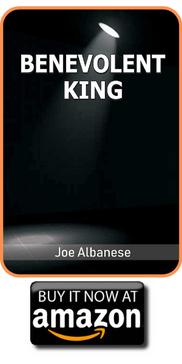 Travis, a gangbanger, has aspirations of being the most powerful gang leader in all of Baltimore. After boosting a shipment of Colombian Devil's Breath, his goals may become reality. That is until Isaac, a small-time drug dealer, finds out a secret about Travis that may ruin his plans. When Shannon, torn between the two and herself, becomes a fissure in the gang, there is no telling who will come out the victor, and where each may end up. A story of drugs, guns, loyalty, blackmail, betrayal, and identity.  the heart and soul of horror interviews about megan taylorMegan Taylor is the author of four dark novels, How We Were Lost (Flame Books, 2007), The Dawning (Weathervane Press, 2010), The Lives of Ghosts (Weathervane Press, 2012), and We Wait (Eyrie Press, 2019). She has also had a short story collection released, The Woman Under the Ground (Weathervane Press, 2014). In addition, her more recent short stories have been placed in several competitions, and appeared in a variety of publications, including Dark Lane’s 6th and 7th anthologies and Neon. Megan lives in Nottingham, where, when she’s not playing with her own fiction, she enjoys running creative writing workshops and courses. Could you tell the readers a little bit about yourself? I’m very lucky that a lot of my life involves writing. As well as being the author of four novels and a short story collection, I also run creative writing workshops and courses. While my writing has often been described as dark, a few years ago, I found that the short stories I most enjoyed writing were increasingly horror stories. Once I gave into the urge, I couldn’t stop. My latest novel, We Wait (Eyrie Press), is unashamedly a ghost story. I enjoyed writing it so much. Why horror? What is appeal of the genre to you as both a fan and as a writer? Why? I’m not entirely sure, but I’ve loved horror since childhood. The thing I enjoyed the most about sleepovers with friends was swopping spooky stories, and I’m also very grateful to my dad. His packed bookshelves included a lot of horror classics and he’d often let me stay up late watching scary films. Looking back, I think the appeal was originally about the shivery thrill, as well as a fascination with the things that might be hiding in the dark, a desire to look beyond the everyday. I’m not sure much has changed… As LBGTQ+ fan and writer of horror, how did you first became immersed in the genre? I think it could be argued that Gothic literature, with its history of playful transgression, was perhaps one of the earliest genres to address ideas of sexuality that didn’t conform to the supposed norm. Sheridan Le Fanu’s Carmilla was published in 1872, and the homoerotic threads running through Dracula aren’t exactly subtle. While these days LGBTQ+ characters are clearly no longer excluded from literature in the way that they once were (and in contemporary horror, they’re certainly thankfully not all monsters anymore), I like to think that horror, with its fascination with particular psychologies, and drawing issues, often literally, out of the shadows, still has the potential to be powerfully inclusive. The term horror, especially when applied to fiction always carries such heavy connotations. What’s your feeling on the term “horror” and what do you think we can do to break past these assumptions? Obviously, the field is huge, ranging from body-shock to the uncanny, and we all have different preferences, but I have no personal issues with the term “horror”. As one of my first loves, which I’ve kept on returning to, and that now seems to have me firmly back in its grip, I’m very happy to declare myself a horror fan. I’m also always happy to argue with strict mainstream/ literary readers who have no idea about how they might be missing out. A lot of good horror movements have arisen as a direct result of the socio/political climate, considering the current state of the world where do you see horror going in the next few years? My first thought when answering this question was about how zombies became such a huge symbol for mass consumerism in the twentieth century. While the raw impact of those ever-hungry, mindless creatures might have started to wear off, consumerism doesn’t appear to be going anywhere, and it will be interesting to see where horror takes this next. And with the ecological disaster that we’re all facing no longer confined to the realms of science fiction, I have no doubt that many horror creators, like everybody else, will have no choice but to respond. The role of women in horror has also changed remarkably over the last century, and is continuing to change, and I find that incredibly exciting, particularly when it comes to film. I was thinking about this recently re-watching Jennifer Kent’s The Babadook and Julia Dorcournau’s Raw. I also only just got around to watching Alice Lowe’s comedy-horror, Prevenge, which I really loved, a dark and weirdly joyous film. What are the books and films that helped to define you as an author? There are so many – too many to name them all! I like to try to read widely, including a lot of contemporary literature and psychological thrillers as well as horror, but most of my favourite films remain horror, including classics like Rosemary’s Baby, The Shining, The Birds and Don’t Look Now. I also love a lot of Daphne Du Maurier’s writing, and I’ll always be grateful for the time I spent as a teenager devouring both Stephen King and Joyce Carol Oates. But one of the biggest influences on many of my recent short stories, and certainly my latest novel, is Shirley Jackson’s The Haunting of Hill House. I first came across the story through Robert Wise’s 1963 film version, The Haunting. It was one of the films I watched as a child and it had a profound effect. As much as I totally loved all the garish Hammer Horrors and spent a sleepless night after watching Carrie, there was something about the black and white and all that pounding on the walls that got to me in a way that no other film ever had. When I came to read Jackson’s incredible book a few years later, the effect was even more extreme. As I sat in bed reading by lamplight, even at the beginning of the novel as Eleanor winds her strange fairytale-like way to Hill House, I had the most unsettling physical sensation of a black cloth descending over the back of my head, or as if there was somebody watching me from behind – although there was only the bed frame and the wall at my back. By the time I came to the novel’s famous hand holding scene, I felt almost as completely undone as Eleanor. Without realising it, I learnt so much about the psychological resonance of ghost stories when I read The Haunting of Hill House. With its blurring of reality and emotion, it’s had an enormous and enduring influence on my writing. What aspects of writing to do you find the most difficult? I think the hardest part is dragging yourself out of the writing hole and back into the day-to-day when you’ve been totally immersed. Are there any subjects that you would never write about? That’s a really interesting question. Although I have particular themes I find myself returning to, I don’t think I’d ever like to put any rigid restrictions on my imagination. It can often feel like ideas find you, rather than the other way around, and I wouldn’t like to turn any away. Having said that, it’s quite unlikely that you’ll find me writing a neatly tied-up, overtly happy ending – but you never know… Writing, is not a static process, how have you developed as a writer over the years? I like to think we don’t ever stop learning. As well as leading creative writing workshops and courses, I still like to attend them, and I believe that there’s something to be gleaned from every story we read, whether good or bad. Each narrative demands its own way of telling, whether that’s about point of view or tone or style, and I think it’s important to keep reminding myself of that, to treat every piece of writing as something new. And at the same time as I’ve hopefully learnt to gain a little more perspective about my stories, I think it’s essential to never forget why I wanted to write in the first place – for the sheer love of disappearing into it. Many CIS white male authors use LGBTQ+ characters in their works, what’s the mistake that they make when trying to portray these characters? Apart from being an uneven and problematic film on other levels, I found my eyes continuing rolling while watching Pascal Laugier’s Martyrs. There’s an outmoded, tired sense of a predictable type of male gaze in the way the female leads are repeatedly depicted – far too many clinging bloody vests. A good example, I think, can be found in Paul Tremblay’s The Cabin at the End of the World. To have two central gay protagonists was an interesting choice and I think Tremblay managed it well. Moving on to getting your work read by unwashed masses, what do you think is the biggest misconception about LGBTQ+ fiction? That it’s niche and will only appeal to LGBTQ+ readers. Such a very old fashioned, narrow view will keep readers trapped when there’s so much diverse and amazing work out there. There are as number of presses dedicated to LGBTQ+ fiction, do you view these as a good thing, or do you think they help to perpetuate the ongoing exclusion from mainstream presses? As an author who is very grateful to have been published by several incredibly supportive independent presses, I think the more presses and opportunities out there the better. Independent publishers often back books out of a love for the work rather than having to be confined by the sometimes rigid or cynical decisions made by marketing departments that have come to dominate so much of mainstream publishing. I’m not saying there aren’t incredible books still coming out of the mainstream – there clearly are – but many independent presses can be particularly proud of showcasing alternative perspectives and marginalized voices, adding to the richness of what we read. And here is the million dollar question do you agree with movements like this and things such as Women in Horror Month? If so how would you like to see sites such as Ginger Nuts of Horror tackle diversity? As a reader, I feel excited by movements like Women in Horror as they’ll often mean discovering new writers, and that’s always brilliant. It’s great that Ginger Nuts of Horror is striving to be inclusive and wide ranging, and I’m very grateful to have this opportunity to talk about LGBTQ+ issues in horror. The most common phrase you hear when people object to active movements to encourage all forms of diversity is “I don’t care about the sexuality, gender, color etc etc of the writer I only care about good stories” what would you like to say to these people? I have some sympathy with the sentiment – ideally, I think that art, in whatever form it takes, should stand separately from the artist – but it becomes more complicated if used as a defense against active movements that are striving to provide a balance that is still sadly lacking in the mainstream. If there was an even playing field out there, things might be different, but while voices remain sidelined because of issues such as gender, sexuality, race, disability and class, I think movements championing diversity aren’t only positive, but essential. To many writers, the characters they write become like children, who is your favorite child, and who is your least favorite to write for and why? I love them all, even my more seemingly unlikable characters (actually, sometimes I love those ones the best), but my favourites are always the characters I’m currently writing. Once a novel or short story has been published and my characters have been sent off into the world, they no longer belong to me in the same way that they once did. For those who haven’t read any of your books, which of your books do you think best represents your work and why? I’d love people who enjoy horror (obviously the majority of people reading this) to give We Wait a try, particularly if you like a haunted house story. If you prefer short stories, you might like my holiday horror, Waiting for the Rat, released as a chapbook single by TSS Publishing. Can you tell us about your last book, and can you tell us about what you are working on next? We Wait, recently released from Eyrie Press, is a ghost story that explores awakening sexuality and repression, family secrets and betrayal and love. Here’s the novel’s blurb: The wealthy Crawleys can’t abide a scandal, so when fifteen-year-old Maddie’s behaviour causes concern, she’s packed off to the family’s country estate, along with her best friend, Ellie. But while Maddie is resentful, Ellie is secretly thrilled. A whole summer at Greywater House, which she’s heard so much about – and with Maddie, who she adores… But from the moment the girls arrive, it’s clear there’s more to the house and the family than Ellie could ever have imagined. Maddie’s aunt and her bedridden grandmother are far from welcoming – and something has been waiting at Greywaters, something that flits among the shadows and whispers in the night. As the July heat rises and the girls’ relationship intensifies, the house’s ghosts can’t be contained, and it isn’t just Ellie who has reason to be afraid. Three generations of the Crawley family must face their secrets when past and present violently collide. I’m currently working on my fifth novel, which was meant to be a psychological thriller but is becoming increasingly paranormal. I’m also still writing and releasing short stories. I have nearly enough for a second collection, which would be exclusively horror, so I’d love to start putting that together soon. What was the last great book you read, and what was the last book that disappointed you? I don’t want to talk about a book that’s disappointed me as I’m very aware that one reader’s poisoned chalice is another’s cup of delicious tea, but I think, for me, one of the most exciting voices in contemporary horror belongs to Catriona Ward. I enjoyed her debut, Rawblood, so much that I started reading her second novel, Little Eve, with trepidation – only to possibly love it even more. I’m looking forward to her next book very much. We Wait by Megan Taylor The wealthy Crawleys can’t abide a scandal, so when fifteen-year-old Maddie’s behaviour causes concern, she’s packed off to the family’s country estate, along with her best friend, Ellie. But while Maddie is resentful, Ellie is secretly thrilled. A whole summer at Greywater House, which she’s heard so much about – and with Maddie, who she adores… But from the moment the girls arrive, it’s clear there’s more to the house and the family than Ellie could ever have imagined. Maddie’s aunt, Natalie, and her bedridden grandmother are far from welcoming – and something has been waiting at Greywaters, something that flits among the shadows and whispers in the night. As the July heat rises and the girls’ relationship intensifies, the house’s ghosts can’t be contained, and it isn’t just Ellie who has reason to be afraid. Three generations of the Crawley family must face their secrets when past and present violently collide.  the heart and soul of horror interviews Who are you? My name is David Watkins, Dave to my friends and just about everyone who knows me, except my mum or when I’ve done something wrong. Your signature style: I’m not sure I have a signature style yet as I’m still learning my craft. If forced to pick, I’d say fast paced, action orientated horror fiction. Toot your own horn: I’m proud of the three books I have out there, but I was amazed to be invited to be part of Leaders Of The Pack: A werewolf anthology, released by Horrific Tales Publishing. At the time the invite arrived, I’d not met Graeme Reynolds (head honcho of HTP), so it felt like a real validation of my work. The anthology is getting great reviews and my story is being mentioned lots and that is beyond amazing for me. Books read: Right now, I’m about halfway through Experiment 9 by Eric Ian Steele and Coffinmakers Blues by Stephen Volk (I tend to read at least two books at once – not at the same time, that would be madness). I have recently finished Postal by Justin Park and Matt Shaw, which is just as twisted as you’d expect from those two but it was also excellent. Another recent read was Godbomb! by Kit Power – I loved it. Shout out to CC Adams as well, as his Semen was also good. Now, there’s a sentence I never thought I’d write. Movies watched: As I’m writing this, the lockdown due to Covid-19 is in full swing, so we’re watching lots of TV and films – far more than we usually do. We take it turns (my wife and my two sons) to choose. Today is going to be Rainman, with Tom Cruise and Dustin Hoffman. I’ve not seen it for years, but remember liking it and I’m curious as to what my kids will make of it. The last film we watched was Terminator 2, which is a classic (although the thumbs up at the end still annoys the shit out of me). Sadly, no-one wants to watch Midsommar with me. Games and/or music played: My gaming days are becoming increasingly limited, but I am thoroughly enjoying The Outer Worlds as it has a bleak sense of dark humour running through it. I really like playing board games, so my friends and I have bought Tabletop Simulator so we can carry on gaming night. It’s not the same as being around the table with everyone, but it’s a really good substitute until we can all meet up again. TTS has just about every board game out there, but Scythe is our current favourite. It’s an economic game where you’re trying to build a better empire than everyone else, but you’ve also got massive mechs at your disposal. Brilliant game. I also try to play board games with my wife and kids a few times a week. We had fun playing Imperial Assault – a board game set in the Star Wars universe – until my son turned into some kind of teenage Darth Vader and stropped, Hayden Christenson style, because his brother went for a crate instead of shooting the storm troopers coming for them. Board games and arguments: it’s like Christmas all over again. Words written: As I said, I’m writing this during the lockdown, and I’m bouncing between massive productivity and crippling anxiety. I usually set myself a goal of 500 words a day and at the moment I write anything from zero to two thousand. There is no rhyme nor reason to it and I wish I could switch off from all the news and social media posts as they really don’t help me. The daily death toll posts are the ones that get me the most: why don’t we have a daily survivor count instead? Perhaps I’m finding it difficult to write fictional horror when our lives are full of a very real horror at the moment. Future stuff: Currently working on what was supposed to be a short science fiction novella but is currently expanding into a novel with far more horror elements than science fiction. Working title is The Memory Shades. The length is a concern: either I’ve bloated it to levels that JK Rowling would approve of, or I’ve got a lot to do in the edit. Brain worms: Why is Avatar so popular? It’s Ferngully with mostly real people, far too many special effects and not enough story for its running time (and don’t get me started on Titanic). David Watkins David Watkins lives in Devon in the UK with his wife, two sons, dog, cat and two turtles. He is unsure of his place in the pecking order: probably somewhere between the cat and the turtles. He has currently released three novels: The Original's Return, The Original's Retribution and The Devil's Inn. Each book is well rated and reviewed on Amazon and beyond. He hates referring to himself in the third person, but no-one else is going to write this for him. David can be found on Twitter so drop by and say hello @joshfishkins, where you'll find him ranting about horror, the British education system and Welsh rugby, but not usually at the same time. Universal link to my Amazon page: author.to/DavidWatkins The Devil's Inn by David Watkins “I don’t want to die in a pub in Devon…” There is a pub in the heart of Dartmoor where a fire has burned every day for over one hundred and fifty years. It is said the fire never goes out. It is said that if it does, the Devil will appear and claim the souls of all inside. Tonight, seven strangers are stranded there during a fierce snowstorm. Tonight, the fire will go out… Praise for David Watkins "...gut twisting scenes...” 4* Joe X Young, Gingernuts of Horror "..a damn entertaining read.." - DLS Reviews "Great horror! I couldn't put the book down" 4.5*, Pamela Kinney, Ismellsheep.com  the heart and soul of horror promotion Who are you? I’m Grant Longstaff. Fledgling writer with a full time job on the side. Your signature style: My stories tend to be rather bleak, mournful and reflective. At least, that’s what I’m aiming for when it comes to my own work. Toot your own horn: My biggest achievement so far is having my short story, Dog (Does Not) Eat Dog, selected by Mercedes M. Yardley for inclusion in Arterial Bloom from Crystal Lake Publishing. Books read: Most recently I’ve read Everything Is Beautiful and Nothing Bad Can Ever Happen Here by Michael Wehunt and Dear Laura by Gemma Amor. Both were great novellas. Dark, personal stories. If you’ve not read them yet, get on it. Movies watched: Midsommar. I thought it was beautiful and terrifying. All the colour and light make the horror so much worse. Also watched the first season of Channel Zero – Candle Cove. Suitably creepy, and the final episode had strong Silent Hill/Twin Peak vibes. Games and/or music played: I’m replaying the original Final Fantasy 7 on the Xbox. Still a great game with a deep story to lose yourself in. Music for writing – Max Richter, Cities Last Broadcast, Giles Lamb. Words written: I’m working on a novella at the moment. It’s slow going, and the current pandemic is draining a lot of my creative energy, but I’m chipping away at it as and when I can. Future stuff: I’m working on a review of Tales from The Shadow Booth Vol. 4 for Gingernuts of Horror. I’m hoping to turn it in soon. Sorry, Jim! Also, I hope I’ll have a finished novella... we can hope. Brain worms: I’ve recently been running a RPG in a WhatsApp group of six friends. It takes place during a zombie apocalypse in our hometown. It’s been a fun, creative outlet – creating scenarios and reacting to players actions quickly – without the pressure of having to write your best words ever. This is a round about way of suggesting you try mixing it up with your social interactions – it might be good for your creative soul to take a break and experiment. Grant Longstaff Grant Longstaff is from Gateshead; a small, suitably dismal town in the north east of England where nothing much happens. He had no choice but to write fiction. His short story, Dissolution, appeared on The Other Stories Podcast. His work is also forthcoming in Arterial Bloom, edited my Mercedes M. Yardley, and Aurealis Magazine. You can find him on Twitter @GrantLongstaff. Arterial Bloom Lush. Brutal. Beautiful. Visceral. Crystal Lake Publishing proudly presents Arterial Bloom, an artful juxtaposition of the magnificence and macabre that exist within mankind. Each tale in this collection is resplendent with beauty, teeth, and heart. Edited by the Bram Stoker Award-winning writer Mercedes M. Yardley, Arterial Bloom is a literary experience featuring 16 stories from some of the most compelling dark authors writing today. With a foreword by HWA Lifetime Achievement Award Recipient Linda D. Addison, you are invited to step inside and let the grim flowers wind themselves comfortably around your bones.  the heart and soul of horror promotion websites KEV HARRISON Who are you? Kev Harrison – writer of dark fiction and horror Your signature style: I write stuff which is atmospheric, often supernatural and anchored very much in the relationships between my characters. Often it lacks the blood and guts for some people’s horror taste, but I like to think I can creep people out with mood and, at times, the horrors we don’t see. Toot your own horn: Having my story ”The Fourth Wall” appear in the Lost Films anthology from Perpetual Motion Machine Publishing. Books read: Just wrapped up Sole Survivor by Zachary Ashford which was an absolute blast. A violent, visceral romp on the surface, but touching on some really interesting themes just below. Before that was Arterial Bloom, edited by Mercedes M. Yardley, which was a delight of an anthology, showing there really can be beauty in the darkest tales. Turned me on to some hitherto unknown writers, as well. Movies watched: Recently seen The Platform, a Spanish dystopian sci-fi with horror elements, on Netflix. The message was a bit on-the-nose, but the delivery and the script, in particular, allowed it to get away with it. Favourite horror of last year was Midsommar. I know it’s divisive but I loved it. Even better the second time around too. Games and/or music played: Not played video games much lately. Recent music that’s grabbed me includes: Waves, the album by Dawn of Solace and Meta by Maraton. Words written: Fiction-wise, I’m 12k into my first ever novel. Set in the middle east, it involves djinn, livestock mutilation and draws on my experiences living in Turkey and travelling in the area. It also begins with a grain of a true story. I also wrote a piece for This is Horror recently on the benefits of reading and writing horror in the Covid crisis. Future stuff: For now, only the aforementioned novel, though I am mentally prepping a story for the In Darkness, Delight: Fear the Future call from Corpus Press. I had a story featured in the Creatures of the Night edition last year and they were brilliant to work with, and the end product was a real thing of beauty. Brain worms: I always keep an eye on unexplained astrophysical phenomena, so I’ve been keeping my eye on a story involving fast radio bursts from deep space that repeat the same ‘signal’ every sixteen days. I actually have a half finished story that ties into these mysterious radio wave blasts, but I hope life does not imitate my art in this particular case. KEV HARRISON  Kev Harrison is a writer of dark fiction and English language teacher from the UK, living and working in Lisbon, Portugal. His nomadic lifestyle has previously taken him to various cities in the United Kingdom, as well as to Turkey and Poland. He has an unquenchable thirst for travel and is passionate about food, photography, and music, as well as fiction. He is a staff writer for This is Horror and has had short fiction published in a variety of magazines and anthologies. His first novella, The Balance, will be released early in 2020, through Lycan Valley Press. THE BALANCE BY KEV HARRISON When myth becomes nightmare … The price of blood is always blood. Natalia’s in trouble. She only looked away for a second, and now her brother’s hurt. Her relationship with her mother is fractured, her brother’s condition is deteriorating, and her only hope lays deep in the unforgiving forest. A secret spoken only in whispers offers a way out. But when help comes in occult forms a sacrifice may be the only way to restore the balance. Humanity and nature collide in The Balance by Kev Harrison, a modern reimagining of the Slavic folk tale of Baba Yaga, set in Cold War Poland.  THE HEART AND SOUL OF HORROR PROMOTIONWHAT IS THE AIRSPEED VELOCITY OF AN UNLADEN AUTHOR? AN INTERVIEW WITH HORROR LEGEND KATHE KOJA
28/4/2020
 Your new collection of short stories Velocities is coming out with Meerkat Press in April. Would you be able to tell us a little bit about it? Yes, we’re very excited. This is the first time that I’ve worked with Tricia, and it’s been a lot of fun so far. When I read a short story collection, I don’t read all of them at once and sometimes I don’t read them all in order and sometimes I read some and not others. So when I chose the stories I tried to group these thematically. So if people wanted to go in a particular direction or feel a particular mood the stories are grouped to offer that to the reader. There are a couple of stories in the collection that are original to the collection and haven’t been published before, and some are from anthologies and places that people might know and some are from more surprising places. So I hope I gave people a good cross section of my voice and what my stories can do. As with your novels, your short stories cover a wide range of ground and genre. How do you feel about genre and where your work sits in it? I never really think of it to be honest. Everything that I work on starts from whatever the idea is, the character that sparks the story or the novel. Then afterwards I try to think of or try to see where that might fit in the larger world of publishing or where it might find its most sympatico readers. So I never set out to specifically create something in the genre, I don’t work very well that way. This is your second collection of short material after Extremities (1997). How do you feel you’ve changed as a writer since then? I hope I’m better! I’m always trying to get better, that’s kind of the point. These stories though themselves cover a fairly wide chronological range. My collected stories would be a fairly hefty book. there are lots of stories out there that don’t appear in either of these collections. Maybe someday we’ll do a nice omnibus of all of them. It was fun to be reminded of some of the circumstances and the place where these stories came out originally. But hopefully anyone who enjoyed Extremities will enjoy Velocities. And for people who are completely new to my fiction, Velocities I think makes a good taster menu. And if you like what you read there then you’ll probably like the rest of the things I do. And if you don’t, no harm, no foul, it wasn’t for you and we’ll part as friends. Your work frequently features obsessive artists with a really intense connection to your work. What keeps bringing you back to these characters? I think because that’s a large part of my own worldview. My work is very central to my life. My husband is an artist, I’m an artist, a lot of my friends are creative workers in one way or another, although I hate that term! Anyone can be a creative worker. You can be an extremely creative nurse, or an extremely creative bus driver. But people who work in, lets say in the creative industries. And I find that the people whose work that I enjoy the most seem to have an intense focus on what they produce and what they do as an artist. So I would imagine that’s why I go there, cause that’s where I already am. You have written many novels as well as short stories. When you start a story do you always know if it’s going to be a novel or a short story? I would have to say I always know. Sometimes when I start something, you kind of have a feel for the shape of it. It’s like how much room does this idea need, how much room does this character need, how far are you going to go with it, or how far can I go. And it does have a particular feel. Like, this is going to be a very short story, or this has to be a novel. A couple times I have misjudged the length of a novel. My Victorian puppet trilogy Under The Poppy (2010) started out as one book, and I had no idea it was going to be much larger until I got to the end of the first book and said oh, wow there’s tons more stuff that I have to tell about these people. And it ended up turning into a trilogy. Which is kind of good, because if I’d known in the beginning it was a trilogy, it might have scared me off. At that time it was the most difficult thing I that had ever ventured, and it was an education. Under The Poppy is more historical fiction compared with your horror novels. Was it very different writing it, and did it require a lot more research? Yes and no, but that’s like anything, that’s like any of my books. When I was writing Bad Brains (1992) I had really no idea how close head injuries worked, or how treatment was. Or what did people experience, what drugs were they on, what was likely to happen, what was likely to go wrong. So I had to do a lot of research to be able to have the correct facts to add to my story to make sure that the things that happened in the story were things that would actually happen, or could actually happen. Under The Poppy, because it takes place at the end of the Victorian era, and the beginning of modernity, we have a kind of colourful idea of what those time periods might have been like. But to get a better idea of what was available, how did people travel, what did they do, what were societal expectations of you, if you were a performer what did people think about you in polite society – all that stuff. Because you’re trying to create this world that partakes of the reality of the larger world as closely as possible. So you kind of lay reality over what you’re doing like a template and see where are the rough edges, where is the stuff that doesn’t fit, or isn’t correct. In one of my YA novels Straydog (2002), I had thought I knew some of the animal control laws and regulations. I got to a certain point in that novel and said, you know I had better check, just to be sure. And I found out I was completely wrong. And everything I had planned for the last third of the novel would have to be thrown away, because it’s not what would happen. So I was punished for my ignorance! But the answer is always, as much research as the project itself will need. Straydog was your first YA novel. How did you find that after having written your adult horror novels? It was great. It was a lot of fun. Again I don’t plan things out ahead of time, I don’t say well now I think I’m going to try to do this. I’d written a short story in fact for a young adult magazine called Cicada that was the basis of Straydog, and my agent really liked it and suggested I see if I would like to try writing a YA novel. That book was the result and then I went on to write a bunch more for FSG and I loved the experience. I think the bridge or the connection between the horror novels and the YA novels is probably intensity. There isn’t a time in your life generally when you’re more intense than in your teenage and growing up years. So I felt very much at home there. I loved writing YA. Another thing that comes through in your writing is the intensity of the voice. A lot of your characters have very specific ways of speaking and looking at the world. Do you find when you’re writing does the character’s voice have to come first or does it take a lot of writing and rewriting to find it? No, they always come first, and that’s how everything starts. If there is no voice for me then there is no way in, and there isn’t anywhere to go. It’s always the voice, it’s always the person, the particular point of view, and that’s what makes the story for me, the novel or whatever. When I start working, I’m always following that voice. And the project that I’m working on now, Dark Factory, there are two very different voices in that book, and that took a minute to navigate. Because they’re two very different people, and nobody has more weight than the other. There isn’t a viewpoint character, it’s both of these guys, so that took a second. Frequently your characters tend to have a doomed aspect to them. Do you feel that in order to really find out how a character works you have to grind them down? I don’t think I’m grinding them down, I think that’s what they’re doing. I don’t have a particular plan for any character when I’m writing, again I’m following the voice and seeing what would naturally happen to that person in that situation. I don’t do any of that consciously at all. And that would not be fun at all to do! Meerkat Press is also reissuing your legendary debut novel The Cipher (1991) and bringing it back in print for the first time in ages. Would you be able to tell us a bit about that? Sure. I’m really excited to have The Cipher coming back into print again in English. It’s been quite a while, and for years and years people have asked, when will it be back, will it be reprinted? And I really wanted to do it in the best possible way. I found a really good home at Meerkat, and I’m really happy with the way the book’s been handled there, and the relaunch of it’s gonna be a lot of fun. I’m excited to see how people respond to it. Many people have read it through the years, and especially since the ebook edition was made available, but there are lots of people who haven’t. I’m very excited to see how they resonate with the Funhole. It’s such an iconic book but it’s been so hard to track down for ages, it’s really nice that it’s going to be back in print. Yeah I’m really glad and I think now is a good time. Where did the Funhole come from? I think people really respond to that feeling of this kind of emptiness that asks something of you but you don’t know what it wants and you don’t know why you’re attracted to it. That’s clearly something that we as a species are kind of pulled to the inexplicable, even though we deduce probably correctly that it’s not safe or even desirable. But there’s something in that mystery that draws us forward. And you know obviously I’m not the first person or will be the last to think of this void or this emptiness and why are we drawn to emptiness. And answering the question was really interesting. And again it began in fact as a piece of short fiction. And the Nicholas character was not central to that piece of fiction, but it became clear that something else was happening. So I moved him out of the other piece and gave him his own place to play and the book just took off on its own. Nicholas also is a character that people resonate to or with in different ways. His adversary in a way, his girlfriend, Nakota, a lot of people are very harsh on her. I’m particularly fond of her because I think she’s probably the most honest character in that book. She knows exactly what she wants, and she’s not afraid to go after it. Actually very much like Bibi in Skin (1993). Bibi was also another very definite, very strong and concentrated character. She knew exactly what she wanted and was not afraid to go after it. I’m always very interested to see or to learn from readers what are they getting out of a particular novel, and The Cipher’s been great for that. People have shared their ideas and theories and questions throughout the years, so I’m really excited to see what will happen now. That relationship between Nicholas and Nakota is very dysfunctional, which could be said of a lot of your characters. Is that something you feel particularly drawn to explore? No, not really. Again it’s a function of the characters. The character relationship at the heart of Under The Poppy is a quite functional one. They manage to stay together through every kind of separation and torment that the world can throw at them, so they’re magnificently functional. It’s going to come out of whatever the stresses and the particular shape of whatever those characters are going through. There’s a character in The Cipher, Vanese, who gets up and leaves – spoiler alert! – at a certain part of the book, because that’s how she would react. That’s how she would respond to the things that are going on. Which has always bothered me about fiction in general but maybe horror fiction in particular, I want to see the people who get up and leave. I want to see the people who say, “You know what? I don’t think I’m going to go into this hellmouth, so bye! Let me know how it turns out if you can!” But that’s a natural human response as well. Smart people generally flee pain. You mentioned earlier the project you’re working on at the moment, Dark Factory, would you be able to tell us a bit about it? Yes, I’m really excited about this, and this has been a total learning experience for me, and an education. Dark Factory started out as a novel. It’s about these two guys who both come to work at this club called Dark Factory that’s like an augmented choose your own reality type of club. You can dance, you can drink, you can see all kinds of things. There’s a huge menu of different experiences you can have. And once these two get together, their synergy causes the club to change and causes the reality of the club to change. And writing this book has brought me into collaborative contact with artists and musicians and designers and the world of Dark Factory itself is going to be something unique in my creative method. It is a book it is also a lot of other things. I don’t want to say too much about it. I do have a Patreon if people are interested. There’s a video they can watch that tells more about the project, and of course I would love it if people would support it. But it’s going to be something I haven’t attempted before, it’s very ambitious for me. I really believe that we are so sophisticated now in the way that we take in narrative. We’re used to watching and binge-watching and taking in long stories with multiple branching narratives, and do that easily and well. I’m excited to see how that will translate to something that’s immersive fiction, that’s a narrative and there’s a lot more than what is going on on the page. it’s been a lot of fun. It’s been very nerve wracking, cause you’re kind of building the airplane while you’re flying it! But I hope that people will have as much fun with it as I and my collaborators had. Meanwhile, with Meerkat Press bringing back The Cipher, are there any plans to bring Bad Brains or any of your other works that are out of print back? At the moment no, but I would never say never. They’re all available in e editions so people can have ebooks. And so the fiction’s there. Right now no, no plans yet. What’s next for Kathe Koja? Dark Factory is my life pretty much for the foreseeable. In fact I just locked down a performance space for November of this year – assuming we’re still all alive and viable – for a Dark Factory performance event. So that’s my life going forward. Thank you Kathe Koja for speaking with us! Velocities Paperback by kathe koja From the award-winning author of The Cipher and Buddha Boy, comes VELOCITIES, Kathe Koja's second electrifying collection of short fiction. Thirteen stories, two never before published, all flying at the speed of strange. Dark, disturbing, heartfelt and utterly addictive.   DAISY LYLE DIGS DEEP: AN INTERVIEW WITH AARON A. REED AUTHOR OF THE UNIQUE NOVEL SUBCUTANEAN
24/4/2020
 Could you tell the readers a little bit about yourself? I suppose I have a bit of an unusual background for a writer: I started out getting a degree in film, then got deeply into games and interactive stories, and ended up going to grad school to study new ways of abusing computers to get them to collaborate with people in telling stories. In the process I ended up with an advanced degree in computer science, despite primarily thinking of myself as a writer, and since then I've been working professionally on tools for helping game writers put generative text into their games, while continuing to write both traditional and interactive fiction in my spare time. What aspects of writing do you find the most difficult? One of the hardest things for me is the conceptual leap from having the first few pieces of a story to understanding how they're going to fit together into a satisfying whole. Lots of my ideas die as maps or outlines with a few strong pieces here and there but no clear sense of what to do with them. Every once in a while when I'm lucky, something will click and I'll see the full shape of a story and how it all works: and from then it's just work (often hard work, of course) to get it completed. I can sometimes try to force that to happen when I'm sitting down carefully planning a project out (which I've had to do for contract work in game writing, for example) but it's magical when it happens on its own, sometimes in the middle of the night waking up from a dream or at other unexpected times and places. Other than the horror genre, what else has been a major influence on your writing? Though I've actually written less of it than other genres, I was most influence by science fiction growing up. I'm technically too young for it but I read a lot of Golden Age SF as a kid because it was all my school library had: the 40s, 50s, and early 60s stuff, and I think that sense of rational optimism colored a lot of my worldview and writing style, although sometimes in subtle ways. Later on in college I discovered 60s and 70s SF (again, a couple decades out of date) and that blew me away in a different way, and I've loved the incredible turn towards a much wider range of stories and authors that the genre has taken in the most recent decade. Unrelated to SF, I've always had a fascination with caves and underground spaces, a theme that shows up in Subcutanean as well as in some of my prior games and stories, and most of my favorite horror books and films take place underground in one way or another. Have you had any feedback yet about the way the uniqueness of each copy of the book has impacted readers? What kind of emotions are you hoping it might awaken in them? One of the primary emotional journeys I want to take readers on is to let them feel the same sense of unease and worry about the alternative possibilities they might be missing that the characters do. That was a "pieces fitting together" moment for me with Subcutanean: realizing that I could create this situation in the reader's mind where they felt that same sense of multiple possibilities that the characters did, even reading what seems to be a static book with no interactive component. It's a kind of real-world frame story around the experience of reading the book itself. And I'm also hoping that by the end, each reader, like Orion, has made peace with their "reality"; their version of the story, and isn't yearning for another world they wish they could see... even if there's maybe a bit of bittersweetness to that feeling. As far as feedback so far: I haven't had too much yet about this specific aspect. Next month I know there's a class on horror fiction that's going to be reading the book and has asked me to give a remote guest lecture, and I am LOVING the thought of those class discussions. "Wait, WHAT did you say happened in your book???" Part of the experience for me as an author has been to avoid the temptation to tell people about alternate possibilities unless they specifically ask. So if someone tells me they love it that a certain scene happened the way it did or I picked a certain theme to emphasize, I'm not going to say "Oh, well it could also have happened this way, or that way." The version they read is just as legitimate a Subcutanean as any other, and I don't want to invalidate it by implying it's not the true or best story. It was the one they got, and if they liked it, that's all that matters! There is a lot of overlap between the themes in your book and the experiences of people suffering from certain kinds of mental illness, in particular psychotic disorders and social anxiety. Was this deliberate or did these echoes just arise as a natural result of the subject matter? I think both Orion and Niko, in different ways, are people who feel like they don't fit in to the lives they feel they're supposed to live, and can't escape the feeling that this is their own fault, that they're doing something wrong. I personally was someone who had a very rough time in my early 20s figuring out who I wanted to be. In my own personal case it wasn't about a diagnosed mental illness. But I think there are huge swaths of people, myself at that age and these characters included, who don't have access to or the wherewithal to seek out therapy, or diagnoses, or other kinds of support to get the help they need to be happier. That interstitial space, feeling not well enough to live a happy life but not unwell enough to get help, was something I saw in myself and a lot of my friends back then, and wanted to capture in the book. Subcutanean makes a good point about the way another “you” is generated every time you form an emotional or social bond with someone, and suggests that this proliferation of “yous” can have a corrosive effect on the self. At a time when the Internet is encouraging us to make ever more social contacts, what do you think we can do to protect ourselves from this? This is something most of us don't really explicitly learn growing up and have to figure out, I think: how to be someone who can support a friend, partner, family member etc. and give them what they really need from you, rather than what you want them to need from you. This is even harder in stressful times like these: to work out when you're okay to vent or panic and when you need to be the one who stays strong for someone else, or whether a visit to a family member that might put them at risk is really for their benefit or just your own. One of the great things about fiction, of course, is how it helps us practice getting inside other people's heads and seeing different perspectives from our own, and get better at being good humans with each other. Clive Barker’s Imajica is mentioned in the book. Was he a big influence on your writing generally? And who do you feel are his successors today, in terms of incorporating gay issues into horror fiction? Barker and a couple other queer authors like Samuel Delany and Thomas M. Disch were some of the first openly gay authors I read as a teenager, and they were all hugely important to me. Imajica is still one of my favorite books ever: it's such an original vision of an other world that stains and is stained by our own. I've always admired the way his works can seamlessly meld genres together, and his characters so often feel deeply truthful in the ways real people do, no matter how briefly they appear. As far as his successors, I've actually read more queer fantasy and literary fiction than horror lately, but Michael Golding's "A Poet of the Invisible World" is one book I'd call out as capturing some of the same strange magic and poignant heartbreak. A lovely poem by Gwendolyn MacEwen, “Dark Pines Under Water”, is quoted in your book. What do you think about using generative text to write poetry? I studied generative text systems a lot as part of my dissertation work, and to me they're most fascinating not for the output they generate but for the process a human went through to create those systems. I think working with a generative text algorithm is just a new kind of constrained writing, like working in a specific poetic form. The system you built or chose to use, the words you fed into it, the way you curated or didn't curate the output, are all artistic acts expressing something that the actual generated output is just another piece of. What effect do you think the increasing use of generative text in online journalism and literary genres such as erotica will have on human writers in future? Will it result in a wave of structural unemployment, or are we worrying too much? I think you only have to be worried if you're writing the sort of prose that could easily be replaced by a computer! Which of course is not a knock on any particular genre or style. The latest AI techniques are starting to get pretty good at mimicking the surface coherency of prose, especially certain kinds of prose. But they're still light-years away from writing prose that engages with us emotionally, because that's about making a human-to-human connection through the medium of the written word, and we don't yet have algorithms that want to make connections with us, or do anything other than exactly what they're told. I think where we're mostly likely to see real gains in generative text is in prose that's designed to have a more predictable and measurable response, like erotica and, yes, parts of horror. Long before we have an AI Tolstoy, I can see a writer tool connected to a deep understanding of how terror works in the human brain that could help suggest ideas, pace a scene for maximum effect, predict when to ratchet up the tension and when to stretch it out, and maybe even generate its own creepypastas. But the deeper stories that really stick with us are going to need to connect that stuff to human characters that readers care about, so I wouldn't worry about being out of a job just yet. Rickety old student houses often abound in odd nooks and crannies. Do you have a lot of experience of real-life uncanny architecture? There's a bit in Subcutanean where Orion talks about always having dreams of discovering new rooms or hallways in his house, and that's all me. I've lived in a couple rambling old houses, but probably the biggest real-life architectural inspiration for Subcutanean was a miserable basement apartment I almost moved into with a friend during college when we were pretty poor and it seemed like a suspiciously good deal. It was windowless and had low ceilings and too many rooms for the price they were asking connected by hallways that seemed longer than they should have been, and we'd actually already paid the deposit and started moving in when we both got a bad feeling about the place and backed out. Every now and then in years later I would remember it with a disturbing gut feeling, like I might not still be alive if I had moved in there. Some of the specific details in Subcutanean's Downstairs are straight out of my memories of that place: the brown carpet and the tacky, too-bright wall sconces, in particular. Let’s finish up with something a bit more light-hearted. Orion and Niko both obviously love music. If Subcutanean was made into a film and you had to choose five pieces of music from any genre to soundtrack it, what would they be? Right now I think all five would be by Rob (Robin Coudert) who wrote the incredible soundtrack to Gretel & Hansel. Sound design is one of my favorite parts of horror films: despite the late '90s period nature of Subcutanean, my ideal soundtrack for a movie version would be weird, experimental soundscapes instead of pop hits. Not that Hollywood ever listens to the writer, of course...  Aaron A. Reed is a writer, designer, and researcher focused on finding new ways for gamemakers and players to tell stories together. His fiction, games, and playable artworks have won recognition from a broad range of storytelling communities, including the Independent Games Festival (video games), the ENnie Awards (tabletop roleplaying), and Kirkus Reviews (traditional publishing). Aaron is a multi-time IndieCade and IGF finalist, and his work has also been shown at South by Southwest, Slamdance, and GaymerX; he has spoken about digital storytelling at PAX and PAX East, Google, WorldCon, NarraScope, and the Game Developer Conference. Aaron holds a PhD in Computer Science and a MFA in Digital Arts and New Media. He lives in Santa Cruz, California. aaronareed.net Subcutanean: a novel where each copy is different Insecure college senior Orion loves music, books, and his best friend Niko. When the two of them find a secret basement in their rambling old off-campus house, at first Orion’s thrilled. It’s another secret to share, another adventure to maybe, at last, bring them closer together. But something's wrong: the basement doesn't end. Blandly decorated halls stretch on for miles past peeling wallpaper, empty bedrooms, and countless stairwells always leading down. Soon they realize Downstairs is a snarled tangle of possibilities, more and more opening up the deeper they go. Something down there multiplies everything: architecture, emotions, even people. Together they must navigate an increasingly dangerous labyrinth that peels back their friendship to raw and angry roots, filled with two-faced doppelgängers, treacherous architecture, and long-buried secrets. Most dangerous of all is Orion's consuming obsession: somewhere down there, is there a Niko who loves him back? "Lurking inside this generative horror novel is a deeply felt and strangely moving coming-of-age story." --Isaac Schankler Purchase a copy here  |


Archives
May 2023
|
 RSS Feed

|

|